The Enlightenment Sleight of Hand

How Reason Inherited God’s Metaphysics.

The Enlightenment, we are told, was the age of Reason. A radiant exorcism of superstition. Out went God. Out went angels, miracles, saints, indulgences. All that frothy medieval sentiment was swept aside by a brave new world of logic, science, and progress. Or so the story goes.

Audio: NotebookLM podcast on this topic.

But look closer, and you’ll find that Reason didn’t kill God—it absorbed Him. The Enlightenment didn’t abandon metaphysics. It merely privatised it.

From Confessional to Courtroom

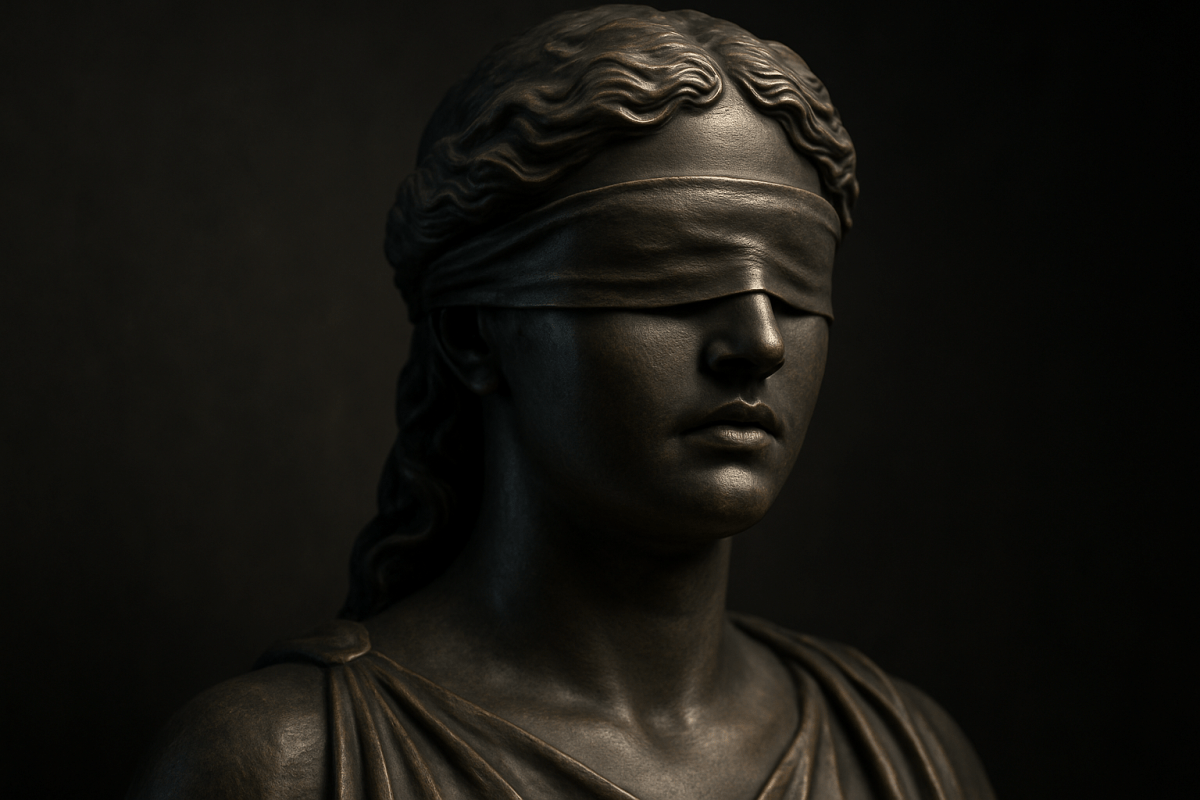
We like to imagine that the Enlightenment was a clean break from theology. But really, it was a semantic shell game. The soul was rebranded as the self. Sin became crime. Divine judgement was outsourced to the state.

We stopped praying for salvation and started pleading not guilty.

The entire judicial apparatus—mens rea, culpability, desert, retribution—is built on theological scaffolding. The only thing missing is a sermon and a psalm.

Where theology had the guilty soul, Enlightenment law invented the guilty mind—mens rea—a notion so nebulous it requires clairvoyant jurors to divine intention from action. And where the Church offered Hell, the state offers prison. It’s the same moral ritual, just better lit.

Galen Strawson and the Death of Moral Responsibility

Enter Galen Strawson, that glowering spectre at the feast of moral philosophy. His Basic Argument is elegantly devastating:

  1. You do what you do because of the way you are.
  2. You can’t be ultimately responsible for the way you are.
  3. Therefore, you can’t be ultimately responsible for what you do.

Unless you are causa sui—the cause of yourself, an unmoved mover in Calvin Klein—you cannot be held truly responsible. Free will collapses, moral responsibility evaporates, and retributive justice is exposed as epistemological theatre.

In this light, our whole legal structure is little more than rebranded divine vengeance. A vestigial organ from our theocratic past, now enforced by cops instead of clerics.

The Modern State: A Haunted House

What we have, then, is a society that has denied the gods but kept their moral logic. We tossed out theology, but we held onto metaphysical concepts like intent, desert, and blame—concepts that do not survive contact with determinism.

We are living in the afterglow of divine judgement, pretending it’s sunlight.

Nietzsche saw it coming, of course. He warned that killing God would plunge us into existential darkness unless we had the courage to also kill the values propped up by His corpse. We did the first bit. We’re still bottling it on the second.

If Not Retribution, Then What?

Let’s be clear: no one’s suggesting we stop responding to harm. But responses should be grounded in outcomes, not outrage.

Containment, not condemnation.

Prevention, not penance.

Recalibration, not revenge.

We don’t need “justice” in the retributive sense. We need functional ethics, rooted in compassion and consequence, not in Bronze Age morality clumsily duct-taped to Enlightenment reason.

The Risk of Letting Go

Of course, this is terrifying. The current system gives us moral closure. A verdict. A villain. A vanishing point for our collective discomfort.

Abandoning retribution means giving that up. It means accepting that there are no true villains—only configurations of causes. That punishment is often revenge in drag. That morality itself might be a control mechanism, not a universal truth.

But if we’re serious about living in a post-theological age, we must stop playing dress-up with divine concepts. The Enlightenment didn’t finish the job. It changed the costumes, kept the plot, and called it civilisation.

It’s time we staged a rewrite.

Blame is a Social Construct

The propensity to assign blame is deeply intertwined with human moral frameworks, often reflecting our need to ascribe responsibility and maintain social order. Blame allows us to identify transgressions, enforce norms, and establish accountability within our communities. But when it comes to non-human animals, the concept of blame becomes more complex.

Do Non-Human Animals Have a Sense of Blame?

Non-human animals certainly exhibit behaviours that suggest some rudimentary understanding of social rules and consequences. For example, studies on primates show that they can experience forms of moral emotions like guilt or shame. A chimpanzee might avoid eye contact or show submissive behaviour after breaking a social norm, such as stealing food from a dominant individual. Similarly, domestic dogs have been observed to display so-called “guilty” behaviours—such as avoiding eye contact or cowering—when they sense that their human is displeased. However, it’s debated whether this truly indicates guilt or simply a reaction to their owner’s emotional state.

However, the concept of blame as humans understand it—an attribution of moral responsibility that involves complex cognitive processes like intention-reading and understanding of moral rules—appears to be uniquely human. Non-human animals can recognise when another individual’s behaviour deviates from the norm and might react accordingly, but they don’t seem to hold others accountable in the same moral or punitive sense that humans do.

Blame and Morality in Humans vs. Non-Human Animals

In human societies, blame is often accompanied by a desire for reparation or punishment, as well as a cognitive understanding of intentions and causality. We don’t just react to actions; we interpret motives and hold individuals accountable based on our perception of their intentions. This is where non-human animals typically differ. Their responses to perceived wrongdoing are more likely driven by immediate social consequences—like changes in dominance status or access to resources—rather than a sense of moral outrage or an abstract concept of justice.

For example, if a wolf in a pack disobeys a social rule, it might be punished by the alpha, but this is more about reinforcing social hierarchy and cohesion than about assigning moral blame. Similarly, if a cat lashes out at another cat after being disturbed, it’s responding to an immediate violation of its personal space, not holding the other cat morally accountable.

Evolutionary Perspective

From an evolutionary standpoint, blame and moral emotions likely evolved in humans to facilitate cooperation and social cohesion in increasingly complex societies. As our ancestors formed larger and more intricate social groups, the ability to understand others’ intentions, enforce social norms, and hold individuals accountable would have been crucial for maintaining group stability and cooperative behaviours.

Non-human animals, even those that live in complex social structures, do not face the same cognitive demands as humans when it comes to maintaining large-scale social cohesion. Their social rules and enforcement mechanisms are typically less nuanced and more directly linked to survival and reproductive success.

Conclusion

While non-human animals demonstrate behaviours that hint at a basic understanding of social rules and can respond to transgressions, the uniquely human capacity for assigning blame—and the moral frameworks that arise from it—appears to be a product of our advanced cognitive abilities and complex social structures. Blame, in humans, is not just about responding to actions but involves a deeper understanding of intentions, responsibility, and justice—concepts that are foundational to our moral systems but beyond the reach of non-human cognition as we currently understand it.


I started writing a book on blame, agency, and retributive justice a few years back. Perhaps I should revisit it along with the dozen other books in progress.

Choice and Blame: Why We Forgive Some and Condemn Others

A recent parody video making the rounds on social media shows a man at a kitchen table, his girlfriend, and their cat. In a desperate attempt to gain his girlfriend’s attention, he knocks a cup off the table. The moment it hits the floor, she turns on him, scolding him for his clumsiness. Quick to deflect, he blames the cat, and suddenly her anger dissipates. She shifts from reprimanding him to lavishing affection on the supposedly guilty feline. The tension lifts—until he sheepishly confesses that it was, in fact, his doing all along. Her response? An incredulous, “Are you kidding me?”

What’s fascinating about this skit isn’t the comedy of the man’s mischief or even the cat’s unknowing role in the charade. It’s the girlfriend’s starkly different reactions to the same act, depending on who she believes committed it. The cat, in her eyes, can do no wrong; the boyfriend, however, is immediately culpable. It’s easy to laugh at the scenario’s absurdity, but the dynamic it portrays is familiar and, dare I say, quite telling about human behaviour.

The Double Standard of Blame

Why is it that we’re quick to exonerate some and just as quick to indict others? The phenomenon is more than a quirk of personality; it reveals our deeper, often unconscious, biases. While it’s understandable that the girlfriend might think the cat incapable of intentional mischief, her reaction also suggests a predisposition to forgive certain actors—whether due to perceived innocence, attachment, or simply habit.

This dynamic isn’t limited to pets and partners. In families, workplaces, and social groups, we often see a similar pattern. One person becomes the perennial scapegoat, bearing the brunt of blame for any and all misdeeds, while another enjoys a seemingly unshakeable immunity. Think of the “golden child” and the “black sheep” within a family. One can rarely put a foot wrong, while the other’s every move is scrutinised, questioned, or condemned.

Beyond the Blame: Motivations and Consequences

The reasons behind these imbalances can be complex. Sometimes, they stem from past behaviour: if someone has repeatedly erred, we may be primed to expect the worst from them, even if they’ve reformed. Other times, they arise from emotional bonds or biases: we excuse those we love or admire because acknowledging their faults would cause us discomfort or cognitive dissonance.

This phenomenon isn’t just about playing favourites; it can have significant psychological consequences. For the person perpetually cast as the villain, the burden of unwarranted blame can lead to feelings of resentment, anxiety, or self-doubt. Meanwhile, those consistently exonerated may internalise a skewed perception of their own infallibility, which can be equally damaging.

A Broader Reflection on Accountability

Returning to the video’s context, the girlfriend’s swift switch from reproach to indulgence once she believed the cat was at fault, and her subsequent anger when the truth was revealed, invites us to question our own responses to perceived transgressions. Are we, too, guilty of selectively assigning blame based on who we think is responsible? How often do we let our preconceptions shape our judgments, favouring one actor over another without truly weighing the evidence?

The parody is amusing, no doubt, but it also serves as a subtle reminder: our reactions often reveal more about our biases and expectations than about the actions themselves. The next time we find ourselves quick to blame or forgive, it’s worth pausing to ask: are we reacting to the act, or to the actor?

In a world increasingly marked by polarised opinions and knee-jerk reactions, cultivating this kind of self-awareness is crucial. We need to be vigilant not only about how we judge others but also about why we do so. For, in the end, it’s not just about who knocked the cup off the table—it’s about who we believe deserves to be scolded for it.

Blame On TikTok

A woman blames another for stealing her headphones. This viral video has been circulating in circles of mental health awareness and Karen syndrome.

My attention is otherwise occupied, so I won’t take time for a longer post, but I feel this illustrates my point that people just need to blame. It’s a knee-jerk response, and target accuracy is unnecessary, as this demonstrates.

tl;dr – Karen misplaced her headphones in her bag

From an evolutionary perspective, this also highlights theories supporting fitness over truth—fitness beats truth, FBT. Were that a rival stealing hard-earned food, better to apprehend or remediate than gather all the facts only to allow the culprit to escape. Of course, in cases like this, one gets false positives.

Video: Blame and Causa Sui

In this segment, I ponder the interplay between blame and Causa Sui. I’ll discuss the implications for moral responsibility as well as legal responsibility, which are not as in sync as one might imagine they might be.

Video: Blame & Causa Sui

To the uninitiated, Western legal systems have no pretensions about being about morality or justice. Legal systems are designed to maintain power structures and the status quo. They are deontological machines, making them prime targets for automation by the machine learning associated with artificial intelligence. This would also diminish the power of rhetoric over facts to some extent. But, I am no legal scholar, and all of this will have to wait for another segment.

I recently shared a video on causa sui and the basics of blame and blameworthiness, so I want to intersect those topics here.

Peter Strawson suggested that for humans, blame is a reactive response. It’s reflexive like having your knee jerk when tapped. Essentially, his position is that if blame didn’t naturally exist, we’d have to invent it, mirroring Voltaire’s quip, ‘If God did not exist, it would be necessary to invent Him’. Of course, this is because they serve the same power control purpose.

If God did not exist, it would be necessary to invent Him

Voltaire

To be fair, blame is closer to real than God, but the point remains. Strawson’s point is also that humans are saddled with blame and it’s not going anywhere no matter how nebulous it becomes in execution. It’s natural.

To me, this starts to sound suspiciously like a naturalistic fallacy. Humans seem to selectively cherry-pick which so-called natural tendencies they choose to defend. One might use nature to argue that female sexual availability begins at menstruation, and yet we have decided to ignore this and defer this on the grounds of civility. It’s obvious that we could consider blame to be an animal instinct we want to domesticate away, but because it serves other purposes, per Strawson’s perspective, it’s a useful tool.
But what’s the causa sui challenge. Let’s quickly recapitulate.

Causa sui argues that one cannot be the cause of oneself, ex nihilo. Being full products of nature and nurture to adopt the lay parlance, any blameworthiness lies with the sources or creators. Since we are concerned with moral responsibility, we can eliminate nature forthrightly. Nature may be responsible—by many estimations approximately 40 per cent responsible—, it possesses no moral agency. And if the individual is not responsible, then we are left with the environment and society, including the social environment. Of course, the environment gets off the hook in the same manner as the genetic and hereditary factors of nature.

Before we consider society, let’s regard the individual.

Albeit the brain-as-computer is a bit facile, it’s still good enough for illustrative purposes. When you are born, your cognitive hardware is installed, as are your edge peripherals and update protocols. Any of these can become damaged through some degenerative processes, or external environmental factors, but since my interest is in optimistic rather than pessimistic scenarios, I’ll ignore these instances. Given that blameworthiness is directly related to presumed cognitive processing, factors that diminish these faculties, mitigate blameworthiness and factors than increase it, ameliorate it.

As a—quote—’normal’ child becomes an adolescent and then an adult, the probability it will become blameworthy, increases with age, ceteris paribus. A person with cognitive deficits or conditions such as aphasia or dementia decreases the probability of blame assignment. Even temporary impairment mitigates judgment—oh, she was drunk.

So, following the brain-as-computer analogy, your brain is a CPU with a self-updating cognitive operating system and instruction set. Essentially, there is also short and long-term memory.
In the case of cognitive deficits, one of these components might be effectively broken. The CPU might process too slowly; it might misinterpret what it receives; there may be issues with the sense organs or the nerves that transport signals.

I’ve got a mate who, due to medical malpractice at birth, experienced nerve damage. Although his eyes and brain are normal, his optic nerve cannot carry signals very well, effectively leaving him blind. Neither can he taste nor smell. So there’s that.

But assuming that this processing and storage hardware are intact, the causa sui constraint still applies, but let’s spend some time evaluating societal interactions.

All inputs come from society—cultures and subcultures. Apart from misinterpreted processing scenarios, if a person doesn’t receive a particular moral instruction set, that person should surely be considered to be exempt from moral blame. It may be difficult to assess whether an instruction has been input. This is a reason why children are categorically exempted: they may not have received all of the expected moral codes, they may not have been stored or effectively indexed, and their processing hardware is still in development—alpha code if you will. Brain plasticity is another attribute I won’t spend much time on, but the current state of science says that the brain is still not fully developed even by age 30, so this is certainly a mitigating factor, even if we allow leeway for the causa sui argument.

I mention subculture explicitly because the predominant culture is not the only signal source. A child raised by, I don’t know, say pirates, would have an amended moral code. I am sure we can all think of different subcultures that might undermine or come at cross odds with the dominant culture, whether hippies, religious cultists, militia groups, racial purist groups, and so on.

So, a commonly held moral in the subdominant group may counter that of the prevailing one. An example that comes to mind is some religious organisations that do not agree with human medical intervention. There have been cases where parents have allowed a child to die from an otherwise curable condition. Although in the United States, there is a claim of freedom of religion—a claim that is spotty at best—, parents or guardians in situations like these have been convicted and sentenced for following their own moral codes. But as with all people, these people are as susceptible to the limitations of causa sui as the rest of us. They are not responsible for creating themselves, but moral responsibility was asserted based on the beliefs of the prevailing culture. Even besides the legal context, persons in the larger society would likely blame the parents for their neglect—though they may be praised for being resolute in their righteousness by their in-group. This just underscores that morality is a collection of socially constructed conventions rather than something more objective.

Returning to causa sui, let’s say a person commits an act that society would typically assign blame. Rather than exercise some act of retributive justice—a concept with no foundation in a causa sui universe—the course of action was remediation. In this case, the desired moral instruction would be delivered thereby seemingly making the moral offender blameworthy. But would they be?

Presumably, (for what it’s worth) psychologists would evaluate the subject for competency in maintaining the programming. In the case of the aforementioned religious parents, they may be threatened with retribution for not abiding by the superseding rules of the prevailing power structure.

Although I might personally allow some leeway even with the causa sui in full force and effect, but I can’t say that I have much faith in the ability of humans to make a correct assessment. My impression is that any assessment would be one of convenience than something sounder.

Perhaps I’ll produce a more robust segment on retributive justice, but my feeling is that retributive justice is an area that legal systems should avoid altogether. If necessary, focus on restorative justice, rehabilitation (or ‘habilitation’ as the case might be) and quarantine models to ensure any bad actors are contained away from society. Again, this puts individuals at the mercy of cultures they find themselves a part of. I am not going to delve into this any further save to remind the listener of gang initiation schemes where a person needs to kill a member of a rival gang to become a trusted member. This is their moral code—quite at odds with the mainstream.

So there you have it. Owing to causa sui constraints, a person cannot be ultimately responsible for their actions. My primary thesis is—apart from metaphorical equipment failures—that any moral responsibility falls wholly on the society or culture. Full stop. And this isn’t as foreign as one might first feel. Although for most people blame is natural, in an individualistic society, people are interested in finding the culprit. In collectivist cultures, any culprit might do. Perhaps I’ll share some stories in a future segment.
Meantime, what are your thoughts on moral responsibility? Can someone be ultimately responsible? Some have said the ‘ultimate responsibility’ is a philosophical red herring and that we can still hold someone responsible, even if not in the ultimate sense, which causa sui disallows. Are you more in this camp? Is this enough to mete out so-called retributive justice? For me, retributive justice is a euphemism for vengeance, and justice is a weasel word. But that’s just me, and perhaps a topic for another segment.

Are there any topics you’d like me to cover? Leave a comment below.

Peter van Inwagen – Big Questions in Free Will

Peter van Inwagen is a personality I’ve had on my radar, but I haven’t spent any time with him because he is a referenced influence of Robert Kane or Derk Pereboom, who hold positions I disagree with.

Video: Peter van Inwagen – Big Questions in Free Will

Still, I was interested, so I thought watching a short 13-minute video interview might introduce me to him. I’ve enjoyed other Closer to the Truth content, so I gave it a go. I feel that Peter sets up the problem perfectly. No faults whatsoever. As I see it, the same problem and solution proposal arises that Galen Strawson adopts, yet this is where I disagree with them both.

As noam chomsky has speculated maybe our minds are just put together in the wrong way to find this fault we got a certain set of cognitive modules tossed up to us in our evolutionary history maybe we got the wrong ones for thinking about this problem

— Peter van Inwagen

[TBD]

Unless I decide to unpack the rest, I’ll cut to the chase. The argument is as follows:

  1. Humans are somehow hardwired to blame. (I do not know if this is universally true, but let’s accept this premise as being true.)
  2. Without the notion of free will (or at least human agency), we cannot assign blame.
  3. Therefore, in order to assign blame, free will has to be true.

I don’t disagree with this syllogism. However, in ‘free will has to be true’ , there are ostensibly two possibilities.

  1. Free will exists as a fact in nature—a priori
  2. Free will is a construction—a posteriori

Of course, the general consensus for proponents of free will is that it exists a priori. My contention is that this is not the case. Free will is an a posteriori construction.

Inwagen is falling into a heuristic trap: It feels like it’s true, so it’s obviously true. Borrowing from Daniel Kahneman, he and others are relying on System I and failing to trigger System II, where System II is required. Moreover, I take this position because I don’t think System II has what it needs to accurately analyse and assess the situation holistically. We can’t get outside of the system, so we make up a story that presumably serves our purposes.

I am not one who believes ‘the universe is a simulation’, but I do believe it serves as an apt metaphor. We are player characters in the game and we can’t see outside of it.

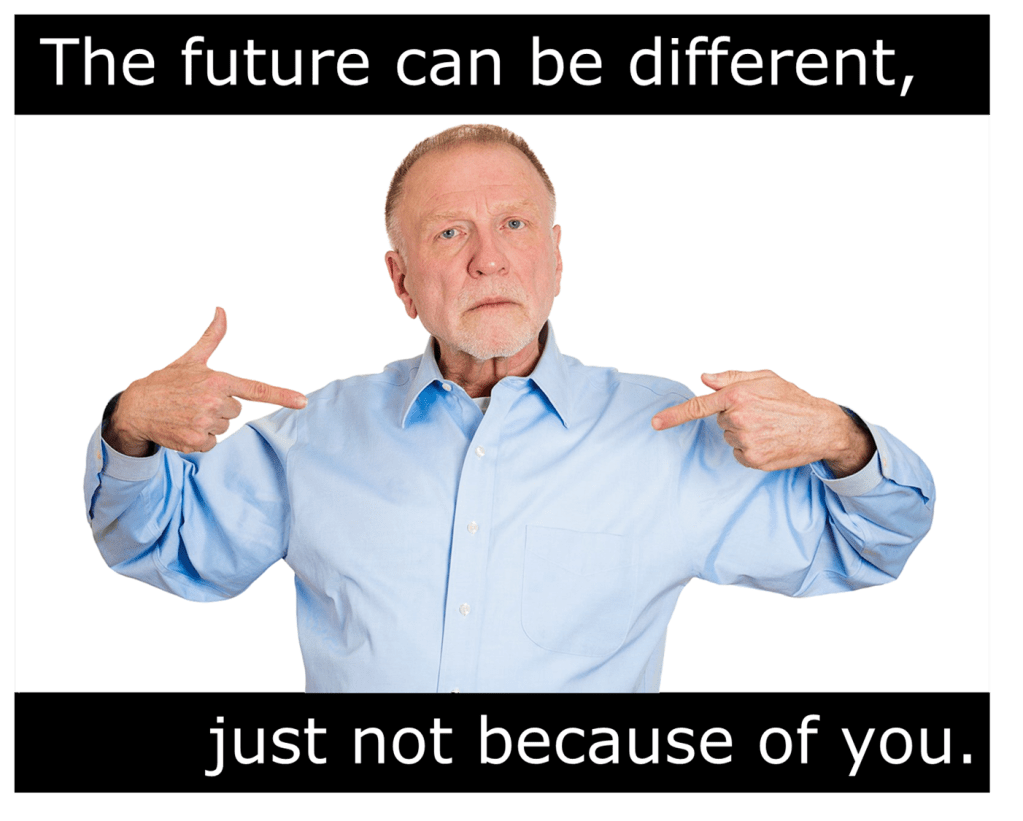
I like to sum it all up with the expression, the future can be different, just not because of you.

Cows Are Suey*

As I research the agency/free will quandary, I am finding a lot of common minds, as it were. On the free will versus determinism spectrum, I can’t say without reservation that I accept determinism or indeterminism, for that matter, but I can say that free will is weak tea. Causa Sui comes into play, but I’ll get to that.

Audio: NotebookLM podcast on this topic of Causa Sui.

As an aside, similar to the theism versus atheism debate, keep in mind that this debate hinges on free will taking the privileged position occupied by theism. When discussing compatibility versus incompatibilism, it’s whether determinism is compatible or incompatible with free will. I feel that the privilege of free will in this debate is telling insomuch as it reveals a bias on preferred perspective.

If you’ve been reading, I like what Derk Pereboom has to say, but I feel we have a bit of a gap in our accord. But I’m very partial to Galen Strawson’s line of argumentation that doesn’t rely on determinism to declare the free will argument pointless. I believe that there is space to fill in some gaps in his position regarding social responsibility, and maybe there are no gaps; I just am not yet familiar enough with his position. From a strictly deterministic position, I find Robert Sapolsky’s position appealing, but it still ends up being a pissing match. To be fair, I think any position will be a pissing match. I’ll elaborate on this next before I touch on causa sui.

Losing My Religion

In my book, free will is an anachronistic vestige of religion. Not to go too far down a Foucauldian path, religion is a power play. As religion constructs gods, it also constructs notions of free will. Power structures like to leverage these concepts for their own ends.

Interestingly, religion first gave us determinism—at least the Abrahamic monotheistic varieties—, but it needed to construct free will or it would have undermined its ability to cast blame and guilt. When science matured, it said, ‘Hey, hold on there. There’s no room for gods in physics. Everything has a cause and was determined at the start. Your intuition was right at the start. Free will is bollocks.’

Causa Sui

Finally. Causa Sui is the Latin name for a self-caused cause, one that is not the result of prior events. Here is where I really like Galen Strawson’s account. His argument is premised on 4 factors, the first of which is what you do flows from the way you are.

What you do flows from the way you are.

Galen Strawson

In essence, you’ve somehow got to get to be responsible for being the way you are, but you can’t you can’t get back behind yourself in such a way as to be responsible for the kind of person you are. You’ve got to somehow have chosen it, but you can’t choose it unless you already exist as a creature who has preferences.

No Causa Sui

You’d somehow have to get to be the cause of yourself to take fundamental ultimate responsibility for yourself and therefore for your actions that flow from the way you are and therefore free will—indeed more responsibility and free will, and therefore we do not have free will.

In the diagramme, we see you, and the influence of external forces, but at no point are you ever responsible for your own actions. Even if you did make a so-called conscious effort to do something else, it would still be the result of one of these other sources.

Perhaps an inapt example would be for a homosexual person to ‘decide‘ to be a heterosexual person. This is not to say just to act like a heterosexual person, but to actually be attracted to the opposite sex. It should be obvious that this can’t be done, but if you are having difficulty, imagine the mirror example where you are a heterosexual person and you ‘decide‘ to be attracted to people of your own sex. Of course, this is akin to deciding that you like cilantro when you don’t, deciding you like Justin Beiber when you don’t, or deciding that you don’t actually enjoy chateaubriand when you do. Even if you manage to act the opposite of your sexual orientation, it is still not you who is responsible for the apparent change. It’s a response to social forces and external conditioning. You are the way you are because of the way you are. You’ve had absolutely no say in the matter.

You are the way you are because of the way you are.

So what’s the big deal? you might still be asking yourself. If you’ve just done something morally or legally “wrong” —emphasised by big bold scare quotes, you need to be punished or at least blamed irrespective of how you became you, right? Let’s ignore that I am a moral non-cognitivist at the start and pretend that this moral indignation is otherwise meaningful.

Quarantine Justification Theory

Let’s say that someone has done something outside the bounds of social acceptance in some milieu. To make it even easier to consider, let’s imagine for a moment, instead, an autonomous robot that was designed to seek glass and smash it. This robot has no conscience and no free will. It is just a robot programmed to break windows.

This robot has been unleashed on our community. In one sense, some might blame the robot for breaking the windows, but we know that whoever programmed this robot is to blame. But we don’t know who programmed it. What we do know is that we want to stop the robot from breaking more windows.

So we track down the robot and we disable it—or perhaps it’s designed in such a way that it can’t be turned off. Even though the robot is not to blame, it is a menace and we’ve collectively decided to disarm it or quarantine it. We build a glassless room and sequester it away so it can do no more damage.

Some people find this scenario a reasonable justification to quarantine the actor, but I think that this has at least one problem, I’ll mention two considerations I have.

Not a Robot

So, let’s revisit quarantine justification theory with a human actor, and let’s presume no causa sui. As we can’t blame the robot actor, neither can we blame the person actor. As with the robot, the goal is not to punish but to quarantine.

Not to Blame

Now let’s add a dose of reality. This human is not on a window-breaking rampage. Instead, s/he vandalised the window of a shop for some reason; let’s say that s/he was short-changed and wanted to exact damage equal to the shorted change. A police officer witnesses the act and takes the perpetrator into custody. What should the judge do? Remember, the person did not create themself, but s/he did the act s/he was accused of.

The image below shows two scenarios. In scenario A, you are integrated with society; in scenario B, you are quarantined. The question is what is the justification for quarantining you.

Quarantine Justification Model

It’s difficult to argue that this person should be quarantined because this was a tit-for-tat response, not a rampage. It’s unlikely to happen again. One might try to argue that this person should be fined or, in line with quarantine, incarcerated to be made an example, thus acting as a scapegoat to serve as an external social pressure mechanism to disincentivise this retributive action. But this would ostensibly be punishing this person for something beyond their control.

We can even loosen the scenario to consider a person who has robbed a liquor store or kidnapped a child. These events are all too common, but there is nothing to suggest that a person will repeat this activity, so quarantine cum incarceration is hard to justify.

I can envision someone reading this thinking that we need to do something. We can’t let this person get away with it, but if you find yourself drifting in this direction, it’s your programming. You can’t help yourself. You don’t even have this degree of agency.

I haven’t given it enough thought, but it feels like this is similar to the dissonance when one grasps something intellectually, but instinctually or emotionally something just doesn’t sit right. Whilst you try to get outside of yourself, your programming doesn’t allow it.


* If you haven’t sussed it out quite yet, ‘cows are suey’ is how Google’s auto-generated transcript heard causa sui in an interview with Galen Strawson on this topic, and the rest is history.

There Are No Accidents

There are no accidents, or so claimed Carl Jung in his work on synchronicity, positing that events may be connected causally or by meaning. Some people see this as the work of some karmic force whilst others use it to suggest that a person is being passive-aggressive.

Karma

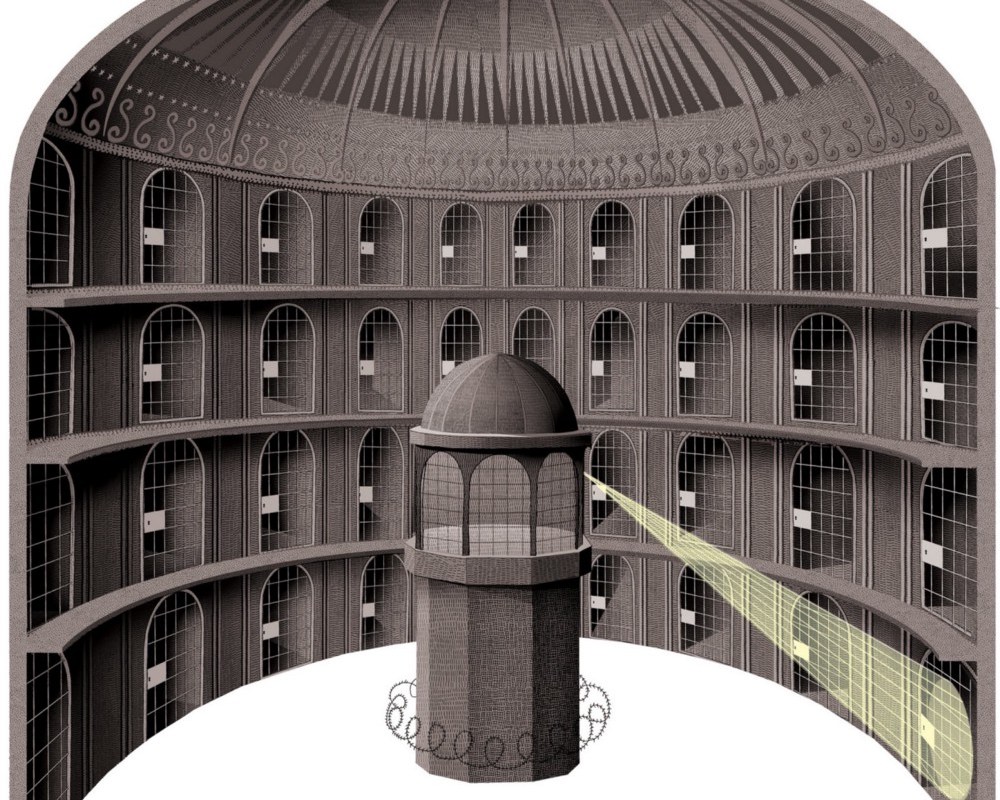
In the karmic sense, this means that there is no escaping fate, and, as with Santa Claus, he is constantly watching you, like some personified panopticon. See the short post on karma, too.

I’m not sure if the bible story of Judas and Jesus is really a karmic anecdote, but under this paradigm, everything is a no-fault situation. Judas was fated to betray Jesus. And despite this lack of responsibility, Judas still committed suicide once he realised what he had done and despite it not being an accident.

Passive-Aggression

In the passive-aggressive sense, it is to say the event A may be caused by something in person B’s unconscious mind—and not by some collective consciousness or a Universal Overseer. So, secretly, if Person B accidentally backed into your parked car, it may not be by some conscious volition; rather, it’s because or some deep-seated anger or other ill-will harboured and directed for you.

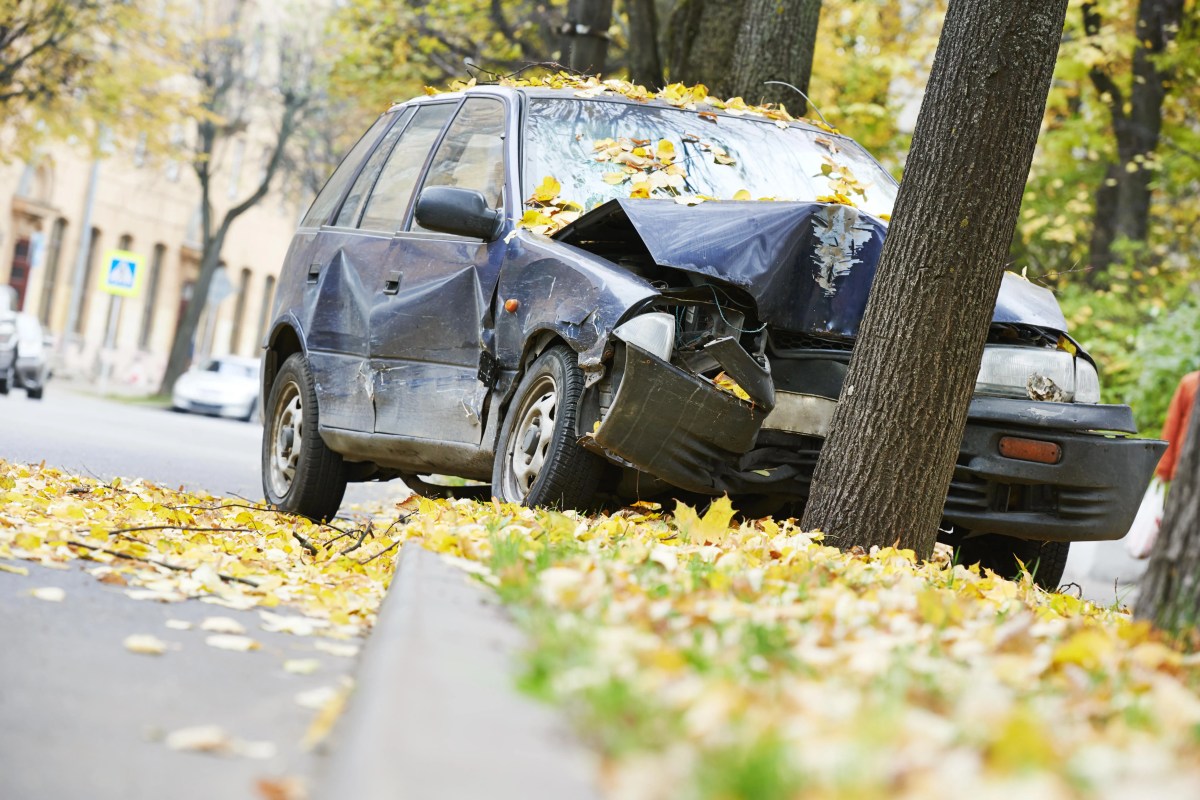
The problem is that if you accept that there are no accidents, then you—intentionally or otherwise—parked your car in a place where it would necessarily be hit by someone—by anyone. It just happened to be this other person for whom there are also no accidents. So, both parties are blameless. But people love to blame, and they like to defer responsibility.

Verdict

The bottom line is that both of these concepts are a bit sketchy. In a world of no free will, the karma situation might be plausible, but this wreaks havoc on moral-ethical systems. I discuss that in most post on karma.