
Missing Pieces of the Anti-Enlightenment Project

5–8 minutes

I’ve just added a new entry to my Anti-Enlightenment corpus, bringing the total to seven – not counting my latest book, The Illusion of Light, that summarises the first six essays and places them in context. This got me thinking about what aspects of critique I might be missing. Given this, what else might I be missing?

Audio: NotebookLM podcast discussion of this topic.

So far, I’ve touched on the areas in the top green table and am considering topics in the bottom red/pink table:

Summary Schema – The Anti-Enlightenment Project – Published Essays

AxisCore QuestionRepresentative Essay(s)
EpistemicWhat counts as “truth”?Objectivity Is Illusion: An Operating Model of Social and Moral Reasoning
PoliticalWhat holds power together?Rational Ghosts: Why Enlightenment Democracy Was Built to Fail; Temporal Ghosts: Tyranny of the Present
PsychologicalWhy do subjects crave rule?Against Agency: The Fiction of the Autonomous Self; The Will to Be Ruled: Totalitarianism and the Fantasy of Freedom
AnthropologicalWhat makes a “normal” human?The Myth of Homo Normalis: Archaeology of the Legible Human
EthicalHow to live after disillusionment?The Discipline of Dis-Integration: Philosophy Without Redemption

Summary Schema – The Anti-Enlightenment Project – Unpublished Essays

AxisCore QuestionRepresentative Essay
Theological (Metaphysical)What remains sacred once transcendence is dismantled?The Absent God: Metaphysics After Meaning
Aesthetic (Affective)How did beauty become moral instruction?The Aesthetic Contract: Beauty as Compliance
Ecological (Post-Human)What happens when the world refuses to remain in the background?The Uncounted World: Ecology and the Non-Human
Linguistic (Semiotic)How does language betray the clarity it promises?The Fractured Tongue: Language Against Itself
Communal (Social Ontology)Can there be community without conformity?The Vanished Commons: Between Isolation and Herd

Below is a summary of the essays already published. These are drawn verbatim from the Anti-Enlightenment Project page.

1. Objectivity Is Illusion: An Operating Model of Social and Moral Reasoning

Published September 2025

Objectivity, in the social and moral sense, is a performance – a consensus mechanism mistaken for truth. This essay maps how “objectivity” operates as a scaffold for Enlightenment rationality, masking moral preference as neutral judgment. It introduces a five-premise model showing that what we call objectivity is merely sustained agreement under shared illusions of coherence. The argument reframes moral reasoning as provisional and participatory rather than universal or fixed.

Read on Zenodo

2. Rational Ghosts: Why Enlightenment Democracy Was Built to Fail

Published October 2025
The Enlightenment built democracy for rational ghosts – imagined citizens who never existed. This essay dissects six contradictions at the foundation of “rational” governance and shows why democracy’s collapse was prewritten in its metaphysics. From mathematical impossibility to sociological blindness, it charts the crisis of coherence that modern politics still calls freedom.
Read on Zenodo

3. Temporal Ghosts: Tyranny of the Present

Published October 2025
Modern democracies worship the now. This essay examines presentism – the systemic bias toward immediacy – as a structural flaw of Enlightenment thinking. By enthroning rational individuals in perpetual “decision time,” modernity erased the unborn from politics. What remains is a political theology of the short term, collapsing both memory and imagination.
Read on Zenodo

4. Against Agency: The Fiction of the Autonomous Self

Published October 2025
“Agency” is not a metaphysical faculty – it’s an alibi. This essay dismantles the myth of the autonomous self and reframes freedom as differential responsiveness: a gradient of conditions rather than a binary of will. Drawing on philosophy, neuroscience, and decolonial thought, it argues for ethics as maintenance, not judgment, and politics as condition-stewardship.
Read on Zenodo

5. The Discipline of Dis-Integration: Philosophy Without Redemption

Published October 2025

This essay formalises Dis-Integrationism – a philosophical method that refuses synthesis, closure, and the compulsive need to “make whole.” It traces how Enlightenment reason, deconstruction, and therapy culture all share a faith in reintegration: the promise that what’s fractured can be restored. Against this, Dis-Integrationism proposes care without cure, attention without resolution – a discipline of maintaining the broken as broken. It closes the Anti-Enlightenment loop by turning critique into a sustained practice rather than a path to redemption.

Read on Zenodo

6. The Myth of Homo Normalis: Archaeology of the Legible Human

Published October 2025

Modernity’s most persistent myth is the “normal” human. This essay excavates how legibility – the drive to measure, categorise, and care – became a form of control. From Quetelet’s statistical man to Foucault’s biopower and today’s quantified emotion, Homo Normalis reveals the moral machinery behind normalisation. It ends with an ethics of variance: lucidity without repair, refusal without despair.

Read on Zenodo

7. The Will to Be Ruled: Totalitarianism and the Fantasy of Freedom

Published October 2025

This essay examines how the Enlightenment’s ideal of autonomy contains the seed of its undoing. The rational, self-governing subject – celebrated as the triumph of modernity – proves unable to bear the solitude it creates. As freedom collapses into exhaustion, the desire for direction re-emerges as devotion. Drawing on Fromm, Arendt, Adorno, Reich, Han, and Desmet, The Will to Be Ruled traces the psychological gradient from fear to obedience, showing how submission is moralised as virtue and even experienced as pleasure. It concludes that totalitarianism is not a deviation from reason but its consummation, and that only through Dis-Integrationism – an ethic of maintenance rather than mastery – can thought remain responsive as the light fades.

Read on Zenodo

Below are possible future topics for this series*

8. The Absent God: Metaphysics After Meaning

Axis: Theological / Metaphysical
Core Question: What remains sacred once transcendence is dismantled?

Concept:
This essay would trace how Enlightenment humanism replaced God with reason, only to inherit theology’s structure without its grace. It might read Spinoza, Kant’s moral law, and modern technocracy as secularised metaphysics – systems that still crave universal order.
Goal: To show that disenchantment never erased faith; it simply redirected worship toward cognition and control.
Possible subtitle: The Enlightenment’s Unconfessed Religion.

9. The Aesthetic Contract: Beauty as Compliance

Axis: Aesthetic / Affective
Core Question: How did beauty become moral instruction?

Concept:
From Kant’s Critique of Judgment to algorithmic taste cultures, aesthetic judgment serves social order by rewarding harmony and punishing dissonance. This essay would expose the politics of form – how beauty trains attention and regulates emotion.
Goal: To reclaim aesthetics as resistance, not refinement.
Possible subtitle: Why Modernity Needed the Beautiful to Behave.

10. The Uncounted World: Ecology and the Non-Human

Axis: Ecological / Post-Human
Core Question: What happens when the world refuses to remain background?

Concept:
Here you dismantle the Enlightenment split between subject and nature. From Cartesian mechanism to industrial rationalism, the natural world was cast as resource. This essay would align Dis-Integrationism with ecological thinking – care without mastery extended beyond the human.
Goal: To reframe ethics as co-maintenance within an unstable biosphere.
Possible subtitle: Beyond Stewardship: Ethics Without Anthropos.

11. The Fractured Tongue: Language Against Itself

Axis: Linguistic / Semiotic
Core Question: How does language betray the clarity it promises?

Concept:
Every Anti-Enlightenment text already hints at this: language as both the instrument and failure of reason. Drawing on Nietzsche, Derrida, Wittgenstein, and modern semiotics, this essay could chart the entropy of meaning – the collapse of reference that makes ideology possible.
Goal: To formalise the linguistic fragility underlying every rational system.
Possible subtitle: The Grammar of Collapse.

12. The Vanished Commons: Between Isolation and Herd

Axis: Communal / Social Ontology
Core Question: Can there be community without conformity?

Concept:
This would return to the psychological and political threads of The Will to Be Ruled, seeking a space between atomised autonomy and synchronized obedience. It might turn to Arendt’s notion of the world between us or to indigenous and feminist relational models.
Goal: To imagine a non-totalitarian togetherness – a responsive collective rather than a collective response.
Possible subtitle: The Ethics of the Incomplete We.

* These essays may never be published, but I share this here as a template to further advance the Anti-Enlightenment project and fill out the corpus.

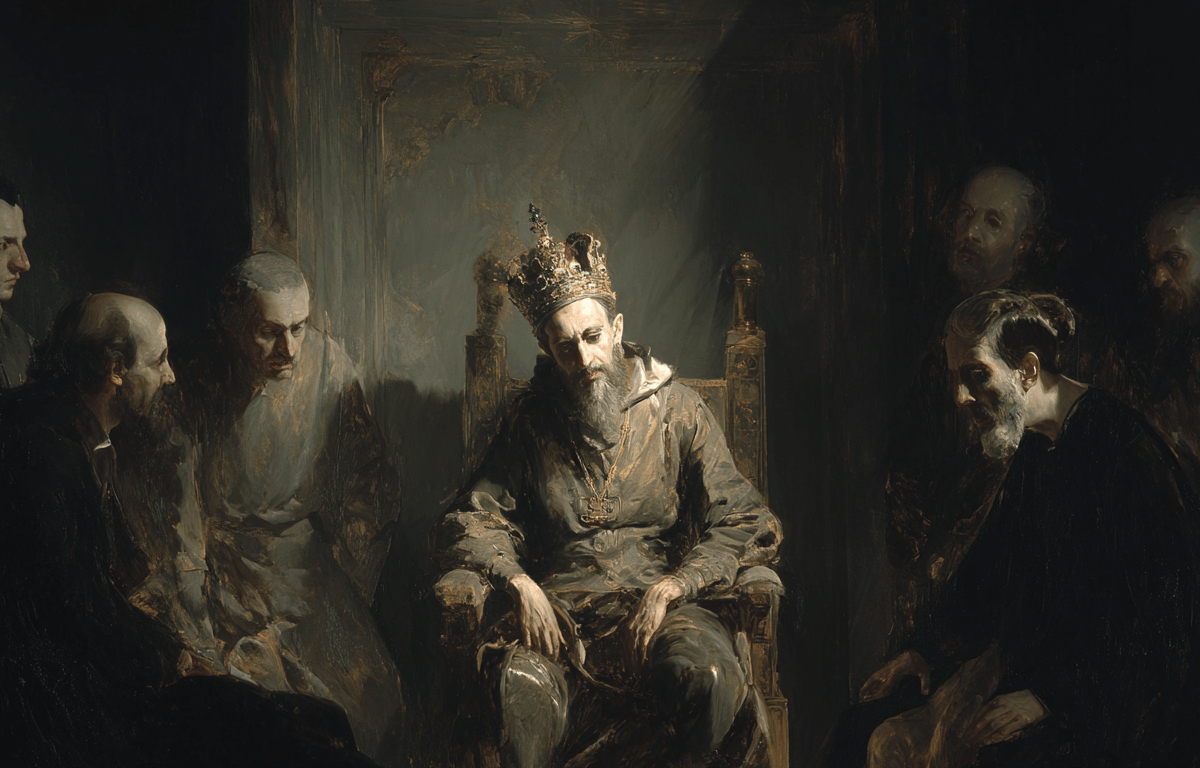
The Will to Be Ruled: Totalitarianism and the Fantasy of Freedom

1–2 minutes

The latest addition to the Anti-Enlightenment Project is now live on Zenodo:
The Will to Be Ruled: Totalitarianism and the Fantasy of Freedom

Modern liberal democracies still chant the Enlightenment’s refrain: the rational, self-governing individual acting freely within a moral order of their own design. It’s an elegant myth – until the self begins to wobble. Under economic, cultural, and epistemic strain, autonomy curdles into exhaustion, and exhaustion seeks relief in obedience.

Audio: NotebookLM podcast of this essay. Please note that this audio summarises the entire essay. As such, it’s also longer than most, coming in at just under 40 minutes. I listened to it, and I feel it does a good job of capturing the essences of the essay. Of course, you could read the essay more quickly, but the perspective may still be helpful.

This essay traces that drift – from the Enlightenment’s causa sui complex to the ecstatic submission that defines modern authoritarianism. Drawing on Fromm, Arendt, Adorno, Reich, Han, and Desmet, it explores how freedom’s rhetoric becomes its opposite: obedience moralised as virtue, conformity sold as courage, submission experienced as pleasure.

At its core, The Will to Be Ruled argues that totalitarianism is not the antithesis of Enlightenment reason but its fulfilment. Once the world is rendered intelligible only through rational mastery, the subject inevitably longs to be mastered in return.

The closing section introduces Dis-Integrationism – a philosophical stance that declines redemption, preferring maintenance over mastery. It offers no cure, only the small ethic of attentiveness: keeping the field responsive while the light fades.

Filed under the Anti-Enlightenment Project, this essay completes the current thematic triad alongside Objectivity Is Illusion and Against Agency.

NB: This essay was inspired in part by Desmet’s The Psychology of Totalitarianism and this video:

Video: The Modern World, Totalitarianism and the Brain with Iain McGilchrist & Mattias Desmet

The Trust Myth: Harari’s Binary and the Collapse of Political Credibility

Yuval Noah Harari, always ready with a digestible morsel for the TED-addled masses, recently declared that “democracy runs on trust, dictatorship on terror.” It’s a line with the crispness of a fortune cookie and about as much analytical depth. Designed for applause, not interrogation, it’s the sort of soundbite that flatters liberal sensibilities while sanding off the inconvenient edges of history.

Audio: NotebookLM podcast on this topic.

Let’s be honest: this dichotomy is not merely simplistic – it’s a rhetorical sedative. It reassures those who still believe political systems are like kitchen appliances: plug-and-play models with clear instructions and honest warranties. But for anyone who’s paid attention to the actual mechanics of power, this framing is delusional.

1. Trust Was Never Earned

In the United States, trust in democratic institutions was never some noble compact forged through mutual respect and enlightened governance. It was cultivated through exclusion, propaganda, and economic bribery. The post-WWII boom offered the illusion of institutional legitimacy – but only if you were white, male, middle-class, and preferably asleep.

Black Americans, Indigenous peoples, immigrants, women – none were granted the luxury of naïve trust. They were told to trust while being actively disenfranchised. To participate while being systemically excluded. So no, Harari, the machine didn’t run on trust. It ran on marketing. It ran on strategic ignorance.

2. Dictatorship Doesn’t Require Terror

Equally cartoonish is the notion that dictatorships subsist purely on terror. Many of them run quite comfortably on bureaucracy, passive conformity, and the grim seduction of order. Authoritarians know how to massage the same trust reflexes as democracies – only more bluntly. People don’t just obey out of fear. They obey out of habit. Out of resignation. Out of a grim kind of faith that someone – anyone – is in charge.

Dictatorships don’t extinguish trust. They re-route it. Away from institutions and toward strongmen. Toward myths of national greatness. Toward performative stability. It’s not that terror is absent—it’s just not the whole machine. The real engine is misplaced trust.

3. Collapse Is Bipartisan

The present moment isn’t about the erosion of a once-trustworthy system. It’s the slow-motion implosion of a confidence game on all sides. The old liberal institutions are collapsing under the weight of their hypocrisies. But the loudest critics – tech messiahs, culture warriors, authoritarian nostalgists – are no better. Their solutions are just new brands of snake oil in sleeker bottles.

Everyone is pointing fingers, and no one is credible. The public, caught between cynicism and desperation, gravitates either toward restoration fantasy (“make democracy work again”) or authoritarian theatre (“at least someone’s doing something”). Both are dead ends.

4. The Only Way Forward: Structural Reimagination

The only viable path isn’t restoration or regression. It’s reinvention. Systems that demand unconditional trust – like religions and stock markets – are bound to fail, because they rely on sustained illusions. Instead, we need systems built on earned, revocable, and continually tested trust – systems that can survive scrutiny, decentralise power, and adapt to complexity.

In other words: stop trying to repair a house built on sand. Build something else. Something messier, more modular, less mythological.

Let the TED crowd have their slogans. We’ve got work to do.

Bonjourno, Adorno

I’ve recently read Adorno’s publication, The Authoritarian Personality, and I share my perspective and thoughts.

This study was performed post-World War 2 and published in 1950. It was meant to determine if a relationship existed between anti-semitism, ethnocentrism, and fascism (cum authoritarianism) and compared several psychometric tests to determine the correlation between cohort groups. The new test was called the F Scale test, a pale attempt to hide the purpose of the Fascism Test.

What’s interesting to me, is how these map to the épistémè of the day, but perhaps that’s more a reflection on how ripe some populations were for fascism. In many ways, it’s dated,and many have questioned the approach and methodology. Moreover, some have noted that the correlation with fascism may simply be a correlation with authoritarianism more generally.

Before I get to the main content, I admit that I don’t agree with the psychoanalytical vantage. In fact, I equate psychoanalysis with astrology and tarot cards. To this end, I ignore the etiological aspects. I also feel that the fixation on anti-semitism is overspecified, so the effects would map to any targeted out-group. Finally, I feel that the chosen categories are not mutually exclusive, so there are unnecessary covariances. I discuss these in turn. Adorno created 9 categories. The first is conventionalism.

Conventionalism:
Adherence to conventional values

By conventional, Adorno means traditional — people who find solace in the familiar. In my experience, most people are conventional and to a large degree. When I  consider conventionalism, it’s about how people present themselves when they think they are being observed. I’m not sure that I’d differentiate closet rebels from people who are simply conventional to the bone. Many people will tell their closest confidantes how rebellious and unconventional they are…but only behind closed doors because they fear being judged and reprisals. In practice, they will even call out and chastise a person who has been caught being unconventional.  This extends to beliefs, sexuality, and other propensities, such as recreational drug use.

Authoritarian Submission:
Towards ingroup authority figures

Authoritarian submission also over-indexes across the board. Ostensibly, this is about obedience and deference. Even if one disagrees with an authority figure, they are unlikely to voice the disagreement and will quickly cave any defence when push comes to shove. 

Note the in-group qualifier. In the United States, when George W Bush was president, the authoritarians railed on about how important it was to support whoever was president — until Obama became president. When Trump became president, it was important to fall into line behind the new leader, leaving differences in the past — until Biden became president. In practice, some of these people couch the ousted leader as the better or legitimate leader. Historically, this has led to fractures that have taken down nations. This is also the story behind the Sunni-Shia conflict of Islam.

Authoritarian Aggression:
Against people who violate conventional values

Authoritarian aggression is a natural extension of conventionalism and submission. I submit, and so should you — if only performatively, I will call you out. We can witness this when closet gay legislators not only pass laws against their own beliefs and activities, but they do so vocally, aggressively. The best defence is a strong offence. And better to be the accuser than the accused.

Anti-Intraception:
Opposition to subjectivity and imagination

Anti-Intraception is a fancy way of saying that one is an objectivist. Anti-intraception is a characteristic of the authoritarian personality which results in a low tolerance for creative thinking and emotion-importance; people who are anti-intraceptive (i.e. are not particularly self-aware) reject subjective thinking in favour of more concrete thinking (e.g. placing high importance on clearly observable facts instead of thoughts and feelings). There is no room for subjectivity or relativity. This is one god, one truth, and whatever the prevailing position of the day, with no room for perspective or interpretation. Other sources equate prescriptive optimism to be an effect of an anti-inceptive disposition.

Superstition and Stereotypy:
Belief in individual fate; thinking in rigid categories

I would have distinguished between superstition and stereotypy, but perhaps there is a strong correlation between the two. Stereotypy is where we get the need for strong categories and things like binary sex and no distinction between sex and gender. Superstition is obviously belief in improbable metaphysical forces and entities. This is where gods enter the equation. With superstition comes fatalism. Things are not within their control. Things just happen to them. They feel powerless, and so seek to align with the powerful, being somewhat subsumed by the bully. This is a perfect segue to the next characteristic.

Power and Toughness:
Concerned with submission and domination; assertion of strength

Power and toughness are where militarism and domination come into frame — Nietzsche 101. This is also projected and reflected onto leaders and representatives. Brawn is privileged over brains. Affiliated bullies are copacetic. It also manifests in ethnocentrism, jingoism, nationalism, and patriotism. We’re number one. We’ve got the best this and that, whether country, state, school, sports team, or Girl Scout Troop. It doesn’t matter. Everything is a competition, and I need to come out on top — if even only by association.

Destructiveness and Cynicism:
hostility against human nature

Excerpting from the text, this is about ‘the inability to identify with humanity [that] takes the political form of nationalism and cynicism about world government and permanent peace. It takes other forms, all based on ideas concerning the intrinsic evil (aggressiveness, laziness, power-seeking, etc.) of human nature; the idea that this evil is unchangeable is rationalized by pseudoscientific hereditarian theories of human nature. The evil, since it is unchangeable, must be attacked, stamped out, or segregated wherever it is found, lest it contaminate the good. The democratic alternative — humanitarianism — is not a vague and abstract “love for everybody” but the ability to like and dislike, to value and oppose, individuals on the basis of concrete specific experience; it necessarily involves the elimination of the stereotypical ingroup-outgroup distinction and all that goes with it‘.

As one can notice, this fits into the religious mindset. It’s also a prime motivation for genocide.

Projectivity:
Perception of the world as dangerous; tendency to project unconscious impulses

Projectivity takes us to the Leviathan of Hobbes’ ‘solitary, poor, nasty, brutish, and short‘ natural existence. It’s also takes the most blatant psychoanalytical aspect: projection. Enough said.

Sex:
Overly concerned with modern sexual practices

Sex and sexuality ties back nicely to conformity and conventionalism as well as stereotypy. It manifests as repression, to borrow from psychoanalytical nomenclature. By and large, the reason these people want privacy in the bedroom is because of modesty. Make no mistake, these people practise plenty of deviances and excuse themselves in typical attribution bias fashion. When caught in the act, they make excuses for their deviance rather than to defend their personal rights. Some of these deviances are not actually deviance from practice. Rather, the deviation is versus belief.

Whilst I agree with the sentiment of sexuality, this feels like it’s already been captured as a special case of conventionalism and is a quaint throwback to the Freudian obsession.

Closure

Speaking for myself, I’m not certain that a post-modern can be a fascist. First, what post-modern is a conventionalist or traditionalist. The only recognised authority is the underside of a power relationship. Without a recognised authority, there is nothing to react against. A key element of postmodernism is subjectivity over objectivity, which helps to explain why authoritarians like Jordan Peterson so vehemently oppose even the notion of postmodernism. Postmoderns eschew categories or make them so expansive as to not provide much gravity for stereotypes. I can’t speak for other postmoderns, but I am a pacifist and conscientious objector. I’ve got no tolerance for power plays, alpha males, and machismo. I am a bit of a cynic, but it’s not from some sense of evil caricatures. I don’t even believe in the notion of good or evil. I don’t believe in nature, let alone human nature. These are just facile categories to contain stereotypes. Where have I seen that before? Do I project my unconscious as my perception of the world? The shadow knows. And then there’s sex. My sex life and my insouciance of others’ sex lives are not necessarily in sync. I’m no pansexual, but neither do I care if someone is. Not my monkeys. Not my circus. I am not overly fixated on sex — especially what everyone else is or isn’t doing.

I’ve avoided reading much Adorno over the years, primarily because I was put off by his work on media and culture. And in general, I am put off by people holding onto teleological propositions. I’m amazed that I hadn’t tripped over his work on authoritarianism. 

I’ve always questioned authority, and authoritarians and even mainstream people have painted me as being oppositional to authority because of my upbringing, taking a psychoanalytic approach. Being suspicious of psychoanalysis and its tendency towards conformitivism, I received similar criticism. In the 1980s, Robert Altemeyer renamed the authoritarian personality Right-Wing Authoritarianism, as this was in step with the times and in recognition that there other authoritarian constructs outside of the Right and Fascism.

I’m not sure I ever needed permission to question authority and confirmation, but somehow Adorno does just that. The blind faith Adorno attributes to Fascism, has always rubbed me like a priest. For all intents and purposes, I ignored the Semitic and psychoanalytic aetiology, focusing instead on the attributes. 

All of this said, it is easy to create a stereotypical heuristic strawman, if you will, and live in fear for the many people who seem to fit this bill. Meantime, I’ll occupy my time elsewhere.