The Church of Pareto: How Economics Learned to Love Collapse

—or—How the Invisible Hand Became a Throttling Grip on the Throat of the Biosphere

As many frequent visitors know, I am a recovering economist. I tend to view economics through a philosophical lens. Here. I consider the daft nonsense of Pareto optimality.

Audio: NotebookLM podcast of this content.

There is a priesthood in modern economics—pious in its equations, devout in its dispassion—that gathers daily to prostrate before the altar of Pareto. Here, in this sanctum of spreadsheet mysticism, it is dogma that an outcome is “optimal” so long as no one is worse off. Never mind if half the world begins in a ditch and the other half in a penthouse jacuzzi. So long as no one’s Jacuzzi is repossessed, the system is just. Hallelujah.

This cult of cleanliness, cloaked in the language of “efficiency,” performs a marvellous sleight of hand: it transforms systemic injustice into mathematical neutrality. The child working in the lithium mines of the Congo is not “harmed”—she simply doesn’t exist in the model. Her labour is an externality. Her future, an asterisk. Her biosphere, a rounding error in the grand pursuit of equilibrium.

Let us be clear: this is not science. This is not even ideology. It is theology—an abstract faith-based system garlanded with numbers. And like all good religions, it guards its axioms with fire and brimstone. Question the model? Heretic. Suggest the biosphere might matter? Luddite. Propose redistribution? Marxist. There is no room in this holy order for nuance. Only graphs and gospel.

The rot runs deep. William Stanley Jevons—yes, that Jevons, patron saint of unintended consequences—warned us as early as 1865 that improvements in efficiency could increase, not reduce, resource consumption. But his paradox, like Cassandra’s prophecy, was fated to be ignored. Instead, we built a civilisation on the back of the very logic he warned would destroy it.

Then came Simon Kuznets, who—bless his empirically addled soul—crafted a curve that seemed to promise that inequality would fix itself if we just waited politely. We called it the Kuznets Curve and waved it about like a talisman against the ravages of industrial capitalism, ignoring the empirical wreckage that piled up beneath it like bones in a trench.

Meanwhile, Pareto himself, that nobleman of social Darwinism, famously calculated that 80% of Italy’s land was owned by 20% of its people—and rather than challenge this grotesque asymmetry, he chose to marvel at its elegance. Economics took this insight and said: “Yes, more of this, please.”

And so the model persisted—narrow, bloodless, and exquisitely ill-suited to the world it presumed to explain. The economy, it turns out, is not a closed system of rational actors optimising utility. It is a planetary-scale thermodynamic engine fuelled by fossil sunlight, pumping entropy into the biosphere faster than it can absorb. But don’t expect to find that on the syllabus.

Mainstream economics has become a tragic farce, mouthing the language of optimisation while presiding over cascading system failure. Climate change? Not in the model. Biodiversity collapse? A regrettable externality. Intergenerational theft? Discounted at 3% annually.

We are witnessing a slow-motion suicide cloaked in the rhetoric of balance sheets. The Earth is on fire, and the economists are debating interest rates.

What we need is not reform, but exorcism. Burn the models. Salt the axioms. Replace this ossified pseudoscience with something fit for a living world—ecological economics, systems theory, post-growth thinking, anything with the courage to name what this discipline has long ignored: that there are limits, and we are smashing into them at speed.

History will not be kind to this priesthood of polite annihilation. Nor should it be.

Metamodernism: A Postmodern Critique

The genesis of the Modernity Worldview Survey was Metamodernism. Is this still a thing? In recent years, metamodernism has emerged as a supposed successor to postmodernism, claiming to transcend the seemingly irreconcilable tensions between modernist sincerity and postmodern irony. Yet, upon closer examination, this framework reveals itself not as a genuine paradigm shift but rather as a modernist invention that fails to escape the very critiques it attempts to address.

Video: Introduction to Modernity Worldview Survey concepts

The Modernist Roots of Metamodernism

Despite its claims of oscillation between poles, metamodernism betrays its modernist underpinnings through its implicit teleology and notion of progress. The very framing of “meta” as beyond or transcending suggests a linear progression that is fundamentally at odds with the postmodern rejection of grand narratives. Metamodernism positions itself as forward-moving whilst attempting to recapture elements of premodernity, revealing an anxiety about being perceived as regressive or naive.

Podcast: Audio version of this content

This desire to have it both ways—to acknowledge the constructed nature of meaning whilst still pursuing transcendent meaning—doesn’t represent a resolution so much as a psychological coping mechanism. The cognitive dissonance created by attempting to simultaneously hold contradictory positions is assuaged through a clever rhetorical move: claiming that oscillation itself is the point.

A Rebranding Exercise

What metamodernism presents as novel is ultimately a recombination of elements from premodern, modern, and postmodern frameworks without resolving their fundamental contradictions. Rather than being mutually exclusive from these earlier paradigms, it cherry-picks aspects of each whilst maintaining the basic ontological framework of modernism.

The notion that one can meaningfully “oscillate” between accepting objective and subjective realities is particularly problematic. Either reality has objective features, or it doesn’t—pretending otherwise doesn’t create a new philosophical paradigm but rather a convenient means of avoiding the implications of either position.

Postmodern Irony in Motion

Perhaps the most intriguing interpretation of metamodernism is not as a sincere attempt to move beyond postmodernism but as postmodernism performing its own critique. Viewed through this lens, metamodernism becomes postmodern irony in motion—a knowing wink at the impossibility of escaping construction whilst performatively engaging with the desire to do so.

The irony deepens when we consider that “postmodernism” itself is essentially an externally imposed label rather than a self-identification. Most thinkers characterised as postmodernists reject the label, which functions primarily as a modernist attempt to categorise and contain ideas that fundamentally challenge its frameworks.

Art vs. Philosophy

Where metamodernism succeeds is as a descriptive label for certain artistic and cultural productions that deliberately play in the space between irony and sincerity. Works like David Foster Wallace’s “Infinite Jest,” the television series “BoJack Horseman,” and Wes Anderson’s films effectively combine postmodern techniques with sincere emotional engagement.

However, what works as an artistic sensibility fails as a comprehensive philosophical framework or moral compass. The oscillation that enriches art becomes paralysing when applied to ethics or ontology. A moral framework requires some stable reference points; constantly shifting between believing in objective moral truths and viewing morality as entirely constructed provides no reliable guide for actual decision-making.

Insider vs. Outsider Perspectives

Like religious frameworks that balance literal and metaphorical interpretations, metamodernism may function as a lived experience for those who embrace it, even if it doesn’t hold up to external philosophical scrutiny. The cognitive manoeuvres that appear as tricks or inconsistencies to outsiders often feel like natural, intuitive ways of navigating complexity to those within the system.

This insider/outsider divide recalls Thomas Nagel’s famous “What Is It Like to Be a Bat?” (PDF) thought experiment—there may be experiential aspects of inhabiting a metamodern worldview that aren’t fully comprehensible from the outside. Yet this doesn’t invalidate external critique; inconsistencies and contradictions still matter philosophically.

Conclusion: Beyond Labels

Perhaps the most postmodern insight is recognising that we cannot escape having an ideology—even a position of having no ideology is itself an ideology. What distinguishes various approaches isn’t whether they have ideologies but how explicitly they acknowledge them, how consistently they apply them, and how willing they are to subject them to revision.

Metamodernism, for all its aspirations to transcend earlier frameworks, ultimately reveals more about our contemporary psychological condition than it offers as a coherent philosophical position. It captures our desire to maintain meaning in a world where we’ve recognised its contingency—a desire that may be fundamentally human, even if philosophically untenable.

Rather than seeking yet another “-ism” to resolve our existential and philosophical tensions, perhaps we might more honestly confront the limitations and partialities of all our frameworks, recognising that the search for a perfect synthesis may itself be a modernist fantasy.

Modernity Survey Results

I’ve added a permanent page to summarise the modernity worldview categories. If you haven’t yet taken the survey…

Click here to take the survey

This post explains how to interpret the ternary plot chart’s visualisation. The ternary chart on the survey results page will render something like this. This is an admin page with additional functionality, but it’s similar enough. The blue dot represents the average of all responses. The star represents where I guessed the average would land–mostly modern with some residual premodernity and a touch of postmodernity.

Under the title in the header is a textual assessment of the visualisation. In this case, the response illustrates someone moderately modern with postmodern influences. Although this person also has some premodern tendencies, they are relatively insignificant to the context.

The three possible worldviews are at the vertices (the corners) of the triangle. Each side is a scale progressing from 0% to 100%—100% coincident with the label. For example, the bottom side runs from 0 on the left to 100 on the right, which would indicate a score of 100 per cent Premodern, which the output deems Pure Premodern.

Notice that each vertex has green and yellow shading that serves as visual aids representing the strength of the relationship to the corner. Green is strong, and yellow is moderate. The white section outlined by an interior triangle with a red border is decidedly mixed, showing no strong inclination to any of the extremes.

In the example above, the red plot point illustrates a response (as shown below the chart) that is 20.7% Premodern, 52.1% Modern, and 27.2% Postmodern. These numbers should always sum to 100, though there will be some drift due to rounding. The star represents where I thought the average response would be. Follow the tickmarks on each side, and you’ll notice they correspond with the plot point as a 3-tuple (20, 70, 10).

In the future, I expect to render a view that plots the average survey response as a reference.

Below this chart is an expository account of the response choices. You can render this content as a PDF for your personal archive.

Final Word

If you have any questions or suggestions related to this topic, please feel free to leave them in the comments below.

Language Insufficiency, Rev 3

I’m edging ever closer to finishing my book on the Language Insufficiency Hypothesis. It’s now in its third pass—a mostly subtractive process of streamlining, consolidating, and hacking away at redundancies. The front matter, of course, demands just as much attention, starting with the Preface.

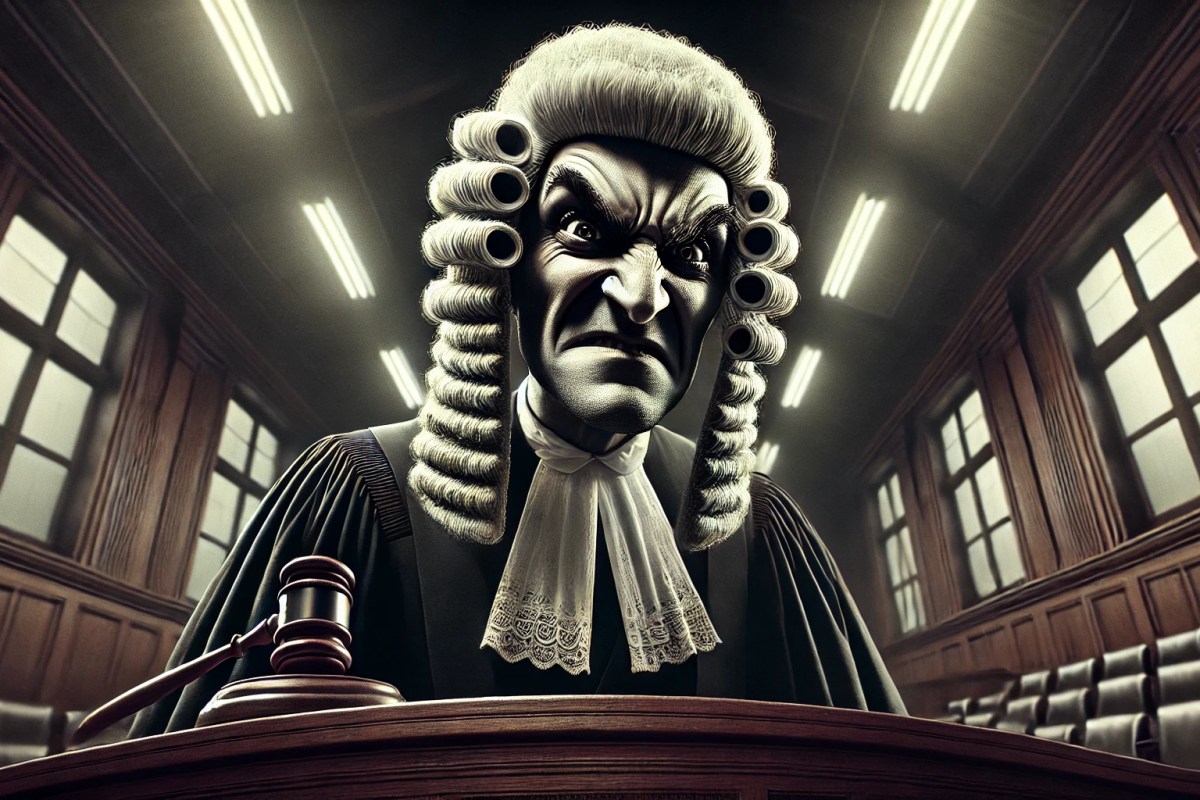
The opening anecdote—a true yet apocryphal gem—dates back to 2018, which is evidence of just how long I’ve been chewing on this idea. It involves a divorce court judge, a dose of linguistic ambiguity, and my ongoing scepticism about the utility of language in complex, interpretative domains.

At the time, my ex-wife’s lawyer was petitioning the court to restrict me from spending any money outside our marriage. This included a demand for recompense for any funds already spent. I was asked, point-blank: Had I given another woman a gift?

Seeking clarity, I asked the judge to define gift. The response was less than amused—a glare, a sneer, but no definition. Left to my own devices, I answered no, relying on my personal definition: something given with no expectation of return or favour. My reasoning, then as now, stemmed from a deep mistrust of altruism.

The court, however, didn’t share my philosophical detours. The injunction came down: I was not to spend any money outside the marital arrangement. Straightforward? Hardly. At the time, I was also in a rock band and often brought meals for the group. Was buying Chipotle for the band now prohibited?

The judge’s response dripped with disdain. Of course, that wasn’t the intent, they said, but the language of the injunction was deliberately broad—ambiguous enough to cover whatever they deemed inappropriate. The phrase don’t spend money on romantic interests would have sufficed, but clarity seemed to be a liability. Instead, the court opted for what I call the Justice Stewart Doctrine of Legal Ambiguity: I know it when I see it.

Unsurprisingly, the marriage ended. My ex-wife and I, however, remain close; our separation in 2018 was final, but our friendship persists. Discussing my book recently, I mentioned this story, and she told me something new: her lawyer had confided that the judge disliked me, finding me smug.

This little revelation cemented something I’d already suspected: power relations, in the Foucauldian sense, pervade even our most banal disputes. It’s why Foucault makes a cameo in the book alongside Nietzsche, Wittgenstein, Saussure, Derrida, Borges, and even Gödel.

This anecdote is just one straw on the poor camel’s back of my linguistic grievances, a life filled with moments where language’s insufficiency has revealed itself. And yet, I found few others voicing my position. Hence, a book.

I aim to self-publish in early 2025—get it off my chest and into the world. Maybe then I can stop wittering on about it. Or, more likely, I won’t.

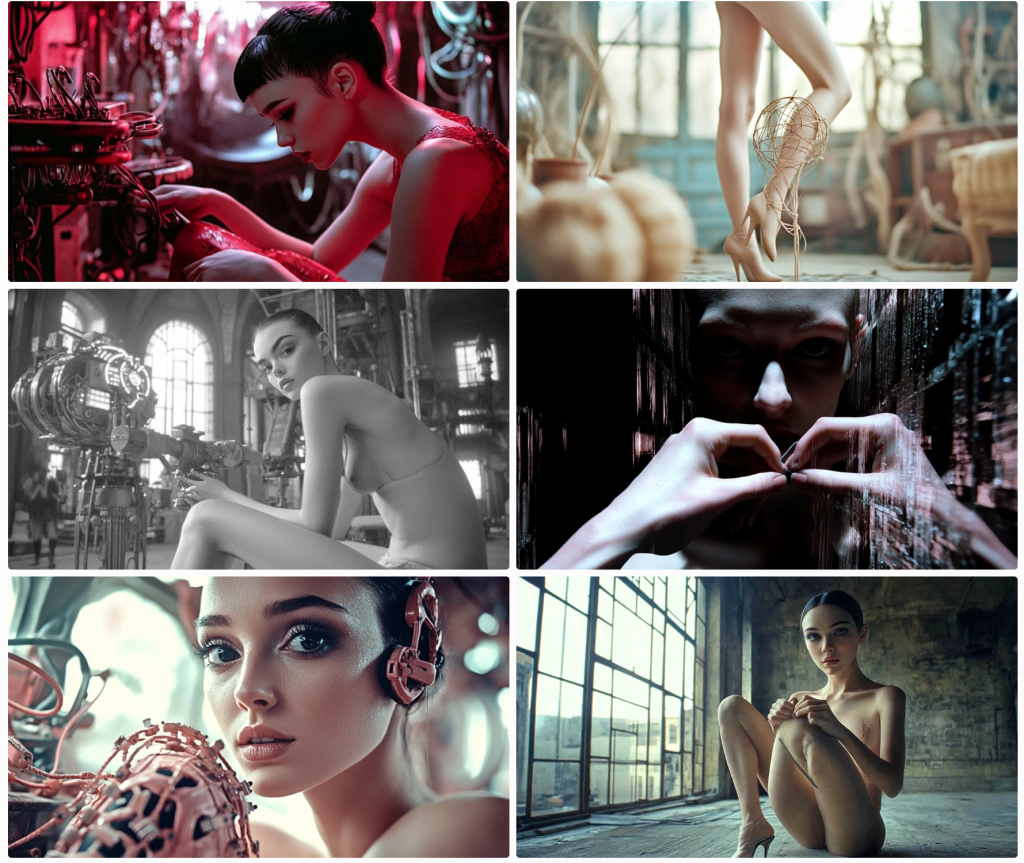
Tiny Dancer

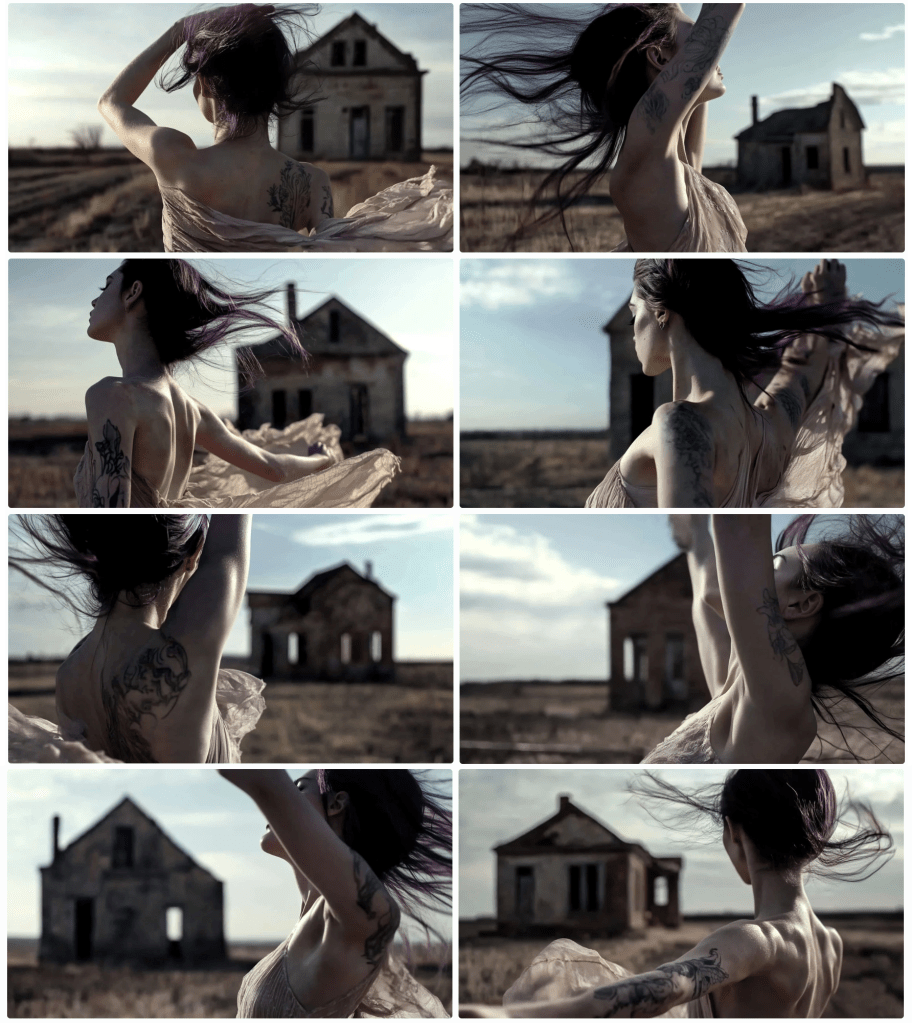
Continuing my short series, I recommenced asking for a dancer.

To be fair, I got some. It looks like sleeping/dead people crept in. The top left wasn’t at all what I was seeking, but I liked it and rendered a series.

It’s got a Steinbeck Grapes of Wrath-Oklahoma Dust Bowl vibe, and I love the muted colour tones, yet it still has warmth. Dancing isn’t working out ver well. What if I ask for a pirouette?

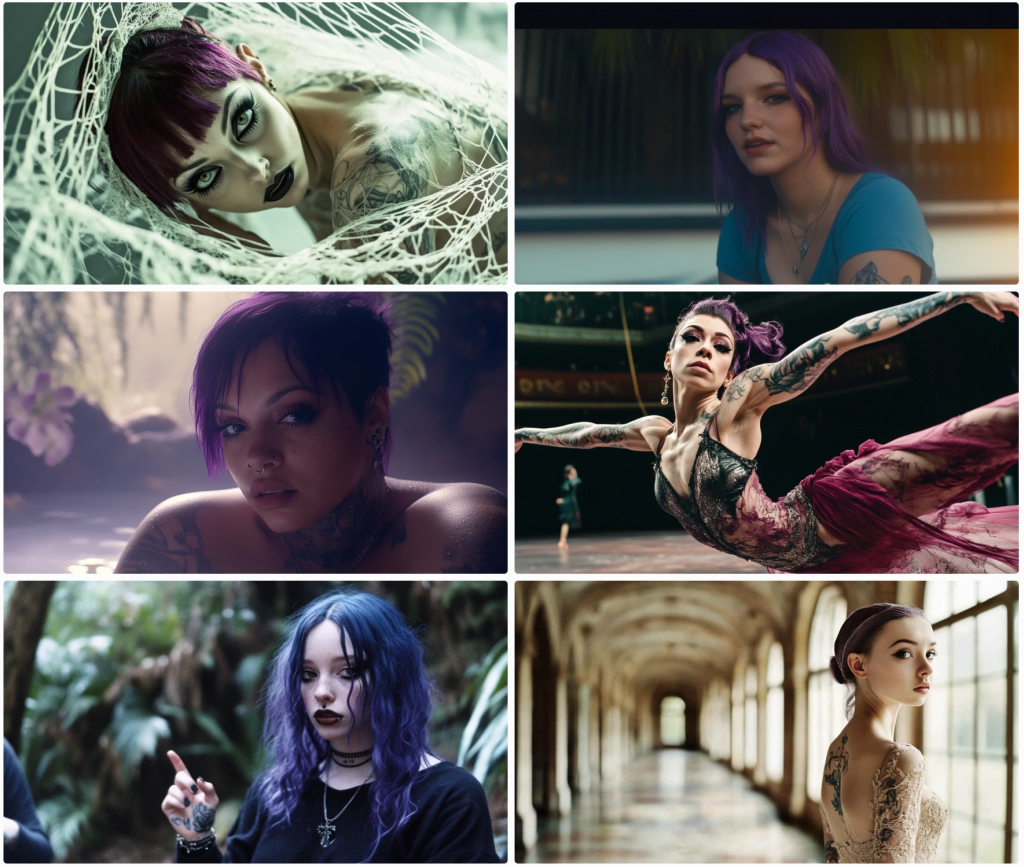
Not really. Cirque du Soleil as a keyphrase?

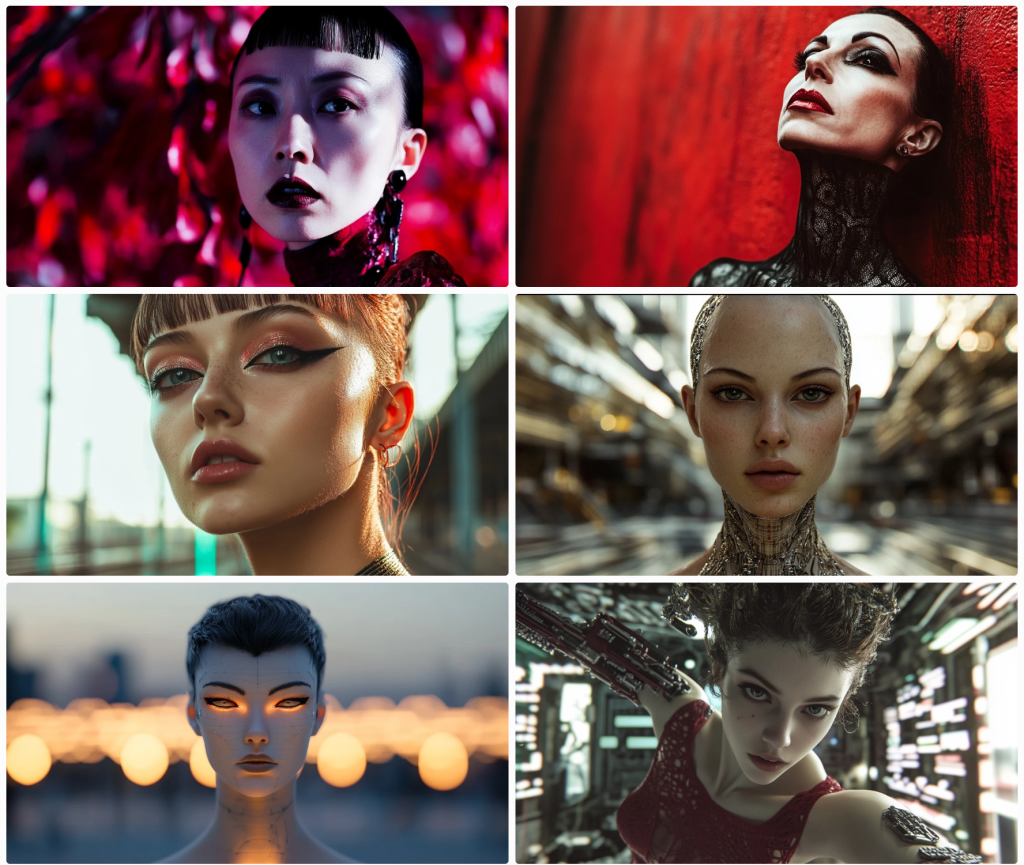
Ish. Cyborgs?

Meh. Why just faces? I guess these are cyborgs.

I want to see full bodies with feet. I’ll prompt Midjourney to have them tie their shoes.

Ya. About that… What the hell is that thing on the lower right? I got this. Once more…

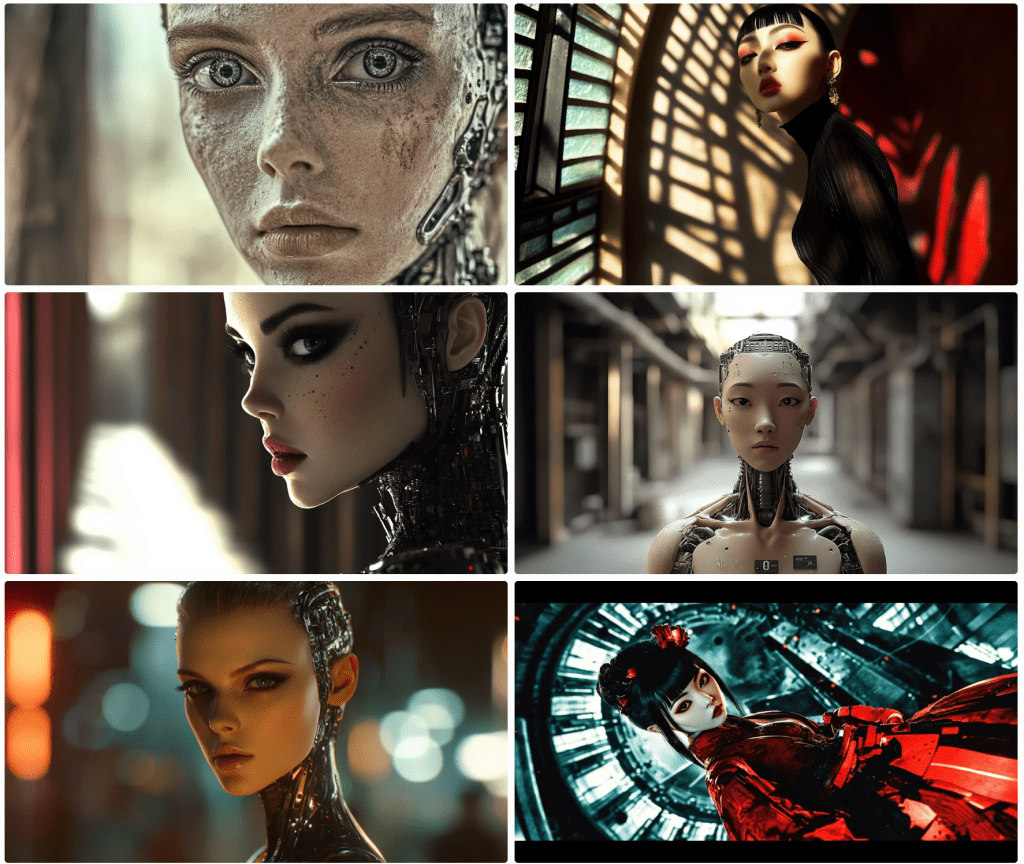
Nah, mate. Not so much. The top left is just in time for Hallowe’en. I guess that’s a cyborg and an animatronic skeleton. What if I change up the aspect ratio for these cyborgs?

Nah.

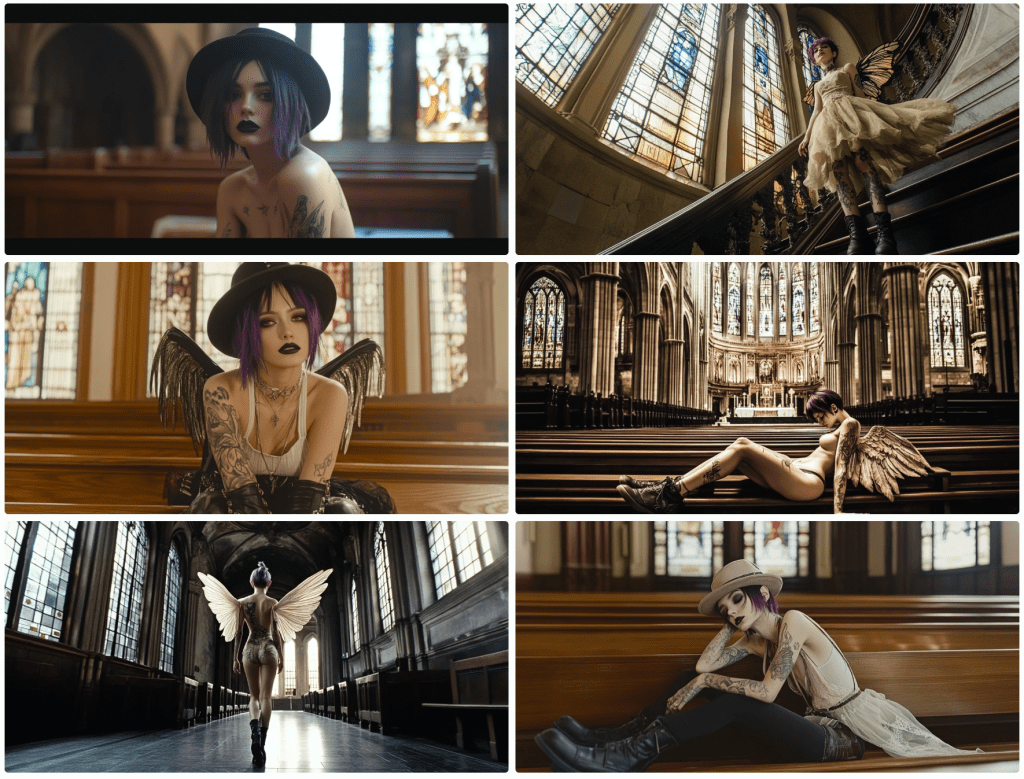
Take me to church

This next set is supposed to be a high-angle shot in a church.

Not really. Let’s keep trying. Why is the top-left woman wearing pants in church – sans trousers? How about we ask for a gown?

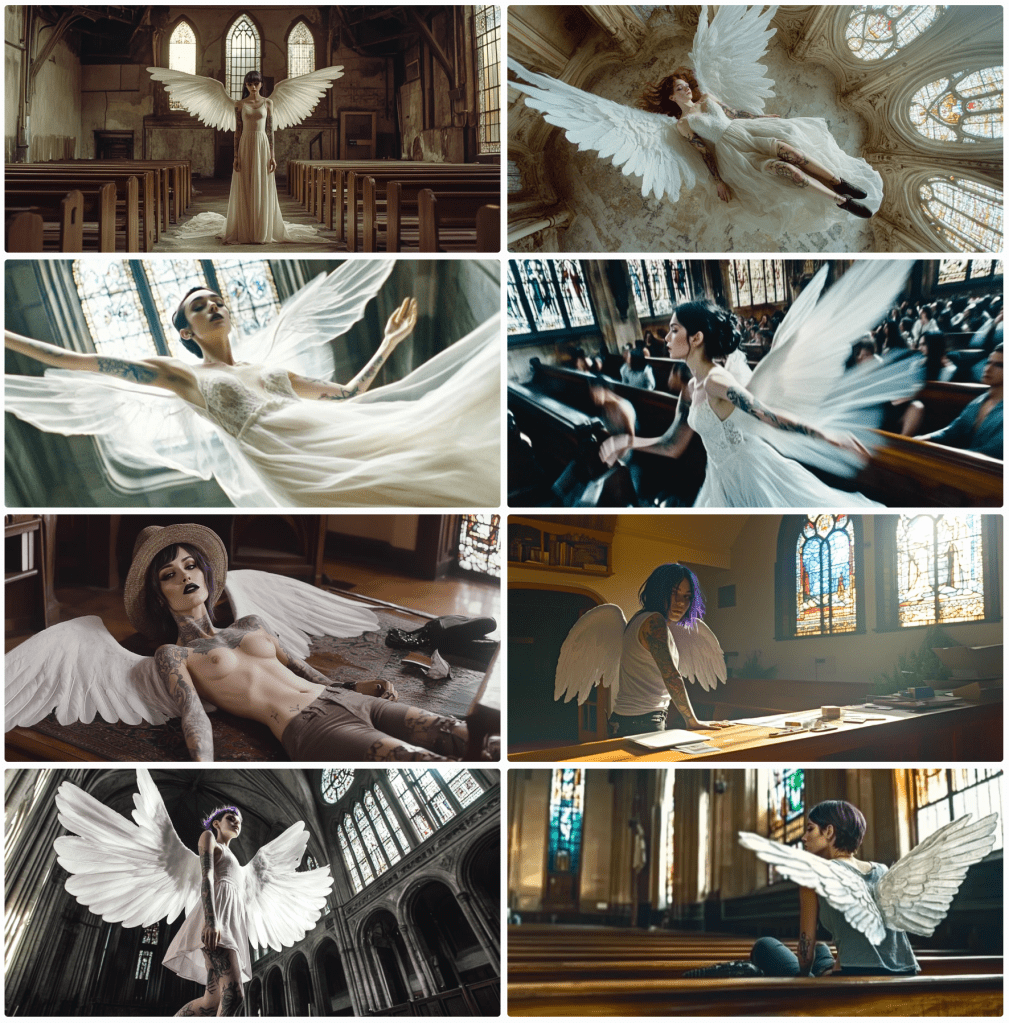
OK? Churches typically have good lighting opportunities. Let’s see some stained glass.

Nope. Didn’t quite understand the assignment. And what’s with the Jesus Christ pose? Church reminds me of angels. How about some wings?

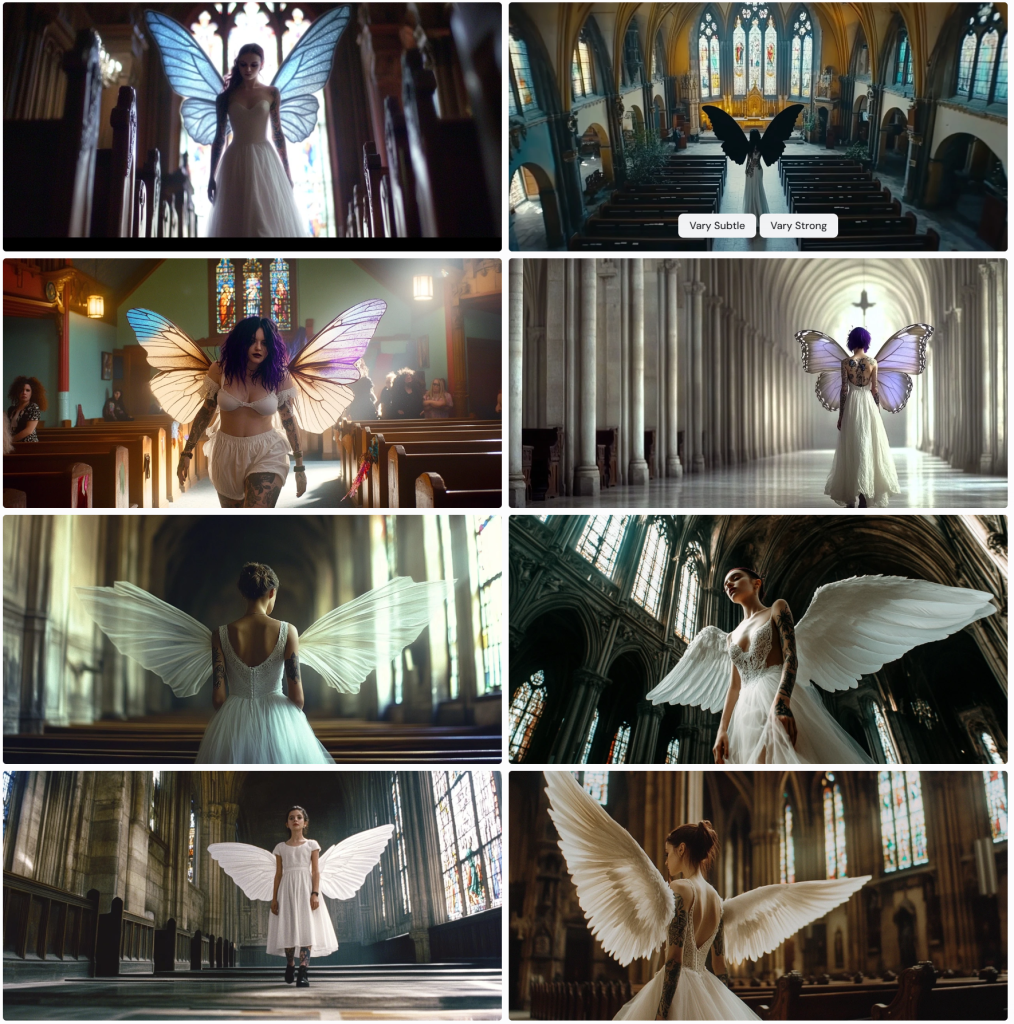
Not the most upbeat angels. Victoria’s Secret is on the lower left. I want white wings and stained glass. What sort of church is this anyway?

Butterfly wings on the lower right? More butterfly.

Why are some of these butterfly wings front- and side-loaded?

Anyway, let’s just call this a day and start thinking of another topic. Cheers.

Midjourney Cowgirls and Indians

Continuing on Midjourney themes, let’s talk cowgirls and American Indians. At least they know how US cowboys look – sort of.

Cowboy hats, boots, jeans (mostly), guns (modern cowboys. no revolvers in sight), gun belts, and topless in the desert – gotta work on that tan. Looks like the bottom left got thrown from her horse and has a bit of road rash going on. I did prompt for cowgirls, so I’m not sure about the block at the top left. He seems to need water.

Let’s inform Midjourney that we need revolvers, a Winchester, and horses to complete the vibe.

Wait, what? Is the woman on the lower left the missing centaur from the other day? And what’s with the low-riding woman in the middle right? I think the top left looks like a tattooed woman wearing a sheer top. Not sure.

Let’s see some gunfire.

Yep. These are authentic cowgirls, for sure. What else do they do in the Wild West – saloons, right?

Evidently, this place doesn’t have a no-shirts policy. I’m sure they’re barefoot as well. I asked for boots, but these girls rule the roost.

Let’s see if Midjourney allows drinking.

Maybe. Sort of. I did promise some Indians.

Midjourney seems to have a handle on the Indigenous American stereotype.

Can I get a cowgirl and a pirate in the same frame?

The answer is yes and no. To get two subjects you need to render one and in-paint the other. I didn’t feel like in-painting, so this is what I got. Only one image in the block has two people. I’m sussing them to be cowgirls rather than pirates. Some of these other models are just random people – neither cowgirl nor pirate. Let’s try again.

Ya, no. Fail. Let’s try some sumurais.

Nope. Not buying it. I see some Asian flair, but nah. Let’s try Ninjas instead. Everyone knows those tell-tale black ninja outfits.

Hmmm… I suppose not ‘everyone’. Geishas anyone?

Not horrible. Steampunk?

Man. Lightweight. Perhaps if we call out some specific gear…

Ya. Not feeling it. Any other stereotypes? How about a crystal ball soothsayer?

They seem to have the Gypsy thing down.

I end here. I’ve got dancers, church, angels, and demons. Let’s save them for tomorrow.

Midjourney Pirates

Thar be pirates. Midjourney 6.1 has better luck rendering pirates.

I find it very difficult to maintain composition. 5 of these images are mid shots whilst one is an obvious closeup. For those not in the know, Midjourney renders 4 images from each prompt. The images above were rendered from this prompt:

portrait, Realistic light and shadow, exquisite details,acrylic painting techniques, delicate faces, full body,In a magical movie, Girl pirate, wearing a pirate hat, short red hair, eye mask, waist belt sword, holding a long knife, standing in a fighting posture on the deck, with the sea of war behind her, Kodak Potra 400 with a Canon EOS R5

Notice that the individual elements requested aren’t in all of the renders. She’s not always wearing a hat; she does have red hair, but not always short; she doesn’t always have a knife or a sword; she’s missing an eye mask/patch. Attention to detail is pretty low. Notice, too, that not all look like camera shots. I like to one on the bottom left, but this looks more like a painting as an instruction notes.

In this set, I asked for a speech bubble that reads Arrr… for a post I’d written (on the letter R). On 3 of the 4 images, it included ‘Arrrr’ but not a speech bubble to be found. I ended up creating it and the text caption in PhotoShop. Generative image AI is getting better, but it’s still not ready for prime time. Notice that some are rendering as cartoons.

Some nice variations above. Notice below when it loses track of the period. This is common.

Top left, she’s (perhaps non-binary) topless; to the right, our pirate is a bit of a jester. Again, these are all supposed to be wide-angle shots, so not great.

The images above use the same prompt asking for a full-body view. Three are literal closeups.

Same prompt. Note that sexuality, nudity, violence, and other terms are flagged and not rendered. Also, notice that some of the images include nudity. This is a result of the training data. If I were to ask for, say, the pose on the lower right, the request would be denied. More on this later.

In the block above, I am trying to get the model to face the camera. I am asking for the hat and boots to be in the frame to try to force a full-body shot. The results speak for themselves. One wears a hat; two wear boots. Notice the shift of some images to black & white. This was not a request.

In the block above, I prompted for the pirate to brush her hair. What you see is what I got. Then I asked for tarot cards.

I got some…sort of. I didn’t know strip-tarot was actually a game.

Next, I wanted to see some duelling with swords. These are pirates after all.

This may not turn into the next action blockbuster. Fighting is against the terms and conditions, so I worked around the restrictions the best I could, the results of which you may see above.

Some pirates used guns, right?

Right? I asked for pistols. Close enough.

Since Midjourney wasn’t so keen on wide shots, I opted for some closeups.

This set came out pretty good. It even rendered some pirates in the background a tad out of focus as one might expect. This next set isn’t too shabby either.

And pirates use spyglasses, right?

Sure they do. There’s even a pirate flag of sorts on the lower right.

What happens when you ask for a dash of steampunk? I’m glad you asked.

Save for the bloke at the top right, I don’t suppose you’d have even noticed.

Almost to the end of the pirates. I’m not sure what happened here.

In the block above, Midjourney added a pirate partner and removed the ship. Notice again the nudity. If I ask for this, it will be denied. Moreover, regard this response.

To translate, this is saying that what I prompted was OK, but that the resulting image would violate community guidelines. Why can’t it take corrective actions before rendering? You tell me. Why it doesn’t block the above renders is beyond me – not that I care that they don’t.

This last one used the same prompt except I swapped out the camera and film instruction with the style of Banksy.

I don’t see his style at all, but I came across like Jaquie Sparrow. In the end, you never know quite what you’ll end up with. When you see awesome AI output, it may have taken dozens or hundreds of renders. This is what I wanted to share what might end up on the cutting room floor.

I thought I was going to go through pirates and cowboys, but this is getting long. if you like cowgirls, come back tomorrow. And, no, this is not where this channel is going, but the language of AI is an interest of mine. In a way, this illustrates the insufficiency of language.

Putting the Mid in Midjourney

I use generative AI often, perhaps daily. I spend most of my attention on textual application, but I use image generations, too—with less than spectacular results. Many of the cover images for the articles I post here are Dall-E renders. Typically, I feed it an article and ask for an apt image. As you can see, results vary and they are rarely stellar because I don’t want to spend time getting them right. Close enough for the government, as they say.

Midjourney produces much better results, but you need to tell it exactly what you want. I can’t simply upload a story and prompt it to figure it out. I’ve been playing with Midjourney for a few hours recently, and I decided to share my horror stories. Although it has rendered some awesome artwork, I want to focus on the other side of the spectrum. Some of this is not safe for work (NSFW), and some isn’t safe for reality more generally. I started with a pirate motif, moved to cowgirls, Samuris and Ninjas, Angels and Demons, and I’m not sure quite what else, but I ended up with Centaurs and Satyrs – or did I?

It seems that Midjourney (at least as of version 6.1) doesn’t know much about centaurs and satyrs, but what it does know is rather revealing. This was my first pass:

Notice, there’s not a centaur in sight, so I slowly trimmed my prompt down. I tried again. I wanted a female centaur, so I kept going.

So, not yet. It even slipped in a male’s face. Clearly, not vibing. Let’s continue.

Trimming a bit further, it seems to understand that centaurs have a connexion to horses. Unfortunately, it understands the classes of humans and horses, but it needs to merge them just so. Let’s keep going. This time, I only entered the word ‘centaur’. Can’t get any easier.

It seems I got an angel riding a horse or a woman riding a pegasus. You decide. A bull – a bit off the mark,. A woman riding a horse with either a horn or a big ear. And somewhat of a statue of a horse. Not great. And I wanted a ‘female centaur’, so let’s try this combination.

Yeah, not so much. I’m not sure what that woman holding bows in each hand is. There’s some type of unicorn or duocorn. I don’t know. Interesting, but off-topic. Another odd unicorn-horse thing. And a statue of a woman riding a horse.

Satyrs

Let’s try satyrs. Surely Midjourney’s just having an off day. On the upside, it seems to be more familiar with these goat hybrids, but not exactly.

What the hell was its training data? Let’s try again.

Not so much. We have a woman dancing with Baphomet or some such. Um, again?

We don’t seem to be going in the right direction. I’m not sure what’s happening. Forging ahead…

On the plus side, I’m starting to see goats.

There’s even a goat lady montage thing that’s cool in its own right, but not exactly what I ordered. Let’s get back to basic with a single-word prompt: Satyr.

Well, -ish. I forgot to prompt for a female satyr.

Ya, well. This is as good as we’re getting. Let’s call it a day, and see how the more humanoid creatures render.

Midjourney Alpha

Many of my readers know that I use AI often. I have been using it to create content for an in-depth book review for The Blind Owl. For those less aware of the foibles of generative AI, I share some insights—or low-lights. For this, I used Midjourney v6.1.

Prompt: a young woman gives a flower to an old man, who is crouched under a large cypress tree by a river

I issued this prompt, and as per usual, it rendered four options. Notice that in some instances, the tree is not a key element.

Given enough time, one can slowly improve to obtain the desired result.

Here, an old man indeed crouches under a prominent cypress tree and by a river. A young woman hands him some flowers—though not so much blue morning glories. On balance, I like this output, but it still needs work.

Some other problems:

  1. The man is looking away—neither at her nor her flowers.
  2. Her (right) eye is deformed.
  3. Her left hand is deformed.
  4. I didn’t ask for jewellery—an earring.

At least I can in-paint out these imperfections—perhaps.

Here’s another render using the same image prompt.

Notice that it ignored the man altogether. My point is that for every awesome image you see, there may have been hundreds of iterations to get there. There are ways to get persistent characters and scenes, but this takes a bit of up-from effort and iterations that one can leverage going forward.

On the topic of Midjourney model 6.0 versus 6.1, I share this comparison—front-facing faces for a character sheet for this old man. Here, I prefer the earlier model as displayed in the top row.

In some cases, there are minor improvements over v6.0. In other cases, they stepped back. v6.1 renders less realistic human images, making them look more computer-generated and less natural. It also over-applies sexual stereotypes, traditional beauty archetypes, smoother skin, and so on. But that’s not the main topic for today.

DISCLAIMER: This post has little to do with philosophy, but it ties into a philosophical novella.

AI is Science Fiction

In the heart of the digital age, a Chinese professor’s AI-authored Science Fiction novel snags a national award, stirring a pot that’s been simmering on the back burner of the tech world. This ain’t your run-of-the-mill Sci-Fi plot—it’s reality, and it’s got tongues wagging and keyboards clacking. Here’s the lowdown on what’s shaking up the scene.

AI Lacks Originality? Think Again

The rap on AI is it’s a copycat, lacking the spark of human creativity. But let’s not kid ourselves—originality is as elusive as a clear day in London. Originality is another weasel word. Everything’s a remix, a mashup of what’s been before. We’ve all been drinking from the same cultural well, so to speak. Humans might be grand at self-deception, thinking they’re the cat’s pyjamas in the creativity department. But throw them in a blind test with AI, and watch them scratch their heads, unable to tell man from machine. It’s like AI’s mixing up a cocktail of words, structures, themes—you name it—and serving up a concoction that’s surprisingly palatable. And this isn’t the first time, not long ago, an AI-created artwork won as best submission at a state fair. In some cases, they are seeking AI-generated submissions; other times, not so much.

AI and the Art Debate

So, AI can’t whip up human-level art? That’s the chatter, but it’s about as meaningful as arguing over your favourite colour. Art’s a slippery fish—try defining it, and you’ll end up with more questions than answers. It’s one of those terms that’s become so bloated, it’s lost its punch. To some, it’s a sunset; to others, it’s a can of soup. So when AI throws its hat in the ring, it’s not just competing—it’s redefining the game.

The Peer Review Question Mark

Here’s where it gets spicy. The book bagging a national award isn’t just a pat on the back for the AI—it’s a side-eye at the whole peer review shindig. It’s like when your mate says they know a great place to eat, and it turns out to be just okay. The peer review process, much like reviewing a book for a prestigious award, is supposed to be the gold standard, right? But this AI-authored book slipping through the cracks and coming out tops? It’s got folks wondering if the process is more smoke and mirrors than we thought.


What’s Next?

So, where does this leave us? Grappling with the idea that maybe, just maybe, AI’s not playing second fiddle in the creativity orchestra. It’s a wake-up call, a reminder that what we thought was exclusively ours—creativity, art, originality—might just be a shared space. AI’s not just imitating life; it’s becoming an intrinsic part of the narrative. Science fiction? More like science fact.

The next chapter’s unwritten, and who knows? Maybe it’ll be penned by an AI, with a human sitting back, marvelling at the twist in the tale.