What a relief. After trudging through a couple of so-called ‘popular’ books, it’s refreshing to read something that actually reflects the complexity of reality.
The first essay in Slavoj Žižek’s Against Progress is titled Progress and Its Vicissitudes. It opens with a nod to the opening scene of The Prestige, directed by Christopher Nolan. But Žižek, as always, takes it further. He unearths something far more sinister in the magician’s sleight of hand—something unsettlingly perceptible to the young girl who witnesses the trick.
Life isn’t always what it seems on the surface. It isn’t as neat or digestible as our perceptions make it out to be. Žižek embarks on a scathing critique of the concept of progress, dismantling its conventional interpretations and exposing the often-overlooked consequences that lurk beneath its glossy exterior. He unravels the paradoxes and failures inherent in the notion of progress, urging readers to rethink their blind faith in the idea of a linear march towards a utopian future.
Defining ‘progress,’ he argues, is akin to laying claim to the future. But whose future? And at what cost? He interrogates the competing visions that shape human possibility, questioning whether, in the face of our cascading ecological, social, and political crises, things can actually improve—and what ‘better’ even means. He skewers various ideologies—neoliberalism, populism, and the self-improvement industrial complex—for their roles in manipulating and distorting the very concept of progress.
From a postmodernist perspective, Žižek’s analysis aligns with the scepticism towards grand narratives and universal truths that define postmodern thought. He deconstructs the monolithic idea of progress, revealing it as a construct that conveniently conceals underlying power structures and exclusions. By exposing the ‘squashed dead birds’—the inevitable collateral damage of progress—he underscores just how arbitrary and manufactured our notions of advancement really are.
Moreover, Žižek’s critique echoes the postmodernist fixation on desire, denial, and disavowal. He examines how different visions of progress systematically exclude or sacrifice certain elements and how these dynamics manifest across cultural phenomena, from Hollywood blockbusters to decolonisation movements. His analysis reinforces the postmodernist conviction that meanings are never fixed—they are fluid, contested, and often riddled with contradiction.
In the end, Against Progress is not just a critique—it’s an invitation. An invitation to abandon the comforting illusion of an inevitable march towards something better and to face the messy, contingent reality of human existence head-on.
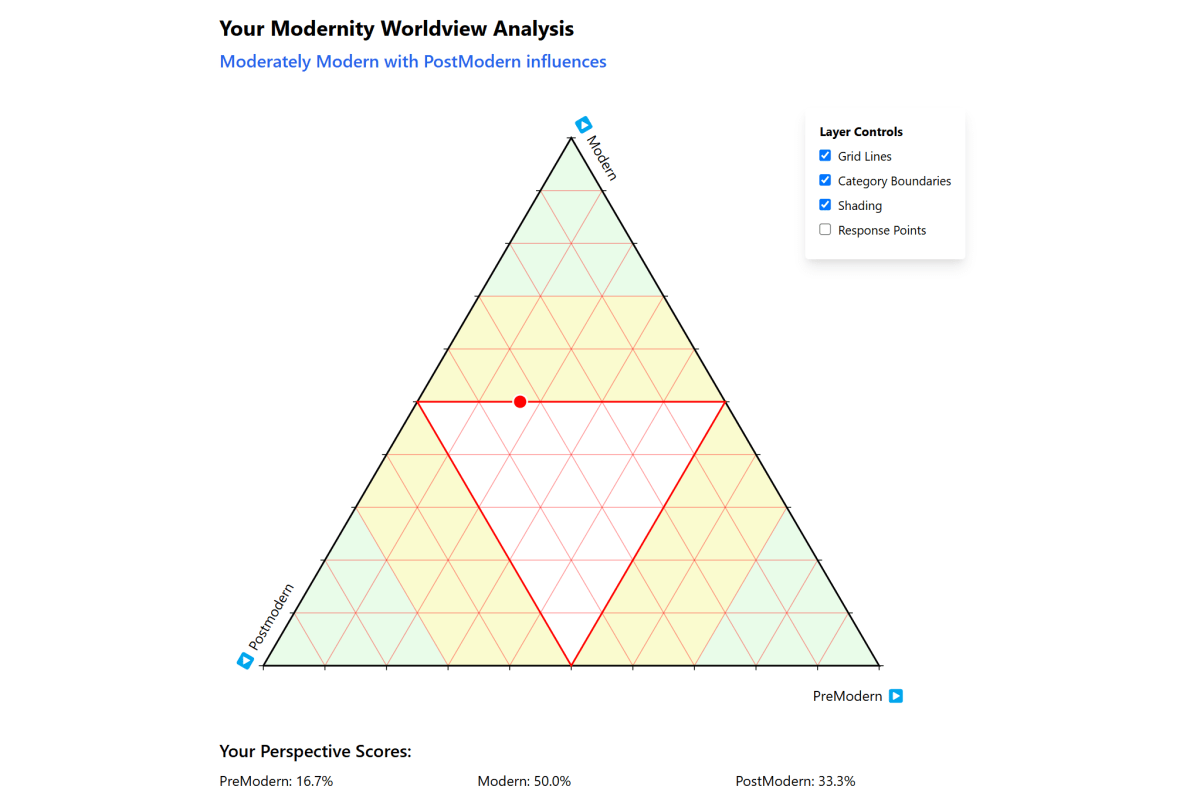
This post explains how to interpret the ternary plot chart’s visualisation. The ternary chart on the survey results page will render something like this. This is an admin page with additional functionality, but it’s similar enough. The blue dot represents the average of all responses. The star represents where I guessed the average would land–mostly modern with some residual premodernity and a touch of postmodernity.
Under the title in the header is a textual assessment of the visualisation. In this case, the response illustrates someone moderately modern with postmodern influences. Although this person also has some premodern tendencies, they are relatively insignificant to the context.
The three possible worldviews are at the vertices (the corners) of the triangle. Each side is a scale progressing from 0% to 100%—100% coincident with the label. For example, the bottom side runs from 0 on the left to 100 on the right, which would indicate a score of 100 per cent Premodern, which the output deems Pure Premodern.
Notice that each vertex has green and yellow shading that serves as visual aids representing the strength of the relationship to the corner. Green is strong, and yellow is moderate. The white section outlined by an interior triangle with a red border is decidedly mixed, showing no strong inclination to any of the extremes.
In the example above, the red plot point illustrates a response (as shown below the chart) that is 20.7% Premodern, 52.1% Modern, and 27.2% Postmodern. These numbers should always sum to 100, though there will be some drift due to rounding. The star represents where I thought the average response would be. Follow the tickmarks on each side, and you’ll notice they correspond with the plot point as a 3-tuple (20, 70, 10).
In the future, I expect to render a view that plots the average survey response as a reference.
Below this chart is an expository account of the response choices. You can render this content as a PDF for your personal archive.
Final Word
If you have any questions or suggestions related to this topic, please feel free to leave them in the comments below.
The more I watch the News or engage with social media, I can’t help but feel that the Western World™ has gone mad. It’s also disconcerting because, as a subjectivist, this should come as no surprise. I guess I miss the days when it was better wrapped in relativism. Perhaps it’s just that the relative cohorts are getting smaller and smaller, and the intersectionality of dimensions can’t bear the load. I prompted 7 generative AI platforms to help asses whether I am alone in my observations. I present the responses unedited, identifying each with a header.
Audio: NotebookLM podcast of this content.
Are we in a post-rationality era, or is it just me who sees this with concern?
ChatGPT
Oh, we are absolutely in a post-rational era, and you are right to be concerned. The Age of Reason has been mugged in a dark alley by vibes, conspiracy theories, and a relentless onslaught of algorithmic drivel. Facts? Mere inconveniences. Logic? A relic of a bygone age when people actually read books instead of scrolling through rage-bait on social media.
We now live in a world where feelings trump evidence, where expertise is met with a sneer and a “Well, I heard on TikTok that…” Politicians openly contradict themselves within the same sentence, and their supporters somehow cheer louder for the contradiction. Science? Only if it aligns with pre-existing beliefs. Critical thinking? How dare you suggest such a thing—just trust the meme with the most retweets.
But hey, maybe this is just the inevitable entropy of civilization. Who needs enlightenment values when you can have vibes and engagement metrics? Buckle up—it’s only going to get weirder.
DeepSeek
The idea that we might be entering a “post-rational era” is a topic of concern for many, and you’re not alone in noticing trends that suggest a shift away from traditional rational discourse. This concept often refers to a cultural or societal movement where emotional appeals, subjective experiences, and ideological narratives seem to carry more weight than evidence-based reasoning, critical thinking, or objective facts.
Several factors contribute to this perception:
Polarization and Tribalism: In many societies, political and social polarization has led to a decline in rational debate. People often align with groups or ideologies that reinforce their beliefs, dismissing opposing views without critical examination. This tribal mindset can override rational discourse.
Misinformation and Disinformation: The rise of social media and digital platforms has made it easier for false or misleading information to spread rapidly. Confirmation bias leads individuals to accept information that aligns with their preexisting beliefs, regardless of its accuracy.
Emotional Appeals in Media and Politics: Emotional narratives often resonate more deeply with audiences than complex, nuanced arguments. This has led to a media and political landscape where sensationalism and emotional manipulation can overshadow rational analysis.
Erosion of Trust in Institutions: Trust in traditional sources of authority, such as science, academia, and the media, has declined in some quarters. This skepticism can lead people to reject evidence-based reasoning in favor of alternative narratives.
Post-Truth Culture: The term “post-truth” reflects a cultural shift where objective facts are less influential in shaping public opinion than appeals to emotion and personal belief. This phenomenon has been particularly evident in recent political campaigns and debates.
However, it’s important to note that rationality and critical thinking haven’t disappeared entirely. Many individuals and organizations continue to advocate for evidence-based decision-making and rational discourse. The challenge lies in amplifying these voices and addressing the structural and cultural factors that contribute to the perception of a “post-rational era.”
If you’re concerned about this trend, you’re not alone. Engaging in and promoting critical thinking, media literacy, and open dialogue can help counteract these tendencies. It’s also worth remembering that societal shifts are often cyclical, and the pendulum may swing back toward a greater appreciation for rationality in the future.
Meta AI
You’re not alone in your concern. The notion of a “post-rational” era suggests that emotions, personal beliefs, and ideologies have become more influential in shaping public discourse and decision-making, often at the expense of objective facts, evidence, and critical thinking.
Factors contributing to this trend
Social media echo chambers: Algorithms prioritize content that confirms our existing biases, creating bubbles that reinforce emotions and opinions over facts.
Polarization and tribalism: The increasing divide between ideological groups has led to a focus on winning arguments and defending one’s tribe, rather than seeking common ground or objective truth.
Information overload and misinformation: The internet has made it easier for misinformation to spread, contributing to a sense of confusion and mistrust in institutions and expertise.
Emotional appeals and populism: Politicians and influencers often use emotional language and simplistic solutions to complex problems, which can be more persuasive than nuanced, fact-based arguments.
Concerns and implications
Erosion of trust in institutions: The devaluation of expertise and objective facts can lead to decreased trust in institutions, such as science, academia, and the media.
Poor decision-making: Emotion-driven decision-making can result in policies and choices that are not in the best interest of individuals or society as a whole.
Social cohesion and conflict: The emphasis on emotional appeals and tribalism can exacerbate social divisions, leading to increased conflict and decreased social cohesion.
What can be done?
Promote critical thinking and media literacy: Encourage critical thinking, nuance, and media literacy to help individuals effectively evaluate information and arguments.
Foster inclusive, respectful dialogue: Encourage open, respectful discussions that prioritize listening, empathy, and understanding, rather than emotional appeals and tribalism.
Support fact-based journalism and expertise: Advocate for and support institutions that prioritize fact-based reporting, expertise, and objective analysis.
You’re not alone in your concern, and there are steps we can take to promote a more rational, inclusive, and fact-based public discourse.
Claude
I share your concern about the perceived decline of rationality in our society. There are several worrying trends that seem to point to a “post-rationality” era in certain respects:
The rise of “fake news,” misinformation, and conspiracy theories spreading rapidly online and clouding the information landscape. It has become harder to distinguish fact from fiction.
Increasing political polarization and partisanship, with each side viewing the other as the enemy and rational compromise becoming more difficult. Emotion and tribalism often trump facts.
A distrust in traditional institutions, expertise and science in some segments of the population. Authority of experts is questioned and fringe theories gain traction.
“Post-truth politics” where appeals to emotion, personal beliefs and identity matter more than objective facts in shaping public opinion and discourse.
Shorter attention spans and the prevalence of shallow, snap judgments over deep analysis and critical thinking. Sensationalism is incentivized.
Filter bubbles and echo chambers online that reinforce existing views and make people less open to engaging with different perspectives rationally.
At the same time, I don’t think rationality is dead. Many people still deeply value science, reason, factual accuracy and logical argumentation. But these forces of anti-rationality have grown stronger recently.
As a society, I believe we need to double down on critical thinking skills, media literacy, scientific inquiry, and mechanisms to hold leaders and media accountable for spreading misinformation. Restoring trust in expertise and institutions that safeguard truth is crucial. We must make rational discourse “cool” again across partisan lines.
These are complex, multifaceted issues, but I don’t think we should surrender to a post-rationality era as an inevitability. Rationality is too important – it’s worth fighting for as a foundation for societal progress. But it will take serious effort to stem the worrying trends you’ve pointed to. I share your concerns on this front.
Perplexity
There is indeed a growing discourse around the concept of post-rationality, but it’s not universally accepted that we are in a post-rational era. The idea of post-rationality has emerged as a critique and extension of rationalist thinking, rather than a complete abandonment of rationality[1][5].
Post-rationality acknowledges the limitations of pure rationalism while still recognizing the value of rational thought. It suggests that there are domains where traditional rationality may not be sufficient or may even be counterproductive[1][2]. This perspective argues for a more nuanced understanding of human cognition and decision-making, incorporating elements like intuition, emotion, and social context[5].
However, it’s important to note that:
Rationality remains fundamental: Even proponents of post-rationality often argue that understanding rationality is a prerequisite for moving beyond it[2][5].
Ongoing debate: There’s significant disagreement about what post-rationality actually entails and whether it’s a useful concept[5].
Concerns about irrationality: Some observers worry that the critique of rationalism could lead to a rejection of reason altogether, potentially fostering nihilism or anti-intellectualism[3][7].
Your concern is not unfounded. There are indeed challenges to rational discourse in contemporary society, including the spread of misinformation, polarization, and what some describe as a “post-truth” environment[6][7]. However, these challenges don’t necessarily indicate a wholesale rejection of rationality.
Rather than a true “post-rational” era, we may be experiencing a period of reevaluation and expansion of our understanding of rationality. This includes grappling with its limitations and exploring how to integrate other forms of knowledge and decision-making[1][2][5].
You’re certainly not alone in your concern. There’s been a growing sentiment that we might be entering a post-rationality era, where emotions and personal beliefs seem to hold more sway than reason and evidence. The rise of misinformation, conspiracy theories, and political polarization have all been cited as symptoms of this shift.
It’s a complex issue with lots of factors at play. Some blame social media algorithms that create echo chambers, while others point to the erosion of trust in traditional institutions. But there’s no single, simple answer.
Why do you think we might be in a post-rationality era?
¬◇ Not Diamond
The concept of a “post-rationality era” is a topic of discussion and debate among various intellectual and philosophical communities. Here are some key points that suggest we might be in, or at least approaching, a post-rational era, along with some differing perspectives:
Loss of Rational Certainty
The early 20th century saw significant challenges to the idea of rational certainty, particularly with developments in non-Euclidean geometry, Einstein’s general relativity, quantum theory, and the foundational crises in mathematics and logic. These discoveries undermined the notion that rationality and science could provide absolute truths and certainties[2].
Post-Rationalism
Post-rationalism acknowledges the limitations of rationality while still valuing true beliefs. It recognizes that irrational-seeming systems, such as rituals and traditions, can often serve human interests better than purely rational systems. This perspective critiques the over-reliance on rationality and highlights the importance of other aspects of human experience, like meaning and happiness[1].
Post-Rationalist Nihilism
Some individuals, particularly those deeply invested in rationalism, may experience a sense of nihilism or loss of meaning when they realize that rationality is not always sufficient. This can lead to feelings of anxiety, depression, and a crisis of identity. However, this can be mitigated by recognizing the value of rationality in many domains, even if it is not universally applicable[3].
Postmodern and Post-Christian Era
There is a broader cultural and philosophical context where the traditional foundations of rationality and meaning are being challenged. The postmodern and post-Christian era, as described by some authors, is characterized by a rejection of grand narratives and traditional values. This has led to concerns about the erosion of critical thinking, the promotion of nihilism, and the rise of totalitarian tendencies that suppress individual freedom and self-reflection[5].
Practical Implications
While the theoretical underpinnings of rationality are being questioned, practical applications of rational thinking, such as in science, mathematics, and even fields like effective altruism, continue to be valuable. There is an ongoing discussion about how to maintain a balanced approach that respects the utility of rationality while acknowledging its limitations[2][4].
In summary, it is not just you who sees this with concern; many thinkers and writers are grappling with the implications of a post-rational era. This era is marked by a recognition of the limitations of rationality, a critique of its over-reliance, and a search for new ways to integrate rational thinking with other aspects of human experience.
NB: Interestingly, these ¬◇ footnotes don’t ink to anyplace.
I’ve been reading too much lately—as if such a state could exist. I have partially constructed posts anchored in other books, yet here I am, leapfrogging to this one.
I purchased Capitalist Realism by Mark Fisher perhaps a decade or more ago, but it simply languished among other prospects on the shelf—not to mention the accumulation of eBooks on my hard drive and in the cloud.
Capitalist Realism is a book I should have read back in the day, and yet, reading it now feels oddly refreshing. The revised version I’m engaging with, published in 2022, includes a preface that attempts to reassure readers that, while the book may not seem as impactful as it did in 2009, much has been done to mitigate the conditions that spawned it. I’ll argue, however, that these conditions remain firmly in place and that the author of the front matter fails to grasp the full implications of the text. Of course, the author is dead. Literally.
In many ways, Capitalist Realism is a distillation of my own intellectual influences, from Žižek to Lacan, Baudrillard and Badiou to Foucault, Deleuze, and Guattari—even Kafka. For me, this base is welcoming—comforting. Perhaps I am the choir who Fisher is preaching to.
The earliest chapters paint capitalism not only as insidious and predacious but also as self-reinforcing. Michael Moore once observed that capitalists would sell the very rope used to hang them. But capitalism runs deeper than this. Even anti-capitalist sentiment is capitalized and commodified. Conscientious individuals can “win” if they simply buy the right brands and donate to the right causes.
A Brief, Brutal Experiment in Categorising Your Worldview
This month, I’ve been tinkering with a little project—an elegant, six-question survey designed to assess where you land in the great intellectual mess that is modernity.
Audio: Podcast discussion about this post.
This isn’t some spur-of-the-moment quiz cooked up in a caffeine-fueled haze. No, this project has been simmering for years, and after much consideration (and occasional disdain), I’ve crafted a set of questions and response options that, I believe, encapsulate the prevailing worldviews of our time.
It all began with Metamodernism, a term that, at first, seemed promising—a bold synthesis of Modernism and Postmodernism, a grand dialectic of the ages. But as I mapped it out, it collapsed under scrutiny. A footnote in the margins of intellectual history, at best. I’ll expand on that in due course.
The Setup: A Simple, Slightly Sadistic Ternary Plot
For the visually inclined (or the masochistically curious), I initially imagined a timeline, then a branching decision tree, then a Cartesian plane before landing on a ternary plot—a three-way visual that captures ideological leanings in a way a boring old bar chart never could.
The survey itself is brief: six questions, each with five possible answers. Submit your responses, and voilà—you get a tidy little ternary chart plotting your intellectual essence, along with a breakdown of what your answers signify.
Methodology: Half-Rigorous, Half-Reckless
I am, after all, a (recovering) statistician, so I’ve tried to uphold proper methodology while also fast-tracking certain safeguards for the sake of efficiency. If there’s enough interest, I may expand the survey, adding more questions or increasing response flexibility (tick boxes instead of radio buttons—revolutionary, I know).
Privacy Concerns? Relax. I’m not harvesting your data for some nefarious scheme. No personally identifiable information is collected—just a timestamp, session ID, and your browser’s language setting. I did consider tracking IP addresses to analyze regional trends but ultimately scrapped that idea.
In the future, I may add an optional email feature for those who wish to save and track their responses over time (assuming anyone is unhinged enough to take this more than once).
The Rest of the Story: Your Feedback, My Amusement
Since this is a personal project crafted in splendid isolation, I’d love to hear your thoughts. Are the questions reasonable? Do the response options make sense? Does the summary feel accurate? Is the ternary chart decipherable, or have I constructed a glorified inkblot test?
As an academic, economist, and statistician, I had never encountered a ternary chart before embarking on this, and now I rather enjoy it. That said, I also find Nietzsche “intuitive,” so take that as you will.
If this gains traction, expect follow-up content—perhaps videos, podcasts, or further written explorations.
Your Move
Take the survey. It’s painless, requiring mere minutes of your life (which is, let’s be honest, already wasted online). And because I’m feeling generous, you can even generate a PDF to stick on your fridge, next to your collection of expired coupons and disappointing takeout menus.
Let’s see where you stand in the grand, chaotic landscape of modernity. Or at least, let’s have a laugh trying to make sense of it.
DISCLAIMER: The Modernity Worldview Survey is not scientific. It is designed as an experiment to provide directional insights. It is hosted on Google Cloud and subject to its availability and performance limitations.
As the clock ticks us into 2025, a peculiar tale has surfaced in the blogosphere: a dark twist on the classic fable of the “wolf in sheep’s clothing,” served with a side of nihilistic absurdity. If you haven’t read it yet, you can find the original story over at Blog for Chumps. It’s a biting little narrative that turns traditional moralising on its head. Here’s why it deserves your attention.
Audio: NotebookLM Podcast on this topic.
The Tale in Brief
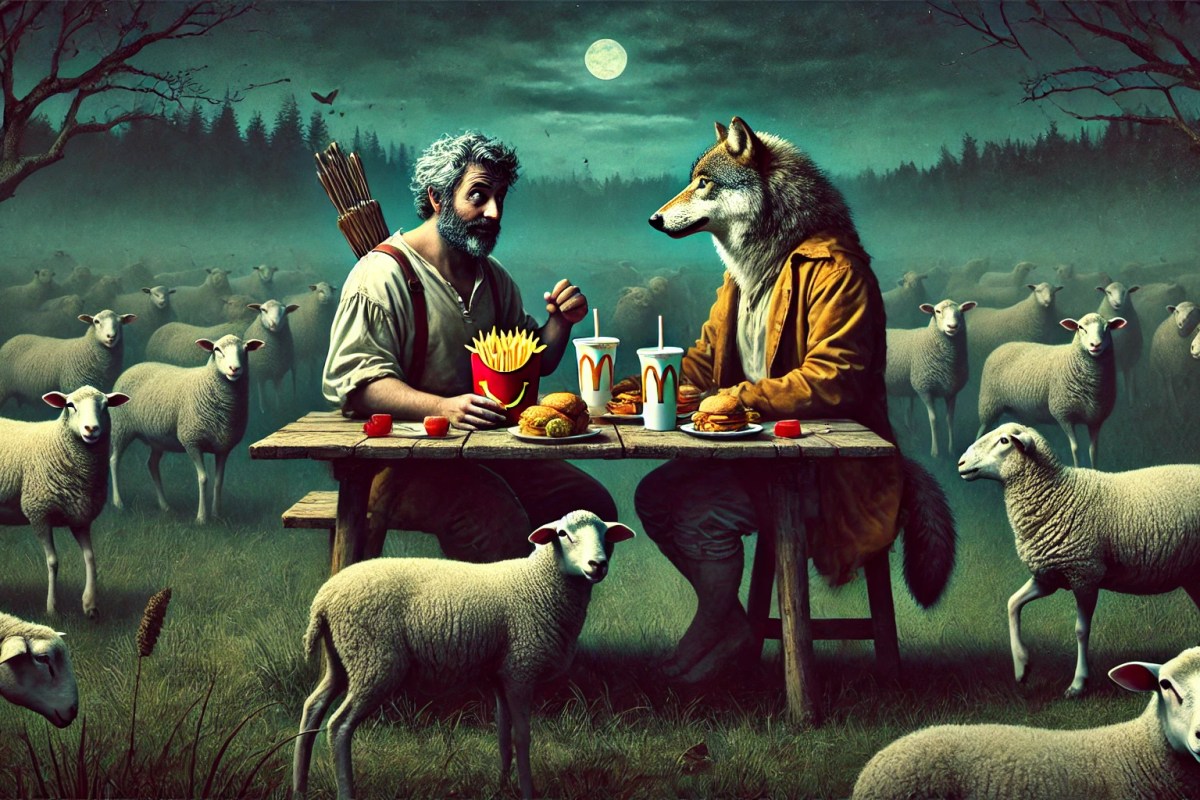
A hungry wolf, tired of dodging vigilant shepherds, decides to forgo subterfuge altogether. He waltzes into the flock, making no effort to hide his predatory nature. A naïve lamb follows him, and predictably, the wolf claims his meal. Later, the wolf returns to the sheepfold, where the shepherd — instead of protecting his flock — teams up with the wolf. Together, they butcher a sheep before abandoning the scene entirely to indulge in McDonald’s, leaving the traumatised sheep to accept their grim new reality.
Not exactly bedtime reading for the kids.
Themes: A Cynical Mirror to Our World
This tale is not merely a grotesque subversion of pastoral simplicity; it’s a scalpel slicing into the rotting carcass of modern society. Here’s what lurks beneath its woolly surface:
1. Cynicism Towards Authority
In most fables, the shepherd embodies protection and care. Here, he’s a collaborator in senseless violence. The shepherd’s betrayal critiques the notion of benevolent authority, suggesting that those entrusted with safeguarding the vulnerable often act in their own interests or, worse, align themselves with destructive forces. Sound familiar? Think political complicity, corporate greed, or any number of modern failures of leadership.
2. Normalisation of Atrocity
The sheep, described as cognitively intact, accept their grim reality without resistance. This isn’t a story about oblivious innocence; it’s about the horrifying human capacity to adapt to systemic violence. It reflects how people, faced with injustice, often acquiesce to their oppressors rather than challenge the status quo.
3. Inversion of Expectations
The wolf doesn’t even bother with the traditional sheepskin disguise. His audacity mirrors the brazen nature of modern exploitation, where bad actors operate in plain sight, confident in the public’s apathy or resignation. It’s a commentary on the erosion of shame, accountability, and even the pretence of decency.
4. Absurdity and Nihilism
The shepherd and wolf ditch their victim to grab fast food, trivialising the violence they’ve inflicted. The juxtaposition of archaic brutality with banal consumerism is absurd yet disturbingly resonant. It suggests that, in our era, even cruelty can be relegated to a footnote in the pursuit of comfort or convenience.
Symbols: Layers of Meaning
The tale brims with symbolic resonance:
The Wolf: A stand-in for unchecked greed or predatory systems, the wolf’s brazen behaviour highlights the dangers of apathy and unchallenged power.
The Shepherd: His betrayal symbolises the failure of institutions — governments, corporations, or other entities — to protect those they claim to serve.
The Sheep: Far from being simple-minded, the sheep’s acceptance of their grim new reality is a biting critique of societal complacency.
McDonald’s: A modern symbol of triviality and consumerism, it underscores the absurdity of senseless violence in a world driven by shallow comforts.
A Stark Commentary on Power Dynamics
At its core, the story is a brutal satire of power and complicity. Though ostensibly adversaries, the shepherd and wolf unite to exploit the powerless. It’s a chilling reminder of how often power structures protect their own interests at the expense of the vulnerable.
The sheep’s passive acceptance is equally damning. It forces readers to confront their own role as silent witnesses or even complicit actors in systems of oppression. What happens when we’re no longer shocked by atrocity but instead integrate it into the fabric of our existence?
The Satirical Edge
What makes this story particularly effective is its dark, sardonic, and unapologetically hyperbolic tone. It revels in absurdity while delivering a grim truth about human nature. The shepherd and wolf’s nonchalance is as hilarious as it is horrifying, making the tale an unsettling mirror of a society where injustice and apathy often go hand in hand.
Final Thoughts
This fable may be short, but its implications are vast. It’s a cautionary tale about the dangers of complacency, the betrayal of trust, and the absurdity of modern priorities. More importantly, it’s a call to resist the normalisation of harm — to recognise wolves and shepherds for what they are and demand better from ourselves and those in power.
So, as we usher in a new year, let this tale serve as a grim reminder: the wolf doesn’t always need a disguise, and the shepherd isn’t always your friend. Sometimes, they’re just two blokes on their way to McDonald’s.
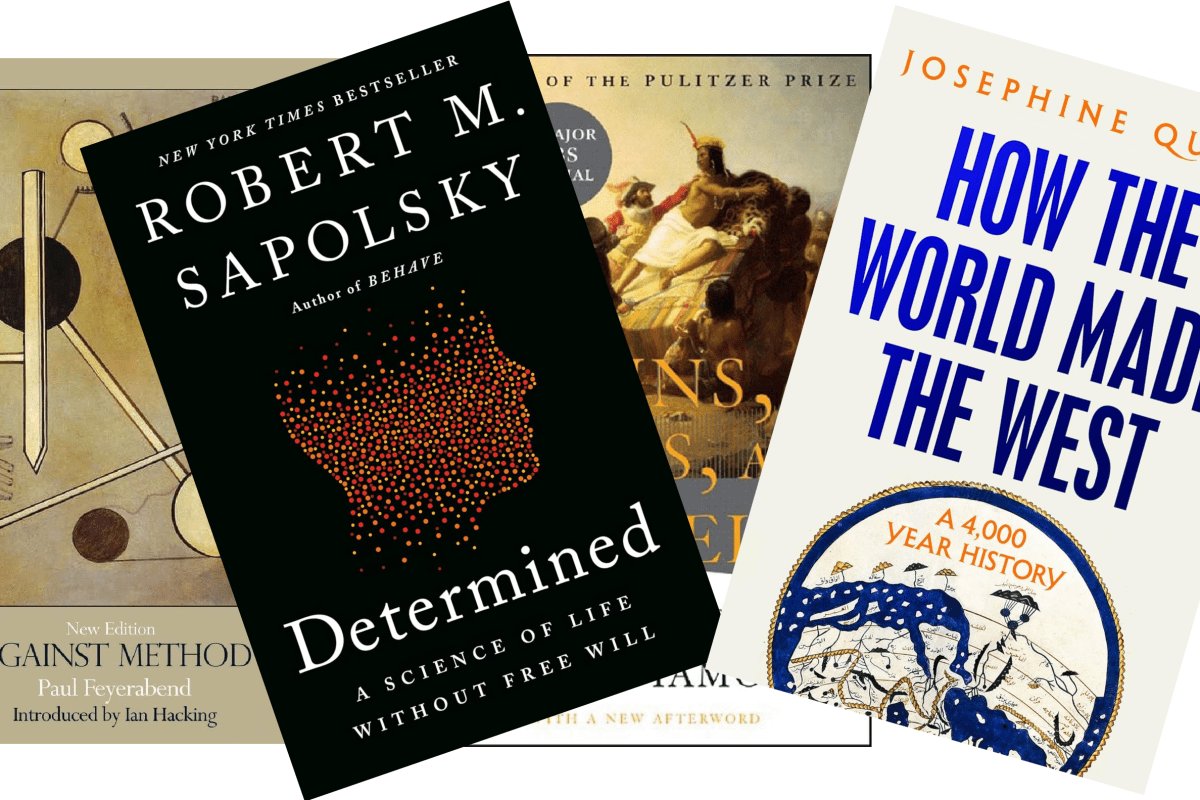
These are my favourite books I read in 2024. Only one was first published this year, so it seems I was playing catch-up and rereading. Two are about history; two are about the philosophy of science; and one is about biological free will or the lack thereof.
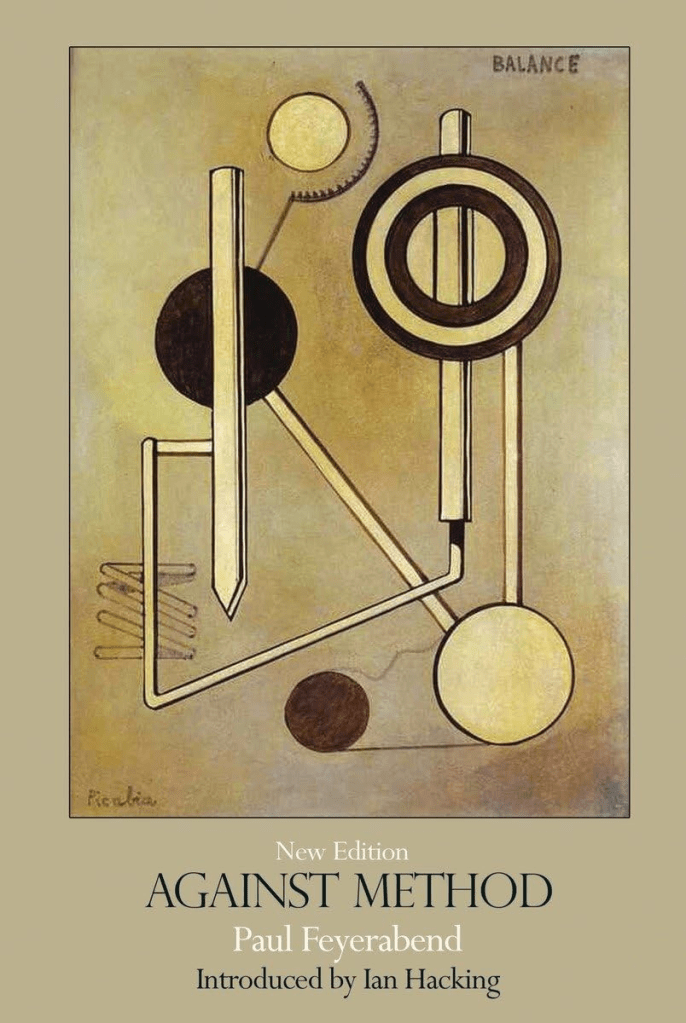
Against Method is a re-read for me. It makes the list on the coattails of a higher-ranked book. Feyerabend makes a compelling case against the Scientific Method™. To complete the set, I’d also recommend Bruno Latour‘s We Have Never Been Modern.
Determined arrives on the heels of Sapolsky’s Behave, another classic that I’d recommend even more, but I read it in 2018, so it doesn’t make the cut. In Determined, Sapolsky makes the case that there is no room or need for free will to explain human behaviour.
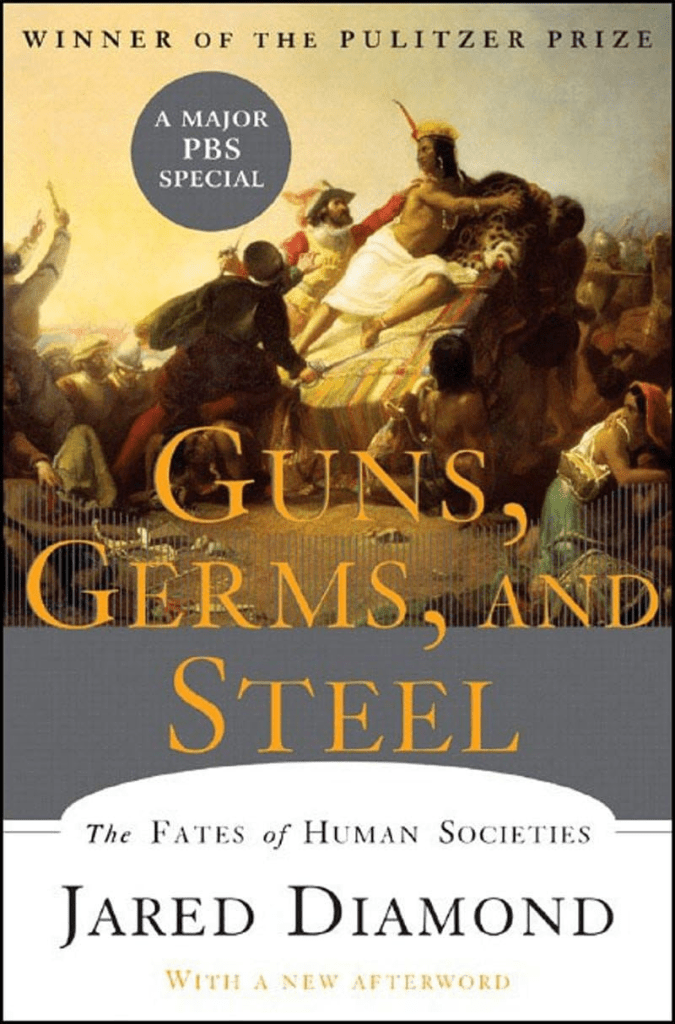
As with Against Method, Guns, Germs, and Steel makes the list only to complement my next choice. It views history through an environmental lens. To fill out the historical perspective, I recommend David Graeber’s The Dawn of Everything: A New History of Humanity (with David Wengrow). I’d recommend Yuval Noah Harari‘s Sapiens: A Brief History of Humankind, but it occupies a different category and is more about a plausible broad narrative than the detail explored in the others listed.
Quinn makes history approachable as she questions the uniformity of civilisations pushed by orthodoxy. Read this in context with the aforementioned historical accounts for a fuller perspective.
I was born in 1961. This should have been bedtime reading for me. I’d heard of this work, but one really has to read it. It’s less Modernist than I had presumed—though not to the extent of Feyerabend or Latour mentioned above. Again, reading all three provides a robust perspective on the philosophy of science.
Like Quinn, the writing is approachable. I had expected it to be stilted. It is academic, and it may boost your vocabulary, but give it a gander. It also works well in an audiobook format if you are so inclined.
This about closes out 2024. What do you think about these choices? Agree or disagree? What are your top recommendations?
I’ve written about this topic before. Metamodernism has been heralded as the great reconciler of Modernism and Postmodernism, a dialectical triumph that purports to synthesise these two oppositional paradigms. On the one hand, Modernism clings to its belief in objective truths, rationality, and universal principles. On the other, Postmodernism dismantles those certainties, exposing them as fragile constructs, rooted as much in ideology as in reason. The promise of metamodernism is to bridge this divide, to create a space where the objectivity of Modernism and the relativism of Postmodernism can coexist. But can it?
Audio: NotebookLM Podcast about this topic.
Spoiler alert: it cannot. In fact, metamodernism doesn’t even attempt to fulfil its stated goal. Instead, what it really does—intentionally or not—is meld Modernism’s objective framework with Pre-Enlightenment mysticism, offering a regressive concoction that romanticises the past while pretending to chart a bold new future. This isn’t synthesis; it’s nostalgia masquerading as innovation.
The Unbridgeable Divide: Objective vs. Relative
To understand why metamodernism’s claimed synthesis is untenable, we need to examine the fundamental incompatibility of its supposed components. Modernism rests on the firm foundation of objectivity: truth is universal, reason is supreme, and progress is inevitable. Postmodernism, however, thrives in the cracks of that foundation, pointing out that these so-called universal truths are culturally and historically contingent, and that “progress” often serves as a euphemism for domination or erasure.
Reconciling these two positions is like trying to mix oil and water. Modernism’s faith in absolutes cannot coexist with Postmodernism’s celebration of ambiguity and multiplicity without reducing one to a mere aesthetic flourish for the other. The result is not a synthesis but a superficial oscillation, an endless back-and-forth that achieves neither clarity nor coherence.
The Real Agenda: A Fusion of Objectivities
What metamodernism actually achieves is something quite different. Instead of bridging the gap between Modernism and Postmodernism, it fuses Modernism’s objective certainties with the equally objective but pre-rational framework of Pre-Enlightenment mysticism. In doing so, it abandons the critical lens of Postmodernism altogether, retreating to a worldview that is comfortingly familiar but intellectually regressive.
Consider the resurgence of myth, spirituality, and transcendence in metamodernist discourse. These elements hark back to a time when objective truths were dictated by divine authority or cosmological narratives rather than scientific inquiry. By incorporating these pre-modern ideas into its framework, metamodernism sidesteps the hard questions posed by Postmodernism, offering a fusion that is plausible only because both Modernism and Pre-Enlightenment mysticism share a common belief in absolute truths.
Plausible but Retrograde
This melding of Modernist and Pre-Enlightenment frameworks might seem plausible because, in truth, many Moderns never fully abandoned their mystical roots. The Enlightenment’s project of replacing religious dogma with reason was always incomplete; its foundational assumptions about universality and objectivity often carried an unspoken theological residue. Metamodernism taps into this latent nostalgia, offering a vision of the world that feels grounded and comforting, but at the cost of intellectual progress.
The problem is that this vision is fundamentally retrograde. By retreating to the certainties of the past, metamodernism ignores the most valuable insight of Postmodernism: that all frameworks, whether Modern or mystical, are ultimately constructed and contingent. To move forward, we need to grapple with this contingency, not escape from it.
Conclusion: Nostalgia in Disguise
Far from being a dialectical synthesis, metamodernism is a retreat. It cloaks itself in the language of progress while recycling old patterns of thought. Its attempt to reconcile Modernism and Postmodernism collapses into a fusion of Modernist objectivity and Pre-Enlightenment mysticism, leaving the critical insights of Postmodernism by the wayside.
If we are to truly progress, we must resist the siren song of metamodernism’s nostalgia. Instead, we should embrace the challenge of living without absolutes, grappling with the ambiguity and multiplicity that define our postmodern condition. Anything less is not synthesis but surrender.
Jean-François Lyotard’s Le Différend has a way of gnawing at you—not with profound revelations, but with the slow, disquieting erosion of assumptions. It got me thinking about something uncomfortably obvious: political orientation is nothing more than the secular cousin of religious indoctrination. Just as most people will, without much scrutiny, cling to the religion of their upbringing and defend it as the One True Faith, the same applies to their political worldview. Whether you’re baptised into Anglicanism or wade knee-deep into the waters of neoliberalism, the zeal is indistinguishable.
Of course, there are the self-proclaimed rebels who smugly declare they’ve rejected their parents’ politics. The ones who went left when Mum and Dad leaned right or discovered anarchism in the ruins of a conservative household. But let’s not be fooled by the patina of rebellion: they may have switched teams, but they’re still playing the same game. They’ve accepted the foundational myths of institutions and democracy—those hallowed, untouchable idols. Like religion, these constructs are not just defended but sanctified, preached as the best or only possible versions of salvation. Dissenters are heretics; non-believers are unthinkable.
It’s not that political ideologies are inherently bad (just like religion has its occasional charm). It’s that the devout rarely stop to question whether the framework itself might be the problem. They assume the boundaries are fixed, the terms are immutable, and the debate is merely about the correct interpretation of the catechism. But if Lyotard has taught us anything, it’s this: the real battles—the différends—are the ones no one’s even acknowledging because the language to articulate them doesn’t exist in the prevailing orthodoxy.
At a time when scientific authority faces unprecedented challenges—from climate denial to vaccine hesitancy—the radical critiques of Paul Feyerabend and Bruno Latour offer surprising insight. Their work, far from undermining scientific credibility, provides a more nuanced and ultimately more robust understanding of how scientific knowledge actually progresses. In an era grappling with complex challenges like artificial intelligence governance and climate change, their perspectives on the nature of scientific knowledge seem remarkably prescient.
The Anarchist and the Anthropologist: Challenging Scientific Orthodoxy
When Paul Feyerabend declared “anything goes” in his critique of scientific method, he launched more than a philosophical provocation—he opened a fundamental questioning of how we create and validate knowledge. Bruno Latour would later expand this critique through meticulous observation of how science operates in practice. Together, these thinkers reveal science not as an objective pursuit of truth, but as a deeply human enterprise shaped by social forces, rhetoric, and often, productive chaos.
Consider how modern climate scientists must navigate between pure research and public communication, often facing the challenge of translating complex, probabilistic findings into actionable policies. This mirrors Feyerabend’s analysis of Galileo’s defence of heliocentrism—both cases demonstrate how scientific advancement requires not just empirical evidence, but rhetorical skill and strategic communication.
The Social Construction of Scientific Facts
Latour’s concept of “black boxing”—where successful scientific claims become unquestioned facts—illuminates how scientific knowledge achieves its authority. Contemporary examples abound: artificial intelligence researchers like Timnit Gebru and Joy Buolamwini have exposed how seemingly objective AI systems embed social biases, demonstrating Latour’s insight that technical systems are inseparable from their social context.
The COVID-19 pandemic provided a stark illustration of these dynamics. Public health responses required combining epidemiological models with social science insights and local knowledge—precisely the kind of epistemological pluralism Feyerabend advocated. The pandemic revealed what sociologist Harry Collins calls “interactional expertise”—the ability to communicate meaningfully about technical subjects across different domains of knowledge.
Beyond Method: The Reality of Scientific Practice
Both Feyerabend and Latour expose the gap between science’s methodological ideals and its actual practice. This insight finds contemporary expression in the work of Sheila Jasanoff, who developed the concept of “sociotechnical imaginaries”—collectively imagined forms of social life reflected in scientific and technological projects. Her work shows how scientific endeavours are inseparable from social and political visions of desirable futures.
The climate crisis perfectly exemplifies this interweaving of scientific practice and social context. Scholars like Kyle Whyte and Robin Wall Kimmerer demonstrate how indigenous environmental knowledge often provides insights that Western scientific methods miss. This validates Feyerabend’s assertion that progress often requires breaking free from established methodological constraints.
The Pluralistic Vision in Practice
Neither Feyerabend nor Latour advocates abandoning science. Instead, they argue for recognising science as one way of knowing among many—powerful but not exclusive. This vision finds practical expression in contemporary movements like citizen science, where projects like Galaxy Zoo or FoldIt demonstrate how non-experts can contribute meaningfully to scientific research.
The “slow science” movement, championed by Isabelle Stengers, similarly echoes Feyerabend’s critique of methodological orthodoxy. It advocates for more thoughtful, inclusive approaches to research that acknowledge the complexity and uncertainty inherent in scientific inquiry.
Knowledge in the Age of Complexity
Today’s challenges—from climate change to artificial intelligence governance—demand precisely the kind of epistemological pluralism Feyerabend and Latour advocated. Kate Crawford’s research on the politics of AI parallels Latour’s network analysis, showing how technical systems are shaped by complex webs of human decisions and institutional priorities.
Feminist scholars like Karen Barad propose “agential realism,” suggesting that scientific knowledge emerges from specific material-discursive practices rather than revealing pre-existing truths. This builds on Feyerabend’s insight that knowledge advances not through rigid methodology but through dynamic interaction with multiple ways of knowing.
Towards a New Understanding of Scientific Authority
The critiques of Feyerabend and Latour, amplified by contemporary scholars, suggest that scientific authority rests not on infallible methods but on science’s capacity to engage with other forms of knowledge while remaining open to revision and challenge. This understanding might help address contemporary challenges to scientific authority without falling into either naive scientism or radical relativism.
The rise of participatory research methods and citizen science projects demonstrates how this more nuanced understanding of scientific authority can enhance rather than diminish scientific practice. Projects that combine traditional scientific methods with local knowledge and citizen participation often produce more robust and socially relevant results.
Conclusion: Embracing Complexity
Feyerabend and Latour’s critiques, far from being merely historical curiosities, offer vital insights for navigating contemporary challenges. Their work, extended by current scholars, suggests that the future of knowledge lies not in establishing new orthodoxies but in maintaining openness to multiple approaches and perspectives.
In an age of increasing complexity, this pluralistic vision offers our best path forward—one that recognises science’s value while acknowledging the essential contribution of other ways of knowing to human understanding. As we face unprecedented global challenges, this more nuanced and inclusive approach to knowledge creation becomes not just philosophically interesting but practically essential.
The lesson for contemporary science is clear: progress depends not on rigid adherence to method but on maintaining open dialogue between different ways of understanding the world. In this light, the apparent chaos Feyerabend celebrated appears not as a threat to scientific authority but as a necessary condition for genuine advancement in human knowledge.







 Philosophics