Discovering Postmodernism

12–18 minutes

Postmodernism seems to have as many definitions as the number of people who encounter it, and that’s just not very useful. It’s less useful still when people with ulterior motives control the narrative. I’d like to take back the narrative and offer a succinct definition or description and offer reasons why some of the competing definitions are fundamentally incorrect. My journey commenced on my Descriptive Postmodernism post.

Each year, I start with a new notion to explore. For 2021, it’s postmodernism. I identify as practicing postmodernist, but it seems to have a nebulous definition, and many people assume it means different things. Some definitions seem to comport and others are curious takes. I am well-aware that some people in this space have opinions at least as strong as mine, and many have deeper and/or broader exposure than I do. Nonetheless, I feel confident that my logic will resonate.

Audio: NotebookLM podcast conversation about this content

As I pursue this definition, I will explore a line of inquiry that I hope will help to frame the issue.

These are my initial questions:

  1. What is the core definition of postmodernism?
  2. Why hate postmoderns?
  3. Why can’t postmodernism be constructive?
  4. Why do postmoderns deny Truth?
  5. When did postmodernism, a critical, dis-integrative concept become identified as being integrative?
  6. How does one parse the theory of postmodernism from the personality who espouses a perspective on it?

Postmodernism can be viewed as a reaction to so-called modernism, but it’s not so cut and dry. Postmodernism as an intellectual pursuit was in full force in the 1970s and 80s. But Modernism was still the main thrust, as is remains today. Post- is likely an overstatement, as it did not supersede. In comparison, post-Enlightenment thought—reason and logic—still competes with pre-Enlightenment thinking—metaphysical and superstition—, but even persons holding post-Enlightenment views still cling to traditional beliefs. Contrarily, people holding modern beliefs are not likely to simultaneously hold postmodern beliefs and vice versa. For moderns, postmodernism is a hot button, trigger item. For this cohort, any association will set them off.

What is the core definition of postmodernism?

From early on, postmodernism has been used as a pejorative term by its detractors. Many academics associated to postmodernism do not identify as postmoderns. They have been categorised as such, as something they have said or written is heretical to the Modern orthodoxy.

These days—if not from the start—postmodernism is nebulous. It has long since lost its brand to detractors, and its definition is undergoing some revisionist history by this cohort. What started as a perspective or lens to disintegrate content and context is now seen by many as possessing a point of view for constructing, for building.

The Condition of Postmodernity
Before defining philosophical postmodernism, let’s first exclude a possible source of confusion: postmodernity. Postmodernity is a periodical distinction, a cultural state where it occurs chronologically subsequent to the period referenced as Modernity.

Postmodernity is a condition or a state of being associated with changes to institutions and conditions and with social and political results and innovations, globally but especially in the West since the 1960s, whereas postmodernism is an aesthetic, literary, political or social philosophy, the cultural and intellectual phenomenon, especially since the 1920’s new movements in the arts and literature.

To be fair, the philosophy of postmodernism is a reaction to the philosophy of Modernism, but there was a diversion of the periodic reference from the philosophical. If we adopt this definition, the only requirement for inclusion is to have been active in this period. Since Feminism and Marxism were coincidentally prevalent phenomena, it would be easy to include these by virtue of chronology, but it doesn’t follow that these fall into the philosophical notion of postmodernism. It may be a simple matter of the ambiguity of language.

Some social theorists and sociologists—Scott Lash, Ulrich Beck, Zygmunt Bauman, and Anthony Giddens—deny that there is a postmodern condition. Instead, they suggest that modernity has simply extended into a state of late or liquid modernity.

Simplifying to the extreme, I define postmodern as incredulity toward meta-narratives.

Jean-Francois Lyotard

To establish a grounding and because he got there first, let’s see how Lyotard defines it in the introduction to his Postmodern Condition:

Simplifying to the extreme, I define postmodern as incredulity toward meta-narratives. This incredulity is undoubtedly a product of progress in the sciences: but that progress in turn presupposes it. To the obsolescence of the metanarrative apparatus of legitimation corresponds, most notably, the crisis of metaphysical philosophy and of the university institution which in the past relied on it. The narrative function is losing its functors, its great hero, its great dangers, its great voyages, its great goal. It is being dispersed in clouds of narrative language elements – narrative, but also denotative, prescriptive, descriptive, and so on. Conveyed within each cloud are pragmatic valencies specific to its kind. Each of us lives at the intersection of many of these. However, we do not necessarily establish stable language combinations, and the properties of the ones we do establish are not necessarily communicable.

The simple definition is captured by the first sentence. The rest is exposition. But let’s rewind for a bit and establish a frame. Admittedly, even at the start this is ‘simplifying to the extreme‘. Moreover, the context is relative to hard sciences. Lyotard admits he was over his head. In fact, he later referred to the book as his worst. But books have lives of their own, a sentiment with which Barthes might agree.

The central point here is to question metanarratives. Period. Full stop. The next task is to ask how a postmodern might accomplish this task and what might be their perspectives and tools?

In Reclaiming a Scientific Anthropology, Lawrence Kuznar claimed that « the primary tenets of the postmodern movement include: (1) an elevation of text and language as the fundamental phenomena of existence, (2) the application of literary analysis to all phenomena, (3) a questioning of reality and representation, (4) a critique of metanarratives, (5) an argument against method and evaluation, (6) a focus upon power relations and hegemony,  and (7) a general critique of Western institutions and knowledge. » [See end note 1]

Postmodernism is a disintegrative system. It disassembles, deconstructs, atomises, and lays bare. It is suspicious of underlying metanarratives—and I’d be willing to argue that it is equally suspicious of stated narratives as well. It questions who is served by a given narrative, who gains and loses power by one interpretation over another.

[tools and systems]

In the end, a reader may disagree with what I am proposing here, and the reader may even be correct in claiming that my definition is too reductive. Perhaps, I should abandon the postmodern label and simply recast my definition as Disintegrationism or some such. Deconstruction is already taken, so why not?

Why hate postmoderns?

One problem I notice is that postmodernism, long being applied as a pejorative term in a similar vein to the use of SJW, is a way to discredit personalities and ideologies they disagree with. We see entire ideologies being besmirched as postmodern theories. We might see Stephen Hicks misrepresent postmodernism and conflate feminism with it. Moderns are by nature traditionalists or conventionalists, so whether postmodernism, feminism, Marxism, and the like, these are unconventional. It may be a simple heuristic trick to paint all of these with a broad brush. Nuance and difference be damned. [See end note 2] Jordan Peterson‘s bete noir is cultural Marxism, that he insists is part of the blight of postmodernist thought.

Many have attempted to conflate social theories with postmodernism, whether Marxism, feminism, identity politics, and so on. But this is inherently wrong. Lyotard provided postmodernism with its original definition in his book, but detractors have been annexing other unpopular concepts to it in order to create a sort of critical mass for the uncritical opposition.

Why can’t postmodernism be constructive?

Postmodernism necessarily can’t be constructive, because after one disintegrates a perspective into its primitive elements, any reconstruction needs another narrative to serve as a foundation. It is true that one may reconstitute a disintegrated narrative through a different lens, as cited above Marxist, and so on, but all this does is to shift perspective, point of view, and creates a new power play.

There is nothing wrong with this approach, but neither is there a reason to privilege this interpretation over the original or some other. A Marxist perspective may resonate better with Marxists, and Feminist perspective with Feminists, but this doesn’t make the interpretation better or more generally applicable. It just brings it into clearer focus for that cohort. As near-sighted lenses help the hyperopic and far-sighted lens aid the myopic, neither is inherently better outside of the defined context. And each solution would create a distortion for a person neither near- or far-sighted. There is no lens that is all things to all people.

On balance, I think it’s fair to say that postmodernism is descriptive and not prescriptive, so whilst one can play at disintegrating and reintegrating, but this is simply to gain a new perspective and new insights. In literature, we might consider, say, Philip K Dick’s, The Man in the High Castle. In this, Dick explores what might have been if the Axis led by Nazi Germany had prevailed. This alternate historical rendering can be evaluated as a postmodern exercise. Dick is not promoting this outcome, he is merely playing what-if—reordering the actors to create speculative new narratives. Although the Amazon.com version takes liberties and injects additional narrative perspective, the reintegration is still evident.

As well, postmodernism cannot be constructive because it would be infinitely recursive. For each construction, there would exist a deconstruction. All that’s occurred is a rearrangement. From the same Lego pieces, we apply a new map—a new narrative. From the position of purpose, one construction may be deemed better or preferred, but this is not likely to persist from another.

Disintegration – Reintegration Cycle

Whilst I am more interested in the philosophical, postmodernism has much application to literature. This might be better defined as poststructuralism.

Why do postmoderns deny Truth?

Some people have argued that postmodern thinkers don’t believe in the notion of Truth.

There are a few things to clarify first: the definition of truth and the context of a truth claim.

There are different and competing theories on what truth is—whether correspondence, coherence, or some other version—but that’s beyond the scope of this content. Some people use ‘truth’ as a synonym for ‘fact’, but in the name of clarity, we should separate the two concepts even if idiomatically the terms can be used interchangeably. [See end note 3] In creating this bond, it’s easy to see how these people might be confused. Virtually no one is proposing that ‘facts’ are not ‘facts’. It may be that postmodernism should have a weak and a strong version.

If the colour red is defined as the reflection by an object having a wavelength between 625 and 700 nanometres and a corresponding frequency between 400 and 480 THz, and a ball as a 3-dimensional object where every point on the surface is the same distance from the centre, and all of the incumbent terms are similarly defined and accepted with concordant definitions, then a sighted person with no colour vision perception deficiencies in an environment with natural full-spectrum lighting, will agree with the fact that the sphere is red. If one prefers to label the correspondence of a red sphere and the perception of the red ball as true, then this trivial relationship is valid.

2-dimensional render of a 3-dimensional red sphere

It may be a correct assessment that some thinkers deny all truth, but it’s more likely that these thinkers are suspicious of the person claiming to know the truth because of the relationship between truth claims and power. Although Lyotard’s commentary was directed at hard science and underlying metanarratives such as progress, most postmoderns are more concerned with claims of moral truths.

This is related to the context of a claim. Per Foucault, if one context gives me power, I am more apt to adopt that perspective in order to manifest that power. I am not going to delve into some political discourse at the moment. Apart from this, Truth—where synonymous with fact—is contextual.

Using a typical example, one can evaluate the moral claim that killing another human is immoral. In fact, many—not all—people may agree with this as a general principle. But when we apply context—say, self-defence, military action, or capital punishment—, we discover that some of the same people now evaluate that killing another human is moral. So, we arrive that this moral assessment is subject to be either true or false depending on the context it’s evaluated in. Myself, being a non-cognitivist, I find moral claims to be lacking truth aptness, but that’s another story.

When did Postmodernism become a constructive rather than decompositional philosophy?

I’ll reserve the option to finish this section later. A quick internet search finds that David Ray Griffin coined the term constructive postmodernism. Griffin appears to have an agenda to return to modernism, particularly, it seems at first glance, Pragmatism.

My initial thought is that it was not thinkers fully invested in postmodernism; rather it was people with ulterior motives. Infusing Christian elements appear to be the most common thread. This line of thought is entirely speculative, so please stand by for an update or retraction. Metamodernism appears to have similar attributes, though perhaps simply metaphysical rather than Christian in nature.

How does one parse the theory of postmodernism from the personality who espouses a perspective on it?

Many people identified as postmoderns don’t self-identify as such. Kuznar labels postmodern anyone whose thinking includes most or all of these elements, but there is a compositional challenge inherent in this claim.

There are several compositional problems. First, one can apply postmodernism to a narrow domain and operate fully as a modern in the rest—perhaps even the majority of situations. Second, one can apply a postmodern lens theoretically, but be more pragmatic in more mundane matters. Third, one might apply a postmodern lens among many lenses, defending each in turn. Fourth, one may have had strong postmodern tendencies at one point in life but not held this perspective at other points.

Taking Foucault as an example—as well as one who eschewed the postmodern label—, he did disintegrate history and did question the underlying narratives, hitting all of Kuznar’s touchpoints. For one, I would categorise him as a postmodern thinker. Moreover, his disintegration led to the discovery of a common power thread throughout. Much of his writing was focused on this power relationship and illustrated how it was manifest.

Foucault was also a vocal Marxist. This is a constructive (integrative) worldview. This perspective gives privilege to Marxism, which is antithetical to postmodernism. As a rational interpreter, Foucault determined that this was a better form of government—but clearly, that’s because he accepted the underlying narrative and historicity proposed by Marx. Does this invalidate his postmodern credentials? Do we revoke his PoMo card?

Disclaimer

Excuse me for occasionally using this space as a scratchpad, but it serves the purpose well. I’ve never delved deeply in to critical theory, though I suppose I suppose that at least some of it resonates with me.

Note that I approach this as a stream of consciousness. It’s not meant to be a robust academic treatment. Although, I do cite source documents in some cases, many of my points are anecdotal or pulled from memory, understanding fallibility and so on. I expect to return to flesh out some details, but I figure I’ll publish my thoughts now and make updates in future. I may even correct spelling, grammar, and redundancies.

My goal at the start was two-fold (at least). First, is to describe the domains of postmodernism from the perspective of a proponent (as opposed to accepting a definition imposed by detractors). Second, is to assess where critical disintegration diverged to an integration theory. It’s obvious that you hold that deconstruction and discourse analysis fall within the domain. They are certainly orthodox post-structural concepts, so I suppose a third goal might be to define the boundaries of poststructuralism relative to postmodernism.


Endnotes

[1] Postmodernism and Its Critics, Daniel Salberg, et al.

[2] This modern cohort has a similar tendency to paint any form of Socialism as Communism, and they see the Soviet Union’s failed experiment of whatever they attempted to do as Communism. Therefore all forms of Socialism are destined to fail. The failure to appreciate nuance and detail is the common thread. I might posit that it’s similar to the phenomenon where, on average, women tend to perceive more colours (or colour names) than men.

[3] Aping logical empiricism, idiomatic language allows for broader definitions of truth and allows it to be synonymous with fact. This is similar to the idiomatic similarity of sex and gender, though this distinction is necessary for technical and academic discussion.


Descriptive Postmodernism

I can’t count the number of times I’ve defended Postmodernism (PoMo) from attack, so I am publishing this, so I can link to it. Perhaps I am not defending PoMo, but my flavour of it, but I’ve read a lot of work published by the usual suspects—some who eschew being lumped into a poorly defined category—or at least a nebulous category.

Before I get too far, I also want to remind the reader to take care to separate the philosophy from the person. One popular attack is the conflating of identity politics and social justice advocacy as PoMo phenomena. In fact, I consider myself to be PoMO—to be defined here in a moment—and a social justice warrior (SJW), this despite contesting the very notion of identity to begin with.

By definition, a summary is a reduction of some thing, but one needs to be careful not not arrive at reductio ad absurdum. Where appropriate, one may also wish to differentiate postmodernism with postructuralism. So as not to create a definition partir de rien, I’ll reference other accessible versions. A critic may disagree with these definitions, but they will serve as the foundation of my position and vantage.

Wikipedia gives us this definition (their reference links retained):

Postmodernism is generally defined by an attitude of scepticism, irony, or rejection toward what it describes as the grand narratives and ideologies associated with modernism, often criticizing Enlightenment rationality and focusing on the role of ideology in maintaining political or economic power. 

https://en.wikipedia.org/wiki/Postmodernism

The Stanford Encyclopedia of Philosophy gives us this

That postmodernism is indefinable is a truism. However, it can be described as a set of critical, strategic and rhetorical practices employing concepts such as difference, repetition, the trace, the simulacrum, and hyperreality to destabilize other concepts such as presence, identity, historical progress, epistemic certainty, and the univocity of meaning.

https://plato.stanford.edu/entries/postmodernism/

Notice the commonalities. PoMo is a descriptive, critical activity. It’s descriptive. As language and grammar can be approached descriptively of prescriptively, so can philosophy. Some ‘schools’ do both. PoMo is exclusively descriptive. PoMo was born as a reaction to Modernism, especially the unstated foundations labelled by Lyotard as metanarratives—the grand narratives and underlying ideologies of prevailing beliefs that were uncritically taken for granted, many of which that were formed or catalysed in the Age of Enlightenment.

Jean-François Lyotard defined philosophical postmodernism in The Postmodern Condition, writing “Simplifying to the extreme, I define postmodern as incredulity towards meta narratives….”[4] where what he means by metanarrative is something like a unified, complete, universal, and epistemically certain story about everything that is. Postmodernists reject metanarratives because they reject the concept of truth that metanarratives presuppose. Postmodernist philosophers in general argue that truth is always contingent on historical and social context rather than being absolute and universal and that truth is always partial and “at issue” rather than being complete and certain.[3]

https://en.wikipedia.org/wiki/Postmodern_philosophy

My defence is that PoMo cannot be for social justice or engage in identity, as it has no positive position on these. It functions to critically deconstruct. People unfamiliar with PoMo concepts often misunderstand this notion of deconstruction. All to often, I see people criticise Derrida for his brand of Deconstruction, but that only illustrates the fact that they never read or simply misunderstand what Derrida means by Deconstruction. Perhaps, I’ll elaborate on that in future.

My point is that PoMo is corrosive—like lye. It eats away at ideologies, dissolves them. It is not meant to construct anything. So where does this constructive expectation come from? It derives primarily from two places.

Modernism

Most people casting dispersion are modernists. They need to construct things. To be fair, this perspective has been an evolutionary advantage, but some people can’t allow a bunch of Lego pieces to remain unconstructed. This is fine, but you need another tool to perform this task. It’s not PoMo.

Ad Hominem

The other challenge is the inability to distinguish between the person and the idea. Michel Foucault was very vocal in the political realm and actively promoted Marxism, but, firstly, Foucault was not a self-professed PoMo—and for several reasons, one could come to accord with his assessment; secondly, in his deconstruction of history, he discovered a foundational component—this activity being squarely PoMo—, but he reconstructed historical narratives employing the lens of power. This rebuilding is not PoMo activity.

Parting Shot

Besides—or in addition to—ignorance, some people have an agenda, and they play ad hominem games, so if they can vilify a person and associate that person to an ideology, it can have the tendency of poisoning the well. Uncritical people won’t even notice the sleight of hand and redirect.

never attribute to malice that which is adequately explained by ignorance*

Hanlon’s Razor

A textbook example is Stephen Hick’s attempt in Explaining Postmodernism: Skepticism and Socialism from Rousseau to Foucault to conflate feminism (a positive mechanism) with postmodernism (to reiterate, a negative mechanism). In it he claims that feminists Andrea Dworkin and Catherine Mckinnon are proponents of PoMo thought, but he is apparently unaware that McKinnon has explicitly attacked PoMo as destructive to feminism. A fuller critique of Hicks‘ work can be heard on YouTube. I recommend it highly if you have the better part of an hour to spare. Jordan B Peterson is a celebrity personality whose primary exposure to PoMo is Hicks, so when you understand how off-base Hicks is, you’ll realise why Peterson is so off-base, too.


* Hanlon’s razor is originally cast as “never attribute to malice that which is adequately explained by stupidity“, but I prefer the term ignorance, as it it less value-laden and more broadly applicable. Besides, to be ignorant does not mean to be stupid. Many ignorant people are not stupid. I am ignorant of the Russian language, but I am not stupid.

Insurrection Bandwagon

There was a recent insurrection at the United States Capitol building in Washington, DC. I won’t take any more time discussing whether this is hyperbole or real. In the end, it doesn’t matter. It’s not relevant to the solution.

From the perspective of propaganda, it’s been an effective message. It’s gotten Trump haters and supporters to view Trump as a common enemy—some of them anyway. Some people and entities can’t performatively distance themselves fast enough or scapegoat him loudly enough.

Whilst I do feel that much of the hullabaloo is performative, I’m not going to focus on the performative aspect. This serves to amplify, but it’s not the central message. Instead, I’d like to frame this through the lens of René Girard’s mimetic theory of conflict and resolution.

Adopting Girard’s vantage, we can see each of mimetic desire, scapegoating, mimetic crisis, ritual, sacrifice, and culture.

Mimetic Desire

In a social context, mimetic theory is about creating in-groups and out-groups—and intentionally so. Groups have rules, by which membership is governed. Symbols are employed to amplify belonging and compliance. At it’s core, mimetic desire employs mimesis—imitation. Monkey see, monkey do.

Here, society is the prevalent in-group. From their perspective, this is the us of the in-group versus the them of the out-group. Girard noted that us versus them is evident in many contexts—whether in the wild or otherwise—, and it can be exploited. It’s about creating a flag to rally around—in this case literally, figuratively speaking.

The mechanism of mimetic desire is to coalesce the focus on some object. From the positive dimension, the desire is to belong, but mimetic desire doesn’t have to be positive. As in this case, it can be negative. The masses have assembled for a common cause of vilifying one Donald J Trump.

Mimetic Crisis

The insurrection is the mimetic crisis. It broke the rules. It’s unclear how all of the many rules that were broken in the four preceding years were able to fly under the radar. To some extent, the US government is constructed of two nearly equal in-groups. They each belong to the institution of institutionalised government and so-called Republican ideal as an expression of modern Democracy. They share some common beliefs, but this sharing diverges dimensionally and methodologically. The telos are multi faceted, and each group prefers different facets—and the facets desired by the public are different still.

At first—to borrow from Kübler-Ross—, there was denial by the Trump-aligned party of sycophants. These Trump-aligned Republicans (read: Neoconservatives; UK: Tories) were also aligned with the outgroup, leaving them vulnerable to ostracism. Meanwhile, the Democrats (read: Liberal/Neoliberal; UK: Labour) secured the moral high-ground and control of the larger in-group. They painted themselves as the adults wearing big boy trousers (over their Pull-Ups).

Scapegoating

Scapegoating is instrumental in mimetic theory. It’s a mechanism to build solidarity and cohesion through exclusion. Narratively, it operates to distinguish acceptable behaviour versus unacceptable. In almost all instances, scapegoating is an object to project blame.1 The remaining members have received the signal.

Here, we have two entities to scapegoat 2: the insurrectionists and the Instigator in Chief, soon to be ex-president, Donald Trump.

Ritual

Ritualistically, scapegoats need to be bear the brunt of the anger of the in-group and associated friends and family. There are procedures to follow. These rituals play out in the House in the form of impeachment, and in the Senate in the form of conviction. For the uninvited guests, the traditional court system ritual

Part of the outrage is performative ritual. Certain entities are checking the boxes suggested by their PR teams. These same entities had nothing to say for the past four years as they’ve enriched themselves at the expense of the American public and world, but this was the last straw. They vowed to cut off support and funding —until they don’t, but by then no one will be any the wiser. People have both short attentions spans and memories.

There is no requirement whatsoever that rituals produce anything. As hard work is its own reward, ritual for the sake of ritual is all that’s necessary. Rituals needn’t be authentic or heartfelt. Simply mime the parts, and you’re all set. Plus, you get full credit—participation points just for playing.

Sacrifice

One ritual is to sacrifice the goats, but we need only exile the offending members. In Christian lore 3, there are actually two goats—a sacrificial goat and an emissary goat—the scapegoat. The sacrificial goat is, obviously, sacrificed—burnt offerings—, but the emissary goat was released into the wilderness, taking with it all sins and impurities. This is the excommunicated, the shunned.

Culture

Where performatism really comes in, is cultural signalling. People and other entities work overtime to signal they are on the winning side. This includes everything from Oscar-winning performances to cringeworthy Razzie-candidates. Those in the public eye tend to go overboard. It’s good to remember that an empty vessel makes the most noise.


  1. The notable exception to this scapegoat-blame relationship is the Christian Christ myth, where Jesus acted as a scapegoat but was without blame.
  2. Trump and the Scapegoat Effect, The American Conservative, David Gornoski, September 1, 2016.
    An interesting article discusses the Trump-scapegoating phenomenon that also mentions René Girard’s work.
  3. Leviticus 16:21–22

Can Metamodernism Sublate Modernism and Postmodernism?

I’ve been hearing that metamodernism is the next stage in the march of history toward progress. Metamodernism will synthesise modernism and postmodernism into something better that before. It’s what’s for breakfast.

Audio: Podcast conversation around this topic.

I’ve heard about metamodernism in the past, and every time I review some material, I discount it and move on. This time, I’ll react to it. My colleagues in some other online fora have suggested metamodernism (Freinacht) or post-liberalism (Pabst), who see their solution located in the middle between conventional polarities. The attempt here is to adopt Hegel’s dialectic approach, so we’ve got a starting point, an objective, a lens, and a framework. Sounds good. Let’s go. But what are we trying to reconcile?

Ideas attributed to Modernism are

  1. Faith in science
  2. Development and progress
  3. Democracy
  4. The individual
  5. A meritocratic social order
  6. Humanity can recreate nature by virtue of its reason

Ideas attributed to Postmodernism are

  1. Critical questioning of all knowledge and science
  2. Suspicion towards all grand narratives about “progress”
  3. Emphasis on symbols and contexts
  4. Ironic distance
  5. Cultures have been oppressed and ruined by modern society
  6. Reveals injustice in “democratic” societies
  7. Relations create the individual
  8. A multicultural order where the weak are included
  9. Humanity has destroyed the biosphere

Metamodern Ideas

  1. How can we reap the best parts of the other two?
  2. Can we create better processes for personal development?
  3. Can we recreate the processes by which society is governed, locally and globally?
  4. Can the inner dimensions of life gain a more central role in society?
  5. How can modern, postmodern and premodern people live together productively?
  6. How can politics be adjusted to an increasingly complex world?
  7. What is the unique role of humanity in the ecosystems of nature?

Reviewing the Modern List

I want to be careful not to construct a strawman or create a false dichotomy, so perhaps I do have to backtrack to touch on the Modern list.

Faith in science is exactly that—faith—and is not warranted without recognised and articulated assumptions.

The notions of development and progress rely on underlying teleological goals and values that are not universally agreed upon and don’t benefit participants in the same manner and to the same degrees. There are winners and losers.

Democracy is a specious notion that I’ve railed against time and again. This is simply one form of political organisation among many. There is no reason to elevate this form over many others.

Moderns do have an rather fixed notion of what defines the individual. A Postmodern is not very likely to accept this notion except as a snapshot that can only be interpreted within a narrowly defined context.

A meritocratic social order is a Modern concept ripe with metanarrative support.

That humanity can recreate nature by virtue of her reason—notwithstanding the odd use of ‘her, evidently a nod to Mother Nature—, there is a elevated notion that reason is a superior mechanism. I’d extend this to include the notion that many people—not just the elite—are capable of ‘reason’. Yet again, all of this is questionable.

Critiquing the Postmodern List

At the start, I’ll suggest that Metamodernism is an attempt by Moderns to re-established ground lost to Postmoderns under the auspices of reconciliation. This does not appear to come from a disinterested mediator. The constituents of the Modern list look orthodox enough for my purposes, and I wish to spend some time parsing the Postmodern list. These lists don’t appear to be equivalent, as there is more editorialising in the PoMo list. I’ll skip the the first 4, taking them as given.

That cultures have been oppressed and ruined by modern society is quite value-laden. I’d be more inclined toward cultural constructs rely on unspoken metanarratives that leads to unbalance and disrupt the playing field. Employing the term ruin is a hint that the author is a Modern out of their element. To ruin would presume a notion of something to ruin with some teleological metanarrative in play.

That PoMo reveals injustice in “democratic” societies is interesting. First, the quotes around democratic suggests that the author finds claims of democracy to be specious or finds the term is at least at times misapplied. I can’t be certain. In the end, it’s not important because it seems to be acting as an unnecessary filler anyway. I better rendering might be the phrase ‘reveals injustice in societies‘. Full stop.

Relations create the individual feel legitimate. Identity is unnecessary in a vacuum. Although Identity is a dynamic and ambiguous concept. I don’t think this will affect my assessment.

A multicultural order where the weak are included is prescriptive. This, again, is a misinterpretation by a modern. That a Postmodern makes a claim that a culture has inequalities and inequities, it does not follow that s/he is promoting some particular solution—include the weak. Emotionally, this may indeed be the reaction by a Postmodern—perhaps myself included—, but this is not part of the philosophy that points out the discrepancy. It’s an annex.

Attributing the claim that humanity has destroyed the biosphere to Postmoderns is a huge stretch. I don’t believe this is an idea initiated by Postmoderns, and I don’t think this perspective is disproportionality held by Postmoderns over some other cohort.

Perusing the Metamodern List

Now to react to the metamodern list. Having already inspected the list, I’ll point out that every one of these questions has a Modern perspective—the need to construct and resolve over a need to deconstruct and explore.

How can we reap the best parts of the other two?

Ok. The concept of best here is a bit disconcerting since best is value-laden and relies on context, which further relies on some set of narratives.

Can we create better processes for personal development?

Again, what is this person we are developing? What is the telos? Why this telos and not another?

Can we recreate the processes by which society is governed, locally and globally?

This is a binary question, so I’ll assume the author meant more. We already know this answer. It’s yes.

The question this implies is ‘what might it be?’ We already know this answer, too. There are any number of organisations and processes of government, none particularly better than the next.

Can the inner dimensions of life gain a more central role in society?

Where is the inner dimensions idea even come from? Why would anyone even accept the notion, and why give it any preference let alone credence? Not to be a dick, but why give anyone a role? The apparent metanarrative here appears to be democracy or at least participation, but there is not reason to accept this as better or worse than alternatives.

How can modern, postmodern and premodern people live together productively?

Why ‘productively’? This is another Modern notion foisted on the solution. Aside from the productivity red herring, this is a somewhat valid question, though it does elevate the notion of an inclusive society, and there is not reason to accept this as a preference, again, without some underlying metanarrative treatment.

How can politics be adjusted to an increasingly complex world?

This feels a bit emptier that the other list entries. Again, the answer depends on the goals and expectations, so it requires this context.

What is the unique role of humanity in the ecosystems of nature?

Really? Humans need to have a unique role? This is obviously a Modernist-Humanist notion that elevate humans. I could see an argument where humans can be unique but not elevated. Again, what world would that be in? With notions of progress and productivity, it should be obvious that we’re again operating with some underlying metanarratives in place.

So What?

Reviewing metamodernism again, I can see why I forget about it shortly after I encounter it. Perhaps this will serve as a reminder that I’ve trodden this ground before. In summary, it’s painfully apparent to me that so-called Metamodernism is simply an attempt by Moderns to repackage and re-gift Modernism through the same old lens, but I’m not buying it.

Along my quick review of information on Metamodernism, there is a large metaphysical/spiritual element that is quite unlikely to resolve to either rationality or Postmodernism.

I may investigate other flavours of this concept, whether post-post modernism, post-liberalism, but from what I can tell, these are backwards looking toward Classical Virtue metaethical models. Besides having nostalgic value, I’m not a fan.

Mimetic Desire

People influence one another and, when they’re together, they have a tendency to desire the same things, primarily not because those things are rare but because, contrary to what most philosophers think, imitation also bears on desire. Humans essentially try to base their being, their profound nature and essence, on the desire of their peers.

“Mimetic Desire: Shakespeare Rather than Plato.” When These Things Begin: Conversations with Michel Treguer, by René Girard and Trevor Cribben Merrill

Although I have some reservations—or at least reserve some latitude—, I tend to agree with Girard. Desire is a social construct. Desire is separate to needs. Desires are wants. As accomodated in Economics, we don’t need what we want, but we want what we need. We desire what we need.

we don’t need what we want, but we want what we need

What Girard is essentially saying is that I want what I want because you want it. This is independent of value in an economic sense. Memetically, the value of an object increases relative to the perceiver simply because another person wants it. In my reckoning, I’d separate want from desire or at least elevate desire to a higher degree of wanting.

Girard termed this triangular relationship between subject (you), object (the thing), and the mediator (the influencer) mimetic, to mimic. I suppose some of this might be considered to be memetic, but I also suppose that memes serve to simplify rather than serve as a distinct transmission vector.

circa 2016

My question is—exacerbated during this pandemic—how does this operate in isolation? I consider myself. I am not an ascetic by most definitions, but I am somewhat of a minimalist. My only ‘vices’ are my computer and my guitars. I used to be a professional musician—though most of that was spent on the other side of the console—and I was a Gibson snob. From the perspective of emotional desire, I still am. There is a certain nostalgia, but I don’t play out anymore, and I’m not seriously recording, so I don’t need the same perceived quality of an old Gibson.

Guitarists know that different guitars give different sounds. I’ve owned as many as 10 guitars at a time, and each had its purpose. Some was feel. This guitar was for Blues, this was other for Grunge, and that was for Jazz…and that for Fusion and that for a retro sound. This one had a fast neck, and this one sustained for days. This one was tuned à la Keith Richards, sans a string, to an Open G, and the was set up for Drop C, and of course there was the Standard-tuned one for good measure

Jason & Me circa 2012

Did I need 10 guitars? No. Did I need 1? Not really—not unless I wanted to be a musician, desired to be a musician, so the degree of freedom was l, given this other desire. Having 1 guitar for a guitar player is not the same as a painter with only one colour of paint, but it almost feels like it. It’s certainly a convenience, and it allows players to express themselves artistically.

The question isn’t why I desired a guitar, but why I wanted to be a musician, and of all the instruments, why the guitar—and why did I prefer this genre over that. I’ll admit that my tastes are rather eclectic, but all that says is that I mimic eclecticism or eccentrism. My parents are not eclectic. Most of my friends are mainstream whitebread people—none I’d deem eclectic.

I’m rambling. Just because I don’t remember the source of my desire doesn’t mean there is no source. Perhaps it’s a composite source. I can’t say. Perhaps the outcome I’m naming, say eclecticism, is incorrect, so I am seeking the wrong source.

circa 2004

My point was that I don’t need a Gibson to be satisfied. First, I’ve already owed them, and I don’t have the same performative needs. But I still want to play, and I still want to exercise some artistic freedom, so I still have a few guitars.

To wrap this up, I’ll leave with an unpaid mimitec endorsement of Harley Benton guitars. The last guitar I purchased was this Harley Benton Black Paisley TE70. It’s very fit, and I picked it up for about €200, which included shipping and handling. They are German-built. When I was a kid, a guitar at this price range would have be borderline unplayable and won’t sound shite-like. These aren’t €1,000 instruments, but you’d be hard pressed to find a 5x value differential. They are build solid and have been given extra care not previously seen in down-market instruments. If I wanted to spend another €200, I could upgrade the pickups and for a bit more swap out the electronics to bigger potentiometers—but I won’t. I was planning to splurge and spend €50 on locking machine heads. Nope. Good enough. At €200 a pop, I could afford all sorts of configurations, but even that desire has waned—at least a bit, at least for a while.

circa 1984

Parlez-vous Parler?

Amazon is threatening to pull the plug on Parler because of the content of its users. Google Play and Apple Store are pulling the Parler app from their offerings. These are private corporations and so are allowed to choose who they allow on their platforms, but these are dangerous grounds to tread. And it’s all too easy to fall into the mass hysteria—performative or otherwise—and let the mob rule.

Parler is a joke, but make no mistake this is the epitome fascist oligarchy and oligopoly. This is a concerted power play by the power brokers. The powers that be of the oligopoly are some of the same players as those of the oligopoly. And there is no mistaking the powers. They have the power to silence the president of the United States of America.

Olly, olly oxen free.

Let’s end-run around net neutrality.

Believe me. I feel that Donald J Trump is a vile person and a poor excuse for a human being. Viscerally, I wish they had silenced him 4 years ago—or 40, give or take. But this is clearly a shot over the bow.

A parallel in the public sector might be the way they got their foot in the door with income taxes back in the day. To pay for World War I, the US needed cash. Taxes are an easy scheme, but at the time most government operations were funded through tariffs, excise and use fees, and property taxes.

Taxing income was illegal, so there was a dilemma. But this dilemma had an easy solution. Let’s make incomes taxes legal, and we can tax the richest Americans the fair and modest amount of 1 per cent of income. The common man wouldn’t even notice.

Once taxing income was legal, the trojan horse having successfully breached the fortress, it was only a short while before the rates rose above 1 per cent and the tax base expanded to everyday workers, even as the wealthy moved away from an income-based existence to a capital gains-based one.

This is a textbook slippery slope.

Ferme-la!

My question is how does one get from ‘I disapprove of what you say, but I will defend to the death your right to say it’ to ‘Ferme-la!’ so easily?

I disapprove of what you say, but I will defend to the death your right to say it.

Evelyn Beatrice Hall (Misattributed to Voltaire)

In the end, this is playing to emotion, leveraging mass hysteria and outrage, performative and otherwise.

I’ve got too many distractions happening to finish with the exposition, so here’s a short list of reference stories I intended to reference.

Bonus

The End

Diversity Frame

One if the biggest foci of postmodern philosophy is the metanarrative. Employment diversity is a place that the metanarratives go unquestioned by most. The most predominant aspect is the frame. Don’t accept it.

Inside this frame, some uncritically adopted narratives are as follows:

  • Work is good
  • Work builds character (proportionately to the effort exerted)
  • Work defines your value or worth as a human
  • Work signifies your place in society
  • Work is its own reward (except for monetary payment and recognition)
  • Value is defined by monetary achievement
  • Worth is defined by your place in an enterprise

And so on…

In this HBR article*, the frame has been established as a corporation and the diversity within this context. What this say by omission is that money and power is the measure of a meaningful existence. If only women were afforded a seat at this table—proportional to their population in society—, things will be even.

Women should start their own successful companies. Women should rise to the top of existing companies. Especially if they buy into the aforementioned narratives. Many women and men buy into this story lock, stock, and barrel (whatever that means), but only is you accept this as a frame is this relevant.

It’s easy to imagine a world where money is unnecessary, where labouring is unnecessary.

It’s easy to imagine a world where money is unnecessary, where labouring is unnecessary. Some have imagined a world without work, where people could instead pursue artistic endeavours, but this is just adopting a different set of narratives—like the person who exchanges drugs or alcohol for Jesus or some such. Out of the frying pan into the fire. This is the lie.

Interestingly, the HBR article makes these points:

  1. Quantify gender equity in terms of economic gains for the company.
  2. Hold leaders accountable for change by tying DEI metrics to performance reviews.
  3. Offer development opportunities to increase gender intelligence, empathy, and self-efficacy.
  4. Pull back the curtain on misperceived social norms.
  5. Establish cross-gender professional relationships.
  6. Frame, focus, and integrate interventions into core business outcomes and mission.

Notice that each of these operates from the perspective of the company. Granted, this is HBR, where the B is for Business, but still. Here’s the low down.

  1. Gender equity will at some point increase your bottom line.
  2. Create diversity metrics (and incentives) and tie them to performance review—presumably tied to the economic performance expected in bullet 1.
  3. Offer diversity training—notwithstanding the body of evidence and long history that diversity programmes are not only ineffective but sow seeds of discontent.
  4. Educate your executives and staff to the misconceptions—so long as you don’t question the deeper metanarratives.
  5. Essentially, the ask here is to establish male-female protégé-mentor relationships. Of course, this could be expanded to break binary gender stereotypes, too.
  6. Back to business, frame the frame. But to tell the truth, I don’t even know how to interpret and summarise the provided example. It seems this is an admixture of points 1 and 2, given metrics should ladder up to stated objectives and outcomes.

asking for this equity in diversity is a short-term fix

In any case, asking for this equity in diversity is a short-term fix, but it’s unimaginative and buys into the worldview of the patriarchy. There is no reason to accept this prima facie. As with the notion of Democracy, I’d be willing to argue that the system itself is the problem and that any tinkering within the system is limited by the system itself.


* Apologies in advance if HBR has a paywall. Typically, the first 3 articles are free, but if you are like me that exhausts on day one.

Sans Raison

How does one justify reason without reason? Isn’t this just circular reasoning— circular logic? Can one justify reason without employing reason? Can there be logic without reason?

The Age of Enlightenment is simultaneously the Age of Reason. Reason is the best path forward, and yet one can’t even board the train without a predisposition toward reason at the start.

This reminds me of the troubles the logical positivists encountered by claiming that everything need to be falsifiable, and yet this claim could not be falsified. It’s Hume’s ought problem.

One could employ empiricism, but can one arrive there alogically?

Is there a term for ‘not logical’ without the same baggage as illogical?

  • Alogical
  • Antilogical
  • Contralogical
  • Counterlogical
  • Delogical
  • Dislogical
  • Inlogical
  • Mislogical
  • Nonlogical
  • Oblogical
  • Unlogical

For example, a work of art is not (necessarily) logical, but neither is it illogical; this feels like improper usage. So, what prefix modifier would one employ to communicate ‘not within the sphere of logic’ in shorthand? Or is it just ‘not logical‘. That doesn’t seem quite right either.

Clearly, shambling down some rabbit hole…

Watch Dogs: Legion

I’m not a gamer. OK, so I have been known to play some games, but I’m not very good at them and don’t justify committing any significant time improving my playing skills. Besides, I’m fairly occupied outside of the gaming experience. Part of it, I think, is that games I don’t identify with the experience gaming offers. Driving games? No. Flying games? Nope. Shooting games? Nah. Puzzle games. For a few moments, then naw. Building games? Farming games? Role play games? Not so much. That said, many friends and associates play games, so I remain somewhat aware and occasionally participate badly. My son plays certain games, so I am aware enough to allow for a communication thread in the same way I am somewhat conscious of sports because my brother steeps himself in sports. But in practise, I couldn’t tell you the difference between Marcus Rashford and Alex Verdugo.

All of this said, I come upon a piece from a few months ago. Ultimately, it reads like a philosophy on gaming. In the piece, the author, Austin Walker reviews Watch Dogs: Legion and explains why it doesn’t live up to its meta potential. I haven’t played any of the Watch Dog games and might not ever, but his point seems to be that they had the best talent and could have been edgy, but they didn’t. He offers some possible solutions on the edge, but he leaves a fuller solution to the game makers.

For those unfamiliar with the context of Watch Dogs: Legion (as I was), it’s a collaborative anti-establishment game. It promises to rail against the oppressive, ultraconservative, fascist powers through collective action, but as Walker writes, this activity is performative. In the end, nothing changes beyond some superficiality.

Perhaps, this, itself, is the commentary: Nothing changes except at the margins, but I don’t think this was the intent. Instead, it’s about a place to redirect one’s anger and frustration, except there is no resolution. Perhaps it’s supposed to be more about the journey than the destination, but I’m not buying that either.

In any case, rather than summarise Walker’s work, I link to it to speak for itself. And despite its deficits, it still feels it reserves a space not yet occupied by other properties yet, so a little more imagination could inch it into just the right place.

Ref: https://www.vice.com/en/article/pkdy5y/watch-dogs-legion-review

For the record, the last game I enjoyed playing with friends was 7 Days to Die, which I’ve played on and off since 2013 or so. It’s come a long way since it was first released. Interestingly, it’s still in Alpha—some 8 years later, so I’m not sure what that even means anymore.

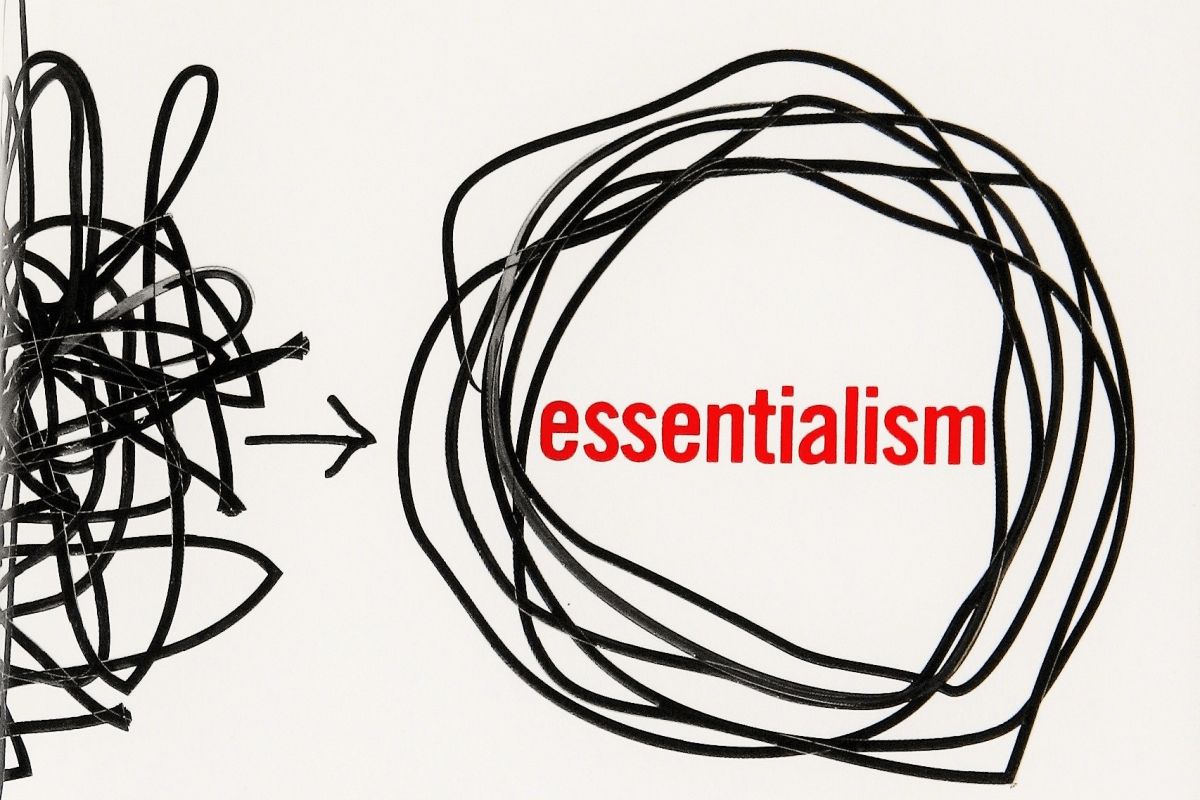
Žižek’s Essentialism

So, I’ve gone down a rabbit hole. Again. This time, it’s Žižek. Again. I’ve still not read any of Žižek’s own work, but people mention him often and he is a shameless self-promoter. In this video clip, he responds to whether gender is a social construct. Unfortunately, he conflates gender with sex, and his examples cite transsexuals not transgenders.

sex is about biological sex assignment

To set the stage, sex is about biological sex assignment—the sex category you are assigned into at birth: male, female, or other for some 1.8%. This is a simplistic categorisation: penis = male; vagina = female; both or neither: rounding error. In some cases, a decision is made to surgically conform the child to either male or female and ensure through prophylactic treatment that this isn’t undone hormonally in adolescence.

gender is about identity

Gender is about identity. As such, it is entirely a social construct. All identity of this nature is a function of language and society. In this world—in the West—, females wear dresses (if they are to be worn at all) and males don’t—kilts notwithstanding. In this world, sex and gender have little room for divergence. so the male who identifies as this gender (not this sex) is ostracised.

The example I usually consider first is the comedian Eddie Izzard—a cross-dresser. He’s probably a bad example because he does identify as a male. He just doesn’t wish to be constrained by male role restrictions and wants to wear the makeup that’s been reserved for women in the West at this time.

Žižek eventually gets to an argument about essentialism—so we’re back at Sorites paradoxes and Theseus again. At the start, I could argue that the sexual distinction has few meaningful contexts. For me, unless I am trying to have sex and/or procreate, the distinction is virtually meaningless. For others, only procreation remains contextually relevant. In this technological world, as Beauvoir noted in the late 1940s, strength differentials are not so relevant. End where they are, sex is not the deciding factor—it’s strength.

Žižek’s contention seems to be that the postmoderns (or whomever) disclaim essentialism in favour of constructivism but then resolve at essentialism as a defence because ‘now I am in the body originally intended’. I’ll argue that this is the logic employed by the person, but this person is not defending some academic philosophical position. They are merely engaging in idiomatic vernacular.

I am not deeply familiar with this space, and if the same person who is making a claim against essentialism is defending their actions with essentialism, then he’s got a leg to stand on. As for me, the notions of essentialism and constructivism are both constructed.