As I wrote earlier, free will is a vestige of bygone days—an anachronism. Even though though I’ve got a very low opinion of psychology as a discipline, if we introduce behaviourism into the equation, we can see how little agency a person really has.
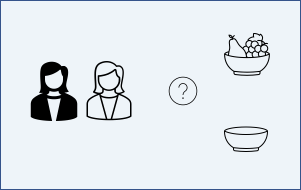
Mary’s parents have fed her porridge for breakfast her entire life. She loves porridge.
When Mary is away, she freely chooses porridge.
Even as she ages, she chooses porridge.
One day, she is dating someone who she knows prefers fruit to porridge, so Mary chooses fruit instead.
Is this free will? At first, Mary is conditioned to eat porridge, and she develops a preference for it. Given choice, she chooses porridge. But is this a choice? Yes, she can break the cycle and choose something else. Still is that her choiced, or an act of rebellion against her upbringing?
When dating, she chooses fruit—perhaps even going against her own preference, her preference to make a good impression taking priority.
If we rewind we can see that her parents fed her porridge because that’s what they chose.
Another more charged choice is religion. Most people with a religion share the same religion as their parents. In some cases, they choose a different religion or no religion, but these are minority cases. And some of these instances are to differentiate from their parents, to assert their individuality. But is this a choice, or is this pathology? How can you determine the difference?
Thisis not meant to serve as some exaustive treatment. I am merely jotting down thoughts as I continue to distract myself from higher-value outpout. 😉
Full Disclosure: I consider myself to be a determinist. I looked for something like Dawkins’ spectrum of theistic probability to evaluate where one might be oriented on a scale of free will to determinism to fatalism whilst also considering compatibilism.
Dawkins’ spectrum of theistic probability
Let’s lay some groundwork by establishing some definitions from most constrained to least:
Fatalism : a doctrine that events are fixed in advance so that human beings are powerless to change them
Compatibilism : a doctrine that maintains that determinism is compatible with free will
Determinism : a theory or doctrine that acts of the will, occurrences in nature, or social or psychological phenomena are causally determined by preceding events or natural laws
Freewill : freedom of humans to make choices that are not determined by prior causes or by divine intervention
It seems that freewill and fatalism are bookends with compatibilism attempting to moderate or synthesise freewill and deteminism. But it also seems that one’s selection may be contexual. Ultimately, this argument is fraught with semantic challenges insomuch as some underlying concepts are yet unresolved.
Crash Course Philosophy does provides a nice summary of the challenges in defending even compatibilist positions away from detemininism and even fatalism.
As this video notes, our choices may appear to be free, but it doesn’t take much effort to perform a 5-whys investigation to remove anything but homoeopathic amounts of agency.
Taking a short example, let’s look at the cases of the trial judges mentioned by Sapolsky (Behave) and Kahneman (Noise). Given all of the factors entering into sentences, prior offences, sex or gender of either the defendant or the judge, education, income, and so on, but far the largest factor in determining the length or severity of a sentence was the time between the sentencing and the judge’s last meal—effectively their blood glucose levels.
Some may argue that this is a short interval, but behaviourists would argue that a person now is a culmination of all of their experiences to date. That the decision of the so-called criminal to rob the liquor store (going for the stereotype here) was not the result of low blood sugar. This may be true, but there is still an unbroken chain of confluent events that brought them to that place.
From a culpabilty perspective, even absent true agency, the offender should still be incarcerated or whatever to prevent this behaviour from repeating. Of course, if you believe in rehabilitation, you are necessarily a behaviourist in soem shape or form: the idea is to effectively repattern experience impressions. The other problem is one of probability. That you did X once, are you lilkey to do it again? If not, then there is no further risk to society, as it were. Given the probability of recitivism—and some argue that mass incarceration increases the probability or attempting criminal actions post-release—, is this even an effective deterence? It’s time to get out of the rabbit hole.
From my position, it is impossible to reconcile experience and freewill. The best you can argue is that one is free in the moment—like some strange improv exercise, where you are shown a film that stops abrutly, and you are instructed to act out the remainder of the scene. Is this free, or is this extrapolating on your experience.
Skipping to fatalism, how probable is it that absolutely everything is determined. Reality is just a film we are both in and observing or experiencing, but all of it is already laid down. We are just unawares. Every strange plot twist and early exit was not only already scripted, but it’s already been captured. There is no room for improvisation or flubbed lines. There is no opportunity to go off-script. Even these words are predestined. Even unpublished thoughts were not meant to be published.
There is no way to test this sort of system from inside the system, and there is no way to get a vantage above it, so here we are.
The notion of determinism affords humans some modicum of agency, perhaps akin to one part in a trillion trillions. Practically, we are taking credit for a butterfly effect—and punishing for this degree of freedom. As Sapolsky has noted, most instances of perceived agency are trivial. We can ‘instruct’ finger movement with our brain. Ostensibly, we think: move finger; bend; point; stop. And even so, what was the cause of the thought to move the finger? Was there truly a non-causal event?
Cognotive dissonance ensures that we can’t allow ourselves to be NPCs or automotons. We have to omuch hubris for that. We must have some free will. Some religions say we not only have agency here in this life but that we chose the life to begin with. Even so, we’ve not seen the script in advance; we’ve merely chosen which lessons we want learnt.
So what about compatibilism? Sort of, who cares? Whilst I can define some interstitial state between free will and determinism, it seems that it would not be even tempered or would otherwise skew heavily toward determinism.
What keeps me from being a hard determinist is that I hold out hope for statistics, chaos, and stochasticism. One might argue in return, that these, too, are determined; we just don’t see the underlying connection. And that’s my cognitive cross to bear.
To be fair, it seems that the notion of free will or even compatibilism are secondary, let’s say, reactions to the need for culpability, for moral responsibility. Societies are built upon these notions, as are legal systems. Necessary ingredients to invent are:
‘Individual’
Agency and Volition
Choice, Motivation, and Intent
Responsibilty and Blame
None of these actually exist, so they need to be invented and constructed in order to associate self-control to actions. In fact, we have insanity escape clauses to recognise that there are cases where control is lost, whether temporarily or permanently, or never had in the first place for any number of ‘reasons’. At core, these attributes are necessary to exert power in a society. The next goal is to convince the actors or subjects that these things are ‘real enough’— as the saying goes, ‘good enough for the government’.
Even if we accept these things at face value, the interpretation and processing of these are different animals still. The notion of Will itself is likely speceous or another fabricated notion. Perhaps, I’ll address Will on another day. Probably not, as all of this is distracting me from my language insufficiency work.
When I think about free will, it is foisted on humanity in the same manner as gods and religion. With gods, we have been defending against theism for millennia. The gods fetish and free will are inextricably linked. As with the chicken and egg connundrum, the question is whach came first. Is God a reaction to fee will, or is it the other way around. Did we create free will to allow for responsibility and then fabricate Supreme busy bodies to act as ultimate judges? Or did we create the gods and build out the myth of free will to accommodate punishment of deviant behaviour. Or are these just parallel constructions? Enquiring minds want to know.
“Solitude is for me a fount of healing which makes my life worth living. Talking is often torment for me, and I need many days of silence to recover from the futility of words.”
— Carl Jung
My research into the insufficiency of language yields some nice results. Thank you Google.
To Gustav Schmaltz
30 May 1957
Dear Schmaltz:

I understand your wish very well, but I must tell you at once that it does not fit in my with my situation. I am not getting on at 82 and feel not only the weight of my years and the tiredness this brings, but even more strongly, the need to live in harmony with the inner demands of my old age. Solitude is for me a fount of healing which makes my life worth living. Talking is often torment for me, and I need many days of silence to recover from the futility of words. I have got my marching orders and only look back when there is nothing else to do. The journey is a great adventure in itself, but not one that can be talked about at great length. What you think of as a few days of spiritual communion would be unendurable for me with anyone, even my closest friends. The rest is silence! This realization comes clearer every day, as the need to communicate dwindles.

Naturally, I would be glad to see you for one afternoon for about two hours, preferably in Kusnacht, my door to the world. Around August 5 would suit me best, as I shall be home at then in any case. Meanwhile, with best greetings,

Yours ever,
Jung.
I need many days of silence to recover from the futility of words
Carl Jung
Clearly, the main theme here is solitute and slience, but I keyed in on the futility quote.
Markus Gabriel was brought to my attention, and I immediately thought of Lance at The Dog Walks.
In essence, part of his argument touches on the insufficiency of language, but his key rationale for this claim is anchored arount Kant and set theory. He published a book by the same name on this topic in 2015. This TedX talk is from 2013. I haven’t read it and am unlikely to do so in the near term, but it might be interesting if it expands upon the notion presented here.
As I am busy researching, this will likely be short. It would be even shorter without this preamble.
In researching the literature for my insufficiciency of language hypothesis, I am reading Fodor and Reboul to try to better grasp the evolutionary function of language. Both rely on the Theory of Mind. It seems that the more accepted theory is the language primarily evolved for communication as a survival mechanism. However, Fodor defends that cognition was the primary function and communicated was exapted. Carruthers contributes to the Language of Thought domain.
As I’ve presented here in dribs and drabs, my insufficiency theory of language argues that language is ill-suited for the communication of abstract concepts. It is fine for expression; communication of situational objects, inventions, and motion, description; and argumentation. But imagined concepts such as fairness, justive, and freedom don’t hold water. As I’ve discussed this hertofore in detail, I’ll not repeat myself.
Confirmation bias notwithstanding, the primacy of cognition better explains why abstract conceptual communication so often fails. Language has been stretched beyond its boundary constraints, and the air is thin past that.
I’m not sure I am willing to choose a side quite yet. Rather, I’ll note the different perspectives and move on. The underlying mechanism is less important to me than the empirical deductions that follow.
I’ve been following Philosophy Tube since Abigail was Ollie. Always top-notch material. Their content has gotten longer over time, so I’ve found myself skipping over in favour of shorter presentations. I am so glad to have decided to watch this one.
As anyone who follows me knows, I am a big advocate of social construct theory, yet I learned so much in this vid, which is proper well-cited AF. Lot’s of new content to add to my backlog, so I’ve got more than enough reading material for my next few incarnations at least.
The biggest takeaway for me is the notion that not only is gender a social construct, but so is sex itself. Previously, I have defended the sex-gender distinction, but in fact, scientific taxonomies are still social constructs—only in the scientific community rather than the greater community at large.
Abigail’s platypus drives home the point. Not that it’s some big reveal. Another less poignient analogy is fruit and vegetable classification. Tomatoes are fruits. Mellons—watermellons, pumpkins, and so on—are fruits. Say it ain’t so.
Give it a viewing and like or comment here and/or there.
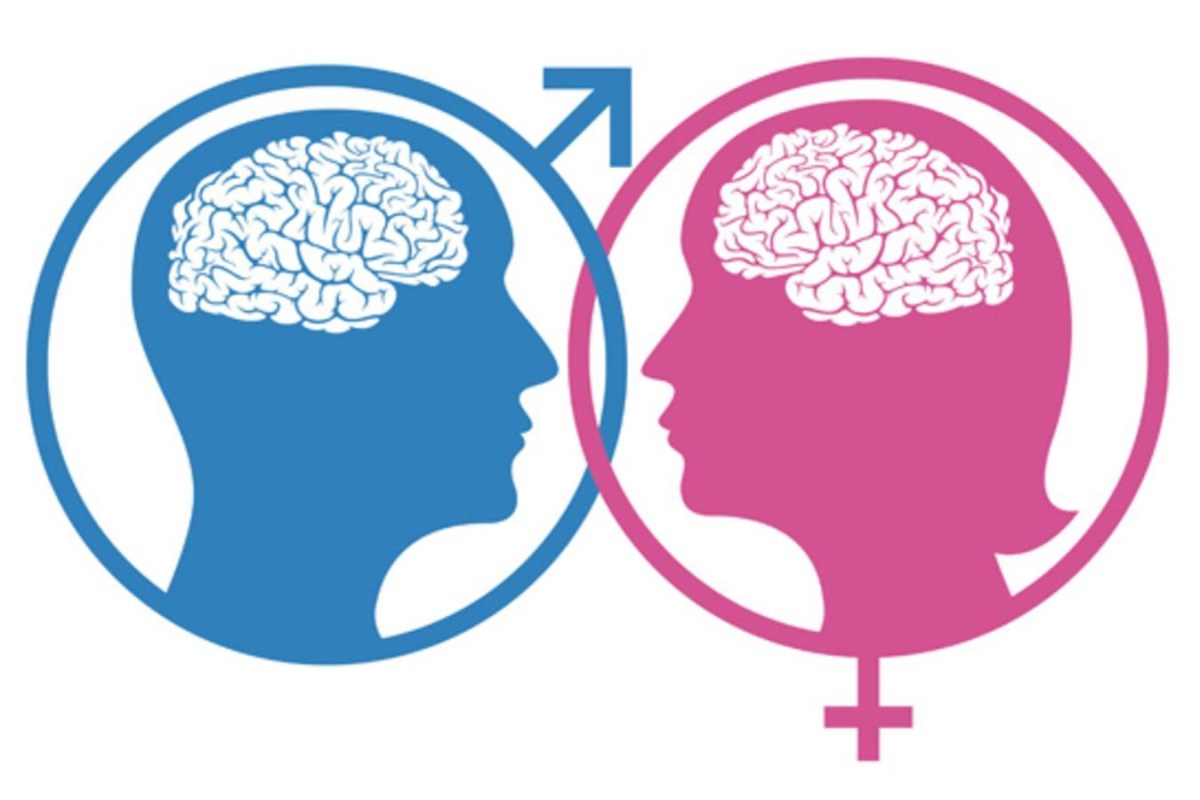
It’s only happenstance that I’ve got consecutive gender posts. Derrida spoke about prioritisation in binary pair, and the inherent symbolic connotation. Sex and gender are two examples.
At the risk of overstating the obvious, masculinity holds the priority in this pair bond. Masculinity traditionally conveys hardness, strength and logic, whilst femininity conveys softness and weakness and emotion. This is what Beauvoir intends by her use of the other sex—male and other. Even in a non-binary frame, maleness still prevails over everythying else. Of course, in this broader world, male may trump female, but in an appeal to nature fashion, female trumps intersex in the same way the light-skinned people of colour trump their darker-skinned counterparts.
English even has derivative terms such as hysterical, an emotional state rooted in the Greek hystera, the uterus or womb. Etymologically, the word was invented by the Greek under the impression that this behaviour was a deviation from male normaly.
In the physical world, this male-female terminology generailises to penetrator and penetrated—penetratrix, anyone? We routinely refer to plugs and connectors with prongs as male and recepticals are female. At first glance, it might be tempting to assume that penis is somehow related to penetration, but it’s not so, as penis derives from tail.
In music there is the notion of cadence, the beats of a rhythm. Classically speaking, there are masculine and feminine cadences. And if you guessed that masculine cadences involve strong beats and feminine cadences invlove weak beats, you’d be correct.
Feminine Cadence a musical cadence in which the final chord or melody note falls on a weak beat
The reason I am writing this is as a reminder to the predjudice langage embeds and perpetuates. Even if we have lost the connection to the original intent, the sense remains. We should actively seek other terms that don’t promote this anachronistic belief system.
It’s also easy to get carried away and over-specify the domain. So, terms like manhole, manuscript, manipulate, and such are, let’s say, false cognates, in a manner of speaking. There are no counterpart womanholes—sophomoric humour notwithstanding—, womanuscripts, and womanipulation, though it might be fun to write some exposition with the intention of satarising these and words with a similar structure. I’m not sure I could womanage to carve out the time to get there.
Last Word
In a different space, we’ve got master-slave word pairs. In computers, there may be master and slave drives. I’ve heard people point out the insensitivity of this notion without grasping that projecting American (or wider-world) human slavery on this rather than understanding this pairing existed well before the New World was even ‘discovered’. This is where hysterical political correctness needs to step down and give way to education.
This wall of words was posted in a Facebook that the AI thought I would be interested in. I’m not, save for the rhetorical and grammatical structure. I am not interested in the veracity of the claim or the sentiment it is meant to provoke.
The author purportedly had a conversation with a former student, who identified as being a member of another race—black, I suppose; African-American in the current vogue; negro and coloured in bygone days.
Notice the head-fake. A conversation with an individual person quickly morphs into a generalisation. This individual, in the mind of the author—or at least the conveyance—was now the representative mouthpiece for this so-called race. But that’s not what I question.
They and them are now considered to be acceptible singular forms if a person identifies as such. I’m not sure I am equiped to comment on identification to a grammatical element, so I’ll side-step that and focus on the outcome.
Perusing this or something similar, there is a sense of undeserved weight—an inclusion from the perspective of a single person. Some people actively promote themselves as spokespeople for a group, whether race or something else. But this person did not necessarily claim to speak for anyone beyond him or herself—perhaps some small, immediate group of collegues who shared this perspective.
I am wondering how this will play out as a device to intentionally deceive the reader.
Another thing…
I was in Philadelphia yesterday, and a black associate of mine was commenting on what he deemed to be 150 neo-Nazi skinheads parading in the rain, a point eliciting more pleasure than perhaps it deserved. His assessment is that race was not a problem, that he held no illwill toward any race. His contention was with ‘motherfucking racists’. Unfortunately, there is no scientific racist litmus. There are only actions and perceptions. This is where Popper’s paradox of tolerance pops into mind. And so it goes…
Here I am yet again writing about something I am not particularly equiped to do. In other fora, I’ve been directed again to Lacan vis-à-vis a thread about Lacan’s perspective on the real. I’ve commented on Lacan before, usually in the context of eschewing any philosophy founded on psychology—especially psychoanalysis. Explaining that I have a reading backlog extending beyond my likely lifespan, it was recommended that I read Jacques Lacan by Sean Homer, so I am sharing the recommendation. Anything by Bruce Fink was another reco. Noam Chomsky takes an ad hominem swipe at Lacan here.
I decided to watch a few videos (including this, this, and this) to survey some of Lacan’s ideas, knowing that something could be lost in the translation. Let’s just say that I was underwhelmed.
In a nutshell, my biggest contention is the notion of the unconscious as an active agent.
According to my understanding, Lacan posits that there is a ‘real’ out there, but it is obscured by language and subject to interpretation. To him the real is a Void.
Psychoanalysis presumes being able to get closer to the ‘truth’ of reality. Like astrologers and fortune-tellers, Psychoanalyst primary defence is that not all knowledge is evidence-based or falsifyable. My problem is that I am not open to another way of experiencing the world, but they somehow have privileged access to this truth. Of course, this is a similar to religious claims of some special spiritual access that opens when you believe.
To me, the Void is as apt a metaphor as any. And while we both agree that the real is inaccessible, I don’t accept the impostition of the how and the why. What Lacan does—and Freud before him and psychoanalysts more generally—is to inject hows and whys into the story. In this narrative, the unconscious has active powers, (as opposed to negative space), where memories (in whatever form) may be repressed and actions may be triggered (or activated) by unconscious urges or desires. I consider this last train of thought wholly imagined and fabricated. This void and the unconscious has no purpose.
Along the way, I do agree with Lacan’s poststructuralist position. I have no issues with symbolic or metaphoric concepts and speech. The contention arrises when one attempts to claim the metaphoric to be concrete. This is the same contention I have with people who take the metaphoric text of the bible and cencretise it. There are other problems there, but I’ll quit now.
In bygone days, national governments asserted power and prevailed over relgion, in essence forming a ceasefire partnership that has, save in pockets, pretty much held fast in most of the Western world. Religion is still somewhat of a factor in many corners — in some circles dominant —, but the latest challenger are the acquisitive corporate defenders: multinational (wannabe supernational) entities, whose aspirations of dominance is stifled by the prevailing power structure.
As many in government are Capitialist converts, they each and collectively have an Achilles heel, as captured by the adage probably misattributed to Lenin, ‘The capitalists will sell us the rope with which to hang them’.
The capitalists will sell us the rope with which to hang them.
not Vladimir Ilich Lenin
Contemporary politics see the orgy of strange bedfellows and the slow poisoning of Democracy by lobbyists and their palliative care of the deligates of the People. Some of the polis see this and react in horror to decisions such as Citizens United in the United States, as more and more foxes are voted into the hen house — and wolves into Congress. This is not limited to the United States.
Along the way, some government officials attempt to cozy up to the predators to enriched themselves personally at the expense of their citizenry and on the way to the killing floor. They’ll have been fattened by scraps, only to be consumed in the abbatoir. In some cases — perhaps many — the leaders are themselves part of this acquisitive class, so they are not in particular need of a country.
Even if the acquisatives are aware that they’re destroying the host and the structure that invented them, these petulent progeny run roughshod anyway. But the permissive parents don’t wish to bite the hands that feed them.
So far, the acquisitive corporatists have been able to snuggle up with the ruling class, and this class perceives themselves as being part of this class. Most aren’t. They are entourage at best — pathetic sycophantic hanger-ons. Once they realise that they are not members of the club and try to wrest control, the real fight will commence, but it will likely be too little and too late. The real losers will be the people, no longer having evern the semplence of protection. Libertarians will finally see that their dream was a nightmare from the start.
And then we await the next paradigm shift.
Backstory
What prompted this post?
A colleague on Facebook posted a Scientific American article about oversimplification of sex determination in response to a transphobe, and Facebook took it down. Having had a couple similar responses myself, I have come to the conclusion that Facebook and the other social media giants need external governance. I don’t want to endure what ass hats like Donald Trump have to say any more than the next person, but this censorship needs to happen in a different way. Given my perspective on Truth, we need to assess how best to keep devisive speech in control. In some cases, these people are simply lying. They claim that I didn’t say that, wasn’t with that person, wasn’t in that place, and so on when these are all demonstrably false. This is not generally illegal behaviour.
When Trumps says, I’ll be president again in August, or I’ll be Speaker of the House, this is a prediction. It’s like saying, ‘This is the winning lottery ticket’. Language allows for this speculative hyperbole. Again, bad form and taste are not illegal. Even if some assclown riles up some portion of the populace, who’s to say whatever they’re hawking isn’t for some future greater good at the expense of some near-term disruption.
I’m rambling. The point is that the overreach of Facebook is just another instance of corporations taking power into their own hands and uncontested. It will come to a head. Perhaps not in my lifetime, but mark my words.