My interest strays from philosophy to politics, music, language, and linguistics. Here I explore the latter.
I took some time to create some educational content. Trivia to be sure. Educational nonetheless. Check it out.
Socio-political philosophical musings

My interest strays from philosophy to politics, music, language, and linguistics. Here I explore the latter.
I took some time to create some educational content. Trivia to be sure. Educational nonetheless. Check it out.
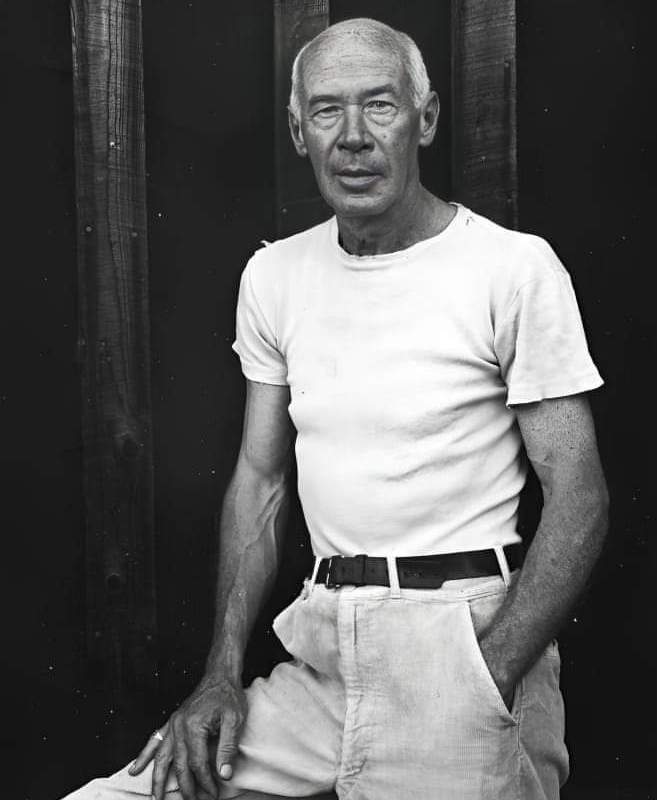
Once I thought that to be human was the highest aim a man could have, but I see now that it was meant to destroy me. Today I am proud to say that I am inhuman, that I belong not to men and governments, that I have nothing to do with creeds and principles. I have nothing to do with the creaking machinery of humanity – I belong to the earth! ~Henry Miller
(Book: Tropic of Cancer https://amzn.to/3PiCzBN)
I’ve been MIA here for a couple of reasons:
As for my physical concerns, I won’t bore you. I’d rather discuss my side project, which in the absence of employment turns out to be my primary focus. Currently, I am world-building, so I can explore philosophical and sociological issues in a safe space.
This world is contemporary Earth and the near future—at least for now, as I am leaving a lot of room to explore. Check out my Ridley Park blog if you are interested in specifics. Here, I just want to focus on the philosophical aspects and ramifications, using this story world as a reference, so I’ll provide a brief setup upon which to build.
In this world, a scientist has genetically engineered an embryo (for reasons) and ends up with quasi-vampires, a subspecies of humans—or is it? This cohort is human for all intents and purposes, except they need to ‘drink’ blood to survive. They’ve got fangs and an internal organ used to process and metabolise the blood. He decides to clone these and create a new population. In time, he improves on the genetics in the manner described here. The first short story (flash fiction) I’ve shared is Hemo Sapiens: The Unidentified, but let’s get onto the philosophical aspects.
In this world, I shed light on what makes humans human. What happens when we need to coexist with a similar species? What if we treat them as second-class citizens? What if they become physically and intellectually superior?
Are these people a new species or a new race? Or are they just transhumans? What rights do they have? As a new race, perhaps it’s earier to fathom them and grant them human rights, but what if they are a new species? We haven’t had a great track record of granting rights to other species.
And what’s their immigration status? A common reaction to ‘immigrants’ is to ‘send them back to where they came from’. But what if they came from here? What if they were raised here and speak our language? In this case, they are raised near Manchester in the UK. They speak English. They are not only sentient beings at the start, they have above average IQs and have general cultural awareness. Some speak a second language. Save for the fangs, all outward appearances show them as human.
Until they are discovered by authorities, they are raised in a greenhouse environment. By the time they are discovered, there are five versions of them—alpha through epsilon—, and some have started reproducing, so we get to explore these dynamics, too. Some have tagged these people—are they people?—as homo sapiens sanguinius—bloodsucking intelligent man. Affectionately, I call them hemo sapiens.
I’ll return here as I produce more content there. I prefer not to create spoilers. Although I am working on several stories in different formats (short story, novella, novel, and so on), I’ll publish them (somewhere), provide literary analysis on my Ridley Park blog and provide philosophical commentary here. I hope you’ll join me and participate in the discussion.
Identity is a fiction; it doesn’t exist. It’s a contrivance, a makeshift construct, a label slapped on to an entity with some blurry amalgam of shared experiences. But this isn’t just street wisdom; some of history’s sharpest minds have said as much.
“There are no facts, only interpretations.”
— Friedrich Nietzsche
Think about Hume, who saw identity as nothing more than a bundle of perceptions, devoid of any central core. Or Nietzsche, who embraced the chaos and contradictions within us, rejecting any fixed notion of self.
Edmund Dantes chose to become the Count of Monte Cristo, but what choice do we have? We all have control over our performative identities, a concept that Judith Butler would argue isn’t limited to gender but applies to the very essence of who we are.
“I don’t feel that it is necessary to know exactly what I am. The main interest in life and work is to become someone else that you were not in the beginning.”
— Michel Foucault
But here’s the kicker, identities are a paradox. Just ask Michel Foucault, who’d say our sense of self is shaped not by who we are but by power, society, and external forces.
You think you know who you are? Well, Erik Erikson might say your identity’s still evolving, shifting through different stages of life. And what’s “normal” anyway? Try to define it, and you’ll end up chasing shadows, much like Derrida’s deconstruction of stable identities.
“No such things as selves exist in the world: Nobody ever was or had a self.”
— Thomas Metzinger
“He seemed like a nice man,” how many times have we heard that line after someone’s accused of a crime? It’s a mystery, but Thomas Metzinger might tell you that the self is just an illusion, a by-product of the brain.
Nations, they’re the same mess. Like Heraclitus’s ever-changing river, a nation is never the same thing twice. So what the hell is a nation, anyway? What are you defending as a nationalist? It’s a riddle that echoes through history, resonating with the philosophical challenges to identity itself.
“I never can catch myself at any time without a perception, and never can observe anything but the perception.”
— David Hume
If identity and nations are just made-up stories, what’s all the fuss about? Why do people get so worked up, even ready to die, for these fictions? Maybe it’s fear, maybe it’s pride, or maybe it’s because, as Kierkegaard warned, rationality itself can seem mad in a world gone astray.
In a world where everything’s shifting and nothing’s set in stone, these fictions offer some solid ground. But next time you’re ready to go to the mat for your identity or your nation, take a minute and ask yourself: what the hell am I really fighting for? What am I clinging to?

In our ever-connected world, the media plays a pivotal role in shaping public perception and influencing societal narratives. However, this influential power often comes with a darker side, as the media can become complicit in advancing the interests of various complexes – intricate networks of governmental, corporate, and private entities. In this blog post, we will explore how the media intertwines with these complexes and the implications it has on society. Let’s delve into the intricate web that binds the media with the prison-industrial complex, military-industrial complex, and other powerful entities.
The prison-industrial complex thrives on the growth of the prison system, leading to concerns about harsh sentencing, mass incarceration, and the exploitation of cheap prison labor.
The media plays a crucial role in perpetuating this complex by sensationalizing crime stories, contributing to public fear, and endorsing “tough-on-crime” narratives. Biased reporting and lack of coverage on alternative approaches to criminal justice reform further solidify the link between media and the prison-industrial complex. (Source: The Nation [1])
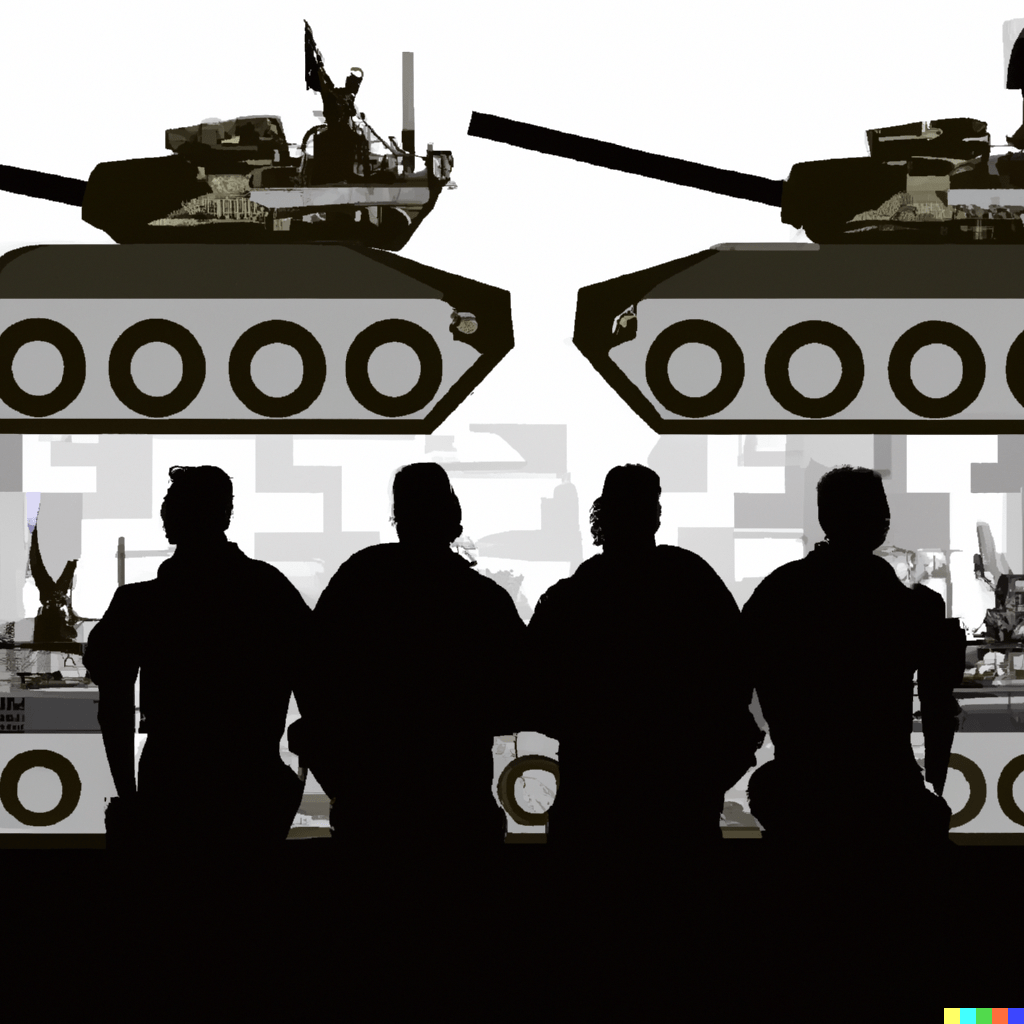
The military-industrial complex is a symbiotic relationship between the defense industry and the military establishment. The media becomes complicit in this complex through its coverage of conflicts, often glorifying military actions and reinforcing the necessity of heightened defense spending. Corporate influence on media content can lead to the marginalization of dissenting voices that question militarization and war efforts. (Source: Fairness & Accuracy In Reporting [2])
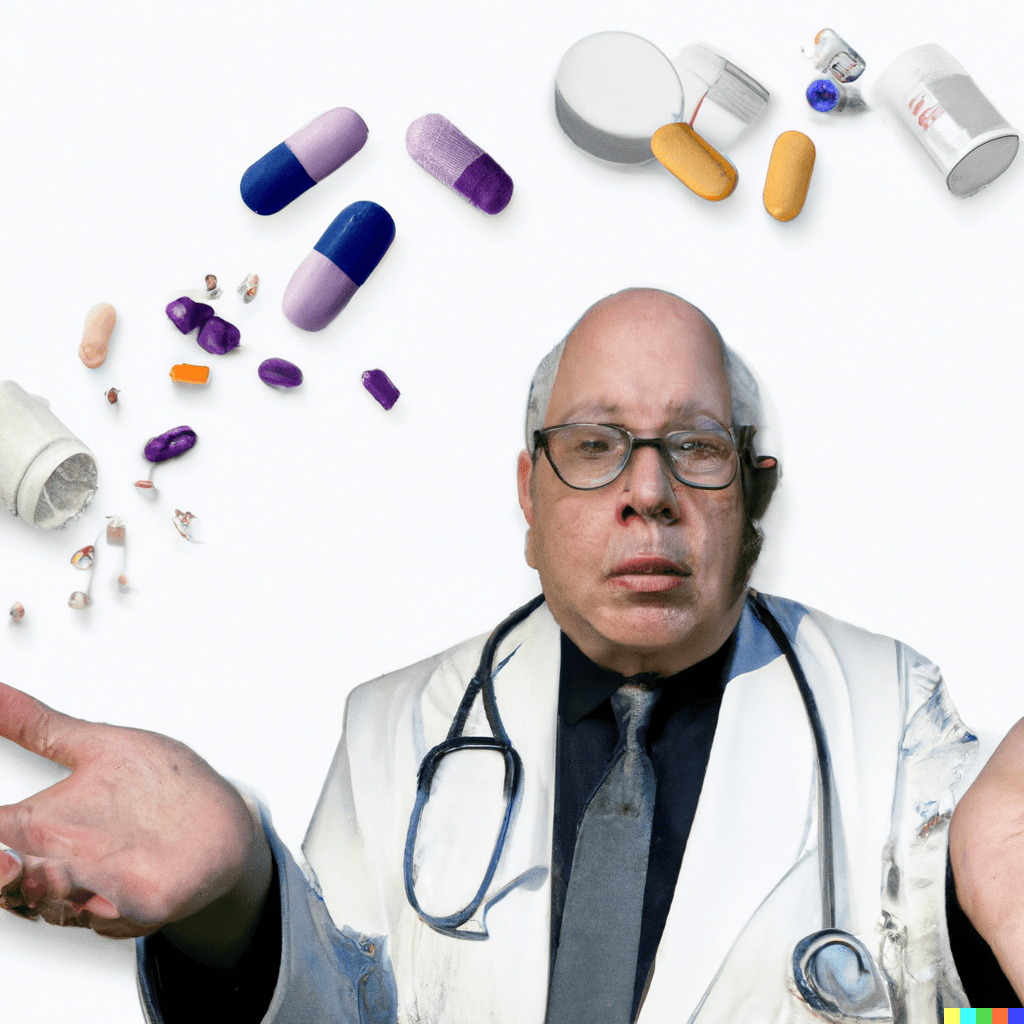
Whilst not as widely recognized, the medical-industrial complex also finds synergy with the media. Pharmaceutical companies, medical device manufacturers, and healthcare providers may influence media content through advertising revenue and sponsored content. Biased reporting on medical treatments and research can shape public opinion and drive consumer demand for specific drugs and medical interventions. (Source: PLoS Medicine [3])
These complexes are not isolated entities; they often overlap and reinforce each other. For instance, the military-industrial complex may fuel conflicts that contribute to the expansion of the prison-industrial complex through the incarceration of individuals affected by war and militarization. Corporate interests that profit from one complex might have a stake in another, creating a tangled web of intertwined power structures.
Media’s complicity in advancing the interests of various complexes is a multifaceted issue that demands critical examination. By shedding light on this subject, we empower ourselves to become discerning media consumers, capable of identifying bias and questioning narratives that may serve powerful entities rather than the public interest. It is essential to encourage diverse and independent journalism that holds these complexes accountable and promotes transparency. Only by understanding the intricacies of this nexus can we strive for a more just and equitable society.
1. “The Media’s Role in Perpetuating Mass Incarceration,” The Nation
2. “How Media Flacks Sold the Iraq War,” Fairness & Accuracy In Reporting
3. “The Role of the Media in Promoting and Reducing Health Inequalities,” PLoS Medicine

Servile compliance and vigilante justice are the core messages underlying Small Town. Comply, or else…
Watching the video, Try That in a Small Town by Jason Aldean, I was left pondering: Are there no convenience store robberies in small towns, or are petrol station and liquor store robberies exempt from scrutiny? Most mass school shootings happen in small towns. Am I missing something through the bravado?
I guess the works of the likes Truman Capote and Flannery O’Connor are lost to this generation, and the message of the Borg has faded into history.
Don’t dare be different or speak your mind about anything meaningful. Sure, serve ham over turkey on Thanksgiving. Be a rebel, but don’t complain about low wages or political subjugation…unless it’s what the local consensus believes.
But tightly-knit small towns will make sure that justice prevails even if it’s the extra-judicial flavour.
This video is divisive to the country as a whole at the expense of some small-town jingoism.
Oh, and don’t even think of burning that flag.

I’ve created a short video for YouTube on my Language Insufficiency Hypothesis.
“Language has always been and will always be insufficient to convey a shared meaning to abstract concepts.”

Many of us have probably heard the call for ethical AI, but what is ethical AI exactly?
Ethical AI applyies an ethical framework to Artificial Intelligence, which is to say to apply ethics to the machine learning model.
Constitutional AI is a potential solution to ethical AI. The challenge is that all ethical models are flawed. Constitutional AI suggests a rule set that is wrapped around the base functional model. Product examples of this are Claude and Anthropic, which is supported by Google. OpenAI, which relies on human governance, the basis of ChatGPT, is supported by Microsoft.
Each of these has inherent challenges. We’ve all likely heard of the systematic bias inherent in the data used by large language models. OpenAI uses human governance to adjust and minimize the bias in these models. However, this can lead to hypercorrection and introduces different human biases. Moreover, this leads to situations where queries are refused by the model because human governance has determined the outputs to be out of bounds.
Constitutional AI on the other hand has underlying ethics explicitly built into the model under the auspices of harm reduction. The problem I have with this is twofold: The first is fundamental. Constitutional AI is based on the deontological morality principles elaborated by Kant. I’ll come back to this. The second is empirical.
Many of us are of the age to recall when Google’s motto was to do no evil. When they decided they could not follow their own dictate mom they simply abandoned the directive. Why should we expect a different behaviour this time around?
Moreover, harm is a relative concept so to minimize harm of one group may be to increase harm in another. This undermines the deontological intent and is of larger concern.
As a moral relativist and subjectivist, I find this to be categorically problematic. It poses even more problems as a moral noncognitivist.
From the relativist’s perspective, our AI is fundamentally guided by western white guys with western white-guy sentiment and biases. Sure, there are token representations of other groups, but by and large they are marginalised and the aggregated are still dominated by western white guys.
DISCLAIMER: It is still difficult for me to input or edit copy into a computer, so this may be more ragged than usual. I may return to amend or extend it as I see fit.

Many lives were changed in 2019 as fentanyl replaced heroin as the opiate of the masses on the streets of Philadelphia. Ten times more potent than heroin, fentanyl lasts half the time between fixes. It cost many lives.
But look deeper. Look away from the streets and towards the medical-industrial complex. The state of pain management is in its infancy. In some hundred years we’ll look back on this period and cringe in the same manner as when we regard bloodletting and humours. We have myriad solutions, but as many cases have none. Opiates fill some of this void, whether by prescription or on the streets, but even this only masks the symptoms.
The goal is not always to obviate physical pain, but for some mental torment feels as real. Those with mental anguish are marginalised whilst the rest are accused of overreacting. It all in their heads, too. Drug-seekers. Mental illness. Bollox.
Medical science in this arena is in its Infancy. Not quite yet toddlers, but they won’t admit it. Better to blame the patients and victims. Better to make it a moral issue. Public health regulations are in the same state of maturity. Hubris kills. Capitalism kills. Calvinistis protestant work ethic kills. Fetanyl kills, too.
Ninety per cent of fetanyl is cut with Xylazine, tranq, a veterinary tranquiliser. This makes fetanyl cheaper and is reported by some to extend the euphoric effects, but it’s not an opioid, so interventions are different to opiate-induced overdose.
Xylazine renders the user to sleep, but it doesn’t stop withdrawal symptoms. Addicts awaken to need another fix. If there isn’t enough opiate, one may awaken already in withdrawal.
Whilst heroin might last eight hours between fixes, fentanyl lasts closer to four. The addict needs to seek twice as often.
But I’m rambling. I’ve been in hospital since 9 March. It’s still difficult to focus. My girlfriend died the next day, on the 10th. She overdosed on a chemical cocktail of fentanyl, alcohol, and who knows what.
Her pain was psychological, but that’s a topic for another day. She was in recovery. This is where some are most susceptible to overdose.
I’m tired. More to follow…
 Philosophics