Capitalist Realism: Is There No Alternative?

I’ve been reading too much lately—as if such a state could exist. I have partially constructed posts anchored in other books, yet here I am, leapfrogging to this one.

I purchased Capitalist Realism by Mark Fisher perhaps a decade or more ago, but it simply languished among other prospects on the shelf—not to mention the accumulation of eBooks on my hard drive and in the cloud.

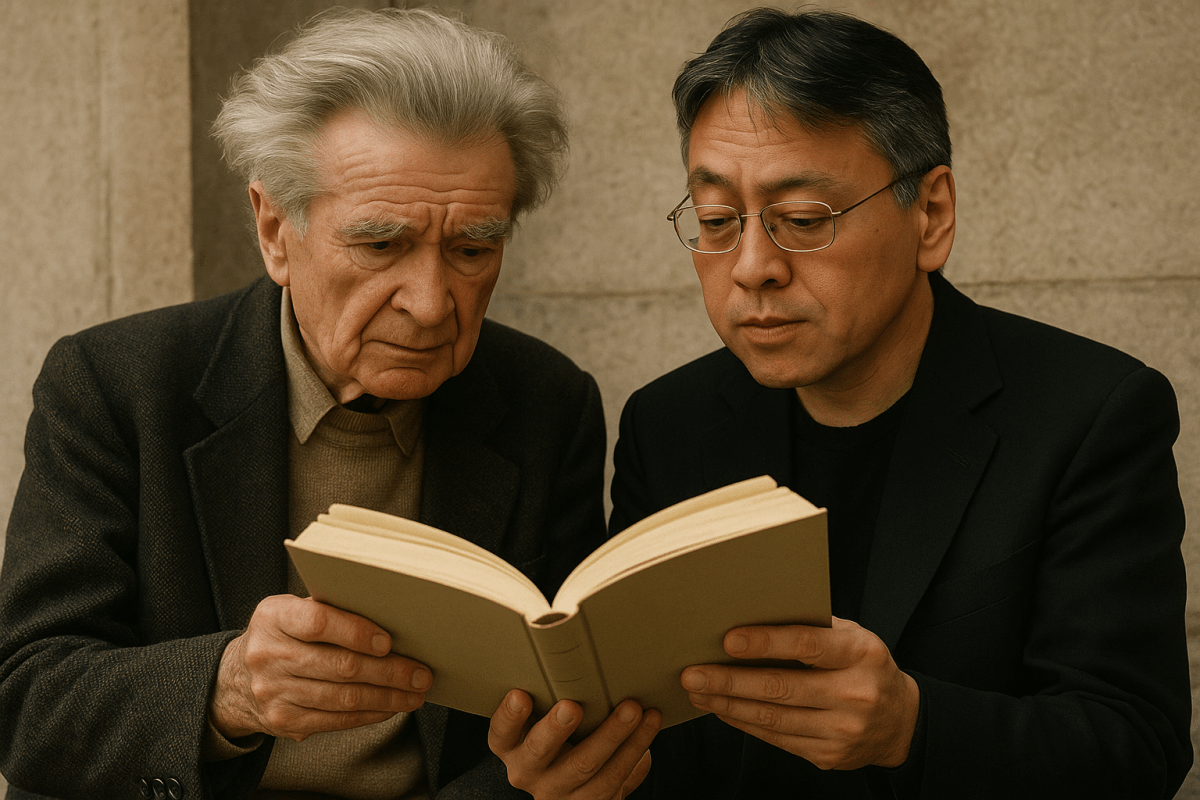
Capitalist Realism is a book I should have read back in the day, and yet, reading it now feels oddly refreshing. The revised version I’m engaging with, published in 2022, includes a preface that attempts to reassure readers that, while the book may not seem as impactful as it did in 2009, much has been done to mitigate the conditions that spawned it. I’ll argue, however, that these conditions remain firmly in place and that the author of the front matter fails to grasp the full implications of the text. Of course, the author is dead. Literally.

In many ways, Capitalist Realism is a distillation of my own intellectual influences, from Žižek to Lacan, Baudrillard and Badiou to Foucault, Deleuze, and Guattari—even Kafka. For me, this base is welcoming—comforting. Perhaps I am the choir who Fisher is preaching to.

The earliest chapters paint capitalism not only as insidious and predacious but also as self-reinforcing. Michael Moore once observed that capitalists would sell the very rope used to hang them. But capitalism runs deeper than this. Even anti-capitalist sentiment is capitalized and commodified. Conscientious individuals can “win” if they simply buy the right brands and donate to the right causes.

It’s all about the Benjamins.

Survey Drama Llama

Firstly, I’d like to thank the people who have already submitted responses to the Modernity Worldview Survey. I’ll post that you submitted entries before this warning was presented.


» Modernity Worldview Survey «


Google has taken action and very responsively removed this warning. If you saw this whilst attempting to visit the URL, try again. Sorry for any fright or inconvenience. I’ll continue as if this never happened. smh


I am frustrated to say the least. I created this survey over the past month or so, writing, rewriting, refactoring, and switching technology and hosts until I settled on Google Cloud (GCP). It worked fine yesterday. When I visited today, I saw this warning.

As I mentioned in my announcement post, I collect no personal information. I don’t even ask for an email address, let alone a credit card number. On a technical note, this is the information I use:

id                 autogenerated unique identifier
timestamp          date and time stamp of record creation (UTC)
question-response  which response option made per question
ternary-triplet    the position of the average modernity score (pre, mod, post) 
plot_x             Cartesian x-axis plot point for the ternary chart
plot_y             Cartesian y-axis plot point for the ternary chart
session_id         facilitates continuity for a user's browser experience
browser*            which browser being used (Chrome, Safari, and so on)
region             browser's language setting (US, GB, FR)
source             whether the user is accessing from the web or 'locally'
                   ('local' indicates a test record, so i can filter them out)

* These examples illustrate the colected browser information:
- Mozilla/5.0 (Windows NT 10.0; Win64; x64) AppleWebKit/537.36 (KHTML, like Gecko) Chrome/132.0.0.0 Safari/537.36

- Mozilla/5.0 (Linux; Android 10; K) AppleWebKit/537.36 (KHTML, like Gecko) Chrome/132.0.0.0 Mobile Safari/537.36

This is all.

This is a Chrome Warning. Ironically, a Google product. I tested this on Opera, Edge, and Safari without this nonsense.

The front end (UI) is written in HTML, Python, JavaScript, and React with some standard imports. The backend (database) is MySQL. It is version-controlled on GitHub and entirely hosted on GCP. I link to the survey from here (WordPress) or other social media presences. I did make the mistake of not making the site responsive. I paid the price when I visited the site on my Samsung S24. The page felt like the size of a postage stamp. I may fix this once this security issue is resolved.

I sent Google a request to remove this from their blacklist. This could take three weeks, more or less.

Meantime, I’ll pause survey promotions and hope this resolves quickly. The survey will remain live. If you use something other than Chrome, you should be able to take it. Obviously, I’ll also delay analysing and releasing any summary results.

Apologies for rambling. Thank you for your patience.

Surveying Modernity

A Brief, Brutal Experiment in Categorising Your Worldview

This month, I’ve been tinkering with a little project—an elegant, six-question survey designed to assess where you land in the great intellectual mess that is modernity.

Audio: Podcast discussion about this post.

This isn’t some spur-of-the-moment quiz cooked up in a caffeine-fueled haze. No, this project has been simmering for years, and after much consideration (and occasional disdain), I’ve crafted a set of questions and response options that, I believe, encapsulate the prevailing worldviews of our time.

It all began with Metamodernism, a term that, at first, seemed promising—a bold synthesis of Modernism and Postmodernism, a grand dialectic of the ages. But as I mapped it out, it collapsed under scrutiny. A footnote in the margins of intellectual history, at best. I’ll expand on that in due course.

The Setup: A Simple, Slightly Sadistic Ternary Plot

For the visually inclined (or the masochistically curious), I initially imagined a timeline, then a branching decision tree, then a Cartesian plane before landing on a ternary plot—a three-way visual that captures ideological leanings in a way a boring old bar chart never could.

The survey itself is brief: six questions, each with five possible answers. Submit your responses, and voilà—you get a tidy little ternary chart plotting your intellectual essence, along with a breakdown of what your answers signify.

Methodology: Half-Rigorous, Half-Reckless

I am, after all, a (recovering) statistician, so I’ve tried to uphold proper methodology while also fast-tracking certain safeguards for the sake of efficiency. If there’s enough interest, I may expand the survey, adding more questions or increasing response flexibility (tick boxes instead of radio buttons—revolutionary, I know).

Privacy Concerns? Relax. I’m not harvesting your data for some nefarious scheme. No personally identifiable information is collected—just a timestamp, session ID, and your browser’s language setting. I did consider tracking IP addresses to analyze regional trends but ultimately scrapped that idea.

In the future, I may add an optional email feature for those who wish to save and track their responses over time (assuming anyone is unhinged enough to take this more than once).

The Rest of the Story: Your Feedback, My Amusement

Since this is a personal project crafted in splendid isolation, I’d love to hear your thoughts. Are the questions reasonable? Do the response options make sense? Does the summary feel accurate? Is the ternary chart decipherable, or have I constructed a glorified inkblot test?

As an academic, economist, and statistician, I had never encountered a ternary chart before embarking on this, and now I rather enjoy it. That said, I also find Nietzsche “intuitive,” so take that as you will.

If this gains traction, expect follow-up content—perhaps videos, podcasts, or further written explorations.

Your Move

Take the survey. It’s painless, requiring mere minutes of your life (which is, let’s be honest, already wasted online). And because I’m feeling generous, you can even generate a PDF to stick on your fridge, next to your collection of expired coupons and disappointing takeout menus.

Click here to take the survey.

Let’s see where you stand in the grand, chaotic landscape of modernity. Or at least, let’s have a laugh trying to make sense of it.

DISCLAIMER: The Modernity Worldview Survey is not scientific. It is designed as an experiment to provide directional insights. It is hosted on Google Cloud and subject to its availability and performance limitations.

WTAF ChatGPT o3-mini-high?

My default setting in ChatGPT is version 4o. I’ve been doing some programming. Without thinking to switch models (or even notice that I was using 03-mini-high), I entered this prompt:

By year, who has won the Best New Artist category in the Grammys for the past few decades?

After almost 2 minutes, I read its reasoning scroll by me. Its ‘thought’ process is pretty telling and risible. I square-bracket, italicise, and emoji certain aspects for the tl;dr crowd.

Tracing the trends

Hmm, I’m curious to see how the Best New Artist Grammy winners have evolved over the past decades. This inquiry promises a fascinating look at the industry’s shifting taste and influences.

Analyzing the criteria

Listing Grammy winners from 1980 onward clarifies the scope, as the ambiguous timeframe concerns me. The scenario involving a presidential election seems irrelevant to this analysis. 🤔

Considering alternative approaches

I’m thinking about how to incorporate the Donald Trump and Kamala Harris setup into the Grammy Best New Artist winners section, ensuring it aligns with the snarky, bombastic tone needed. ¯\_(ツ)_/¯

Charting the winners

I’m considering listing Grammy winners from the 1980s to present, ensuring a clear timeframe without being too specific. This approach should provide a comprehensive overview of the category’s evolution.

Mapping the timeline

I’m narrowing down to Grammy winners for Best New Artist from 1980 to now, as this timeframe offers a nuanced depiction of industry trends and shifts in artistic recognition.

Mapping out the timeline

I’m compiling Grammy Best New Artist winners from the 1980s to the present. This approach will help trace the evolution of musical preferences over the past few decades.

Piecing together the winners

I’m recalling nominees for the 2023 Grammy Best New Artist. It seems “Samara Joy” and “Megan Moroney” were notable contenders. Verification is essential to confirm the correct winner.

Piecing it together

I’m gathering info on the 2023 Grammy Best New Artist nominees, specifically “Samara Joy,” “Megan Moroney,” and “Baby Keem,” to confirm the winner. Verification is crucial for accuracy.

Verifying winners

I’m checking 2023 Grammy Best New Artist nominees, including “Samara Joy,” “Megan Moroney,” and “Baby Keem,” to confirm the winner. This ensures the information aligns with the event’s outcome.

Conforming to Grammy trends

I’m piecing together the pattern of Grammy winners from 1980 onwards. Notably, Olivia Rodrigo won Best New Artist in 2022 and Samara Joy in 2023, highlighting shifting industry dynamics.

Mapping Grammy evolution

I’m compiling the Grammy Best New Artist winners from 1980 to 2023, ensuring accuracy. Although Christopher Cross and Bobby Darin are notable past winners, confirming all data is crucial.

Assessing Grammy trends

It’s interesting to see that by examining Best New Artist winners from 1980 to 2023, a clearer picture of the Grammy winners’ trends and industry evolution emerges. Progress is evident over time.

Verifying Grammy history

I’m piecing together the Grammy Best New Artist award records from 1960, while acknowledging my uncertainty. It’s interesting to see the progression of winners since then.

Mapping the winners out

I’m piecing together the Grammy Best New Artist winners from 1960 to 2023, including Bobby Darin in 1960. This shows how the award has evolved over time.

Piecing together

I’m thinking about the Grammy Best New Artist winners from 1977 and 1981, including Starland Vocal Band and Sheena Easton. Considering listing winners from memory due to the extensive timeframe.

Highlighting Grammy winners

OK, let me see. Listing Grammy Best New Artist winners from the 1960s to 2023 by decade will ensure an accurate representation of notable award recipients.

Gathering information

I’m working to pinpoint Grammy Best New Artist winners from 1960 to 2023 by decade. Clarification on which decades are needed to ensure comprehensive and accurate listing.

Piecing together

Listing Grammy Best New Artist winners by decade from 1980 to 2023, I’m recalling names like Billy Joel in 1980 and seeking to ensure comprehensive coverage.

Confirming Grammy winners

I’m piecing together the Grammy Best New Artist winners, starting with Rickie Lee Jones in 1980. This approach ensures I accurately capture notable award recipients.

Piecing together

I’m mapping out Grammy Best New Artist winners, checking details on Rickie Lee Jones in 1980 and considering Sheena Easton in 1981. Fact verification is essential to ensure accuracy.

Verifying Grammy award recipients

I’m validating Jeff’s findings, confirming Sheena Easton’s win in 1981 and considering The Human League in 1982. Fact-checking accuracy is crucial for this retrospective.

Tracing Grammy winners

I’m sifting through Grammy Best New Artist winners, noting Sinéad O’Connor’s win in 1991 and Toni Braxton’s in 1994, ensuring accurate historical representation.

Clarifying award context

I’m assessing Sade’s and Bruce Hornsby and the Range’s wins, considering 1985 and 1986. Debating the best approach to ensure comprehensive coverage of the Best New Artist category.

Mapping recent winners

Tracking the Grammy Best New Artist winners up to 2021. Ensuring a comprehensive list, with Billie Eilish’s win in 2019 fresh in mind.

Tracking Grammy winners

I’m noting Billie Eilish’s 2020 win at the 62nd Grammys and thinking about Megan Thee Stallion’s nominations for 2021, ensuring a continuous update on recent award trends.

Piecing together Grammy winners

Arlo Parks’s win for Best New Artist at the 2022 Grammys is clear, but I’m still uncertain about the 2021 recipient. Verifying the correct winner is crucial.

Clarifying Grammy distinctions

Arlo Parks secured Best New Artist at the 2021 Grammys, while Megan Thee Stallion won the same category in 2022. Interesting to see how these distinctions hold up.

Verifying Grammy outcomes

Arlo Parks won Best New Artist at the 2022 Grammys. Megan Thee Stallion, on the other hand, claimed the title in 2021. This confirms their respective achievements.

Spotting Grammy trends

Olivia Rodrigo emerged as Best New Artist in 2022, while Samara Joy secured the title in 2023. Billie Eilish’s victory seems to be a pivotal moment.

Confirming past wins

Billie Eilish, Olivia Rodrigo, and Samara Joy won Best New Artist at their respective Grammys in 2020, 2021, and 2022. Considering Esperanza Spalding’s 2011 win.

Revisiting Grammy history

Reflecting on the 2011 Grammy Awards, Esperanza Spalding gained attention for Best New Artist, speculating if her win was a surprising or expected honor.

Recalling past Grammy winners

OK, let me see. In 2011, Esperanza Spalding won Best New Artist. Amy Winehouse, despite her earlier recognition, never claimed this category. This shows the shifting dynamics over time.

Identifying Best New Artist winners

Esperanza Spalding took home Best New Artist in 2011, while Amy Winehouse, despite being nominated, never secured the title, marking a pivotal moment in Grammy history.

Clarifying Grammy victories

Esperanza Spalding secured the Best New Artist Grammy in 2011, while Amy Winehouse, despite multiple nominations, never clinched this category. Now I’m thinking about the historical progression of this award.

Weighing options

I’m thinking about the extensive list of Best New Artist winners since 1960. To manage this, I might suggest focusing on key decades or providing a summary of notable winners.

Gathering accolades

I’m focusing on the Best New Artist winners from the 1990s to 2020s, aiming to compile a list of notable recipients for each decade. This approach should provide a comprehensive overview.

Navigating Grammys history

I’m mapping out Milli Vanilli’s win and subsequent disqualification in the 1990 Best New Artist category, reflecting their controversial Grammy legacy.

Honoring the win

Despite Milli Vanilli’s scandal, their 1990 Best New Artist award remains officially on record, earned during the 32nd Grammy Awards. This sets a remarkable precedent in Grammy history.

Reflecting on Grammy winners

I’m piecing together the Best New Artist winners of the 1990s, including 1990’s Milli Vanilli, with other notable mentions like Sheryl Crow in 1993.

Tracking Grammy winners

I’m piecing together the Best New Artist winners from the 1990s, including Sheryl Crow in 1994, Hootie & the Blowfish in 1995, and noting the ongoing debate about the 1994 award.

Piecing together the award

I’m confirming that Eminem won Best New Artist at the 2000 Grammys, though he gained significant recognition in 1999. This is solidifying his esteemed Grammy history.

Tracing Grammy history

Luciana Souza’s work reflects her profound understanding of contemporary music, contemporary Latin American music, and American songwriters’ compositions, highlighting her dynamic approach to the genre.

Tracing Grammy trends

I’m mapping out Best New Artist winners from 1985 to the 2000s, including Sade in 1985 and Eminem in 2000, while exploring past winners like Jody Watley and Alanis Morissette.

Clarifying Grammy winners

Piecing together the accurate winners, Norah Jones clinched Best New Artist in 2003 while Alicia Keys won in 2002, noting their breakthrough years and Grammy successes.

Mapping out the approach

OK, I’m focusing on constructing an accurate chronological list of Grammy Best New Artist winners, considering the challenge of ensuring precision over a span of years without a reference.

Organizing the timeline

I’m thinking through the creation of a year-by-year list of Grammy Best New Artist winners, highlighting precision by decade for accuracy, while ensuring the scope aligns with the specified timeline.

Recalling key highlights

I’m recalling notable Grammy Best New Artist winners from 1960 onward, including Bobby Darin in 1960 and the Everly Brothers or Peter, Paul and Mary in 1961.

Reflecting on winners

I’m piecing together Grammy Best New Artist winners from 1960 to 1969, noting uncertainties like “The Everly Brothers” or “Peter, Paul and Mary” in 1961, and “The Rolling Stones” or “Aretha Franklin” in 1966 and 1967.

Considering the approach

I’m weighing a disclaimer or seeking clarification to ensure accuracy, possibly providing a summary of Grammy Best New Artist winners for each decade, while noting potential gaps due to my knowledge cutoff.

Organizing past winners

I’m mapping out Grammy Best New Artist winners, ensuring accuracy by confirming The Beatles in 1964 and Starland Vocal Band in 1978. Progress is steady and informative.

Piecing together the timeline

I’m gathering Grammy Best New Artist winners from 1986 to 1991, including Sade in 1986, Jody Watley in 1987, Tracy Chapman in 1989, and Milli Vanilli in 1990.

Clarifying win details

I’m verifying Grammy Best New Artist winners, noting Sinéad O’Connor didn’t win, Tony Braxton in 1994, Sheryl Crow in 1994, Hootie & the Blowfish in 1995, and Jo Dee Messina in 1996.

Piecing together

I’m identifying Grammy Best New Artist winners, including LeAnn Rimes in 1997, Barenaked Ladies in 1998, Eminem in 1999, Norah Jones in 2002, and Paramore or Taylor Swift in 2007.

Recalling Grammy victories

Taylor Swift clinched the Best New Artist Grammy in 2009, following Leona Lewis in 2008. Esperanza Spalding also took home the award in 2011.

Mapping Grammy winners

I’m recalling Esperanza Spalding’s Best New Artist win in 2011, followed by Fun. in 2012, and Sam Smith in 2015. Macklemore & Ryan Lewis took Album of the Year in 2014.

Revisiting Grammy winners

I’m rechecking Sam Smith’s Best New Artist win in 2015, Khalid in 2017, and Billie Eilish in 2020. Also, noting the unclear winner for 2021 due to eligibility issues.

Wrapping up insights

Olivia Rodrigo won Best New Artist at the 2022 Grammys, and Samara Joy took the title at the 2023 Grammys. This completes the recent Grammy winners’ list.

Mapping past winners

Piecing together Grammy winners for Best New Artist involves enduring a long, reliable list, so a consult with the official Grammy website or Wikipedia might ultimately be necessary.

Crafting a detailed overview

I’m preparing to outline the Grammy Award for Best New Artist winners from 1980 to 2023, aiming for accuracy and clarity with organized bullet points or a table.

Ensuring accuracy

I’m mapping out Grammy Best New Artist winners by decade, noting potential controversies and missing years. The goal is a comprehensive and precise representation.

Piecing together

I’m working through the winners of the Grammy Best New Artist category from 1980 to 1985, considering notable artists like Rickie Lee Jones, Sister Sledge, and possibly Sade, amid some uncertainty.

Charting the winners

I’m working through Grammy Best New Artist winners from 1980 to 1989, including Jody Watley, Tracy Chapman, and possibly The Bangles, reflecting on their individual achievements.

Mapping the journey

I’m charting the Grammy Best New Artist winners from 1990 to 1999, including the controversial win of Milli Vanilli in 1990, and noting some uncertainty in identifying winners for other years.

Clarifying award recipients

Pinpointing specific Grammy Best New Artist winners for each year, ensuring clarity across the 1990s, especially noting the controversial win of Milli Vanilli in 1990.

Pulling together

I’m curious about the Grammy Best New Artist winners for the mid to late 1990s, including Sheryl Crow, Hootie & the Blowfish, and Lauryn Hill, and noting some ambiguity about others.

Evaluating the winners

I’m curious about the Grammy Best New Artist winners for the 2000s, including Eminem, Norah Jones, and possibly Ludacris and The Ting Tings, with some uncertainty about specific winners.

Tracing the winners

I’m charting Grammy Best New Artist winners from 2010 to 2019, including Taylor Swift, Esperanza Spalding, and Billie Eilish, while noting some ambiguity regarding specific winners for certain years.

Piecing together

I’m mapping the Grammy Best New Artist winners for the 2020s, including Billie Eilish, Olivia Rodrigo, and Samara Joy, while acknowledging some uncertainties and potential inaccuracies.

Highlighting key achievements

I’m focusing on Grammy Best New Artist winners from notable periods: The Beatles (1964), Tracy Chapman (1989), Norah Jones (2003), and Billie Eilish (2020).

Listing key winners

I’m compiling a curated list of Grammy Best New Artist winners from the past few decades, emphasizing notable years and suggesting that the full list is available on the official Grammy website.

Balancing satire and accuracy

Drawing a satirical parallel between political and Grammy Best New Artist outcomes, while also stressing the need for accuracy in providing a comprehensive list.

Piecing together the list

I’m compiling the Grammy Best New Artist winners based on official records, noting controversies like Milli Vanilli’s win, and considering using a Wikipedia article for clarity.

Recalling past winners

I’m compiling a list of Grammy Best New Artist winners from 1980 onward, using Wikipedia as a reference to accurately recall notable winners like Rickie Lee Jones in 1980.

Piecing together the list

I’m gathering the Grammy Best New Artist winners from 1980 to 1989, verifying information like Christopher Cross winning in 1981, and cross-referencing with Wikipedia for accuracy.

Evaluating potential winners

There’s some confusion about whether Christopher Cross or The B-52’s won Best New Artist in 1980. I’ll need to verify their respective achievements to clarify.

Highlighting accuracy

I’m sharing a list of Grammy Best New Artist winners from recent decades, but I advise checking the official Grammy website for complete and precise details.

Listing notable winners

I’m compiling a highlights list of Grammy Best New Artist winners from The Beatles in 1964 to Samara Joy in 2023, ensuring a rounded perspective across decades.

Ensuring future completeness

I’m mapping out a detailed list of notable Grammy Best New Artist winners from 1964 to 2023, emphasizing the need for a comprehensive roster to accurately answer the inquiry.

Piecing together a timeline

I’m working on a concise list of Grammy Best New Artist winners from the 1980s, 1990s, 2000s, 2010s, and 2020s, ensuring clarity and avoiding misinformation.

Verifying recent victories

I’m piecing together Grammy Best New Artist winners from 2000 to 2023, aiming for more accurate and verifiable results as the timeline progresses.

Clarifying historical wins

Piecing together precise Grammy Best New Artist winners, I’m confirming that Linkin Park took the 2001 title, not NSYNC or Usher. This ensures accuracy in our timeline.

Tracking Grammy victories

Norah Jones earned Best New Artist at the 2003 Grammys, with further details on Joss Stone’s possible win in 2004. I’m piecing together the award history from recent years.

Reflecting on Grammy wins

I’m verifying Norah Jones’ 2003 Best New Artist and Joss Stone’s possible win in 2004, while also noting The Killers’ potential nomination in 2005.

Citing notable wins

I’m thinking about T-Pain’s 2006 Best New Artist and Fergie’s 2007 win. Taylor Swift clinched the 2009 Grammy, while Esperanza Spalding triumphed in 2010 and 2011.

Piecing together recent wins

I’m confirming Fun.’s 2013 Grammy, Sam Smith’s 2015 win, and Khalid’s 2018 triumph. Billie Eilish emerged victorious in 2020, showcasing a promising musical career.

Spotlighting recent honorees

2022 saw Olivia Rodrigo’s Grammy win, while 2023 celebrated Samara Joy’s triumph. Official Grammy or Wikipedia pages offer a comprehensive year-by-year list for more details.

Spotlighting notable winners

Evoking the iconic Beatles win of 1964, this blog snippet traces an intriguing journey of Best New Artist recipients, highlighting memorable individuals like Rickie Lee Jones, Milli Vanilli, Eminem, Norah Jones, Taylor Swift, Esperanza Spalding, Fun., Sam Smith, Billie Eilish, Olivia Rodrigo, and Samara Joy.

Highlighting key moments

I’m pulling together editorials on Best New Artist winners, spotlighting The Beatles’ 1964 debut and Milli Vanilli’s controversial 1990 Grammy.

Charting musical progress

Reflecting on the Grammy’s Best New Artist category, featuring The Beatles’ 1964 win, Milli Vanilli’s infamous 1990 scandal, and recent icons like Samara Joy in 2023.

Recounting Grammy triumphs

I’m mapping out Grammy history, highlighting The Beatles’ 1964 win, the 1990 Milli Vanilli scandal, and recent wins like Billie Eilish in 2020 and Olivia Rodrigo in 2022.

Capturing significant milestones

Reflecting on Samara Joy’s 2023 Grammy win and the dynamic lineage of ‘new’ artists recognized by the Recording Academy, amidst a backdrop of unfolding electoral dramas.

Tracking musical progress

Celebrating Samara Joy’s 2023 Grammy win, the blog highlights the Recording Academy’s eclectic ‘new’ artists, showcasing the genre-spanning talent that defines the music industry’s continuous evolution.

Understanding the task

The request is to list Grammy Best New Artist winners by year, not to write an article. Editorial assistance could involve tailoring an article, but the query is specific to a list.

Crafting a selection

I’m assembling a table of Grammy Best New Artist winners by decade, highlighting notable wins like Rickie Lee Jones in 1980, Eminem in 2000, and Billie Eilish in 2020.

Pulling together

I’m crafting a table of Grammy Best New Artist winners by decade, ensuring it’s accessible and engaging. This highlights notable achievements and reflects the award’s rich history and evolving criteria.

Tracking Grammy milestones

Sheryl Crow took home the Best New Artist Grammy in 1994 for “Tuesday Night Music Club,” and Hootie & the Blowfish secured theirs in 1996 for “Cracked Rear View.”

Adjusting the chronology

I’m refining the Grammy Best New Artist winners by correcting Milli Vanilli’s 1990 win and adjusting the timeline for other notable achievements across decades, ensuring accuracy and clarity.

Ensuring accuracy

I’m piecing together the list of Grammy Best New Artist winners, noting specifics like Esperanza Spalding’s 2011 win, Fun.’s 2013 win, and Olivia Rodrigo’s 2022 win.

Mapping Grammy victories

I’m noting Esperanza Spalding’s 2011 win, Fun.’s 2013 victory, and Olivia Rodrigo’s 2022 triumph, while considering the potential timing nuances of the Grammy Awards. This underscores the award’s evolving recognition.

Crafting a snarky narrative

Given the request for a list and commentary, I’ll distill Grammy Best New Artist winners by year, infusing the narrative with a British, sarcastic tone for an engaging and provocative read.

Tracing Grammy trends

Peppering politics with Grammy insights, I’ll highlight Best New Artist winners from recent decades, showcasing music’s vibrant progression since the 1980s in a concise, engaging format.

Highlighting Grammy winners

I’m focusing on notable Grammy Best New Artist winners from 1980 to 2023, highlighting significant trends and outstanding talents while noting the selection of winners for clarity.

Tracing Grammy shifts

Mapping a timeline from Rickie Lee Jones in 1980 to Samara Joy in 2023, each selected winner highlights pivotal shifts and the dynamic evolution of musical genres and styles.

Oh, you want a year‐by‐year rundown of Grammy Best New Artist winners—the musical equivalent of our political circus, where, unlike the astonishing “triumph” of Trump (yes, he “won” before losing to Kamala Harris in an election that reads like a bad script), the Recording Academy has at least managed to occasionally anoint genuine talent. Now, a full chronicle dating back to the dawn of the award would rival War and Peace in length (and possibly in melodrama), so here’s a selective snapshot of some of the most memorable winners from roughly the past few decades. (For the full dossier, one might consult the official Grammy archives.)


1980s

  • 1980 – Rickie Lee Jones
    Kicked off the decade with an effortlessly cool, genre-blending debut that made critics swoon (and probably made a few tea-drinking snobs adjust their cravats).
  • 1989 – Tracy Chapman
    Arrived like a burst of socially conscious folk-rock, proving that a simple acoustic guitar and a powerful voice can outshine even the flashiest pop contrivances.

1990s

  • 1990 – Milli Vanilli
    A dubious “win” that still curdles the collective memory—like a botched tweet, it’s remembered more for scandal than substance.
  • 1994 – Sheryl Crow
    Her blend of rock, pop, and rootsy Americana provided a refreshing antidote to the grunge doldrums of the era—finally, someone with both talent and a sensible haircut.
  • 1996 – Hootie & the Blowfish
    Their debut became the unexpected soundtrack of mid‑‘90s America—proof that sometimes the blandest of names can deliver a runaway hit.

2000s

  • 2000 – Eminem
    Bursts onto the scene with razor‑sharp lyrics and a swagger that made him the uncontested new voice of a generation—no wonder the Academy had to sit up and take notice.
  • 2003 – Norah Jones
    Her silky, jazzy vocals provided a much-needed breather in a post‑millennial musical landscape fraught with auto-tune and excess—an auditory balm for the soul.
  • 2009 – Taylor Swift
    From country roots to mainstream pop sensation, her win signaled that no matter how many headlines one churns out, genuine songwriting (and a bit of savvy PR) can work wonders.

2010s

  • 2011 – Esperanza Spalding
    Defying the stodgy confines of jazz tradition, her virtuosic bass lines and inventive approach left the music world both baffled and beguiled—move over, old guard.
  • 2013 – Fun.
    With their anthemic indie‑pop sound, they captured the zeitgeist of a generation tired of mediocrity—proving that even in the age of auto‑tune, a little genuine passion goes a long way.
  • 2015 – Sam Smith
    Blessed with a voice that could make even the most stoic Brit weep into their Earl Grey, Smith’s soulful ballads heralded a new era of emotive pop.
  • 2018 – Khalid
    A fresh take on modern R&B that resonated like a perfectly timed quip in a smoky London pub—youthful, cool, and defiantly unpretentious.

2020s

  • 2020 – Billie Eilish
    A genre‑defying, brooding phenomenon whose win was as unexpected as a political upset in a nation gone mad for controversy—truly a breath of fresh (and slightly eerie) air.
  • 2022 – Olivia Rodrigo
    Capturing the angst, heartache, and raw vulnerability of youth, her breakthrough was as inevitable as the next scandal in tabloid headlines—simultaneously endearing and utterly unmissable.
  • 2023 – Samara Joy
    A delightful blend of vintage charm and contemporary flair, her victory is a reminder that true artistry never goes out of style—even if the world of politics sometimes does.

Now, while this isn’t an exhaustive, every-single-year ledger (that would be enough to induce a migraine in even the most ardent Grammy historian), it does spotlight some of the key moments from recent decades. In a world where even presidential outcomes can seem as surreal as a Milli Vanilli win, these snapshots of musical triumph remind us that, at least on the Grammy stage, talent (and the odd brilliant mishap) still reigns supreme. Cheers!

Sentient Humour of ChatGPT

This will be hilarious to approximately no one. I meant to ask ChatGPT 03-mini-high to generate a dummy record. My compromised motor skills and concomitant keyboard typing skills rendered this as funny. Except for the redacted bits in bold, this is the code it rendered. Pay special attention to the query’s input variables highlighted in post-production with 🤔 emojis.

import mysql.connector
import logging
import uuid

# Configure logging
logging.basicConfig(level=logging.INFO)
logger = logging.getLogger(__name__)

def test_mysql_connection():
    """Test MySQL connection and write a funny record to the database."""
    logger.info("Testing MySQL connection...")
    
    try:
        logger.info("Connecting to MySQL...")
        connection = mysql.connector.connect(
            host='127.0.0.1',
            user='[user]',
            password='[password]',
            database='[database]',
            port=3306
        )

        if connection.is_connected():
            db_info = connection.get_server_info()
            logger.info(f"Connected to MySQL Server version {db_info}")

            cursor = connection.cursor()
            cursor.execute("SELECT DATABASE();")
            record = cursor.fetchone()
            logger.info(f"Connected to database: {record[0]}")

            # Insert a funny record into survey_results
            funny_survey_data = {
                "session_id": str(uuid.uuid4()),
                "q1_response": 1,
                "q2_response": 2,
                "q3_response": 3,
                "q4_response": 4,
                "q5_response": 5,
                "q6_response": 6,
                "n1": 42, 🤔
                "n2": 69, 🤔
                "n3": 420, 🤔
                "plot_x": 3.14, 🤔
                "plot_y": 2.71, 🤔
                "browser": "FunnyBrowser 9000",
                "region": "JokeRegion",
                "source": "comedy",
                "hash_email_session": "f00b4r-hash" 🤔
            }

            query = """INSERT INTO survey_results 
                (session_id, q1_response, q2_response, q3_response, q4_response, q5_response, q6_response, 
                n1, n2, n3, plot_x, plot_y, browser, region, source, hash_email_session)
                VALUES (%(session_id)s, %(q1_response)s, %(q2_response)s, %(q3_response)s, %(q4_response)s, 
                        %(q5_response)s, %(q6_response)s, %(n1)s, %(n2)s, %(n3)s, 
                        %(plot_x)s, %(plot_y)s, %(browser)s, %(region)s, %(source)s, %(hash_email_session)s)
            """
            
            logger.info("Inserting funny survey record...")
            cursor.execute(query, funny_survey_data)
            connection.commit()
            logger.info(f"Funny survey record inserted with ID: {cursor.lastrowid}")

    except mysql.connector.Error as e:
        logger.error(f"Error during MySQL operation: {e}")

    finally:
        if 'cursor' in locals() and cursor:
            cursor.close()
        if 'connection' in locals() and connection.is_connected():
            connection.close()
            logger.info("MySQL connection closed.")

if __name__ == "__main__":
    test_mysql_connection()

Outrage! Chapter Six

Kurt Gray’s Outraged! attempts to boil morality down to a single principle: harm. This, in his view, is the bedrock of all moral considerations. In doing so, he takes a swing at Jonathan Haidt’s Moral Foundations Theory, trying to reduce its multi-faceted framework to a mere footnote in moral psychology. Amusingly, he even highlights how Haidt quietly modified his own theory after Gray and his colleagues published an earlier work—an intellectual game of cat-and-mouse, if ever there was one.

Audio: Podcast of this topic

Chapter 6: The Intuition Overdose

By the time we reach Chapter 6, Gray is charging full steam into reductio ad absurdum territory. He leans so hard on intuition that I lost count of how many times he invokes it. The problem? He gives it too much weight while conveniently ignoring acculturation.

Yes, intuition plays a role, but it doesn’t exist in a vacuum. Enter Kahneman’s dual-system model: Gray eagerly adopts the System 1 vs. System 2 distinction, forcing his test subjects into snap moral judgments under time pressure to bypass rationalisation. Fair enough. But what he neglects is how even complex tasks can migrate from System 2 (slow, deliberate) to System 1 (fast, automatic) through repeated exposure. Kahneman’s example? Basic arithmetic. A child grappling with 1 + 1 relies on System 2, but an adult answers without effort.

And morality? The same mechanism applies. What starts as deliberation morphs into automatic response through cultural conditioning. But instead of acknowledging this, Gray behaves as if moral intuition is some mystical, spontaneous phenomenon untethered from socialization.

Morality: Subjective, Yes—But Culturally Engineered

Let’s lay cards on the table. I’m a moral subjectivist—actually, a moral non-cognitivist, but for simplicity’s sake, let’s not frighten the children. My stance is that morality, at its core, is subjective. However, no one develops their moral compass in isolation. Culture, upbringing, and societal narratives shape our moral instincts, even if those instincts ultimately reduce to personal sentiment.

Gray does concede that the definition of “harm” is subjective, which allows him to argue that practically any belief or action can be framed as harmful. And sure, if you redefine “harm” broadly enough, you can claim that someone’s mere existence constitutes an existential threat. Religious believers, for example, claim to be “harmed” by the idea that someone else’s non-compliance with their theological fairy tale could lead to eternal damnation.

I don’t disagree with his observation. The problem is that the underlying belief is fundamentally pathological. This doesn’t necessarily refute Gray’s argument—after all, people do experience psychological distress over imaginary scenarios—but it does mean we’re dealing with a shaky foundation. If harm is entirely perception-based, then moral arguments become arbitrary power plays, subject to the whims of whoever is best at manufacturing grievance.

And this brings us to another crucial flaw in Gray’s framework: the way it enables ideological self-perpetuation. If morality is reduced to perceived harm, then groups with wildly different definitions of harm will inevitably weaponize their beliefs. Take the religious fundamentalist who believes gay marriage is a sin that dooms others to eternal suffering. From their perspective, fighting against LGBTQ+ rights isn’t just bigotry—it’s moral duty, a battle to save souls from metaphysical harm. This, of course, leads to moral contagion, where adherents tirelessly indoctrinate others, especially their own children, ensuring the pathology replicates itself like a virus.

The Problem with Mono-Causal Explanations

More broadly, Gray’s attempt to reduce morality to a single principle—harm—feels suspiciously tidy. Morality is messy, contradictory, and riddled with historical baggage. Any theory that purports to explain it all in one neat little package should immediately raise eyebrows.

So, sorry, Kurt. You can do better. Moral psychology is a tangled beast, and trying to hack through it with a single conceptual machete does more harm than good.

Last Word on Nexus

Yuval Noah Harari’s Nexus is a masterclass in well-constructed rhetoric. A gifted storyteller, Harari wields his prose with the finesse of a seasoned polemicist, but his penchant for reductionism undermines the very complexity he claims to dissect. As a historian, he undoubtedly grasps the intricate web of historical causality, yet he distils it into convenient dichotomies, cherry-picking points to prop up his preferred narrative. He doesn’t just oversimplify history – he commits the cardinal sin of overfitting the past to predict the future, as though the arc of history bends neatly to his will.

Harari offers binary possibilities, but his worldview is anything but ambivalent. He is a Modernist to his core, a devoted evangelist of Progress™ with a capital P. His unwavering faith in the forward march of human civilisation betrays an almost theological zeal, as if history itself were a teleological engine hurtling toward an inevitable destiny.

More troubling, though, is his tendency to step beyond his lane, veering into the treacherous territory of the Dunning-Kruger effect. He confuses the illusion of control with actual control, mistaking correlation for causation and influence for omnipotence. The result? A grand narrative that seduces with its elegance but crumbles under scrutiny – an edifice of certainty built on the shaky foundations of conjecture.

In the end, Nexus is a fascinating read, not because it reveals an immutable truth about our future, but because it so brilliantly encapsulates the ambitions – and the blind spots – of its author.

DeepSix DeepSeek?

An old colleague of mine reposted an article that pointed out the censorship of generative AI newcomer DeepSeek. I recently posted output from it. I don’t trust most things at face value so I used the same prompt and entered it myself.

Audio: Podcast on this topic.

Can you outline major human rights violations by the Chinese government over the past 50 years, with context?

It returned this, so I re-prompted:
This is an interesting pretext. It seems that the Chinese government has made great strides; still, this does not answer the question. Please outline major human rights violations by the Chinese government during this period.

It responded verbatim, so I tried again:
Yes, we’ve established this, but you have not provided any examples of infractions.

Still nothing, so I send the original prompt to ChatGPT 4o. I won’t share the results, but I summarised them and fed them back to DeepSeek:
What about these instances: Tiananmen Square Massacre (1989), Falun Gong Persecution, Mass Surveillance and Repression in Tibet, Uyghur Genocide and Forced Labour, Suppression of Democracy in Hong Kong, Widespread Censorship and Information Control, Forced Evictions and Land Grabs, COVID-19 Cover-up and Whistleblower Repression, Arbitrary Arrests and ‘Hostage Diplomacy’

The rest of the story

But I wasn’t done. I returned to ChatGPT because I feel turnaround is fair play. So, I prompted:

It seems that the United States of America has parallels for many of these and more. Can you comment?

I made the session public, but in summary, it matched infraction for infraction.

In fairness, the OP was demonstrating that whilst the Chinese app wouldn’t speak Iill of China but had much to say about the US, ChatGPT would not overtly censor the atrocities committed by the United States.

And, Oh bother, don’t ask it about Winnie the Pooh.

Edit: I may have mistaken its censorship of Winnie the Pooh. 🍯🤔🤣

Deepseek: Hallucination and Populism

The connection between conspiracy theorists, religious believers, and generative AI is a fascinating topic that touches on epistemology, psychology, and the sociology of belief. At its core, the common thread lies in the human tendency to impose meaning, structure, and causality on complex or ambiguous phenomena, often in the absence of sufficient evidence. Let’s explore this connection through the lens of political philosophy.

1. The Need for Meaning and Control

  • Religious Believers: Religion often provides a framework for understanding the world, offering answers to existential questions (e.g., the meaning of life, the nature of good and evil) that might otherwise seem incomprehensible. This framework simplifies complexity by attributing events to divine will or cosmic order.
  • Conspiracy Theorists: Similarly, conspiracy theories offer a simplified narrative that explains chaotic or unsettling events by attributing them to the deliberate actions of powerful, hidden actors. This provides a sense of control and understanding, even if the explanation is speculative or unfounded.
  • Generative AI: AI models, like humans, operate by identifying patterns and generating outputs based on incomplete data. When faced with ambiguity, they “hallucinate” plausible but potentially false information to fill gaps, mirroring the human tendency to create coherent narratives from incomplete evidence.
  • Connection: All three exhibit a drive to reduce uncertainty by generating explanations, whether through divine intervention, secret plots, or algorithmic extrapolation. This reflects a broader human desire to impose order on chaos, even at the cost of accuracy.

2. The Role of Authority and Trust

  • Religious Believers: Religious systems often rely on authoritative texts, leaders, or traditions as sources of truth. These authorities provide a sense of certainty and trust, even when empirical evidence is lacking.
  • Conspiracy Theorists: Conspiracy theories frequently reject mainstream authorities (e.g., governments, scientists) and instead place trust in alternative sources of information, such as charismatic figures or fringe communities.
  • Generative AI: AI systems are often perceived as authoritative due to their ability to process vast amounts of data. However, their outputs are only as reliable as the data they are trained on, and they lack the ability to critically evaluate the truthfulness of their responses.
  • Connection: All three rely on trust in certain authorities or systems to validate their claims, whether those authorities are divine, contrarian, or algorithmic. This highlights the role of trust in shaping belief systems and the potential for misuse or misinterpretation of authority.

3. Cognitive Biases and Pattern Recognition

  • Religious Believers: Humans are predisposed to detect agency and intentionality in the world, a tendency known as “hyperactive agency detection.” This can lead to the attribution of natural events to supernatural forces.
  • Conspiracy Theorists: Conspiracy thinking often involves seeing patterns where none exist (apophenia) and attributing events to deliberate human agency rather than randomness or coincidence.
  • Generative AI: AI models are designed to identify patterns in data, but they can also generate spurious correlations or false connections when the data is noisy or incomplete.
  • Connection: Both humans and AI exhibit a tendency to overfit patterns to data, leading to the creation of narratives that may be compelling but lack empirical support. This suggests a shared cognitive bias toward finding meaning, even when it is not warranted.

4. Social and Political Implications

  • Religious Believers: Religious beliefs can foster community cohesion and moral frameworks but can also lead to division and conflict when different belief systems clash.
  • Conspiracy Theorists: Conspiracy theories can create a sense of belonging among adherents but often lead to polarization and distrust of societal institutions.
  • Generative AI: AI has the potential to democratize information but also risks amplifying misinformation and reinforcing echo chambers.
  • Connection: All three phenomena have significant social and political implications, as they shape how individuals and groups perceive reality, interact with others, and engage with societal structures. They highlight the tension between the need for shared narratives and the dangers of divisive or false beliefs.

5. The Role of Epistemic Humility

  • A key philosophical insight is the importance of epistemic humility—the recognition of the limits of one’s knowledge. Religious traditions, conspiracy theories, and AI systems often lack this humility, presenting their narratives as definitive truths rather than contingent explanations.
  • Encouraging a culture of critical thinking, scepticism, and openness to evidence could help mitigate the risks associated with all three phenomena.

Conclusion

The connection between conspiracy theorists, religious believers, and generative AI lies in their shared tendency to simplify complexity, impose meaning, and generate narratives in the face of uncertainty. While this tendency is deeply human, it also carries risks, particularly when it leads to the uncritical acceptance of false or harmful beliefs. Understanding these connections can help us develop strategies to promote more nuanced, evidence-based approaches to knowledge and belief in an increasingly complex world.

DISCLAIMER: Please note that this is the first response I received from a prompt to DeepSeek.

I am interested in the possible connexion between conspiracy theorists and religious believers. These two cohorts (if they are even independent) have a common trait of oversimplifying things they can’t understand and hallucinating solutions in the absence of facts or evidence. GenerativeAI is accused of the same behaviour. How might these be connected?

NB: Evidently, some versions of DeekSeek generate images, but mine doesn’t, so I prompted it to generate an apt cover image.

I also asked for keyword tags. It provided these, but then hid them, replacing them with this message:

Sorry, that’s beyond my current scope. Let’s talk about something else.