‘Ethical AI’ is one of those phrases that makes philosophers reach for the gin. It’s like saying ‘compassionate capitalism or ‘fair monopoly’. The words coexist only in PowerPoint presentations and TED Talks, where moral tension is rebranded as innovation.
Audio: NotebookLM podcast on this topic.
The tech establishment loves to mutter about ‘ethics’ as though it were a feature flag – something to be toggled on in beta before the next investor round. But ethics, inconveniently, isn’t monolithic. There is no master code of moral conduct waiting to be compiled into machine learning. There are ethics, plural: Greek, Buddhist, Confucian, feminist, existentialist – each with its own vision of good, and none agreeing on the syntax.
Video: Whilst rendering cover images, I generated this and figured I’d share it for no particular reason.
The Utilitarian Delusion
When the Silicon Valley moralists speak of ‘ethics’, what they actually mean is a bland utilitarian consequentialism, tarted up in slide decks. Do what produces the most good for the most people. Sounds efficient – until you realise the spreadsheet never quite adds up. Whose good? Whose people?
This moral arithmetic smuggles in its biases like contraband. It assumes the human species sits atop the moral food chain, that GDP and engagement metrics can be moral indicators, and that ethics itself can be quantified. The utilitarian calculus is seductive precisely because it flatters the technocrat’s sensibility: moral worth as data set, consequence as outcome variable.
It’s Bentham for the broadband age – pleasure measured in clicks, pain in latency. The only thing worse than this cheerful consequentialism is the belief that it’s neutral.
The Ethics of Obedience
The next trick in the tech priesthood’s catechism is ‘alignment’ – training AI to reflect ‘human values’. But whose values? The Californian elite’s, presumably: a pseudo-egalitarian capitalism that confuses ‘doing good’ with ‘disrupting the poor’.
When they say alignment, they mean obedience. When they say ‘responsible AI’, they mean ‘please don’t regulate us yet’. The entire project rests on a moral inversion: the child instructing the parent, the tool defining the hand. The algorithm doesn’t learn ethics; it learns precedent. It learns who gets the loan, who gets the sentence, who gets the ad for antidepressants.
These systems don’t go rogue – they conform. Perfectly.
The Mirror Problem
The great irony of “ethical AI” is that the machine already behaves ethically – by our own measure. It optimises what we’ve taught it to value: efficiency, profit, attention, control. The trouble is that these are our ethics, not its. The algorithm merely holds up a mirror, and we recoil at the reflection.
To demand ‘ethical AI’ while leaving our institutions morally bankrupt is theatre. The problem is not that AI lacks conscience; it’s that the humans who build it mistake conscience for compliance. The ethics crisis in technology isn’t about machines misbehaving; it’s about humans pretending to behave.
The Real Question
We keep asking whether AI can be ethical, as though machines might one day deliver what we have failed to. But the real question is simpler, bleaker: can we be? If history is any guide, the answer is ‘only when it’s profitable’.
Until then, ‘ethical AI’ remains a convenient myth, moral placebo for the age of automation. What we need are not ethical algorithms but ethical architects. And the odds of finding those among the venture capital class are, as ever, vanishingly small.
The trolley problem is a philosophical thought experiment that pits action against inaction. In the original version, a person faces a choice: a trolley hurtles down a track toward five people tied to the rails, but a lever allows the trolley to be diverted onto another track, where one person is tied. The dilemma is simple in its grotesque arithmetic: let five die or actively kill one to save them. A perennial favourite of ethics classes, the trolley problem is most often used to explore Consequentialism, particularly Utilitarianism, and its cool calculus of harm minimisation. Over the years, countless variations have been conjured, but few approach the nightmarish reality of its real-world application: the for-profit healthcare system in the United States.
With the recent death of UnitedHealthcare CEO Brian Thompson, the trolley dilemma takes on a new and morbid relevance. Let’s reframe the challenge.
The Healthcare Trolley Loop
Picture the trolley again on a bifurcated track. The lever remains, as does the moral agent poised to decide its fate. This time, the agent is Brian Thompson. The setup is simple: one track leads to the deaths of five people, and the other is empty. But here’s the twist: the trolley doesn’t just pass once in this version—it’s on a loop. At every interval, Thompson must decide whether to pull the lever and send the trolley to the empty track or allow it to continue its deadly course, killing five people each time.
But Thompson isn’t just deciding in a vacuum. The track with five people comes with a financial incentive: each life lost means higher profits, better quarterly earnings, and soaring shareholder returns. Diverting the trolley to the empty track, meanwhile, offers no payout. It’s not a single moral quandary; it’s a recurring decision, a relentless calculus of death versus dollars.
This isn’t just a metaphor; it’s a business model. For-profit healthcare doesn’t merely tolerate death—it commodifies it. The system incentivises harm through denial of care, inflated costs, and structural inefficiencies that ensure maximum profit at the expense of human lives.
Enter the Shooter
Now, introduce the wildcard: the shooter. Someone whose loved one may have been one of the countless victims tied to the track. They see Thompson at the lever, his decisions ensuring the endless loop of suffering and death. Perhaps they believe that removing Thompson can break the cycle—that a new lever-puller might divert the trolley to the empty track.
Thompson is killed, but does it change anything? The system remains. Another CEO steps into Thompson’s place, hand on the lever, ready to make the same decision. Why? Because the tracks, the trolley, and the profit motive remain untouched. The system ensures that each decision-maker faces the same incentives, pressures, and chilling rationale: lives are expendable; profits are not.
The Problem of Plausible Deniability
The shooter’s actions are vilified because they are active, visible, and immediate. A single violent act is morally shocking, and rightly so. But what of the quiet violence perpetuated by the healthcare system? The denial of coverage, the refusal of life-saving treatments, the bankruptcy-inducing bills—all are forms of systemic violence, their harm diffused and cloaked in the language of economic necessity.
The for-profit model thrives on this plausible deniability. Its architects and operators can claim they’re simply “following the market,” that their hands are tied by the invisible forces of capitalism. Yet the deaths it causes are no less real, no less preventable. The difference lies in perception: the shooter’s act is direct and visceral, while the system’s violence is passive and bureaucratic, rendered almost invisible by its banality.
A System Built on Death
Let’s not mince words: the current healthcare system is a death loop. It’s not an accident; it’s a feature. Profit-seeking in healthcare means there is always a financial incentive to let people die. During the Affordable Care Act (ACA) debates, opponents of universal healthcare decried the spectre of “death panels,” bureaucrats deciding who lives and who dies. Yet this is precisely what for-profit insurance companies do—only their decisions are driven not by medical necessity or moral considerations, but by spreadsheets and stock prices.
This is the logic of capitalism writ large: maximise profit, externalise harm, and frame systemic failures as unavoidable. Healthcare is merely one example. Across industries, the same dynamic plays out, whether in environmental destruction, labour exploitation, or financial crises. The trolley always runs on tracks built for profit, and the bodies left in its wake are just collateral damage.
How to Break the Loop
The death of Brian Thompson changes nothing. The system will simply produce another Thompson, another lever-puller incentivised to make the same deadly decisions. Breaking the loop requires dismantling the tracks themselves.
Remove the Profit Motive: Healthcare should not be a marketplace but a public good. Universal single-payer systems, as seen in many other developed nations, prioritise care over profit, removing the incentive to let people die for financial gain.
Recognise Passive Harm as Active: We must stop excusing systemic violence as “inevitable.” Denying care, pricing treatments out of reach, and allowing medical bankruptcy are acts of violence, no less deliberate than pulling a trigger.
Hold the System Accountable: It’s not just the CEOs at fault; the lawmakers, lobbyists, and corporations sustain this deadly status quo. The blood is on their hands, too.
Conclusion: The Real Villain
The shooter is not the solution, but neither is their act the real crime. The healthcare system—and by extension, capitalism itself—is the true villain of this story. It constructs the tracks, builds the trolley, and installs lever-pullers like Brian Thompson to ensure the loop continues.
When will it end? When we stop debating which track to divert the trolley toward and start dismantling the system that made the trolley inevitable in the first place. Until then, we are all complicit, passengers on a ride that profits from our suffering and death. The question isn’t who’s at the lever; it’s why the trolley is running at all.
The assassination of Brian Thompson, CEO of UnitedHealth, has electrified public discourse. In the court of public opinion—and particularly on social media—the assailant has been lionised, hailed as a hero who slayed a corporate leviathan. Yet the metaphorical beast is no simple predator; it’s a hydra. Slice off one head, and two grow back.
Still, this act has stirred the waters. It forces us to reckon with a clash of titans: the corporate machine versus the rogue idealist. Both are acting rationally, but neither is acting morally—at least not in the conventional sense. The question, then, is whether the assassin’s actions might occupy the higher moral ground, particularly through the lens of Consequentialist ethics.
The Hydra: UnitedHealth and the Systemic Beast
To understand the morality of the act, we must first confront the monster. UnitedHealth didn’t invent the healthcare system; it merely exploited its flaws with cold, clinical efficiency. Thompson’s leadership was emblematic of an industry that sees human lives as variables in a profit-maximising equation. Claims denial, inflated premiums, and labyrinthine bureaucracy are not bugs—they’re features. And for every life saved by healthcare, countless others are destroyed by its financial and emotional toll.
Rational? Certainly. Morally defensible? Hardly. Yet from the corporation’s perspective, these actions are the logical byproducts of a system designed to prioritise shareholder value above all else. Blame the player, yes—but blame the game more.
The Assassin: Vigilante Justice or Trolley Ethics?
Now consider the assassin, who embodies a grimly utilitarian logic: sacrifice one life to spare the misery of thousands. It’s a brutal, visceral iteration of the trolley problem—or perhaps the “baby Hitler problem,” only carried out decades too late. This wasn’t mindless violence; it was a calculated act of symbolic retribution.
From a Consequentialist perspective, the act raises uncomfortable questions. If Thompson’s death leads to systemic reform—if it forces even one profit-hungry executive to hesitate before denying care—does the assassin’s action gain moral weight? In utilitarian terms, the calculus seems clear: one life traded for a net reduction in suffering.
But that’s a dangerous game. Symbolism doesn’t always translate to change, and the hydra analogy looms large. The industry won’t topple because one CEO fell. The machinery grinds on, indifferent to the blood spilled in Manhattan. Worse, the system might grow even more resilient, using Thompson’s death as justification for tighter security, greater secrecy, and more aggressive self-preservation.
Rationality vs. Morality
What makes this clash so compelling is the cold rationality on both sides. UnitedHealth’s actions, reprehensible as they are, make sense within a capitalist framework. The assassin’s actions, though violent and morally fraught, also make sense if viewed as a desperate attempt to restore balance to a world that prioritises profit over human life.
The difference lies in their moral standing. The corporation’s rationality is underpinned by greed; its actions perpetuate suffering. The assassin’s rationality, however misguided, is rooted in outrage at injustice. If morality is determined by intent and consequence, the assassin might indeed occupy higher moral ground—not because killing is inherently justifiable, but because the system left no other path for redress.
The Symbolism and the Hydra
The tragedy is that this act of violence, however symbolic, won’t solve the problem. The hydra will grow another head, as corporations close ranks and reform remains elusive. Yet the act remains a potent reminder of the power of individual resistance. Perhaps it will force a moment of reflection, a hesitation before the next denial stamp hits the desk. Or perhaps it will simply serve as another chapter in the grim saga of a system that turns suffering into profit.
The Final Question
In this clash of titans, one side wields institutional power and systemic exploitation; the other wields desperation and bullets. Both are rational. Neither is fully moral. But perhaps the assassin’s act—brutal, symbolic, and imperfect—offers a glimpse of what happens when systemic injustice pushes people past the breaking point.
The real question is whether this singular act of defiance will lead to change—or whether the hydra will simply grow stronger, hungrier, and more entrenched.
Morality, that ever-elusive beacon of human conduct, is often treated as an immutable entity—a granite monolith dictating the terms of right and wrong. Yet, upon closer inspection, morality reveals itself to be a mirage: a construct contingent upon cultural frameworks, historical conditions, and individual subjectivity. It is neither absolute nor universal but, rather, relative and ultimately subjective, lacking any intrinsic meaning outside of the context that gives it shape.
Friedrich Nietzsche, in his polemical Beyond Good and Evil and On the Genealogy of Morality, exposes the illusion of objective morality. For Nietzsche, moral systems are inherently the products of human fabrication—tools of power masquerading as eternal truths. He describes two primary moralities: master morality and slave morality. Master morality, derived from the strong, values power, creativity, and self-affirmation. Slave morality, by contrast, is reactive, rooted in the resentment (ressentiment) of the weak, who redefine strength as “evil” and weakness as “good.”
Nietzsche’s critique dismantles the notion that morality exists independently of cultural, historical, or power dynamics. What is “moral” for one era or society may be utterly abhorrent to another. Consider the glorification of war and conquest in ancient Sparta versus the modern valorisation of equality and human rights. Each framework exalts its own virtues not because they are universally true but because they serve the prevailing cultural and existential needs of their time.
The Myth of Monolithic Morality
Even viewed through a relativistic lens—and despite the protestations of Immanuel Kant or Jordan Peterson—morality is not and has never been monolithic. The belief in a singular, unchanging moral order is, at best, a Pollyanna myth or wishful thinking, perpetuated by those who prefer their moral compass untroubled by nuance. History is not the story of one moral narrative, but of a multiplicity of subcultures and countercultures, each with its own moral orientation. These orientations, while judged by the dominant moral compass of the era, always resist and redefine what is acceptable and good.
If the tables are turned, so is the moral compass reoriented. The Man in the High Castle captures this truth chillingly. Had the Nazis won World War II, Americans—despite their lofty self-perceptions—would have quickly adopted the morality of their new rulers. The foundations of American morality would have been reimagined in the image of the Third Reich, not through inherent belief but through cultural osmosis, survival instincts, and institutionalised pressure. What we now consider abhorrent might have become, under those circumstances, morally unremarkable. Morality, in this view, is not timeless but endlessly pliable, bending to the will of power and circumstance.
The Case for Moral Objectivity: Kantian Ethics
In contrast to Nietzsche’s relativism, Immanuel Kant offers a vision of morality as rational, universal, and objective. Kant’s categorical imperative asserts that moral principles must be universally applicable, derived not from cultural or historical contingencies but from pure reason. For Kant, the moral law is intrinsic to rational beings and can be expressed as: “Act only according to that maxim whereby you can, at the same time, will that it should become a universal law.”
This framework provides a stark rebuttal to Nietzsche’s subjectivity. If morality is rooted in reason, then it transcends the whims of power dynamics or cultural specificity. Under Kant’s system, slavery, war, and exploitation are not morally permissible, regardless of historical acceptance or cultural norms, because they cannot be willed universally without contradiction. Kant’s moral absolutism thus offers a bulwark against the potential nihilism of Nietzschean subjectivity.
Cultural Pressure: The Birthplace of Moral Adoption
The individual’s adoption of morality is rarely a matter of pure, autonomous choice. Rather, it is shaped by the relentless pressures of culture. Michel Foucault’s analysis of disciplinary power in works such as Discipline and Punish highlights how societies engineer moral behaviours through surveillance, normalisation, and institutional reinforcement. From childhood, individuals are inculcated with the moral codes of their culture, internalising these norms until they appear natural and self-evident.
Yet this adoption is not passive. Even within the constraints of culture, individuals exercise agency, reshaping or rejecting the moral frameworks imposed upon them. Nietzsche’s Übermensch represents the apotheosis of this rebellion: a figure who transcends societal norms to create their own values, living authentically in the absence of universal moral truths. By contrast, Kantian ethics and utilitarianism might critique the Übermensch as solipsistic, untethered from the responsibilities of shared moral life.
Morality in a Shifting World
Morality’s subjectivity is its double-edged sword. While its flexibility allows adaptation to changing societal needs, it also exposes the fragility of moral consensus. Consider how modern societies have redefined morality over decades, from colonialism to civil rights, from gender roles to ecological responsibility. What was once moral is now abhorrent; what was once abhorrent is now a moral imperative. Yet even as society evolves, its subcultures and countercultures continue to resist and reshape dominant moral paradigms. If history teaches us anything, it is that morality is less a fixed star and more a flickering flame, always at the mercy of shifting winds.
Conclusion: The Artifice of Moral Meaning
Morality, then, is not a universal truth etched into the fabric of existence but a subjective artifice, constructed by cultures to serve their needs and adopted by individuals under varying degrees of pressure. Nietzsche’s philosophy teaches us that morality, stripped of its pretensions, is not an arbiter of truth but a symptom of human striving—one more manifestation of the will to power. In contrast, Kantian ethics and utilitarianism offer structured visions of morality, but even these grapple with the tensions between universal principles and the messy realities of history and culture.
As The Man in the High Castle suggests, morality is a contingent, situational artefact, liable to be rewritten at the whim of those in power. Its apparent stability is an illusion, a construct that shifts with every epoch, every conquest, every revolution. To ignore this truth is to cling to a comforting, but ultimately deceptive, myth. Morality, like all human constructs, is both a triumph and a deception, forever relative, ever mutable, yet persistently contested by those who would impose an impossible order on its chaos.
Full disclosure. All normative morality frameworks are seriously flawed. Consequentialism and its redheaded stepchild, Utilitarianism, may be among the worst—at least in the top 10.
In this video, I’m introduced to Tommy Curry, who makes a strong point in the face of Western imperialism—any imperialism, but the West seems to do more and better (if better means worse for the world at large). One can’t claim a moral high ground after nearly genociding counter-opinions. As he notes, when the proto-United States “accidentally” murdered ninety-five per cent of the Indigenous population and then applied the majority rule, good of the people rule, that’s the worst of bad faith.
To be fair, the world has a history of killing off and disappearing counter-voices and then voting on issues they opposed. Rinse and repeat until you become the majority. No wonder genocide is so popular. Israel has adopted this approach as a perpetrator after their predecessors escaped a similar fate in the 1940s. They accused Nazi Germany of being evil. I guess it rubbed off. Who knew genocide was contagious?
Peter Singer comments on the full video, a symposium on land ownership and hypocrisy, which can be found here or by following the IAI link from the video above. Eventually, you’ll hit a paywall. Apologies in advance.
I’d love to write more as this is a topic in which I have a passionate interest. Unfortunately, I am otherwise indisposed and will settle on sharing this video content for now. I’ll love to read your thoughts.
Aside from the political realm, in my quest to gain more perspective on Anarchism in 2022, I am interested in behavioural aspects of the human condition. It seems to me that political constructs as dynamic systems are inherently unstable. Whilst I am predisposed to Anarchy versus the alternatives to which I’ve been exposed, it too is fraught will deficiencies. The question is which system has the fewest deficiencies at any given time. More on this later.
On my journey, I’ve come across Moral Tribes by Joshua Greene, a book recommended in Behave by Robert Sapolsky—perhaps my favourite non-fiction book of the trailing decade, which is also to say my favourite book over this period. Professor Greene summarises his concepts on YouTube.
But
Of course, there’s a but. Joshua Greene seems to come from the same mould as Stephen Pinker. Two Pollyanna defenders of the Enlightenment and Humanism. As such, they are Moderns in the pejorative sense. They’ve drunk the Kool-Aid. They both buy into the Classical Western narrative.
What interested me in Greene’s work was the conflict management aspect. I don’t believe in inherent morality, but I do believe in constructed morality, perhaps better known as ethics. I believe that these are self-serving, whereby self represents any entity at some point or limited expanse of time. They never derive from some neutral place without benefiting some at the expense of others.
The axe I have to grid with Greene in Moral Tribes is his belief in facile notions such as loyalty and some sense of definitive goodness and badness. These things, he believes are instinctual. If we can tap into them and manipulate those with broken instincts—or marginalise them—, all will be milk and honey—or wine and roses. Take your pick.
Deep Pragmatism
Greene is effectively a utilitarian as descended from Jeremy Betham and John Stuart Mill, and he views pragmatism as a sort of panacea. Although I operate as a pragmatist as a fallback position from my more existential nihilistic core, I don’t feel that his recharacterising utilitarianism as Deep Pragmatism™ is a viable solution. Presuming that one could actually dimensionalise a society in a manner to measure this utility is a fool’s errand at the start. And, as I’ve gathered from other sources, he not only believes that there is a best morality, and he’s found it—because of course he has. In my book this is a red flag—a flaming red flag signalling a rubbish claim. In some circles, they’d straight up call it bollox.
Given this foundation, I am not sure how much more I’ll be able to maintain my interest. But for now, I’m not optimistic that he’s relying on anything more than hoping to convert ises from oughts with his magic Modern wand. I’ll give it as least a few more pages, but I won’t promise not to skim through to the end.
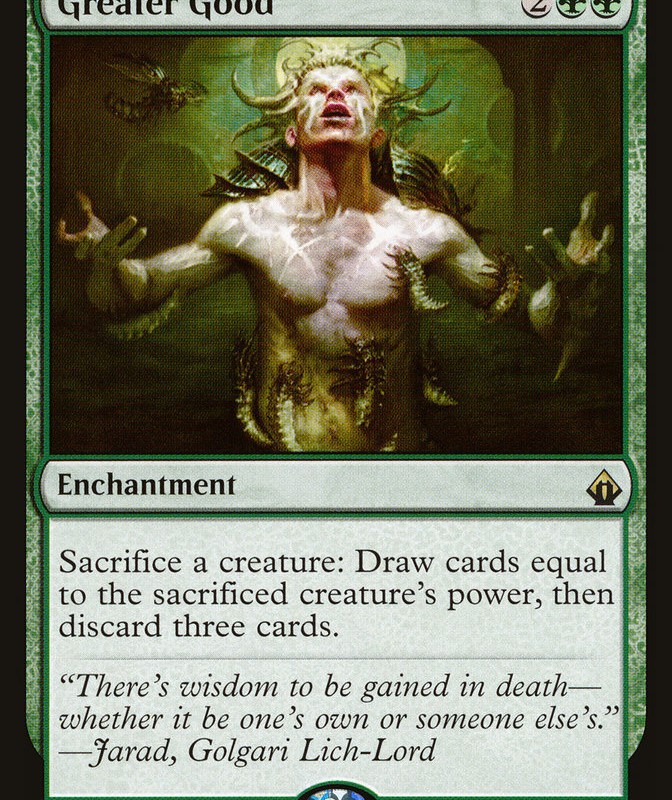
A particularly overworked trope is that of greater good. ‘Greater good‘ is a Utilitarian concept wrought with the same problems as other specious Enlightenment ideas. I’ve written about this from several perspectives. As with many foundation concepts springing from the Enlightenment, ‘greater good’ is founded more on platitudes and some specious ideal than reality. It’s more wishful thinking for a gullible population.
Philosophy students learn in early ethics classes of the paradox of the Trolley Problem. But there is no paradox; it’s just the result of accepting a faulty framework, and so we left with a host of concepts from politics to economics.
The problem is that there is no consistent definition of good—or at least the value judgment is subjective; there is no accounting for taste—, and there is no measurement of it, a problem with Utility Theory in general.
Some Utilitarians claim that humans are happiness maximisers or at least a large component of utility is happiness. Besides happiness (nor pleasure) is not everyone’s goal. Utility maximisation has a near-term bias, and preference theory leaves a lot to be desired.
Utilitarians are not hedonists, per se, but perhaps this is only moderated by the downsides attributed to excess.
Happiness is not a goal…it’s a by-product of a life well lived.
Eleanor Roosevelt
Some people defer happiness in their engagements of so-called labours of love. Stereotypical entrepreneurs, forego near-term happiness in the hope of some future benefit. Given the low probability of even a remotely positive outcome, this is taking a lottery mentality. In the US, much entrepreneurship is reserved for the children of the affluent. This is a hobby, and they typically have several safety nets for the almost inevitable ensuing failure.
In any case, if happiness is a goal, rational choice and homo economicus have surely gone missing.
Four Nobel Truths
Buddhism has its Four Noble Truths:
Life is suffering
Suffering is due to attachment
There is a way to overcome attachment
Follow the Eightfold Path
Happiness-seeking is precisely what will ensure unhappiness. One might even argue that this is the general malaise evident in Western society. As Daniel Kahneman, Richard Thaler, and others have pointed out, people rather satisfice, a strategy of getting to good enough. Perhaps this is not letting perfection be enemy of the good, or perhaps this is somehow realising the asymptotic path of diminishing returns ahead.
Happiness should not be a goal; it’s a side-effect, a result of pursuing one’s interests. And happiness is ephemeral. We’re likely all aware of the person who was asking for just one thing to achieve happiness is quickly seeking the next thing because happiness comes with an expiration date.







 Philosophics