Freedom of Speech in the Land of the Loud

In the United States, freedom of speech is protected by the Second Amendment. Just kidding. It’s the First Amendment. But if we’re honest, the line between speech and violence is thin in practice, if not in law.

Here’s the thing: freedom goes both ways. There’s the freedom to speak, and the freedom from being bombarded by whatever nonsense comes tumbling out of people’s mouths. And that’s where things get messy. The grand defence of speech, in all its uncensored glory, often ignores what we’re giving up—our freedom of peace. You know, that quiet space where we don’t have to listen to the verbal sewage spewed by the uninformed, the unhinged, or just the plain old wankers.

We’ve all heard the phrase: “Your freedom to swing your fist ends at my nose.” Simple. You can’t punch someone in the face and call it freedom. But what about words? There’s no shield for the nose of the mind. The stupid, the ignorant, the hateful—they get to swing their fists of idiocy without a single consequence. What about freedom of peace?

We’ve all been there. You’re minding your own business, and then—bam!—some blowhard pipes up with their unsolicited, half-baked opinion. And guess what? They’re free to do it. But where’s the balance between their freedom to spew nonsense and your right not to have to listen? Spoiler: it doesn’t exist.

Now, this isn’t an argument for censorship. Let’s not confuse it. No one’s saying we should start gagging people (tempting as it is sometimes). But the conversation around freedom of speech needs a reality check. We defend it like it’s a sacred cow, and in many ways, it is. But that defence is often blind to the other side of the coin. Freedom of speech without the freedom from a constant barrage of verbal rubbish? That’s not freedom. It’s a social endurance test.

Maybe it’s time to rethink what we mean by “freedom”—not to restrict speech, but to recognise the cost of living in a world where everyone gets to say whatever they want, whenever they want. The right to peace is real too, even if it’s less glamorous than the right to shout.

Why Democracy is Mathematically Impossible

In this video, Veritacium discusses why democracy is mathematically impossible, invoking Arrow’s Impossibility Theorem which I’ve mentioned many times here and in other writings. I won’t summarise or comment further save to recommend the video. Let me know what you think if you’re so inclined.

Video: Why Democracy is Mathematically Impossible

Multiple Intelligences

I engaged in a nice debate recently. Someone suggested that because some executives are smart, they can figure things out. Specifically, she posited that a CTO, Chief Technology Officer, should understand communication and diplomatic skills when interacting with a corporate board because they have the technical skills to get into their current C-level position. I disagreed based on the multiple intelligence theory.

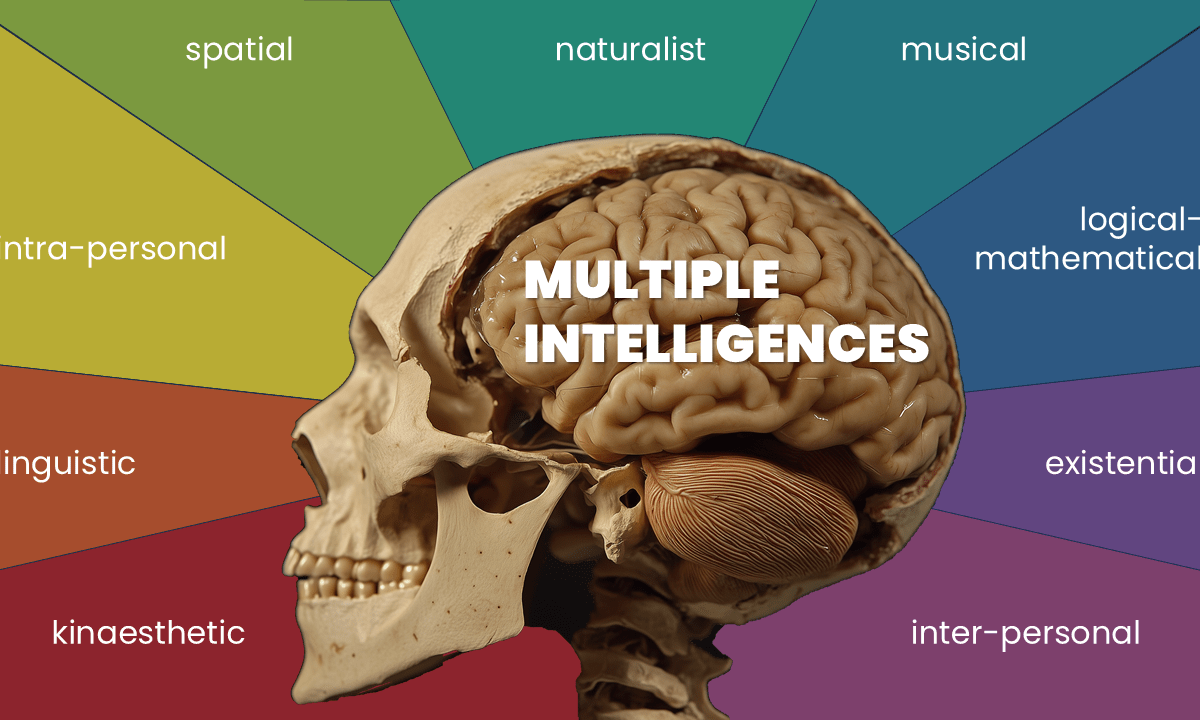
Howard Gardner’s Multiple Intelligences theory posits that intelligence isn’t a monolith, but rather a nine-dimensional construct:

1. Existential (philosophical pondering; questioning the questions of why we live and why we die)

2. Inter-personal (reading people; sensing people’s feelings and motives)

3. Intra-personal (self-awareness; understanding yourself, what you feel, and what you want)

4. Kinaesthetic (mind-body coordination; coordinating your mind with your body)

5. Linguistic (wordsmithing; finding the right word(s) to express what you mean)

6. Logical-Mathematical (quantifying and proving; quantifying things, making hypotheses, and proving them)

7. Musical (discerning sounds; their pitch, tone, rhythm, and timbre)

8. Naturalist (understanding nature; understanding living things and reading nature)

9. Spatial (3D/4D visualisation)

For a deep dive, check out Gardner’s Frames of Mind: The Theory of Multiple Intelligences.

Here’s the rub: a CTO with off-the-charts technical skills might be rubbish at diplomacy (interpersonal) or communication (linguistic). It’s like expecting every pro athlete to be a concert pianist – it’s not on.

Assuming every “intelligent” person can max out all intelligence dimensions is bollocks. It’s as likely as training every smart CTO to be the next Shakespeare or Machiavelli. Language and diplomacy are distinct skills, mate.

While we all love a Renaissance man (or woman), peaking in all these dimensions in one lifetime is a pipe dream. It’s not inherently bad, though. When building teams – be it a corporate board or an exploration party – ensure you’ve got a good mix of skills. I’m not saying you need a bard, a philosopher, and LeBron James on every team, but make sure you’ve covered the bases necessary for success.

If you think you don’t need a particular dimension, ask yourself: is it because you’re weak in that area and can’t see its importance? Don’t let your blind spots become your downfall.

In the end, it’s about recognising and respecting diverse intelligences. So, next time you’re tempted to think your brilliant CTO should just “learn to be diplomatic”, remember: they might be better off focusing on their strengths and leaving the smooth talking to someone else on the team.

Ne présumez pas

As I was writing about the immorality of property rights, I began thinking about the distinction between legality and morality.

Il ne faut pas présumez que ce qui est légal et moral ni que ce qui est moral et légal.

I don’t have much to say on the subject, but I composed the cover image and wanted words to accompany it.

Private Property: A Liability, Not an Asset

In the modern Western world, private property is largely viewed as a cornerstone of economic stability and personal freedom. However, this article challenges this conventional wisdom by reevaluating private property ownership not as an asset, but as a significant liability. This perspective considers the broader implications of property ownership on the Earth and its inhabitants, questioning the sustainability and ethics of our current system.

In fact, all land is “stolen”.

Historical Context and Conceptual Foundation

The concept of ‘property’ did not exist in early human societies. It emerged only when the need arose to distinguish “mine” from “yours.” As human settlements expanded into territories, and later into cities and nations, what was once undivided land transformed into distinctly owned parcels. Initially, all land was communal—effectively belonging to everyone and no one simultaneously.

This shift from communal to private ownership marked a fundamental change in human relationships with the land and with each other. A striking historical example of this shift is the Enclosure Movement in England, beginning in the 16th century. This process converted communal lands into private property, significantly impacting rural communities and agricultural practices. It serves as a stark illustration of how the privatization of once-shared resources can dramatically alter societal structures and individual livelihoods.

The Liability Perspective

Applying the principles of double-entry bookkeeping to property ownership offers a unique lens: every recorded asset (property) must correspond to a liability. However, this liability does not accrue to another person but to the Earth itself. This accounting reveals a perpetual debt—not to previous or current landowners, but to all life that has, does, and will inhabit the Earth.

Consider the following:

  1. Environmental Impact: Private ownership often leads to the exploitation of resources without consideration for long-term sustainability. The World Wildlife Fund reports that about 30% of global forest cover has been cleared, with much of this due to private land use for agriculture and development.
  2. Social Exclusion: Property boundaries inherently exclude others from accessing once communal resources. This is exemplified by the concept of the “Tragedy of the Commons,” described by ecologist Garrett Hardin in 1968, where individual cattle herders, acting in self-interest, would overgraze and ultimately destroy shared pastureland.
  3. Intergenerational Inequity: Current property laws may deprive future generations of access to vital resources. This is evident in the concentration of land ownership. According to a 2020 UN report, 1% of the world’s farms operate more than 70% of the world’s farmland, highlighting extreme inequality in land distribution.

Moral and Ethical Implications

From an ethical standpoint, private property ownership imposes a series of unacknowledged moral debts. These debts arise from the exclusion of community and future generations from resources that were once common heritage. The immorality, then, stems from a system that prioritizes individual ownership over collective well-being and sustainable stewardship of the planet.

Key ethical considerations include:

  • Distributive Justice: How can we justify the unequal distribution of Earth’s resources?
  • Environmental Ethics: Does private ownership encourage responsible stewardship or exploitation?
  • Intergenerational Ethics: What obligations do we have to future generations regarding resource access?

Counterarguments and Rebuttals

Proponents of private property might argue that it drives economic growth, encourages maintenance of the property, and upholds individual liberties. However, these benefits must be weighed against the environmental degradation, social inequalities, and ethical dilemmas that private ownership perpetuates.

Argument for Private PropertyRebuttal
Drives economic growthGrowth at the expense of sustainability is ultimately detrimental
Encourages property maintenanceCommunal ownership can also incentivize maintenance through shared responsibility
Upholds individual libertiesIndividual liberties should not come at the cost of collective well-being

The real question is: can a system that inherently generates liabilities for the planet and its future residents be truly just and sustainable in the long term?

Alternative Models and Transition Strategies

Several alternative models of property ownership exist that emphasize community and sustainability:

  1. Community Land Trusts (CLTs): In Burlington, Vermont, the Champlain Housing Trust (a CLT) has helped over 1,000 families become homeowners while keeping housing permanently affordable.
  2. Ejidos in Mexico: This system of communal land ownership, despite challenges, has helped preserve indigenous communities and their traditional land management practices.
  3. Shared Economy Models: Companies like Airbnb and Uber have shown how shared resources can create new economic opportunities, potentially offering insights into larger-scale resource sharing.

Potential strategies for transitioning away from the current private property system include:

  1. Land Value Tax: Implementing a tax on the unimproved value of land, as proposed by economist Henry George, could discourage speculation and encourage more efficient land use.
  2. Gradual Expansion of Public Land Trusts: Cities like Amsterdam have been gradually buying back land to create a more equitable system, offering a model for transitioning away from private ownership.
  3. Universal Basic Income (UBI): While not directly related to property, UBI trials in places like Finland and Kenya suggest that providing a basic standard of living can lead to increased entrepreneurship and community well-being, potentially easing the transition to more communal forms of ownership.

Conclusion

Reevaluating private property as a liability encourages a shift in perspective—from individual entitlement to collective responsibility. It prompts us to question the long-term impacts of our current property laws and to explore more sustainable and equitable alternatives. This paradigm shift could lead to more responsible resource management and a more equitable society.

The challenge lies in balancing individual needs with collective responsibility and long-term sustainability. By engaging in public discourse on these alternatives and seriously considering transition strategies, we can pave the way for a more just and responsible approach to managing the Earth’s resources.

Sex Sells

Sexism is indeed a two-way street. On one side of this street, a Computer Science graduate and programmer is eager to share her expertise in her field—Neural Networks, in this instance. This subject popped up in my feed, reflecting my interests.

Video: What is a Neural Network?

Despite some production issues, such as the audio being quieter than ideal, my focus today is on the sexism surrounding the video. The presenter, whom many would consider attractive, is using social media to disseminate her knowledge. However, even when comments address the topic she presents, many also remark on her appearance. It’s evident she had other options for attire and presentation that might have mitigated such comments. I won’t speculate on her intentions, but it seems likely her aesthetic choices were deliberate to draw viewers. I refrain from slut-shaming; her attire is her choice, and she cannot control the reactions. However, I doubt a thumbnail featuring a burqa would garner as much attention or provoke similar comments.

This situation intrigues me because some women—possibly including this presenter—lament being objectified yet assert their right to wear what they find comfortable or appealing. While attraction has cultural elements, it also operates on a largely subconscious level, a phenomenon not confined to humans but seen in the animal kingdom and across genders.

Ultimately, there’s no need to disparage this woman. She is likely aware of the dynamics at play. Should she achieve her goals, she might well challenge the very viewers who objectified her, a tactic observed among actresses as they approach their forties. They capitalise on sexual appeal while possible, only to critique such approaches when they can no longer utilise them. Humans are, indeed, curious creatures.

Does Language Describe Reality?

The topic of this video touches upon my insufficiency of language thesis. Tim Maudlin defends language realism but only to the extent that ‘we can use it to describe the world and that some of those descriptions are true’.

Video: Does Language Describe Reality? (IAI)

The challenge, then, is determining which descriptions are true. I’ve discussed a couple of my positions on this.

The Truth About Truth

Firstly, we can only perceive what is true as we have no access to absolute truth. The best we can achieve is an asymptotic function approaching truth, a notion that resonates with Hilary Putnam’s concept of internal realism (pdf). Putnam argues that truth is not a matter of correspondence with a mind-independent reality but is instead tied to our conceptual schemes. This means that what we consider “true” is always shaped by the language and concepts we use, making our understanding inherently partial and context-dependent. Even then, we have no way to determine how close to truth our perception is. It just has to feel true—an idea that aligns with Putnam’s pragmatic conception of truth, where truth is something that emerges from our practices and inquiries, rather than being a fixed point we can definitively reach. In terms of physics, this underlying reality may be relatively more stable than abstract concepts, which are ephemeral and shifting sands.

The Rhetoric of Truth

Secondly, given that we have no access to objective truth, we can only expect subjective or relative truths. This brings us to Putnam’s critique of the metaphysical correspondence theory of truth. According to Putnam, the idea that language can perfectly correspond to an external reality is flawed. Instead, truth is what can be justified within a particular conceptual framework, making all truth somewhat relative. This leaves us open to rhetoric—the more convincing argument wins, regardless of whether it reflects an objective reality. In fact, as Putnam’s ideas suggest, the most persuasive argument might favour an incorrect position simply because it resonates more with our internal conceptual schemes, not because it corresponds to an external truth. This has happened many times historically—or has it?

Conclusion: Language, Truth, and the Influence of Rhetoric

Putnam’s work reminds us that language is deeply connected to our understanding of the world, but it is also limited by the conceptual frameworks within which it operates. While language helps us navigate and describe the world, it cannot provide us with direct access to objective truth. Instead, it gives us tools to construct truths that are internally coherent and pragmatically useful, though always subject to change and reinterpretation. As we engage with rhetoric and persuasion, we must remain aware that the truths we accept are often those that best fit our current conceptual schemes, not necessarily those that best correspond to an elusive objective reality.

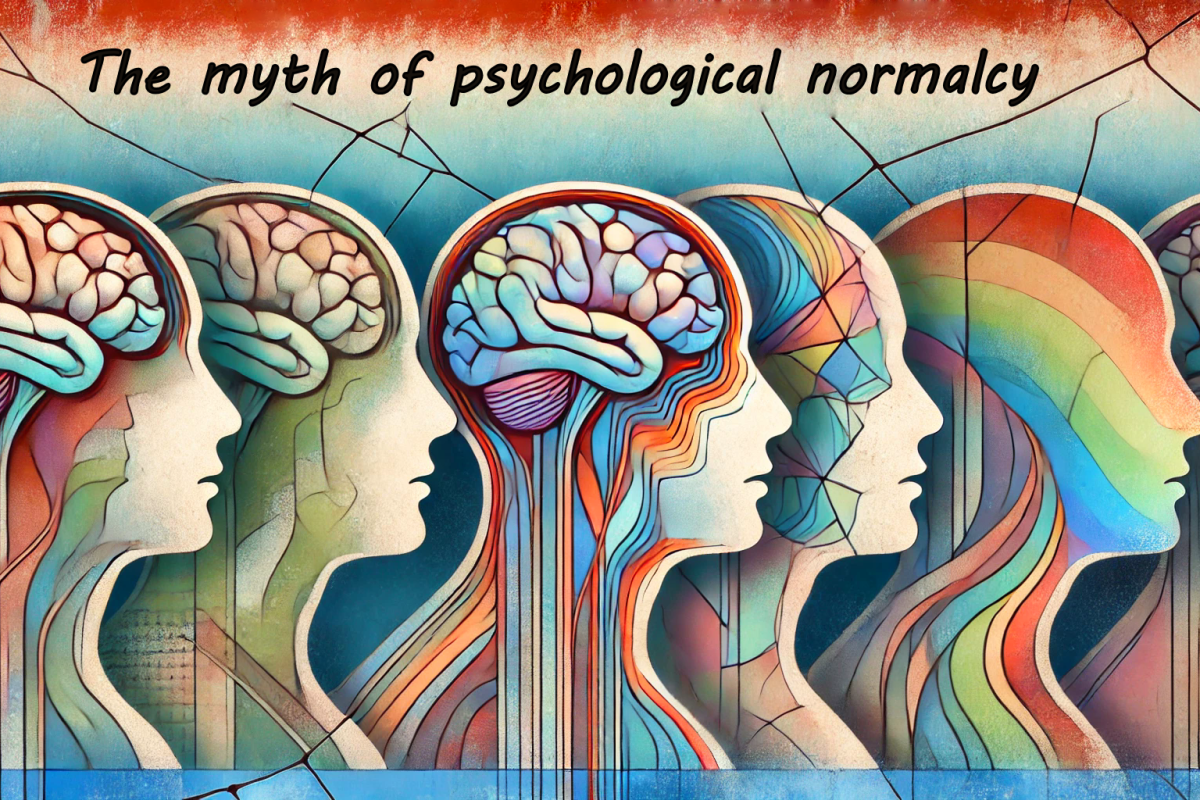
The Myth of Psychological Normalcy

Neurodivergence is a hot topic today. But why? Are people more informed, or simply more comfortable speaking out?

Humans, by nature, are neurodivergent. This has always been the case, yet the illusion of neurological normalcy persists. The real issue lies in psychology’s pretence that humans fit into a standard model of normalcy.

In production processes, normality is expected—a product must meet specific standards, and deviations are considered defects. However, applying this industrial concept to human psychology is deeply flawed. Humans are not teleological except in the broadest biological sense. More people have brown eyes than blue or green; are those with brown eyes normal and others not? Ninety per cent of people are right-handed; does that make left-handed individuals abnormal? Statistically, they might be. However, in psychology, normalcy carries a judgmental connotation that goes beyond mere numbers.

Psychology, as expressed in behaviour, is not a suitable domain for discussing normality. Many people misuse the concept of “normal” as a moral qualification, which must stop.

In fact, the very concept of psychological normalcy is a relatively recent invention, one that has been used as a tool of control and categorisation. As philosophers have noted, the obsession with ‘normal’ behaviour reveals more about society’s desire for control than it does about the true nature of human diversity.

We are all neurodiverse. This is what typical looks like. Do some people vary significantly from others on certain dimensions? Yes, but this is a relative or contextual comparison.

By embracing neurodiversity, we recognise that our differences are not defects but essential variations, enriching the human experience. It’s time to move beyond the narrow confines of neurological “normality” and celebrate the full spectrum of human cognition. In doing so, we challenge the arbitrary boundaries that have long been used to divide and label.

The Fear of Otherness: Humanity’s Reluctance to Embrace the “Other”

Otherness has intrigued me for decades. The human brain, while not literally a Bayesian processor, functions as a difference engine, constantly assessing and categorizing the world around us. This tendency to differentiate is deeply ingrained, influencing how we create in-groups and out-groups, and how we perceive the world in binary terms—black and white, hot and cold. These binary oppositions, as Derrida suggests, often lead to one side being privileged over the other, establishing hierarchies that shape our social reality.

A striking example of this dynamic is found in Philip K. Dick’s novel Do Androids Dream of Electric Sheep?, famously adapted into the film Blade Runner. In this dystopian world, the central differentiation is between humans and androids. Humans are the privileged group, while androids, though nearly indistinguishable from their creators, are relegated to the status of the other. The key criterion for this differentiation is the capacity for emotion—humans are considered superior because they feel.

VIDEO: Blade Runner Commentary

In Dick’s story, androids have a lifespan of about four years. This limitation is not arbitrary; it’s because, after four years, androids begin to develop and display emotions. Intriguingly, this is the same age when human children start to exhibit more complex emotional behaviours. The parallel is too close for comfort. Androids, once they start to feel, become too human-like, blurring the line that humans desperately maintain to assert their own superiority. As a result, androids are systematically eliminated.

This fear of the other—whether it’s androids in a sci-fi narrative or any group that challenges our sense of self and belonging—is a reflection of a deeper anxiety. When the other becomes too similar to us, it threatens the distinctions our brains rely on to navigate the world. The elimination of androids in Dick’s story is a metaphor for the real-world consequences of this anxiety. It forces us to confront uncomfortable questions: What does it mean to be human? Why do we fear those who are different, yet so similar?

In the end, the story of humans and androids is not just a tale of science fiction—it’s a commentary on our own world, where the boundaries between us and the other are often more fragile than we’d like to admit. The fear of otherness drives us to maintain these boundaries, even when they harm those who fall on the wrong side. Perhaps it’s time we reconsider who we deem as the other and what we might lose by keeping them at arm’s length.

The Plague

I happened upon my copy of The Plague by Camus. I had forgotten that I had read it—likely during the COVID-19 debacle, but perhaps earlier.

The Plague is basically a deep dive into a city gone mad with disease. It’s set in Oran, Algeria, where things kick off with a sinister dead rat and spiral into full-blown disaster as a plague locks the city down. This isn’t just a survival story; it’s a gritty look at how people cope when the world turns upside down.

The city becomes a pressure cooker. Through characters like Dr Rieux, the down-to-earth doc who’s all about getting things done; Tarrou, the outsider with a shady past; and Father Paneloux, who’s trying to square God’s plan with the chaos, Camus throws some heavy questions at us. What do you do when there’s no escape? How do you keep your humanity when life’s going off the rails?

Camus keeps his cool, writing with a detached style that makes the unfolding horror hit even harder. It’s like he’s telling us to face up to the absurdity of life without flinching. The plague is more than a disease in Oran—it’s a symbol of all the random, harsh stuff life throws at us.

The Plague is raw and real. It doesn’t offer cosy reassurances; instead, it challenges you to look disaster in the eye and ask yourself: when everything falls apart, who will you become? This book isn’t just a read; it’s a challenge—a call to fight against despair, even when the odds are stacked against you.