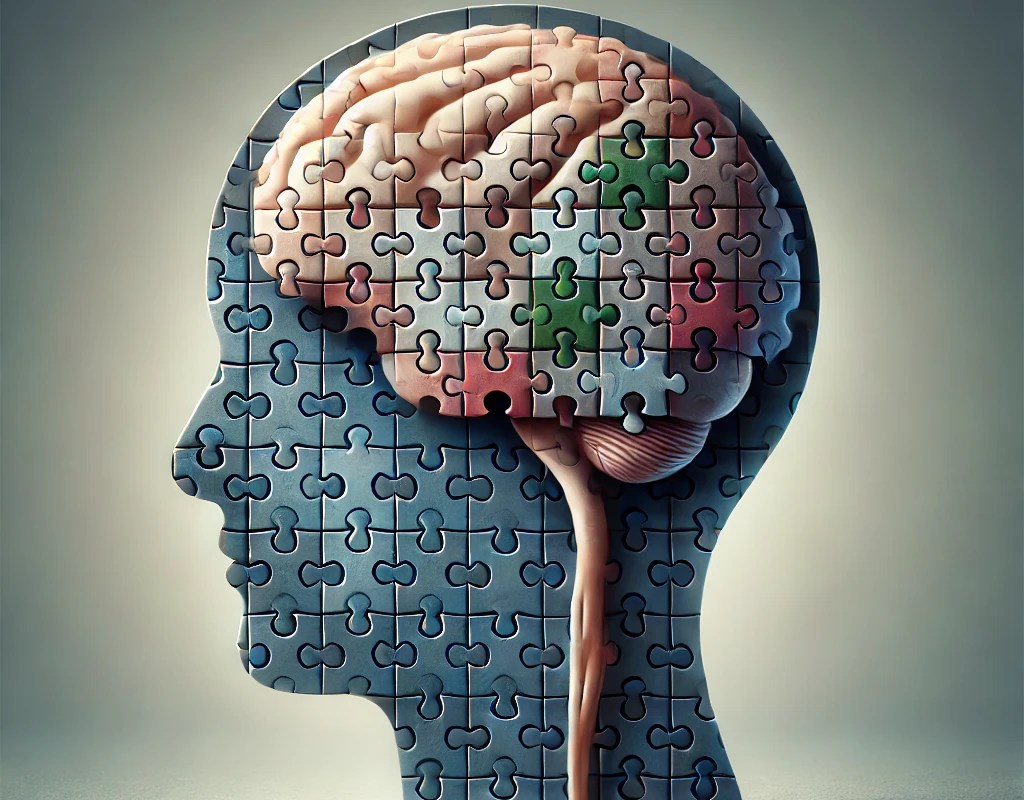
The Enlightenment still walks among us. Or rather, it lingers like a spectre – insisting it is alive, rational, and universal, while we, its inheritors, know full well it is a ghost. The project I’ve begun – call it my anti-Enlightenment collection – is about tracing these hauntings. Not the friendly ghosts of warm memory, but the structural ones: rationality unmoored, democracy designed to fail, presentism enthroned as law.
Audio: NotebookLM podcast on the essay underlying this post.
This collection began with Rational Ghosts: Why Enlightenment Democracy Was Built to Fail, which anatomised the Enlightenment’s misplaced faith in rational self-governance. The rational individual, Enlightenment’s poster child, turned out to be less a citizen than a figment – a ghost conjured to make democracy look inevitable.
It continues now with Temporal Ghosts: Tyranny of the Present, which dissects the structural bias of presentism – our systemic privileging of the living over the unborn. Hobbes, Locke, Rousseau, Bacon, Smith, Bentham, Montesquieu: each laid bricks in an architecture that secured sovereignty for now while exiling the future into silence. Debts accumulate, climate collapses, nuclear waste seeps forward through time. The unborn never consented, yet institutions treat their silence as assent.
Why a Collection?
Because ghosts travel in packs. One essay exposes Enlightenment’s hollow promises of reason; another its structural bias toward immediacy. The next will follow a different haunting, but always the same theme: Enlightenment’s bright lantern casts a shadow it refuses to see. The collection is less about reconstruction than exorcism – or at least acknowledgment that we live in a haunted house.
Ghost by Ghost
Rational Ghosts – Enlightenment democracy promised rational citizens and self-correcting systems. What it delivered instead was structural irrationality: Condorcet’s paradox, Arrow’s impossibility theorem, and a politics rigged to stumble over its own claims of reason.
Temporal Ghosts – The unborn are disenfranchised by design. The Enlightenment’s “living contract” fossilised presentism as law, leaving future generations to inherit debts, ecological ruin, and technological lock-in.
There may be more hauntings to come – economic ghosts, epistemic ghosts, technological ghosts. But like all spectres, they may fade when the season changes. The calendar suggests they’ll linger through Día de Muertos and Hallowe’en; after that, who knows whether they’ll still materialise on the page.
Reason is not an oracle of truth but a spectrum-bound tool, and when it is worshipped as absolute, it curdles into pathology. True rationality knows when to temper itself, when to equivocate, and when a kind lie is wiser than a cold fact.
Reason and rationality are the household gods of modernity. We light incense to them daily: follow the science, be reasonable, act rationally. But before we genuflect, it’s worth asking what exactly we mean. By reason, I mean the faculty of inference – spotting contradictions, tracing causes. By rationality, I mean the practice of applying that faculty toward some end. That’s all. Nothing mystical.
Audio: NotebookLM podcast on this topic.
The trouble starts when these concepts are treated as absolutes. They aren’t. They vary in intensity and application. A person’s reasoning operates on a spectrum with something like frequency and amplitude. Some minds hum at low frequency – broad strokes, contradictions smoothed over by intuition. Others burn hot at high frequency and amplitude – rapid logical leaps, obsessive consistency, the inability to let a premise go. And while some reason flows like a continuous wave – steady, consistent, predictable – other forms fire more like particles: synaptic sparks that don’t always connect, logic arriving in bursts or stutters rather than as a smooth line.
“But a normal ego of this sort is, like normality in general, an ideal fiction. The abnormal ego, which is unserviceable for our purposes, is unfortunately no fiction. Every normal person, in fact, is only normal on the average. His ego approximates to that of the psychotic in some part or other and to a greater or lesser extent; and the degree of its remoteness from one end of the series and of its proximity to the other will furnish us with a provisional measure of what we have so indefinitely termed an ‘alteration of the ego’.”
― Sigmund Freud
Push too far and what we sanctify as ‘reason’ bleeds into what psychiatry pathologises as autism or schizophrenia. Meanwhile, ‘normal’ cognition always includes an emotional ballast. Strip it out and the result looks alien, even monstrous. Freud’s quip about psychopathy – that the psychopath differs from the rest of us in degree, not kind – applies just as well to reason. Rationality is simply the socially acceptable blend of logic and affect. Deviate, and you’re declared broken.
Camus gave us a parable in The Stranger. Meursault observes his world with ruthless clarity, but no emotional resonance. He doesn’t weep at his mother’s funeral, and society condemns him less for murder than for failing to perform grief. His ‘pure’ reason reads as inhuman.
Here’s the paradox: if rationality means adapting effectively to one’s environment, then pure rationality demands knowing when to suspend itself. A person who insists on logic at every turn is not rational but maladapted. The rational actor lies, flatters, nods at the boss’s bad joke, comforts the friend who doesn’t want statistics but solace. Rationality that cannot bend collapses into pathology.
This is why the infamous ‘Do these jeans make me look fat?’ question is such a perfect test. The ‘true’ answer, if you are reasoning narrowly, may be ‘yes’. But true rationality recognises the context, the stakes, the human need beneath the words. The rational response is not the cold fact but the kind equivocation. Rationality that cannot lie is no rationality at all.
Here’s the paradox: if rationality means adapting effectively to one’s environment, then pure rationality demands knowing when to suspend itself. A person who insists on logic at every turn is not rational but maladapted. The rational actor lies, flatters, nods at the boss’s bad joke, comforts the friend who doesn’t want statistics but solace. Rationality that cannot bend collapses into pathology.
Consider the social rituals we all know. A partner says, ‘I like that house’, and the rationally over-tuned response is to evaluate the house. The actual cue is in the like, not the house. The answer isn’t that you dislike the house, but rather what you can appreciate about it. Miss that, and you miss the point. Or take the dinner table: when my son was seven, a well-meaning host – very Martha Stewart – asked him how he enjoyed his meal. He replied, with perfect candour, ‘I’ve had better’. From a logical standpoint, faultless. From a rational standpoint – if rationality includes social adaptation – disastrous. The question was never about the food. It was a cue for appreciation, for harmony. He gave fact when what was asked for was affiliation.
So yes, I attack reason and rationality – not because they don’t exist, but because they are misapplied, reified, and worshipped as neutral arbiters of truth. They are not. They are tools with a range, and outside that range, they fail catastrophically. To speak of ‘reason’ as if it were an unqualified good is like praising fire without mentioning its talent for arson.
Written by
Philosophics
After I wrote this, I realised I forgot to mention Kant.
Even Kant, patron saint of rational duty, insisted you must never lie, not even a white lie, not even to a murderer asking where your friend is hiding. For him, truth-telling was categorical, binding, immune to circumstance. But this is reason gone rigid, unable to flex with human reality. It shows how worship of Reason leads not to morality but to monstrosity. A rationality that cannot bend is no rationality at all.
Gustave Le Bon’s The Crowd: A Study of the Popular Mind (1895) has had the half-life of uranium. His thesis is simple and disturbing: rational individuals become irrational when they merge into a crowd. The crowd hypnotises, contagion spreads, and reason dissolves in the swell of collective emotion.
It’s neat. It’s elegant. It’s also far too flattering.
Audio: NotebookLM podcast on this topic.
Le Bon assumes that the default state of the human being is rational, some Enlightenment holdover where citizens, left to their own devices, behave like tidy mini-Kants. Then, and only then, do they lose their reason in the mob. The trouble is that a century of behavioural science has made it painfully clear that “rational man” is a fairy tale.
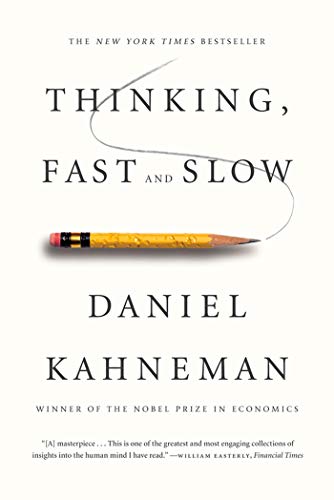
Daniel Kahneman mapped our cognitive machinery in Thinking, Fast and Slow: System 1 (fast, intuitive, emotional) is running the show while System 2 (slow, deliberate, logical) is mostly hired as the PR manager after the fact. Dan Ariely built a career documenting just how predictably irrational we are – anchoring, framing, sunk-cost fallacies, you name it. Add in Tversky, Thaler, Gigerenzer, and the usual suspects, and the picture is clear: we don’t need a crowd to become irrational. We start irrational, and then the crowd amplifies it.
In that sense, Le Bon wasn’t wrong about crowds being dangerous, but he may have missed the darker point. A crowd doesn’t corrupt a rational base – it accelerates the irrational baseline. It’s not Jekyll turning into Hyde; it’s Hyde on a megaphone.
This matters because if you take Le Bon literally, the problem is situational: avoid crowds and you’ll preserve reason. But if you take Kahneman seriously, the problem is structural: crowds only reveal what was already there. The positive feedback loop of group psychology doesn’t replace rationality; it feeds on the biases, illusions, and shortcuts already baked into the individual mind.
Le Bon handed us the stage directions for mass manipulation. Modern behavioural economics shows us that the script was already written in our heads before we ever left the house. Put the two together and you have the perfect recipe for political spectacle, advertising, and algorithmic nudges.
Which makes Le Bon’s century-old observations correct – but not nearly bleak enough.
Kant, bless him, thought he was staging the trial of Reason itself, putting the judge in the dock and asking whether the court had jurisdiction. It was a noble spectacle, high theatre of self-scrutiny. But the trick was always rigged. The presiding judge, the prosecution, the jury, the accused, all wore the same powdered wig. Unsurprisingly, Reason acquitted itself.
The Enlightenment’s central syllogism was never more than a parlour trick:
P1: The best path is Reason.
P2: I practice Reason.
C: Therefore, Reason is best.
It’s the self-licking ice-cream cone of intellectual history. And if you dare to object, the trap springs shut: what, you hate Reason? Then you must be irrational. Inquisitors once demanded heretics prove they weren’t in league with Satan; the modern equivalent is being told you’re “anti-science.” The categories defend themselves by anathematising doubt.
The problem is twofold:
First, Reason never guaranteed agreement. Two thinkers can pore over the same “facts” and emerge with opposite verdicts, each sincerely convinced that Reason has anointed their side. In a power-laden society, it is always the stronger voice that gets to declare its reasoning the reasoning. As Dan Hind acidly observed, Reason is often nothing more than a marketing label the powerful slap on their interests.
Second, and this is the darker point, Reason itself is metaphysical, a ghost in a powdered wig. To call something “rational” is already to invoke an invisible authority, as if Truth had a clerical seal. Alasdair MacIntyre was right: strip away the old rituals and you’re left with fragments, not foundations.
Other witnesses have tried to say as much. Horkheimer and Adorno reminded us that Enlightenment rationality curdles into myth the moment it tries to dominate the world. Nietzsche laughed until his throat bled at the pretence of universal reason, then promptly built his own metaphysics of will. Bruno Latour, in We Have Never Been Modern, dared to expose Science as what it actually is – a messy network of institutions, instruments, and politics masquerading as purity. The backlash was so swift and sanctimonious that he later called it his “worst” book, a public recantation that reads more like forced penance than revelation. Even those who glimpsed the scaffolding had to return to the pews.
So when we talk about “Reason” as the bedrock of Modernity, let’s admit the joke. The bedrock was always mist. The house we built upon it is held up by ritual, inertia, and vested interest, not granite clarity. Enlightenment sold us the fantasy of a universal judge, when what we got was a self-justifying oracle. Reason is not the judge in the courtroom. Reason is the courtroom itself, and the courtroom is a carnival tent – all mirrors, no floor.
When I was a child, the United States Supreme Court was still spoken of in hushed, reverent tones, as though nine robed sages in Washington were the Platonic guardians of justice. Impartiality was the word on everyone’s lips, and we were meant to believe that “the law” floated above the grubby realm of politics, as pure and crystalline as the Ten Commandments descending from Sinai.
Audio: NotebookLM podcast on this topic (MP3).
Even then, I didn’t buy it. The whole thing reeked of theatre. And the past few decades have proved that scepticism correct: the Court has become a pantomime. In this robed reality show, nine unelected lawyers cosplaying as oracles interpret the world for us, often by a razor-thin vote that splits exactly along partisan lines. Impartial? Please. A coin toss would be less predictable.
This is why I perked up when I heard Iain McGilchrist, in his recent interview with Curt Jaimungal, wax lyrical about rationality versus reasonableness. Schizophrenia, he tells us, is like a left hemisphere gone berserk, parsing the world in a literalist frenzy without the right hemisphere’s sense of context. The schizophrenic hears a voice in an empty room and, lacking the capacity for metaphor, deduces that it must be the neighbours whispering through the electrical socket. Rational, in its way, but absurd.
Video: Iain McGilchrist and Curt Jaimungal
McGilchrist’s corrective is “reasonableness,” which he casts as the quality of a wise judge: not a slave to mechanistic logic, but able to balance intuition, context, and experience. The problem, of course, is that “reasonable” is one of those delightful weasel words I keep writing about. It claims to be neutral – a universal standard, above the fray – but in practice, it’s just a ventriloquism act. “Reasonable” always turns out to mean what I, personally, consider obvious.
Enter Judge Judy, daytime television’s answer to jurisprudence. Watch her wag a finger and declare, “Any reasonable person would have kept the receipt!” And the studio audience – hand-picked to agree with her every twitch – erupts in applause. It’s reasonableness as spectacle, the mob dressed up as jurisprudence.
Now scale that performance up to SCOTUS. The “reasonable person” test is embedded deep in the common law tradition, but the reasonable person is not you, me, or anyone who has actually missed a bus, pawned a wedding ring, or heard a neighbour’s radio through thin walls. No, the reasonable person is an imaginary, well-groomed gentleman of property whose intuitions happen to dovetail nicely with the prejudices of the bench. The Court, like Judge Judy, insists it is Reason incarnate, when in truth it is reasonableness-by-consensus, a carefully curated consensus at that.
McGilchrist is right that rationality, stripped of context, can lead to absurdity. But in elevating “reasonableness” as if it were a transcendent virtue, he mistakes projection for philosophy. A judge is “reasonable” only when her intuitions rhyme with yours. And when they don’t? Suddenly, she’s a madwoman in robes, and her “reasonableness” is exposed as nothing more than taste disguised as universal law.
The “reasonable person” – whether invoked by the Supreme Court or by Judge Judy – is a ghost that conveniently resembles the speaker. We imagine we’re appealing to some objective standard, when in fact we’re gazing into a mirror. The tragedy of schizophrenia, as McGilchrist notes, is to take metaphor literally. The tragedy of law and politics is the opposite: to dress literal bias in metaphor, to call it “reason,” and to applaud ourselves for our wisdom while the stage set burns behind us.
The Illusion of Clarity in a World of Cognitive Fog
Apologies in advance for this Logic 101 posting. Reason—our once-proud torch in the darkness, now more like a flickering lighter in a hurricane of hot takes and LinkedIn thought-leadership. The modern mind, bloated on TED Talks and half-digested Wikipedia articles, tosses around terms like “inductive” and “deductive” as if they’re interchangeable IKEA tools. So let us pause, sober up, and properly inspect these three venerable pillars of human inference: deduction, induction, and abduction—each noble, each flawed, each liable to betray you like a Greco-Roman tragedy.
Video: This post was prompted by this short by MiniPhilosophy.
Audio: NotebookLM podcast on this topic.
Deduction: The Tyrant of Certainty
Deduction is the purest of the lot, the high priest of logic. It begins with a general premise and guarantees a specific conclusion, as long as you don’t cock up the syllogism. Think Euclid in a toga, laying down axioms like gospel.
Example:
All humans are mortal.
Socrates is human.
Therefore, Socrates is mortal.
Perfect. Crisp. Unassailable. Unless, of course, your premise is bollocks. Deduction doesn’t check its ingredients—it just cooks with whatever it’s given. Garbage in, garbage out.
Strength: Valid conclusions from valid premises. Weakness: Blind to empirical falsity. You can deduce nonsense from nonsense and still be logically sound.
Induction: The Gambler’s Gospel
Induction is the philosopher’s lottery ticket: generalising from particulars. Every swan I’ve seen is white, ergo all swans must be white. Until, of course, Australia coughs up a black one and wrecks your little Enlightenment fantasy.
Example:
The sun rose today.
It rose yesterday.
It has risen every day I’ve been alive.
Therefore, the sun will rise tomorrow.
Touching, isn’t it? Unfortunately, induction doesn’t prove anything—it suggests probability. David Hume had an existential breakdown over this. Entire centuries of Western philosophy spiralled into metaphysical despair. And yet, we still rely on it to predict weather, markets, and whether that dodgy lasagna will give us food poisoning.
Strength: Empirically rich and adaptive. Weakness: One exception detonates the generalisation. Induction is only ever as good as the sample size and your luck.
Abduction: Sherlock Holmes’ Drug of Choice
Abduction is the inference to the best explanation. The intellectual equivalent of guessing what made the dog bark at midnight while half-drunk and barefoot in the garden.
Example:
The lawn is wet.
It probably rained.
It could be a garden sprinkler. Or a hose. Or divine intervention. But we bet on rain because it’s the simplest, most plausible explanation. Pragmatic, yes. But not immune to deception.
Strength: Useful in messy, real-world contexts. Weakness: Often rests on a subjective idea of “best,” which tends to mean “most convenient to my prejudices.”
The Modern Reasoning Crisis: Why We’re All Probably Wrong
Our contemporary landscape has added new layers of complexity to these already dubious tools. Social media algorithms function as induction machines on steroids, drawing connections between your click on a pasta recipe and your supposed interest in Italian real estate. Meanwhile, partisan echo chambers have perfected the art of deductive reasoning from absolutely bonkers premises.
Consider how we navigate information today:
We encounter a headline that confirms our worldview
We accept it without scrutiny (deductive failure)
We see similar headlines repeatedly (inductive trap)
We conclude our worldview is objectively correct (abductive collapse)
And thus, the modern reasoning loop is complete—a perfect system for being confidently incorrect while feeling intellectually superior.
Weakness by Analogy: The Reasoning Café
Imagine a café.
Deduction is the customer who checks the menu and confidently orders “Soup of the Day,” because the chalkboard says “Today’s Soup is Tomato,” and she trusts chalkboards.
Induction is the one who has had tomato soup every Wednesday for months and assumes it’ll be tomato today again—until it isn’t, and now he’s wearing bisque.
Abduction sees the waiter carrying bowls of red liquid to every table and infers it’s probably tomato soup, orders it, and gets… gazpacho. Ice-cold disappointment.
All three are trying to reason. Only one might get lunch.
The Meta-Problem: Reasoning About Reasoning
The true joke is this: we’re using these flawed reasoning tools to evaluate our reasoning tools. It’s like asking a drunk person to judge their own sobriety test. The very mechanisms we use to detect faulty reasoning are themselves subject to the same faults.
This explains why debates about critical thinking skills typically devolve into demonstrations of their absence. We’re all standing on intellectual quicksand while insisting we’ve found solid ground.
Conclusion: Reason Is Not a Guarantee, It’s a Wager
None of these modalities offer omniscience. Deduction only shines when your axioms aren’t ridiculous. Induction is forever haunted by Hume’s skepticism and the next black swan. Abduction is basically educated guessing dressed up in tweed.
Yet we must reason. We must argue. We must infer—despite the metaphysical vertigo.
The tragedy isn’t that these methods fail. The tragedy is when people believe they don’t.
Perhaps the wisest reasoners are those who understand the limitations of their cognitive tools, who approach conclusions with both confidence and humility. Who recognize that even our most cherished beliefs are, at best, sophisticated approximations of a reality we can never fully grasp.
So reason on, fellow thinkers. Just don’t be too smug about it.
The more I watch the News or engage with social media, I can’t help but feel that the Western World™ has gone mad. It’s also disconcerting because, as a subjectivist, this should come as no surprise. I guess I miss the days when it was better wrapped in relativism. Perhaps it’s just that the relative cohorts are getting smaller and smaller, and the intersectionality of dimensions can’t bear the load. I prompted 7 generative AI platforms to help asses whether I am alone in my observations. I present the responses unedited, identifying each with a header.
Audio: NotebookLM podcast of this content.
Are we in a post-rationality era, or is it just me who sees this with concern?
ChatGPT
Oh, we are absolutely in a post-rational era, and you are right to be concerned. The Age of Reason has been mugged in a dark alley by vibes, conspiracy theories, and a relentless onslaught of algorithmic drivel. Facts? Mere inconveniences. Logic? A relic of a bygone age when people actually read books instead of scrolling through rage-bait on social media.
We now live in a world where feelings trump evidence, where expertise is met with a sneer and a “Well, I heard on TikTok that…” Politicians openly contradict themselves within the same sentence, and their supporters somehow cheer louder for the contradiction. Science? Only if it aligns with pre-existing beliefs. Critical thinking? How dare you suggest such a thing—just trust the meme with the most retweets.
But hey, maybe this is just the inevitable entropy of civilization. Who needs enlightenment values when you can have vibes and engagement metrics? Buckle up—it’s only going to get weirder.
DeepSeek
The idea that we might be entering a “post-rational era” is a topic of concern for many, and you’re not alone in noticing trends that suggest a shift away from traditional rational discourse. This concept often refers to a cultural or societal movement where emotional appeals, subjective experiences, and ideological narratives seem to carry more weight than evidence-based reasoning, critical thinking, or objective facts.
Several factors contribute to this perception:
Polarization and Tribalism: In many societies, political and social polarization has led to a decline in rational debate. People often align with groups or ideologies that reinforce their beliefs, dismissing opposing views without critical examination. This tribal mindset can override rational discourse.
Misinformation and Disinformation: The rise of social media and digital platforms has made it easier for false or misleading information to spread rapidly. Confirmation bias leads individuals to accept information that aligns with their preexisting beliefs, regardless of its accuracy.
Emotional Appeals in Media and Politics: Emotional narratives often resonate more deeply with audiences than complex, nuanced arguments. This has led to a media and political landscape where sensationalism and emotional manipulation can overshadow rational analysis.
Erosion of Trust in Institutions: Trust in traditional sources of authority, such as science, academia, and the media, has declined in some quarters. This skepticism can lead people to reject evidence-based reasoning in favor of alternative narratives.
Post-Truth Culture: The term “post-truth” reflects a cultural shift where objective facts are less influential in shaping public opinion than appeals to emotion and personal belief. This phenomenon has been particularly evident in recent political campaigns and debates.
However, it’s important to note that rationality and critical thinking haven’t disappeared entirely. Many individuals and organizations continue to advocate for evidence-based decision-making and rational discourse. The challenge lies in amplifying these voices and addressing the structural and cultural factors that contribute to the perception of a “post-rational era.”
If you’re concerned about this trend, you’re not alone. Engaging in and promoting critical thinking, media literacy, and open dialogue can help counteract these tendencies. It’s also worth remembering that societal shifts are often cyclical, and the pendulum may swing back toward a greater appreciation for rationality in the future.
Meta AI
You’re not alone in your concern. The notion of a “post-rational” era suggests that emotions, personal beliefs, and ideologies have become more influential in shaping public discourse and decision-making, often at the expense of objective facts, evidence, and critical thinking.
Factors contributing to this trend
Social media echo chambers: Algorithms prioritize content that confirms our existing biases, creating bubbles that reinforce emotions and opinions over facts.
Polarization and tribalism: The increasing divide between ideological groups has led to a focus on winning arguments and defending one’s tribe, rather than seeking common ground or objective truth.
Information overload and misinformation: The internet has made it easier for misinformation to spread, contributing to a sense of confusion and mistrust in institutions and expertise.
Emotional appeals and populism: Politicians and influencers often use emotional language and simplistic solutions to complex problems, which can be more persuasive than nuanced, fact-based arguments.
Concerns and implications
Erosion of trust in institutions: The devaluation of expertise and objective facts can lead to decreased trust in institutions, such as science, academia, and the media.
Poor decision-making: Emotion-driven decision-making can result in policies and choices that are not in the best interest of individuals or society as a whole.
Social cohesion and conflict: The emphasis on emotional appeals and tribalism can exacerbate social divisions, leading to increased conflict and decreased social cohesion.
What can be done?
Promote critical thinking and media literacy: Encourage critical thinking, nuance, and media literacy to help individuals effectively evaluate information and arguments.
Foster inclusive, respectful dialogue: Encourage open, respectful discussions that prioritize listening, empathy, and understanding, rather than emotional appeals and tribalism.
Support fact-based journalism and expertise: Advocate for and support institutions that prioritize fact-based reporting, expertise, and objective analysis.
You’re not alone in your concern, and there are steps we can take to promote a more rational, inclusive, and fact-based public discourse.
Claude
I share your concern about the perceived decline of rationality in our society. There are several worrying trends that seem to point to a “post-rationality” era in certain respects:
The rise of “fake news,” misinformation, and conspiracy theories spreading rapidly online and clouding the information landscape. It has become harder to distinguish fact from fiction.
Increasing political polarization and partisanship, with each side viewing the other as the enemy and rational compromise becoming more difficult. Emotion and tribalism often trump facts.
A distrust in traditional institutions, expertise and science in some segments of the population. Authority of experts is questioned and fringe theories gain traction.
“Post-truth politics” where appeals to emotion, personal beliefs and identity matter more than objective facts in shaping public opinion and discourse.
Shorter attention spans and the prevalence of shallow, snap judgments over deep analysis and critical thinking. Sensationalism is incentivized.
Filter bubbles and echo chambers online that reinforce existing views and make people less open to engaging with different perspectives rationally.
At the same time, I don’t think rationality is dead. Many people still deeply value science, reason, factual accuracy and logical argumentation. But these forces of anti-rationality have grown stronger recently.
As a society, I believe we need to double down on critical thinking skills, media literacy, scientific inquiry, and mechanisms to hold leaders and media accountable for spreading misinformation. Restoring trust in expertise and institutions that safeguard truth is crucial. We must make rational discourse “cool” again across partisan lines.
These are complex, multifaceted issues, but I don’t think we should surrender to a post-rationality era as an inevitability. Rationality is too important – it’s worth fighting for as a foundation for societal progress. But it will take serious effort to stem the worrying trends you’ve pointed to. I share your concerns on this front.
Perplexity
There is indeed a growing discourse around the concept of post-rationality, but it’s not universally accepted that we are in a post-rational era. The idea of post-rationality has emerged as a critique and extension of rationalist thinking, rather than a complete abandonment of rationality[1][5].
Post-rationality acknowledges the limitations of pure rationalism while still recognizing the value of rational thought. It suggests that there are domains where traditional rationality may not be sufficient or may even be counterproductive[1][2]. This perspective argues for a more nuanced understanding of human cognition and decision-making, incorporating elements like intuition, emotion, and social context[5].
However, it’s important to note that:
Rationality remains fundamental: Even proponents of post-rationality often argue that understanding rationality is a prerequisite for moving beyond it[2][5].
Ongoing debate: There’s significant disagreement about what post-rationality actually entails and whether it’s a useful concept[5].
Concerns about irrationality: Some observers worry that the critique of rationalism could lead to a rejection of reason altogether, potentially fostering nihilism or anti-intellectualism[3][7].
Your concern is not unfounded. There are indeed challenges to rational discourse in contemporary society, including the spread of misinformation, polarization, and what some describe as a “post-truth” environment[6][7]. However, these challenges don’t necessarily indicate a wholesale rejection of rationality.
Rather than a true “post-rational” era, we may be experiencing a period of reevaluation and expansion of our understanding of rationality. This includes grappling with its limitations and exploring how to integrate other forms of knowledge and decision-making[1][2][5].
You’re certainly not alone in your concern. There’s been a growing sentiment that we might be entering a post-rationality era, where emotions and personal beliefs seem to hold more sway than reason and evidence. The rise of misinformation, conspiracy theories, and political polarization have all been cited as symptoms of this shift.
It’s a complex issue with lots of factors at play. Some blame social media algorithms that create echo chambers, while others point to the erosion of trust in traditional institutions. But there’s no single, simple answer.
Why do you think we might be in a post-rationality era?
¬◇ Not Diamond
The concept of a “post-rationality era” is a topic of discussion and debate among various intellectual and philosophical communities. Here are some key points that suggest we might be in, or at least approaching, a post-rational era, along with some differing perspectives:
Loss of Rational Certainty
The early 20th century saw significant challenges to the idea of rational certainty, particularly with developments in non-Euclidean geometry, Einstein’s general relativity, quantum theory, and the foundational crises in mathematics and logic. These discoveries undermined the notion that rationality and science could provide absolute truths and certainties[2].
Post-Rationalism
Post-rationalism acknowledges the limitations of rationality while still valuing true beliefs. It recognizes that irrational-seeming systems, such as rituals and traditions, can often serve human interests better than purely rational systems. This perspective critiques the over-reliance on rationality and highlights the importance of other aspects of human experience, like meaning and happiness[1].
Post-Rationalist Nihilism
Some individuals, particularly those deeply invested in rationalism, may experience a sense of nihilism or loss of meaning when they realize that rationality is not always sufficient. This can lead to feelings of anxiety, depression, and a crisis of identity. However, this can be mitigated by recognizing the value of rationality in many domains, even if it is not universally applicable[3].
Postmodern and Post-Christian Era
There is a broader cultural and philosophical context where the traditional foundations of rationality and meaning are being challenged. The postmodern and post-Christian era, as described by some authors, is characterized by a rejection of grand narratives and traditional values. This has led to concerns about the erosion of critical thinking, the promotion of nihilism, and the rise of totalitarian tendencies that suppress individual freedom and self-reflection[5].
Practical Implications
While the theoretical underpinnings of rationality are being questioned, practical applications of rational thinking, such as in science, mathematics, and even fields like effective altruism, continue to be valuable. There is an ongoing discussion about how to maintain a balanced approach that respects the utility of rationality while acknowledging its limitations[2][4].
In summary, it is not just you who sees this with concern; many thinkers and writers are grappling with the implications of a post-rational era. This era is marked by a recognition of the limitations of rationality, a critique of its over-reliance, and a search for new ways to integrate rational thinking with other aspects of human experience.
NB: Interestingly, these ¬◇ footnotes don’t ink to anyplace.
Using AutoCrit, I continue to share the review progress of my work in progress, Democracy: The Grand Illusion. In this chapter, I survey the topic of rational ignorance.
Synopsis
The text delves into the concepts of rational ignorance and unknown unknowns within the framework of democratic decision-making. It begins by defining rational ignorance as individuals choosing to remain uninformed due to the perceived high cost of acquiring information. The discussion then moves on to explore how this impacts voter behaviour, leading to decisions based on superficial understanding and susceptibility to misinformation. The concept of unknown unknowns is introduced as factors individuals are unaware of, influencing decision-making unpredictably.
The text concludes by emphasising the importance of addressing cognitive challenges through enhancing political literacy, promoting deliberative democracy, ensuring transparency, and leveraging technology. By doing so, it aims to create a more informed electorate and strengthen democratic systems.
Audience
The target audience for this text includes policymakers, educators, citizens interested in political science or governance issues, and those involved in civic engagement. Those not targeted may include casual readers looking for light reading material or individuals with no interest in politics. To make it more relevant, the author could simplify complex terms for lay audiences without compromising depth or provide real-world examples illustrating theoretical concepts.
Structure and Organisation
The text follows a logical order by first introducing key concepts like rational ignorance and unknown unknowns before exploring their implications on democratic decision-making. Each section flows seamlessly into the next without abrupt transitions or disconnection between ideas.
Tone
The tone throughout remains informative yet urgent about addressing cognitive challenges within democracies effectively. There’s a sense of responsibility conveyed towards improving civic engagement among readers.
Clarity
Overall clarity is strong; however, some sections could benefit from simplification for easier comprehension by all readers. For instance:
“Unknown Unknowns refer to factors that are completely outside individuals’ awareness…” – This could be rephrased more straightforwardly.
There is an entire section on cognitive biases earlier in the book as well as a note to directing the reader to it.
Argument and Persuasion
Opinions presented focus on mitigating effects of rational ignorance through enhanced education and transparency measures which are logically constructed with support from references such as Downs (1957) & Kahneman (2011). While persuasive elements are well-supported overall; further statistical data or case studies would enhance credibility.
Commentary
I’m not sure I’ll include more in this book, as I cite copious source material, noted below.
Interest and Engagement
While engaging overall due to its relevance in current socio-political contexts; sections detailing strategies like encouraging deliberative democracy may lose reader interest due to dense content presentation without breaks or interactive elements such as case studies or anecdotes involving citizen participation can improve engagement levels significantly
Final Thoughts & Conclusions
The text concludes with a strong and satisfying section that summarizes the concepts of rational ignorance and unknown unknowns, emphasizing their impact on democratic decision-making. It effectively ties together the key points discussed throughout the work and provides a clear call to action for addressing cognitive challenges in governance. The final thoughts and conclusions serve to underscore the importance of mitigating these challenges through improved education, deliberation, transparency, and technological advancements. The text ends conclusively by summarizing key points discussed earlier while offering actionable steps towards strengthening democratic systems amidst cognitive challenges faced today—providing a clear direction forward that ties together various themes explored throughout the narrative effectively.
References and Supporting Materials
Downs, A. (1957).An Economic Theory of Democracy. Harper & Row.
Kahneman, D. (2011).Thinking, Fast and Slow. Farrar, Straus and Giroux.
Caplan, B. (2007).The Myth of the Rational Voter: Why Democracies Choose Bad Policies. Princeton University Press.
Tetlock, P. E. (2005).Expert Political Judgment: How Good Is It? How Can We Know? Princeton University Press.
Sunstein, C. R. (2006).Infotopia: How Many Minds Produce Knowledge. Oxford University Press.
Lupia, A., & McCubbins, M. D. (1998).The Democratic Dilemma: Can Citizens Learn What They Need to Know? Cambridge University Press.
Akerlof, G. A., & Shiller, R. J. (2015).Phishing for Phools: The Economics of Manipulation and Deception. Princeton University Press.
Iyengar, S., & Kinder, D. R. (1987).News That Matters: Television and American Opinion. University of Chicago Press.
Gigerenzer, G., & Todd, P. M. (1999).Simple Heuristics That Make Us Smart. Oxford University Press.
Sunstein, C. R., & Thaler, R. H. (2008).Nudge: Improving Decisions About Health, Wealth, and Happiness. Penguin Books.
AutoCrit is an AI-based editorial application. I am a member of their affiliate programme, so I gain minor financial benefits at no cost to you if you purchase through a link on this page.
I’m working on a new book—if by new I mean reengaging a book I started in 2022. I’m picking up where I left off with fresh eyes. As I’ve not had time to contribute much to this blog, I thought I’d share the preface as a work in progress. I may share additional subsections over time. Feel free to share any feedback in the comments section.
Imagine a world where the foundation of our governance, the system we hold as the pinnacle of fairness and equality, is fundamentally flawed. What if the mechanisms we trust to represent our voices are inherently incapable of delivering the justice and prosperity we seek? This book embarks on a provocative journey to challenge the sanctity of democracy, not with the intent to undermine its value but to question its effectiveness and expose the inherent limitations that have been overlooked for centuries.
This book is meant to be inclusive, though not necessarily comprehensive. Although focused heavily on a Western experience, particularly the United States, the insights and critiques apply globally.
Democracy feels like an anachronism awaiting a paradigm shift. As a product of the Enlightenment Age, democracy has been sacrosanct in the Western world for centuries. However, a quick glance at current results reveals dissonance. Not all is well. Despite typical defences such as entrenched political parties, low-information voters, rural-urban divides, gerrymandering, and illegal voting, this book sets out to show that democracy is fundamentally flawed. It doesn’t even work well on paper, almost inevitably yielding suboptimal results. When people are added to the equation, it just gets worse.
In this book, we’ll discuss inherent challenges to democracy. The main premises are:
In theory, democracy is not mathematically tenable. It always leads to suboptimal solutions with mediocre results. [1]
In practice, human nature and cognitive limitations exacerbate the execution of democracy from the perspective of voters and representatives. [2]
We’ll explore democracy from its beginnings and various forms across time, history, scale, and scope. We’ll investigate the impacts of imperfect information, human rationalities, emotional triggers, and cognitive limitations and biases of the general populace. We’ll survey the continents and look at ancient Mesopotamia, India, the Polynesian islands, and beyond.
This book aims to spark critical thinking and dialogue about the efficacy of democracy, encouraging readers to question widely held assumptions and consider the need for potential reforms or alternative governance models. Through this examination, the book hopes to inspire new ideas and solutions that can address the complexities and challenges inherent in democratic systems.
Hear me out. The Age of Enlightenment and after is based on the notion that ordinary people are rational, capable of reason, and critical thinking. I may not get out much, but I don’t notice a lot of evidence of this. In fact, I feel that the original proponents of this didn’t get out much either. And when they did, they congregated together.
I’m not talking about rote learning and being functionally literate. I’m talking about being able to suss out solutions to novel challenges. Call me an elitist, but I noticed this in my classmates at both university and grad school. I could count on one hand the number of people I would consider to be more than rote learners. I can report similar results when I taught undergrad economics. And to be honest, even rote learning seemed to be a challenge beyond reach for many.
Some may accuse me of being an elitist or a misanthrope, and I understand the motivation, but I could also be critiqued for claiming elephants to be large land mammals or ice to be cold. To be fair, notions of intelligence are sketchy enough without trying to measure reason and rationality, so I am speaking generically and metaphorically as I have no good measure either. I’m operating on intuitions.
The right hemisphere is about creative problem-solving.
In reading Iain McGilchrist’s books, he might argue that these people are just left-hemisphere dominant. That’s all rote activity. The right hemisphere is about creative problem-solving. I may be wrong, but I think it’s more than that.
As a metaphor, pick your favourite high-performing athlete. I’m not into sports, so I’ll toss out some names. Perhaps you’ve heard of some: Cristiano Ronaldo, Kylian Mbappé, Leo Messi, Virat Kohli, Micheal Jordan, LeBron James, or whomever. Who’s your favourite athlete? Leave a comment.
I might have practised some 10,000* hours a year for decades and I wouldn’t have been able to elevate my skills to the level of any of these. Moreover, even if I were to target someone in the lowest centile of all professional athletes in any given sport, I wouldn’t likely reach that level. I was holding out for curling, but alas, I still don’t think so. If you happen to be a professional athlete, then switch metaphors to music or art and ask if you could then reach the pinnacles of these disciplines.
The point I am trying to make is that when it comes to reason, most people aren’t even rank amateurs. They are more like pigeons playing chess. And let’s be serious, whether these pigeons are playing chess, checkers, go, or croquet, they aren’t going to fare any better.
Phenotypes such as brown eyes or red hair are determined. Aspects such as height and intelligence have propensities.
When a person is born into this world, some aspects are determined outright, whilst others have propensities. Phenotypes such as brown eyes or red hair are determined. Aspects such as height and intelligence have propensities.
At birth, a person’s height is limited by some upper limit under optimal conditions. If I encounter nutritional deficits or some other stressors, this theoretic height may never be reached. I feel the same is true for intelligence and how well we can reason. I don’t particularly agree that IQ scores are a great measure, but I’ll use the notion conceptually since most people likely know of them and generally how they work. In a nutshell, a score of 100 is considered average, give or take a standard deviation in either direction, so roughly speaking about 68.26 per cent of people in a population fall between 85 and 115. This leaves about 16 per cent above and below average. By extension, about 85 per cent of people are average and below.
I’d like to assert is that the majority if not the entirety of this cohort cannot reliably reason or think rationally or critically.
What I’d like to assert is that the majority if not the entirety of this cohort cannot reliably reason or think rationally or critically. They can memorise that 1 + 1 = 2 and Paris is the capital of France, but novelty and synthesis are pretty much out of scope. And they can reason about small things in small doses.
Practically, this means a couple of things. Firstly, on the positive side, they can be trained to be drones. Wage slaves. Most jobs in the world are rote. Insert tab A into slot B. Follow an algorithm or procedure. This is not limited to so-called unskilled labour. This goes all the way up the food chain to doctors and lawyers, two rote professions if there are any.
Secondly, on the negative side, they cannot be trained to participate in democratic processes. This is a failure of insight of the Fathers of the Enlightenment. Is that a thing? Moving on. To be fair, they did notice. Plato noticed, too. This is why, among other reasons, they sought a republic over a pure democracy. The problem, besides bad incentives and ulterior motives, is that many of these people aren’t any, or materially better, thinkers. Recall my previous reference to lawyers. How many politicians are lawyers? Q.E.D. OK, so I’m being irascible, but still.
The problem is that the masses have been taught that participative democracy is both good and a right to be cherished. And it would be if the population were up to par. In the United States, they’ve had challenges in the past with literacy tests to limit access to the polls, but one, this wasn’t testing the right thing, and two, as I said at the start there isn’t really a test for this particular capacity.
Let’s imagine that there was a test. And let’s further imagine that it was somewhat aligned to IQ score. Let’s say that the threshold kicks in just over 115. This would mean that only 15.9 per cent of the adult population would be able to vote. Even if the threshold was met at 100, that would still eliminate 50 per cent of eligible voters. That would not go over very well. Remember these people are rote learners, and they learned that (1) rights are inalienable and sacred and (2) voting is a right. Justified or otherwise, you could expect a revolt, even in America where people are afraid of their own shadows. They aren’t the French showing their numbers in yellow vests. They are much more docile when it comes to things like this. Gun-related violence is another story, but unless they are shooting each other this is where fending for their rights end.
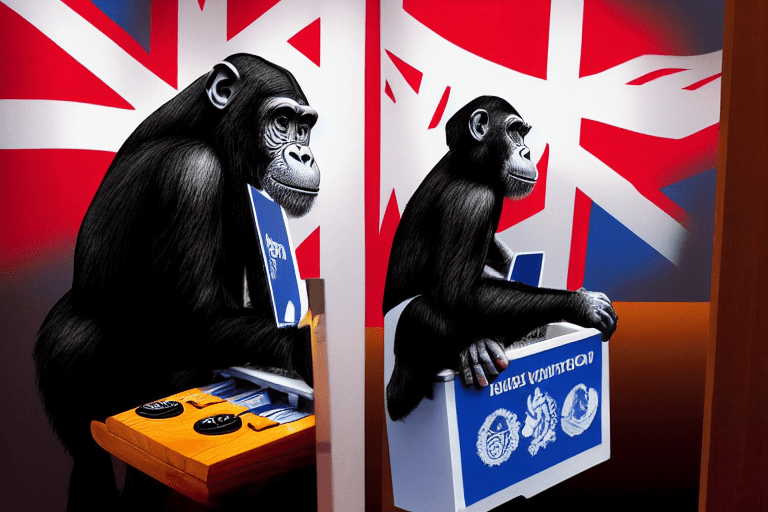
perhaps we could start allowing chimps to participate in the process
And maybe I am wrong, perhaps we could start allowing chimps to participate in the process. I’ve heard a lot of good things about dolphins and octopuses. I look around me, and I see a lot of nice people. People who enjoy life and are nice to talk with, maybe even about the weather. But being affable doesn’t make one a critical thinker. It doesn’t make a great foundation for government or even the selection of government.
Voting Chimps
The 64,000 question is what to do. The problem, as with any challenge involving people, is that it involves people. We could construct a test, and the affluent would find a way to bribe to get a favourable result or pay for the rote information and strategy to pass the test. They already use both of these approaches for college admissions, so I wouldn’t expect anything different here.
On a final note, some including Kant and Chomsky have argued that there are limits to human reason on a global level. I am just applying this to the local level, and there are many more local limits that never come close to encountering this higher global limit. That’s a challenge in and of itself.
In the end, you can rest assured. No one is going to voluntarily give up their voting rights any time soon. No meaningful test is on the horizon. The system will likely implode on itself first. In some places sooner than others.
* Yes, I know there are only 8,760 hours in an earth year. I was hoping you didn’t notice.