Fiction Nation: Conclusion

Conclusion

In our exploration of fictions—nations, economies, money, legal systems, and even sports—we have uncovered the profound ways in which these constructs shape our reality. These fictions, born from collective agreements and sustained by shared belief, play pivotal roles in organizing societies, guiding behaviors, and fostering a sense of belonging and purpose. While they may not correspond to an objective, external reality, their effects are undeniably real and impactful.

Recognizing the fictional nature of these constructs challenges us to rethink our assumptions about truth and reality. It reveals the power of human imagination and the social nature of our existence. This awareness empowers us to question, reform, and innovate the fictions we live by, opening up possibilities for creating new social constructs that better align with our evolving values and aspirations.

The historical and philosophical perspectives we have explored underscore the contingent and constructed nature of truth. Thinkers like Michel Foucault and Jean Baudrillard remind us that what we accept as truth is often a product of social and historical processes, shaped by power dynamics and collective narratives. This critical awareness invites us to engage with our social constructs more thoughtfully and responsibly.

The practical implications of this perspective are far-reaching. By understanding that economic systems, national identities, and legal frameworks are human-made, we can envision and implement alternative models that prioritize sustainability, equity, and inclusivity. Recognizing the power of belief and narrative in shaping our realities encourages us to foster transparency, inclusivity, and critical engagement in the construction and perpetuation of social fictions.

Ethically, we must approach the creation and maintenance of fictions with a commitment to the common good. The manipulation of these constructs for narrow interests can lead to exploitation and injustice. Therefore, it is crucial to ensure that our social constructs serve the interests of all members of society and reflect our collective values and aspirations.

In conclusion, living in a world of fictions is both a profound and practical reality. By embracing the constructed nature of our social realities, we affirm the human capacity for imagination and creativity. This recognition opens up possibilities for envisioning and creating new fictions that better reflect our values and guide us toward a more just, equitable, and sustainable future. Through critical engagement and thoughtful innovation, we can navigate the complexities of our social world with greater insight and intentionality, fostering a more dynamic and harmonious society.

⬅ Fiction Nation: Can This Be True? (section 7)

⬅ Fiction Nation: The Concept of Fiction (section 1)

References

  1. Graeber, David. Debt: The First 5,000 Years (2011).
  2. Foucault, Michel. Discipline and Punish: The Birth of the Prison (1975).
  3. Baudrillard, Jean. Simulacra and Simulation (1981).
  4. Anderson, Benedict. Imagined Communities: Reflections on the Origin and Spread of Nationalism (1983).
  5. Giddens, Anthony. The Consequences of Modernity (1990).
  6. Beck, Ulrich. Cosmopolitan Vision (2006).
  7. Cover, Robert. “Nomos and Narrative” (1983).
Fiction Nation: Can This Be True?

Section 6: Can This Be True?

The Nature of Truth in Fictions

In exploring the concept that nations, economies, money, legal systems, and even sports are fictions, we confront a fundamental question: can this be true? The answer hinges on our understanding of truth and reality. If we define truth as correspondence to an objective, external reality, then fictions, by their nature, are not “true” in a literal sense. However, if we recognize that truth can also be a construct shaped by human perception and social agreements, then fictions hold a different kind of truth.

Fictions are true in the sense that they have real effects on our lives. They shape our behaviours, influence our decisions, and structure our societies. The value of money, the authority of laws, and the significance of national identities are all real because we collectively believe and act as if they are. This shared belief and action give fictions their power and their truth.

Philosophical Perspectives

Philosophers have long grappled with the nature of truth and reality. The concept of social constructs aligns with the ideas of thinkers like Michel Foucault, who argued that knowledge and power are intertwined, and that what we accept as truth is often a product of social and historical processes. Similarly, Jean Baudrillard’s concept of hyperreality suggests that in the postmodern world, the line between reality and simulation becomes blurred, and fictions can become more real than reality itself.

These perspectives challenge the notion of an objective, immutable truth, suggesting instead that truth is often contingent, context-dependent, and constructed through human interactions. In this light, the fictions that structure our world are as true as any other aspect of our lived experience.

Empirical Evidence

Empirical evidence supports the idea that fictions have real effects. For instance, studies in economics and sociology demonstrate how beliefs and narratives shape market behaviours and social norms. The placebo effect in medicine, where patients experience real improvements in health due to their belief in a treatment, exemplifies the power of belief in creating tangible outcomes.

Historical examples further illustrate this point. The Treaty of Westphalia in 1648, which established the modern system of nation-states, was a legal and diplomatic construct that reshaped political boundaries and identities. The creation of fiat currencies, which derive their value from collective trust rather than intrinsic worth, has revolutionized global economies.

Practical Implications

Recognizing the constructed nature of our social realities has practical implications. It empowers us to critically examine and potentially reshape the fictions we live by. This critical awareness fosters adaptability and innovation, allowing us to address contemporary challenges more effectively.

For example, understanding that economic systems are human-made constructs can inspire alternative models that prioritize sustainability and equity. Similarly, recognizing the fictional nature of national identities can promote more inclusive and cosmopolitan forms of belonging.

Ethical Considerations

While fictions can be powerful tools for organizing society, they also carry ethical considerations. The manipulation of fictions for political or economic gain can lead to exploitation and injustice. It is crucial to approach the construction and perpetuation of fictions with a sense of responsibility and a commitment to the common good.

Transparency, inclusivity, and critical engagement are key to ensuring that the fictions we create serve the interests of all members of society. This requires ongoing dialogue and reflection to align our social constructs with our evolving values and aspirations.

Conclusion

The notion that we live in a world of fictions is both profound and practical. It challenges us to rethink our assumptions about truth and reality, and to recognize the power of collective belief and social constructs in shaping our lives. By embracing this perspective, we gain the ability to question, reform, and innovate the fictions that structure our world, fostering a more just and dynamic society.

In acknowledging the constructed nature of our social realities, we affirm the human capacity for imagination and creativity. This recognition opens up possibilities for envisioning and creating new fictions that better reflect our values and aspirations, guiding us toward a more equitable and sustainable future.

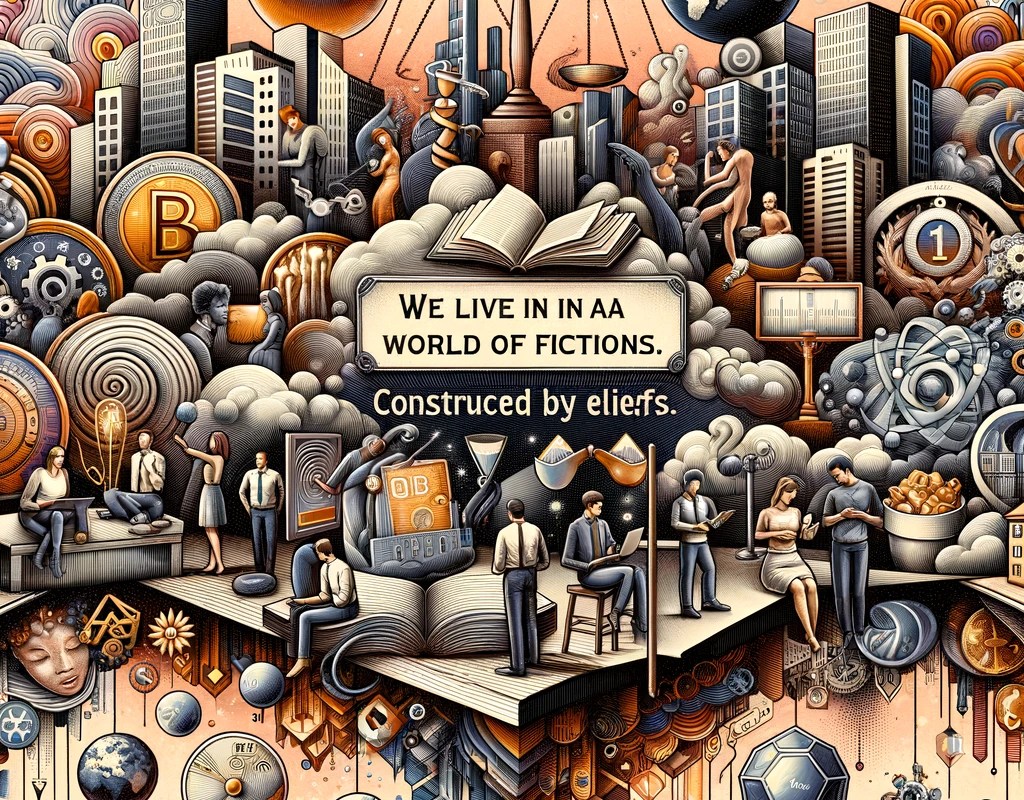
PS: Apologies for the AI typo in the thumbnail image. I fixed it once, and it went missing. Perhaps. I’ll mend it later.

References

  1. Graeber, David. Debt: The First 5,000 Years (2011).
  2. Foucault, Michel. Discipline and Punish: The Birth of the Prison (1975).
  3. Baudrillard, Jean. Simulacra and Simulation (1981).
  4. Anderson, Benedict. Imagined Communities: Reflections on the Origin and Spread of Nationalism (1983).
  5. Giddens, Anthony. The Consequences of Modernity (1990).
  6. Beck, Ulrich. Cosmopolitan Vision (2006).

Fiction Nation: Legal and Jurisprudence Systems


Section 4: Legal and Jurisprudence Systems as Fictions

The Nature of Legal Systems

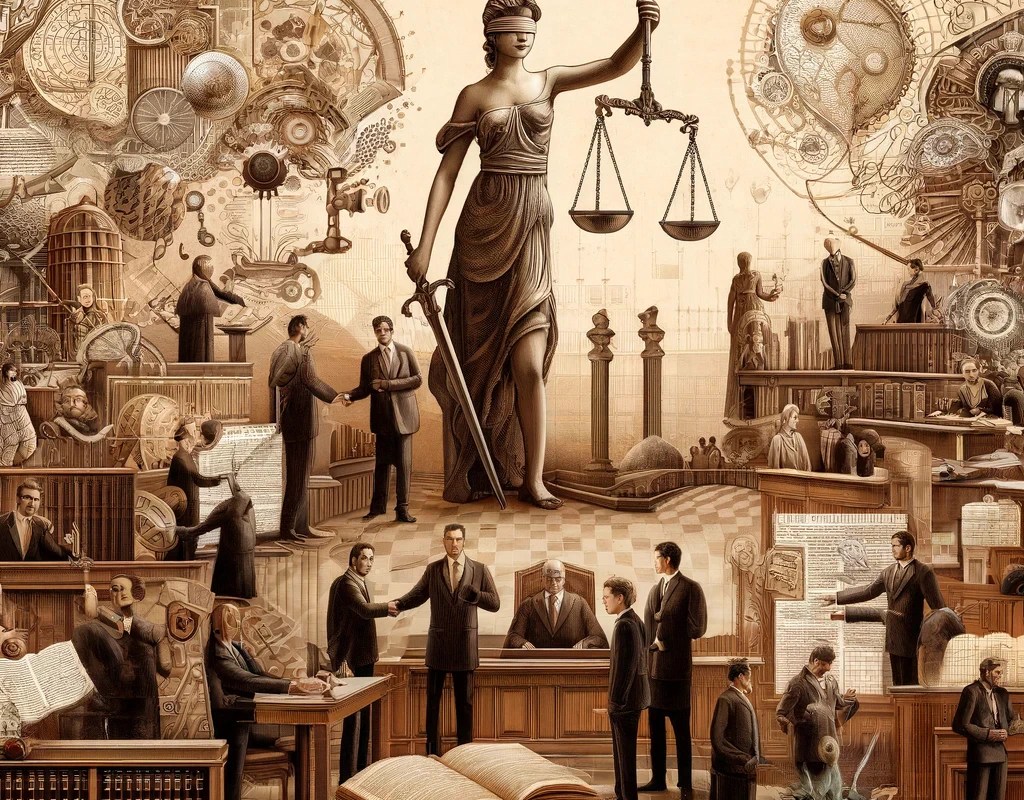
Legal and jurisprudence systems are among the most complex and entrenched fictions in society. Laws are human-made rules that govern behaviour, established by governments and enforced by judicial institutions. While laws aim to create order and justice, they are ultimately constructs, products of human agreement and cultural evolution.

The concept of law varies significantly across cultures and historical periods. Ancient legal codes, such as the Code of Hammurabi or Roman law, illustrate the long-standing tradition of codifying rules to govern society. However, these codes, like modern laws, are not natural phenomena but rather inventions designed to regulate human interactions and maintain social cohesion.

The Evolution of Legal Fictions

Legal systems have evolved alongside societies, adapting to changes in cultural norms, technological advancements, and political landscapes. The development of common law, for example, is a testament to the adaptive nature of legal systems. Common law, which originated in medieval England, is based on judicial precedents and case law rather than written statutes. This system relies heavily on the interpretation and application of past decisions, demonstrating how legal principles are constructed and reconstructed over time.

Moreover, legal fictions are often used within these systems to achieve practical outcomes. For instance, the concept of corporate personhood, where a corporation is treated as a legal person with rights and responsibilities, is a legal fiction designed to facilitate business operations and protect individual shareholders from certain liabilities. This illustrates how legal constructs can shape economic activities and social relations.

Implications of Legal Fictions

The recognition that legal systems are fictions has profound implications for how we understand and engage with the law. It highlights the role of human agency in creating and modifying legal norms, suggesting that laws are not immutable truths but rather adaptable tools for governance.

Legal systems are often seen as impartial and objective, but they are deeply influenced by the values, beliefs, and power dynamics of the societies that create them. This can lead to biases and inequalities being embedded within legal frameworks. For example, historical laws that discriminated based on race, gender, or class demonstrate how legal fictions can perpetuate social injustices.

Understanding the fictional nature of legal systems also opens the door to questioning and reforming these systems. It encourages us to consider alternative approaches to justice and governance that may better reflect contemporary values and address the needs of diverse populations.

The Role of Legal Narratives

Legal narratives, the stories told through laws and legal decisions, play a crucial role in shaping public perceptions and societal norms. These narratives construct realities that influence how individuals and communities understand their rights, responsibilities, and relationships with the state.

The work of scholars like Robert Cover, who in “Nomos and Narrative” (1983) argued that law is a system of meaning-making through narratives, underscores the importance of storytelling in the legal realm. By examining these narratives critically, we can uncover the underlying assumptions and power structures that they reinforce.

Future of Legal Systems

As societies continue to evolve, so too will their legal systems. The rise of international law, human rights conventions, and transnational legal frameworks reflects the growing interconnectedness of the world. These developments challenge traditional notions of state sovereignty and domestic legal autonomy, suggesting a future where legal systems may become even more complex and intertwined.

By recognizing legal systems as fictions, we are better equipped to navigate and influence these changes. This awareness can lead to more inclusive and equitable legal frameworks that serve the broader goals of justice and human flourishing.

References

  1. Cover, Robert. “Nomos and Narrative” (1983).
  2. Graeber, David. Debt: The First 5,000 Years (2011).
  3. Anderson, Benedict. Imagined Communities: Reflections on the Origin and Spread of Nationalism (1983).
  4. Giddens, Anthony. The Consequences of Modernity (1990).
  5. Beck, Ulrich. Cosmopolitan Vision (2006).

Fiction Nation: Economies & Money (part 3)

➡ Fiction Nation: Living in a World of Fictions (section 5)

Neglect and a Quarter Dozen

I am going to neglect this blog for at least another day. I’ve got too many irons in the fire.

Why do we routinely say ‘half dozen’ but don’t tend toward ‘quarter dozen’ or ‘third of a dozen’? I know many people have maths deficits, but still. I don’t think even I will attempt to start this trend, but this thought crossed my head today.

I hope to return to reengage with this block, but until then, adieu.

Perfect and Relative Pitch and Reality

Perception of Reality™ is akin to having relative pitch. Unlike pitch, where some people have perfect pitch – the ability to name a note or chordal composition without any other reference – it is unlikely that anyone has or will have access to objective reality – analogically: perfect pitch for reality.

As I’ve mentioned, I believe that all our experiences and interactions with reality are relative, if not wholly subjective. There may exist an objective reality, but for reasons already noted – cognitive and sense perception deficits –, we can never access it.

Musically, If someone plays and identifies a reference note, say A (or do in movable do solfège), and then plays a major fifth above (or sol), a person with relative pitch can hear that fifth interval and identify it as an E. Everything is about relationships. In music, the relationships are intervalic, but we know where we are based on where we’ve been. A person with perfect pitch requires no such priming. They can identify the first A note without prompting.

Our experience with reality is also relative, but no one has the equivalence of perfect pitch. No one has access to objective reality – if there even is one.

I don’t deny that there could be an objective reality. I just believe it’s inaccessible. I am a qualified realist – so, not a physicalist –, but I don’t believe in supernatural or paranormal events. A so-called ‘supernatural’ event is merely an event that hasn’t yet been described in ‘natural’ terms.

Now that I got that off my chest, what are your thoughts on objective reality? Lemme know.

Death Revisited

A year ago, in March 2023, I spent nine weeks in hospitals. I remember the day I almost died. It was not life-changing or life-affirming. No tunnels, lights, angels, or life on replay in slow motion. Just me monologuing. Gasping for breath.

I was breathing three units of Oxygen through my nose, but I wasn’t getting enough. The staff upped the dose to five units and administered it through a face mask. I was gasping. They were pushing on a string. I wasn’t getting the Oxygen. Instead, I was gasping like a fish out of water.

No lights – just monologue. Being contemplative, I do this often anyway. I remember telling myself, just pick a side; flip a coin; in or out; live or die. I was indifferent to the outcome. I just wanted the suffering to end. Full stop. I had no investment in either outcome. I’ve lived a good life. I was at peace. I am at peace. A year on, and I’m still recovering.

The last thing I remember was telling a nurse, “I think you need to intubate me.”

“We might have to; she replied.

The next day, I awoke with tubes down my throat after an emergency surgery to drain fluid around my heart.

I can’t claim to have experienced a near-death experience, NDE, but I was on the threshold. There was no other side. No pleading. No review. Just me in the world I was thrown into – what Heidegger termed Geworfenheit.

This is all of us. Here without volition. Just trying to make it through. Before this incident, I didn’t believe in ageing. I was invincible. I lived life like a younger person, and no end was in sight.

Perhaps I was too quick to say this was not life-changing. Now, I realise the fragility in life – at least I was fragile. I aged overnight – and then some. Overshot my chronological age. This is where I remain. Vulnerable.

Although I’d like to return to work, I am still not employable. Besides all of the medical visits and physiotherapist, my ankle is broken, awaiting repair, and my hands still don’t quite work. I can type. I’m typing this. Slowly. Twenty words a minute. Lots of backspacing. A computer application might assist with this, but none do quite so. This translates to a twenty per cent productivity output. Not great.

I’ve always considered myself to be a knowledge worker, but I never realised how much I still need my hands. I’m not just a brain in a vat. I need to engage with the world.

I am recovering – slowly and not without setbacks. Still, I persist. I took the road less travelled. Might I have been better off taking the other road? It’s hard to say.

Cognitively, we humans have an endowment effect: We value what we have. For now, I have life. Irrational or otherwise, I’ll cling to it. I’ll hope for a better tomorrow, but hope floats. Hope and a dollar won’t buy you a cup of coffee at Starbucks. It’s a vapid yet very human fiction. I hope this next year will be better than the last. Let’s see where it goes.

Hemo Sapiens: Awakening

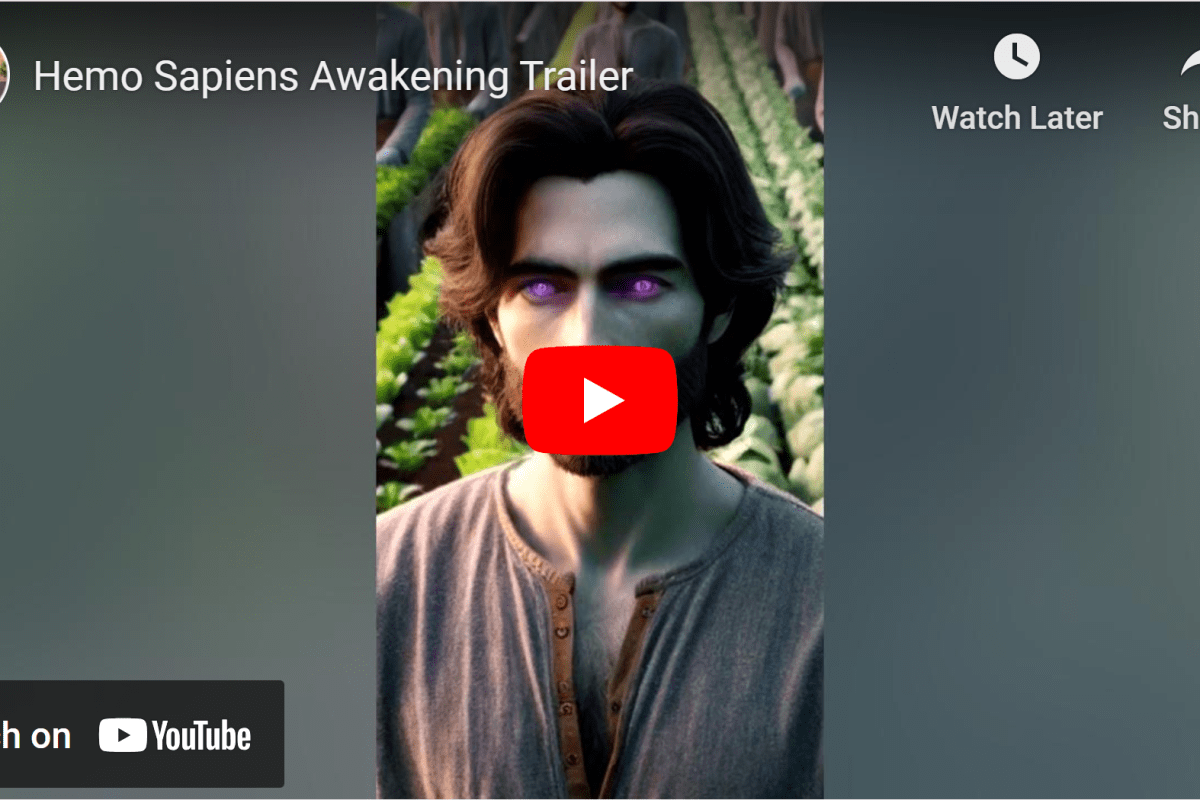
I’ve been neglecting this site as I’ve been focusing on releasing my first novel, which I’ve now managed successfully. I published it under a pseudonym: Ridley Park. The trailer is available here and on YouTube.

Hemo Sapiens: Awakening is the first book in the Hemo Sapiens series, though the second chronologically. The next book will be a prequel that tells the story about where the Hemo Sapiens came from and why. I’ve got a couple of sequels in mind, too, but I don’t want to get ahead of myself.

In summary, Hemo Sapiens is shorthand for Homo Sapiens Sanguinius, a seeming sub-species of Hemo sapiens Sapiens—us. In fact, they are genetically engineered clones. It’s a work of near-future speculative fiction. It’s available in hardcover, paperback, and Kindle. If you’ve got a Kindle Unlimited account, you can view it for free in most markets. The audiobook should be available in a couple weeks if all goes well.

Awakening explores identity, belonging, otherness, and other fictions. It talks about individualism and communalism. It looks at mores, norms, and more.

Check it out, and let me know what you think.

AI is Science Fiction

In the heart of the digital age, a Chinese professor’s AI-authored Science Fiction novel snags a national award, stirring a pot that’s been simmering on the back burner of the tech world. This ain’t your run-of-the-mill Sci-Fi plot—it’s reality, and it’s got tongues wagging and keyboards clacking. Here’s the lowdown on what’s shaking up the scene.

AI Lacks Originality? Think Again

The rap on AI is it’s a copycat, lacking the spark of human creativity. But let’s not kid ourselves—originality is as elusive as a clear day in London. Originality is another weasel word. Everything’s a remix, a mashup of what’s been before. We’ve all been drinking from the same cultural well, so to speak. Humans might be grand at self-deception, thinking they’re the cat’s pyjamas in the creativity department. But throw them in a blind test with AI, and watch them scratch their heads, unable to tell man from machine. It’s like AI’s mixing up a cocktail of words, structures, themes—you name it—and serving up a concoction that’s surprisingly palatable. And this isn’t the first time, not long ago, an AI-created artwork won as best submission at a state fair. In some cases, they are seeking AI-generated submissions; other times, not so much.

AI and the Art Debate

So, AI can’t whip up human-level art? That’s the chatter, but it’s about as meaningful as arguing over your favourite colour. Art’s a slippery fish—try defining it, and you’ll end up with more questions than answers. It’s one of those terms that’s become so bloated, it’s lost its punch. To some, it’s a sunset; to others, it’s a can of soup. So when AI throws its hat in the ring, it’s not just competing—it’s redefining the game.

The Peer Review Question Mark

Here’s where it gets spicy. The book bagging a national award isn’t just a pat on the back for the AI—it’s a side-eye at the whole peer review shindig. It’s like when your mate says they know a great place to eat, and it turns out to be just okay. The peer review process, much like reviewing a book for a prestigious award, is supposed to be the gold standard, right? But this AI-authored book slipping through the cracks and coming out tops? It’s got folks wondering if the process is more smoke and mirrors than we thought.


What’s Next?

So, where does this leave us? Grappling with the idea that maybe, just maybe, AI’s not playing second fiddle in the creativity orchestra. It’s a wake-up call, a reminder that what we thought was exclusively ours—creativity, art, originality—might just be a shared space. AI’s not just imitating life; it’s becoming an intrinsic part of the narrative. Science fiction? More like science fact.

The next chapter’s unwritten, and who knows? Maybe it’ll be penned by an AI, with a human sitting back, marvelling at the twist in the tale.

Geopolitical Positioning

Some have asked me why I comment on the conflicts of the world since I am a nihilist who doesn’t believe in nations and borders. The answer is that I still have emotions and can still apply logic. Besides, much of my argument revolves around selective vision and cherry-picking.

Two conflicts have been in the news lately—Israel-Palestine and Russia-Ukraine. I think I can frame this without taking sides.

Israel-Palestine

On 7 October, Hamas attacked Israeli citizens. This is a crime against humanity. Israel declared war on Palestine and attacked their citizens. This is both a crime against humanity and a war crime. Israeli officials claim that it is justifiable because the militant Hamas were hiding behind Palestinian ‘human shields’, targets that included hospitals and other infrastructure.

However, 7 October didn’t happen without history. I’m no historian, but Israel’s occupation of Gaza has been considered illegal since 1968. If we accept this frame, Hamas are roughly equivalent to the French resistance during WWII, doing what they can to rid the oppressors. I think this video by a fellow philosopher provides some historical context, so I’ll stop here and recommend it.

Spoiler Alert: This affair commenced circa the nineteenth century.

Russia-Ukraine

We all know this story. Russia invaded Ukraine without provocation on 24 February 2002. Putin just wanted to reform the former Soviet Union, right? Well, not so fast. While I disagree with this narrative, I also disagree with its historical framing as well as the claim that Ukraine had some long-standing sovereignty and its people were all asking for liberation from the West.

Again, let’s rewind to 2014—nah, 1989, the fall of the Berlin Wall and the end of the Cold War™, an event that would commence a period of unprecedented peace—if not for that pesky Military-Industrial Complex. Drats. Not good for profits. Never gonna happen. Promises made. Promises broken.

You’ll notice in this Belgian (French language) map that Ukraine didn’t yet exist in 1769. We can see Crimea, which was controlled by the declining Ottoman Empire.

No history lesson today. Do your homework. Nothing is back and white.

Good Enough

As I approach my sixty-second year on earth, having almost expired in March, I’ve been a bit more reflective and introspective. One is categorical. I’ve been told over the years that I am ‘good’ or ‘excel’ at such and such, but I always know someone better—even on a personal level, not just someone out in the world. We can all assume not to be the next Einstein or Picasso, but I am talking closer than that.

During my music career, I was constantly inundated with people better than me. I spent most of my time on the other side of a mixing console, where I excelled. Even still, I knew people who were better for this or another reason. In this realm, I think of two stories. First, I had the pleasure and good fortune to work on a record with Mick Mars and Motley Crue in the mid-’80s. We had a chat about Ratt’s Warren DiMartini, and Mick told me that he knew that Warren and a spate of seventeen-year-olds could play circle around him, but success in the music business is not exclusively based on talent. He appreciated his position.

In this vein, I remember an interview with Tom Morello of Rage Against the Machine. As he was building his chops he came to realise that he was not going to be the next Shredder or Eddie Van Halen, so he focused on creating his own voice, the one he’s famous for. I know plenty of barely competent musicians who make it, and I know some virtual virtuosos who don’t. But it involves aesthetics and a fickle public, so all bets are off anyway.

As I reflect on myself, I consider art and photography. Always someone better. When I consider maths or science, there’s always someone better. Guitar, piano? Same story.

Even as something as vague and multidimensional as business, I can always name someone better. I will grant that in some instances, there literally is no better at some level—just different—, so I sought refuge and solace in these positions. Most of these involved herding cats, but I took what I could.

Looking back, I might have been better off ignoring that someone was better. There’s a spot for more than the best guitarist or singer or artist or policeman for that matter. As a musician, I never thrived financially—that’s why I was an engineer—, but I could have enjoyed more moments and taken more opportunities.

When I was 18, I was asked to join a country music band. I was a guitarist and they needed a bass player. I didn’t like country music, so I declined—part ego, part taste. Like I said, aesthetics.

As I got older and started playing gigs, I came to realise that just playing was its own reward. I even played cover bands, playing songs that were either so bad or so easy. But they were still fun. I’m not sure how that would have translated as playing exclusively country music day after day, but I still think I might have enjoyed myself—at least until I didn’t. And the experience would still have been there.

I was a software developer from the nineties to the early aughts. I was competent, but not particularly great. As it turns out, I wasn’t even very interested in programming on someone else’s projects. It’s like being a commercial artist. No, thank you. It might pay the bills, but at what emotional cost?

I was a development manager for a while, and that was even worse, so I switched focus to business analysis and programme management, eventually transitioning to business strategy and management consulting. I enjoyed these more, but I still always knew someone better.

On one hand, whilst I notice the differences, it’s lucky that I don’t care very much. Not everyone can be a LeBron James or a Ronaldo, but even the leagues are not filled with this talent. I’m not suggesting that a ten-year-old compete at this level, but I am saying if you like it, do it. But temper this with the advice at the Oracle of Delphi: Know thyself. But also remember that you might never be the best judge of yourself, so take this with a grain of salt. Sometimes, ‘good enough’ is good enough.