Hierarchies and Meritocracy

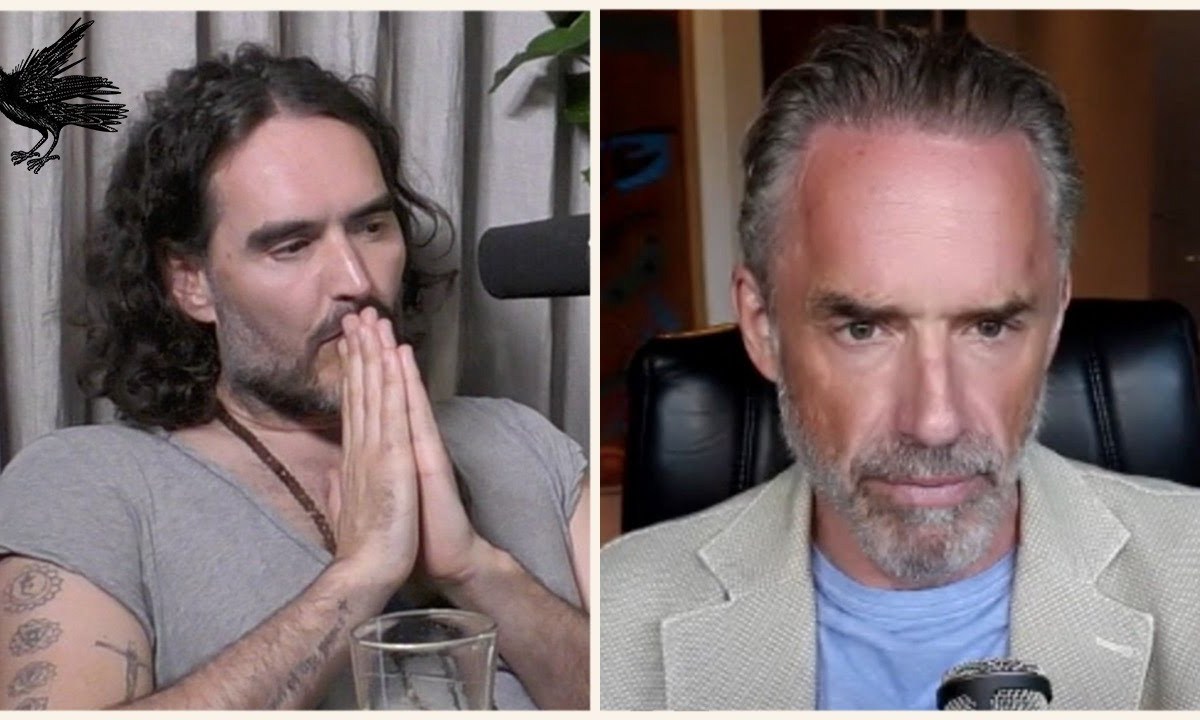
Jordan Peterson and Russell Brand chat for about 12 minutes on sex differences and personality, but that’s not where I want to focus commentary. What I will say is that Peterson continually conflates sex and gender, and I find that disconcerting for a research psychologist.

I’ve queued this video near the end, where Peterson delineates his conception of how the political right and left (as defined by him and the US media-industrial complex).

I feel he does a good job of defining the right, and he may have even captured whatever he means by left—radical left even—, but he doesn’t capture my concerns, hence I write.

To recap his positions,

Premises

  • We need to pursue things of value
  • Hierarchies are inevitable
  • [One has] to value things in order to move forward in life
  • [One has] to value things in order to have something valuable to produce
  • [One has] to value some things more than others or [they] don’t have anything like beauty or strength or…competence or…whatever…
  • If [one] value[s] [some domain] then [one is] going to value some [things in that domain] more than others because some are better
  • If [one] play[s] out the value in a social landscape, a hierarchy [will result]
  • A small number of people are going to be more successful than the majority
  • A very large number of people aren’t going to be successful at all

Conservative (Right)

  • Hierarchies are justifiable and necessary

Left

  • Hierarchies … stack [people] up at the bottom
  • [Hierarchies] tilt towards tyranny across time

Critique

I feel I’ve captured his position from the video transcript, but feel free to watch the clip to determine if I’ve mischaracterised his position. I have reordered some of his points for readability and for a more ordered response on my part.

To be fair, I feel his delivery is confused and the message becomes ambiguous, so I may end up addressing the ‘wrong’ portion of his ambiguous statement.

We need to pursue things of value

This is sloganeering. The question is how are we defining value? Is it a shared definition? How is this value measured? How are we attributing contribution to value? And do we really need to pursue these things?

Hierarchies are inevitable

Hierarchies may be inevitable, but they are also constructed. They are not natural. They are a taxonomical function of human language. Being constructed, they can be managed. Peterson will suggest meritocracy as an organising principle, so we’ll return to that presently.

[One has] to value things in order to move forward in life

This is a particular worldview predicated on the teleological notion of progress. I’ve discussed elsewhere that all movement is not progress, and perceived progress is not necessarily progress on a global scale.

Moreover, what one values may not conform with what another values. In practice, what one values can be to the detriment of another, so how is this arbitrated or mediated?

[One has] to value things in order to have something valuable to produce

I think he is trying to put this into an economic lens, but I don’t know where he was going with this line. Perhaps it was meant to emphasise the previous point. I’ll just leave it here.

[One has] to value some things more than others or [they] don’t have anything like beauty or strength or…competence or…whatever…

This one is particularly interesting. Ostensibly, I believe he is making the claim that we force rank individual preferences, then he provides examples of items he values: beauty, strength, competence, and whatever. Telling here is that he chooses aesthetic and unmeasurable items that are not comparable across group members and are not even stable for a particular individual. I won’t fall down the rabbit hole of preference theory, but this is a known limitation of that theory.

If [one] value[s] [some domain] then [one is] going to value some [things in that domain] more than others because some are better

We’ve already touched on most of this concept. The key term here is ‘better‘. Better is typically subjective. Even in sports, where output and stats are fairly well dimensionalised, one might have to evaluate the contributions of a single athlete versus another with lower ‘output’ but who serves as a catalyst for others. In my mental model, I am thinking of a person who has higher arbitrary stats than another on all levels versus another with (necessarily) lower stats but who elevates the performance (hence) stats of teammates. This person would likely be undervalued (hence under-compensated) relative to the ‘star’ performer.

In other domains, such as art, academics, or even accounting and all measurement bets are off.

If [one] play[s] out the value in a social landscape, a hierarchy [will result]

Agreed, but the outcome will be based on rules—written and unwritten.

A small number of people are going to be more successful than the majority

Agreed.

A very large number of people aren’t going to be successful at all

Agreed

Conclusion

The notion of meritocracy is fraught with errors, most notably that merit can be meaningfully assessed in all but the most simple and controlled circumstances. But societies and cultures are neither simple nor controlled. They are complex organisms. And as Daniel Kahneman notes, most merit can likely be chalked up to luck, so it’s all bullshit at the start.

In the end, Peterson and people like him believe that the world works in a way that it doesn’t. They believe that thinking makes it so and that you can get an is from an ought. Almost no amount of argument will convince them otherwise. It reminds me of the time Alan Greenspan finally admitted to the US Congress that his long-held adopted worldview was patently wrong.

Video: CSPAN: Oversight and Government Reform Committee Chairman, Rep. Henry Waxman and Former Fed Chairman Alan Greenspan Testimony

WAXMAN: “You found a flaw…”

GREENSPAN: “In the reality—more in the model—that I perceived is the critical functioning structure that defines how the world works, so to speak.”

WAXMAN: “In other words, you found that your your view of the world—your ideology—was not right. It was not what it had it…”

GREENSPAN: “Precisely. No, I… That’s precisely the reason I was shocked because I have been going for 40 years or more with very considerable evidence that it was working exceptionally well.”

To paraphrase musically
Video: Social Distortion, I Was Wrong

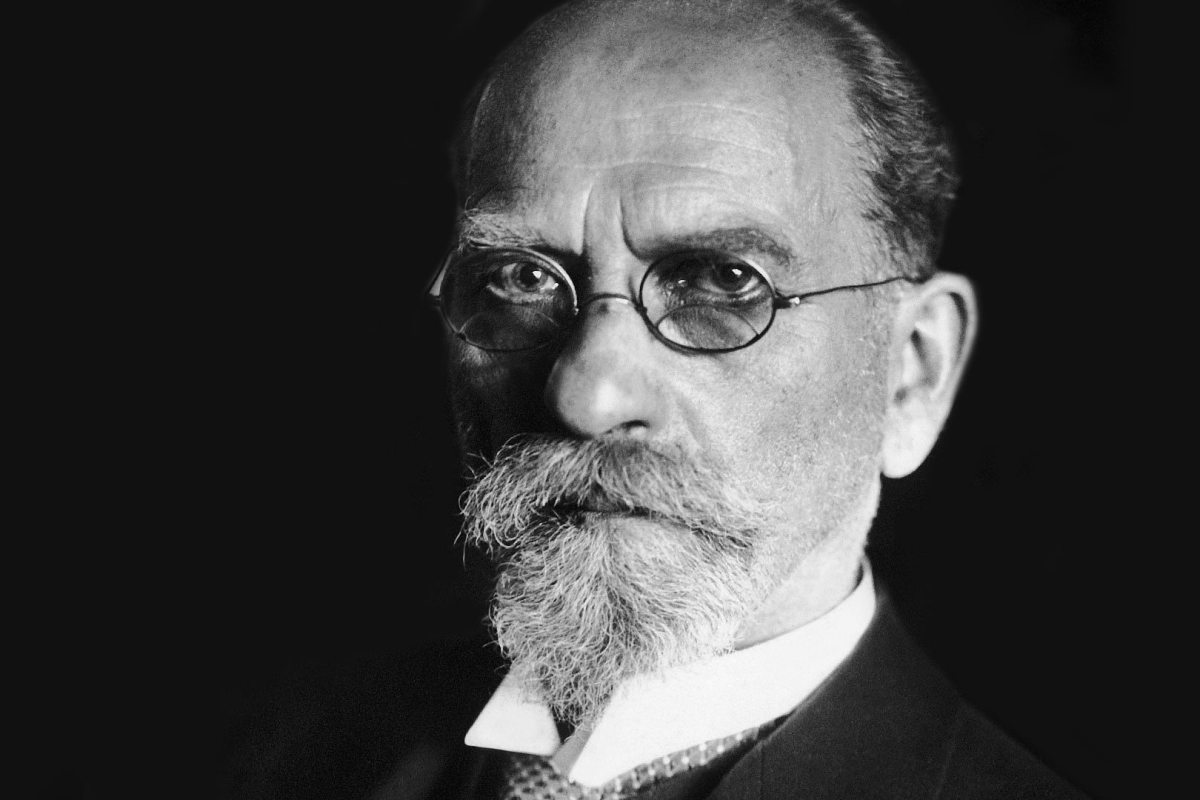
Finding Husserl

When I was seriously exploring music, I started from the artists I enjoyed and searched their roots and influences and cascaded back. In the 1970s, this was to look at the roots of Eric Clapton, Jimmy Page, and Keith Richards. I’d be brought back to James Burton or Elmore James; I’d find Robert Johnson, BB King, Muddy Waters and Hubert Sumlin (Howlin’ Wolf); and I’d find John Lee Hooker, and Chuck Berry. And then, I’d dg further to find Son House, T-Bone Walker, and Big Bill Broonzy. Although I grew to appreciate these originals, I still preferred the reinvigorated versions of my youth.

In philosophy, I seem to have taken a somewhat similar path. In particular, it’s a journey back to Husserl. I was exposed to essence and being most probably through Sartre. this brought me to Heidegger that brought me to Husserl. To be fair there was a large gap between Sartre and Heidegger and a fairly long gap from then until Husserl. I’ve come upon Husserl’s name time and again but I deprioritised him, He seemed always to be the AND of Heidegger, sort of like how Garfunkel was the AND of Simon.

But I thought that Heidegger was the root—the source, as Son House might have been to the Blues. Given the connection of Husserl and Heidegger, I’m not sure that Dasein‘s genesis is clear cut. Moreover, I believe it’s a pedestrian German world, that fancy pants academes wish to evermore preserve in amber as a stand-in to being there, though Heidegger insisted that the meaning was more nuanced and in some way I could consider that it prefigured Derrida’s privileged pairs highlighted in his Deconstruction.

I’ve commenced reading Husserl’s’ Ideas, and my takeaway at this point is his eidetic facts.

Rememories

I follow David Bennett Piano on YouTube. Today, he posted a side trip he took from Manchester to Liverpool.

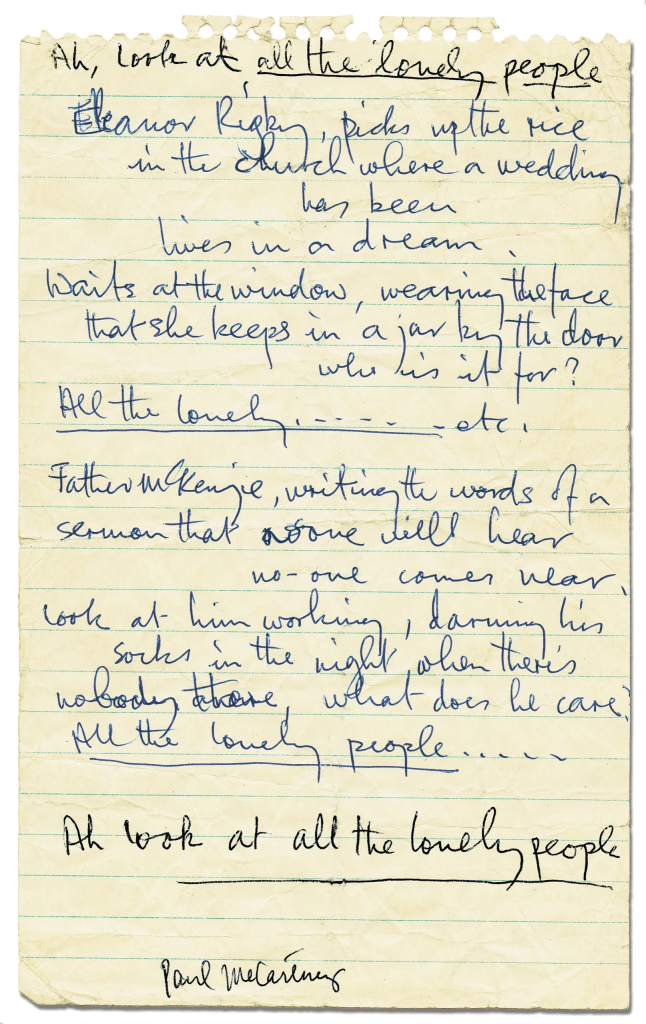
This post reflects on how memory operates and true and false memories. The video clip is about a minute long and shows Paul McCartney recounting how he decided to create the character of his eponymous song Eleanor Rigby.

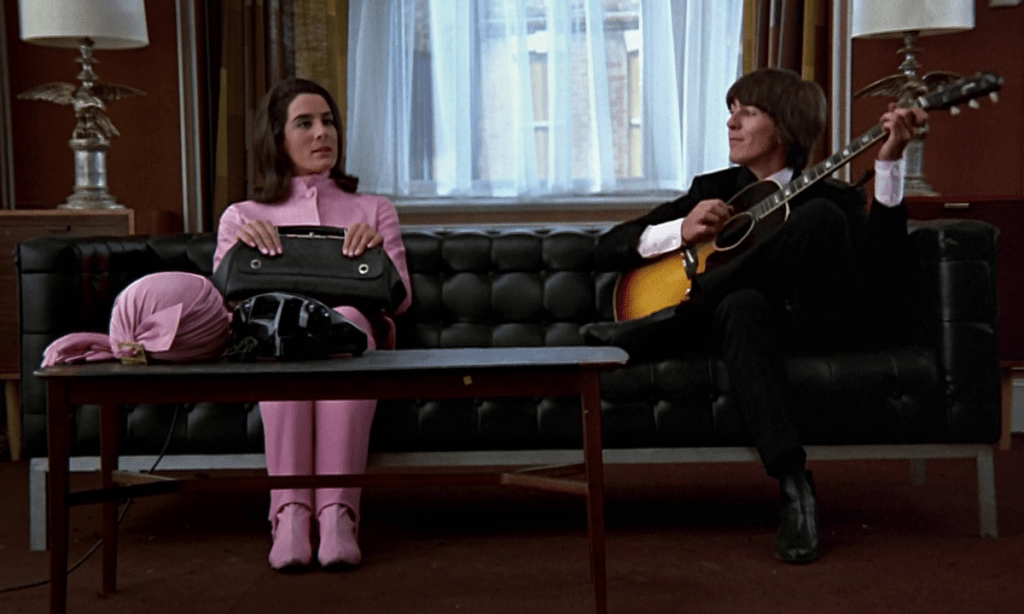
In Paul’s recollection, he had been working with an actress Eleanor Bron on the Beatles film Help!

Eleanor Bron and George Harrison

He fancied the name Eleanor and was trying to think of a two-syllable word to follow when he spotted a sign that read Rigby & Evens, a wine and spirits shop in Bristol.

Rigby & Evens, Limited Sign

According to Paul, these were the components leading to the title character.

Eleanor Rigby Hand-written Lyrics by Pail McCartney

From the perspective of recency over primacy, Paul may be correct, but it could also be, as he admits, that he had seen the tombstone without it being consciously registered. He may have even been consciously aware but subsequently forgotten it. Perhaps this is why the name resonated with him, having been exposed previously. Memory is known to be reinforced through repetition. From the perspective of primacy over recency, he may have never settled on the name had he not seen the inscription on the gravestone.

Could it be that this was a coincidence and Paul never did see that grave marker, or is it more likely that he did? We’ll never know for sure, but it is an interesting turn of events.

Descent of Man

Joe Talbert, singer and songwriter for IDLES, shares some of his perspective with us. Cued is a bit on masculinity, particularly the toxic variety.

Interview with Joe Talbert of IDLES

For me, it’s a breath of fresh air. Maybe it’s just nostalgia, but the IDLES bring some of the lost energy back into music. I’m old enough to remember the first Punk wave of the 1970s and the next waves as well as the ripples.

The Descent of Man clearly explains how masculinity as a construct is dangerous, problematic, and … bullshit

Joe Talbert

I’ve always been out of step with my music interests, ability, and availability. In the ’70s, I was raised on the Classic Rock of the day, from the Beatles and Stones in the ’60s, to Zeppelin and Sabbath in the ’70s before focusing more on the likes of Jeff Beck, John McLaughlin, and then Allan Holdsworth. In the mid-’70s, came vapid and syrupy, saccharine pop and the nonsense that was Disco. Thankfully, this was disturbed by Punk on one hand and Eddie Van Halen on the other. Then there was New Wave and the Hair Bands.

When I wanted to play Rock in Japan, I had offers for Country. My mates in Los Angles were into retro when I was into Progressive and Jazz Fusion. I did get on a Blues kick for a while, but I didn’t really feel like I could pull it off—some affluent white kid and all. Besides Hair Bands in the ’80s, there was a Euro-synth wave, but I wanted something more complex and experimental. By the ’90s, I finished grad school and was career-oriented. I fell in love with Grunge and post-Grunge, but that was a personal endeavour. I did finally play that in the 2000s as covers sprinkled with originals, but it was a side-gig not designed as a career. That train had sailed. Nowadays, I still dabble, but I’m not all that motivated to compose much.

Anyway, IDLES is refreshing. I don’t critique it as music. It’s not particularly melodic or harmonic. It’s about the message and the energy. There’s a beat that drives, and there is instrumentation and vocals. It’s an experience.

IDLES – Car Crash (Live on KEXP)

But this isn’t about the music. It’s about the notion of normalcy. In this clip, Joe talks about his longing for normalcy. Maybe that’s just normal, but I’ve never subscribed to the notion of normalcy, so I’ve never longed for it. Truth be told, my preference is for people to realise that it’s all a control mechanism.

Joe was influenced by therapy and The Descent of Man by the artist Grayson Perry. In this book, Perry, clearly giving a nod to Darwin’s earlier work, takes on toxic masculinity and attempts to reframe the very notion of masculinity. Like normalcy, I am not interested in gender roles either.

I worked as a statistician for a couple of years way back when, so it turns out that I have a perspective on normal. The problem with the notion of normal is that deviation for normal is seen as broken. Social sciences and pop-psychology have done this. Foucault wrote a lot on this phenomenon. I won’t address his work here.

Joe viewed himself as broken because he bought into the narrative. He feels better now. He feels he’s in a better place. Perhaps this was necessary for him. I can’t speak to that. It’s not a goal I aspire to. Perhaps I’m privileged. I can’t say. For now, I get to enjoy the respite Joe & Co afford us.

Fast Car

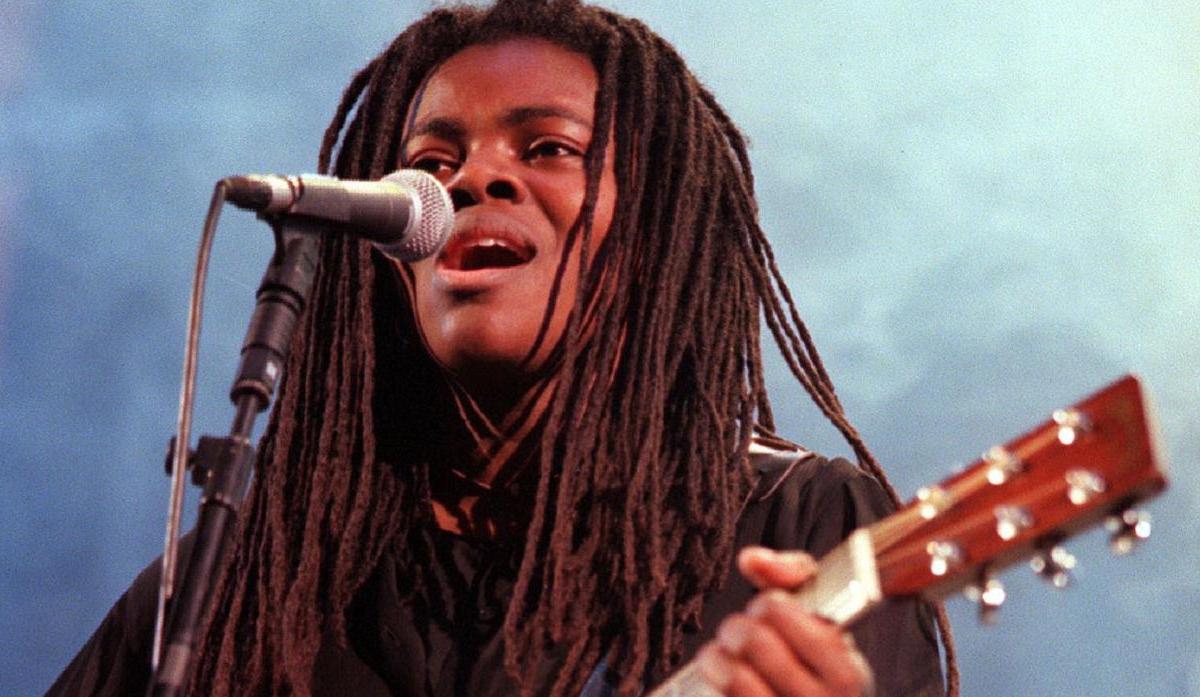
I enjoy listening to music reaction videos on YouTube. The other day, I came across Tracy Chapman’s Fast Car. I’ve loved this song since it first came out. Musically, it’s a simple repetitive chord progression—finger-picked D, A, F#m, E. In a manner, repetition is a metaphor for the lyrical narrative. In this live performance version, the treatment is more simplified than the original album version—until the last bar.

Tracy Chapman – Fast Car

The protagonist is in a place where any place is better, and she’s got a fast car she can use to get away. The situation she finds herself in is a family relationship where alcoholism is a problem; her father is an alcoholic. Her old man’s got a problem. He lives with the bottle, that’s the way it is. But she’s got a friend, and she’s got hope. She tells her friend, ‘maybe we make a deal. Maybe together we can get somewhere. They are starting from zero and have got nothing to lose. They can follow her ‘plan to get us out of here‘.

And so she left to create a new life, but in this new place, she recreated her prior experience with her friend proxying her father. Like her dad, she loved her friend, but she knew that the relationship wouldn’t work out.

And so she left to create a new life. Rather, she remains in place and asks her friend to make a decision, to take a fast car and keep on driving, to leave tonight or live and die this way.

Perhaps this new life would be better without the remnant from the previous life. Did she learn from her experience, or would she seek the same type of partner? Would she fall into the same pattern because it was her comfort zone? The song doesn’t tell us, but the underlying music hasn’t changed. It’s easy to imagine the next verse to be the same as the first—although one could argue that it does end on the G, not repeating the Em and D they run out the phrase. That’s for you to decide.

Returning to the song, there is the chorus. She’s retelling this story. She’s looking back—remembering. She had wanted to belong. She wanted to be something. In the end, we don’t know where she ended up. It seems to me that she’s in a place where she can reflect. Perhaps it’s the calm before the storm, or perhaps this challenge has been resolved, and the chain has been broken. Perhaps, that’s the effect of the added notes in the final bars.

A powerful song.

Feeling Music

Back in the day when I was a startving artist, as it were, and a bit of a studio rat, we didn’t always have budgets for top studio musicians, so we had to improvise… and by ‘improvise’, I mean get music students from USC or UCLA to play parts on instruments the bands weren’t proficient at. We could transcribe an arrangement and notate how we wanted it to be played. Notating feel is somewhat possible but not practical.

Typically, we’d secure trained Classical musicians, but the struggle was real to get them to ‘feel’ and not just read the notes on the page. For us, we just ‘felt’ it. We’d find a pocket, find a groove, not care that the tempo might drift or the spacing wasn’t quite in cadence, but getting these trained musicians to get past, ‘but that’s not what you wrote’ was hard. The playing was technically correct, but it was often wooden.

In the day—this is the early to mid ’80s—, synths were not quite ready for prime time when it came to simulating acoustic instruments, 8-bit samplers were shite and 16-bit samplers were out of our price range—and still not quite ready for prime time either. So that was the trade off.

Typically, the best case scenario was to play the parts on a synth for the players armed with sheet music, but that was never as good as when we had a feeling instrumentalist make an appearance.

Philosophie de la musique

Soundcloud: Bry Willis

So, OK. A bit of a bait and switch. This post is not about the philosophy of music, but music is a part of my life and has been since I was a kid. My philosophy is that I connect with music and it connects back.

This past month, I’ve been especially enjoying pieces centred on Sus2, typically in F.

To me Sus2 voicings have a Minor sadness yet are somehow more airy. My last 3 excerpts illustrate different takes.

Give a listen or not. Feel free to comment or not.

I’ll leave you with a piece I wrote for a former girlfriend, who died in June 2020. I could write am entire philosophy-psychology series on her, but for now, here is the purposfully meloncholy piece (with a notable nod to Smashing Pumpkins), the opening notes also serving as her ringtone.

Mimetic Desire

People influence one another and, when they’re together, they have a tendency to desire the same things, primarily not because those things are rare but because, contrary to what most philosophers think, imitation also bears on desire. Humans essentially try to base their being, their profound nature and essence, on the desire of their peers.

“Mimetic Desire: Shakespeare Rather than Plato.” When These Things Begin: Conversations with Michel Treguer, by René Girard and Trevor Cribben Merrill

Although I have some reservations—or at least reserve some latitude—, I tend to agree with Girard. Desire is a social construct. Desire is separate to needs. Desires are wants. As accomodated in Economics, we don’t need what we want, but we want what we need. We desire what we need.

we don’t need what we want, but we want what we need

What Girard is essentially saying is that I want what I want because you want it. This is independent of value in an economic sense. Memetically, the value of an object increases relative to the perceiver simply because another person wants it. In my reckoning, I’d separate want from desire or at least elevate desire to a higher degree of wanting.

Girard termed this triangular relationship between subject (you), object (the thing), and the mediator (the influencer) mimetic, to mimic. I suppose some of this might be considered to be memetic, but I also suppose that memes serve to simplify rather than serve as a distinct transmission vector.

circa 2016

My question is—exacerbated during this pandemic—how does this operate in isolation? I consider myself. I am not an ascetic by most definitions, but I am somewhat of a minimalist. My only ‘vices’ are my computer and my guitars. I used to be a professional musician—though most of that was spent on the other side of the console—and I was a Gibson snob. From the perspective of emotional desire, I still am. There is a certain nostalgia, but I don’t play out anymore, and I’m not seriously recording, so I don’t need the same perceived quality of an old Gibson.

Guitarists know that different guitars give different sounds. I’ve owned as many as 10 guitars at a time, and each had its purpose. Some was feel. This guitar was for Blues, this was other for Grunge, and that was for Jazz…and that for Fusion and that for a retro sound. This one had a fast neck, and this one sustained for days. This one was tuned Ă  la Keith Richards, sans a string, to an Open G, and the was set up for Drop C, and of course there was the Standard-tuned one for good measure

Jason & Me circa 2012

Did I need 10 guitars? No. Did I need 1? Not really—not unless I wanted to be a musician, desired to be a musician, so the degree of freedom was l, given this other desire. Having 1 guitar for a guitar player is not the same as a painter with only one colour of paint, but it almost feels like it. It’s certainly a convenience, and it allows players to express themselves artistically.

The question isn’t why I desired a guitar, but why I wanted to be a musician, and of all the instruments, why the guitar—and why did I prefer this genre over that. I’ll admit that my tastes are rather eclectic, but all that says is that I mimic eclecticism or eccentrism. My parents are not eclectic. Most of my friends are mainstream whitebread people—none I’d deem eclectic.

I’m rambling. Just because I don’t remember the source of my desire doesn’t mean there is no source. Perhaps it’s a composite source. I can’t say. Perhaps the outcome I’m naming, say eclecticism, is incorrect, so I am seeking the wrong source.

circa 2004

My point was that I don’t need a Gibson to be satisfied. First, I’ve already owed them, and I don’t have the same performative needs. But I still want to play, and I still want to exercise some artistic freedom, so I still have a few guitars.

To wrap this up, I’ll leave with an unpaid mimitec endorsement of Harley Benton guitars. The last guitar I purchased was this Harley Benton Black Paisley TE70. It’s very fit, and I picked it up for about €200, which included shipping and handling. They are German-built. When I was a kid, a guitar at this price range would have be borderline unplayable and won’t sound shite-like. These aren’t €1,000 instruments, but you’d be hard pressed to find a 5x value differential. They are build solid and have been given extra care not previously seen in down-market instruments. If I wanted to spend another €200, I could upgrade the pickups and for a bit more swap out the electronics to bigger potentiometers—but I won’t. I was planning to splurge and spend €50 on locking machine heads. Nope. Good enough. At €200 a pop, I could afford all sorts of configurations, but even that desire has waned—at least a bit, at least for a while.

circa 1984

Gimme Some Truth

John Lennon wrote this song in 1968 and released it as a solo artist, post-Beatles breakup, but he clearly was no post-modern. He embraced truth. He searched for it. To many, he had found it; following Heidegger’s logic, Lennon was authentic; not living the life someone else designed for him; living up to his potential.

This is quaint. I’d always loved John. He was my favourite Beatle. Paul was always too saccharine for me. I liked George, but his mysticism went off the rails. And Ringo—well, Ringo was Ringo. What’s not to like about the guy?—as long as you’re not talking about his prowess as a drummer.

I watched a YouTube video, and felt compelled to write a response—one I’ve recast and embellished here.

What is Postmodernism – Armored Skeptic

To a postmodernist, there is no objective truth. End of story. There is no further discussion. To postmodernists, a claim that there is some objective truth is parallel to hearing a proponent of religion who claims there is a God just because s/he says so. Truth is like God: it doesn’t exist. Period. End of story. And so like the religious who will ramble on for days about their God, so the modernist do the same.

Like the notion of God, Truth is a construct of human language, and they’re both fictions. People often confuse facts with truth. Facts are descriptive attributes about things or ideas whereas truth is about some inviolable, absolute notion. But facts are analytic or tautological: the car is red. Sure, we’ve constructed a term ‘car’ and a term ‘red’. If a thing exists that is both a car and red, then the statement is factually correct, but there is nothing true about it. It provides no additional information than ‘all bachelors are unmarried’.

The problem with truth is that we are attempting to make some universal claim, so let me pick an easy one: Thou shalt not kill: killing is bad. As an emotivist (post-modern philosopher AJ Ayer’s term), this translates to ‘Boo, murder’ or ‘I don’t like murder’, but there is no truth component to be found. Moreover, when it is brought to my attention that I abide with killing very frequently—by means of eating meat or vegetables—, I can attempt to limit the scope: Thou shalt not kill people. Of course, there are all sorts of escape clauses from this, whether wars, police action, capital punishment, euthanasia, abortion, and what have you. Each of these is differently good or bad subject to the observer. Why? Because there is no objective truth behind the claim. It was fabricated in the same manner Gods, governments, and other human institutions were fabricated.

So, the claim is that there is no basis for the status quo, which clearly jeopardises the standing of the status quo, so they pull a yellow card and argue that you are not allowed to argue without accepting their notion of truth. Otherwise, how can they win the argument? This is akin to arguing when you are stranded in the desert without fuel in your vehicle that there has to be fuel or else you can’t progress. And so the status quo has no fuel, and so it whines that the postmodernists just aren’t fair. In fact, they are accused of speaking nonsense, which sounds a lot like what the church claimed about heretics all those years ago. Only now, the modernists are the church holding onto a past that never was.

Finally, grouping all of these different postmodern disciplines together is like lumping all atheists together—they may have little in common save for the disbelief in God and gods, but their rationale and path may be orders of magnitude apart.

But all I want is some truth…

John Lennon – Gimme Some Truth