I’m a nihilist. Possibly always have been. But let’s get one thing straight: nihilism is not despair. That’s a slander cooked up by the Meaning Merchants – the sentimentalists and functionalists who can’t get through breakfast without hallucinating some grand purpose to butter their toast. They fear the void, so they fill it. With God. With country. With yoga.
Humans are obsessed with function. Seeing it. Creating it. Projecting it onto everything, like graffiti on the cosmos. Everything must mean something. Even nonsense gets rebranded as metaphor. Why do men have nipples? Why does a fork exist if you’re just going to eat soup? Doesn’t matter – it must do something. When we can’t find this function, we invent it.
But function isn’t discovered – it’s manufactured. A collaboration between our pattern-seeking brains and our desperate need for relevance, where function becomes fiction, where language and anthropomorphism go to copulate. A neat little fiction. An ontological fantasy. We ask, “What is the function of the human in this grand ballet of entropy and expansion?” Answer: there isn’t one. None. Nada. Cosmic indifference doesn’t write job descriptions.
And yet we prance around in lab coats and uniforms – doctors, arsonists, firemen, philosophers – playing roles in a drama no one is watching. We build professions and identities the way children host tea parties for dolls. Elaborate rituals of pretend, choreographed displays of purpose. Satisfying? Sometimes. Meaningful? Don’t kid yourself.
We’ve constructed these meaning-machines – society, culture, progress – not because they’re real, but because they help us forget that they’re not. It’s theatre. Absurdist, and often bad. But it gives us something to do between birth and decomposition.
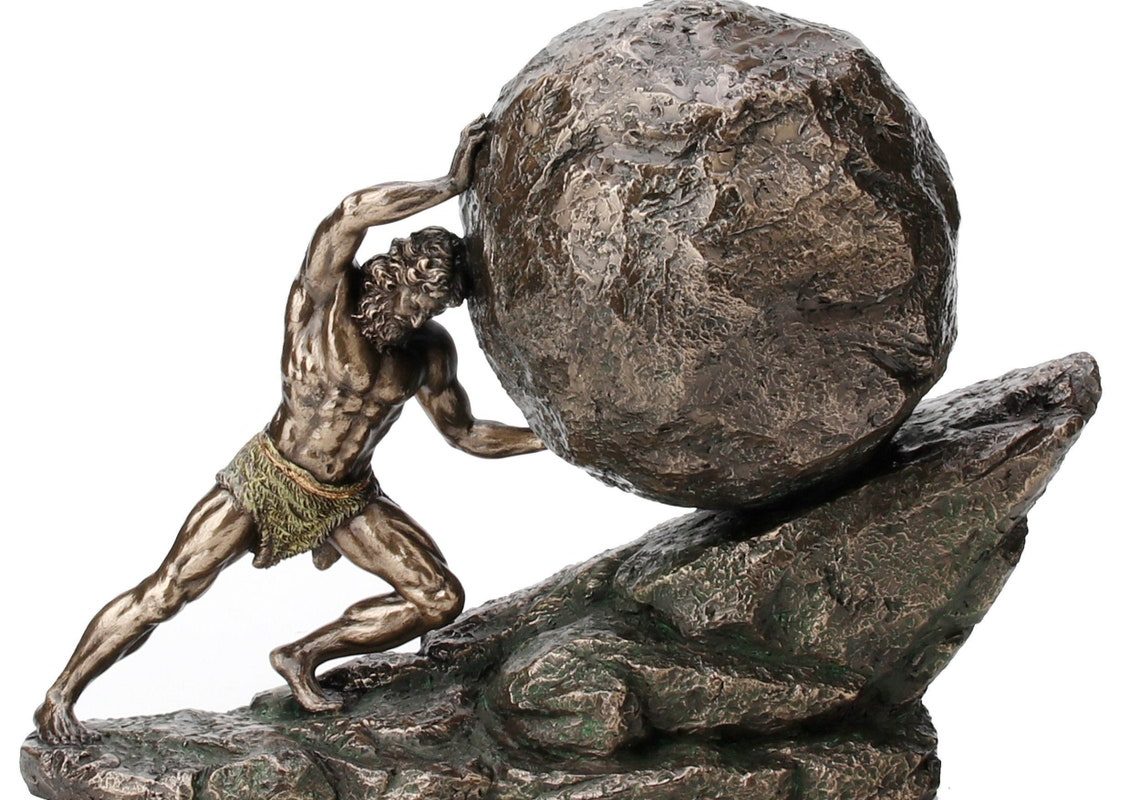
Sisyphus had his rock. We have careers.
But let’s not confuse labour for meaning, or imagination for truth. The boulder never reaches the top, and that’s not failure. That’s the show.
So roll the stone. Build the company. Write the blog. Pour tea for Barbie. Just don’t lie to yourself about what it all means.
Because it doesn’t mean anything.
 Philosophics