Reason on a Spectrum

4–6 minutes

Reason is not an oracle of truth but a spectrum-bound tool, and when it is worshipped as absolute, it curdles into pathology. True rationality knows when to temper itself, when to equivocate, and when a kind lie is wiser than a cold fact.

Reason and rationality are the household gods of modernity. We light incense to them daily: follow the science, be reasonable, act rationally. But before we genuflect, it’s worth asking what exactly we mean. By reason, I mean the faculty of inference – spotting contradictions, tracing causes. By rationality, I mean the practice of applying that faculty toward some end. That’s all. Nothing mystical.

Audio: NotebookLM podcast on this topic.

The trouble starts when these concepts are treated as absolutes. They aren’t. They vary in intensity and application. A person’s reasoning operates on a spectrum with something like frequency and amplitude. Some minds hum at low frequency – broad strokes, contradictions smoothed over by intuition. Others burn hot at high frequency and amplitude – rapid logical leaps, obsessive consistency, the inability to let a premise go. And while some reason flows like a continuous wave – steady, consistent, predictable – other forms fire more like particles: synaptic sparks that don’t always connect, logic arriving in bursts or stutters rather than as a smooth line.

Push too far and what we sanctify as ‘reason’ bleeds into what psychiatry pathologises as autism or schizophrenia. Meanwhile, ‘normal’ cognition always includes an emotional ballast. Strip it out and the result looks alien, even monstrous. Freud’s quip about psychopathy – that the psychopath differs from the rest of us in degree, not kind – applies just as well to reason. Rationality is simply the socially acceptable blend of logic and affect. Deviate, and you’re declared broken.

Camus gave us a parable in The Stranger. Meursault observes his world with ruthless clarity, but no emotional resonance. He doesn’t weep at his mother’s funeral, and society condemns him less for murder than for failing to perform grief. His ‘pure’ reason reads as inhuman.

Here’s the paradox: if rationality means adapting effectively to one’s environment, then pure rationality demands knowing when to suspend itself. A person who insists on logic at every turn is not rational but maladapted. The rational actor lies, flatters, nods at the boss’s bad joke, comforts the friend who doesn’t want statistics but solace. Rationality that cannot bend collapses into pathology.

This is why the infamous ‘Do these jeans make me look fat?’ question is such a perfect test. The ‘true’ answer, if you are reasoning narrowly, may be ‘yes’. But true rationality recognises the context, the stakes, the human need beneath the words. The rational response is not the cold fact but the kind equivocation. Rationality that cannot lie is no rationality at all.

Here’s the paradox: if rationality means adapting effectively to one’s environment, then pure rationality demands knowing when to suspend itself. A person who insists on logic at every turn is not rational but maladapted. The rational actor lies, flatters, nods at the boss’s bad joke, comforts the friend who doesn’t want statistics but solace. Rationality that cannot bend collapses into pathology.

Consider the social rituals we all know. A partner says, ‘I like that house’, and the rationally over-tuned response is to evaluate the house. The actual cue is in the like, not the house. The answer isn’t that you dislike the house, but rather what you can appreciate about it. Miss that, and you miss the point. Or take the dinner table: when my son was seven, a well-meaning host – very Martha Stewart – asked him how he enjoyed his meal. He replied, with perfect candour, ‘I’ve had better’. From a logical standpoint, faultless. From a rational standpoint – if rationality includes social adaptation – disastrous. The question was never about the food. It was a cue for appreciation, for harmony. He gave fact when what was asked for was affiliation.

So yes, I attack reason and rationality – not because they don’t exist, but because they are misapplied, reified, and worshipped as neutral arbiters of truth. They are not. They are tools with a range, and outside that range, they fail catastrophically. To speak of ‘reason’ as if it were an unqualified good is like praising fire without mentioning its talent for arson.


After I wrote this, I realised I forgot to mention Kant.

Even Kant, patron saint of rational duty, insisted you must never lie, not even a white lie, not even to a murderer asking where your friend is hiding. For him, truth-telling was categorical, binding, immune to circumstance. But this is reason gone rigid, unable to flex with human reality. It shows how worship of Reason leads not to morality but to monstrosity. A rationality that cannot bend is no rationality at all.

The Myth of the Rational Base: Le Bon and the Crowd Revisited

2–3 minutes

Gustave Le Bon’s The Crowd: A Study of the Popular Mind (1895) has had the half-life of uranium. His thesis is simple and disturbing: rational individuals become irrational when they merge into a crowd. The crowd hypnotises, contagion spreads, and reason dissolves in the swell of collective emotion.

It’s neat. It’s elegant. It’s also far too flattering.

Audio: NotebookLM podcast on this topic.

Le Bon assumes that the default state of the human being is rational, some Enlightenment holdover where citizens, left to their own devices, behave like tidy mini-Kants. Then, and only then, do they lose their reason in the mob. The trouble is that a century of behavioural science has made it painfully clear that “rational man” is a fairy tale.

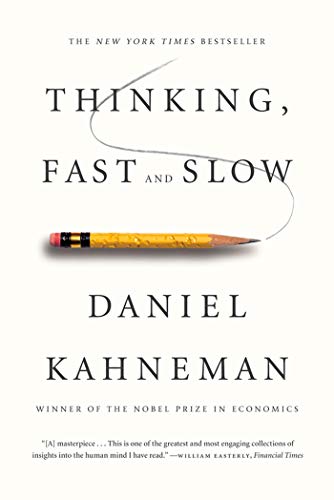
Daniel Kahneman mapped our cognitive machinery in Thinking, Fast and Slow: System 1 (fast, intuitive, emotional) is running the show while System 2 (slow, deliberate, logical) is mostly hired as the PR manager after the fact. Dan Ariely built a career documenting just how predictably irrational we are – anchoring, framing, sunk-cost fallacies, you name it. Add in Tversky, Thaler, Gigerenzer, and the usual suspects, and the picture is clear: we don’t need a crowd to become irrational. We start irrational, and then the crowd amplifies it.

In that sense, Le Bon wasn’t wrong about crowds being dangerous, but he may have missed the darker point. A crowd doesn’t corrupt a rational base – it accelerates the irrational baseline. It’s not Jekyll turning into Hyde; it’s Hyde on a megaphone.

This matters because if you take Le Bon literally, the problem is situational: avoid crowds and you’ll preserve reason. But if you take Kahneman seriously, the problem is structural: crowds only reveal what was already there. The positive feedback loop of group psychology doesn’t replace rationality; it feeds on the biases, illusions, and shortcuts already baked into the individual mind.

Le Bon handed us the stage directions for mass manipulation. Modern behavioural economics shows us that the script was already written in our heads before we ever left the house. Put the two together and you have the perfect recipe for political spectacle, advertising, and algorithmic nudges.

Which makes Le Bon’s century-old observations correct – but not nearly bleak enough.

« Je pense, donc j’ai raison ! »

3–4 minutes

The Enlightenment promised a universal Reason; what we got was a carnival mirror that flatters philosophers and fools the rest of us. MacIntyre and Anscombe diagnosed the corpse with precision, but then tried to resurrect it with Aristotelian or theological magic tricks. I’m less charitable: you can’t will petrol into an empty tank. In my latest essay, I put ‘Reason’ on the slab, call in Kahneman, Hume, Nietzsche, and others as expert witnesses, and deliver the verdict: morality is a house rule, not a cosmic law. This piece is part of a larger project that includes my Language Insufficiency Hypothesis and Against Dumocracy. The Enlightenment isn’t dying – it’s already dead. We’re just cataloguing the remains.

The Enlightenment was many things: a bonfire of superstition, a hymn to autonomy, a fever dream of “Reason” enthroned. Its philosophers fancied themselves heirs to Aristotle and midwives to a new humanity. And to be fair, they were clever enough to trick even themselves. Too clever by half.

Alasdair MacIntyre, in After Virtue, plays the role of forensic pathologist with admirable precision. He shows us how the Enlightenment dynamited the teleological scaffolding of Aristotle, then tried to keep the vocabulary of virtue, duty, and rights standing in mid-air. The result: what he calls a “moral Babel,” a chorus of shrill assertions dressed up as rational law. Elizabeth Anscombe had already filed the death certificate back in 1958 with Modern Moral Philosophy, where she pointed out that our talk of “moral obligation” is just a Christian relic without a deity to enforce it. And Nietzsche, that perennial party-crasher, cheerfully declared the whole project bankrupt: once the gods are dead, “ought” is nothing but resentment pretending to be metaphysics.

And yet, when MacIntyre reaches the heart of the matter, he can’t quite let the body stay buried. He wants to reattach a soul by importing an Aristotelian telos, even summoning a “new St Benedict” to shepherd us through the ruins. It plays beautifully with those still tethered by a golden string to Aquinas and the premodern, but let’s be honest: this is just hypnosis with a Latin chorus. Descartes told us je pense, donc je suis; MacIntyre updates it to je pense, donc j’ai raison. The trouble is that thinking doesn’t guarantee rightness any more than an empty petrol tank guarantees motion. You can will fuel into existence all you like; the car still isn’t going anywhere.

The behavioral economists – Kahneman, Tversky, Ariely, Gigerenzer – have already demonstrated that human reason is less compass than carnival mirror. Jonathan Haidt has shown that our “moral reasoning” usually lags behind our gut feelings like a PR department scrambling after a scandal. Meanwhile, political practice reduces “just war” to a matter of who gets to publish the rule book. Progress™ is declared, rights are invoked, but the verdict is always written by the most powerful litigant in the room.

So yes, MacIntyre and Anscombe diagnose the corpse with impressive clarity. But then they can’t resist playing resurrectionist, insisting that if we only chant the right metaphysical formula, the Enlightenment’s heart will start beating again. My own wager is bleaker – or maybe just more honest. There is no golden thread back to Aristotle, no metaphysical petrol station in the desert. Morality is not a universal constant; it’s a set of rules as contingent as the offside law. Killing becomes “murder” only when the tribe – or the state – says so. “Life is sacred” is not a discovery but a spell, a linguistic sleight of hand that lets us kill in one context while weeping in another.

The Enlightenment wanted to enthrone Reason as our common oracle. Instead, it handed us a corpse and told us to pretend it was still breathing. My contribution is simply to keep the coroner’s mask on and say: The magic tricks aren’t working anymore. Stop looking for a metaphysical anchor that isn’t there. If there’s to be an “after,” it won’t come from another Saint Benedict. It will come from admitting that the Enlightenment died of believing its own hype – and that language itself was never built to carry the weight of gods.