“Man is least himself when he talks in his own person. Give him a mask, and he will tell you the truth.” — Oscar Wilde
Identity is an illusion—but a necessary one. It’s a shortcut. A heuristic, evolved not for truth but for coherence. We reduce ourselves and others to fixed traits to preserve continuity—psychological, social, narrative.
Audio: NotebookLM podcast on this topic. (Spotify)
But what if continuity is a lie?
In the latest post on RidleyPark.blog, we meet Sarah—a woman who survives by splintering. She has three names, three selves, three economies of interaction. Each persona—Sarah, Stacey, and Pink—fulfils a role. Each protects her in a system that punishes complexity.
And yet, this isn’t fiction. It’s reality intensified.
Identity Is Compression
Cognitive science suggests that we don’t possess a self—we perform one. Our so-called identity is assembled post-hoc from memory, context, and social cues. It’s recursive. It’s inferred.
We are not indivisible atoms of identity. We are bundled routines, personae adapted to setting and audience.
This is not pathology. It’s strategy.
From Performance to Survival
In Needle’s Edge, Sarah doesn’t use aliases to deceive. She uses them to survive contradictions:
Stacey is desirable, stable, and profitable—so long as she appears clean and composed.
Pink is a consumer, invisible, stripped of glamour but allowed access to the block.
Sarah is the residue, the name used by those who once knew her—or still believe they do.
Each persona comes with scripts, limitations, and permissions. Sarah isn’t being dishonest. She’s practicing domain-specific identity. This is no different from how professionals code-switch at work, or how people self-edit on social media.
It’s just more raw. More urgent. Less optional.
The Literary Echo
In character development, we often demand “depth,” by which we mean contradiction. We want to see a character laugh and break. Love and lie. But Sarah shows us that contradiction isn’t depth—it’s baseline reality. Any singular identity would be a narrative failure.
Characters like Sarah expose the poverty of reduction. They resist archetype. They remind us that fiction succeeds when it reflects the multiple, the shifting, the incompatible—which is to say, the real.
What Else Might We Say?
That authenticity is a myth: “Just be yourself” presumes you know which self to be.
That moral judgment often stems from a failure to see multiple selves in others.
That trauma survivors often fracture not because they’re broken, but because fracturing is adaptive.
That in a capitalist framework, the ability to fragment and role-play becomes a survival advantage.
That fiction is one of the few spaces where we can explore multiple selves without collapse.
The Missing Link
For a concrete, narrative reflection of these ideas, this post on RidleyPark.blog explores how one woman carries three selves to survive three worlds—and what it costs her.
Humans, we are told, are exceptional—unlike the rest of the lowly animal kingdom. We alone possess reason, morality, and the ability to transcend our base instincts. And yet, curiously, this argument is rolled out only when convenient. At times, we are commanded to rise above our primal urges; at others, we are scolded for even thinking about resisting them. This ideological schizophrenia is no accident—it is a feature, not a bug, of our prevailing moral and economic order.
The contradictions of “human nature” arguments can be broken down into two key patterns:
A. We must transcend our animal instincts—but only when they threaten social or economic order.
B. We must accept our animal instincts as unchangeable—but only when they reinforce existing power structures.
This hypocrisy is especially visible in how capitalism and morality are framed. Let’s examine two case studies.
Case 1: Prostitution—A Market That Must Be Morally Suppressed
Sex is as fundamental a biological drive as hunger or thirst. One would think that in a world where everything is commodified, prostitution—the most direct transaction of supply and demand—would be embraced by free-market capitalists. But no. We are told that engaging in this “base” activity is degrading, immoral, and must be curtailed. The same capitalists who defend free enterprise at all costs suddenly become moralists, urging us to resist temptation and rise above our urges. Sex, despite being one of the most natural acts imaginable, is treated as an impulse to be tamed rather than an economic exchange to be normalised.
Case 2: Capitalism—A System We Must Accept as “Natural”
Contrast this with how we are told to think about capitalism. Greed, exploitation, and ruthless competition? Those are “just human nature.” The strong thrive, and the weak perish. We are warned not to question the system because to do so would be to fight against nature itself. Socialism? A naive fantasy. Economic cooperation? Impossible. Mutual aid? Utopian nonsense. We must accept that humans are selfish creatures, that hierarchy is inevitable, and that billionaires accumulating obscene wealth while millions starve is simply the way of things.
Why are we ordered to suppress our instincts in one case yet surrender to them in another? Because morality, in its institutional form, is not about virtue—it is about control.
The Convenient Flexibility of “Human Nature”
This selective logic is designed to keep power structures intact. The rules shift depending on whose interests are at stake:
If an instinct challenges profit or control, it must be suppressed.
If an instinct benefits the ruling order, it must be accepted as natural.
Thus, the same societies that demand moral restraint when it comes to sex, leisure, or pleasure suddenly rediscover their inner Darwinist when defending capitalist greed and economic cruelty.
The “Natural Order” Myth
The claim that capitalism is the inevitable result of human nature is one of history’s greatest ideological scams. If it were indeed “natural,” it would not require:
Constant propaganda to reinforce its legitimacy.
Violent suppression of alternative systems.
Trillions in government bailouts every time it fails.
Moreover, humans are not only competitive, selfish creatures. We are also wired for cooperation, altruism, and communal living—traits conveniently erased from discussions about economics.
Final Thought: Breaking the Cycle
If we can rise above base instincts for sex and violence, why can’t we rise above capitalist greed and exploitation? Why is overcoming “human nature” only demanded when it suits power? The truth is, we are only commanded to rise above when it keeps us obedient—and ordered to accept reality when it keeps the powerful in control.
The only real rebellion is to reject this hypocrisy entirely. The future belongs not to those who passively accept the contradictions of the present, but to those who refuse to play by its schizophrenic rules.
It’s not uncommon to label workers under the capitalist system as wage slaves.
As with the abolition of slavery in the United States, the future will one day recoil at Capitalism, wondering how humanity could ever have justified the exploitation of others for commerce and profit. Then again, that’s the same question, isn’t it?
As with the old story, a man asked a lady: “Would you be willing to sleep with me if I paid you £1,000,000?” Without hesitation, she answered, “Yes.” “And what if I only paid you £5?” The irate lady fumed: “£5? What do you think I am?” The man replied: “We’ve already established that. Now we’re trying to determine the degree.”
Capitalism is only a matter of degree from slavery. In practice, slavery is a Capitalist’s wet dream.
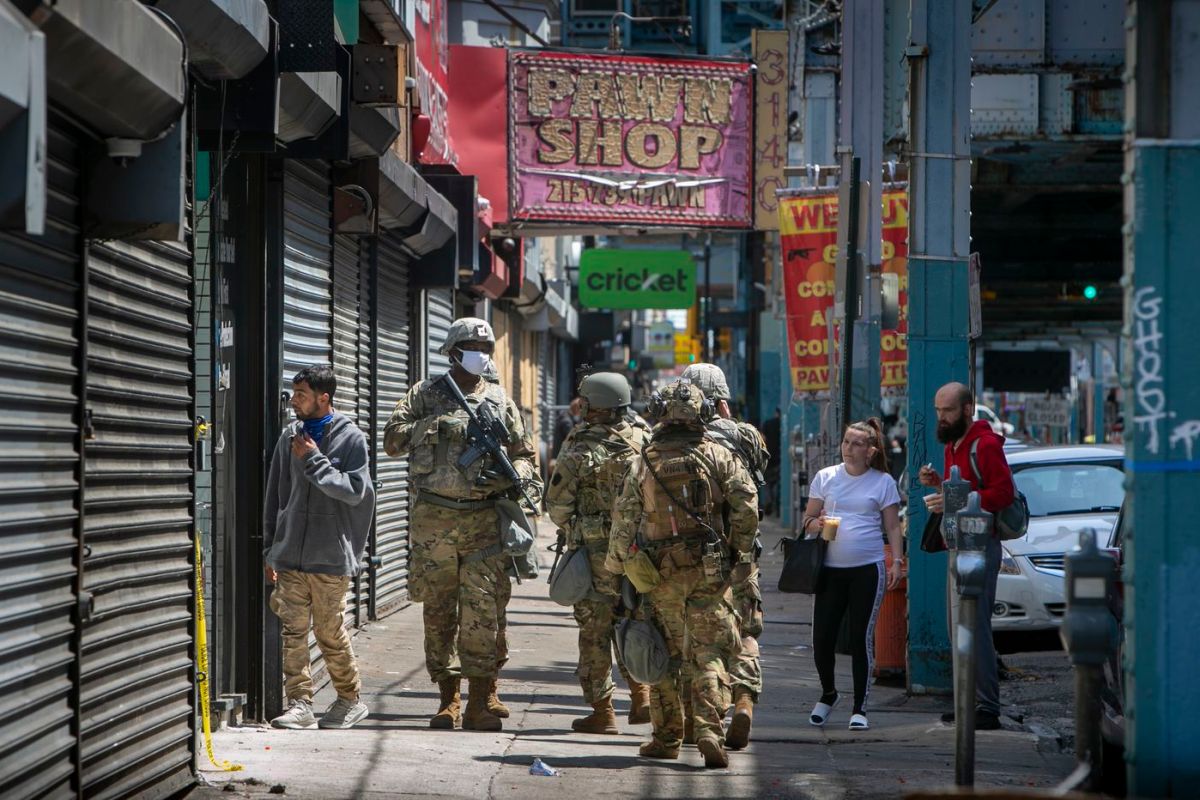
That was the response to my question regarding the police presence yesterday.
EDIT: Some in the community have arranged a memorial for Gary.
In Memorium
I live in an economically depressed community. Swathes of addicted streetwalkers to the south and crack and smack street dealers to the north. Between these bookends are some dozen or more churches and me. Adjacent to me is an abandoned church, a haven for the doubly disenfranchised homeless in the community.
Gary didn’t make it to Christmas. Perhaps I saw him around the neighbourhood, but I didn’t know Gary by name.
“It doesn’t sound like it ended well,” said I. “I think it was frostbite,” he continued.
I find it difficult to believe it was frostbite, but I’m no expert. It barely gets below freezing in this part of the country, but it did last night. Does anyone remember the Valley Forge of American history?
“He had no place to go. They wouldn’t let him in the shelter because he drinks.”
This is Tough Love™ in action. Hate the sin. Fuck the sinner. Another victim of the system and of morality vis-à-vis Virtue Signalling.
In the words from the first Home Alone instalment: Merry Christmas, you filthy animal.
Product markets don’t function the way we’re taught.
Wearing my economist’s hat, I have issues with arguments advanced attempting to defend Capitalism. Technically, Capitalism is a system of production and not one of distribution, but idiomatically, people conflate it with a market system. Ignoring that modern economic systems use markets, I am commenting in this idiomatic sense.
I’m not sure why some of us economists are intrigued with how the market works for drugs and prostitution, I have this in common with Steven Levitt’s Freakonomics, still a decent book.
Rather than focus on prostitution‘s service market, I prefer to attend to drugs and the product market. I’ll showcase how unregulated markets don’t work per textbook and Libertarian lore. Heroin and fentanyl make for a perfect use case.
BACKGROUND
Fentanyl (AKA fetty) is sold retail through independent distributors. As is typical, each link in the chain takes a cut, selling for a higher unit price to capture margin. All of this is textbook behaviour.
On the city streets, dealers sell to caseworkers, who sell to block boys. There are also watchers, an overhead expense that we’ll ignore. They represent a typical SG&A function. I’ll return to the distribution chain in a moment.
Product is sold to dealers as weight. This might be kilos or ounces. I’m not sure they are so concerned with whether they use the metric or imperial system of measure.
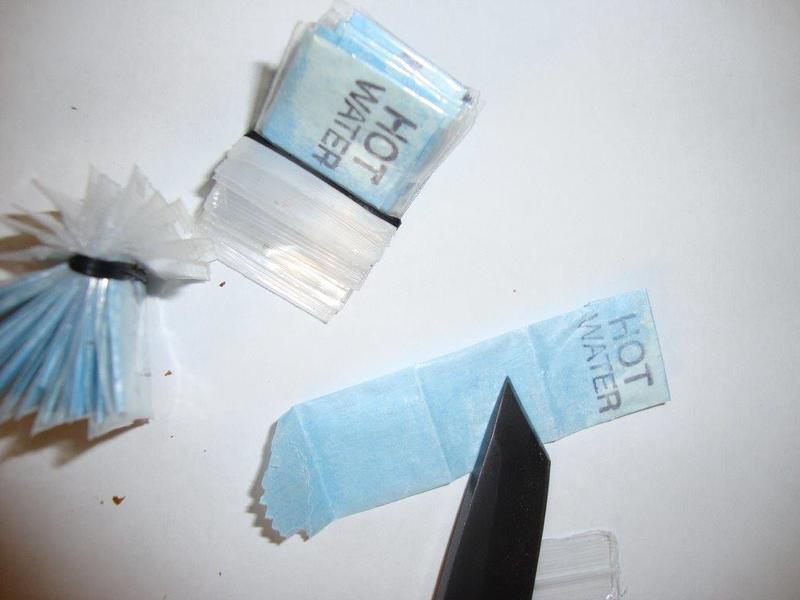
Weight is a wholesale activity. Retail units are bags and bundles. Maybe logs. Bags are the smallest unit. It’s around 10mcg to 30mcg.1 A person is likely to consider a bag or even a half a dose. Some people will purchase a bag or two at a time. Heroin and fentanyl bags are the same size. They are waxed paper bags about 30mm wide by 3cm tall. These are typically folded in thirds an inserted into little zipper locked bags—like tiny sandwich bags.
Tiny Sandwich Bags
If you are buying irregularly or up to maybe 4 or 5 bundles at a time, you are most likely buying from the block—block boys. This is a cash and carry business. First come, first serve. A block is a small city block—a territory on one street from one cross-street to the next. Cross the street, and you are in a new territory. Turn the corner, and you’re in a new territory. And territories serve particular brands. More on this later, but you don’t go to the Gucci block to buy Chanel.
As a buyer, you have some freedom to select a block where you are trusted (mostly just not to be a cop or a snitch), but there is some rivalry, so if a seller on block A sees you buying from block B, it may pose problems if you later try to buy from A. Although these block boys are competing for your business, by and large they know each other. It’s like if the Kellogg’s guy runs into the General Mills guy whilst stocking in the cereal aisle. As long as you aren’t using the other’s allocated shelf space, you’re fine. No knives. No gunfights. It’s all good.
Bag of Heroin Compared with a US Penny
The price of fentanyl varies wildly by location. As of now, a bag of powder retails at between $5 and $10. The closer one is to a distribution hub, the cheaper. In Philadelphia, $5 is the norm. In Wilmington, Delaware, $10 is typical. Further south in Dover, one might pay as high as $20. The supply chain takes its toll. Supply and demand are at work as advertised, so we’re still operating in textbook territory.
Bags are aggregated into bundles, which may range between 14 and 16 bags.2 Ten bundles compromise a log.
Whilst for some users a bag or a portion is sufficient, tolerance is an issue. In order to feel the same effects, users need to increase their doses. Some users need to dose 7 or more bags.
Bags of Fentanyl Representing Various Stamps
For entry-level users, fentanyl is a relatively cheap high. A dose lasts about 4 hours. Heroin lasts about 8. For addicts, there’s a notable downside: withdrawal. Withdrawal symptoms are flu-like. They get worse before they get better, addicts prefer to remain dosed prior to they become symptomatic. For the typical addict, the struggle is real.
For a person using half a bag every hour a day, the cost would be a manageable $30 a day. For the 7 to 8 bag user, they are looking at about 3 bundles a day, which might cost between $70 to $120 apiece, so between $210 and $360 a day. Putting 2 + 2 together, you might realise how addiction and prostitutes arrive hand in hand. This is not an activity for minimum wage workers, especially when the dose ratchets up.
A Couple Bundles and a Bag of Fentanyl with Hot Water Stamp
What happened to the economic angle? It turns out that there are several product issues. On the street, brand matters…sort of. Fentanyl brands are known as stamps. Bags are stamped to indicate the source. And this is the first deviation from textbook theory.
Brand names became prominent in the 19th century with bulk goods. When purchasing oatmeal from the general store, the consumer would gain confidence in the product based on the brand. Brand marketing has become fundamental to modern commerce.
Quaker Oats Brand Label circa 1906
A problem with brand stamps is that they are not reliable product indicators. They are more indicative of the retail seller than the source. It would be like visiting Walmart and buying Walmart oatmeal, but it reveals nothing of the quality. As street fetty is cut with tranquilisers (tranq) or other cheaper ingredients and fetty actually relates to a class of drugs as opposed to a specific chemical formula, the quality varies from 0 per cent fetty to something less than 100 per cent, as 100 per cent would not be typically found on the streets, primarily owing to margin requirements. Most users I’ve encountered are fine with the tranq admixture. In practice, people have their preferred tranq and ratio. Of course, this quality is subject to variation, too. Because of the aforementioned withdrawal issues, if there is not an adequate dose of fetty, the batch will not stop or reverse the withdrawal symptoms.
Unlike a brand label that a box of Raisin Bran cereal you just purchased contains Raisin Bran, a common analogy might be that one day you buy a box of Raisin Bran but discover when you consume it that you’ve been served Captain Crunch instead. Alternatively, when you arrive to make your purchase, your boy tells you that no one has Raisin Bran, but Captain Crunch is the same thing (I swear).
A Tale of Two Cereals
Apart from quality, there is no weights and measures oversight. I’ve read that a bag of fetty weighs around 100mg to 300mg, but I can’t substantiate this. However, I have it by a trusted account that the weight ranges wildly from 0mg to something more—let’s say 300mg to be generous.
If this occurred in the regulated world, a person might return the product for a refund or exchange. This is not an option on the block.
Unlike a brand label that the 400g box of Raisin Bran cereal you just purchased contains 400g of Raisin Bran, a common analogy might be that on one day you buy a 400g box of Raisin Bran, but instead of getting this quantity of Raisin Bran, you discover you’ve only got 350g of Raisin Bran—or maybe 350g box of Captain Crunch. If this occurred in the regulated world, a person might return the product for a refund or exchange. This is not an option on the block. And with the various dilution schemes, you might end up with salted Raisin Bran. No returns. No refunds.
In the regulated world, if Walmart is unreliable, you can go to go to Safeway instead. But in this unregulated world, Safeway is just as unreliable. The street can only sell what it has access to, and if they receive a batch of something unexpected, they still need to unload it. The TV and movies make it seem like these guys are quality control freaks, but they are all bottom feeders.
Punchline
The Libertarian wet dream is that markets are self-regulating and bad actors will be forced out of business. The drug trade demonstrates this not to be true.
1I am not sure of the actual weights, as I’ve never weighed any. The information available on the Internet conflicts.
2I’ve read that in some places, a bundle is 10 and the next larger portion is a brick, but this is not the case in the greater Philadelphia area. Much I’ve read on law enforcement sites does not reflect my experience, not does the information on official medical sites, so I question the veracity of the information being fed to the public. It feels like there is more morality shaming than science. More on this in a separate post.






 Philosophics