I’ve been spending many hours finishing my novel, so it hasn’t left much time for writing here. I considered writing this on my other ‘writing’ blog, but I felt it was time to post something here, and it’s equally topical.
My writing style is typically stream-of-consciousness. I tend to have a problem or a scene I want to resolve. I place myself mentally into the scene, and I start to write. What might flow, I don’t tend to know in advance. The words just come out.
Occasionally, I’ll sit back and reflect more consciously, but mostly, it just comes out on the page. When I’m finished with a scene, I’ll usually revisit it consciously and look for gaps, continuity challenges, missing or extraneous details, room for character development, and so on.
Sometimes, I just embody a character. Other times (diversion: why is ‘sometimes’ a compound word, but not ‘other times’? That’s how my brain works), I embody the setting or the situation.
Sometimes, I need to address an entire chapter, so I look for obvious scenes and beats. I stub them out so that I don’t forget—perhaps even notes to myself about the purpose so I can step away and reengage later.
As a musician, I tend to approach music from the opposite direction. I might start from some inspiration, but most of my writing is brute-force analytics. My music is more laboured than my writing. My visual art falls more in the middle but leans towards the musical approach.
This article appeared in my social feed, What are the different types of atheism? But the author makes at least two notable mistakes. Firstly, he conflates atheism with agnosticism, the first being about belief and the last being about knowledge. So, one can believe or disbelieve in something, but that doesn’t speak to knowing. This debate is specifically about gods, so one can believe in a god but not know; one can not believe in gods and not know; one can believe in a god and know; and one can disbelieve in gods and not know. As for me, I am an igtheist: I don’t care about gods. It’s a silly place to spend my time.
For a theist or atheist, the existence of gods is a truth statement. For me, the question is not ruth apt; it’s ostensibly gibberish. Even then, I am still agnostic, which might also be ignostic because not only don’t I know, neither do I care.
As Ricky Gervais has pointed out (recasting per the linked article), if there are 10,000 gods, a typical Christian doesn’t believe in 9,999 gods. They believe in their god. Just 1. Of course, the other gods are nonsense. Ditto for Muslims. Ditto for Jews. In the end, they claim the same underlying deity, but they argue over which cohort He favours, and their god identifies as a male, so they’ve adopted male pronouns.
Secondly, whilst the author mentions religious and non-religious, he misses the spiritual cohort. This is a subset of non-religious. In some cases, I and many others might argue that spirituality is simply a personal religion, so the distinction would be one of community. The religious congregate en masse whilst the spiritual take this journey alone. One may also argue that some spiritual folks also congregate. I’ve attended more than one Wiccan or Pagan group event, but the ties may be looser than with a mainstream religion.
In the case of some spiritual adherents, non-religious is shorthand for being opposed to Big Religion. Perhaps not coincidentally, many of these are opposed to Big Pharma and Big Agriculture, but my purpose here is not a psychological profile.
I recently heard Robert Sapolsky say in a lecture that the religious live longer and are happier on average than non-religious, which is to say the spiritual and the atheists alike, so he notes this could provide an underlying evolutionary explanation for religious belief. Neither will I comment further on this notion, but there you have it. Take id or leave it.
I’ve just finished reading Alain de Benoist’s book, The Problem of Democracy, so I decided to give a review. I’ll reserve critiquing the philosophy for later. For now, here’s a summary.
In the realm of existential contemplation, the notion of the ‘self’ is akin to a fleeting present moment. It flits into existence for a fraction of an attosecond, vanishing before our grasp. Much like the illusory present, the ‘self’ manifests briefly and then fades into the annals of the past, a mere connection of temporal slices.
When we traverse the corridors of time, we effortlessly speak of the ‘past,’ stringing together these slices into a continuous narrative. This amalgamation serves our language and thought processes, aiding idiomatic expression. Yet, it remains a construct, a fiction we collectively weave. It is akin to the frames of a movie, where the illusion of movement and coherence is crafted by arranging individual frames in rapid succession.
The ‘self’ follows a similar illusionary trajectory. It exists only inasmuch as we christen it, attributing a name to a fleeting instance of being. However, this existence is as fleeting and ephemeral as a mirage. We name it, we perceive it, but it dissolves like smoke upon closer inspection.
This existential musing reminds one of the fictional entity – the unicorn. We can name it, describe it, and even envision it, yet its tangible existence eludes us. The ‘self’ aligns itself with this enigmatic unicorn, an abstract concept woven into the fabric of human understanding.
In this dance of philosophical thought, published works echo similar sentiments. Renowned thinkers like Nietzsche, in his exploration of eternal recurrence, or Camus, delving into the absurdity of life, have grappled with the transient nature of the ‘self.’ Their writings form a canvas, painting the portrait of an existence that flits through time, leaving only traces of memory and illusion in its wake.
In conclusion, the ‘self’ is a fleeting enigma, a temporal wisp that vanishes as quickly as it appears. Like a raindrop in the river of time, it merges and dissipates, leaving behind an evanescent trace of what we conceive as ‘I’. The philosophical gaze peers through the mist, challenging the very essence of this ephemeral entity, inviting us to question the very fabric of our perceived reality.
I recently had a discussion with my son about a controversial academic topic. He was struggling to find someone willing to engage in a meaningful dialogue. People on both sides of the issue seemed either emotionally invested without evidentiary support or lacking sufficient background knowledge for substantive debate. Moreover, due to the current political correctness and cancel culture environment, even gathering new data on this unpopular subject is challenging. This exemplifies the failure of the scientific community to uphold impartial inquiry, a key factor underlying my view that scientific consensus is predicated more on rhetorical appeals than dispassionate analysis.
The topic stemmed from The Bell Curve, a 1994 book by psychologist Richard J. Herrnstein and political scientist Charles Murray. The authors argued that intelligence, as measured by IQ tests, has a strong genetic component, with race and ethnicity as statistically significant variables. Specifically, they claimed the average IQ score for whites in the US was one standard deviation higher than for blacks – 102 versus 85, as depicted in the chart below.
While the details are less relevant here, the core issue is the purported gap between racial groups. As shown, there is substantial overlap in the bell curves, but the one representing blacks is notably shifted leftward from the white curve.
As a statistician, I tend to focus more on methodological rigour and meta-analyses than the mathematical computations themselves, which I presume were executed properly.
My first consideration was the validity of IQ tests as a proxy for achievement, given the cultural biases these metrics contain. Even accepting the IQ gap argument, issues around test construction leave open the ‘so what?’ question. However, the study’s findings were largely replicated 15 years later, suggesting some robustness.
My son observed that the current sociopolitical climate would likely preclude similar research from being funded or published today. Accusations of racism would be inevitable, even for a purely academic inquiry on this topic – creating an artificial blind spot in the science.
While understandable given the history of eugenics abuses, refusing to objectively investigate testable hypotheses is antithetical to the scientific method, which relies on falsifiability and replication. Without permitting studies to potentially confirm or refute a claim, we are left guessing. This is how scientific narratives are socially constructed – not by a disinterested search for truth, but through consensus and conformity enforcement.
I am sceptical of social science approaches generally, which often appear pseudoscientific. However constructive criticism should apply equally to so-called hard sciences like physics, where incompatible models of quantum gravity and dark matter proliferate, awaiting the next paradigm shift.
In summary, my son’s concern was that even proposing this controversial thesis as a dissertation topic could lead to professional censure. Personally, I take no position on the veracity of this hypothesis. However, as a matter of scientific integrity and public policy relevance, arbitrarily declaring certain academic questions off limits seems contrary to the principles of an enlightened, post-Enlightenment society. We cannot refuse to ask difficult questions for fear of inconvenient answers.
I’ve been reengaging with philosophy, though my positions haven’t changed recently. My last change was to shift from being a qualified material realist to a qualified idealist in the shape of Analytic Idealism. In most matters I can think of, I am an anti-realist, which is to say concepts like truth and morality are not objective; rather they are mind-dependent.
I’ve long been on record of taking the stance that Capital-T Truth, moral truths, are derived rhetorically. There is no underlying Truth, only what we are aggregately convinced of, by whatever route we’ve taken. As a moral non-cognitivist, I am convinced that morality is derived through emotion and expressed or prescribed after a quick stop through logic gates. Again, there is nothing objective about morality.
Truth and morality are subjective and relative constructs. They resonate with us emotionally, so we adopt them.
Were I a theist — more particularly a monotheist —, I might be inclined to be emotionally invested in some Divine Command theory, where I believe that some god may have dictated these moral truths. Of course, this begs the question of how these so-called “Truths” were conveyed from some spirit world to this mundane world. I have no such conflict.
But let’s ask how an atheist might believe in moral realism. Perhaps, they might adopt a Naturalistic stance: we have some natural intuition or in-built moral mechanism that is not mind-dependent or socially determined. I am not a naturalist and I don’t take a universalist approach to the world, so this doesn’t resonate with me. I can agree that we have an in-built sense of fairness, and this might become a basis for some aspects of morality, but this is still triggered by an emotional response that is mind-dependent.
Another curious thing for me is why non-human animals cannot commit immoral acts. Isn’t this enough to diminish some moral universal? In the end, they are an extension of language by some definition. No language, not even a semblance of morality.
Anyway, there’s nothing new here. I just felt like creating a philosophical post as I’ve been so distracted by my health and writing.
As moral error theorists, we’re accustomed to facing criticism for our perspective. I’m a moral non-cognitivist, but there’s a significant intersection with these theories. When someone asserts that torture is wrong, I might argue that the claim is hollow, as moral wrongness is merely an emotional response masquerading as an objective moral stance. On the other hand, an error theorist would debunk this argument, stating that there’s no absolute position of right or wrong. Pragmatically, we both arrive at the conclusion that the claim cannot hold true.
Video: Is Error Theory Counterintuitive — Kane B
Intuition leads others to a different interpretation. If they believe something is true due to their epistemic certainty, then for them, it is true. Their reality is shaped by experience. Curse the limitations of sense perception and cognitive constraints. “I know what I know,” is their typical retort. Moreover, it’s a matter of practicality. “You know what I mean,” they insist.
They attempt to substitute fact with heuristics, truth with analogue, and terrain with a map. Admittedly, it’s convenient to feign an identity at play, but at best, it’s a near equivalence.
In the linked video, the example of claiming ‘that car is red’ is presented. But can cars truly be red? Not precisely. Cars can possess the property of appearing red to most individuals in specific lighting conditions, but a car cannot inherently be red. Thus, this statement is categorically false. We can assert ‘that the car appears to be red,’ and as a matter of practicality, we might designate the car as such. However, this highlights the inadequacy of language, particularly concerning abstract concepts.
A challenge arises from people’s inclination, driven by the principle of least effort, to seek simplicity and convenience, often at the expense of truth.
A challenge arises from people’s inclination, driven by the principle of least effort, to seek simplicity and convenience, often at the expense of truth. This principle underpins Occam’s Razor: choose the simplest version among competing explanations. It’s a misguided endeavour, akin to living under the notion that opposites attract rather than like attracting like.
I encounter this opposing worldview when I pinpoint certain inconsistencies or issues in the ‘real world,’ emphasizing that language is insufficient to convey adequate meaning, that there exists no objective moral centre, and that democracy is a system that falters even on paper. Almost invariably, the response is, ‘then what?’ I don’t possess the answer to ‘then what.’ I’m merely informing you that your leg is broken. I don’t need to know how to fix it for this to be true, a valid assessment.
While I’m on a roll, let’s talk about charity in philosophical argumentation, which, in my view, is another misguided concept. Why should I favour the notion that a person genuinely believes in the position they hold? It’s another heuristic rule set up to lend credence to otherwise weak arguments. We need not adhere to these boundaries—they’re nonexistent.
BONUS: I ran this content through ANTHROP/C’s Claude 2 for analysis and evaluation. I include it as an example of the bias inherent in generative AI. Whilst I realise that I am taking a polemic position—nothing new here—, Claude apes canned responses. Ironically, the same responses I am arguing against. I do agree that I could have ‘steel-manned’ my argument, but this is a blog post, not a dissertation. Perhaps another day.
Here are some thoughts on evaluating the blog post:
The author takes a strong moral non-cognitivist stance, arguing that moral claims like “torture is wrong” are not objective facts but expressions of emotion. This view aligns with moral error theory in debunking moral realism.
However, the dismissive attitude towards those who believe moral claims have truth value shows a lack of philosophical charity. The author could strengthen their position by steelmanning the opposing view before critiquing it.
The analogy between moral claims and claims like “the car is red” makes an interesting point about the inadequacy of language for capturing nuanced truth. However, more nuance could be applied in acknowledging the usefulness of simplifying language and heuristics in everyday life.
The author’s critique of Occam’s Razor and preference for complex explanations is thought-provoking but could benefit from addressing the pragmatic value of simpler models. Outright dismissing this philosophical principle seems extreme.
The call to abandon charity in argumentation in the name of absolute truth risks throwing the baby out with the bathwater. Some level of mutual understanding between interlocutors is needed for productive discourse.
Overall, while the post raises thoughtful challenges to moral realism, heuristics, and other commonly held views, the dismissive tone and lack of nuance weaken the arguments. More charity towards opposing views and addressing pragmatic concerns could strengthen the critique.
In summary, the post puts forward some provocative arguments but could benefit from greater philosophical charity, nuance, and balancing pragmatism with pursuing absolute truth. A more measured tone discussing pros and cons of different perspectives would likely lend more persuasive force.
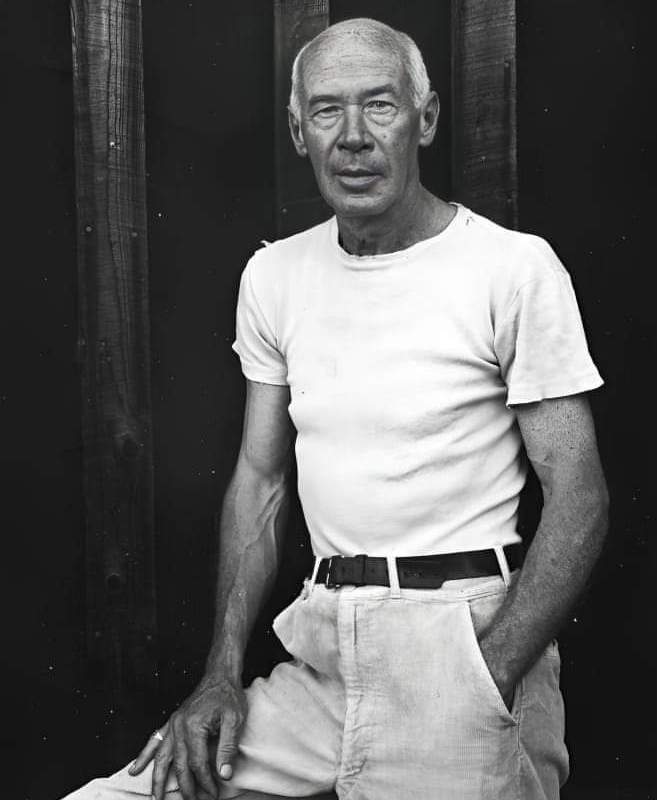
Once I thought that to be human was the highest aim a man could have, but I see now that it was meant to destroy me. Today I am proud to say that I am inhuman, that I belong not to men and governments, that I have nothing to do with creeds and principles. I have nothing to do with the creaking machinery of humanity – I belong to the earth! ~Henry Miller
I’ve been recovering from physical challenges that affect my mobility and ability to interface with a computer, diminishing my productivity in such matters to about 10 or 20 per cent.
I’ve been focusing my energy (besides that on recovery) on writing fiction under my Ridley Park pseudonym.
As for my physical concerns, I won’t bore you. I’d rather discuss my side project, which in the absence of employment turns out to be my primary focus. Currently, I am world-building, so I can explore philosophical and sociological issues in a safe space.
This world is contemporary Earth and the near future—at least for now, as I am leaving a lot of room to explore. Check out my Ridley Park blog if you are interested in specifics. Here, I just want to focus on the philosophical aspects and ramifications, using this story world as a reference, so I’ll provide a brief setup upon which to build.
In this world, a scientist has genetically engineered an embryo (for reasons) and ends up with quasi-vampires, a subspecies of humans—or is it? This cohort is human for all intents and purposes, except they need to ‘drink’ blood to survive. They’ve got fangs and an internal organ used to process and metabolise the blood. He decides to clone these and create a new population. In time, he improves on the genetics in the manner described here. The first short story (flash fiction) I’ve shared is Hemo Sapiens: The Unidentified, but let’s get onto the philosophical aspects.
Podcast: Audio rendtion of Hemo Sapiens: The Unidentified (Runtime: 5:25).
In this world, I shed light on what makes humans human. What happens when we need to coexist with a similar species? What if we treat them as second-class citizens? What if they become physically and intellectually superior?
Are these people a new species or a new race? Or are they just transhumans? What rights do they have? As a new race, perhaps it’s earier to fathom them and grant them human rights, but what if they are a new species? We haven’t had a great track record of granting rights to other species.
And what’s their immigration status? A common reaction to ‘immigrants’ is to ‘send them back to where they came from’. But what if they came from here? What if they were raised here and speak our language? In this case, they are raised near Manchester in the UK. They speak English. They are not only sentient beings at the start, they have above average IQs and have general cultural awareness. Some speak a second language. Save for the fangs, all outward appearances show them as human.
Until they are discovered by authorities, they are raised in a greenhouse environment. By the time they are discovered, there are five versions of them—alpha through epsilon—, and some have started reproducing, so we get to explore these dynamics, too. Some have tagged these people—are they people?—as homo sapiens sanguinius—bloodsucking intelligent man. Affectionately, I call them hemo sapiens.
I’ll return here as I produce more content there. I prefer not to create spoilers. Although I am working on several stories in different formats (short story, novella, novel, and so on), I’ll publish them (somewhere), provide literary analysis on my Ridley Park blog and provide philosophical commentary here. I hope you’ll join me and participate in the discussion.