Children are ethically indisposed to think it’s wrong to eat animals. This article from the Journal of Environmental Psychology published a year ago looks into the schism and cognitive dissonance assuaging mechanisms in play.
This study relied on a small sample size (n=176), between the ages of 4 and 7 years living in a metropolitan area located in the southeastern region of the United States. The sample was otherwise diverse.
As this study was limited in geographic scope (see WIERD on a tangential note), it noted that eating habits vary by culture. For example, eating horse (or dog) meat is not condoned in the United States, but it is acceptable in many other places.
In summary, the childer were shown cards each with a picture of an item, whether a French fry, a horse, a cat, a fish, a tomato, and so on. At the start, they were asked to identify the item represented on the card. Next, they were asked to put the card into one of two bins, each decorated to approximate an animal or vegetation. Finally, they were asked to sort the cards into two areas, one represented by false teeth indicating edible products and a rubbish bin representing inedible items.
The subjects did a fair job of identifying the card items. They had very high image recognition of these particular animals. On the lower end of recognition were hamburger (ground beef patty), almonds, and shrimp. There was a difference between the older children and the younger children, but this may relate to the added acculturation their age would bring.
Without delving deeply into details, in this study, most 6- and 7-year-olds classified chicken, cows, and pigs as not OK to eat. The interesting cognitive trick is that these children also classified these derivative food items as non-animals thus removing the cognitive dissonance. No longer classified as an animal, their ethical framework remained internally coherent.
In discussing the results, many children were ill-informed about the source of various food products. Language games obscured the source. No one should eat a cow, but beef is fine—a hamburger is fine. Hot dogs grow on trees, don’t they?
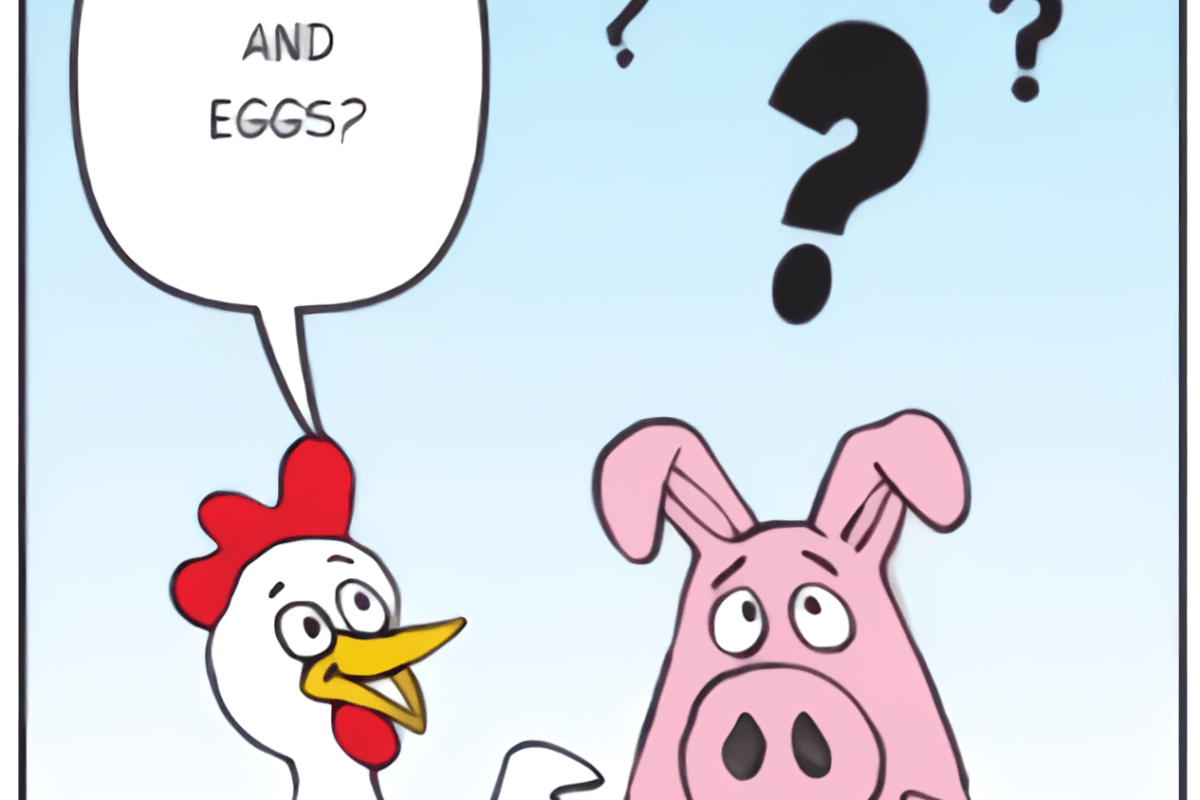
This reminds me of the story wherein a chicken and a pig are conversing, and the chicken suggests that it and the pig go into the restaurant business. The pig considers the proposition and declines by the rationale that it would be committed but the chicken would only be involved. Children may believe that hot dogs are a by-product like eggs, fur, or feathers—don’t get me started on the down used in pillows, jackets, and comforters—rather than grasping that the animals yield these products at the expense of their lives.
Some people grow up and realise the inconsistency of their ethics and actions, but they find any number of ways to reconcile their actions, noting that the activity is normal and natural.
FULL: DISCLOSURE: For the record, I eat chicken, turkey (on festive holidays in lieu of chicken), and I eat beef (that’s cows, for the uninformed). I also consume some animal byproducts, i.e., chicken eggs and cheese. I also wear leather. I was a vegetarian for about three years until I opted to become a chickenatarian. My life partners goaded me into eating beef, and so I’ve since added that. In all cases, I feel bad for eating defenceless, sentient beings. I’m not sure it serves as any consolation that I limit my consumption to these three animals—or even if it were only one. For the record, I don’t particularly like the taste of turkey or beef, but it’s not offensive like pork, coffee, or alcohol. Chicken, I like. Sorry chickens.
Video: Homer Simpson’s (not so) ethical dilemma
For the record, this is post number 500 on Philosophics. Perhaps I should write a post about it.
I have a confession to make. I finished reading the first volume of The Matter with Things about a month ago, and I took a break from reading more of it. I finally got around to continuing, and I read chapter twenty. When I got to the end and turned to the next chapter—chapter twenty-one—, it dawned on me that volume I ended at chapter nine. I had inadvertently skipped volume II and began volume III. Oopsie. I’m lucky it wasn’t a novel, having skipped ten chapters.
Since I’ve read it, I might as well summarise it, Spoiler alert: there are no spoilers to alert. As this chapter is more about exposition and colour, this summary will be much shorter than the summaries of the first volume. I don’t know if this will be a continuing trend. We’ll find out together.
This chapter is labelled the coincidentia oppositorum, the coincidence of opposites. Effectively, the chapter wants to impart three main points.
Symmetry
Firstly, asymmetry is the norm. Symmetry is the exception. We perceive things in opposites. This brings attention to bear. Line straight lines, symmetry does not exist in nature. It is something the left hemisphere perspective approximates. No face is symmetrical; planets are not symmetrical. In fact, if one manipulates an image of a face and mirrors one side as both to appear as a face, it becomes obvious that something is amiss.
Excess
The Ancient Greeks had a penchant for moderation. Buddhists have the Middle Path. Everything is poisonous in large enough quantities. Even poisons can be therapeutic at low doses. The point is to retain this perspective.
To be or not to be…or both
This is not about Schrodinger’s cat. We need to break ourselves of the habit of thinking in opposites. Not everything is a dichotomy—black and white. Some things are black and white—and not just a draughts board. McGilchrist opens the chapter with a nice Iriqois about two brothers who were seeming opposites but were nonetheless necessary. In a manner, this is the good versus evil story. Opposition strengthens us. Trees raised in a windless environment don’t have the strength of natural-grown trees.
This story is encapsulated in a story told by Rabbi Jonathan Sacks.
A faithful man finds in the scriptures that Rabbi X said that a certain thing was true. Later he finds that Rabbi Y said that the very same thing was false. He prays for guidance: ‘Who is right?’ God answers: ‘Both of them are right.’ Perplexed, the man replies: ‘But what do you mean? Surely they can’t both be right?’ To which God replies: ‘All three of you are right.’
In the chapter summary, McGlichrists ends with this:
Just as there is an asymmetry in the relationship of the hemispheres, there is an asymmetry in the coincidentia oppositorum. We need not just difference and union but the union of the two; we need, as I have urged, not just non-duality, but the non-duality of duality with non-duality; and we need not just asymmetry alone, or symmetry alone, but the asymmetry that is symmetry-and-asymmetry taken together.
Summary
As I mentioned at the start, this is a short summary. I really enjoyed this chapter and its lessons. It’s nice to be reminded of such things. This extends to the asymmetry of the hemispheres of the brain. As much as I don’t appreciate the imbalance of the left hemisphere in Modernity, I need to be reminded that we just need to tweak the dial a tab to the right. We don’t need the right hemisphere operating at eleven, to share a reference to Spinal Tap.
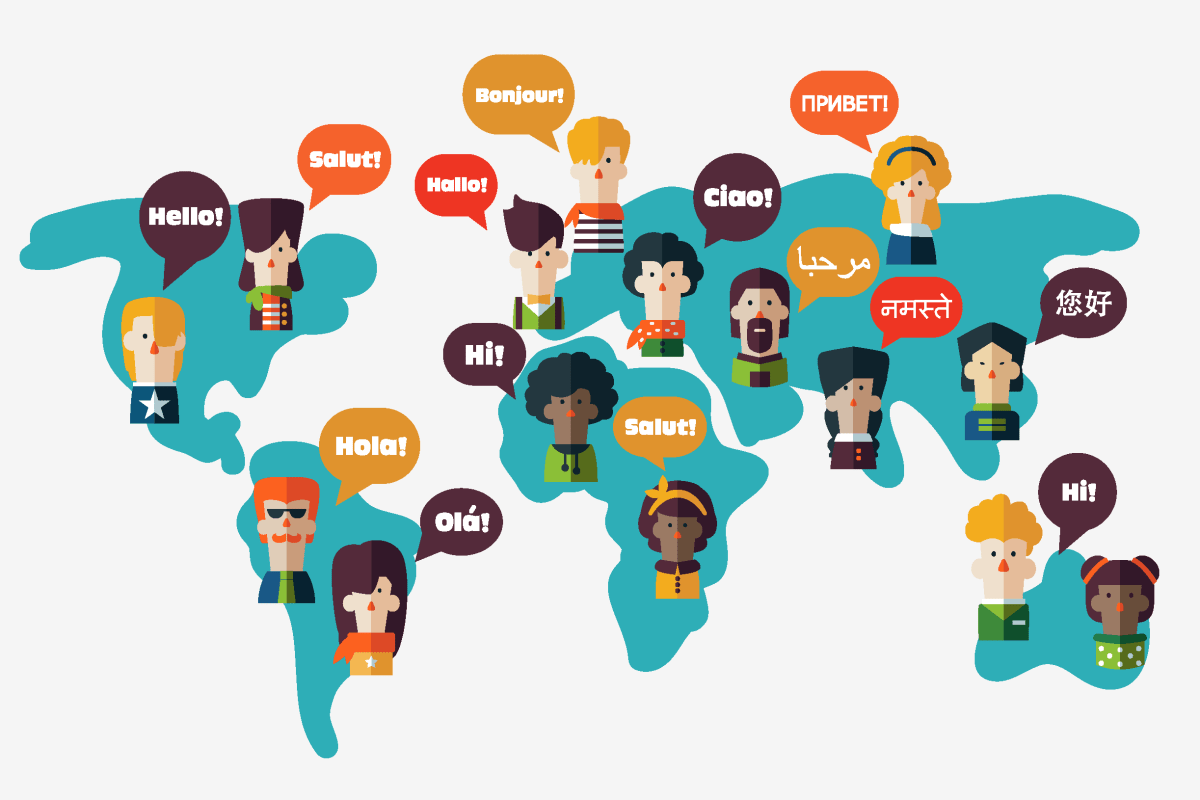
The link between language and cognition is interesting though not entirely grasped.
VIDEO: TED Talk on YouTube — Lera Boroditsky
“I speak Spanish to God, Italian to women, French to men and German to my horse.”
― Charles V, Holy Roman Emperor (probably not, but whatevs…)
Perspective
In the West, we tend to be quite self-centric. We are the centres of our universes, and this has several implications. Firstly, we orient conversation around ourselves; occasionally, we orient conversation around others. Instead, some cultures orient themselves around their world.
Self as Centre
Ordinarily, if a Westerner is asked which is their dominant hand, they might answer left or right. If they are asked to describe where something is spatially, one might answer on my left or right or above or below me. If the person asking is present, they may simply point to the object as a gesture.
Other as Centre
In some cases, we might feel it necessary to orient relative to another? The answer to the question, “Where is the book?” might be, “On your left”, or “You’ve got something on your left cheek”.
Terrain as Centre
In the West, we have notions of cardinal directions—North, East, West, and South—, but we still tend to orient communication around ourselves or others. In some regions, the use of cardinal directions is more prominent than in others. For example, when I am in Boston, I didn’t find many people reference places by cardinal directions, but when I am in Los Angeles, much conversation is relative to head north or head east. I notice that Google Maps tend to employ this. It’s often confusing when I am in an unfamiliar place, and the voice instructs me to travel west toward Avenue X. If I happen to have remembered where Avenue X is, I might internally orient toward that. Otherwise, I head in some direction until Google reinforces my choice or it rather recalculates based on my bad choice, if even nonjudgmentally.
In some cultures, this cardinality includes the body, so in comparison with the aforementioned self-as-centre dominant hand query, the response would depend on which way the subject was facing. Were they a southpaw (lefthander) facing north, they would respond that their west hand is dominant. But if they were facing south, it would be their east hand. This may seem to be confusing to a Westerner, but to a native, they would explicitly understand because they would be intimately oriented. As Lera relates in the video, someone might point out an ant crawling on your southwest leg.
To be fair, this space is not entirely alien to some Westerners. For example, mariners can shift the conversation from themselves to their ship or boat. Rather than left and right, relative to themselves or another, they might refer to port and starboard relative to the vessel. Being on the vessel and facing front (the bow), left is port and starboard is right; however, facing the rear (the stern), left is not starboard and right is now port. So, if someone asks where the lifeboat is, landlubbers may say it’s on their left whilst a sailor might say it’s on the starboard side.
Centring Time
Time is another aspect we centre on ourselves. I won’t even endeavour to raise the circular notion of time. If an English speaker thinks about a timeline, we would likely configure it from left to right equating with past to future. This aligns with our writing preference. For native Arabic or Hebrew speakers, they might naturally opt to convey this from right to left in accordance with their preferred writing system.
For the Aboriginal Kuuk Thaayorre in Australia, their rendition of time was contingent on their orientation in the world. Essentially, time flows from east to west, perhaps in accordance with the apparent movement of the sun across the sky relative to Earth. Facing south or north, they rendered time left to right and right to left, respectively. When they faced east, time came toward the subject, with time moving away from the body when facing west.
Counting
So-called modern or advanced societies have developed number systems, but some cultures either have no counting or limited counting, having systems that might extend 1, 2, many, or 1, 2, 3, many. This means that tasks we learn like accounting, inventory management, or comparing counts of apples and oranges are not only not available to these people, they are irrelevant to them.
Categorical Imperitive
Lera tells us about the blues. Not B.B. King Blues, but the categorisation of blue, blues, and colours more generally. I’ve discussed this before in various places. As with numbers, some languages have a lot and some have few; some have only distinctions for light and dark, or equivalents of white, black, red, and so on. Colour names are typically added to a language in a similar order based on the frequency within the visual colour spectrum. I may have written about that earlier as well if only I could find it.
Different cultures and languages categorise colours differently, subdividing them differently. In many non-English languages, pink is simply light red. English opts to assign it a unique label. On the other hand, blue is basically one colour name in English whilst it is further broken down in Russian to goluboi (light blue, голубой) and siniy (darker blue, синий). This mirrors the pattern of pink (lighter red) and red (darker red) in English, a distinction not prevalent in other languages. Of course, we also have variations of reds and blues such as crimson or cyan, but this is rather second-order nuance.
Interestingly, in neurological studies, when measuring a person with a language that splits a colour, say a Russian looking at blues, the instruments capture the event of the subject having noticed the category shift. No such shift occurs in speakers without such a switch. I would be interested to know what the results would be for a bilingual speaker to be asked to respond in each language. Informally, I asked a Russian mate of mine if he experienced anything differently seeing blue whilst thinking in Russian versus English. He said yes, but couldn’t really provide any additional information. If a reader happens to be fluent in two or more languages, I’d be interested in hearing about your experiences.
One last note on colour, I’ve read studies that claim that women on balance have more colour names than men, which is to say where a typical male only sees shades of blue, the typical woman sees periwinkle, ultramarine, cyan, navy, cobalt, indigo, cerulean, teal, slate, sapphire, turquoise, and on and on. Of course, many English-speaking males may be defensive about now, arguing, “I know cyan. I know teal. Who doesn’t know turquoise?” Knowing is different to employing, and perhaps you’re not typical. You’re an atypical male. Let’s not get into gender challenges. Rather, let’s.
Gender Problems
Yet again, gender rears its ugly head. I am wondering when people are going to start demanding fluidity among gendered nouns. Sticking with Lera’s examples, a bridge happens to be grammatically feminine in Germans and masculine in Spanish. When asked to describe a bridge, German speakers are more apt to choose stereotypically feminine adjectives, beautiful or elegant whilst Spanish speakers opted for stereotypically masculine terms, strong or long. I suppose she was reaching for laughter on that last reference.
Structured Events
Objects and subjective injection are other possible conventions. Lera mentions a tourist bumping into a vase. In English, one would be comfortable declaring, “The man knocked the vase off the pedestal.” In Spanish, the same event might more often be described as “The vase fell off the pedestal”. Notice the shift in agency and dispersion of blame. In English, we have some apparent need to inject not only a cause but an agent as a source of the cause. As I see it, one might have these several (possibly inexhaustive) options:
He knocked the vase off the stand.
Someone knocked the vase off the stand.
The vase got knocked off the stand.
The vase fell off the stand.
I decided to note the relationship between the case and the stand. I suppose this is not strictly necessary and might seem superfluous in some contexts.
In case 1, a specific agent (he) is responsible for knocking off the vase. This does not suggest intent, though even negligence carries weight in many circles.
In case 2, the agent becomes indefinite. The speaker wants to specify that the vase didn’t just fall over on its own.
In case 3, agency is not only indefinite, but it also may not have a subject. Perhaps, a cat knocked it off—or the wind or an earth tremor.
In the final case, 4, the agent is removed from the conversation altogether, All that is conveyed is that the vase fell from a stand.
One might want to argue, “So what?” but this is not simply a convention of language; it stems from perception—or perhaps perception was altered by language through acculturation, but let’s not quibble here. It determines what someone pays attention to. When an event was witnessed, people from cultures where agency is a strong component, the witness is more apt to remember the culprit, whereas a non-agency-focused witness, would not be as likely to recall attributes about the person who may have knocked it over. Practically, this leads to issues of blame and culpability. Clearly, a culture with an agent orientation might be quicker to assess blame, where this would be further removed from the conversation from a different cultural perspective. I am speculating here, but I don’t feel it’s a large logical leap.
In a retributive justice system, the language that assigns agency is more likely to mete out harsher punishments because he broke the vase, it wasn’t simply broken. The use of language guides our reasoning. This leads me to wonder whether those who are ‘tough on crime‘ use different language construction than those who are more lenient.
Enfin
I just wanted to share my thoughts and connect language with cognition. I don’t think that the connection is necessarily strong or profound, but there is something, and there are more language nuances than noted here.
An online colleague published an essay on another essay (en français). The gist was to say that their ideas were the same save for whether a core foundation was reality or truth. I am going to stylise these and derivatives in capital initials, e.g., Real and Truth. I am not sure I see the connexion, and perhaps Lance will chime in here directly to correct any misunderstandings and fill in any holes.
Podcast: Audio rendition is this page content
At least in English vernacular, True and Real are close synonyms. I don’t feel they are as close as we may assume at first glance. I think each of these terms carries with it its own ambiguity and connotation, so a meaningful discussion may prove to be difficult.
I’m not sure if it’s a fair characterisation, but I feel that most people consider Real as what they can sense or experience. Some may not even allow for the experiential component. In my mind, metaphorically thinking, of course, a book might be real; an idea might be real; even the idea of a unicorn might be real, but unicorns are not real. If we want to claim unicorns as part of Reality or include it in the set of Reality, then it would be a second-order sort. Substituting Harry Potter for unicorns, the idea of Harry Potter is real, but Harry Potter is a figment. Of course, Harry Potter may be the name of a human or your pet otter, but this is not the manifest Harry Potter of the idea. And Harry Potter is not a unicorn.
Harry Potter is not a unicorn
I mention Harry Potter and, indeed, unicorns, because I have had people argue that these things are real. For me, they are off the table, whether real or imagined. I feel that some people may also reduce Real to material, so a Realist would be the same as a Materialist. That’s fine except we end up with obvious non-material stuff on the cutting room floor. What do we do with emotions and so-called qualia? Sure, some might equate emotions with biochemical reactions and some synaptic exchange in some parts of the brain, further articulated through facial and bodily expressions and gestures. For the Materialist, we may not yet know the mechanism, but it’s only a matter of time—in the same manner as atoms became protons and electrons, which became quarks with spins and colour, and this morphed into fields.
Being sympathetic to Analytic Idealism, I might argue that none of this is real because all we can experience is what we can sense, but what we sense is a second order of Reality. We can’t even experience the first-order variety. The usual analogy is to look at computer bits or the funky Matrix code, and it doesn’t reveal what we see or experience through the interface. In the case of the Matrix, the interface is their perceived reality. But perception isn’t Reality. At least Descartes suggests as much. If first-order Reality is unattainable, we can either consider this sensed and experienced world second order. This leaves our unicorns and Harry Potter to be third order. In this case, we might idiomatically consider the first-order to be understood to exist, but our use of Reality extends only to the second-order variety.
In any case, I don’t expect to resolve the mystery of Reality here and now, but it is a dialogue where accord is necessary to be on the same proverbial page.
But then what is True? What is Truth? I’ve written about this previously. Here, we are explicitly invoking the capital-T version of Truth, not the minuscule-t version where it’s synonymous with pedestrian ‘facts’ and tautologies. By True, are we asking what is objectively real—unadulterated by subjective experience, some universal and invariable condition? And is this Truth what is Real? Are there Truths that are not Real?
To sum it up, it is quite standard—although not universal by a long shot—to consider Real what we can experience whilst True is something that requires proof. A physical table might be real. Like unicorns, mathematic concepts may be true—I’d argue that this is tautological whilst others might defend some Platonic ideal—, but they are not real. They are an abstraction. I suppose my point is to not take these words for granted and presume they can be directly interchanged. I suppose in the adjective form, they are more apt to coincide—Is that a true Picasso? Is that a real Picasso? Clearly, when we are asking if it is real, we are asking if it is truly genuine rather than questioning its materiality.
It may be true that I am wittering away online in some masturbatory pseudo-intellectual frenzy, and the results may be virtually real, but I needed to let my mind wander for a bit. If you’ve gotten this far, bless your heart, and leave a comment.
As humans, we often leverage systems. They seem to make life easier. Whether a routine or a step-by-step instruction through an unknown process, a system can guide us. Systems are also connected, interactive entities, but that’s not for this segment. I am more interested in the loss of humanity that systematic processes and bureaucracy bring, so I am interested in imposed systems rather than systems we invent to find our keys and wallets.
Podcast: Audio rendition of this page contentImage: Spectrum of System versus Human
If we consider systematisation and humanity on a scale, we can see that any move toward systematisation comes at the expense of humanity. It might make logical sense to make this trade-off to some degree or another. The biggest hit to humanity is the one-size-fits-all approach to a problem. It removes autonomy or human agency from the equation. If a system can be that mechanised, then automate it. Don’t assign a human to do it. This is an act of violence.
As I’ve been reading and writing a lot about Iain McGilchrist’s work lately, I feel one can easily map this to left versus right cerebral hemisphere dominance. System-building is inherently human, but it’s in the domain of the left hemisphere. But my imposition of a system on another is violence—one might even argue that it’s immoral.
As with bureaucracy, these imposed systems are Procrustean beds. Everyone will fit, no matter what. And when human beings need to interact with systems, we can not only feel the lack of humanity, but our own humanity suffers at the same time.
A close friend of mine recently checked herself into a mental health facility. After a few days, she called and asked if I could bring her a change of clothes and some toiletries—deodorant, soap, and shampoo. She had some in her house, but the packaging needed to be unopened and factory sealed. I stopped at a shop to buy these items and I brought them to the facility.
At the reception area, I needed to be cross-referenced as an authorised visitor, so I was asked to show proof of my identity as if it mattered who was delivering clothing that was going to be checked anyway. No big deal, they recorded my licence number on a form and ask me to fill it out—name, phone number, and what I was delivering.
The form stated that any open consumable items would not be allowed. I signed the form. An attendant took the bag and told me that I needed to remove the ‘chemicals’, that they would not be delivered. I pointed to the lines on the form that read that this restriction was for open items and reinforced that I had just purchased these and showed her the sales receipt. She told me that the patient would need to obtain a doctor’s permission, and she assured me that the patients all had soap.
I’m sure she thought she was being compassionate and assertive. I experienced it as patronising. Me being me, I chided her lack of compassion and humanity, not a great match for a mental health attendant. In fact, it reminded me of a recent post I wrote on Warmth. In it, I suggested that service staff should at least fake conviviality. I take that back. Faux congeniality is patronising. She mimicked me. “Yes, systems are so inhumane, but here we follow a system.” My first thought was of Adolf Eichmann, who kept the trains on schedule without a care for the cargo. This is the violence inherent in systems.
Systems are not illogical. In fact, they are hyper-logical. And that’s the problem, logic is traded off at the expense of empathy. And one might have a strong argument for some accounting or financial system process, but I’ll retort that this should be automated. A human should not have to endure such pettiness.
I can tell that this will devolve quickly into a rant and so I’ll take my leave and not foist this violence upon you.
My mind is a Pachinko machine; my brain fatigued. Add to this the environmental distractions, such as breakfast, and it’s not conducive to focus. Today, it’s scrambled eggs and dry muffins—sans jam or butter, only some whipped substitute unfit for human consumption,
My prompt for writing the recent post on Professionalism was my reaction to the hospital staff and their demeanour—or as a colleague suggested in a comment, decorum. Perhaps I can remain focused on the words on this page as I type.
For service staff, warmth is a necessary ingredient of professionalism. This is particularly true for persons in the healing arts. The top indicator for pursuing legal action in a medical malpractice suit is the doctor’s bedside manner—personality and disposition—, whether the patient feels a personal connexion—a human connexion.
My experience in hospital is that the Medical Doctors have been hit or miss in the department—more miss than hit. I can even recall the names of the memorable ones. I suppose were I to be ill-treated, I’d remember as well. Here, it’s either treated nicely as a human or otherwise as an object in an assembly line. Thankfully, there have been no mistreatments or abuse.
The Registered Nurses had a better warmth ratio. Asking my circle of family, friends, and associates, this seems to be the general consensus. The rest of the staff were somewhere in between.
This warmth or human connexion extends beyond healthcare and to the service industry where human-to-human contact is made, even where that connexion is virtual—perhaps more so in order to bridge the distance. In my experience, the human factor tends to fall more at or below the level of the Medical Doctors. Any warmth is accidental. I am not saying that the people themselves lack compassion—though that could be the case. Rather, I am saying that they are moulded into automatons by the systems they are part of. It saps people of their humanity.
I started writing a post titled Bureaucracy is Violence, but I never completed it because I got lost in research. In a nutshell, bureaucracy is a Procrustean bed. I’ll leave it there for now. If you know, you know. Meantime, rage against the machine.
Do not go gentle into that good night. Rage, rage against the dying of the light.
It’s good to remember that words are but a small portion of communication, which operates in a larger space. Body language, gesticulation, facial expressions, speed, tone, inflexion, and intonation, all combine to convey at least as much. This is why a written document is always lacking. This is why important or sensitive information should be delivered in person unless you are willing to risk misinterpretation.
In the post-covid reality, some people have moved a lot of their previously face-to-face communication to one of the various videoconference services. Infants rely highly on the face, and they express much through the face. Even domesticated dogs have expressive faces. The face conveys a lot of information. This helps to make videoconference a decent means of communication. It is a step up over the telephone for instant communication, but it still falls short. Even over the phone, one can still use delivery speed and pacing. Tone, inflexion, and intonation should be able to be conveyed, but this may also be limited by connexion quality as well as microphone and speaker quality. However, body language and gesticulation are still largely absent. What may be present can be lost over a small viewing screen or poor video quality.
What gets left behind or limited are cues of authenticity and trust. I remember I had a client in Texas who preferred not to speak with my manager and other executives from the New York office. We had all met in person in the pre-Covid world, and the Texans had judged these people as “fast-talking city folks” instead of real down-to-earth people. I may be a city-slicker, but I’m not as fast-talking. One of these men was a great communicator in my eyes, but these are city eyes. As for the other person, he had snake-oil salesman written all over him, but he tried to hide it in all his erudition. He was very book-smart but lacking in authenticity.
mean what you say, and you say what you mean
Allow me to pause for a moment to riff on authenticity. In one way, I don’t believe in authenticity because I don’t believe there is anything to be authentic to. I write about this in many posts and at length. On the other hand, authenticity is that you believe what you are saying—you mean what you say, and you say what you mean. So what you are asking me to believe, you believe yourself.
If spoken communication is so important, why do you write a blog? That a picture is worth a thousand words is telling. In fact, a picture may convey a thousand words, but it’s probably conveying almost infinite words—or it could be. Words typically fail to transmit metaphor and intent. If we want to be clear, we need to add all sorts of additional words to allay confusion. Perhaps we need to include background information, tangential information, context, and whatnot. By the time we include all of the information that would be conveyed by the face and gesture, we’ve probably overwhelmed the recipients with a document that reads like a terms and conditions page—the ones almost no one reads but tick the box at the end anyway.
What is lost or diminished over video is authenticity and emotional content. Of course, a person can convey sympathy, empathy, and compassion over the phone, but to me, it’s like the wire monkeys in the old psychology experiments by Dr Harry Harlow. You get something to cling to—perhaps even a blanket around the wire is better than nothing. If the telephone is a wire monkey, videoconference is the wire monkey wrapped in a Teri-towel. The human element is still missing. We’re interacting with a simulacrum.
Princess Leia Organa
Some people are amazed at the prospect of holograms in the manner of Princess Leia’s grand entrance. “Help me, Obi-Wan.” Indeed, help us all. It is a step in the right direction, but mind the gap.
In the end, we should at least strive to prioritise in-person communication. At least in the movies, when they want to tell a loved one that their combatant or police officer has fallen (read: died), they do this in person. It should be telling that this also convey’s an emotional message to the audience that is often received as intended. It may cost more, but be sure to evaluate this cost against the benefits. Consider the lost benefits as well.
“You are the most interesting person I’ve ever met.”
Podcast: Audio rendition of this page content
This phrase was uttered to me the other day. Before you get on about my being braggadocious or humblebragging, let me disavow that notion straight away. But first some background and context.
Philosophics is my main blog, but I contribute to many. Philosophy is my passion, but occasionally I have a day job, and I have a blog centred on aspects of that. I was trying to decide whether this belongs there or here. I was video-interviewing for a contract position at a large bank. I even got an offer, so huzzah. As is typical, I went through my qualifications and responded to questions. This position involves managing a team, so I was asked what my approach was to teambuilding outside of work. Follows is a recreation of that conversation, which takes place about 40 minutes into the call.
Them: “How do you reinforce team cohesion outside of work hours?”
Me: “Full disclosure: I’m an introvert.”
Them: “Wait what? You are the most extroverted introvert I’ve ever met.”
Me: “This is 1 on 1. My preference is to be at home reading a book.”
Them: “I find that hard to believe. You are the most interesting person I’ve ever met.”
Me: “Like the guy in the Corona ads?”
Upon later discovery, they were Dos XX Equis ads.
Me: “In the past, I’ve always delegated that to someone with an interest and who cares. As I am a homebody, I am not even aware of what might be interesting. I tend to tag along, but I’m a teetotaler, and I’m not much into darts or pool, bowling or WhirlyBall. The best I can hope for is Trivia Night.”
These are team-building activities I’ve had to endure in the past. I’m not sure dragging a team through an art museum would do much for team cohesion. It may inspire a mutiny. I could be mistaken.
I’m an older chap, so you might assume that I’m just out of touch and set in my ways. You should know that I’ve always been like this. Parties and events bore me to tears. None of it resonates with me, and much of it is centred around alcohol (in the politically correct accounts). I’ve attended many and mingled, but in the back of my mind, I just couldn’t wait to take flight. I was in the entertainment business for years, and this was the norm and expectation, so I complied, but it was never comfortable.
In any case, I think he confuses the difference between someone being interesting and someone who can spin a good narrative. I’ve always been a storyteller. Believe me, I was not trying to embellish my background, I was just answering ‘how would you handle this?’ queries and responding with past experiences to make it real.
To be honest, if there is such a thing, I am overqualified for the job—whatever that means—, so they were afraid I’d get bored and quickly exit. The last thing on my mind was to embellish anything. This role is not a stretch. In fact, I was told that sometimes the tasks would be very tactical and mundane. I responded that I’d take what I could and appreciate not taxing my brain.
Chapter 10 of The Master and His Emissary is titled The Enlightement, which is to say another chapter centred around a religious theme and paradigm shift. Only it isn’t. This chapter is focused mainly on metaphor and poetry, and that’s where I want to comment.
If you haven’t happened to have read the prior posts on The Master and His Emissary orThe Matter with Things, I’ll summarise the functions of the left and right cerebral hemispheres. If you have, feel free to skip this paragraph. The left hemisphere is closing and convergent whilst the right hemisphere is expansive and divergent, The left is about naming, categorising, and analysing; the right is about experiencing the world as presenced. Where the right hemisphere is about presentation, the left is about re-representation. A challenge occurs when the re-presented view of the left supersedes the experiential view of the right. This is what occurs in a left-dominant brain.
Metaphor is a function of the right hemisphere. The left hemisphere considers metaphor to be a figure of speech. It trivialises it in one of two ways. Either, it reduces it to components that map to some other concepts—ignoring the parts that can’t be mapped—, or it assumes the metaphor to be whimsy and therefore without inherent value.
But metaphor is more than a figure of speech. It’s a figure of thought that can’t be reduced. Metaphor is like art or music and other residences of the right hemisphere. These things must be taken as whole entities and be considered in the manner of Gestalt.
Being analytical and representative, the left hemisphere can be educated. I could be wrong, but I don’t see how the right can be strengthened. It seems that its weakness is interference from the left, but the left is constantly wintering on that it’s always right, and all you need is to be more analytical. If you don’t have empathy, you can’t learn it. If you don’t understand metaphor, you’re pretty much out of luck. The same goes for anything in the experiential right hemisphere.
Might I be wrong? Sure, I’m no neuroscientist, but short of some external event, like a stroke, brain lesions, head trauma, or some such. I don’t see the vector. In a way, it’s like the advancement of technology. It’s difficult to stem the tide and reverse it. This is the challenge. In the West, we’ve been on a path to rationality and reason—left hemisphere fare—, which has shifted it further and further left. We just need more systems and processes.
Why the title, “Metaphor and Simile?” Metaphor resides in the province of the right hemisphere. Simile resides in the left. I remember listening to Joseph Campbell in the 1980s discussing the power of metaphor. Where metaphor is a mode of thought, simile is just a figure of speech. And it’s an analytical analogue. Love is like a rose. There’s a simple mapping. Love is a rose is more robust. John Lennon sings these lines in Mind Games.
Love is the answer and you know that for sure
Love is a flower you got to let it grow
Love is a flower. You got to let it grow. Grammatical structure aside—only an intractable problem for left-brainers—, this is a relatively simple metaphor, flowers grow and bloom; love grows and blooms.
Follows are another few famous metaphors. These may feel more accessible than some others.
“All the world’s a stage, and all the men and women merely players. They have their exits and their entrances.”
William Shakespeare
“All our words are but crumbs that fall down from the feast of the mind.”
Khalil Gibran
This one is particularly interesting as it suggests how diminutive words are relative to that of the mind—mere crumbs.
“And your very flesh shall be a great poem.”
Walt Whitman
How shall your flesh be a great poem? No like a great poem, but to be a great poem.
I’ve talked about Robert Frost’s The Road Less Travelled previously.
Two roads diverged in a yellow wood, And sorry I could not travel both And be one traveler, long I stood And looked down one as far as I could To where it bent in the undergrowth;
Then took the other, as just as fair, And having perhaps the better claim, Because it was grassy and wanted wear; Though as for that the passing there Had worn them really about the same,
And both that morning equally lay
In leaves no step had trodden black.
Oh, I kept the first for another day!
Yet knowing how way leads on to way,
I doubted if I should ever come back.
I shall be telling this with a sigh Somewhere ages and ages hence: Two roads diverged in a wood, and I— I took the one less traveled by, And that has made all the difference.
This poem is replete with metaphors.
The road itself is a metaphor for life, and the forks are the choices we make. Interpreted from a post-Modern perspective, and as Frost said himself, the trick is that it doesn’t matter which path is taken. In any case, irrespective of which paths you take, it will still make all the difference.
I’ve digressed.
McGilchrist says societies and people are moving too far into a left-dominant worldview, which only reinforces and accelerates this worldview. I don’t know how reversible it is. It’s swung both ways before, but that was prior to Scientism. This and hubris are not a great combination. In the end, the probability of teaching someone metaphor is on par with teaching someone to appreciate a work of art or a piece of music.
McGilchrist says we need to regain this capacity for metaphor—and empathy and so on—, but this requires (in my mind) a paradigm shift. I don’t see it happening at an individual level. There would need to be a cultural shift, and that is unforeseeable from here at the moment.
Here’s the challenge as I see it. In saying that we need to regain the ability to understand metaphor without assuming it can be deconstructed without a loss of meaning, he doesn’t provide a path—at least not yet. I’ve got two chapters remaining, so perhaps he’ll offer some guidance or conceptual framework in one of them. Otherwise, the future looks bleak. Of course, humans are adaptable. Evolution works that way, but you can also veer down an evolutionary dead end without knowing your journey has no viable future until you get there. And that will make all the difference.
In the spirit of full disclosure and to set the stage, I’m an atheist and can’t remember being otherwise. I’ve discussed this here before at length. Iain McGilchrist is not.
Religion is the topic of chapter nine of The Master and His Emissary. I understand what the author is saying, and I think a question I have about a fundamental issue is coming to head. Although I’ve spoken at greater length before, I’ll recapitulate here.
An assertion of McGilchrist’s is that we should judge the hemispheres by how well each corresponds to the truth of reality. He goes on to tell us that the left hemisphere is the controller of words, so we shouldn’t get hung up on the word truth and the definition that pales relative to the intuition of truth. I have an issue with this, but I’ll return to it in a moment.
As I’ve stated countless times by now, the left cerebral hemisphere is convergent and closing whilst the right is divergent and expansive. The left is intellect whilst the right is intuition. The left is categorisation, naming, and re-presentation whilst the right is Gestalt and presentation. The left is literal whereas the right is metaphorical. I’ll return to this presently.
Before touching on religion, I’ll articulate my challenge. He makes an unsubstantiated assertion that we can’t build a whole from a sum of parts. Instead, we need to accept the whole as presented as is, and realise that we may not be able to fully account for all of the parts. Just trust our intuition of the experience.
My contention here is that neither is quite right. Whilst the left hemisphere has the possibility of leaving things out, the right hemisphere has the possibility of adding irrelevant or otherwise injected content. In the case of religion, this would be along the lines of inserting a god of the gaps. I’ll come back to this.
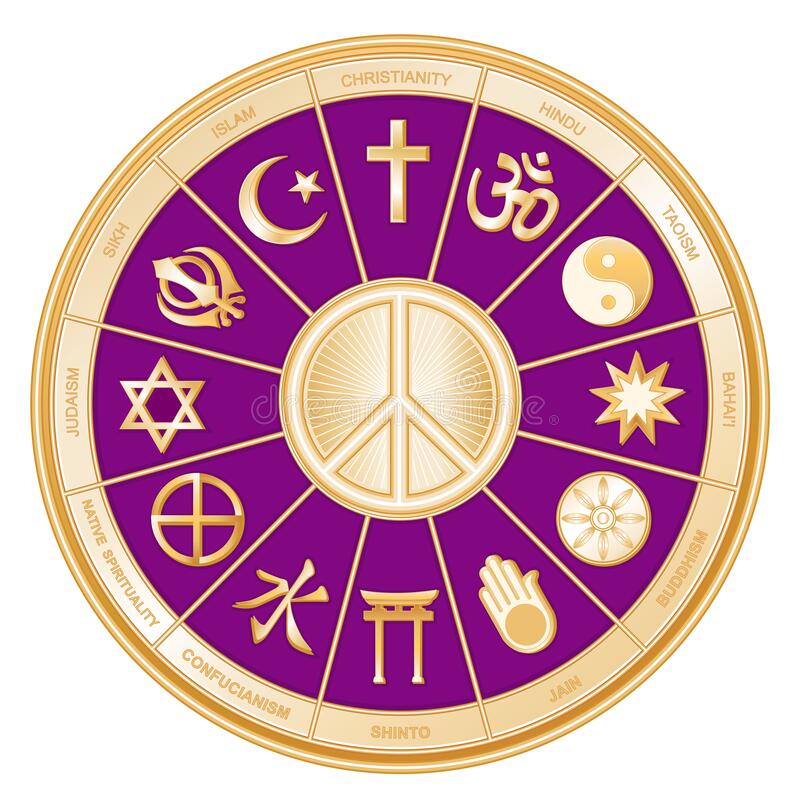
All religions are not created equal. McGilchrist argues that Catholicism is a right-hemisphere religion whilst Protestantism, in particular Lutherans, operates from the left hemisphere. He even cites Max Weber’s writings noting the connexion between Protestantism and Capitalism. Despite being raised in an area with seventy-odd per cent Roman Catholics, I don’t know enough about Catholicism to critique that part of his assertion, but I agree with his statement on Protestants. As for my intuition, I’d say that all of the rote ritualism is a left-hemisphere function, but I’m not sure.
As he continues his argumentation he makes a case that religion needs to be taken metaphorically and cannot be deconstructed. This is to lose the proverbial woods for the trees. Of course, this is not only precisely what the left hemisphere does it’s also what the Protestant reformation did and Protestantism continues to do today. Like Capitalism, the focus is on the individual. For Catholics, it’s communal. Although he doesn’t cite Calvanlism and the ideal of work, the result is the same. Hard work yields a preternatural payoff.
I have no problem with metaphor, whether in speech, writing, art, or music. I’ve been a musician and dabbled in art. Much of my favourite fiction is metaphorical, and I don’t need to dissect it any of these to enjoy the experience.
religion can be experienced metaphorically
I am even willing to grant that religion can be experienced metaphorically. I have no quarrel here. Where his argument tends to lose ground is when it becomes prescriptive and systematised. Again, I am no expert on Catholicism, but I have attended Catholic church ceremonies. I even got ejected from CCD classes I had attended with a mate when I was eight or nine years old—not a great way to win hearts and minds.
When I lived in West Los Angeles—Palms to be exact—, my apartment was across the street from an Anglican church. Down the road, there was a Hare Krishna ashram—very diverse. I poked my nose into each. In fact, the Anglican church was my designated voting location, so I visited there on that occasion periodically. The spectacle of the smoke of frankincense and myrrh billowing out and wafting up is still a pleasant recollection. Frankly, I hadn’t thought of it in years, but writing about it returned the memories. Of course, the ashram had its own incense; only it was nag champa.
Some self-professed ‘spiritual’ people I have encountered, love the spectacle of a Catholic ceremony. There are candles, rituals, chanting, kneeling, chorals, and incantations. I can see how these can be taken metaphorically, but it’s also rote. But that’s not where my difficulty lay.
My problem is not that religion can’t be interpreted metaphorically. In fact, I can’t agree more. My problem is that this metaphor further aligns to God or to gods. But wait. I know what you’re thinking. Those are just metaphors, too. And I agree. The problem isn’t that I don’t grant or understand that. It’s that the parishioners don’t. They think there is an old bearded man in the clouds issuing commandments and listening for their prayers. And if you don’t toe the line and play nice, your eternal life prospects don’t look good.
He does argue that this fire and brimstone are artefacts of the Protestants, but this is what I see depicted in films and books. Obviously, the Southen Baptist preacher at the pulpit shrieking sermons is Protestant fare. On the other hand, Catholics have demons to exorcise and rosary beads and confession. I can see that these are metaphorical. Perhaps he’s right. I don’t know if Catholics have the equivalent of eternal hell. They do have—or did have—a purgatory. Do they have a decalogue. As far as I know, they do. Perhaps he was just speaking in relative terms—that Catholic tradition is just more right-hemisphere-oriented than Protestantism.
If this is the extent of his claim, we agree, but he goes further and invokes the divine. Yet again, I can accept this as a metaphor, but I feel he means it to be taken more literally. In any case, the followers seem to tend to.
With meditation … the idea is to let go and forego attachment
This brings me back to God of the gaps. Metaphors are concepts or notions. I say this because, metaphors don’t, for example, answer prayers. The act of praying may be metaphorical—perhaps I could equate it to singing or meditation—, but no physical action is expected in return. With singing, the effect may be a connexion or an emotion. The music is aiming to lift spirits or make one reflective or sad—perhaps add tension in a suspense movie. With meditation—guided meditation notwithstanding—, the idea is to let go and forego attachment. What do your suspect we are letting go of? What are we detaching from? The fetters of the left hemisphere—the bastion of judgment.
Prayer is different. On one hand, there is the metaphorical aspect of compassion and sharing, But it doesn’t end there. Susie has surgery and we pray for her recovery. Metaphorically, a believer may feel consoled by compassion. Even Susie may feel better, which will lead to a more positive disposition that may lead to faster recovery and healing, even if by placebo effects. On the other hand, perhaps not. And then there’s distance healing where the recipient isn’t even aware of the prayers, but they are either brokered by God or simply permeate the fabric of the universe or Jung’s collective unconsciousness. This is where it goes off the rails.
So, when I am asked to accept religion metaphorically but am also asked to accept magical thinking as part of that equation, I’m just not on board. Sorry. It makes no sense and doesn’t even feel intuitively right.
religion is about power
Call me a cynic, but for me, religion is about power. Perhaps at one time, the religious experience was a feeling, but all evidence points to this being almost immediately exploited by the priest classes and then by Government and other nefarious actors. Some countries are worse than others, but that’s no consolation.
In the end, I get the religion-metaphor connexion, and I trust that Iain is not so naive to see the Foucauldian power-control angle. Besides, if culture is shifting to the left hemisphere and can’t interpret metaphors very well—something experience demonstrates—, so I’m not sure the defence holds as much water as he wants it to.








 Philosophics