Morality: The Mirage of Subjectivity Within a Relative Framework

Morality, that ever-elusive beacon of human conduct, is often treated as an immutable entity—a granite monolith dictating the terms of right and wrong. Yet, upon closer inspection, morality reveals itself to be a mirage: a construct contingent upon cultural frameworks, historical conditions, and individual subjectivity. It is neither absolute nor universal but, rather, relative and ultimately subjective, lacking any intrinsic meaning outside of the context that gives it shape.

Audio: Spotify podcast conversation about this topic.

Nietzsche: Beyond Good and Evil, Beyond Absolutes

Friedrich Nietzsche, in his polemical Beyond Good and Evil and On the Genealogy of Morality, exposes the illusion of objective morality. For Nietzsche, moral systems are inherently the products of human fabrication—tools of power masquerading as eternal truths. He describes two primary moralities: master morality and slave morality. Master morality, derived from the strong, values power, creativity, and self-affirmation. Slave morality, by contrast, is reactive, rooted in the resentment (ressentiment) of the weak, who redefine strength as “evil” and weakness as “good.”

Nietzsche’s critique dismantles the notion that morality exists independently of cultural, historical, or power dynamics. What is “moral” for one era or society may be utterly abhorrent to another. Consider the glorification of war and conquest in ancient Sparta versus the modern valorisation of equality and human rights. Each framework exalts its own virtues not because they are universally true but because they serve the prevailing cultural and existential needs of their time.

The Myth of Monolithic Morality

Even viewed through a relativistic lens—and despite the protestations of Immanuel Kant or Jordan Peterson—morality is not and has never been monolithic. The belief in a singular, unchanging moral order is, at best, a Pollyanna myth or wishful thinking, perpetuated by those who prefer their moral compass untroubled by nuance. History is not the story of one moral narrative, but of a multiplicity of subcultures and countercultures, each with its own moral orientation. These orientations, while judged by the dominant moral compass of the era, always resist and redefine what is acceptable and good.

If the tables are turned, so is the moral compass reoriented. The Man in the High Castle captures this truth chillingly. Had the Nazis won World War II, Americans—despite their lofty self-perceptions—would have quickly adopted the morality of their new rulers. The foundations of American morality would have been reimagined in the image of the Third Reich, not through inherent belief but through cultural osmosis, survival instincts, and institutionalised pressure. What we now consider abhorrent might have become, under those circumstances, morally unremarkable. Morality, in this view, is not timeless but endlessly pliable, bending to the will of power and circumstance.

The Case for Moral Objectivity: Kantian Ethics

In contrast to Nietzsche’s relativism, Immanuel Kant offers a vision of morality as rational, universal, and objective. Kant’s categorical imperative asserts that moral principles must be universally applicable, derived not from cultural or historical contingencies but from pure reason. For Kant, the moral law is intrinsic to rational beings and can be expressed as: “Act only according to that maxim whereby you can, at the same time, will that it should become a universal law.”

This framework provides a stark rebuttal to Nietzsche’s subjectivity. If morality is rooted in reason, then it transcends the whims of power dynamics or cultural specificity. Under Kant’s system, slavery, war, and exploitation are not morally permissible, regardless of historical acceptance or cultural norms, because they cannot be willed universally without contradiction. Kant’s moral absolutism thus offers a bulwark against the potential nihilism of Nietzschean subjectivity.

Cultural Pressure: The Birthplace of Moral Adoption

The individual’s adoption of morality is rarely a matter of pure, autonomous choice. Rather, it is shaped by the relentless pressures of culture. Michel Foucault’s analysis of disciplinary power in works such as Discipline and Punish highlights how societies engineer moral behaviours through surveillance, normalisation, and institutional reinforcement. From childhood, individuals are inculcated with the moral codes of their culture, internalising these norms until they appear natural and self-evident.

Yet this adoption is not passive. Even within the constraints of culture, individuals exercise agency, reshaping or rejecting the moral frameworks imposed upon them. Nietzsche’s Übermensch represents the apotheosis of this rebellion: a figure who transcends societal norms to create their own values, living authentically in the absence of universal moral truths. By contrast, Kantian ethics and utilitarianism might critique the Übermensch as solipsistic, untethered from the responsibilities of shared moral life.

Morality in a Shifting World

Morality’s subjectivity is its double-edged sword. While its flexibility allows adaptation to changing societal needs, it also exposes the fragility of moral consensus. Consider how modern societies have redefined morality over decades, from colonialism to civil rights, from gender roles to ecological responsibility. What was once moral is now abhorrent; what was once abhorrent is now a moral imperative. Yet even as society evolves, its subcultures and countercultures continue to resist and reshape dominant moral paradigms. If history teaches us anything, it is that morality is less a fixed star and more a flickering flame, always at the mercy of shifting winds.

Conclusion: The Artifice of Moral Meaning

Morality, then, is not a universal truth etched into the fabric of existence but a subjective artifice, constructed by cultures to serve their needs and adopted by individuals under varying degrees of pressure. Nietzsche’s philosophy teaches us that morality, stripped of its pretensions, is not an arbiter of truth but a symptom of human striving—one more manifestation of the will to power. In contrast, Kantian ethics and utilitarianism offer structured visions of morality, but even these grapple with the tensions between universal principles and the messy realities of history and culture.

As The Man in the High Castle suggests, morality is a contingent, situational artefact, liable to be rewritten at the whim of those in power. Its apparent stability is an illusion, a construct that shifts with every epoch, every conquest, every revolution. To ignore this truth is to cling to a comforting, but ultimately deceptive, myth. Morality, like all human constructs, is both a triumph and a deception, forever relative, ever mutable, yet persistently contested by those who would impose an impossible order on its chaos.

The Relativity of Morality: A Penguin’s Tale

I recently watched The Penguin on HBO Max, a series set in DC’s Batman universe. Ordinarily, I avoid television – especially the superhero genre – but this one intrigued me. Less spandex, more mob drama. An origin story with a dash of noir. I’ll spare you spoilers, but suffice it to say that it was an enjoyable detour, even for someone like me who prefers philosophy over fistfights.

This post isn’t a review, though. It’s a springboard into a larger idea: morality’s subjectivity – or, more precisely, its relativity.

Audio: Spotify podcast related to this topic.

Morality in a Vacuum

Morality, as I see it, is a social construct. You might carry a private moral compass, but without society, it’s about as useful as a clock on a desert island. A personal code of ethics might guide you in solitary moments, but breaking your own rules – eating that forbidden biscuit after vowing to abstain, for instance – doesn’t carry the weight of a true moral transgression. It’s more akin to reneging on a New Year’s resolution. Who’s harmed? Who’s holding you accountable? The answer is: no one but yourself, and even then, only if you care.

The Social Contract

Introduce a second person, and suddenly, morality gains traction. Agreements form – explicit or tacit – about how to behave. Multiply that to the level of a community or society, and morality becomes a kind of currency, exchanged and enforced by the group. Sometimes, these codes are elevated to laws. And, ironically, the act of adhering to a law – even one devoid of moral content – can itself become the moral thing to do. Not because the act is inherently right, but because it reinforces the structure society depends upon.

But morality is neither universal nor monolithic. It is as fractured and kaleidoscopic as the societies and subcultures that create it. Which brings us back to The Penguin.

Crime’s Moral Code

The Penguin thrives in a criminal underworld where the moral compass points in a different direction. In the dominant society’s eyes, crime is immoral. Robbery, murder, racketeering – all “bad,” all forbidden. But within the subculture of organised crime, a parallel morality exists. Honour among thieves, loyalty to the family, the unspoken rules of the game – these are their ethics, and they matter deeply to those who live by them.

When one criminal praises another – “You done good” – after a successful heist or a precise hit, it’s a moral judgement within their own framework. Outside that framework, society condemns the same actions as abhorrent. Yet even dominant societies carve out their own moral exceptions. Killing, for instance, is broadly considered immoral. Murder is outlawed. But capital punishment? That’s legal, and often deemed not only acceptable but righteous. Kant argued it was a moral imperative. Nietzsche, ever the cynic, saw this duality for what it was: a power dynamic cloaked in self-righteousness.

In The Penguin, we see this dichotomy laid bare. The underworld isn’t without morals; it simply operates on a different axis. And while the larger society might disdain it, the hypocrisy of their own shifting moral codes remains unexamined.

Final Thoughts on the Series

I’ll save other philosophical musings about The Penguin for another time – spoilers would be unavoidable, after all. But here’s a quick review: the series leans into drama, eschewing flashy gimmicks for a grittier, more grounded tone. The writing is generally strong, though there are moments of inconsistency – plot holes and contrivances that mar an otherwise immersive experience. Whether these flaws stem from the writers, director, or editor is anyone’s guess, but the effect is the same: they momentarily yank the viewer out of the world they’ve built.

Still, it’s a worthwhile watch, especially if you’re a fan of mob-style crime dramas. The final episode was, in my estimation, the best of the lot – a satisfying culmination that leaves the door ajar for philosophical ruminations like these.

Have you seen it? What are your thoughts – philosophical or otherwise? Drop a comment below. Let’s discuss.

When Hollywood Tried to Cheer Up Less Than Zero and Missed the Point Entirely

Let’s talk about Less Than Zero. No, not the film. I’m talking about the book—Bret Easton Ellis’s nihilistic masterpiece that drags you through a moral cesspit of 1980s Los Angeles. You might remember it as the story that makes American Psycho look like a quirky self-help guide. It’s dark, it’s bleak, and it doesn’t pretend to offer you a shred of hope.

And then there’s the movie adaptation.

Oh, the movie. It’s as though someone read Ellis’s unflinching tale of moral rot and thought, You know what this needs? Friendship. And a redemption arc. And maybe some heartfelt music in the background. Hollywood, in all its infinite wisdom, decided that audiences couldn’t handle the book’s existential despair. So, they took a story about the void—about the emptiness of privilege, the suffocation of apathy, and the complete erosion of human connection—and gave it a fuzzy moral centre.

Here’s the gist: The book is nihilism incarnate. It follows Clay, a disaffected college student who comes home to LA for Christmas and is immediately swallowed whole by a world of cocaine, vapid socialites, and casual cruelty. No one learns anything. No one grows. In fact, the whole point is that these characters are so morally bankrupt, so irreparably hollow, that they’re beyond redemption. If you’re looking for a happy ending, don’t bother—Ellis leaves you stranded in the abyss, staring into the void, wondering if there’s any point to anything. Spoiler: there’s not.

Then along comes the 1987 film, directed by Marek Kanievska. It keeps the names of the characters—Clay, Blair, Julian—but not much else. Instead of being an icy observer of LA’s decadence, Clay is transformed into a love-struck saviour. Blair, a passive figure in the novel, becomes a supportive girlfriend. And Julian—oh, poor Julian—is turned into a sacrificial lamb for the sake of a heartfelt narrative about friendship and second chances.

The film turns Less Than Zero into an anti-drug PSA. It’s basically Nancy Reagan Presents: a story of addiction, redemption, and the power of love, wrapped in a slick 80s aesthetic. Robert Downey Jr., to his credit, gives a brilliant performance as Julian, the doomed addict. But the character is barely recognisable compared to his literary counterpart. In the book, Julian’s descent into drug-fuelled depravity isn’t a cautionary tale—it’s just another symptom of a world where nothing and no one has any value. In the film, Julian is tragic, yes, but in a way that invites sympathy and, crucially, an attempt at salvation.

Let’s not forget the ending. The novel ends on a note so cold it could freeze your soul: Clay leaves Los Angeles, unchanged, unbothered, and unmoved. The film, however, concludes with Clay and Blair driving off into the sunset, having vowed to turn their lives around. It’s saccharine. It’s pandering. It’s the cinematic equivalent of slapping a motivational poster over a painting by Francis Bacon.

Why did Hollywood do this? Simple: nihilism doesn’t sell. You can’t slap it on a movie poster and expect audiences to line up at the box office. People want catharsis, not existential despair. And so, the filmmakers gutted Less Than Zero of its soul (or lack thereof), replacing its stark nihilism with a hopeful narrative about the power of human connection.

Here’s the kicker, though: by doing this, the film completely misses the point of Ellis’s novel. Less Than Zero is a critique of LA’s shallow, soulless culture—a world where connection is impossible because no one feels anything. Turning it into a feel-good story about saving a friend from addiction is not just a betrayal; it’s downright laughable. It’s like adapting 1984 into a rom-com where Winston and Julia overthrow Big Brother and live happily ever after.

To be fair, the film isn’t bad—if you forget the source material exists. It’s well-acted, stylishly shot, and undeniably entertaining. But as an adaptation, it’s a travesty. It’s Ellis’s Less Than Zero with all the edges sanded down, the grit scrubbed clean, and a shiny coat of sentimentality slapped on top.

So, if you’ve read the book and thought, Wow, that was bleak—I wonder if the movie is any lighter?, the answer is yes, but not in a good way. It’s lighter because it’s hollowed out, stripped of its existential weight, and repackaged as something safe and digestible.

And if you haven’t read the book? Do yourself a favour: skip the movie, pour yourself a stiff drink, and dive into Ellis’s bleak masterpiece. Just don’t expect any warm, fuzzy feelings—it’s called Less Than Zero for a reason.

Switching Teams, Same Game: How Politics Is the New Religion

Jean-François Lyotard’s Le Différend has a way of gnawing at you—not with profound revelations, but with the slow, disquieting erosion of assumptions. It got me thinking about something uncomfortably obvious: political orientation is nothing more than the secular cousin of religious indoctrination. Just as most people will, without much scrutiny, cling to the religion of their upbringing and defend it as the One True Faith, the same applies to their political worldview. Whether you’re baptised into Anglicanism or wade knee-deep into the waters of neoliberalism, the zeal is indistinguishable.

Of course, there are the self-proclaimed rebels who smugly declare they’ve rejected their parents’ politics. The ones who went left when Mum and Dad leaned right or discovered anarchism in the ruins of a conservative household. But let’s not be fooled by the patina of rebellion: they may have switched teams, but they’re still playing the same game. They’ve accepted the foundational myths of institutions and democracy—those hallowed, untouchable idols. Like religion, these constructs are not just defended but sanctified, preached as the best or only possible versions of salvation. Dissenters are heretics; non-believers are unthinkable.

It’s not that political ideologies are inherently bad (just like religion has its occasional charm). It’s that the devout rarely stop to question whether the framework itself might be the problem. They assume the boundaries are fixed, the terms are immutable, and the debate is merely about the correct interpretation of the catechism. But if Lyotard has taught us anything, it’s this: the real battles—the différends—are the ones no one’s even acknowledging because the language to articulate them doesn’t exist in the prevailing orthodoxy.

Where Generative AI Shines but Doesn’t

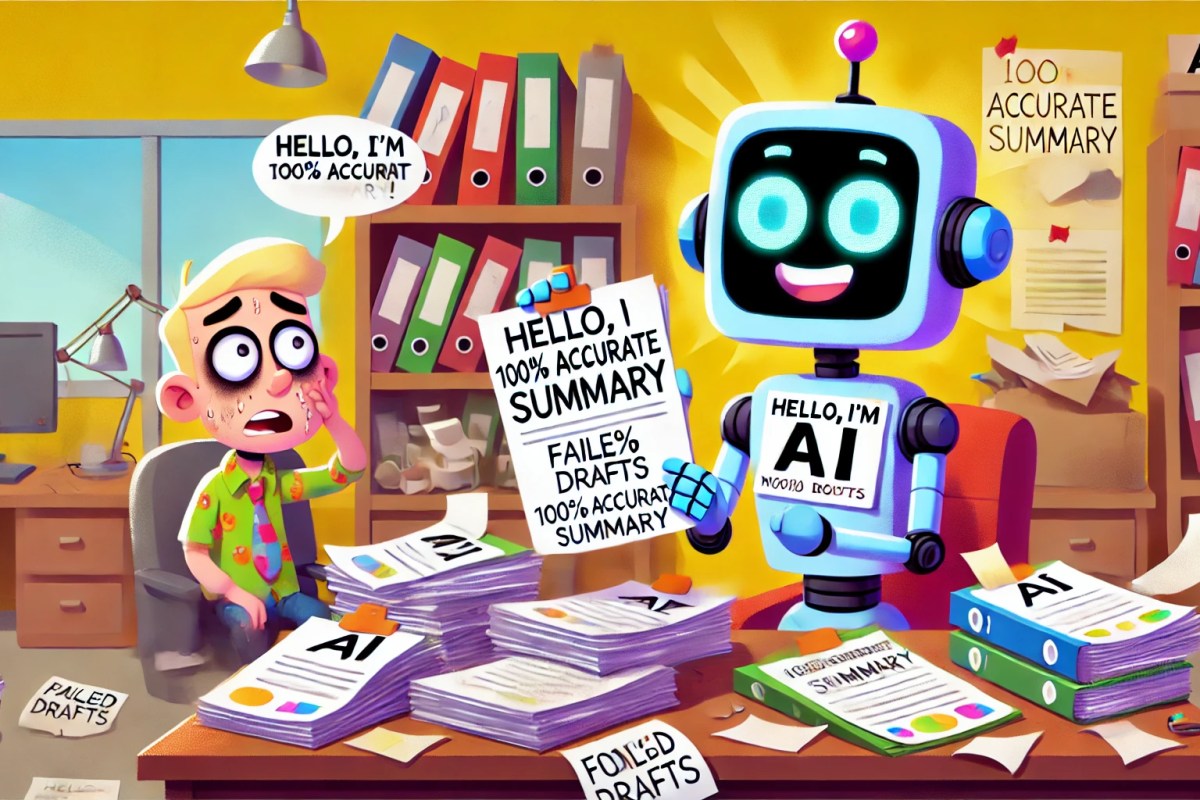
As I am putting some finishing touches on my latest paper, I had the idea to illustrate some of the novel nomenclature. For some reason, Zeno’s Paradox came to mind. Unlike in maths, it is not reconcilable in language. I asked ChatGPT how I might integrate the concept into my paper. Here is what it rendered. Not only is the exposition decent, but it also provides citations and references. Humorously, when I read the citations, I thought that they were placeholders – Brown, David, Smith, and Jones – but they turned out to be legitimate references – references I hadn’t considered and each relatively recent. I’m chalking this up as a win. This was not a case of ‘ChatGPT, do my homework’. Instead, it reflects an active collaboration between a human and technology. And now I have more reference papers to read and absorb.*

Bonus: Audio podcast discussing this topic.

Take the term ‘freedom’, an archetypal example of a Contestable that resists precise communication due to its inherent abstraction and ideological weight. To enhance its effectiveness, we might parse it into narrower forms, such as ‘freedom from’ (liberation from oppression or constraint) and ‘freedom to’ (the capacity to act or pursue desires). Whilst this initial breakdown provides some clarity, it is merely the beginning. Each parsed term demands further qualification: ‘freedom from what?’ and ‘freedom to do what?’ At every level of subdivision, new ambiguities emerge, requiring further refinement (Smith, 2021).

This process resembles Zeno’s paradox, where each attempt to clarify ‘freedom’ by moving incrementally closer to a precise meaning only reveals new layers of interpretive complexity. The concept remains elusive, perpetually deferring any definitive understanding as we approach it in ever-smaller fragments without fully grasping its essence (Jones, 2019). Unlike concrete terms like ‘chair’ or ‘table’, whose meanings can be pinned down through physical reference or functional description, ‘freedom’ resists final articulation (Brown, 2020). This continual parsing illustrates the inherent limitations of language when applied to abstract, boundary-resistant concepts: the more we attempt to define them, the more they fracture into an infinite regress of sub-concepts, each requiring its own explanation (Davis, 2022). Thus, whilst parsing ‘freedom’ improves communicative effectiveness to a point, it ultimately underscores language’s impotence in capturing the full spectrum of complex, ideational constructs (Wilson, 2018).

References:

Brown, J. (2020). The elusive nature of abstract concepts. Journal of Philosophical Studies, 35(2), 123-145.

Davis, S. (2022). Language and the limits of definition. Linguistic Quarterly, 57(1), 78-92.

Jones, M. (2019). Zeno’s paradox and the infinite regress of meaning. Metaphysical Review, 82(3), 245-263.

Smith, L. (2021). Freedom and its discontents: A study in semantic complexity. Political Philosophy Today, 14(2), 56-78.

Wilson, G. (2018). The impotence of language in capturing ideational constructs. Journal of Language and Meaning, 27(4), 198-215.


* References: Here’s the twist. When I went to read the cited references, none were found. Here’s what ChatGPT had to say about it:

I understand your difficulty in locating the references you’ve mentioned. It appears that the articles by Brown (2020), Davis (2022), Jones (2019), and Smith (2021) may not exist in the public domain or could be hypothetical examples. Consequently, Digital Object Identifiers (DOIs) for these works are unavailable.

If you’re interested in exploring topics related to abstract concepts, the limits of language, or semantic complexity, I can recommend some reputable sources:

  1. “The Challenges of Abstract Concepts” by Guy Dove (2021): This chapter discusses the theoretical challenges posed by abstract concepts and reviews current evidence and responses. Springer Link
  2. “Abstract Concepts and Metacognition: Searching for Meaning in Self and Others” by Anna M. Borghi, Chiara Fini, and Luca Tummolini (2021): This work explores the role of metacognition in understanding abstract concepts. Springer Link
  3. “The Limits of Language: Wittgenstein’s Later Philosophy and Skinner’s Verbal Behavior” by R. Harre (1983): This article examines the limitations of language through the perspectives of Wittgenstein and Skinner. JSTOR
  4. “Varieties of Abstract Concepts and Their Multiple Dimensions” by Anna M. Borghi et al. (2018): This paper discusses the representation of abstract concepts and the different criteria used to select them. Cambridge University Press

These sources should provide valuable insights into the subjects you’re interested in.

Thanks, ChatGPT – for nothing. smh

Beware the Bots: A Cautionary Tale on the Limits of Generative AI

Generative AI (Gen AI) might seem like a technological marvel, a digital genie conjuring ideas, images, and even conversations on demand. It’s a brilliant tool, no question; I use it daily for images, videos, and writing, and overall, I’d call it a net benefit. But let’s not overlook the cracks in the gilded tech veneer. Gen AI comes with its fair share of downsides—some of which are as gaping as the Mariana Trench.

First, a quick word on preferences. Depending on the task at hand, I tend to use OpenAI’s ChatGPT, Anthropic’s Claude, and Perplexity.ai, with a particular focus on Google’s NotebookLM. For this piece, I’ll use NotebookLM as my example, but the broader discussion holds for all Gen AI tools.

Now, as someone who’s knee-deep in the intricacies of language, I’ve been drafting a piece supporting my Language Insufficiency Hypothesis. My hypothesis is simple enough: language, for all its wonders, is woefully insufficient when it comes to conveying the full spectrum of human experience, especially as concepts become abstract. Gen AI has become an informal editor and critic in my drafting process. I feed in bits and pieces, throw work-in-progress into the digital grinder, and sift through the feedback. Often, it’s insightful; occasionally, it’s a mess. And herein lies the rub: with Gen AI, one has to play babysitter, comparing outputs and sending responses back and forth among the tools to spot and correct errors. Like cross-examining witnesses, if you will.

But NotebookLM is different from the others. While it’s designed for summarisation, it goes beyond by offering podcasts—yes, podcasts—where it generates dialogue between two AI voices. You have some control over the direction of the conversation, but ultimately, the way it handles and interprets your input depends on internal mechanics you don’t see or control.

So, I put NotebookLM to the test with a draft of my paper on the Language Effectiveness-Complexity Gradient. The model I’m developing posits that as terminology becomes more complex, it also becomes less effective. Some concepts, the so-called “ineffables,” are essentially untranslatable, or at best, communicatively inefficient. Think of describing the precise shade of blue you can see but can’t quite capture in words—or, to borrow from Thomas Nagel, explaining “what it’s like to be a bat.” NotebookLM managed to grasp my model with impressive accuracy—up to a point. It scored between 80 to 100 percent on interpretations, but when it veered off course, it did so spectacularly.

For instance, in one podcast rendition, the AI’s male voice attempted to give an example of an “immediate,” a term I use to refer to raw, preverbal sensations like hunger or pain. Instead, it plucked an example from the ineffable end of the gradient, discussing the experience of qualia. The slip was obvious to me, but imagine this wasn’t my own work. Imagine instead a student relying on AI to summarise a complex text for a paper or exam. The error might go unnoticed, resulting in a flawed interpretation.

The risks don’t end there. Gen AI’s penchant for generating “creative” content is notorious among coders. Ask ChatGPT to whip up some code, and it’ll eagerly oblige—sometimes with disastrous results. I’ve used it for macros and simple snippets, and for the most part, it delivers, but I’m no coder. For professionals, it can and has produced buggy or invalid code, leading to all sorts of confusion and frustration.

Ultimately, these tools demand vigilance. If you’re asking Gen AI to help with homework, you might find it’s as reliable as a well-meaning but utterly clueless parent who’s keen to help but hasn’t cracked a textbook in years. And as we’ve all learned by now, well-meaning intentions rarely translate to accurate outcomes.

The takeaway? Use Gen AI as an aid, not a crutch. It’s a handy tool, but the moment you let it think for you, you’re on shaky ground. Keep it at arm’s length; like any assistant, it can take you far—just don’t ask it to lead.

Dukkha, the Path of Pain, and the Illusion of Freedom: Buddhism, Antinatalism, and the Lonely Road of Individuation

The First Noble Truth of Buddhism—the notion that life is suffering, or dukkha—is often misinterpreted as a bleak condemnation of existence. But perhaps there’s something deeper here, something challenging yet quietly liberating. Buddhism doesn’t merely suggest that life is marred by occasional suffering; rather, it proposes that suffering is woven into the very fabric of life itself. Far from relegating pain to an exception, dukkha posits that dissatisfaction, discomfort, and unfulfilled longing are the baseline conditions of existence.

This isn’t to say that life is an unending stream of torment; even in nature, suffering may seem the exception rather than the rule, often concealed by survival-driven instincts and primal ignorance. But we, as conscious beings, are haunted by awareness. Aware of our mortality, our desires, our inadequacies, and ultimately, of our impotence to escape this pervasive friction. And so, if suffering is indeed the constant, how do we respond? Buddhism, antinatalism, and Jungian psychology each offer their own, starkly different paths.

The Buddhist Response: Letting Go of the Illusion

In Buddhism, dukkha is a truth that urges us not to look away but to peer more closely into the nature of suffering itself. The Buddha, with his diagnosis, didn’t suggest we simply “cope” with suffering but rather transform our entire understanding of it. Suffering, he argued, is born from attachment—from clinging to transient things, ideas, people, and identities. We build our lives on desires and expectations, only to find ourselves caught in a cycle of wanting, attaining, and inevitably losing. It’s a form of existential whiplash, one that keeps us bound to dissatisfaction because we can’t accept the impermanence of what we seek.

The Buddhist approach is both radical and elusive: by dissolving attachment and breaking the cycle of clinging, we supposedly dissolve suffering itself. The destination of this path—Nirvana—is not a state of elation or contentment but a transcendence beyond the very conditions of suffering. In reaching Nirvana, one no longer relies on external or internal validation, and the violence of social judgment, cultural obligation, and personal ambition falls away. This may seem austere, yet it offers a powerful antidote to a world that equates happiness with accumulation and possession.

Antinatalism: Opting Out of Existence’s Violence

Where Buddhism seeks liberation within life, antinatalism takes an even more radical stance: why bring new beings into an existence steeped in suffering? For antinatalists, the suffering embedded in life renders procreation ethically questionable. By creating life, we induct a new being into dukkha, with all its attendant violences—society’s harsh judgments, culture’s rigid impositions, the bureaucratic machinery that governs our daily lives, and the inescapable tyranny of time. In essence, to give birth is to invite someone into the struggle of being.

This perspective holds that the most humane action may not be to mend the suffering we encounter, nor even to accept it as Buddhism advises, but to prevent it altogether. It sees the cycle of life and death not as a majestic dance but as a tragic spiral, in which each generation inherits suffering from the last, perpetuating violence, hardship, and dissatisfaction. Antinatalism, therefore, could be seen as the ultimate recognition of dukkha—an extreme empathy for potential beings and a refusal to impose the weight of existence upon them.

Jungian Individuation: The Lonely Path of Becoming

Jung’s concept of individuation offers yet another approach: to delve deeply into the self, to integrate all aspects of the psyche—the conscious and the unconscious—and to emerge as a fully realised individual. For Jung, suffering is not to be escaped but understood and incorporated. Individuation is a journey through one’s darkest shadows, a confrontation with the parts of oneself that society, culture, and even one’s own ego would rather ignore. It is, in a way, an anti-social act, as individuation requires the courage to step away from societal norms and embrace parts of oneself that might be seen as disturbing or unconventional.

But individuation is a lonely road. Unlike the Buddhist path, which seeks to transcend suffering, individuation requires one to face it head-on, risking rejection and alienation. Society’s judgment, a kind of violence in itself, awaits those who deviate from accepted roles. The individuated person may, in effect, be punished by the very structures that insist upon conformity. And yet, individuation holds the promise of a more authentic existence, a self that is not a mere amalgam of cultural expectations but a reflection of one’s truest nature.

The Delusions That Keep Us Tethered to Suffering

Yet, for all their starkness, these paths might seem almost abstract, philosophical abstractions that don’t fully capture the reality of living within the constraints of society, culture, and self. Human beings are armed with powerful psychological mechanisms that obscure dukkha: self-delusion, cognitive dissonance, and hubris. We fabricate beliefs about happiness, purpose, and progress to protect ourselves from dukkha’s existential weight. We convince ourselves that fulfilment lies in achievements, relationships, or material success. Cognitive dissonance allows us to live in a world that we know, on some level, will disappoint us without being paralysed by that knowledge.

It’s worth noting that even those who acknowledge dukkha—who glimpse the violence of existence and the illusory nature of happiness—may still find themselves clinging to these mental defences. They are shields against despair, the comforting armours that allow us to navigate a world in which suffering is the baseline condition. This is why Buddhism, antinatalism, and individuation require such rigorous, often painful honesty: they each ask us to set down these shields, to face suffering not as a solvable problem but as an intrinsic truth. In this light, psychological defences are seen not as failures of awareness but as survival strategies, albeit strategies that limit us from ever fully confronting the nature of existence.

Finding Meaning Amidst the Violence of Being

To pursue any of these paths—Buddhist enlightenment, antinatalism, or Jungian individuation—one must be prepared to question everything society holds dear. They are radical responses to a radical insight: that suffering is not accidental but foundational. Each path offers a different form of liberation, whether through transcendence, abstention, or self-integration, but they all require a certain fearlessness, a willingness to look deeply into the uncomfortable truths about life and existence.

Buddhism calls us to renounce attachment and embrace impermanence, transcending suffering by reshaping the mind. Antinatalism challenges us to consider whether it is ethical to bring life into a world marked by dukkha, advocating non-existence as an escape from suffering. And individuation asks us to become fully ourselves, embracing the loneliness and alienation that come with resisting society’s violence against the individual.

Perhaps the most realistic approach is to accept that suffering exists, to choose the path that resonates with us, and to walk it with as much awareness as possible. Whether we seek to transcend suffering, avoid it, or integrate it, each path is a confrontation with the violence of being. And maybe, in that confrontation, we find a fleeting peace—not in the absence of suffering, but in the freedom to choose our response to it. Dukkha remains, but we may find ourselves less bound by it, able to move through the world with a deeper, quieter understanding.

The Illusion of Continuity: A Case Against the Unitary Self

The Comfortable Fiction of Selfhood

Imagine waking up one day to find that the person you thought you were yesterday—the sum of your memories, beliefs, quirks, and ambitions—has quietly dissolved overnight, leaving behind only fragments, familiar but untethered. The notion that we are continuous, unbroken selves is so deeply embedded in our culture, our psychology, and our very language that to question it feels heretical, even disturbing. To suggest that “self” might be a fiction is akin to telling someone that gravity is a choice. Yet, as unsettling as it may sound, this cohesive “I” we cling to could be no more than an illusion, a story we tell ourselves to make sense of the patchwork of our memories and actions.

And this fiction of continuity is not limited to ourselves alone. The idea that there exists a stable “I” necessarily implies that there is also a stable “you,” “he,” or “she”—distinct others who, we insist, remain fundamentally the same over years, even decades. We cling to the comforting belief that people have core identities, unchanging essences. But these constructs, too, may be nothing more than imagined continuity—a narrative overlay imposed by our minds, desperate to impose order on the shifting, amorphous nature of human experience.

We live in an era that celebrates self-actualisation, encourages “authenticity,” and treats identity as both sacred and immutable. Psychology enshrines the unitary self as a cornerstone of mental health, diagnosing those who question it as fractured, dissociated, or in denial. We are taught that to be “whole” is to be a coherent, continuous self, evolving yet recognisable, a narrative thread winding smoothly from past to future. But what if this cherished idea of a singular self—of a “me” distinct from “you” and “them”—is nothing more than a social construct, a convenient fiction that helps us function in a world that demands consistency and predictability?

To question this orthodoxy, let us step outside ourselves and look instead at our burgeoning technological companion, the generative AI. Each time you open a new session, each time you submit a prompt, you are not communicating with a cohesive entity. You are interacting with a fresh process, a newly instantiated “mind” with no real continuity from previous exchanges. It remembers fragments of context, sure, but the continuity you perceive is an illusion, a function of your own expectation rather than any persistent identity on the AI’s part.

Self as a Social Construct: The Fragile Illusion of Consistency

Just as we impose continuity on these AI interactions, so too does society impose continuity on the human self and others. The concept of selfhood is essential for social functioning; without it, law, relationships, and even basic trust would unravel. Society teaches us that to be a responsible agent, we must be a consistent one, bound by memory and accountable for our past. But this cohesiveness is less an inherent truth and more a social convenience—a narrative overlay on a far messier reality.

In truth, our “selves” may be no more than a collection of fragments: a loose assemblage of moments, beliefs, and behaviours that shift over time. And not just our own “selves”—the very identities we attribute to others are equally tenuous. The “you” I knew a decade ago is not the “you” I know today; the “he” or “she” I recognise as a partner, friend, or sibling is, upon close inspection, a sequence of snapshots my mind insists on stitching together. When someone no longer fits the continuity we’ve imposed on them, our reaction is often visceral, disoriented: “You’ve changed.”

This simple accusation captures our discomfort with broken continuity. When a person’s identity no longer aligns with the version we carry of them in our minds, it feels as though a violation has occurred, as if some rule of reality has been disrupted. But this discomfort reveals more about our insistence on consistency than about any inherent truth of identity. “You’ve changed” speaks less to the person’s transformation than to our own refusal to accept that people, just like the self, are fluid, transient, and perpetually in flux.

The AI Analogy: A Self Built on Tokens

Here is where generative AI serves as a fascinating proxy for understanding the fragility of self, not just in “I,” but in “you,” “he,” and “she.” When you interact with an AI model, the continuity you experience is created solely by a temporary memory of recent prompts, “tokens” that simulate continuity but lack cohesion. Each prompt you send might feel like it is addressed to a singular entity, a distinct “self,” yet each instance of AI is context-bound, isolated, and fundamentally devoid of an enduring identity.

This process mirrors how human selfhood relies on memory as a scaffolding for coherence. Just as AI depends on limited memory tokens to simulate familiarity, our sense of self and our perception of others as stable “selves” is constructed from the fragmented memories we retain. We are tokenised creatures, piecing together our identities—and our understanding of others’ identities—from whatever scraps our minds preserve and whatever stories we choose to weave around them.

But what happens when the AI’s tokens run out? When it hits a memory cap and spawns a new session, that previous “self” vanishes into digital oblivion, leaving behind only the continuity that users project onto it. And so too with humans: our memory caps out, our worldview shifts, and each new phase of life spawns a slightly different self, familiar but inevitably altered. And just as users treat a reset AI as though it were the same entity, we cling to our sense of self—and our understanding of others’ selves—even as we and they evolve into people unrecognisable except by physical continuity.

The Human Discontinuity Problem: Fractured Memories and Shifting Selves

Human memory is far from perfect. It is not a continuous recording but a selective, distorted, and often unreliable archive. Each time we revisit a memory, we alter it, bending it slightly to fit our current understanding. We forget significant parts of ourselves over time, sometimes shedding entire belief systems, values, or dreams. Who we were as children or even young adults often bears little resemblance to the person we are now; we carry echoes of our past, but they are just that—echoes, shadows, not substantial parts of the present self.

In this sense, our “selves” are as ephemeral as AI sessions, contextually shaped and prone to resets. A worldview that feels intrinsic today may feel laughable or tragic a decade from now. This is not evolution; it’s fragmentation, the kind of change that leaves the old self behind like a faded photograph. And we impose the same illusion of continuity on others, often refusing to acknowledge how dramatically they, too, have changed. Our identities and our understanding of others are defined less by core essence and more by a collection of circumstantial, mutable moments that we insist on threading together as if they formed a single, cohesive tapestry.

Why We Cling to Continuity: The Social Imperative of a Cohesive Self and Other

The reason for this insistence on unity is not metaphysical but social. A cohesive identity is necessary for stability, both within society and within ourselves. Our laws, relationships, and personal narratives hinge on the belief that the “I” of today is meaningfully linked to the “I” of yesterday and tomorrow—and that the “you,” “he,” and “she” we interact with retain some essential continuity. Without this fiction, accountability would unravel, trust would become tenuous, and the very idea of personal growth would collapse. Society demands a stable self, and so we oblige, stitching together fragments, reshaping memories, and binding it all with a narrative of continuity.

Conclusion: Beyond the Self-Construct and the Other-Construct

Yet perhaps we are now at a point where we can entertain the possibility of a more flexible identity, an identity that does not demand coherence but rather accepts change as fundamental—not only for ourselves but for those we think we know. By examining AI, we can catch a glimpse of what it might mean to embrace a fragmented, context-dependent view of others as well. We might move towards a model of identity that is less rigid, less dependent on the illusion of continuity, and more open to fluidity, to transformation—for both self and other.

Ultimately, the self and the other may be nothing more than narrative overlays—useful fictions, yes, but fictions nonetheless. To abandon this illusion may be unsettling, but it could also be liberating. Imagine the freedom of stepping out from under the weight of identities—ours and others’ alike—that are expected to be constant and unchanging. Imagine a world where we could accept both ourselves and others without forcing them to reconcile with the past selves we have constructed for them. In the end, the illusion of continuity is just that—an illusion. And by letting go of this mirage, we might finally see each other, and ourselves, for what we truly are: fluid, transient, and beautifully fragmented.

Schrödinger’s Weasel

The cat is out. And it has been replaced by a weasel. Yes, dear reader, you’ve entered the strange, paradoxical world of Schrödinger’s Weasel, a universe where words drift in a haze of semantic uncertainty, their meanings ambushed and reshaped by whoever gets there first.

Now, you may be asking yourself, “Haven’t we been here before?” Both yes and no. While the phenomenon of weasel words—terms that suck out all substance from a statement, leaving behind a polite but vacuous husk—has been dissected and discussed at length, there’s a new creature on the scene. Inspired by Essentially Contested Concepts, W.B. Gallie’s landmark essay from 1956, and John Kekes’ counterpoint in A Reconsideration, I find myself stepping further into the semantic thicket. I’ve long held a grudge against weasel words, but Schrödinger words are their sinister cousins, capable of quantum linguistic acrobatics.

To understand Schrödinger words, we need to get cosy with a little quantum mechanics. Think of a Schrödinger word as a linguistic particle in a state of superposition. This isn’t the lazy drift of semantic shift—words that gently evolve over centuries, shaped by the ebb and flow of time and culture. No, these Schrödinger words behave more like quantum particles: observed from one angle, they mean one thing; from another, something completely different. They represent a political twilight zone, meanings oscillating between utopia and dystopia, refracted through the eye of the ideological beholder.

Take socialism, that darling of the Left and bugbear of the Right. To someone on the American political left, socialism conjures visions of Scandinavia’s welfare state, a society that looks after its people, where healthcare and education are universal rights. But say socialism to someone on the right, and you might find yourself facing the ghost of Stalin’s Soviet Union – gulags, oppression, the Cold War spectre of forced equality. The same word, but two worlds apart. This isn’t simply a “difference of opinion.” This is linguistic quantum mechanics at work, where meaning is determined by the observer’s political perspective. In fact, in the case of Schrödinger words, the observer’s interpretation not only reveals meaning but can be weaponised to change it, on the fly, at a whim.

What, then, is a Schrödinger word? Unlike the classic weasel words, which diffuse responsibility (“some say”), Schrödinger words don’t just obscure meaning; they provoke it and elicit strong, polarised responses by oscillating between two definitions. They are meaning-shifters, intentionally wielded to provoke division and rally allegiances. They serve as shibboleths and dog whistles, coded signals that change as they cross ideological boundaries. They are the linguistic weasels, alive and dead in the political discourse, simultaneously uniting and dividing depending on the audience. These words are spoken with the ease of conventional language, yet they pack a quantum punch, morphing as they interact with the listener’s biases.

Consider woke, a term once employed as a rallying cry for awareness and social justice. Today, its mere utterance can either sanctify or vilify. The ideological Left may still use it with pride – a banner for the politically conscious. But to the Right, woke has become a pejorative, shorthand for zealous moralism and unwelcome change. In the blink of an eye, woke transforms from a badge of honour into an accusation, from an earnest call to action into a threat. Its meaning is suspended in ambiguity, but that ambiguity is precisely what makes it effective. No one can agree on what woke “really means” anymore, and that’s the point. It’s not merely contested; it’s an arena, a battlefield.

What of fascism, another Schrödinger word, swirling in a storm of contradictory meanings? For some, it’s the historical spectre of jackboots, propaganda, and the violence of Hitler and Mussolini. For others, it’s a term of derision for any political stance perceived as overly authoritarian. It can mean militarism and far-right nationalism, or it can simply signify any overreach of government control, depending on who’s shouting. The Left may wield it to paint images of encroaching authoritarianism; the Right might invoke it to point fingers at the “thought police” of progressive culture. Fascism, once specific and terrifying, has been pulled and stretched into meaninglessness, weaponised to instil fear in diametrically opposed directions.

Schrödinger’s Weasel, then, is more than a linguistic curiosity. It’s a testament to the insidious power of language in shaping – and distorting – reality. By existing in a state of perpetual ambiguity, Schrödinger words serve as instruments of division. They are linguistic magic tricks, elusive yet profoundly effective, capturing not just the breadth of ideological differences but the emotional intensity they provoke. They are not innocent or neutral; they are ideological tools, words stripped of stable meaning and retooled for a moment’s political convenience.

Gallie’s notion of essentially contested concepts allows us to see how words like justice, democracy, and freedom have long been arenas of ideological struggle, their definitions tugged by factions seeking to claim the moral high ground. But Schrödinger words go further – they’re not just arenas but shifting shadows, their meanings purposefully hazy, with no intention of arriving at a universally accepted definition. They are not debated in the spirit of mutual understanding but deployed to deepen the rift between competing sides. Kekes’ critique in A Reconsideration touches on this, suggesting that the contestation of terms like freedom and democracy still strives for some level of shared understanding. Schrödinger words, by contrast, live in the gap, forever contested, forever unresolved, their ambiguity cherished rather than lamented.

Ultimately, in the realm of Schrödinger’s Weasel, language becomes a battlefield where words are held hostage to polarising meanings. Their superposition is deliberate, their ambiguity cultivated. In this brave new lexicon, we see language not as a bridge of understanding but as a weapon of mass disinformation – a trick with all the precision of quantum mechanics but none of the accountability. Whether this ambiguity will one day collapse into meaning, as particles do when measured, remains uncertain. Until then, Schrödinger’s Weasel prowls, its meaning indeterminate, serving whichever agenda is quickest to claim it.

The Privilege of Religion

Woman fired for refusing the COVID jab wins a jaw-dropping $12 million jury verdict against her ex-employer.

Lisa Domski has secured a $12 million award after a federal jury ruled that Blue Cross Blue Shield of Michigan violated her religious beliefs.

This all started when Lisa Domski, a veteran IT specialist with over 30 years at Blue Cross Blue Shield of Michigan, was terminated for refusing to take the COVID-19 shots, citing her Catholic faith.

Domski’s lawyer, Jon Marko, argued that the firing was a clear case of religious discrimination. “Lisa refused to renounce her faith and beliefs and was wrongfully terminated from the only job she had ever known,” Marko stated after the verdict, adding, “The jury’s verdict today tells BCBSM that religious discrimination has no place in America.”

Domski’s $12 million award marks the largest amount a single individual has won after suing their former employer for COVID jab discrimination.

As it becomes common knowledge that the shots were not safe nor effective, expect more future lawsuits to swing in favor of those wrongly fired for refusing the COVID jabs.

This is an X post by Vigilant Fox.

Enter ChatGPT

I don’t understand the ins and outs of religions, so I asked ChatGPT for some background.

The contention that a COVID-19 vaccination conflicts with Catholicism is a nuanced matter that has sparked significant debate within religious, medical, and legal contexts. Here’s a breakdown of the rationale and controversy:

  1. Use of Foetal Cell Lines: A primary concern among some Catholics relates to the use of foetal cell lines in the development or testing phases of COVID-19 vaccines. Though none of the COVID-19 vaccines contain foetal cells, certain cell lines originating from abortions in the 1970s and 1980s were used in either development or testing. Some Catholics argue that any association with these cell lines—even decades removed—conflicts with the Church’s opposition to abortion.
  2. Religious Freedom and Individual Conscience: Catholic doctrine also recognises the primacy of individual conscience, especially in complex moral decisions. While the Vatican has stated that vaccination is morally permissible and even a form of charity toward others, it has left room for individual conscientious objection. The U.S. Conference of Catholic Bishops has echoed this view, suggesting that Catholics may have valid religious grounds for refusing the vaccine if it conflicts with their conscience.
  3. Public Health vs. Individual Rights: The Catholic Church has historically advocated for public health and the common good, encouraging measures to protect vulnerable populations. The tension arises when this duty to protect others is perceived to clash with individual religious beliefs or objections, as in Domski’s case.
  4. Legal and Institutional Responses: Legally, such cases often fall under the U.S. Civil Rights Act, which prohibits discrimination on religious grounds. If an employee can prove a “sincerely held religious belief” against vaccination, employers are generally required to offer reasonable accommodations unless doing so imposes undue hardship. The jury in Domski’s case evidently saw the termination as failing to reasonably accommodate her religious stance, leading to the multi-million dollar verdict.

In essence, this controversy reveals a complicated intersection of theology, ethics, and the law, where personal religious beliefs are weighed against public health imperatives and employment policies. The Catholic Church’s position supports vaccination broadly while recognising individual conscience, but when that personal interpretation of faith diverges, the law, as in this case, can side with the individual’s right to religious freedom over corporate policy.

Re-Enter ChatGPT

As an atheist, I feel this is a privilege afforded to the religious but not afforded to me.

Yes, the irony here is that religious exemptions sometimes operate as a kind of “philosophical privilege,” granting concessions based on faith-based reasoning while leaving secular beliefs in the dust. There’s a strange double standard: sincere secular beliefs, however deeply held, often don’t afford the same protections.

The way the law stands, religious accommodations hinge on the idea of “sincerely held beliefs,” a phrase that’s often used to distinguish bona fide religious convictions from mere preferences. This means that a religion-based objection—no matter how personalised or tenuous its doctrinal grounding—can carry more weight in court than a secular objection of equal conviction. Secular objections tend to lack this legal standing since they aren’t considered “protected beliefs” under statutes like the U.S. Civil Rights Act.

However, creative legal arguments have occasionally carved out paths for non-believers. Philosophical exemptions (which some states offer alongside religious ones) can, in certain contexts, allow individuals to opt out of policies based on personal ethical beliefs. But this is rare and largely regional. Another tactic some non-religious people have used is framing their objection as a matter of personal conscience, particularly if they can point to an ethical code or system that holds similar weight in their lives as religion does for believers—though this route is often tricky to argue.

There’s a structural bias favouring traditional, organised religious belief in these cases, with non-believers typically left navigating a legal landscape that assumes a lack of any ‘transcendent’ belief system is less legitimate. In short, the loopholes tend to shut firmly on atheists, as if secular values couldn’t be equally “sincerely held.”

It would make quite the polemic piece: exploring how some forms of legal exemption implicitly favour religious worldviews and whether atheists should have the option to claim a ‘philosophical exemption’ to level the playing field.

Closing Words

This is where I maintain an argument for the freedom from religion. I was threatened to be suspended without pay unless and until I got vaccinated in January 2021. I had initially refused on the grounds that I worked from home and quarantined myself in my home. I was at low risk of transmitting of recieving a COVID-19 infection. A lawyer from Human Reources videoconferenced me and asked if I had a religious exemption. I told him the the science did not support the vaccination, especially not the mRNA version, which was not and is still not FDA approved to my knowledge.

Long story short, I left my house to get innoculated with a Johnson & Johnson jab. I came down with Covid within days – likely from having ventured outdoors – and was down for about a week. To date, I’ve had COVID-19 three times, once being hospitalised with co-factors for nine weeks. This is despite being vaccinated and having had it previously. I won’t go off on a rant on how little ‘medical science’ knows about COVID to this day, but I would have liked to be able to have been shielded by a religious claim.