The Ship of Theseus is philosophy’s favourite parlour trick: swap out the planks of a ship one by one, and ask in your best furrowed-brow voice whether it’s still the same ship. Then, for added spice, reassemble the discarded parts elsewhere and demand to know which version is the “real” one. Cue the existential hand-wringing and smug undergrad smirks. Oh, how clever.
Audio: NotebookLM podcast on this topic.
But here’s the thing: there’s no paradox. Not really. Not unless you buy into the fantasy that identity is some immutable essence, handed down from the gods like a divine barcode. The whole thought experiment hinges on the absurd presumption that something has a fixed, singular identity across time and context, a quaint metaphysical hobby horse that falls apart the moment you look at it sideways.
Let’s be clear: in the realm of language and proto-psychology – the crude, squishy scaffolding of thought that predates syntax and survives long after it – there is no such thing as a fixed “same.” That’s a linguistic illusion, a parlour trick of grammar and nominal categories. Language wasn’t built to hold truth; it was built to herd humans into consensus long enough to survive the winter.
In practice, we use “same” the way we use duct tape: liberally, and with complete disregard for philosophical coherence. The “same” ship? The “same” person? The “same” idea? Please. Ask your hippocampus. Identity is not a container; it’s a hallucinated continuity trick, maintained by memory, narrative, and sheer bloody-minded stubbornness.
The real kicker? Our precious linguistic tools aren’t built to reflect reality. They’re built to reduce it. To chop up the infinite mess of experience into palatable little mouthfuls of meaning. So when we come to the Ship of Theseus with our dull-edged conceptual knives, what we’re really doing is asking a bad question with inadequate tools. It’s like trying to measure wind speed with a sundial.
The paradox isn’t in the ship. It’s in the language.
And no, you don’t need to patch it. You need to sink it.
Let’s start with a thought experiment, because all good existential crises do.
Imagine a ship – Theseus’s ship, to be precise. After a storied career of heroic sea-faring, it’s put on display in a glorious Athenian dockyard. But as time passes, the planks rot. So, bit by bit, they’re replaced. A new mast here, a fresh hull panel there. Eventually, every single part has been swapped out.
Here’s the philosophical conundrum: Is it still the same ship?
Audio: NotebookLM podcast on this topic.
And if you think you’ve got that sorted, hold on. Imagine all the original pieces were saved, and someone reassembled them in a warehouse across town. Now there are two ships. One with the name, the continuity, the dockside real estate. The other with the original lumber and sails.
Which one is the real Ship of Theseus?
The paradox gnaws at our sense of identity. Is continuity enough? Does memory trump material? When everything is replaced – structure, function, even personnel – what makes a thing still that thing?
Now apply that question not to a ship, but to a rock band. A corporation. A country. Yourself.
That’s where things get fun. And slightly horrifying.
I was recently served a video on Facebook, algorithmic ambrosia for the nostalgic mind, showing the band Foreigner performing one of their chart-groping hits from the ‘70s. Polished, crowd-pleasing, competent. And utterly fake.
Not one founding member in sight.
They weren’t bad, mind you. Just… someone else. A Foreigner cover band trading under the original name, like a haunted jukebox stuffed with licensing contracts.
This, friends, is the Ship of Theseus with a tour schedule.
And it’s not just bands. IBM, once the king of typewriters and tabulating machines, now sells cloud services and AI consultancy. Walgreens, which began as a soda fountain and friendly neighbourhood chemist, now sells LED dog collars and pregnancy tests under buzzing fluorescent lights.
These aren’t companies. They’re brands in drag, corporate necromancers chanting the old names to animate new bodies.
But why stop there?
America isn’t America. Not the one of powdered wigs and musketed revolutionaries. No Founding Fathers™ roam the marble halls, only interns, lobbyists, and PR-tested careerists impersonating ideals they no longer understand. Britain? Please. The Queen is dead, and so is the Empire. France has revolted so many times that they’ve essentially speed-run regime change into a lifestyle brand.
And let’s not get too smug. You aren’t even you anymore, not really. Cells replace themselves, beliefs crumble and reform, memories rot and rewrite. You’re a psychological Foreigner tribute band, just with more trauma and less pyrotechnics.
So here’s the rub: everything persists by pretending. That’s the deal. Names survive, structures remain, but the guts are swapped out, piece by piece, until we’re clapping along to something we no longer recognise, wearing merch from a band that no longer exists.
And we call it continuity.
NB: After a dozen Midjourney prompts, I decided to stop and use this one. Ships of Theseus are as rare as centaurs.
I watched the video, What Makes us Postmodern, and its predecesor, What Makes Us Modern, and I immediately discounted any attempts to synthesise Modernism and Postmodernism in some Hegelian manner, Hegel’s approach being somewhat Modern at the start. One can pair the essential dimensions and perhaps arrive at some moderate position, but, firstly, this is a Modern perspective; secondly, Moderns are not likey to abandon their position.
There may be a resolution, but it seems that it will require a paradigm shift—a different perspective still.
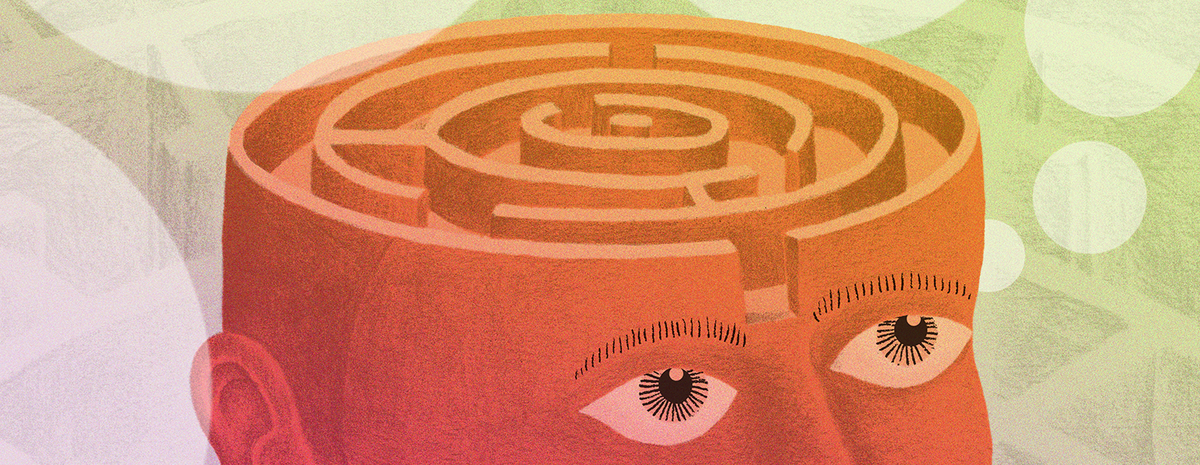
Ancient Greek mythology gives us the story of the Labyrinth. As I am not interested in analysing this from a Jungian perspective, we can safely ignore the Minotaur. The story of the labryrinth is a story for Moderns. It’s a teleological story based on the metanarrative that suggests that one can find order in disorder, if only they have the key.
As the story goes, the labyrinth is an unsolvable puzzle. However, at least one person knows how to solve it, or at least knows how to beat the system. Depending on the source version, Ariadne either assisted Theseus with a thread or jewels.
In a tl;dr version of the story, Theseus is tasked with killing the Minotaur. I’ve recently discussed his ship. Exposition informs us that the Minotaur is mortal, thus killable, but there is no escaping the maze—for reasons. However, Daedalus, the architect of the labyrinth, told Ariadne that there was one way out. If someone were to record their ingress, with say, a thread or jewels, they could then follow these to egress. Definitely not a plot device. Hansel and Gretel took this to heart and marked their ingress with breadcrumbs—or stones, depending upon which version you’re reading.
What Makes this Modern
Though the story of the labyrinth and the Minotaur comes from a pre-modern era, it remains an apt metaphor for modernity.
There is a deliberate underlying structure. In fact, it has been architected by Daedalus. This mirrors the Intelligent Design narrative favoured by Christians.
There is a definitive solution to the puzzle. The story is teleological. If one follows the plan, stays on the path, they will prevail. Go off-script, and perish.
This is a story about structure, about order, about adopting and conforming to the rules. Even though it’s also about gaming the system with cheat codes in more modern parlance. Nowadays, I’d turn off clipping and collision detection, but Ariadne didn’t know these codes. I digress.
Postmodern Reaction
This is not a story for Postmoderns because it starts with a design. For moderns, there is a design. It’s either a vestigial god or science. The belief is that everything has structure. Even if that structure is yet unknown to us. If only we had enough time, we could suss it out. Perhaps it’s past time to re-task Shakespeare’s infinite monkeys.
Reconciliation of this teleological belief is intractable. Rather, it can likely only be solved with rhetoric. Moderns love rhetoric, which explains why they have so much faith in Aristotle and classical philosophers, who still provide a foundation to much philosophy of the Moderns. It’s intractable in the same way that converting someone with some religious conviction to no longer have that conviction.
Modernism is about faith. It may have shifted from faith in gods to faith in logic and reason, science and technology, or organisation and progress. Postmodernism points out that whilst these are possible solutions, they are not the only solutions. Moreover, these have unintended consequences and create collateral damage. They also rely on a privileged perspective. Perhaps I’ll create a segment to illustrate this point using the disruption of COVID-19 as a backdrop.
In the end, Modernism relies on teleologies. The end may not be known, but we can divine a vision and lead people in that direction anyway by employing rhetorical devices. Postmodernism knows that any such narrative is fiction. A postmodern may emotionally buy into the narrative, but they never forget that it’s still fiction.
Modernism relies on order and control to maintain that order. This doesn’t mean that all Moderns are top-down authoritarians. But it does mean that they need crowd control and compliance. The United States are probably mostly Moderns. They like to claim they are individualists, but they are more typically either keeping up with the Joneses or competing with them. Most individuality is trivial at best. “I’m an individual because my BMW is purple.” Quite. And Moderns don’t like much non-compliance. They may want change, but if someone expresses this need for change through civil disobedience, the Modern may viscerally agree, but they will also rationalise that the civil disobedients should have used the admittedly broken system. Moderns like what they call progress, but they can only accept change in small doses at a slow pace, so there’s a friction.
Finally, there’s power. I am not going to rehash Nietzsche or Foucault, but this is a schism. Moderns want order and control. Power structures assist this, but then they don’t like the current actors. If only there were better actors. Nietzsche noted that the masters and the herd had different interests and moralities. Moderns know this on one level but think they can remediate this dichotomy. Because of course, they think they can bring order to everything—Second Law of Thermodynamics notwithstanding.
In the end, these schools will likely attempt to coexist. As for me, I’m a nihilist and somewhat of an existentialist. Yet, I am also a pragmatist as I still have to operate within the world I’ve been thrown into, as noted by Heidegger.
So, I’ve gone down a rabbit hole. Again. This time, it’s Žižek. Again. I’ve still not read any of Žižek’s own work, but people mention him often and he is a shameless self-promoter. In this video clip, he responds to whether gender is a social construct. Unfortunately, he conflates gender with sex, and his examples cite transsexuals not transgenders.
sex is about biological sex assignment
To set the stage, sex is about biological sex assignment—the sex category you are assigned into at birth: male, female, or other for some 1.8%. This is a simplistic categorisation: penis = male; vagina = female; both or neither: rounding error. In some cases, a decision is made to surgically conform the child to either male or female and ensure through prophylactic treatment that this isn’t undone hormonally in adolescence.
gender is about identity
Gender is about identity. As such, it is entirely a social construct. All identity of this nature is a function of language and society. In this world—in the West—, females wear dresses (if they are to be worn at all) and males don’t—kilts notwithstanding. In this world, sex and gender have little room for divergence. so the male who identifies as this gender (not this sex) is ostracised.
The example I usually consider first is the comedian Eddie Izzard—a cross-dresser. He’s probably a bad example because he does identify as a male. He just doesn’t wish to be constrained by male role restrictions and wants to wear the makeup that’s been reserved for women in the West at this time.
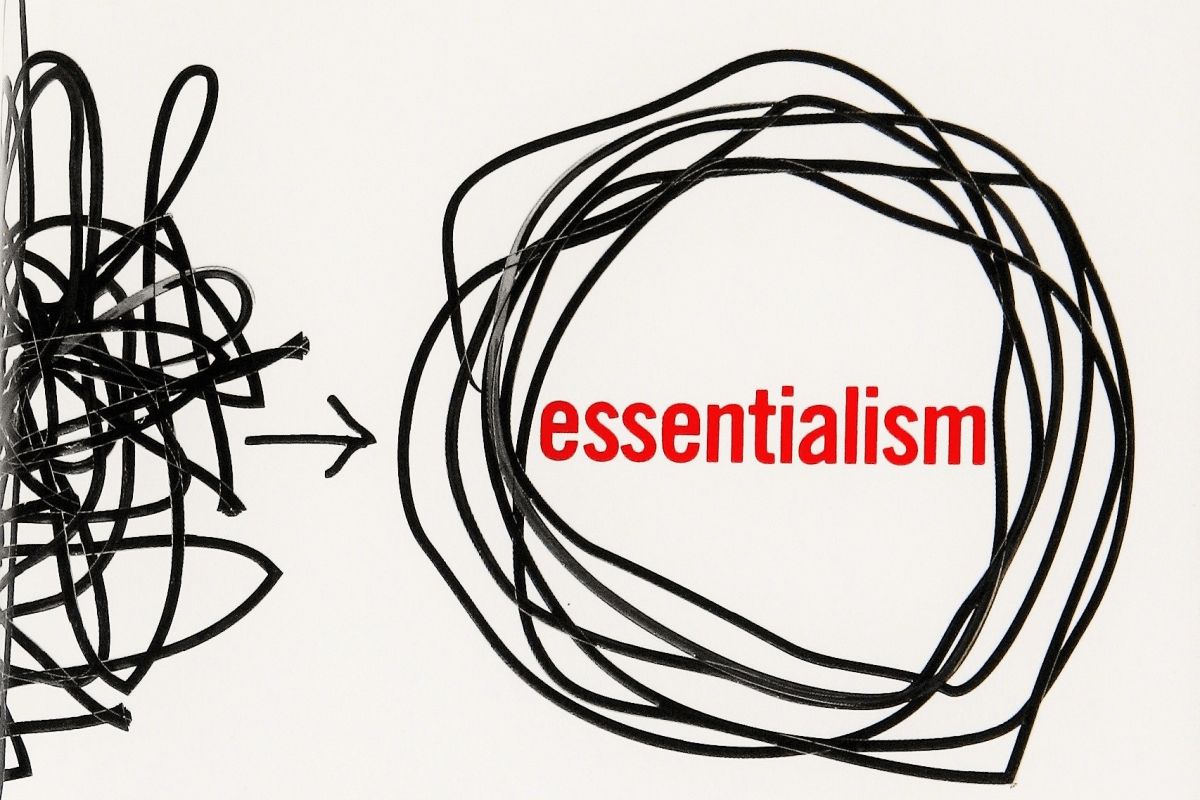
Žižek eventually gets to an argument about essentialism—so we’re back at Sorites paradoxes and Theseus again. At the start, I could argue that the sexual distinction has few meaningful contexts. For me, unless I am trying to have sex and/or procreate, the distinction is virtually meaningless. For others, only procreation remains contextually relevant. In this technological world, as Beauvoir noted in the late 1940s, strength differentials are not so relevant. End where they are, sex is not the deciding factor—it’s strength.
Žižek’s contention seems to be that the postmoderns (or whomever) disclaim essentialism in favour of constructivism but then resolve at essentialism as a defence because ‘now I am in the body originally intended’. I’ll argue that this is the logic employed by the person, but this person is not defending some academic philosophical position. They are merely engaging in idiomatic vernacular.
I am not deeply familiar with this space, and if the same person who is making a claim against essentialism is defending their actions with essentialism, then he’s got a leg to stand on. As for me, the notions of essentialism and constructivism are both constructed.
Chump in Chief* wrote a piece on dementia using analogue of the ship of Theseus. As a topic, Hobbes’** Theseus thought experiment has been well-covered, but that’s never stopped me before.
This is all about identity. Essentially, there are two perspectives. To an observer not on the ship or aware of the transformation, they would be none the wiser. For all intents and purposes, if they had ever seen the ship before, it’s the same. But what about those on the ship?
For nearly all of these observers, it’s almost unquestionably still the same ship. In a manner paralleling a person’s cells being sloughed off every 7 years, the cells in place at the start aren’t there after 7 years. Most will not doubt that you are the same person.
the average human cell is about 7 to 10 years old
As cells are continually dying and replacing themselves, for an adult the average human cell is about 7 to 10 years old, which might be interpreted as saying in the fashion of Theses’ ship that a person is anew each 7 to 10 years. Let’s ignore that this is an average, and many cells have a lifespan of only a few days whilst others—cerebral cells in particular—are here from the start and so are as old as the person.
Another perspective is to consider the replacement parts: would it matter if the colour of the parts changed in the process? What about the materials? What about the underlying architecture? What if the departing sloop arrived a schooner? Weight? What then?
My favourite extension of this thought experiment is to ask the question two-fold: Not only do we ask if this ship built with new materials is still Theseus’ ship—which to be fair is more a question of ownership than of identity—, but what if I reconstruct the original ship with the original materials. Are these both Theseus’ ships? Can we continue this exercise with new material ad infinitum?
As far as I know, we can’t repurpose cells in this fashion, but what if we could? There are many such Star Trek transporter mishap thought experiments, or the Duplicates Paradox.
In these experiments, a transporting device disintegrates the subject, and replicates the subject at a distance—but this replication presumably uses different atoms and cells, and so what if a duplicate copy is made rather than the replacement copy? Who’s identity prevails? Is it murder to eliminate one of the duplicates? Similar questions have played out in the science fiction / fantasy space.
Locke and others suggest that for people, memory and the continuity of thought are key, but your thoughts of me are not the same as my thoughts of me. This is why an amnesiac may no longer maintain some original identity, and yet to the familiar outside observer, this shell of a person remains intact. This is pretty much how it plays out with zombies and dementia patients. This sense of identity is projected upon the person rather than exuded from them.
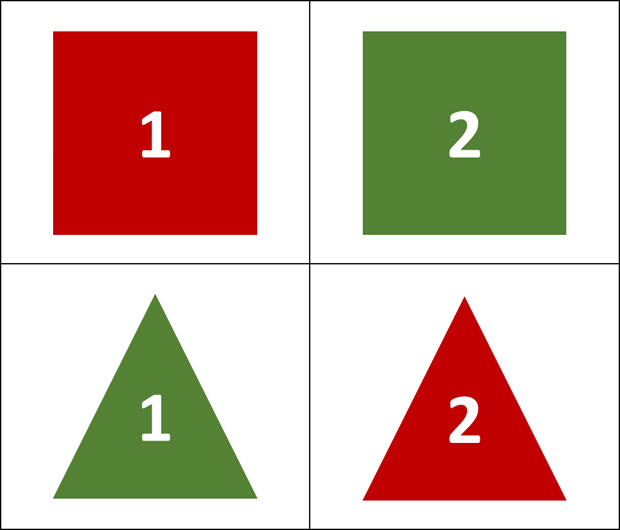
So what is my perspective? Rather than a paradox, it is more a problem of vaguity or ambiguity and how we’re defining sameness. There are many dimensions to similarity. I can present you a red square, a green square, a blue triangle, and a green triangle and play the Sesame Street ‘one of these things is not like the other game.
Is the sameness the colour, the shape, or the number? Could one be comparing area or perimeter?
So, I’ve gone off the reservation. I don’t put a lot of weight in notion of identity. It has evolutionary merit and is an effect of humans’ nature (as it were) to categorise and taxonomise.
* This Chief Chump charge may be unwarranted or even understated, as I don’t know this bloke. ** This is the same Hobbes with the ‘solitary, poor, nasty, brutish, and short’ claim to fame.




 Philosophics