Legibility Meets Humanity for Xmas

3–4 minutes

I’m no fan of holidays. I neither enjoy nor celebrate Christmas. I’m acutely aware of its commercial excesses and its religious inheritance, two institutions I find, at best, tiresome and, at worst, actively corrosive. Whether that’s abhorrence or simple loathing is a distinction I’ll leave to braver souls.

Still, calendars exist whether one consents to them or not, and this piece happens to land today. If Christmas is your thing, by all means, have at it. Sincerely. Rituals matter to people, even when their metaphysics don’t survive inspection.

What follows is not a defence of the season, nor a seasonal moral. It’s a small human moment that happens to involve Santa, which is to say a costume, a script, and a public performance. What interests me is not the symbolism, but what happens when the performance yields just enough to allow someone else to be seen on their own terms. If nothing else, that feels like a tolerable use of the day.

Audio: NotebookLM summary podcast on this topic.

What Legibility?

When I use the term legibility, it’s usually as a pejorative. It’s my shorthand for reductionism. For the way human beings are flattened into checkboxes, metrics, market segments, or moral exemplars so they can be processed efficiently by institutions that mistake simplification for understanding.

But legibility isn’t always a vice.

Video: Santa signs with a 3-year-old dear girl

Most of us, I suspect, want to be legible. Just not in the ways we are usually offered. We want to be seen on our own terms, not translated into something more convenient for the viewer. That distinction matters.

In the video above, a deaf child meets Santa. Nothing grand happens. No lesson is announced. No slogan appears in the corner of the screen. Santa simply signs.

The effect is immediate. The child’s posture changes. Her attention sharpens. There’s a visible shift from polite endurance to recognition. She realises, in real time, that she does not need to be adapted for this encounter. The encounter has adapted to her. This is legibility done properly.

Not the synthetic legibility of television advertising, where difference is curated, sanitised, and arranged into a reassuring grid of representation. Not the kind that says, we see you, while carefully controlling what is allowed to be seen. That version of legibility is extraction. It takes difference and renders it harmless. Here, the legibility runs the other way.

Santa, already a performative role if ever there was one, doesn’t stop being performative. The costume remains. The ritual remains. But the performance bends. It accommodates. It listens. The artifice doesn’t collapse; it becomes porous.

I’m wary of words like authenticity. They’ve been overused to the point of meaninglessness. But I do think we recognise performatism when we see it. Not in the technical sense of speech acts, but in the everyday sense of personas that ring hollow, gestures that exist for the camera rather than the people involved. This doesn’t feel like that.

Of course, the child could already connect. Deaf people connect constantly. They persevere. They translate. They accommodate a world that rarely meets them halfway. Nothing here ‘grants’ her humanity. What changes is the tightness of the connexion.

The shared language acts as a verbal proxy, a narrowing of distance. You can see the moment it clicks. He speaks her language. Or rather, he speaks a language that already belongs to her, even if calling it ‘hers’ is technically imprecise. Mother tongue is a slippery phrase. Irony does some of the work here.

Legibility, in this case, doesn’t make her smaller. It makes the interaction larger. And that, inconveniently for our systems and slogans, is what most people have been asking for all along.

Jung and Catholic Ritual

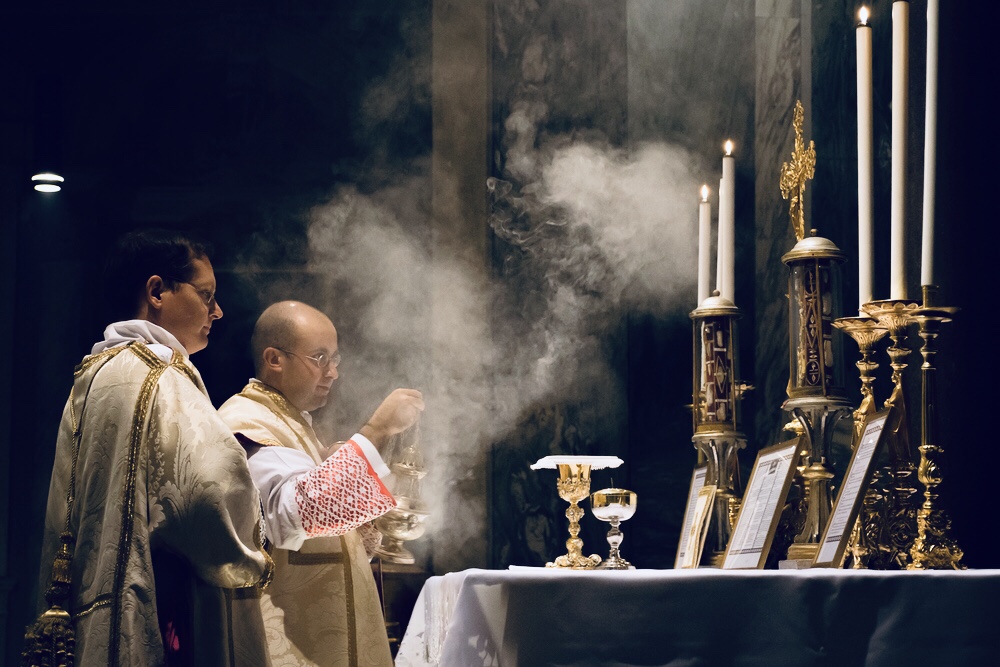
I was chatting with some Catholics on Social Media, responding to a post about the need to grow their base. I sympathised that it must be difficult because the product of organised religion was not exactly tailor-fit. Protestants have provision for roll-your-own, but not Catholics. This led me to a discussion about what Jung wrote about rituals – that it doesn’t matter if the underlying rationale was remembered because some people like ritual for its own sake – candles, incense, wafers, whatever.

(I studied Jung intensely in the mid-’90s, and while I still find him useful as metaphor, I don’t take his broader metaphysics seriously anymore – too mystical for my tastes. But this particular insight about ritual sticks.)

Follows are the unedited results.

Yes, and Jung was being quietly subversive about it. He was pointing to something most modern institutions would rather not hear.

For Carl Jung, ritual doesn’t need to be true in the propositional sense to be effective in the psychological one. Its power doesn’t reside in correct belief, historical accuracy, or even conscious assent. It resides in repetition, form, symbol, and the way those elements bypass the rational gatekeeper and go straight for the nervous system.

Which is precisely why ritual unnerves modernity.

Once you accept Jung’s claim, you’re forced to concede that meaning is not the primary engine of human orientation. Function is. A ritual can continue to stabilise, contain, and organise psychic life long after its original metaphysics has decayed, been forgotten, or become frankly unbelievable. The candles still work even if God has quietly slipped out the back.

This is deeply inconvenient for Enlightenment-descended sensibilities, which insist that symbols must justify themselves, that practices require reasons, and that belief precedes action. Jung flips that on its head. We act first. We kneel first. We chant first. Understanding, if it arrives at all, comes later as a kind of aftercare.

Which helps explain your mate’s conversion without invoking any sudden metaphysical awakening.

Catholic ritual functions even when belief wobbles. Protestantism, having stripped ritual back to avoid superstition, leaves belief carrying all the weight. Once belief falters, there’s nothing left to hold the structure together. No choreography. No inherited muscle memory. No symbolic surplus. Just a sermon competing with the rest of the week’s content.

Jung saw this coming. He understood that modern people would continue to need ritual even as they lost faith in the stories that once justified it. His worry wasn’t that people would abandon religion. It was that they would abandon ritual competence and then wonder why anxiety, fragmentation, and compensatory myth-making flooded in through the cracks.

From that angle, Catholicism’s current crisis looks different again.

The conservatives think ritual must be defended because it encodes truth.
The progressives think ritual can be loosened because truth can be updated.
Jung would have said both are missing the point.

Ritual persists because it does work that language cannot do. It orders time. It disciplines the body. It makes the invisible feel locally real. Strip away the incense, the repetition, the inherited forms, and you don’t get a purer faith. You get an exposed psyche scrambling for substitutes.

So when someone says, “I’m drawn to Catholicism because of the candles and incense,” they’re not being shallow. They’re being honest in a way theologians and sociologists often aren’t. They’re admitting that humans are not primarily convinced creatures.

They are conditioned ones.

Jung didn’t romanticise that fact. He warned about it. But he understood it well enough to say the thing modern institutions still resist admitting:
you can drain a ritual of meaning and it will still shape lives long after the doctrine has stopped persuading anyone.

Insurrection Bandwagon

There was a recent insurrection at the United States Capitol building in Washington, DC. I won’t take any more time discussing whether this is hyperbole or real. In the end, it doesn’t matter. It’s not relevant to the solution.

From the perspective of propaganda, it’s been an effective message. It’s gotten Trump haters and supporters to view Trump as a common enemy—some of them anyway. Some people and entities can’t performatively distance themselves fast enough or scapegoat him loudly enough.

Whilst I do feel that much of the hullabaloo is performative, I’m not going to focus on the performative aspect. This serves to amplify, but it’s not the central message. Instead, I’d like to frame this through the lens of René Girard’s mimetic theory of conflict and resolution.

Adopting Girard’s vantage, we can see each of mimetic desire, scapegoating, mimetic crisis, ritual, sacrifice, and culture.

Mimetic Desire

In a social context, mimetic theory is about creating in-groups and out-groups—and intentionally so. Groups have rules, by which membership is governed. Symbols are employed to amplify belonging and compliance. At it’s core, mimetic desire employs mimesis—imitation. Monkey see, monkey do.

Here, society is the prevalent in-group. From their perspective, this is the us of the in-group versus the them of the out-group. Girard noted that us versus them is evident in many contexts—whether in the wild or otherwise—, and it can be exploited. It’s about creating a flag to rally around—in this case literally, figuratively speaking.

The mechanism of mimetic desire is to coalesce the focus on some object. From the positive dimension, the desire is to belong, but mimetic desire doesn’t have to be positive. As in this case, it can be negative. The masses have assembled for a common cause of vilifying one Donald J Trump.

Mimetic Crisis

The insurrection is the mimetic crisis. It broke the rules. It’s unclear how all of the many rules that were broken in the four preceding years were able to fly under the radar. To some extent, the US government is constructed of two nearly equal in-groups. They each belong to the institution of institutionalised government and so-called Republican ideal as an expression of modern Democracy. They share some common beliefs, but this sharing diverges dimensionally and methodologically. The telos are multi faceted, and each group prefers different facets—and the facets desired by the public are different still.

At first—to borrow from Kübler-Ross—, there was denial by the Trump-aligned party of sycophants. These Trump-aligned Republicans (read: Neoconservatives; UK: Tories) were also aligned with the outgroup, leaving them vulnerable to ostracism. Meanwhile, the Democrats (read: Liberal/Neoliberal; UK: Labour) secured the moral high-ground and control of the larger in-group. They painted themselves as the adults wearing big boy trousers (over their Pull-Ups).

Scapegoating

Scapegoating is instrumental in mimetic theory. It’s a mechanism to build solidarity and cohesion through exclusion. Narratively, it operates to distinguish acceptable behaviour versus unacceptable. In almost all instances, scapegoating is an object to project blame.1 The remaining members have received the signal.

Here, we have two entities to scapegoat 2: the insurrectionists and the Instigator in Chief, soon to be ex-president, Donald Trump.

Ritual

Ritualistically, scapegoats need to be bear the brunt of the anger of the in-group and associated friends and family. There are procedures to follow. These rituals play out in the House in the form of impeachment, and in the Senate in the form of conviction. For the uninvited guests, the traditional court system ritual

Part of the outrage is performative ritual. Certain entities are checking the boxes suggested by their PR teams. These same entities had nothing to say for the past four years as they’ve enriched themselves at the expense of the American public and world, but this was the last straw. They vowed to cut off support and funding —until they don’t, but by then no one will be any the wiser. People have both short attentions spans and memories.

There is no requirement whatsoever that rituals produce anything. As hard work is its own reward, ritual for the sake of ritual is all that’s necessary. Rituals needn’t be authentic or heartfelt. Simply mime the parts, and you’re all set. Plus, you get full credit—participation points just for playing.

Sacrifice

One ritual is to sacrifice the goats, but we need only exile the offending members. In Christian lore 3, there are actually two goats—a sacrificial goat and an emissary goat—the scapegoat. The sacrificial goat is, obviously, sacrificed—burnt offerings—, but the emissary goat was released into the wilderness, taking with it all sins and impurities. This is the excommunicated, the shunned.

Culture

Where performatism really comes in, is cultural signalling. People and other entities work overtime to signal they are on the winning side. This includes everything from Oscar-winning performances to cringeworthy Razzie-candidates. Those in the public eye tend to go overboard. It’s good to remember that an empty vessel makes the most noise.


  1. The notable exception to this scapegoat-blame relationship is the Christian Christ myth, where Jesus acted as a scapegoat but was without blame.
  2. Trump and the Scapegoat Effect, The American Conservative, David Gornoski, September 1, 2016.
    An interesting article discusses the Trump-scapegoating phenomenon that also mentions René Girard’s work.
  3. Leviticus 16:21–22