Atheism Defence

Curse YouTube and Drew—but in a good way. Drew created a video titled I took a Christian class about atheism. It was worse than I expected. Although I don’t find I need to engage with anyone to defend my atheism, I sometimes do. Perhaps, the devil made me do it. I’ve been an atheist for decades—literally for at least half a century. (Man, that’s revealing.)

Spotify Link

The magic gods of social media tossed this gem in my face, and I was fated to watch it—a 45-minute video nonetheless. Who posts long-format content on YouTube these days? Honestly, I didn’t think I was going to watch the entire thing—at least without skipping ahead.

I jotted down my thoughts—on paper no less—as I engaged the content. But before delving into that, I want to say that Greg Koukl is a formidable communicator. He knows how to engage his audience. Drew, the Genetically Modified Skeptic, is a strong communicator himself, employing cogent logic in defence of atheism—well-considered and articulated. Although I was watching the clock—cuz 45-minutes; plus I was stopping to take notes. Capturing a couple dozen bullet points, I’d comment here instead of in situ. I’ll link from there to here when I’ve published my reaction.

Drew responds so well that, generally, I avoid stepping on his responses, with which I am in agreement. Instead, I share my own observations either on topics Drew did not address or that I have a nuanced take on.

Below are the points I make with a time reference to the clip. In some cases, the link starts earlier than the point I am addressing if only to provide a reader with context.

3:25 Greg points out that he is going to focus on areas where Christianity can make sense but atheism cannot.

Response: Things do not have to make sense. This is a belief humans impose on the world. Even if one believes in a world of causes and effects, it does not follow that we have a privileged perspective into these causes. Some effects may be caused by any number of correlated and covariant factors, and to claim that A causes Z, because it’s expedient and somewhat linear over some more complex multifactor causal model, is weak tea. As humans, we want things to make sense. It’s effectively in our nature, but it doesn’t follow that the universe needs to comply with this need. Human psychology compensates knowledge and perception gaps with any number of tricks from Gestalt to apophenia. It may be comforting for some to use gods as putty to fill the cracks, though, in my mind, it’s rather Silly Putty.

3:35 Greg defines the terms theism and atheism. Drew points out the reduced, self-serving definitions Greg tries to slide by.

4:44 Greg tries to frame atheism as an assertion rather than an absence, so he can fabricate a strawman to attack.

Response: As Drew points out, this is sometimes, but not always, true. Here my thoughts (or soul, as the case might be—orthogonal, or otherwise) wandered to the Dawkins Scale, which parses atheism and agnosticism into a spectrum rather than a binary pair. Idiomatically, it’s a non-assertion. If you claim there’s a dog in my yard, it’s incumbent for you to provide evidence. If I claim, there is no dog in my yard, I am under no such obligation. Besides, my looking for evidence of a non-dog in my yard would require additional scrutiny. Perhaps it’s hidden.

Moreover, Greg attempts to make this a semantic issue. Drew points this out. For me, I reflected on the political situation where some cohorts within the US public decried Obamacare (AKA the Affordable Care Act or ACA) and yet were substantially supportive of its features. Obamacare acted as a pejorative to taint the act with negative connotations for Obama detractors. People’s cognitive faculties as deficient as they are, this was super easy—barely an inconvenience. Anarchism triggers the same sort of reaction. I attribute this to an unceasing negative propaganda/indoctrination campaign.

9:00 We have reality on our side.

Response: Translation: We have subjective experience, and we are going to pose this as some objective reality.

9:40 Greg asks: Where did everything come from? What caused the beginning of the universe.

Response: Where is thy stuff? I don’t even need to engage this question directly because the chestnut of an argument he is presenting has a recursion problem. If everything needs a beginning, then God needs a beginning. This argument just kicks the can down the kerb. And ‘He just is‘ works just as well as ‘It just is‘. Nuff said.

11:25 Greg recounts a scenario where he purportedly asks a recently converted atheist, Do things exist? to which the subject responded affirmatively.

Response: The nature of existence and reality is not resolved science. ‘“Things” are perceived‘ is about the best we can get to at this moment in time, and this doesn’t even define things very precisely.

11:30 Have things always existed? is the question posed next.

Response: I like Drew’s response here. Instead, I went to the definition of time because the notion of time is a social construct. It could be that there was a Biblical void from which the universe sprang whole cloth as depicted in the Genesis version or a Big Bang version. It could as well be that at some point time was invented. An imperfect analogy is the BCE-CE split. CE simply starts at year 1 and we’ve run with it. The universe doesn’t have an equivalent notion of BCE, but perhaps it’s similar to spinning up the universe as a virtual machine. There was a literal void of bits awaiting a cue to instantiate a VM universe. For all intents and purposes, this is the beginning of time for that virtual machine. In this example, we could extend the metaphor to a multiverse, or we could stay with a physical machine and virtual machine metaphor. Sure, the physical machine might be a god or another meta-universe—I refuse to say metaverse—, but the virtual machine has no insights earlier than its own time-zero.

The other things Greg’s approach misses are the notions of quantum mechanics and emergent properties. I won’t spend any time elaborating here.

16:50 A big bang needs a big banger!

I addressed this regressive Big Banger point earlier. Moving on.

20:00 Explanatory power of intuitions

Response: Without getting into the weeds of Kahneman and Tversky’s Systems 1 and 2, intuition and heuristics have a place, but they are very fallible for all but the most mundane of tasks. They are not very precise and are a poor foundation for any theory. I can feel it in my bones just doesn’t go very far—and that includes intuitions about reality

22:15 The problem of evil is apparently the most common objection to the existence of God.

Response: This is a sophomoric position to adopt. Greg tries to frame this as an out-there objective reality affair as opposed to an in-there subjective, emotional problem. He posits that things in the world—including people—are inherently bad or evil. Again, Drew reframes this as a uniquely Christian problem. As for me, I don’t even believe in the existence of evil. Good and bad are functional yet still social constructs. Evil is just trebled bad with a metaphysical twist. The problem with evil is more of a problem with bad narrative than anything more substantive. Somebody created a storyline and didn’t run it by strong editors or continuity reviewers.

26:15 Lawmaker Transcendence: In order for there to be laws to be broken, there have to be laws

Response: Knowing his intended audience, Greg keeps hammering on the objective reality nail. Whilst this may play well to the choir, as Drew points out, it’s not likely to score any points in a debate with atheists. Morals, as well as laws, are social constructs. And as universals, they don’t map as closely across cultures except at the most abstract of levels.

It should go without saying that even if there were a god passing out commandments, there would be no way to validate the authenticity of this exchange.

32:30 All people have souls… You are not just a piece of meat in motion

Response: Just rambling. I’m not even going to waste my time on this one except to redirect you to my previous response relative to human psychology and apophenia.

34:00 A soul is not a brain

Response: This bit is juvenile, too. Here Greg explains that the soul is not the brain, that you can’t disassemble your brain to find thought. But, he doesn’t mind ignoring that your soul is nowhere to be found either. This feels quite similar to the need for a creator, but these evidentiary needs don’t apply to their positions. Drew’s computer analogy is apt here.

39:10 Existential crisis is a problem for Greg and other Christians.

Response: Because Christians are wired the way they seem to be, any modality that severs the connection to meaning sets them off. Greg confuses hubris and ego for something more substantial, attributing meaning to it. As it happens, people also cherish their pets more than some random squirrel.

40:30 Humans feel guilty because humans are guilty.

Interestingly, there is a school of belief, psychologically speaking, that the default state of humans is one of anxiety, but given that I don’t give psychology any more credibility than religion, I’ll just leave that here. People feel guilty because they are indoctrinated to feel guilt. A hypothetical person raised on a desert island or in the woods, like Victor, the feral child of Aveyron, or in the jungle, like Tarzan or Mowgli, would not know guilt, empathy, shame, or any of a host of other social “emotional” responses.

All told, Greg raised nothing new nor offered any new support for Christian belief, let alone a broader theistic defence. Ostensibly, the approach he takes is more akin to choir preaching than any other rhetorical purpose. In the end, he’s promoting a smug superiority complex in believers. He understands that although people will accept blind faith rationale for religious belief—especially those indoctrinated from birth—that people do have a mild penchant for rationality. I don’t think most humans operate beyond a cursory level of reasoning, but it’s enough to exploit and construct social reflection mechanisms as part of personal image-building. This allows Greg to propose a homoeopathic logical, rational framework and have it uncritically adopted as being rational.

As for otherwise rational Christians, they likely see through the charlatanism, but since emotion proceeds reason, they are allowed to check out and compartmentalise this nonsense whilst otherwise simultaneously retaining the ability to process the most challenging and tortuous logical conundrum.

exstinctionem hominum

Would human extinction be a good thing for the good of the planet? We’re all familiar with the concept of the greater good, but what is the domain of the greater? We presume it to be the domain of all humans or at least our chosen in-group. But if we dilate the aperture, we might encircle the entire biosphere. In my experience, humans rarely extend the circle beyond themselves and barely even do that, opting to extend it to their race or tribe. Whilst some humans are not as self-centred as some narcissists and sociopaths, the radius doesn’t go too far.

Human beings really are this virus upon the earth, and the earth's running a fever, you know? If you step away from that kind of inherent human sentimentality and just look at it neutrally, the universe is neutral morally. —Eef Barzelay

Is one a misanthrope if one considers the greater good to be the earth devoid of the human virus? Perhaps, yes, if stated in those terms. But if one calculates that humans do more harm than good, doesn’t the cost-benefit calculus indicate that fewer people or no people would be better for the earth. I’ve long been fond of the late George Carlin’s routine where he proses that we don’t have to save Earth; the earth will remain long after humans no longer inhabit it. It’s been said that 99.9% of species that ever occupied the earth as no longer extant. Humans are past the mean duration of a species. Perhaps it’s time to move on.

I started to write this post some time ago after having had a discussion on antinatalism. Rather, I defended anti-natalism in the course of a conversation on the inherited notion that humans as sacred.

I supposed I am not a strict antinatalist, but neither do I feel that life is somehow sacred. Mine, of course, but except that. Just kidding. If you are reading, yours is, too. Just kidding, not you either. Interestingly, this ties into the post on the narrative gravity of the self.

As I write this in a world with a population of almost 8 billion people dominated by a handful and no picnic for that lot either, there are likely enough people already. I do feel that even if population trends continue upward—given offsetting depopulation trends in some regions—, humans will cap out at around 10 billion anyway. Perhaps in a Malthusian manner, but I am thinking in terms of deer herds and population limiting factors as expressed by equations like Xn-1 = rxn(1-xn).

Life does appear to have at least common characteristics and perhaps only one: the need to procreate. The second is the need to live, but that can probably be reduced to the need to live long enough to procreate. This is core to Richard Dawkins’ Selfish Gene theory. I like Robert Sapolsky’s treatment of the subject in Behave: The Biology of Humans at Our Best and Worst.

The concept of ‘sacred‘ is a religious vestige. I’m not sure why this needed to be codified, but religious dogma seems to capture the notion ‘thou shalt not kill’, as if it needed to be said. I won’t spend any time on the hypocrisy of the many people who espouse this edict.

Except for that motherfucker right there!

It may be a valid position to consider me a misanthrope, but that’s probably overstated, but I’m generally not a fanboy. I guess what bothers me most is the hype and self-promotion. I don’t find it to be particularly inconsistent to see the small positive aspects humans bring and still consider them to be parasitic. This is a compositional challenge–a dimensional consideration that moves away from binary-trending heuristics, the age-old right and wrong, good and bad, good and evil, and on and on.

As with geocentrism, we put ourselves at the centre because this is how we experience life—inside out. All else seems to extend from this model, except there is no centre. It’s just our perspective. I experience life the same way. I’m no exception. Nonetheless, I don’t seem to need to cling to this central notion—this notion of centrality.

When all is said and done—when the last human has made their exit, there will be no epilogue or postscript, afterword, or coda. Humanity is a story in need of a narrator. The ongoing codicil will cease, and to copy-paste the high art of Monty Python’s parrot sketch:

E’s not pinin’! ‘E’s passed on! This parrot is no more! He has ceased to be! ‘E’s expired and gone to meet ‘is maker! ‘E’s a stiff! Bereft of life, ‘e rests in peace! If you hadn’t nailed ‘im to the perch ‘e’d be pushing up the daisies! ‘Is metabolic processes are now ‘istory! ‘E’s off the twig! ‘E’s kicked the bucket, ‘e’s shuffled off ‘is mortal coil, run down the curtain and joined the bleedin’ choir invisible!! THIS IS AN EX-PARROT!!

Monty Python – Pet Shop Skit

Consciousness Is Religion

I expect that consciousness is a human nominative concept. Like religion, it will become smaller as science encroaches. In 1994, David Chalmers presented his idea of the hard problem of consciousness in a lecture, Toward a Scientific Basis of Consciousness, but I feel this is more due to the insufficiency of language than anything else. To me, consciousness isn’t well defined. It’s like a medical syndrome. It’s just a grouping of seemingly related conditions that haven’t yet been parsed. In time, it may be determined that they weren’t even related in the first place. Apophenia and cognitive dissonance are two significant human biases that affect perception.

At core, consciousness might be functionally reduced to that of an interpreter. Some have posited that the only thing that exists is ‘information’, whatever that means, so there only needs to be an interpreter—a translater. If that interpreter is defined as consciousness, then so be it. This appears to lead us to a Cartesian place—though it doesn’t follow that the self or ego exists. This would be a second-order event.

Anyway, just rambling. As seems to be the case lately, I’ve got little time to develop my thoughts. At least I’ve captured them for now.

Dear diary…

Your Morals

I was commenting elsewhere on morals and was directed to Jonathan Haidt and his work. Notably, the questionnaire at YourMorals.org, where you can get your own assessment and contribute data points to the body of work.

Full disclosure: I am not a fan of this type of survey, as I’ve mentioned previously. Still, I made an attempt. Better still, I’ve copied the questions to critique. There are 36 all tolled. Perhaps, I’ll respond to a dozen at a time. The next dozen responses are here. Generally speaking, they present each question and provide a Likert scale as follows:

  1. Does not describe me at all
  2. Slightly describes me
  3. Moderately describes me
  4. Describes me fairly well
  5. Describes me extremely well

Standard fare. It starts off bad:

1. Caring for people who have suffered is an important virtue.

Why include an abstract concept like virtue? I don’t ascribe to the notion of virtue, so it’s an empty set. Given that, my response would be a 1. If I ignore the offensive nomenclature and assume it translates idiomatically into ‘beneficial for some target society’, then I still have to question what is meant by suffering, and how far does caring extend. Is it enough to feel bad about the homeless person, or does one have to care enough to provide sustenance and shelter? Talk is cheap.

2. The effort a worker puts into a job ought to be reflected in the size of a raise they receive.

This is fraught with all sorts of problems. In fact, it’s a reason why I consider myself to be a Postmodern. The inherent metanarrative is that societies are effectively money-based. I don’t happen to believe that, so I am again faced with responding to an empty set. Even if I attempt to abstract the ‘raise’ aspect to mean that effort represents input and output is a direct and (perhaps) proportional function, I am still left to wrestle with how this effort is measured and what could have been achieved had the others not been present.

Using a sports analogy—always a dangerous domain for me to play in—, what if LeBron James was to play an opposing team by himself? He needs the other team members. Of course, his teammates are compensated, too. But in his case, his salary is not only based on his athletic talent but on his celebrity power—rent in economic parlance. Perhaps LeBron makes a lot of baskets, but without the assists, he’d have fewer. And because he is the go-to guy, some other teammates might be sacrificing baskets as part of their winning strategy.

Finally, how do you measure the effort of an accountant, a janitor, and an executive? The question is fundamentally bollox.

3. I think people who are more hard-working should end up with more money.

On a related note, I can abbreviate my commentary here. Again, what is harder? Are we asking if construction workers should earn more than CEOs? More bollox.

4. Everyone should feel proud when a person in their community wins in an international competition.

Yet, again, an empty set and a sort of mixed metaphor. I don’t agree with the notion of identity and even less at scale—states, countries, and nationalities. Putting that aside, why should I derive pride (that cometh before the fall) because someone succeeds at some event anywhere? It’s facile. If the question was focused on whether I would be happy for that person, the answer might shift up the scale, but where would I have derived pride for that person’s achievements?

5. I think it is important for societies to cherish their traditional values.

First off, why? What values? Not to beat a dead horse, but what if my tradition is slavery? Should I cherish that? This is really asking should I cherish the traditions of my society. Clearly, it’s not asking if other societies should enjoy the privilege of cherishing theirs? From the standard Western vantage, many want to cherish their own, but not Eastern values of eating dogs or Middle Eastern values of burqaed women and turbans. Is this asking should the world subscribe to my society’s values? I’m not sure.

6. I feel that most traditions serve a valuable function in keeping society orderly

Speaking of tradition… We are not only dealing with the vague notion of tradition, we are discussing another vague concept, order, and elevating order over (presumably) disorder. Order connotes a status quo. And why is the superlative most present? Has someone inventoried traditions? I believe I am supposed to translate this as ‘I feel that the traditions I am familiar with and agree with help to create a society that I am content with’. Again, this betrays the privileged perspective of the observers. Perhaps those disenfranchised would prefer traditions like Capitalism and private property to be relics of the past–or traditions of two-party rule, partisan high court judges, or money-influenced politics, or politicians serving themselves and their donors over the people or Christmas.

7. We all need to learn from our elders

Learn what exactly from our elders? Which elders? The bloke down the block? That elderly Christian woman at the grocery mart? The cat who fought in some illegal and immoral war? The dude who hordes houses, cars, and cash at the expense of the rest of society? Or the guy who tried to blow up Parliament. I believe this is asking should we learn how to remain in place as taught by the privileged wishing to maintain their places.

8. Everyone should try to comfort people who are going through something hard

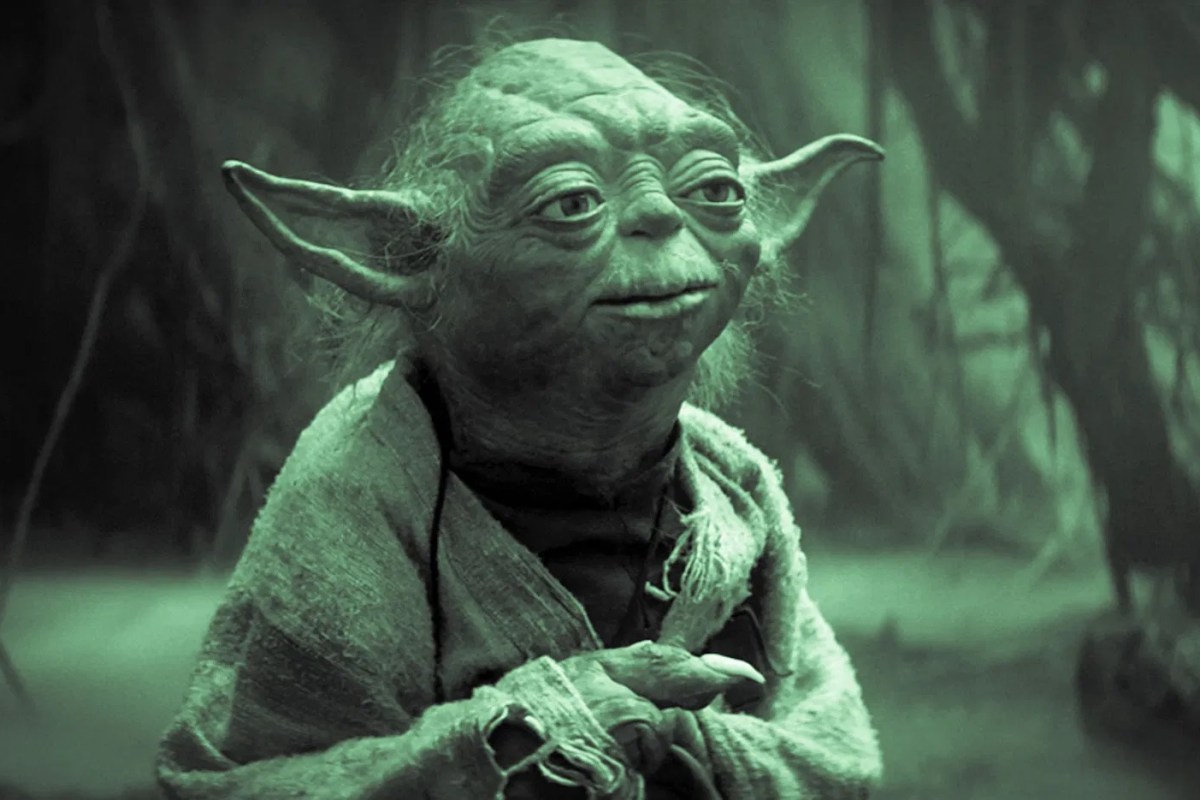
Define hard, and define comfort? This harkens back to the first question. Enough said. As far as lying is concerned, we should by now all be familiar with the adage trying is lying. Or as Yoda would restate it, do or do not, there is no try.

9. I think the human body should be treated like a temple, housing something sacred within

Obviously, this one is total rubbish. Here, I don’t have a structure that makes it difficult to answer. I may have sprained my eye rolling it, though. This said, what is a temple treated like?

10. I get upset when some people have a lot more money than others in my country

This one is interesting. Whilst I don’t believe that countries or money should exist. In practice, they do. So on its face, I can say that I get upset when we are thrown into a bordered region and told we need to exchange paper, metal, plastic, and bits for goods and services–that some people have more and others have less primarily through chance.

11. I feel good when I see cheaters get caught and punished

Which cheaters? Cheating requires perspective and a cultural code. It can privilege the individualist over the communalist. This reminds me of the cultures that are more interested in ensuring that all of their members finish a contest than having any one win.

Academically, it is considered to be cheating to work together on an exam because the individual is being tested. Of course, the exam is on certain content rather than on the contribution of the human being.

Again, the question feels targeted at cheaters getting caught circumventing something we value. If someone cheats becoming assimilated into some military-industrial society, I will encourage and support them. If they get caught and punished, my ire would more likely be directed toward the power structure that created the need to cheat.

12. When people work together toward a common goal, they should share the rewards equally, even if some worked harder on it

I’ll end this segment here on another question of meritocracy. I think it’s fair to judge the authors as defenders of meritocracy, though I could be wrong. This feels very similar to some other questions already addressed. The extension here is about sharing the rewards, whatever that means. Are we baking a cake? Did we build a house for a new couple? Did we plant trees in a public park? Did we clean up litter on a parkway? Did we volunteer to feed the homeless? And what was the work? Again, how are we measuring disparate work? Did the chicken farmer work harder than the cow farmer? Did the carpenter work harder than the organiser?

If the remainder of these questions is different enough, I’ll comment on them as well. Meantime, at least know you know more why I have little faith in the field of morals. This does nothing to change my opinion that morals are nothing more than emotional reactions and subsequent prescriptions. I don’t mean to diminish emotions, and perhaps that might be a good central pillar to a vibrant society. I’ll need more convincing.

Organised Government

Is organised government already on the same downward spiral as organised religion?

Faith in government is low. Without exception, the system has weakened and is clearly broken. The same power corruption that is bringing down organised religion is weighing heavy on governments.

In the US, Canada, and the UK, governments have become polarising entities, and most participants don’t even try to practise statesmanship. Perhaps not the governments, per se, but the forces trying to wrest control. It’s usually us versus them. This has been going on for about half a century and accelerating. Regarding religion, we hear many say they are spiritual or have faith, but they eschew the structure of religion. What is the parallel for government?

Its easy to support the concept of government—or at least of governance—and still complain about the particular instantiation: Trump’s Republicanism is good, but Biden’s Democracy is bad, and vice versa. But I’ll argue that organised government as an institution is as fatally flawed as organised religion.

organised government as an institution is as fatally flawed as organised religion

Government participation like that of religion attracts sociopaths and power-mongers. Are there acceptions. Yes. Are these people corruptable? Yes. Do the become corrupted? Some. Many simply become complacent.

In religion, some defend that they are spiritual but not religious. In politics, we have quasi- and pseudo- anarchists and Libertarians who just haven’t yet realised the source of their malaise, so they tilt Quixotically.

People haven’t quite sussed it out and can’t really seem to put their collective fingers on it, but it’s not governance most of us don’t like, it’s the misuse and abuse of power—as rendered by the NASCAR-themed political meme.

In the current environment, it’s ‘the other party’ that’s the problem. I hope that as with religion, we’ll see a turning point where people realise that it’s the system, the organisation, that’s the problem, not some aspect of it. It’s not a few bad apples. Like in a Stephen King novel, it’s the barrel that’s possessed. That barrel is the system.

Should the Criminal Justice System Be Abolished?

Much of jurisprudence is based on logic founded on faulty premises of regurgitated theological concepts shrouded in naturalistic theory and pseudoscience. This is not about the defund the police social trend of 2020. This is to say that the justice system is smoke and mirrors writ large. It’s ostensibly built on anachronistic concepts such as volition, evil, soul, blame, and forgiveness that should be tossed into the dustbin of history along with phrenology, humours, and will.

The titleof this post is taken from Robert Spapolsky’s proposed chapter concept for Behave, published in 2017, where until now, it’s languished on my Want to Read list, having entered via the vector of my interest in behavioural economics. Chapter 16 was eventually published with the title of Biology, the Criminal Justice System, and (Oh, Why Not?) Free Will.

I’ve been writing for years about the nonesensical attachment to these notions, so it gives me comfort in solidarity to discover others who share, at least to some degree my perspective, knowing, of course, that this doesn’t make this perspective any more correct.

To be fair, I’ve held a low opinion of so-called justice (and government) systems pretty much since I was taught about them almost 50 years ago. In the US, much teaching is really propagandising about how fair these systems are and how peers and reasonable persons concepts make is superior. In my mind, those were the being failings. Later, when I hopped onto my language insufficiency bandwagon, it only fell apart more. Kafka’s The Trial represents the internal workings of most justice systems than the logic and reason of propogated but proponants.

Stopping here. Much to do. I recommend reading Behave. If you’ve read it, I’d love to see what you thought about it.

Compatible with Compatibilism?

Full Disclosure: I consider myself to be a determinist. I looked for something like Dawkins’ spectrum of theistic probability to evaluate where one might be oriented on a scale of free will to determinism to fatalism whilst also considering compatibilism.

Dawkins’ spectrum of theistic probability

Let’s lay some groundwork by establishing some definitions from most constrained to least:

  • Fatalism : a doctrine that events are fixed in advance so that human beings are powerless to change them
  • Compatibilism : a doctrine that maintains that determinism is compatible with free will
  • Determinism : a theory or doctrine that acts of the will, occurrences in nature, or social or psychological phenomena are causally determined by preceding events or natural laws
  • Freewill : freedom of humans to make choices that are not determined by prior causes or by divine intervention

It seems that freewill and fatalism are bookends with compatibilism attempting to moderate or synthesise freewill and deteminism. But it also seems that one’s selection may be contexual. Ultimately, this argument is fraught with semantic challenges insomuch as some underlying concepts are yet unresolved.

Crash Course Philosophy does provides a nice summary of the challenges in defending even compatibilist positions away from detemininism and even fatalism.

As this video notes, our choices may appear to be free, but it doesn’t take much effort to perform a 5-whys investigation to remove anything but homoeopathic amounts of agency.

Taking a short example, let’s look at the cases of the trial judges mentioned by Sapolsky (Behave) and Kahneman (Noise). Given all of the factors entering into sentences, prior offences, sex or gender of either the defendant or the judge, education, income, and so on, but far the largest factor in determining the length or severity of a sentence was the time between the sentencing and the judge’s last meal—effectively their blood glucose levels.

Some may argue that this is a short interval, but behaviourists would argue that a person now is a culmination of all of their experiences to date. That the decision of the so-called criminal to rob the liquor store (going for the stereotype here) was not the result of low blood sugar. This may be true, but there is still an unbroken chain of confluent events that brought them to that place.

From a culpabilty perspective, even absent true agency, the offender should still be incarcerated or whatever to prevent this behaviour from repeating. Of course, if you believe in rehabilitation, you are necessarily a behaviourist in soem shape or form: the idea is to effectively repattern experience impressions. The other problem is one of probability. That you did X once, are you lilkey to do it again? If not, then there is no further risk to society, as it were. Given the probability of recitivism—and some argue that mass incarceration increases the probability or attempting criminal actions post-release—, is this even an effective deterence? It’s time to get out of the rabbit hole.

From my position, it is impossible to reconcile experience and freewill. The best you can argue is that one is free in the moment—like some strange improv exercise, where you are shown a film that stops abrutly, and you are instructed to act out the remainder of the scene. Is this free, or is this extrapolating on your experience.

Skipping to fatalism, how probable is it that absolutely everything is determined. Reality is just a film we are both in and observing or experiencing, but all of it is already laid down. We are just unawares. Every strange plot twist and early exit was not only already scripted, but it’s already been captured. There is no room for improvisation or flubbed lines. There is no opportunity to go off-script. Even these words are predestined. Even unpublished thoughts were not meant to be published.

There is no way to test this sort of system from inside the system, and there is no way to get a vantage above it, so here we are.

The notion of determinism affords humans some modicum of agency, perhaps akin to one part in a trillion trillions. Practically, we are taking credit for a butterfly effect—and punishing for this degree of freedom. As Sapolsky has noted, most instances of perceived agency are trivial. We can ‘instruct’ finger movement with our brain. Ostensibly, we think: move finger; bend; point; stop. And even so, what was the cause of the thought to move the finger? Was there truly a non-causal event?

Cognotive dissonance ensures that we can’t allow ourselves to be NPCs or automotons. We have to omuch hubris for that. We must have some free will. Some religions say we not only have agency here in this life but that we chose the life to begin with. Even so, we’ve not seen the script in advance; we’ve merely chosen which lessons we want learnt.

So what about compatibilism? Sort of, who cares? Whilst I can define some interstitial state between free will and determinism, it seems that it would not be even tempered or would otherwise skew heavily toward determinism.

What keeps me from being a hard determinist is that I hold out hope for statistics, chaos, and stochasticism. One might argue in return, that these, too, are determined; we just don’t see the underlying connection. And that’s my cognitive cross to bear.

To be fair, it seems that the notion of free will or even compatibilism are secondary, let’s say, reactions to the need for culpability, for moral responsibility. Societies are built upon these notions, as are legal systems. Necessary ingredients to invent are:

  • ‘Individual’
  • Agency and Volition
  • Choice, Motivation, and Intent
  • Responsibilty and Blame

None of these actually exist, so they need to be invented and constructed in order to associate self-control to actions. In fact, we have insanity escape clauses to recognise that there are cases where control is lost, whether temporarily or permanently, or never had in the first place for any number of ‘reasons’. At core, these attributes are necessary to exert power in a society. The next goal is to convince the actors or subjects that these things are ‘real enough’— as the saying goes, ‘good enough for the government’.

Even if we accept these things at face value, the interpretation and processing of these are different animals still. The notion of Will itself is likely speceous or another fabricated notion. Perhaps, I’ll address Will on another day. Probably not, as all of this is distracting me from my language insufficiency work.

When I think about free will, it is foisted on humanity in the same manner as gods and religion. With gods, we have been defending against theism for millennia. The gods fetish and free will are inextricably linked. As with the chicken and egg connundrum, the question is whach came first. Is God a reaction to fee will, or is it the other way around. Did we create free will to allow for responsibility and then fabricate Supreme busy bodies to act as ultimate judges? Or did we create the gods and build out the myth of free will to accommodate punishment of deviant behaviour. Or are these just parallel constructions? Enquiring minds want to know.

Metanarrative Problem

Audio: Philosopher Bry Willis discusses this topic.

Postmodernism was summarised by Lyotard as having an incredulity toward metanarratives.

What does this mean? What are metanarratives, and why harbour incredulity toward them?

Audio: NotebookLM podcast on this topic.

Metanarratives are narratives. Stories presented through a lens with a certain perspective. These stories provide a historical account of how a culture arrived to where it has. They can be viewed as origin stories. Metanarratives are also teleological, as they provide the foundation to progress, to advance the culture to a better future. Embedded in these metanarratives are the rules and conditions necessary to navigate, both from the past and into the future.

We’ve got stories. In his book Sapiens: A Brief History of Humankind, historian, Yuval Noah Harari tells us how important stories are for having made human progress. Hooray for us!

This sounds good so far. Right? We’ve got Caesar, Cornwall, and Kahn. We’ve got triumph of us over others. Good prevailing over evil. Right over wrong. So why the incredulity?

Let’s keep in mind that Lyotard is suggesting incredulity and not rejection. The narrative could be fine and accurate enough. One might argue that the benefit of the narrative for the purpose of cohesion outweighs the detriments posed.

There are several notable problems with metanarratives.

Firstly, the past suffers from a cherry-picked survivorship bias. The story threads that don’t support the narrative are abandoned, and some threads are marginalised. So, there’s a dimensional problem. As with any historical account, one needs to adopt a perspective and create a story. Let’s not forget that the word history comes from the word story. In fact, French only has one term: l’histoire. History is story.

Secondly—and this is somewhat related to the survivorship bias problem—, is that we privilege the perspective we take to view this history. In his book, We Have Never Been Modern, Latour uses this line of argumentation to arrive at the conclusion that we have never been modern. It is only because we are here now and surveying history through a rearview mirror that we can even look into the past. And we feel that we have somehow overcome this past. The past was primitive, but we are modern. Some time in the future we’ll deservedly be viewed in the same light because that’s how progress works. But there is no reason to accept this privileged assignment. It’s a function of ego—and to be even more direct: hubris.

Lastly, there’s the issue of teleology. Through this privileged vantage, we orient toward some alleged destination. Like fate, it’s just there for the taking. The only barriers are time, not keeping your eyes on the prize, and not following the rules to get there. There’s an embedded deontology. Those other societies don’t understand what it takes. You need to follow this path, this religion, this sports team. Because this is the best there is.

But there are no crystal balls. We cannot divinate the future. There is no particular reason to believe that our imagined path is the best path. If you don’t believe this, just ask the culture next door.

I’d like to think that somehow Progressives would be more aware of this tendency—and perhaps in some sense they are, but it’s not very apparent pragmatically. I don’t want to get distracted by the notion of institutionalism, but that is evidence of taking a privileged position regarding the status quo—even if your vision of the future would take a different path than your more conservative brethren and sistren.

In closing, this has been a summary of the problem postmoderns have with metanarratives. It could be that the metanarrative you believe to be valid is valid. It could be that your religion is the true religion. It could be that your sports team is the best sports team. That your system of government is the best of all other alternatives. It’s more likely that you’ve convinced yourself that these things are true than them being true.

We can either adopt the perspective of Voltaire’s Dr Pangloss and consider our world to be the best of all possible worlds, or we can step back and consider that we haven’t exhausted all of the possibilities.

Opiates of the Masses

No, really.

Memories are fallible. I’d thought I had written on this topic of opiates and public policy at length. And perhaps I have. Just not here. Perhaps that’s a good thing. Searching my blog for my take on opiates, I find that I cite Marx’s ‘Religion is the opiate of the masses‘, four times—make that five. But nothing more.

Carl Hart recently published a book on his heroin use—Drug Use for Grown-Ups: Chasing Liberty in the Land of Fear. By some accounts, Carl might appear to be the stereotypical heroin addict in the United States. Well, he’s black, so there’s that. But that’s where the stereotype ends.

Carl Hart is a professor of neuroscience in the psychology department of Ivy League, Columbia University—at least before he published his book. I’ve not read his book, but at my blog I’ve provided a link to the Guardian article, which prompted this post.

The gist I get from having read the Atlantic article is that the public health narrative surrounding heroin and other illicit drugs is akin to the hype of the days when Reefer Madness was all the moral outrage. And make no mistake—this outrage has everything to do with moral one-upmanship and nothing to do with health outcomes. This is pure and simple cultural performativism signalling the higher ground one occupies. As is common enough, many people have actually internalised their misinformation and disinformation to the point they truly believe there is a medical basis to their belief systems. If they are at all introspective, they would see that morals and Calvinism have nothing to do with this purported health care policy. It’s a seemingly reasonable, logical place to arrive. No emotional element is necessary.

But allow me to step back for a moment. Am I saying that there are no possible harmful effect for consuming drugs and other chemicals? No. Am I claiming that no one has ever died as a result of chemical intoxication or overdose? No, again. Am I saying that drug abuse does not incapacitate some people? Nope. I am saying none of the above. I am claiming that hyperbole abounds, the causal connection is overattributed, and cofactors are ignored in favour of an orthodox etiology.

For the record, I am a teetotaler. I do not abuse or even use chemicals referred to as drugs—illicit or otherwise. I don’t drink alcohol, don’t smoke cigarettes. I don’t even drink coffee or covfefe. I do drink Coca Cola, so my big vice in this regard is caffeine. Even rarely do I take ibuprofen or acetaminophen.

As I note in my Defence of Capitalism post, it’s difficult to get good second-hand information of illicit drugs. The medical-industrial complex and the official police state peddle fear and disinformation. Whether they believe the information they dispense is true or not is irrelevant. What is important is the low truth content. It makes one wonder what to trust and what not to when these agencies routinely propagate falsehoods and misrepresent truth.

This misrepresentation isn’t limited to opiates. I found it interesting when Michael Phelps won gold at the Olympics, only to announce that he was the consummate pothead, and smoking weed was part of his daily routine. Here’s what the official Olympics website says about him, by the time he retired at Rio 2016 at the age of 31, Michael Phelps had collected a total of 23 golds, three silvers and two bronzes at the Olympics, a record-breaking haul that looks unlikely to be bettered for many years to come. So much for the lazy stoner stereotype. As marijuana becomes more accepted by mainstream culture, we come to notice that many of the so-called mental health issues were just fabricated. The purpose was to shroud a moral argument in medical legitimacy. Whether the healthcare industry was complicit or it was the law enforcement regime gone rogue is a separate question. Yet again, it undermines the legitimacy of any claims.

In 2020, the world encountered the Coronavirus, COVID-19. And medical expertise, particularly around immunology and the spread of pathogens, came into question. In the United States and United Kingdom, their misinformation was further exacerbated by administrations hostile to science. But given the history of misinformation for political purposes, it may be premature to blame the general public for being reluctant to trust the alarms. They’ve created the classic Boy Who Cried Wolf scenario. And so the question becomes what health information can one trust? And who is the authoritative source?

Listen to this as a podcast on Spotify

Humanism is Speciesism

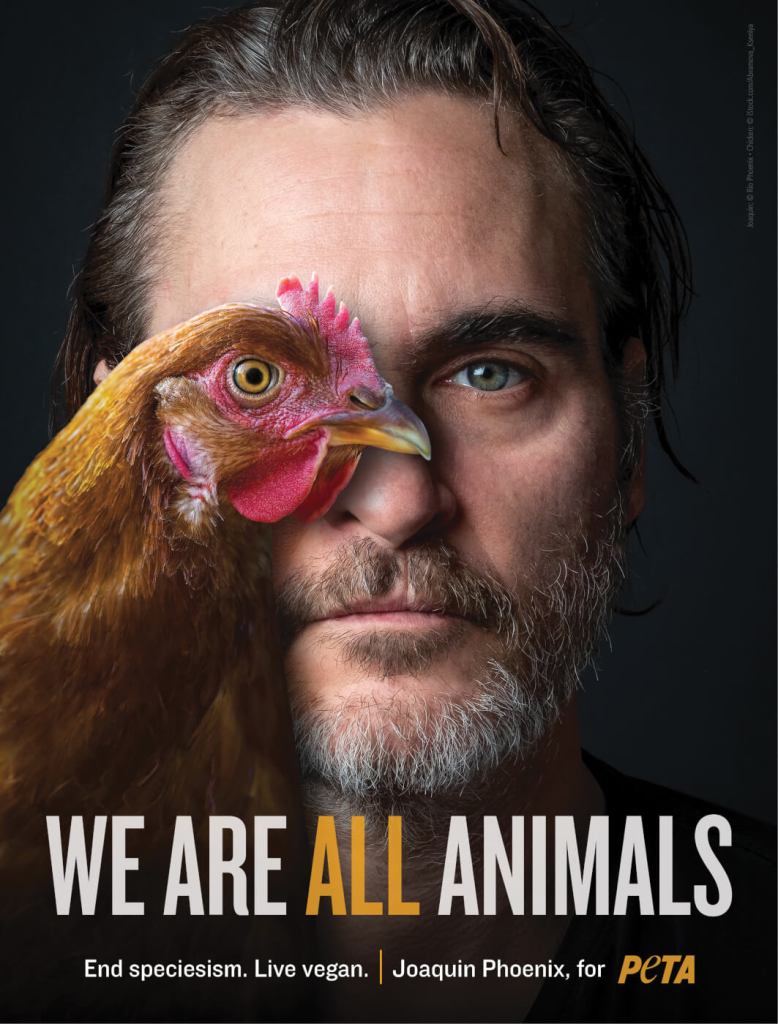
Why is racism wrong but speciesism OK? Primarily, other species have no voice, and to have no voice is to have no say. This advert got my attention.

Joaquin Phoenix Advert

Humanism is part and parcel specious Enlightenment tripe, where ‘coincidentally‘ humans put themselves at the forefront. Copernicus removed Earth from the centre — though to be fair, even Christians had elevated gender-non-specific-Man above other animals — , but Humanism makes it more poignant that it’s Man at centre not God. Gods be damned. In fact, it’s often an afterthought that humans are animals at all, despite only the slightest veneer of consciousness and, more to the point, language to separate us from them.

Otherness has proven itself to be an evolutionary survival aspect, one that has brought me to a point where I can write this, so one can call it natural, another term fraught with connotational baggage. To be able to differentiate and discriminate appear to be valuable attributes, but how much is enough, and how much is too much.

Buddhism teaches that we are all one with the cosmos and that any distinction is an illusion. Buddhist Enlightenment — not to be confused with Western Enlightenment — is to understand this, to not be bound to the illusion.

But, if racism is wrong, why is speciesism OK? Humans do give some animals some rights, and some places give different animals different rights, whilst others give animals categorically more and fewer rights. Some places ascribe divinity upon animals, elevating them above humans.

Racism seems to be more wrong because humans are more genetically homogeneous — at least phenotypically. Other mammals and herptiles don’t look so much like us. In observation, when they do, we have an additional layer of empathy, so chimps and canines with expressive eyes gain sympathy not afforded crustaceans and pinnipeds.

I don’t have an answer save to say that it’s just convenient and someday we may see a world as portrayed by science fiction where some — mostly bipedal species — live quasi-harmoniously with humans. But even there, humans are always the start, front and centre to provide to moral POV.