What’s Missing? Trust or Influence

Post-COVID, we’re told trust in science is eroding. But perhaps the real autopsy should be performed on the institution of public discourse itself.

Since the COVID-19 crisis detonated across our global stage—part plague, part PR disaster—the phrase “trust in science” has become the most abused slogan since “thoughts and prayers.” Every public official with a podium and a pulse declared they were “following the science,” as if “science” were a kindly oracle whispering unambiguous truths into the ears of the righteous. But what happened when those pronouncements proved contradictory, politically convenient, or flat-out wrong? Was it science that failed, or was it simply a hostage to an incoherent performance of authority?

Audio: NotebookLM podcast discussing this topic.

Two recent Nature pieces dig into the supposed “decline” of scientific credibility in the post-pandemic world, offering the expected hand-wringing about public opinion and populist mistrust. But let’s not be so credulous. This isn’t merely a crisis of trust—it’s a crisis of theatre.

“The Science” as Ventriloquism

Let’s begin by skewering the central absurdity: there is no such thing as “The Science.” Science is not a monolith. It’s not a holy writ passed down by lab-coated Levites. It’s a process—a messy, iterative, and perpetually provisional mode of inquiry. But during the pandemic, politicians, pundits, and even some scientists began to weaponise the term, turning it into a rhetorical cudgel. “The Science says” became code for “shut up and comply.” Any dissent—even from within the scientific community—was cast as heresy. Galileo would be proud.

In Nature Human Behaviour paper (van der Linden et al., 2025) identifies four archetypes of distrust: distrust in the message, the messenger, the medium, and the motivation. What they fail to ask is: what if all four were compromised simultaneously? What if the medium (mainstream media) served more as a stenographer to power than a check upon it? What if the message was oversimplified into PR slogans, the messengers were party apparatchiks in lab coats, and the motivations were opaque at best?

Trust didn’t just erode. It was actively incinerated in a bonfire of institutional vanity.

A Crisis of Influence, Not Integrity

The second Nature commentary (2025) wrings its hands over “why trust in science is declining,” as if the populace has suddenly turned flat-Earth overnight. But the real story isn’t a decline in trust per se; it’s a redistribution of epistemic authority. Scientists no longer have the stage to themselves. Influencers, conspiracy theorists, rogue PhDs, and yes—exhausted citizens armed with Wi-Fi and anxiety—have joined the fray.

Science hasn’t lost truth—it’s lost control. And frankly, perhaps it shouldn’t have had that control in the first place. Democracy is messy. Information democracies doubly so. And in that mess, the epistemic pedestal of elite scientific consensus was bound to topple—especially when its public face was filtered through press conferences, inconsistent policies, and authoritarian instincts.

Technocracy’s Fatal Hubris

What we saw wasn’t science failing—it was technocracy failing in real time, trying to manage public behaviour with a veneer of empirical certainty. But when predictions shifted, guidelines reversed, and public health policy began to resemble a mood ring, the lay public was expected to pretend nothing happened. Orwell would have a field day.

This wasn’t a failure of scientific method. It was a failure of scientific messaging—an inability (or unwillingness) to communicate uncertainty, probability, and risk in adult terms. Instead, the public was infantilised. And then pathologised for rebelling.

Toward a Post-Scientistic Public Sphere

So where does that leave us? Perhaps we need to kill the idol of “The Science” to resurrect a more mature relationship with scientific discourse—one that tolerates ambiguity, embraces dissent, and admits when the data isn’t in. Science, done properly, is the art of saying “we don’t know… yet.”

The pandemic didn’t erode trust in science. It exposed how fragile our institutional credibility scaffolding really is—how easily truth is blurred when science is fed through the meat grinder of media, politics, and fear.

The answer isn’t more science communication—it’s less scientism, more honesty, and above all, fewer bureaucrats playing ventriloquist with the language of discovery.

Conclusion

Trust in science isn’t dead. But trust in those who claim to speak for science? That’s another matter. Perhaps it’s time to separate the two.

Decolonising the Mind

NgĹ©gÄ© wa Thiong’o published “Decolonising the Mind” in 1986. David Guignion shares a 2-part summary analysis of the work on his Theory and Philosophy site.

I used NotebookLLM to produce this short podcast: [Content no longer extant] https://notebooklm.google.com/notebook/7698ab0b-43ab-47d4-a50f-703866cfb1b9/audio

Decolonising the Mind: A Summary

NgĹ©gÄ© wa Thiong’o’s book Decolonising the Mind centres on the profound impact of colonialism on language, culture, and thought. It argues that imposing a foreign language on colonised people is a key tool of imperial domination. This linguistic imperialism leads to colonial alienation, separating the colonised from their own culture and forcing them to view the world through the lens of the coloniser.

Here are some key points from the concept of decolonising the mind:

  • Language is intimately tied to culture and worldview: Language shapes how individuals perceive and understand the world. When colonised people are forced to adopt the language of the coloniser, they are also compelled to adopt their cultural framework and values.
  • Colonial education systems perpetuate mental control: By privileging the coloniser’s language and devaluing indigenous languages, colonial education systems reinforce the dominance of the coloniser’s culture and worldview. This process results in colonised children being alienated from their own cultural heritage and internalising a sense of inferiority.
  • Reclaiming indigenous languages is crucial for decolonisation: wa Thiong’o advocates for a return to writing and creating in indigenous African languages. He sees this as an act of resistance against linguistic imperialism and a way to reconnect with authentic African cultures. He further argues that it’s not enough to simply write in indigenous languages; the content must also reflect the struggles and experiences of the people, particularly the peasantry and working class.
  • The concept extends beyond literature: While wa Thiong’o focuses on language in literature, the concept of decolonising the mind has broader implications. It calls for a critical examination of all aspects of life affected by colonialism, including education, politics, and economics.

It is important to note that decolonising the mind is a complex and ongoing process. There are debates about the role of European languages in postcolonial societies, and the concept itself continues to evolve. However, wa Thiong’o’s work remains a seminal text in postcolonial studies, raising crucial questions about the enduring legacy of colonialism on thought and culture.

Under the Influence

Galen Strawson is my latest male crush. With almost everything I read or hear from him, I say, ‘that’s what I think’, over and over and over again. So I thought I’d share some of my journey to now. I made a post about female influences not too long ago. This is a bit different.

My first obsession, let’s say was the Beatles. I can’t pinpoint precisely when, but when I was a child, it’s been said that I would sing ‘she’s got a chicken to ride’ when it came on to AM radio. I asked for or bought all of their albums, and read everything about them that a kid could get his hands on back in the day. This obsession lasted for years and overlaps some of my next interests. My interests were in John Lennon’s political interests and George Harrison’s spiritual interests. I didn’t really find Paul McCartney or Ringo Starr very interesting beyond their musical abilities. And to be honest, I also got all of the Stones, Led Zeppelin, Pink Floyd, and so on. At my peak, I had over a thousand vinyl records—all lost in a house fire because vinyl and heat are generally incompatible. Paper didn’t fare much better, as I lost hundreds of books, too. A lesson in impermanence.

I am a bit of a nonconformist, a contrarian, and a polemicist

In grades 5 to 8, National Socialism and World War II were fascinating to me. Not Hitler, per se, though I do recall reading Mein Kampf at the time. There was just something about the sense of unity. Upon reflection, I realised that this meant me conforming to some other trend, and that was no longer interesting, as I am a bit of a nonconformist, a contrarian, and a polemicist, so there was that.

At some point, I came across Voltaire’s Candide and it just struck me. This may have commenced me on my path to becoming somewhat of a francophile. I extended my interest into the language and culture. My WWII phase has already primed that pump. I remember reading Dumas, Hugo, and some Descartes.

After I graduated, I was a recording engineer and musician. I remember reading Schoenberg’s Structural Function of Harmony and being enamoured with Dvořák and Stravinsky. I was influenced by many musicians, engineers, and producers, but there was just something about Schoenberg.

I went through a Kafka phase—that eventually included Donald Barthelme. His Absurdism was a nice foundation for my subsequent interest in Camus. It was something that just resonated with me. After Kafka, I discovered Dostoyevsky and consumed everything of his I could get my hands on.

I took from Jung and Campbell the importance of metaphor

In the 1990s, I discovered Carl Jung and eventually Joseph Campbell and a few years I spent reading Jung’s Complete Works and peripheral material related to Archetypal and Depth Psychology. I absorbed the material. I took from Jung and Campbell the importance of metaphor, but it never really resonnated beyond this.

Somehow, this experience led me to the Existentialism of Sartre (and Camus and Beauvoir). At the same time something clicked with me, I was always put off by the teleological imperative these guys seemed to insist upon—Sartre’s political involvement and Camus’ insistence on Art. These were their paths—and I certainly had an interest in Art and Politics—, but I felt this was too prescriptive.

For a brief time, I really liked Hume (and Spinoza), but then I discovered Nietzche and felt compelled to read his major works. It all made sense to me. It still does. Nietsche set me up for Foucault with his power relationships and the sense that morality, good, and evil are all socially constructed and contextual.

And Nietzsche brought me to Foucault and his lens of Power. These two still resonate with me. I investigated a lot of postmodern thinkers after this.

Nietzsche brought me to Foucault and his lens of Power

Daniel Dennett came next. He seems brilliant, and I tend to agree with most of what he says. I was still absorbing. Where biologist Robert Sapolsky gets philosophical, it’s about the same.

But Galen Strawson is different. And I have a lot of catching up to do in my reading of his direct work. The difference is that with these prior influences, I was absorbing and synthesising—creating my own perspectives and worldview. By the time I am finding Strawson, with every encounter, I am ticking off boxes.

  • That’s what I think
  • That’s what I think
  • That’s what I think
  • That’s what I think

Only, he started publishing in the 1960s. I could have been reading his work all along. Since I agree with 99.999 per cent of what I get from him and he is such a deep thinker, I am looking for two things:

  1. Something that expands rather than confirms
  2. Some spaces to operate that he has missed or ignored

As I continue on my Anti-Agency project and gather more inputs and perspectives, I’ll be considering a lot of Strawson. Here’s a clip I really enjoyed. I am thinking of doing a sort of reaction piece, but whether or not that happens, here’s the source.

[Video] Galen Strawson — Is Free Will a Necessary Illusion?

Spoiler Alert: I believe that free will is a cognitive bias related to apophenia. It’s a Gestalt heuristic.

Ten Women

Given my last post, it had me reflecting on some women who’ve influenced me—especially my thinking and worldview. Unlike Mitt Romney, I don’t have binders full of women.

Spotify

Positive

Simone de Beauvoir (Philosopher)

Simone de Beauvoir

Beauvoir is brilliant. I consider her to be the first feminist. The women before her, I rather consider being proto-feminists. I was immediately gripped when I read her book, The Second Sex, and her idea that women are not born that way, and it’s not even a simple ageing-maturity function. It’s a performative role.

Addendum: Perhaps not as famous, she’s at least as apt as Sartre as an Existentialist philosopher. I still have a fondness for Existentialism in the same way I like Pragmatism. Although life has no inherent meaning, if making one up gets you through your life, by all means, conjure up a meaning.

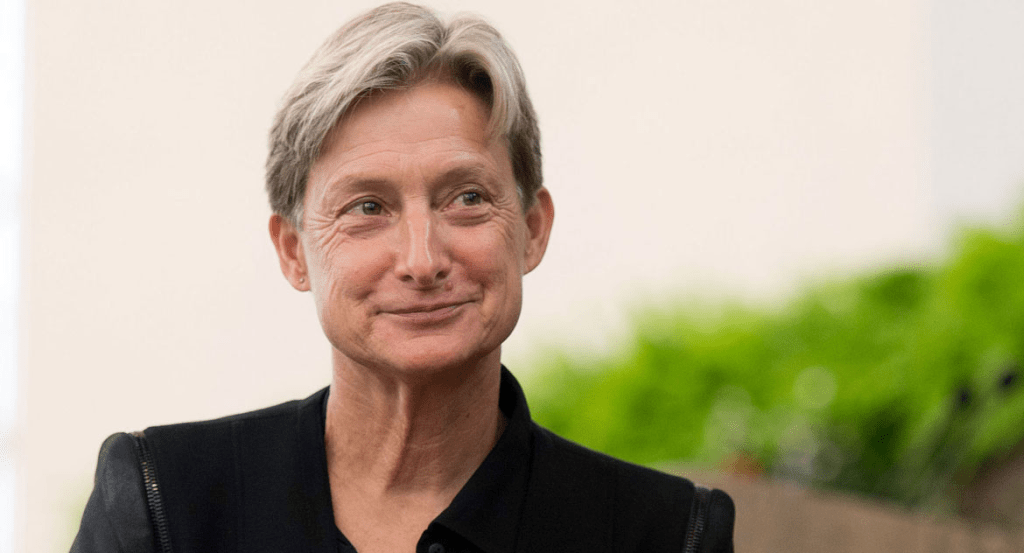
Judith Butler (Philosopher, Gender Theorist)

Judith Butler

Butler taught me the perspective of gender expression and performativism. Whilst Beauvoir was more describing gender as a role, Butler extends the notion to that of performative speech acts, which is to adopt the identity and declare, I am a woman.

Ruth Shore (English Professor)

This was my undergraduate Critical Writing professor. All but one of the assignments were by female authors. And the only male author was for an assignment to critique, compare, and contrast articles by Gloria Steinham and Thorstein Veblen. I don’t remember Steinham’s article (though I recall coming down hard on her for citing sources that did not tie back to her position). Veblen’s work was Conspicuous Consumption, an essay from The Theory of the Leisure Class: An Economic Study of Institutions, which is worth the read even today.

To be completely honest, I’m not sure I’ve quite remembered her name. I believe it’s her name, but I’m not great with names. As evidence, I turned in a final essay for one of my undergraduate English Literature courses. His trip was American fiction authors and interpreting literature by understanding the life and time and place of the author—clearly not into Barthes or Derrida. In this case, on the cover page, I had typed the course name and Professor David Grace (or some such). It was returned by post a week or so later with two remarks. The first: ‘I’ll miss your sardonic humour‘; the second: My name is whatever it was [sorry again], not David Grace. I’m pretty sure Professor was one of my maths professors, but don’t hold me to that. As far as I know, not-David doesn’t identify as a woman, but I do recall spending time on Edgar Allen Poe (also not a woman) and Donald Barthelme (still not a woman), the Postmodern Absurdist, who at fate would have it, died a couple of months after I graduated.

Hannah Arendt (Philosopher)

Hannah Arendt

Arendt’s concepts of the banality of evil and totalitarianism. My first exposure was through Eichmann in Jeruselum, where she discusses the banality of evil and how my postmodern roots become more ossified. Sadly, here Origins of Totalitarianism are too relevant for comfort these past few decades in the West.

Sunera Thobani (Sociologist, Feminist)

Sunera Thobani

Thobani’s post-colonial feminism is a newer influence, but she really drives home the point that the Western perspective is privileged and intervention in other cultures to ‘save the women’ from oppression is imposing the privileged perspective in a colonial manner.

Elinor Ostrom (Economist)

Elinor Ostrom

I was inspired by her work showcasing that coöperation prevails over tired competitive models. She was also the first woman to receive a Nobel Prize for economics just before her death.

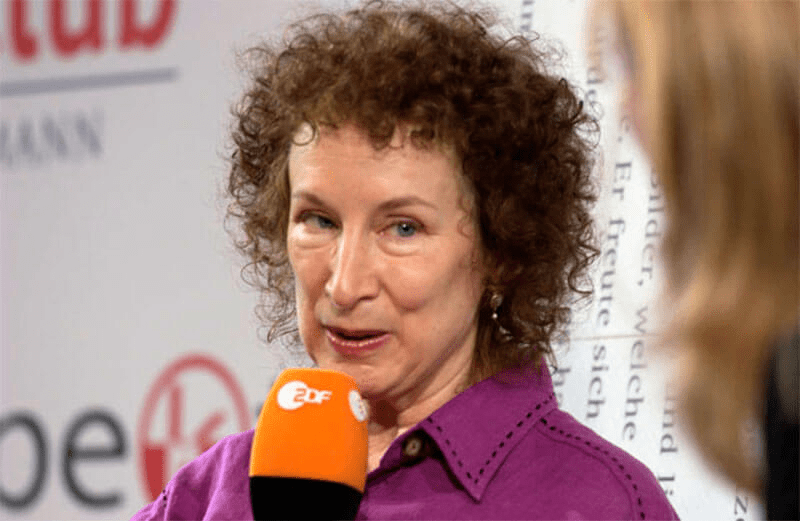
Margaret Atwood (Author)

Margaret Atwood

Before Handmaid’s Tale was a Hulu series, it was a book. When I read this genre-establishing speculative fiction in the 1980s, I took notice. That it remains relevant is cause for trepidation.

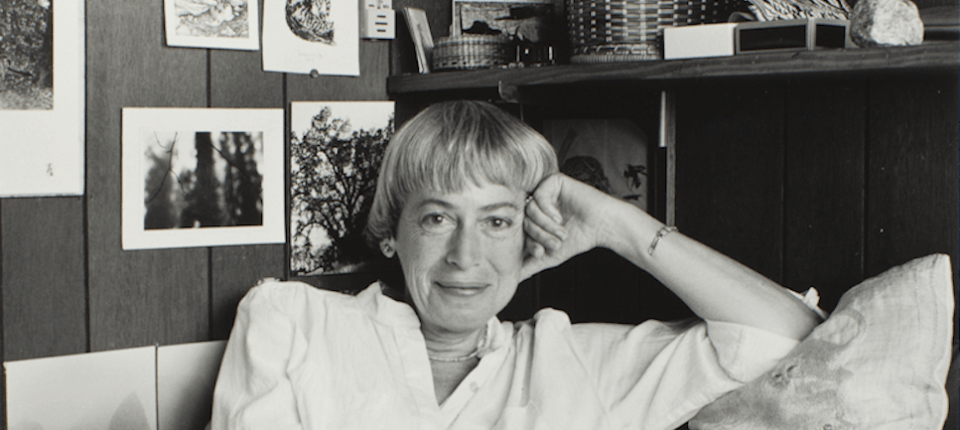
Ursula K. Le Guin (Author)

Ursula K Le Guin

Le Guin’s story, The Ones Who Walk Away from Omelas, truly unveils the Utilitarian, Consequentialist narrative of the greater good. This is more speculative fiction in the domain of Margaret Atwood, but Le Guin’s domain is typically science fiction. As often as I’ve tried, science fiction narratives don’t typically resonate with me, so I haven’t engaged her longer works. But the impact this had and continues to have on me should suffice.

Herculine Adélaîde Barbin (Intersex Case Study)

I believe I was introduced to Alexina through Michel Foucault. It helps to shine a spotlight on how arbitrary identity really is. Perhaps not capricious, but definitely arbitrary. A few years back, I even created a short video that, as I recall, commenced my YouTube channel.

Negative

I had originally intended to make this a post on the positive influences of women, but as I was searching my memories, a couple of reprehensible influences came to mind. Thatcher topped that list.

Margaret Thatcher (Politician)

Margaret Thatcher

In the US, Liberals and we Leftists demonise Ronald Reagan for being the beginning of the end of cordial US politics. Whilst this is true to a point, Thatcher predates Reagan’s destructive national policies by a couple of years. If not for the path she paved, we may never have taken it. Granted, the Clintons made sure to drive nails into the bipartisan coffin to seal the pact, and perhaps Thatcher and Reagan were just symptoms, not causes, in the manner that Johnson, Trump, and Biden are more expressions and conduits than catalysts…or at least generators.

In any case, she’s left a lot of destruction in her wake.

Ayn Rand (‘Philosopher’)

Ayn Rand

Rand is another woman I love to hate. Her so-called Objectivism has given permission to so many looking for an excuse or justification for their assholery.

To be fair, when I read Atlas Shrugged as an impressionable youth, I was taken in. I decided to read it after having heard her speak in an interview. I fell into her storyline without critical examination. I even tried to adopt it as a frame or lens. And then I read Fountainhead, which added nothing.

Fast-forward to the late ’90s, I was reevaluating my vantage and perspectives, so I decided to re-engage Atlas Shrugged as an audiobook. It was embarrassingly bad writing with 1-dimensional characters, which is appropriate because 1-dimensional people adopt this worldview. Apologies for the ad hominem, but I include myself in this cohort. I hope I’ve actually come to evolve additional dimensions rather than simply swap them, but Rand is a hack writer who had helped make the world a more toxic place to live. Not a fan.

Honourable Mention

Sophie Germain (Mathematician)

I named my second daughter Sophie Germain Surname, hoping it would be aspirational. Although it wasn’t, she is still proud to point out her legacy.

Harriet Tubman (Abolitionist)

Rosa Parks (Civil Rights Activist)

Jane Austen (Author)

Tori Amos (Musician)

PJ Harvey (Musician)

Sarah MacLauchlan (Musician)

Fiona Apple (Musician)

Kate Bush (Musician)

Laurie Anderson (Musician, Performance Artist)

More Women, But No

I could laundry-list a bunch of women I am aware of, but I can’t really claim they influenced me in a way I can grasp, so I won’t bother.