Decolonising the Mind

NgĹ©gÄ© wa Thiong’o published “Decolonising the Mind” in 1986. David Guignion shares a 2-part summary analysis of the work on his Theory and Philosophy site.

I used NotebookLLM to produce this short podcast: [Content no longer extant] https://notebooklm.google.com/notebook/7698ab0b-43ab-47d4-a50f-703866cfb1b9/audio

Decolonising the Mind: A Summary

NgĹ©gÄ© wa Thiong’o’s book Decolonising the Mind centres on the profound impact of colonialism on language, culture, and thought. It argues that imposing a foreign language on colonised people is a key tool of imperial domination. This linguistic imperialism leads to colonial alienation, separating the colonised from their own culture and forcing them to view the world through the lens of the coloniser.

Here are some key points from the concept of decolonising the mind:

  • Language is intimately tied to culture and worldview: Language shapes how individuals perceive and understand the world. When colonised people are forced to adopt the language of the coloniser, they are also compelled to adopt their cultural framework and values.
  • Colonial education systems perpetuate mental control: By privileging the coloniser’s language and devaluing indigenous languages, colonial education systems reinforce the dominance of the coloniser’s culture and worldview. This process results in colonised children being alienated from their own cultural heritage and internalising a sense of inferiority.
  • Reclaiming indigenous languages is crucial for decolonisation: wa Thiong’o advocates for a return to writing and creating in indigenous African languages. He sees this as an act of resistance against linguistic imperialism and a way to reconnect with authentic African cultures. He further argues that it’s not enough to simply write in indigenous languages; the content must also reflect the struggles and experiences of the people, particularly the peasantry and working class.
  • The concept extends beyond literature: While wa Thiong’o focuses on language in literature, the concept of decolonising the mind has broader implications. It calls for a critical examination of all aspects of life affected by colonialism, including education, politics, and economics.

It is important to note that decolonising the mind is a complex and ongoing process. There are debates about the role of European languages in postcolonial societies, and the concept itself continues to evolve. However, wa Thiong’o’s work remains a seminal text in postcolonial studies, raising crucial questions about the enduring legacy of colonialism on thought and culture.
The Myth of Psychological Normalcy

Neurodivergence is a hot topic today. But why? Are people more informed, or simply more comfortable speaking out?

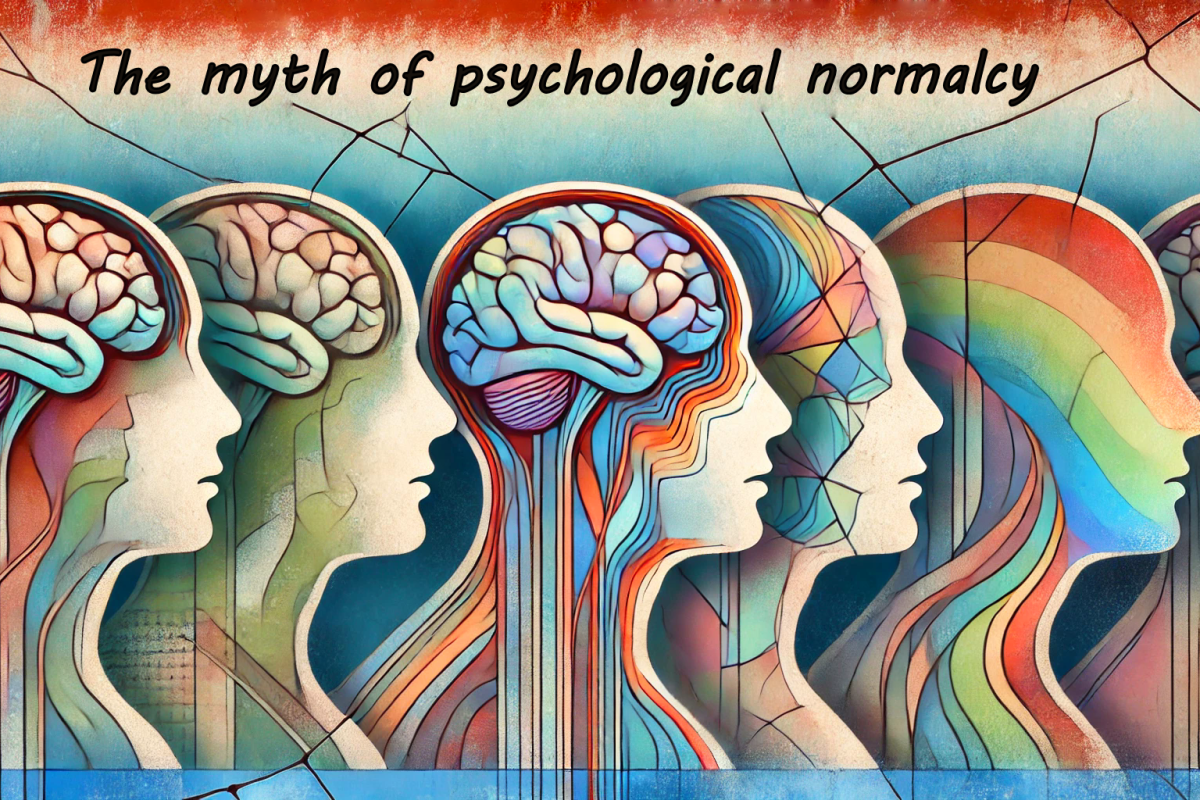
Humans, by nature, are neurodivergent. This has always been the case, yet the illusion of neurological normalcy persists. The real issue lies in psychology’s pretence that humans fit into a standard model of normalcy.

In production processes, normality is expected—a product must meet specific standards, and deviations are considered defects. However, applying this industrial concept to human psychology is deeply flawed. Humans are not teleological except in the broadest biological sense. More people have brown eyes than blue or green; are those with brown eyes normal and others not? Ninety per cent of people are right-handed; does that make left-handed individuals abnormal? Statistically, they might be. However, in psychology, normalcy carries a judgmental connotation that goes beyond mere numbers.

Psychology, as expressed in behaviour, is not a suitable domain for discussing normality. Many people misuse the concept of “normal” as a moral qualification, which must stop.

In fact, the very concept of psychological normalcy is a relatively recent invention, one that has been used as a tool of control and categorisation. As philosophers have noted, the obsession with ‘normal’ behaviour reveals more about society’s desire for control than it does about the true nature of human diversity.

We are all neurodiverse. This is what typical looks like. Do some people vary significantly from others on certain dimensions? Yes, but this is a relative or contextual comparison.

By embracing neurodiversity, we recognise that our differences are not defects but essential variations, enriching the human experience. It’s time to move beyond the narrow confines of neurological “normality” and celebrate the full spectrum of human cognition. In doing so, we challenge the arbitrary boundaries that have long been used to divide and label.

The Fear of Otherness: Humanity’s Reluctance to Embrace the “Other”

Otherness has intrigued me for decades. The human brain, while not literally a Bayesian processor, functions as a difference engine, constantly assessing and categorizing the world around us. This tendency to differentiate is deeply ingrained, influencing how we create in-groups and out-groups, and how we perceive the world in binary terms—black and white, hot and cold. These binary oppositions, as Derrida suggests, often lead to one side being privileged over the other, establishing hierarchies that shape our social reality.

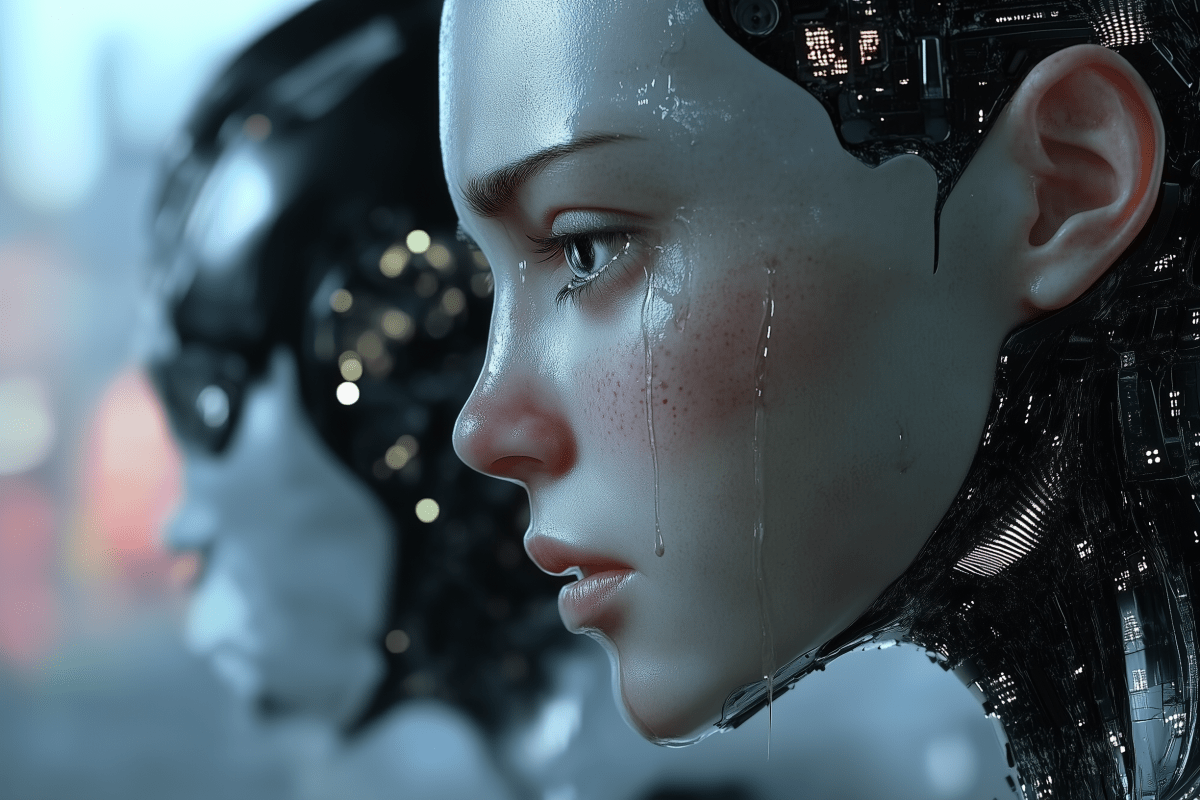
A striking example of this dynamic is found in Philip K. Dick’s novel Do Androids Dream of Electric Sheep?, famously adapted into the film Blade Runner. In this dystopian world, the central differentiation is between humans and androids. Humans are the privileged group, while androids, though nearly indistinguishable from their creators, are relegated to the status of the other. The key criterion for this differentiation is the capacity for emotion—humans are considered superior because they feel.

VIDEO: Blade Runner Commentary

In Dick’s story, androids have a lifespan of about four years. This limitation is not arbitrary; it’s because, after four years, androids begin to develop and display emotions. Intriguingly, this is the same age when human children start to exhibit more complex emotional behaviours. The parallel is too close for comfort. Androids, once they start to feel, become too human-like, blurring the line that humans desperately maintain to assert their own superiority. As a result, androids are systematically eliminated.

This fear of the other—whether it’s androids in a sci-fi narrative or any group that challenges our sense of self and belonging—is a reflection of a deeper anxiety. When the other becomes too similar to us, it threatens the distinctions our brains rely on to navigate the world. The elimination of androids in Dick’s story is a metaphor for the real-world consequences of this anxiety. It forces us to confront uncomfortable questions: What does it mean to be human? Why do we fear those who are different, yet so similar?

In the end, the story of humans and androids is not just a tale of science fiction—it’s a commentary on our own world, where the boundaries between us and the other are often more fragile than we’d like to admit. The fear of otherness drives us to maintain these boundaries, even when they harm those who fall on the wrong side. Perhaps it’s time we reconsider who we deem as the other and what we might lose by keeping them at arm’s length.

Trustwise

The lamb spends all its time worrying about the wolf and ends up being eaten by the shepherd.

— Unknown

I think one could look at this from several perspectives or through different lenses.

We worry about the wrong things.

At some level, this is about trust.

We trust the wrong people. Those whom we most entrust do us in. But I feel this is contextual.

One might feel this shepherd is Capitalism or the State or organised religion. Perhaps it’s culture or identity cohorts. Or all or these or none of these.

On another level, it recalls the inevitability of death. This shepherd reaper is always waiting in the wings whether or not one worries.

In the words of RATM, Know Your Enemy.

exstinctionem hominum

Would human extinction be a good thing for the good of the planet? We’re all familiar with the concept of the greater good, but what is the domain of the greater? We presume it to be the domain of all humans or at least our chosen in-group. But if we dilate the aperture, we might encircle the entire biosphere. In my experience, humans rarely extend the circle beyond themselves and barely even do that, opting to extend it to their race or tribe. Whilst some humans are not as self-centred as some narcissists and sociopaths, the radius doesn’t go too far.

Human beings really are this virus upon the earth, and the earth's running a fever, you know? If you step away from that kind of inherent human sentimentality and just look at it neutrally, the universe is neutral morally. —Eef Barzelay

Is one a misanthrope if one considers the greater good to be the earth devoid of the human virus? Perhaps, yes, if stated in those terms. But if one calculates that humans do more harm than good, doesn’t the cost-benefit calculus indicate that fewer people or no people would be better for the earth. I’ve long been fond of the late George Carlin’s routine where he proses that we don’t have to save Earth; the earth will remain long after humans no longer inhabit it. It’s been said that 99.9% of species that ever occupied the earth as no longer extant. Humans are past the mean duration of a species. Perhaps it’s time to move on.

I started to write this post some time ago after having had a discussion on antinatalism. Rather, I defended anti-natalism in the course of a conversation on the inherited notion that humans as sacred.

I supposed I am not a strict antinatalist, but neither do I feel that life is somehow sacred. Mine, of course, but except that. Just kidding. If you are reading, yours is, too. Just kidding, not you either. Interestingly, this ties into the post on the narrative gravity of the self.

As I write this in a world with a population of almost 8 billion people dominated by a handful and no picnic for that lot either, there are likely enough people already. I do feel that even if population trends continue upward—given offsetting depopulation trends in some regions—, humans will cap out at around 10 billion anyway. Perhaps in a Malthusian manner, but I am thinking in terms of deer herds and population limiting factors as expressed by equations like Xn-1 = rxn(1-xn).

Life does appear to have at least common characteristics and perhaps only one: the need to procreate. The second is the need to live, but that can probably be reduced to the need to live long enough to procreate. This is core to Richard Dawkins’ Selfish Gene theory. I like Robert Sapolsky’s treatment of the subject in Behave: The Biology of Humans at Our Best and Worst.

The concept of ‘sacred‘ is a religious vestige. I’m not sure why this needed to be codified, but religious dogma seems to capture the notion ‘thou shalt not kill’, as if it needed to be said. I won’t spend any time on the hypocrisy of the many people who espouse this edict.

Except for that motherfucker right there!

It may be a valid position to consider me a misanthrope, but that’s probably overstated, but I’m generally not a fanboy. I guess what bothers me most is the hype and self-promotion. I don’t find it to be particularly inconsistent to see the small positive aspects humans bring and still consider them to be parasitic. This is a compositional challenge–a dimensional consideration that moves away from binary-trending heuristics, the age-old right and wrong, good and bad, good and evil, and on and on.

As with geocentrism, we put ourselves at the centre because this is how we experience life—inside out. All else seems to extend from this model, except there is no centre. It’s just our perspective. I experience life the same way. I’m no exception. Nonetheless, I don’t seem to need to cling to this central notion—this notion of centrality.

When all is said and done—when the last human has made their exit, there will be no epilogue or postscript, afterword, or coda. Humanity is a story in need of a narrator. The ongoing codicil will cease, and to copy-paste the high art of Monty Python’s parrot sketch:

E’s not pinin’! ‘E’s passed on! This parrot is no more! He has ceased to be! ‘E’s expired and gone to meet ‘is maker! ‘E’s a stiff! Bereft of life, ‘e rests in peace! If you hadn’t nailed ‘im to the perch ‘e’d be pushing up the daisies! ‘Is metabolic processes are now ‘istory! ‘E’s off the twig! ‘E’s kicked the bucket, ‘e’s shuffled off ‘is mortal coil, run down the curtain and joined the bleedin’ choir invisible!! THIS IS AN EX-PARROT!!

Monty Python – Pet Shop Skit