Reason on a Spectrum

4–6 minutes

Reason is not an oracle of truth but a spectrum-bound tool, and when it is worshipped as absolute, it curdles into pathology. True rationality knows when to temper itself, when to equivocate, and when a kind lie is wiser than a cold fact.

Reason and rationality are the household gods of modernity. We light incense to them daily: follow the science, be reasonable, act rationally. But before we genuflect, it’s worth asking what exactly we mean. By reason, I mean the faculty of inference – spotting contradictions, tracing causes. By rationality, I mean the practice of applying that faculty toward some end. That’s all. Nothing mystical.

Audio: NotebookLM podcast on this topic.

The trouble starts when these concepts are treated as absolutes. They aren’t. They vary in intensity and application. A person’s reasoning operates on a spectrum with something like frequency and amplitude. Some minds hum at low frequency – broad strokes, contradictions smoothed over by intuition. Others burn hot at high frequency and amplitude – rapid logical leaps, obsessive consistency, the inability to let a premise go. And while some reason flows like a continuous wave – steady, consistent, predictable – other forms fire more like particles: synaptic sparks that don’t always connect, logic arriving in bursts or stutters rather than as a smooth line.

Push too far and what we sanctify as ‘reason’ bleeds into what psychiatry pathologises as autism or schizophrenia. Meanwhile, ‘normal’ cognition always includes an emotional ballast. Strip it out and the result looks alien, even monstrous. Freud’s quip about psychopathy – that the psychopath differs from the rest of us in degree, not kind – applies just as well to reason. Rationality is simply the socially acceptable blend of logic and affect. Deviate, and you’re declared broken.

Camus gave us a parable in The Stranger. Meursault observes his world with ruthless clarity, but no emotional resonance. He doesn’t weep at his mother’s funeral, and society condemns him less for murder than for failing to perform grief. His ‘pure’ reason reads as inhuman.

Here’s the paradox: if rationality means adapting effectively to one’s environment, then pure rationality demands knowing when to suspend itself. A person who insists on logic at every turn is not rational but maladapted. The rational actor lies, flatters, nods at the boss’s bad joke, comforts the friend who doesn’t want statistics but solace. Rationality that cannot bend collapses into pathology.

This is why the infamous ‘Do these jeans make me look fat?’ question is such a perfect test. The ‘true’ answer, if you are reasoning narrowly, may be ‘yes’. But true rationality recognises the context, the stakes, the human need beneath the words. The rational response is not the cold fact but the kind equivocation. Rationality that cannot lie is no rationality at all.

Here’s the paradox: if rationality means adapting effectively to one’s environment, then pure rationality demands knowing when to suspend itself. A person who insists on logic at every turn is not rational but maladapted. The rational actor lies, flatters, nods at the boss’s bad joke, comforts the friend who doesn’t want statistics but solace. Rationality that cannot bend collapses into pathology.

Consider the social rituals we all know. A partner says, ‘I like that house’, and the rationally over-tuned response is to evaluate the house. The actual cue is in the like, not the house. The answer isn’t that you dislike the house, but rather what you can appreciate about it. Miss that, and you miss the point. Or take the dinner table: when my son was seven, a well-meaning host – very Martha Stewart – asked him how he enjoyed his meal. He replied, with perfect candour, ‘I’ve had better’. From a logical standpoint, faultless. From a rational standpoint – if rationality includes social adaptation – disastrous. The question was never about the food. It was a cue for appreciation, for harmony. He gave fact when what was asked for was affiliation.

So yes, I attack reason and rationality – not because they don’t exist, but because they are misapplied, reified, and worshipped as neutral arbiters of truth. They are not. They are tools with a range, and outside that range, they fail catastrophically. To speak of ‘reason’ as if it were an unqualified good is like praising fire without mentioning its talent for arson.


After I wrote this, I realised I forgot to mention Kant.

Even Kant, patron saint of rational duty, insisted you must never lie, not even a white lie, not even to a murderer asking where your friend is hiding. For him, truth-telling was categorical, binding, immune to circumstance. But this is reason gone rigid, unable to flex with human reality. It shows how worship of Reason leads not to morality but to monstrosity. A rationality that cannot bend is no rationality at all.

Within One Sigma of Civilisation

Freud once quipped that people are “normal” only on average. To the degree that they deviate from the mean, they are neurotic, psychotic, or otherwise abnormal. Whatever else one thinks of Freud, the metaphor holds for Modernity.

Image: Picture and quote by Sigmund Freud: Every normal person, in fact, is only normal on the average. His ego approximates to that of the psychotic in some part or other and to a greater or lesser extent. —Analysis Terminable And Interminable (1937), Chapter V

We are “Modern” only on average, and only for the first standard deviation. Within one sigma, you can wave a flag and declare: rational, secular, Enlightened. But step further into the tails and the façade dissolves. The “normal” modern turns out to attend megachurches, consult horoscopes, share conspiracy memes, or cling to metaphysical relics that Enlightenment reason was supposed to have torched centuries ago.

The problem isn’t that these people aren’t Modern. The problem is that nobody is Modern, not in the sense the story requires. The mean is an over-fitted abstraction. “Modernity” works like Freud’s “normal”: a statistical average that erases the deviations, then insists that the erased bits are pathology rather than reality.

But the tails are where most of human life actually happens. The “average Modern” is as mythical as the “reasonable person.” What we call Modernity is just a bell curve costume draped over the same mix of superstition, desire, and contingency that has always driven human behaviour.

Man in Capitalistic Society

This is Chapter 5 of Erich Fromm’s The Sane Society. I’ve had this on my bookshelf for quite a while and wasn’t sure how a 70-year-old book could have so much relevance, but it does. Granted, some of it is irrelevant, a victim of the period it was written. This happens.

What strikes me about this chapter is the historical perspective it provides on capitalism. I’m an academic economist. I taught undergraduate economics for the better part of a decade. I’ve read (and recommend reading) Marx’s Capital firsthand.

Audio: NotebookLM Podcast commentary on this content.

Fromm adds additional details here. Firstly, he notes that the capitalism that marked the early days of the Industrial Revolution—the seventeenth and eighteenth centuries—differed from that of the nineteenth and twentieth centuries. The earlier period still had cultural and moral tethers that became frayed or lost in later periods. Without regurgitating the chapter, I cite some themes:

“this underselling practice is grown to such a shameful height, that particular persons publicly advertise that they undersell the rest of the trade.”

People were not very keen on price cutting as a competitive mechanism.

They also note the unfair competitive advantage of the monied elites who could buy materials in cash instead of credit and could thereby undercut prices, who would have to account for paying interest rates or markups on credit.

Whilst in the twentieth century, regulating undercutting is seen as protectionism, the earlier centuries had no problems defending merchants. We do have laws on the ebooks that prevent dumping, but these are rarely enforced, and when they are, it’s a political rather than economic statement. In practice, but done in the name of economics are politics in the same manner as science was used as cover to implement policy during the COVID-19 debacle.

Montesquieu says “that machines which diminish the numbers of workers are ‘pernicious’.” This sentiment echoes the current sentiments about robotics and artificial intelligence.

Nineteenth-century capitalism saw man as the measure of all things supplanted by capital. This is the capitalism Marx rails against—profits over humanity and society, the pursuit of local maxima at the expense of global maxima. This is also where the goal of hypergrowth and growth for growth’s sake came into vogue, ushering us into the Modern Age of Modern ideals—science, progress, order, and so on.

I won’t exhaust the chapter here, but for what it is, it’s a relatively light read. Whether I comment on later chapters depends on whether they engage me. Cheers.

Freud and Moral Responsibility

Morality is a social construct, but so are notions of identity and self. Upon reflection, psychology, a discipline I already hold in the lowest regard, is only the minutest subset of sociology. Without society, psychology would have nothing to study.

Sociology is more focused on structure and interrelationships whilst psychology concerns itself with the individual agent’s psyche. Sigmund Freud did recognise this by the taxonomy of id, ego and superego. It seems that by Freud’s reckoning, the id is a stand-in for volition, rather unconscious reactions, whereby the ego is more reflexive and tempered by the external world. Employing this model, in at least one way of thinking, the id represents the bare and authentic self whilst the ego is the accumulation of inputs.

Put in causa sui terms, the id is the result of inherited genetic temperament and the ego is the result of societal forces as interpreted by the id and any antecedent ego.

Remember, one function of the brain is as a Bayesian prediction engine that evaluates new inputs and forms a new sense of perceptual reality and fitness to operate in this universe.

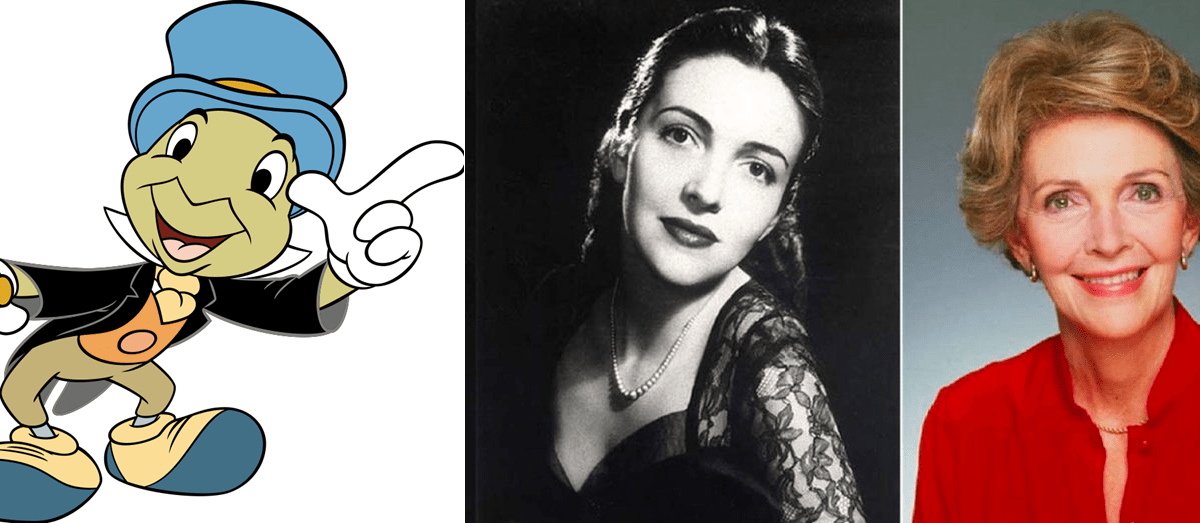
Freud’s superego is ostensibly a part of the ego gone underground—, most of it operating beneath the surface. It’s what I’ll consider being the Nancy Reagan of the psyche—just say no*. It’s Jiminy Cricket. Apologies for not having more contemporary conscience references. I suppose my age is showing.

According to Freud, most of who we are is a social construct, save for the kernel of the id, the proto-self. The ego is the part almost—but not all—above the surface, manifest in consciousness. Conversely, the superego has the reverse configuration, existing almost entirely below the surface. One might even be tempted to argue that the portion of the superego above the surface has actually already been assimilated into the ego.

So, we’re animated sausages, skins stuffed with social cues. Some of these social cues are also moral codes, but many moral codes are inherently unstable and vary by context. And there are local and global morality sources. For example, most religious doctrine is local, so a text authored by a venerated leader in one area may not be venerated outside of that context. In some cases, the directive contains no moral content—don’t eat pork or shellfish or take Saturdays off—whilst others do—love thy neighbour as thyself. Still, they are all social constructs.

If one has no interactions with the other culture, these societies can coexist without challenge, but when a ‘take off on Saturday’ group intersects with a ‘take off Sunday group’, there may be friction, each chiding the other for their nonsensical belief in the manner of Dr Seuss’ Sneetches.

Given this, when discussing morality, we are forced into a structure built on shifting sand. The challenge is that some people believe this ground is bedrock, and power structures insist it is in order to leverage a more solid foundation to maintain power and control.

If we are in some milieu, we are then forced to comply with their norms and morés or be cast out or marginalised, perhaps even scapegoated as Girard might suggest.

Meantime, just take morality with a grain of salt and remember that as will all things human, there are flaws in the logic and outcomes. Also understand that even if these outcomes are flawed and you need to participate in that society, you probably need to remain under the radar—easier for some than others—, conform, play the eccentric, or perish.

* Apparently, Nancy could say no to just about anything except for giving blowjobs. Perhaps this is what saved Ron from the same fate as Bill Clinton, but who am I to say? No shame in that is my position.

Jacques Lacan, anyone?

I’m wondering whether I should delve into Lacan. I am only vaguely aware of him and have never read any of his published essays or lectures. From what I’ve gleaned, I may end up down some rabbit hole. His interest in the function of language interests me, but his analogy of that to psychoanalysis is disconcerting.

The analogy is fine, but I have a problem with the entire field of psychoanalysis as I view it as pseudoscience. As with Freud and Jung, the speculation around the unconscious and their metaphors are fine storytelling, but that’s about it.

My interest is in his structural approach to language and the notion I share concerning the lack of specificity in language, but it seems to me that my time would be better spent reading Derrida.

Lacan is categorised as both a structuralist and a post-structuralist, which might be correct given the period in which he lived, but I am still trying to figure out how he might be considered to be a post-structuralist, as he seems to be concerned with a sense of order, which is somewhat antithetical to this worldview.