Adventures in Translation

Every translation is a negotiation between fidelity and clarity. In the case of The Illusion of Light, some word choices are specifically English and either have no typical translation or don’t translate directly.

Some examples are as follows:

  • Agency: In French, agence means agency, but not the sort of bodily autonomy as it does in English. Autonomie carries too much metaphysical connotation – though to be fair, so does the English version. I ended up with soi autonome.
  • Against Agency: The title of an essay, but I still wanted to translate it. I decided to split the difference and run with Contre l’agency, hoping ‘agency’ would still be recognised in academic circles.
  • Care: There’s no perfect equivalent for ‘care’ as both ethical and practical attention. Soin captures the tenderness but not the intellectual rigour; entretien captures the steadiness but loses affect. I used both, sometimes switching between them in deliberate tension.
  • Dis-Integrationism: Variants of this will follow a Dés-intégrationisme pattern, retaining the negation and the hyphenation.
  • Enlightenment: Of course, Enlightenment is perfectly French, but anti-Enlightenment, not so much. I opted for après-Lumières over anti-Lumières.
  • Freedom: Liberté inevitably invokes Rousseau and 1789. English ‘freedom’ – a word with old English roots and Germanic cognates – feels looser, more existential. I leaned into liberté when I wanted that historic echo and used autonomie or franchise elsewhere to recover the personal register.
  • Maintenance: In English, ‘maintenance’ sits halfway between repair and care. French forces a choice: entretien (maintenance as upkeep) or soin (maintenance as care). I alternated depending on whether the passage leaned toward the mechanical or the ethical.
  • Normality: Normalité exists but sounds sociological, not moral. In Homo Normalis, I leaned on context to restore the Enlightenment’s moral undertone rather than altering the word itself. The surrounding prose had to carry what the French term doesn’t.
  • Objectivity: The French objectivité is a near-cognate, but it feels heavier – almost bureaucratic – where the English still carries a trace of philosophical neutrality. I kept it, but softened the surrounding phrasing to prevent it from sounding bureaucratic.
  • Omnivident: I opted for omnivoyant. In French, it typically means clairvoyant (mystical seeing), but it’s also used for La Joconde‘s unsettling stare – that optical illusion of being watched from every angle. The latter sense is what the Enlightenment promised: not prophecy but perfect surveillance, not mystic vision but total measurement. Mona Lisa’s gaze follows you; so does Reason’s. To be fair, my spell-checker isn’t very happy with omnivident either, but sometimes you just need to stick to your guns.
  • Reason: Raison is obvious but slippery. In English, it can mean logic, justification, or sanity. French raison often sounds institutional – la Raison d’État lurks in its shadow – which helped the irony of my argument but occasionally demanded rephrasing to avoid unintended gravitas.
  • The self: Le soi remains my preference over le moi; the latter brings too much Freud. Soi feels grammatical yet open – the right degree of abstraction for a ghost of the Enlightenment.

Translation isn’t the transfer of meaning but the calibration of resonance. Each word is a compromise between fidelity and hospitality – how much the host language can bear before it ceases to be itself.

I’m only at chapter five – the longest – with six more chapters ahead, plus appendices and back matter. This list will grow. Translation, like the maintenance ethics the book describes, is work without end: attentive, incremental, never quite finished.

An AI Alphabet

A generative AI platform rendered this image of an alphabet appropriate for a child. It went somewhat awry. It looks worse than it seems.

The first three letters are appropriate and in sync with their paired image. The D is correct, but it’s rendered as an elephant. That’s an E word, which is skipped. The F went outright AWOL, but G, H, and I come on strong. J’s gone missing. K represents, but L’s gone astray. M, N, O make it seem that it can only map three characters in a row. P shows Q, as a queen. Then things go off the rails. S? The sun’s correct. What are those umbrella and penguin letters? We found the missing P representative. R, S, T, U are in order – the second S; can’t be too careful. It is fixated on violins – not an R word. It got the first S = sun correct, so perhaps a little slack on the second one. T is for turtle, offset to the left. Two violin words and an image, but no letter V. Not sure what happened. W, X, Y, Z and Z. I’m only pretty sure that one of these Zs is British; the other is American. The X, Y, Z images are offset to the right. We just need the extraneous yacht, much like the real world.

In the end, we’ve got 24 letters – 2 non-sensical ones and a duplicate, but we are missing E, F, J, L, and Q – though at least E and Q are here in spirit. D never got any representation.

Yesterday and Today

For no apparent reason, I was pondering lost temporal words, so I paid a quick visit to ChatGPT and wanted to share the wealth. Perhaps we can bring some of these back from the grave.

Audio: Podcast prattle of this content.

Eldernight: Referring to the night before last, this term has long since faded from common usage.

Erewhile: Meaning “a little while ago” or “previously.”

Ereyesterday: Meaning “the day before yesterday” – a direct counterpart to “overmorrow.”

Erstwhile: Similar to “erewhile,” it denotes something that was formerly the case.

Fortnight: Short for “fourteen nights,” this term refers to a two-week period and is still in use in British English.

Nudiustertian: A wonderfully specific Latin-derived term meaning “of or relating to the day before yesterday.”

Overmorrow: This term was used to indicate the day after tomorrow.

Sennight: Derived from “seven nights,” this word was used to mean a week.

Umwhile: Another Scottish term meaning “at times” or “occasionally” in the past.

Whilom: An archaic term meaning “formerly” or “once upon a time.”

Yore: While you touched on similar concepts with “whilom,” this term specifically means “of long ago” or “of time long past.”

Yestereve: This term referred to the evening of the previous day, essentially what we’d call “last night.”

Yestermorrow: An intriguing word that denoted “yesterday morning.”

Yestreen: A Scottish and Northern English word meaning “yesterday evening” or “last night” – similar to “yestereve” but with different regional origins.

These terms, though largely obsolete, offer a glimpse into the linguistic richness of earlier English, providing nuanced ways to express temporal relationships that have since been lost in modern usage.

The Great British ‘R’ Mystery: How One Letter Stirs Up Trouble Across the Isles and Beyond

Here’s the thing about the letter R in British English: it’s like tea in the UK—ubiquitous yet wielded with such dizzying inconsistency that even the Queen herself might forget if it’s in fashion this season. Like some shadowy figure lurking in the alleyways of phonetics, R refuses to play by the rules, showing up when least expected and disappearing when needed most. So, grab your Earl Grey (or your gin), and let’s unravel the ‘R’ mystery, a story with more twists and turns than a James Bond plot.

EDIT: Here’s a short video by Language Jones on this topic of Rs.

Non-Rhoticity: When ‘R’ Decided It Was Over It

You know those people who drop a grand entrance line and then ghost the party? That’s R in much of British English. Around the 18th century, R went non-rhotic in Southern England, meaning it started acting like an ultra-exclusive VIP—only showing up when it felt like it, especially at the beginning of words or when it needed to bridge vowels. Otherwise, it vanished into thin air.

Imagine trying to summon an ‘R’ in car or butter in a posh English accent. Nope, you won’t find it. And heaven forbid you should try to put it there, lest you get called out for sounding a bit, well, American. R only shows up if it gets to do the delicate act of linking R, like in “law(r) and order.” Otherwise, it’s quite happy being invisible.

Intrusive R: “Hey, Did Anyone Order an ‘R’?”

Just when you thought you understood where R lives and dies, it pulls a fast one—intrusive R. This is when R starts showing up uninvited, slipping in between vowels that never actually requested its presence, as in “Asia(r) and Europe” or “idea(r) of it.” It’s as if R has been waiting in the wings, saw an opening, and said, “Yep, I’m in!” It’s common in dialects like Received Pronunciation, adding to the chaos by creating sounds like “sawr it” instead of “saw it.”

Yes, Americans sometimes think this sounds like linguistic anarchy. Brits, meanwhile, might argue it’s not anarchy but nuance.

The Great Wash Scandal: The Pennsylvanian “Warsh” and American Rs Gone Rogue

If you thought the Brits were bad, wait until you get to the United States, where R lives a double life. In most regions, it’s rhotic (loyally pronounced) except in certain coastal spots like New England, where it gets dropped faster than a hot potato—er, pah-tay-tah. But for true havoc, we turn to Pennsylvania and pockets of the Midwest, where locals throw an extra R into words like wash, pronouncing it as warsh. This trickery is known as epenthesis, a linguistic fancy word for, “Let’s just spice things up by adding stuff that isn’t there.”

In truth, R’s American escapades are the stuff of legends, revealing a rebellious streak that could give even the British a run for their money.

Rolling, Tapping, and Pedos: The R Scandal Goes Global

Cross the Atlantic, and you find R pulling yet another stunt, this time with Spanish speakers in its crosshairs. Spanish has a beautiful setup with its tap and trill—like a musical duo that harmonises perfectly if you know the drill. The English-speaking learner, however, often fumbles, turning perro (“dog”) into pero (“but”) and, worse still, into pedo (“fart”) when the tongue flap falls flat. Just imagine the accidental puns that arise when, with good intentions, one says, “I have a fart,” instead of “I have a dog.”

And rolling R? A fine art lost on many. French and some German speakers take things even further with the uvular R, crafted like a raspy little growl at the back of the throat. It’s as if R has found its place among the operatic elite, making British Received Pronunciation seem almost polite by comparison.

Dialect Drama: From the Scots “Burr” to the Indian Retroflex

If you’re ever lucky enough to venture into the Scots Gaelic or northern English dialects, you’ll find R given the starring role it truly deserves. The famous Scots burr sounds almost like a celebration, a rolling sound that tells you this letter means business. Across the globe in Indian English, R is reinvented yet again, often sounding more retroflex, where the tongue curls back for a rounded effect. Indians and Scots don’t take R for granted—each makes it earn its place, proving the letter can be as distinct as a cultural fingerprint.

The R-Coloured Vowel: R’s Phantom Influence in Rhotic Land

Finally, in America’s rhotic accents, R has gone beyond the call of duty, colouring vowels with a subtle drawl, from bird to hard and hurt. It’s like R said, “If I’m going to be here, I’m going to leave my mark.” The vowel itself becomes something of an accomplice to the R, producing a sound that non-rhotic speakers can’t quite replicate, and leaving Americans with that inimitable r-coloured twang.

The Takeaway? R Plays by Its Own Rules

In the end, R is more than just a letter; it’s a chameleon, a rogue, a shapeshifter that tells the story of history, geography, and culture. Whether it’s acting non-rhotic and blending into the crowd, linking up for that perfect British touch, crashing the party as an intrusive R, or starting scandals in Spanish class, R simply doesn’t conform. And that’s exactly why it fascinates us.

So, the next time you’re at the pub, drop a casual, “Fancy a pint, mate?” and pay attention to that subtle, vanishing R. Cheers to the most unruly letter in the English alphabet—here’s hoping it keeps breaking the rules for centuries to come.

Indian English

This is not a discourse on the English spoken by those from the subcontinent. Rather, it’s just a short and simple observation. Perhaps, someday I’ll post something on the phonetics that makes Indians sound like Indians instead of native western English speakers, but not today.

I’ve recently taken a new job and all of my more junior team members are what’s known as off-shore. The two more senior team members are Indian by birth but live in the United States. We have daily ‘stand-up’ calls where no one really stands up, but each team member summarises how their day went and what they plan to do tomorrow. They are at the end of their day as commence mine. If there is anything impeding them from their plan, we have time to remove the impediment.

I’ve worked with Indians for years. In fact, as an Economics student in the 1980s, many of my classmates were Indian. But until now, I didn’t notice a certain phraseology that makes them sound unnatural to my ear. I am not claiming that my way is right or their way is wrong. I’m just noting the difference.

These team members routinely mention the name of the person to whom they are speaking.

  • Yes, I will do that, name.
  • I understand, name.
  • No, name, that’s not what I meant.

And other such constructions. A native speaker will not generally insert the name.

Full disclosure, this could rather be cultural deference as these people are junior and speaking to someone in a manager role, so perhaps it’s less their English speaking but rather a cultural injection. I haven’t heard them cross-talk with each other enough to gather if this name-ness is dropped with peers.

It could well be that their English is overly formal like the French I studied in school but that no one actually speaks. It is overly formal and stilted. Natives can always tell that you’re school-taught and haven’t been exposed to French in the wild. As I mentioned already, it may be cultural etiquette or simply perceived etiquette. If someone knows or has an opinion, I’d like to hear it—especially if you are a native Indian speaker of English.

Extraneous Orientation

The English language employs a lot of otherwise unnecessary filler words. Particularly words relating to orientation.

“I fell down.”

“I’m driving up to New York.”

In the case of ‘fall down’, there are some cases where as a phrasal verb it might add clarity. One might use ‘He fell down‘ versus ‘She fell over‘. There is some nuance of meaning to be rendered here. But if one says, ‘She fell down the stairs’, few people are will interpret that as ‘She fell over the stairs’, so the inclusion is superfluous. One might also qualify that, ‘The monkey fell off the bicycle’.

Another clarification might involve the object relationship. For example, ‘I fell the tree’ is different to ‘I fell over the tree’ or ‘I fell off the tree’, which might be taken as analogous to ‘I fell down the tree’ or ‘I fell out of the tree’. ‘I fell the tree’ communicates that you chopped the tree down; ‘I fell over the tree’, might communicate that you tripped over the tree. I’m not sure many would say ‘I fell off the tree’. ‘I fell off the branch’ might be more apt. I feel that it would be more common for a native adult English speaker to say, ‘I fell out of the tree’ over ‘I fell down the tree’, which might be something a child would say. Of course, if the object of the tree were known, as in the following dialogue, the orientation might be foregone.

Having dropped from a tree, Abdul asks Paco what happened.

‘I fell.’

Of course, the falling may also be obvious and the question revolves around the cause. Perhaps, it’s just a step into the so-called ‘five whys‘.

Why did you fall? Because I lost my grip.

Why did you lose your grip? Because I was distracted.

Why were you distracted?

And so on. But this is a horse of a different colour.

So what about New York? Why do we tend to add orientation to these types of directions? If I live south of New York, it feels that I am adding something, but is there another New York I could drive down to? If not, what is the up conveying? Also, I’ve heard people refer to up in a reference that would not correspond to up in a map, say, to be travelling to New York from Toronto. Again, just saying, ‘I’m going to New York’ would suffice.

Another odd construct is to wake up, which is to say to awaken. ‘When did you wake?’ or ‘When did you awaken?’ ask the same question as ‘When did you wake up?’ I could even ask ‘Did I wake you?’ or ‘Did I wake you up?’ What is the purpose of up? One can’t actually awaken in another orientation. You can’t wake down or wake over or even wake off, so what’s with the up inclusion?

This works for stand, too, but at least there is a distinct meaning between ‘stand up‘, ‘stand down‘, and ‘stand off‘, though contextually it would be unlikely to confuse the three. If one said, ‘stand’, the meaning should be interpreted the same as ‘stand up‘. ‘Stand down‘ means to relax or withdraw, and ‘stand off‘ is a deadlock, but this is idiomatic language.

I had more examples in mind, but between the original idea and the time I got to the keyboard some hours had elapsed. If you speak a language other than English, does that language have similar filler words?

In French, if I say ‘j’ai tombé‘, it means ‘I fell’, but if I say ‘je suis tombé‘, it is akin to saying ‘I fell down‘ or ‘I fell off‘ without the explicit orientation.

I’m out of here.

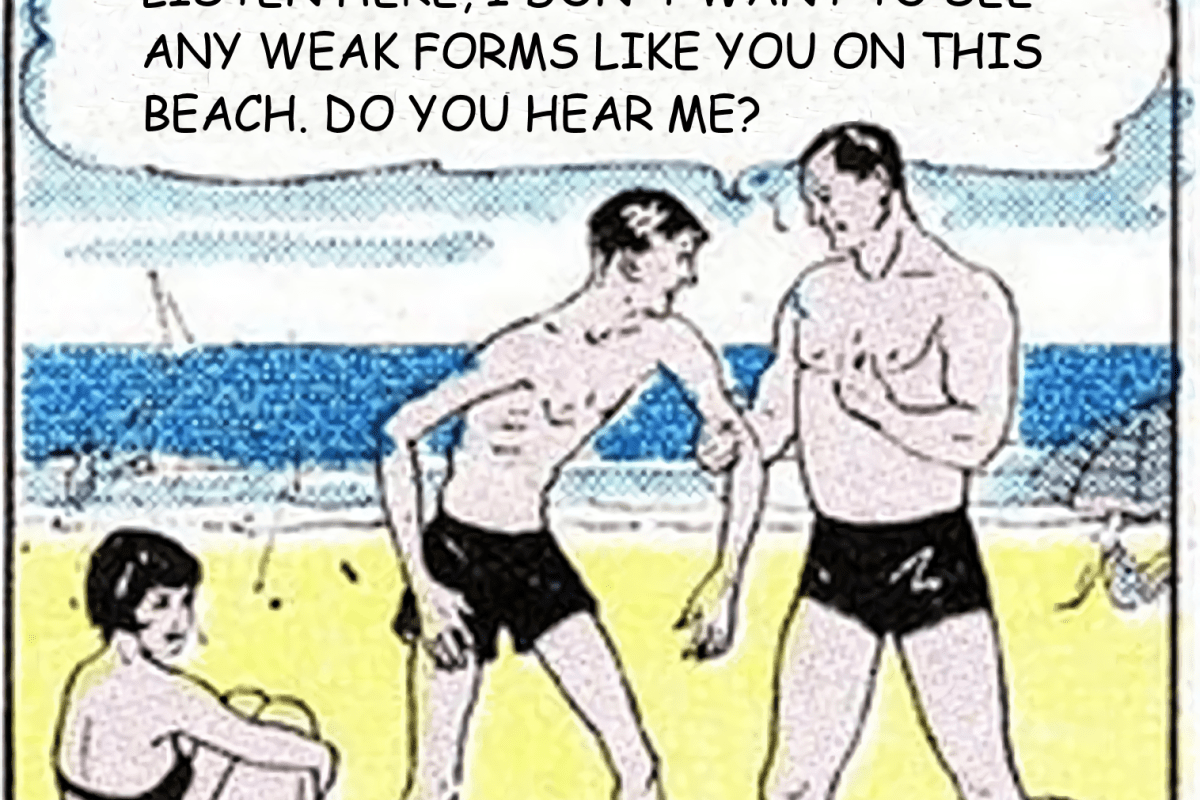
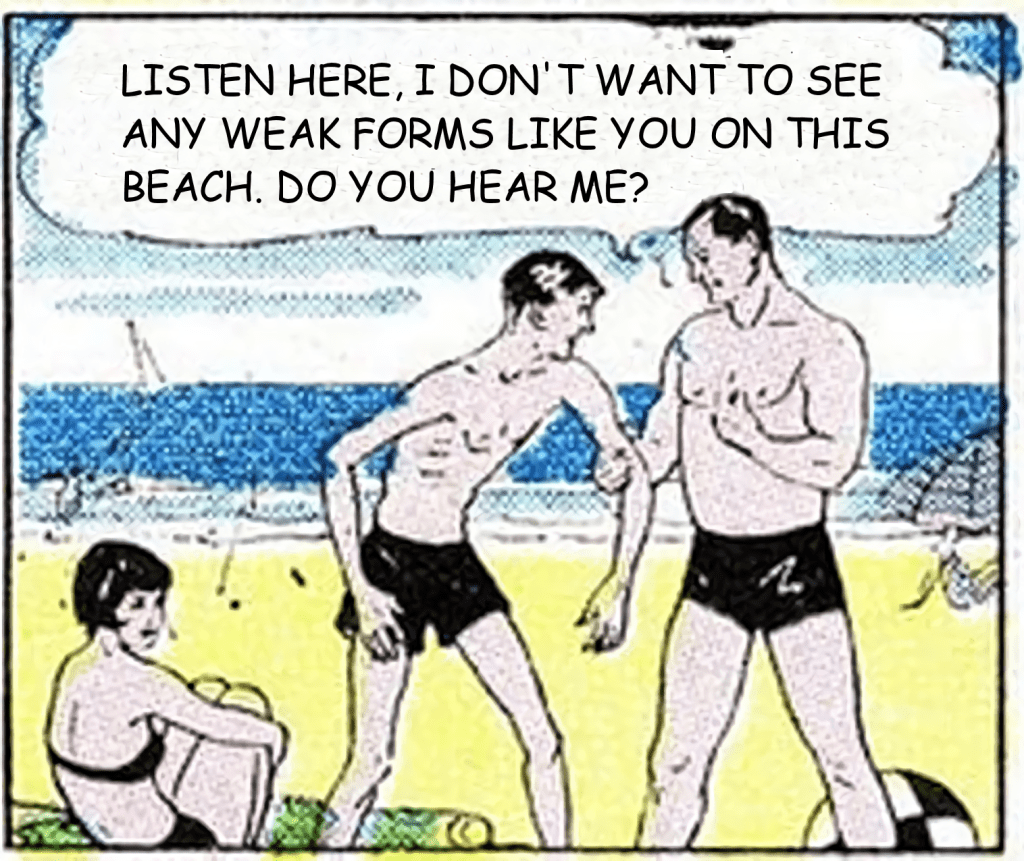
English Weak Forms

I have been so utterly distracted by YouTube this weekend. In this case, it’s a video by Dr Geoff Lindsey explaining weak forms of the English language.

Podcast: Audio rendition of this page content

Much of my work life involves speaking either with non-native English speakers or speakers of English who may be quite well versed in English and yet have a certain rigidity in their execution. Along with local accents, this makes the language feel unnatural to a native speaker.

A common challenge is the adoption of weak forms. Following the principle of least effort, language speakers are lazy. In fact, one may extrapolate this morphology to predict where language may drift next. One example that comes to mind is the American habit of uttering flap Ts over ‘real’ Ts that require slightly more effort to produce.

In English, one says the words, butter, water, doctor, and sister as /ˈbʌtə/,/ˈwɔtəɹ/, /ˈdɒktə/, /ˈsɪstə(ɹ)/ whilst in American English, using the flap T sound, one says (respelt in parentheses) /ˈbʌdəɹ/ (buhd-er), / ˈwɔdəɹ/ (wahd-er), /ˈdɔkdɚ/ (dok-der), /ˈsɪsdər/ (sis-der). Whether the pronunciation of the R is rhotic or non-rhotic is another issue altogether.

But this is about something a bit different. It’s about weak forms, particularly vowels that can be weakened from the strong vowel sound to the shwa (/ə/) sound. It turns out that we do this a lot. In fact, more often than not. Rather than a rehash from the video, I’ve cued it to where Tom Hiddleston recites Lord Byron’s So We’ll Go No More a Roving.

So, we'll go no more a roving
   So late into the night,
Though the heart be still as loving,
   And the moon be still as bright.

For the sword outwears its sheath,
   And the soul wears out the breast,
And the heart must pause to breathe,
   And love itself have rest.

Though the night was made for loving,
   And the day returns too soon,
Yet we'll go no more a roving
   By the light of the moon.

As it happens, much of the difference between native English and English as spoken by non-natives is the hyper-diction heard by choosing the strong rather than the weak form of certain words.

A World Without Whom

To whom it might concern…

Ever get in one of those moods?

You ever get in one of those moods?

Do you ever get in one of those moods?

I do. I am tired of the object pronoun, whom.

I started a petition to eliminate whom from the English language.

Don’t get me wrong, I still have fond memories of the word—a couple anyway.

For Whom the Bell Tolls — Hemingway or Metallica

Even if we retain it in a written form, perhaps we can agree to relinquish the M to silence. We’ve already seeded the ground. When M precedes N at the start of a word, it’s silent, so that gives me hope. Although to be fair, most of these words are silent in general. Save for mnemonic, I can’t say I’ve used any—and how often have I written mnemonic save for now? just to show off. Nobody ever seems to notice the silent M in pterodactyl.

Whom Protesters

But verbally, aurally, in speech, perhaps we can all agree to drop to M—a sort of silent protest. Sure, there are other solutions. Take ‘With whom am I speaking?’ as an example. When is the last time you said or heard this?

I mean, Who am I speaking to? only shifts the problem to be defended by other language guardians. And it’s really a grammar challenge of two fronts, as—misplaced, split infinitive aside—it should rather read Whom am I speaking to? That limits the battle to a single front. But if we drop the M-sound—making it silent—, we can slide this one by. And who would have the occasion to write ‘Whom am I speaking to?‘ This is something that is a spontaneous speech act.

Of course, we could simplify it further to SMS-speak: who dis? or who dat? This might create as many problems as it solves. Some people seem especially interested in the SMS-driven decline of the English language.

If you are tired of pretentious, dusty old words, help me to usher this one into retirement.

Ye Olde Wordes

1–2 minutes

Hear ye! Hear ye! Should I rather have titled this Every Rose Has its Thorn?

Am I alone in this? Are there others who also cringe when they hear period-piece reenacters pronounce the word ye as ‘yee’, or is it just me? Be honest now.

Those as pedantic as I, know that ye was a solution to a technological limitation of early European printing. Prior to the printing press, Old English had a þ character pronounced thorn. Phonetically, it sounded like the modern English voiced dental fricative expression of the th digraph— IPA: /ð/.

Given this, ye would have been spelt þe and should be pronounced the (IPA: /ði/—not necessarily /ðə/) and not yee (IPA: /ji/). I am not sure if a hand-printed (or painted) sign of the day would have conformed to the pre-press spelling or the post-press variant. I wonder how long it took for thorn to pass by the wayside.

I am aware that language is a human construct and even that language is like a living organism. But in this case—as with Latin—, thorn is dead. It seems we should not revise the pronunciation of a fossil of a word. It seems to me it should be frozen in the amber of time.

Bonus Round 1

Back in the day, not only was the abbreviated as ye in printing, but this was abbreviated as ys and that was shortened to yt, as in the Mayflower Compact. Don’t ask why someone felt that it was important to abridge 3- and 4-letter words to 2 characters.

Herbert Manuscripts (excerpt)

Bonus Round 2

It’s may be important to note that the ye of Ye Olde Shoppe fame, which is simply a shortened form of the, is not the same ye of biblical fame, ‘Judge not, that ye be not judged‘, which was the plural form of thou, which is now rendered as you—the plural form.

And now you know…

As for the pronunciation of the ye of hear ye (hear ye), I am not sure which concept is being captured. If you know, then let me know.