
A Case for Intersectionalism

The Space Between

In the great philosophical tug-of-war between materialism and idealism, where reality is argued to be either wholly independent of perception or entirely a construct of the mind, there lies an underexplored middle ground—a conceptual liminal space that we might call “Intersectionalism.” This framework posits that reality is neither purely objective nor subjective but emerges at the intersection of the two. It is the terrain shaped by the interplay between what exists and how it is perceived, mediated by the limits of human cognition and sensory faculties.

Audio: Podcast conversation on this topic.

Intersectionalism offers a compelling alternative to the extremes of materialism and idealism. By acknowledging the constraints of perception and interpretation, it embraces the provisionality of knowledge, the inevitability of blind spots, and the productive potential of uncertainty. This essay explores the foundations of Intersectionalism, its implications for knowledge and understanding, and the ethical and practical insights it provides.

Reality as an Intersection

At its core, Intersectionalism asserts that reality exists in the overlapping space between the objective and the subjective. The objective refers to the world as it exists independently of any observer—the “terrain.” The subjective encompasses perception, cognition, and interpretation—the “map.” Reality, then, is not fully contained within either but is co-constituted by their interaction.

Consider the act of seeing a tree. The tree, as an object, exists independently of the observer. Yet, the experience of the tree is entirely mediated by the observer’s sensory and cognitive faculties. Light reflects off the tree, enters the eye, and is translated into electrical signals processed by the brain. This process creates a perception of the tree, but the perception is not the tree itself.

This gap between perception and object highlights the imperfect alignment of subject and object. No observer perceives reality “as it is” but only as it appears through the interpretive lens of their faculties. Reality, then, is a shared but imperfectly understood phenomenon, subject to distortion and variation across individuals and species.

The Limits of Perception and Cognition

Humans, like all organisms, perceive the world through the constraints of their sensory and cognitive systems. These limitations shape not only what we can perceive but also what we can imagine. For example:

  • Sensory Blind Spots: Humans are limited to the visible spectrum of light (~380–750 nm), unable to see ultraviolet or infrared radiation without technological augmentation. Other animals, such as bees or snakes, perceive these spectra as part of their natural sensory worlds. Similarly, humans lack the electroreception of sharks or the magnetoreception of birds.
  • Dimensional Constraints: Our spatial intuition is bounded by three spatial dimensions plus time, making it nearly impossible to conceptualise higher-dimensional spaces without resorting to crude analogies (e.g., imagining a tesseract as a 3D shadow of a 4D object).
  • Cognitive Frameworks: Our brains interpret sensory input through patterns and predictive models. These frameworks are adaptive but often introduce distortions, such as cognitive biases or anthropocentric assumptions.

This constellation of limitations suggests that what we perceive and conceive as reality is only a fragment of a larger, potentially unknowable whole. Even when we extend our senses with instruments, such as infrared cameras or particle detectors, the data must still be interpreted through the lens of human cognition, introducing new layers of abstraction and potential distortion.

The Role of Negative Space

One of the most intriguing aspects of Intersectionalism is its embrace of “negative space” in knowledge—the gaps and absences that shape what we can perceive and understand. A compelling metaphor for this is the concept of dark matter in physics. Dark matter is inferred not through direct observation but through its gravitational effects on visible matter. It exists as a kind of epistemic placeholder, highlighting the limits of our current sensory and conceptual tools.
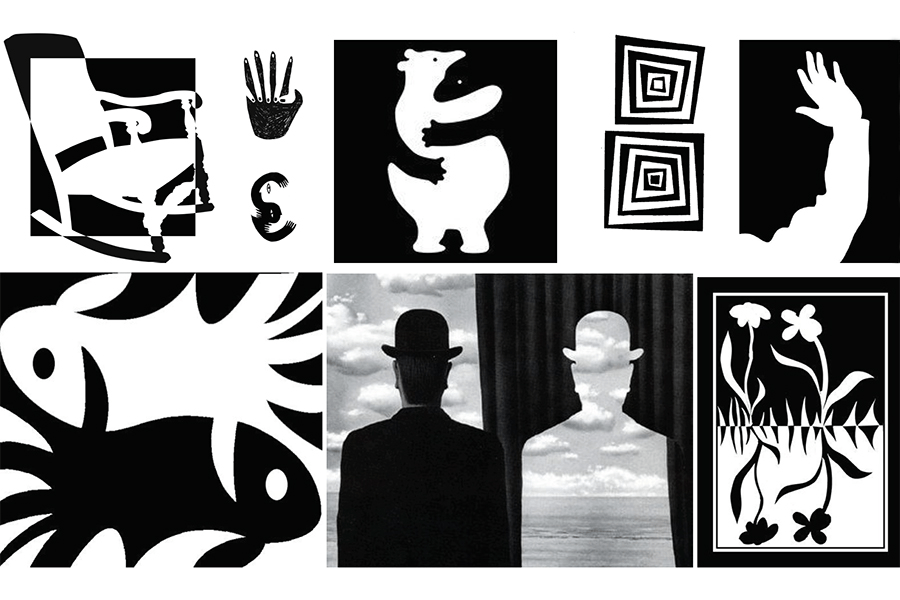
Similarly, there may be aspects of reality that elude detection altogether because they do not interact with our sensory or instrumental frameworks. These “unknown unknowns” serve as reminders of the provisional nature of our maps and the hubris of assuming completeness. Just as dark matter challenges our understanding of the cosmos, the gaps in our perception challenge our understanding of reality itself.

Practical and Ethical Implications

Intersectionalism’s recognition of perceptual and cognitive limits has profound implications for science, ethics, and philosophy.

Science and Knowledge

In science, Intersectionalism demands humility. Theories and models, however elegant, are maps rather than terrains. They approximate reality within specific domains but are always subject to revision or replacement. String theory, for instance, with its intricate mathematics and reliance on extra dimensions, risks confusing the elegance of the map for the completeness of the terrain. By embracing the provisionality of knowledge, Intersectionalism encourages openness to new paradigms and methods that might better navigate the negative spaces of understanding.

Ethics and Empathy

Ethically, Intersectionalism fosters a sense of humility and openness toward other perspectives. If reality is always interpreted subjectively, then every perspective—human, animal, or artificial—offers a unique and potentially valuable insight into the intersection of subject and object. Recognising this pluralism can promote empathy and cooperation across cultures, species, and disciplines.

Technology and Augmentation

Technological tools extend our sensory reach, revealing previously unseen aspects of reality. However, they also introduce new abstractions and biases. Intersectionalism advocates for cautious optimism: technology can help illuminate the terrain but will never eliminate the gap between map and terrain. Instead, it shifts the boundaries of our blind spots, often revealing new ones in the process.

Conclusion: Navigating the Space Between

Intersectionalism provides a framework for understanding reality as a shared but imperfect intersection of subject and object. It rejects the extremes of materialism and idealism, offering instead a middle path that embraces the limitations of perception and cognition while remaining open to the possibilities of negative space and unknown dimensions. In doing so, it fosters humility, curiosity, and a commitment to provisionality—qualities essential for navigating the ever-expanding terrain of understanding.

By acknowledging the limits of our maps and the complexity of the terrain, Intersectionalism invites us to approach reality not as a fixed and knowable entity but as an unfolding interplay of perception and existence. It is a philosophy not of certainty but of exploration, always probing the space between.

Blinded by Bias: The Irony of Greed and Self-Perception

Greed is a vice we readily recognise in others but often overlook in ourselves. This selective perception was strikingly evident during a recent conversation I had with a man who was quick to condemn another’s greed while remaining oblivious to his own similar tendencies. I told him about the escalating greed of certain companies who profit greatly from selling their printer inks and toner brands. I’ll spare you this history. This encounter underscores the powerful influence of fundamental attribution bias on our judgments and self-awareness.

Exploring Greed

Greed can be defined as an intense and selfish desire for something, especially wealth, power, or food. Psychologically, it is considered a natural human impulse that, when unchecked, can lead to unethical behaviour and strained relationships. Societally, greed is often condemned, yet it persists across cultures and histories.

We tend to label others as greedy when their actions negatively impact us or violate social norms. However, when we aggressively pursue our interests, we might frame it as ambition or resourcefulness. This dichotomy reveals a discrepancy in how we perceive greed in ourselves versus others.

Understanding Fundamental Attribution Bias

Fundamental attribution bias, or fundamental attribution error, is the tendency to attribute others’ actions to their character while attributing our own actions to external circumstances. This cognitive bias allows us to excuse our behaviour while holding others fully accountable for theirs.

For example, if someone cuts us off in traffic, we might think they’re reckless or inconsiderate. But if we cut someone off, we might justify it by claiming we were late or didn’t see them. This bias preserves our self-image but distorts our understanding of others.

The Conversation

Our conversation was centred on an HP printer that has shown a ‘low ink – please replace’ message since the cartridge was first installed. I recounted the history of the ink and toner industry. HP had a monopoly on ink for their products, a situation that earned them substantial marginal profits. Upstarts entered the marketplace. This started an escalating arms war. HP spent R&D dollars trying to defend their profit margins with nil benefit to the consumers of their product. In fact, it kept costs artificially higher. Competitors who wanted a slice of those fat margins found ways around these interventions. Eventually, HP installed chips on their toner cartridges. Unfortunately, they have a bug – or is it a feature? If you install a cartridge and remove it, it assumes you’re up to something shady, so it spawns this false alert. Some people believe this out of hand, so HP benefits twice.

If this bloke had worked for HP and had been responsible for revenue acquisition and protection, he would have swooned over the opportunity. Have no doubt. At arm’s length, he recognised this as sleazy, unethical business practices.

This conversation revealed how easily we can fall into the trap of judging others without reflecting on our own behaviour. His indignation seemed justified to him, yet he remained unaware of how his actions mirrored those he criticised.

Biblical Reference and Moral Implications

This situation brings to mind the biblical passage from Matthew 7:3-5:

“Why do you look at the speck of sawdust in your brother’s eye and pay no attention to the plank in your own eye? … You hypocrite, first take the plank out of your own eye, and then you will see clearly to remove the speck from your brother’s eye.”

The verse poignantly captures the human tendency to overlook our flaws while magnifying those of others. It calls for introspection and humility, urging us to address our shortcomings before passing judgment.

The Asymmetry of Self-Perception

Several psychological factors contribute to this asymmetry:

  • Self-Serving Bias: We attribute our successes to internal factors and our failures to external ones.
  • Cognitive Dissonance: Conflicting beliefs about ourselves and our actions create discomfort, leading us to rationalize or ignore discrepancies.
  • Social Comparison: We often compare ourselves favourably against others to boost self-esteem.

This skewed self-perception can hinder personal growth and damage relationships, as it prevents honest self-assessment and accountability.

Overcoming the Bias

Awareness is the first step toward mitigating fundamental attribution bias. Here are some strategies:

  1. Mindful Reflection: Regularly assess your actions and motivations. Ask yourself if you’re holding others to a standard you’re not meeting. Riffing from ancient moral dictates, just ask yourself if this is how you would want to be treated. Adopt Kant’s moral imperative framework.
  2. Seek Feedback: Encourage honest input from trusted friends or colleagues about your behaviour.
  3. Empathy Development: Practice seeing situations from others’ perspectives to understand their actions more fully.
  4. Challenge Assumptions: Before making judgments, consider external factors that might influence someone’s behaviour.

By actively recognising and adjusting for our biases, we can develop more balanced perceptions of ourselves and others.

Conclusion

The irony of condemning in others what we excuse in ourselves is a common human pitfall rooted in fundamental attribution bias. The adage, ‘Know thyself’ might come into view here. We can overcome these biases by striving for self-awareness and empathy, leading to more authentic relationships and personal integrity.

Warmth

My mind is a Pachinko machine; my brain fatigued. Add to this the environmental distractions, such as breakfast, and it’s not conducive to focus. Today, it’s scrambled eggs and dry muffins—sans jam or butter, only some whipped substitute unfit for human consumption,

My prompt for writing the recent post on Professionalism was my reaction to the hospital staff and their demeanour—or as a colleague suggested in a comment, decorum. Perhaps I can remain focused on the words on this page as I type.

For service staff, warmth is a necessary ingredient of professionalism. This is particularly true for persons in the healing arts. The top indicator for pursuing legal action in a medical malpractice suit is the doctor’s bedside manner—personality and disposition—, whether the patient feels a personal connexion—a human connexion.

My experience in hospital is that the Medical Doctors have been hit or miss in the department—more miss than hit. I can even recall the names of the memorable ones. I suppose were I to be ill-treated, I’d remember as well. Here, it’s either treated nicely as a human or otherwise as an object in an assembly line. Thankfully, there have been no mistreatments or abuse.

The Registered Nurses had a better warmth ratio. Asking my circle of family, friends, and associates, this seems to be the general consensus. The rest of the staff were somewhere in between.

This warmth or human connexion extends beyond healthcare and to the service industry where human-to-human contact is made, even where that connexion is virtual—perhaps more so in order to bridge the distance. In my experience, the human factor tends to fall more at or below the level of the Medical Doctors. Any warmth is accidental. I am not saying that the people themselves lack compassion—though that could be the case. Rather, I am saying that they are moulded into automatons by the systems they are part of. It saps people of their humanity.

I started writing a post titled Bureaucracy is Violence, but I never completed it because I got lost in research. In a nutshell, bureaucracy is a Procrustean bed. I’ll leave it there for now. If you know, you know. Meantime, rage against the machine.

Do not go gentle into that good night.
Rage, rage against the dying of the light.

— Dylan Thomas

Communication Breakdown

It’s good to remember that words are but a small portion of communication, which operates in a larger space. Body language, gesticulation, facial expressions, speed, tone, inflexion, and intonation, all combine to convey at least as much. This is why a written document is always lacking. This is why important or sensitive information should be delivered in person unless you are willing to risk misinterpretation.

In the post-covid reality, some people have moved a lot of their previously face-to-face communication to one of the various videoconference services. Infants rely highly on the face, and they express much through the face. Even domesticated dogs have expressive faces. The face conveys a lot of information. This helps to make videoconference a decent means of communication. It is a step up over the telephone for instant communication, but it still falls short. Even over the phone, one can still use delivery speed and pacing. Tone, inflexion, and intonation should be able to be conveyed, but this may also be limited by connexion quality as well as microphone and speaker quality. However, body language and gesticulation are still largely absent. What may be present can be lost over a small viewing screen or poor video quality.

What gets left behind or limited are cues of authenticity and trust. I remember I had a client in Texas who preferred not to speak with my manager and other executives from the New York office. We had all met in person in the pre-Covid world, and the Texans had judged these people as “fast-talking city folks” instead of real down-to-earth people. I may be a city-slicker, but I’m not as fast-talking. One of these men was a great communicator in my eyes, but these are city eyes. As for the other person, he had snake-oil salesman written all over him, but he tried to hide it in all his erudition. He was very book-smart but lacking in authenticity.

mean what you say, and you say what you mean

Allow me to pause for a moment to riff on authenticity. In one way, I don’t believe in authenticity because I don’t believe there is anything to be authentic to. I write about this in many posts and at length. On the other hand, authenticity is that you believe what you are saying—you mean what you say, and you say what you mean. So what you are asking me to believe, you believe yourself.

If spoken communication is so important, why do you write a blog? That a picture is worth a thousand words is telling. In fact, a picture may convey a thousand words, but it’s probably conveying almost infinite words—or it could be. Words typically fail to transmit metaphor and intent. If we want to be clear, we need to add all sorts of additional words to allay confusion. Perhaps we need to include background information, tangential information, context, and whatnot. By the time we include all of the information that would be conveyed by the face and gesture, we’ve probably overwhelmed the recipients with a document that reads like a terms and conditions page—the ones almost no one reads but tick the box at the end anyway.

What is lost or diminished over video is authenticity and emotional content. Of course, a person can convey sympathy, empathy, and compassion over the phone, but to me, it’s like the wire monkeys in the old psychology experiments by Dr Harry Harlow. You get something to cling to—perhaps even a blanket around the wire is better than nothing. If the telephone is a wire monkey, videoconference is the wire monkey wrapped in a Teri-towel. The human element is still missing. We’re interacting with a simulacrum.

Princess Leia Organa

Some people are amazed at the prospect of holograms in the manner of Princess Leia’s grand entrance. “Help me, Obi-Wan.” Indeed, help us all. It is a step in the right direction, but mind the gap.

In the end, we should at least strive to prioritise in-person communication. At least in the movies, when they want to tell a loved one that their combatant or police officer has fallen (read: died), they do this in person. It should be telling that this also convey’s an emotional message to the audience that is often received as intended. It may cost more, but be sure to evaluate this cost against the benefits. Consider the lost benefits as well.

Left-Brain, Right-Brain

The hemispheres of the brain have functional differences. I created a short-form video on YouTube, so it’s less than 60 seconds.

Transcript

If you see a face in this image (in the accompanying video), you can thank the right hemisphere of your brain. The right hemisphere is about unity and the whole—a Gestalt. It fills in missing pieces to construct a whole. And it’s usually pretty good at it.

Think of the right hemisphere as Zen. It’s about experiencing the world as presented. It experiences the world without judgment, without attachment, without naming. It’s about openness and options.
The left hemisphere is about division and parts. Where the right hemisphere wants to open up, the left wants to close down. And it’s about creating maps and symbols, then re-presenting these.
Where the left hemisphere of the brain is focused on the trees, the right hemisphere sees the forest or the woods.

The left hemisphere is what creates our sense of self and individuality whilst it would probably not be unfair to characterise the right hemisphere as the Buddhist notion of selflessness and an undivided universe, where ‘self’ is an illusion.
The left hemisphere is literal whilst the right is metaphoric. It is also the realm of poetry and empathy.