I continue my AutoCrit analysis of the chapter that asks, “Are we too dumb for democracy?” I’m inclined to think, in general, the answer is yes, but I investigate several opposing voices and suggestions for mitigation. Here’s the editorial analysis of the work in process.
Synopsis
The text explores David Moscrop’s book Are We Too Dumb for Democracy? which delves into the capacity of voters to make informed political decisions. Moscrop argues that while voters may face cognitive limitations and biases, they can overcome these through education, information, and systemic reforms. He emphasizes the importance of enhancing political literacy, implementing institutional changes like deliberative democracy practices, and increasing public engagement to improve democratic decision-making.
The text opens by posing the question of whether individuals are capable of making sound political choices in a democratic system. It introduces Moscrop’s perspective on addressing cognitive biases and providing tools for voters to make rational decisions. The closing highlights the necessity of actively engaging in efforts to enhance political literacy, implement reforms, and foster public participation to create a more informed electorate.
Structure and Organisation
The text follows a logical order by introducing Moscrop’s core arguments on voter cognition challenges before discussing his proposed solutions. It is well-organized with clear headings outlining key points within each section.
Clarity
Overall clarity is maintained throughout the text; however some complex terms like “temporal myopia” might require further explanation for readers unfamiliar with psychological concepts related to decision-making biases.
Audience
The target audience for this text includes policymakers, educators, scholars interested in democracy studies, and engaged citizens seeking insights into improving democratic processes. Those not likely part of the target audience could be individuals uninterested in politics or those already well-versed in theories on voter behaviour. To make it more relevant to its target audience, Moscrop could provide more practical examples or case studies illustrating the successful implementation of his proposed solutions.
Commentary
AutoCrit goes off the reservation and confuses my content with Moscrop’s. If you are interested in hearing Moscrop’s position, he did a TEDx talk on the topic in June 2018.
Tone
The tone is analytical yet engaging as it critically examines voter behaviour without being overly pessimistic about democracy’s future prospects.
Interest and Engagement
While most sections are engaging due to their relevance in today’s political climate, areas discussing educational effectiveness or feasibility issues with deliberative democracy practices could potentially lose reader interest. To improve engagement levels here, Moscrop could incorporate real-world examples demonstrating how these methods have been successfully implemented elsewhere.
Commentary
Again, AutoCrit goes off the reservation and conflates my content with Moscrop’s. My goal is not to regurgitate his book. Obtain his book if you want to read examples.
Argument and Persuasion
Moscrop presents opinions supporting the idea that voters can overcome cognitive limitations through education and institutional reforms effectively. The persuasive elements are strong as he provides evidence from research studies and offers practical solutions backed by scholarly works such as Kahneman’s “Thinking Fast And Slow.”
Final Thoughts and Conclusions
The text effectively concludes with a comprehensive summary of David Moscrop’s arguments on the cognitive limitations of voters and potential solutions to enhance democratic decision-making. It ties together key points discussed throughout the analysis, emphasizing the importance of addressing these issues for the effective functioning of democratic systems. The call to action encourages active engagement from policymakers, educators, and citizens in efforts to improve political literacy, implement institutional reforms, and promote public participation. Overall, the conclusion is clear, strong, and satisfying, and serves as a fitting end to the exploration of Moscrop’s work.
References and Supporting Materials
Primary Text
Moscrop, D. (2019). Too Dumb for Democracy? Why We Make Bad Political Decisions and How We Can Make Better Ones. Goose Lane Editions.
Analytical Works
Brennan, J. (2016). Against Democracy. Princeton University Press.
Kahneman, D. (2011). Thinking, Fast and Slow. Farrar, Straus and Giroux.
Foucault, M. (1977). Discipline and Punish: The Birth of the Prison. Vintage Books.
Case Studies and Examples
Fung, A., & Wright, E. O. (2003). Deepening Democracy: Institutional Innovations in Empowered Participatory Governance. Verso.
Gastil, J., & Levine, P. (Eds.). (2005). The Deliberative Democracy Handbook: Strategies for Effective Civic Engagement in the Twenty-First Century. Jossey-Bass.
Nyhan, B., & Reifler, J. (2010). “When Corrections Fail: The Persistence of Political Misperceptions.” Political Behavior, 32(2), 303-330.
AutoCrit is an AI-based editorial application. I am a member of their affiliate programme, so I gain minor financial benefits at no cost to you if you purchase through a link on this page.
Using AutoCrit, I continue to share the review progress of my work in progress, Democracy: The Grand Illusion—perhaps Grand Delusion might be more fitting. In this chapter, I establish a foundation for intelligence and cognitive function.
Synopsis
The text begins by discussing the concept of intelligence, specifically focusing on IQ as a measure of cognitive abilities relative to others. It explains the origins and standardisation of IQ tests, highlighting their limitations in capturing the full spectrum of human intelligence. The discussion then shifts towards Emotional Intelligence (EQ), outlining its components and emphasising its importance in interpersonal relationships and leadership roles.
The narrative further delves into Howard Gardner’s Theory of Multiple Intelligences, which challenges the idea that intelligence is a singular ability measured solely by traditional IQ tests. The text elaborates on various types of intelligences proposed by Gardner, such as linguistic, musical, spatial, naturalistic, and intrapersonal intelligence.
Moreover, cognitive biases are explored in detail within democratic processes through real-world examples like confirmation bias or groupthink. Strategies to mitigate these biases are suggested for improving decision-making within democracies.
The text concludes with a call for embracing diverse forms of intelligence within democratic systems while acknowledging and addressing cognitive biases to enhance governance effectiveness.
Audience
The target audience for this text appears to be individuals interested in psychology, education theory, and political science, or those exploring the intersection between human cognition and democratic governance. Readers seeking an in-depth analysis of different forms of intelligence alongside discussions on democracy would find this text engaging.
Those less inclined towards academic or theoretical discourse may not be the primary target audience. To make it more relevant to a broader readership base outside academia or specialized fields:
Simplifying complex terminology
Providing relatable examples
Incorporating practical applications
Structure and Organisation
The structure follows a logical order starting with defining traditional measures of intelligence leading up to discussions on multiple intelligences and cognitive biases impacting democracy. Each section flows cohesively into the next without abrupt transitions or disjointed topics. No significant issues with organisation are evident; each subsection builds upon previous concepts effectively.
Clarity
Overall clarity is maintained throughout most sections; however:
Complex sentence structures could potentially hinder comprehension for some readers.
Jargon related to psychological theories might require additional clarification for lay audiences. Providing simplified explanations where needed can enhance reader understanding without sacrificing depth.
Argument and Persuasion
Opinions presented focus more on informing than persuading; strengths lie in presenting well-supported arguments backed by historical context (e.g., case studies). Logical construction aids credibility but lacks explicit attempts at persuasion beyond informative purposes.
Tone
The tone remains informative yet engaging throughout without veering towards overly formal or casual language usage which suits an academic discourse effectively.
Interest and Engagement
The text manages to maintain interest through its exploration of diverse aspects related to human intelligence; however certain sections discussing specific types like “Naturalistic Intelligence” might require additional engagement strategies such as case studies showcasing individuals excelling in that particular domain.
Final Thoughts & Conclusions
The conclusions drawn at the end tie together various points introduced earlier effectively providing clear insights into how embracing diverse forms of intelligence can enhance democratic decision-making processes – offering strong closure that resonates with preceding discussions.
The text concludes by emphasising the importance of understanding intelligence in a multifaceted manner, encompassing both IQ and EQ as well as Howard Gardner’s theory of multiple intelligences. It highlights the limitations of relying solely on IQ tests for measuring intelligence, pointing out cultural biases and the narrow scope of such assessments. The discussion on emotional intelligence (EQ) adds depth to the exploration, underscoring its significance in interpersonal relationships, leadership, and mental health. By integrating multiple intelligences into the context of democracy, the text suggests a more inclusive approach to decision-making that values diverse forms of intelligence beyond traditional analytical skills. Overall, the conclusion effectively ties together key points introduced throughout the text, providing a comprehensive perspective on human intelligence and its implications for democratic systems.
Binet, A., & Simon, T. (1916). The development of intelligence in children. (E. S. Kite, Trans.). Williams & Wilkins.
Flynn, J. R. (1987). Massive IQ gains in 14 nations: What IQ tests really measure. Psychological Bulletin, 101(2), 171-191.
Gardner, H. (1983). Frames of mind: The theory of multiple intelligences. Basic Books.
Goleman, D. (1995). Emotional intelligence: Why it can matter more than IQ. Bantam Books.
Herrnstein, R. J., & Murray, C. (1994). The bell curve: Intelligence and class structure in American life. Free Press.
Kaufman, A. S. (2009). IQ testing 101. Springer Publishing Company.
Mayer, J. D., & Salovey, P. (1997). What is emotional intelligence? In P. Salovey & D. J. Sluyter (Eds.), Emotional development and emotional intelligence: Educational implications (pp. 3-31). Basic Books.
Sternberg, R. J. (1985). Beyond IQ: A triarchic theory of human intelligence. Cambridge University Press.
Sternberg, R. J., & Kaufman, S. B. (Eds.). (2011). The Cambridge handbook of intelligence. Cambridge University Press.
Terman, L. M. (1916). The measurement of intelligence. Houghton Mifflin.
Wechsler, D. (1949). Wechsler intelligence scale for children (WISC). Psychological Corporation.
Plato. (c. 380 BCE). The republic. (G. M. A. Grube, Trans.; C. D. C. Reeve, Rev.). Hackett Publishing Company.
AutoCrit is an AI-based editorial application. I am a member of their affiliate programme, so I gain minor financial benefits at no cost to you if you purchase through a link on this page.
Follows is another AutoCrit1 review of my current focus—working title: Democracy: The Grand Illusion, affectionately called Dumocracy.
Synopsis
The chapter “Vote Against Democracy, Say ‘Nay'” delves into a comprehensive exploration of the critiques posed by prominent intellectuals and philosophers throughout history regarding democratic systems. The opening sets the stage by quoting Winston Churchill’s famous line: “The best argument against democracy is a five-minute conversation with the average voter.” This quote immediately introduces a critical perspective on democracy, foreshadowing the in-depth analysis to come.
“The best argument against democracy is a five-minute conversation with the average voter.”
The text then proceeds to examine various historical figures’ criticisms of democracy, ranging from Plato’s concerns about mob rule to Tocqueville’s observations about mediocrity in democratic societies. Each thinker’s critique is dissected and analyzed, shedding light on the potential pitfalls and limitations of democratic governance. From elitism and failures within democracies to warnings about the tyranny of the majority and challenges with meritocracy, each section offers valuable insights into different aspects of democratic systems.
As the text progresses towards its conclusion, it synthesizes these diverse critiques while acknowledging both strengths and weaknesses inherent in democratic ideals. It culminates by emphasizing that despite its flaws, democracy remains one of the best available forms of government—a sentiment encapsulated in Winston Churchill’s famous remark: “Democracy is the worst form of government, except for all others that have been tried.” This closing statement reinforces a pragmatic understanding of democracy while encouraging ongoing reflection on how to refine and improve democratic governance models.
“Democracy is the worst form of government, except for all others that have been tried.”
Winston Churchill
In essence, “Vote Against Democracy, Say ‘Nay'” presents a nuanced examination of historical critiques surrounding democracy that challenge readers to critically assess both the virtues and vulnerabilities embedded within this prevalent system of governance.
Audience
audience for this text appears to be individuals interested in political theory, philosophy, and the complexities of democratic governance. Those who are engaged in scholarly or academic discussions surrounding democracy, its critiques, and potential reforms would likely find this text highly relevant. The detailed exploration of historical perspectives from prominent figures like Plato, Aristotle, Churchill, Nietzsche, and Tocqueville provides a comprehensive overview for readers with an interest in political thought.
However, individuals seeking a more general overview or introductory understanding of democracy may find the text overly intricate and specialized. To make it more accessible to a broader audience outside academia or political theory enthusiasts, the author could consider simplifying complex philosophical concepts into more digestible language. Additionally, providing real-world examples or contemporary case studies illustrating the practical implications of these critiques could help engage a wider range of readers who may not have prior knowledge of political theory. Incorporating clear summaries at key points throughout the text can also aid in enhancing readability and comprehension for those less familiar with the subject matter.
Structure and Organisation
The text follows a logical order and is well-organized. Each critique of democracy by the different intellectuals is presented in a structured manner, with clear transitions between each section. The text flows smoothly from one critique to the next, providing a comprehensive overview of various perspectives on democratic governance without any apparent issues of structure or organization.
Clarity
The author’s points are generally presented clearly throughout the text. Complex ideas and critiques of democracy are explained in a structured manner, making it easier for readers to follow the arguments presented by each thinker. However, there are instances where additional clarification or simplification could enhance reader understanding:
In the section discussing Joseph Schumpeter’s elitist theory of democracy, some readers may find the concept of democracy as a competitive struggle for votes rather than genuine self-governance by the masses somewhat challenging to grasp without further elaboration on how this dynamic operates within democratic systems.
The discussion on Michel Foucault’s critique of democracy introduces terms like biopolitics and power structures that may require more explicit definitions or examples to help readers unfamiliar with these concepts fully comprehend their significance within democratic contexts.
Audre Lorde’s critique focusing on intersectionality and democratic inclusion touches upon complex social dynamics that might benefit from clearer illustrations or real-world applications to elucidate how these issues manifest in practice within democratic institutions.
Overall, while the text effectively conveys nuanced critiques of democracy by various thinkers, providing more concrete examples or simplified explanations in certain sections could enhance clarity for readers less familiar with political theory and philosophy.
Commentary
I may address these aspects with footnotes as this background information is at times extensive and in any case available elsewhere.
Argument and Persuasion
The text presents a range of opinions critiquing democratic systems from various thinkers such as Plato, Aristotle, Alexis de Tocqueville, Friedrich Nietzsche, Winston Churchill, Joseph Schumpeter, Simone Weil, Michel Foucault, and Audre Lorde. These critiques cover themes like elitism in governance (Plato), the importance of moderation (Aristotle), concerns about tyranny of the majority (Tocqueville), critique of egalitarianism (Nietzsche), pragmatic view on democracy’s flaws and strengths (Churchill), elitist theory emphasizing competition for votes over self-governance by masses (Schumpeter), highlighting failures to address spiritual needs and rootedness in society (Weil) and understanding how democratic institutions can perpetuate subtle forms of control through power structures embedded within knowledge frameworks.
Each thinker presents their arguments with logical reasoning and supporting evidence drawn from historical contexts or philosophical principles. The strength lies in the diversity of perspectives offered which enriches the discourse on democracy by exploring its complexities from different angles. By addressing issues like potential mediocrity in democracies or challenges with inclusivity for marginalized groups within democratic systems these critiques prompt critical reflection on areas where improvements may be needed.
Overall, the persuasive elements are well-supported through references to original texts or established theories. The logical construction is evident as each opinion is presented coherently with relevant examples or theoretical frameworks backing them up.
Tone
The text presents a range of emotional perspectives, reflecting both critical analyses and nuanced reflections on democratic systems. The tone varies from sober contemplation to impassioned critique, showcasing a mix of scepticism, concern, pragmatism, and urgency. Each author’s perspective evokes emotions such as caution (Plato), moderation (Aristotle), wariness (Tocqueville), disdain for egalitarianism (Nietzsche), pragmatic acknowledgement of flaws (Churchill), elitist realism (Schumpeter), longing for rootedness and community (Simone Weil), critical examination of power structures (Foucault) and call for inclusivity and justice for marginalized groups (Audre Lorde). These emotional tones collectively create a rich tapestry that challenges conventional views on democracy while urging readers to consider the complexities inherent in governance systems.
Interest and Engagement
The text presents a wide range of critiques on democracy from various historical and philosophical perspectives, which can be engaging for readers interested in political theory. The inclusion of notable figures such as Plato, Aristotle, Alexis de Tocqueville, Friedrich Nietzsche, Winston Churchill, Joseph Schumpeter, Simone Weil, Michel Foucault, and Audre Lorde adds depth and credibility to the discussion.
However, due to the detailed nature of each critique presented in the text and the extensive references to specific works by these thinkers, some sections may become dense or overwhelming for readers who are not well-versed in political philosophy. To improve engagement in these sections:
Simplify Complex Ideas: Break down complex concepts into more digestible segments that are easier for a broader audience to understand.
Provide Contextual Explanations: Offer brief explanations or summaries before delving into each critique to provide context for readers unfamiliar with the philosophers’ works.
Use Analogies or Real-World Examples: Illustrate abstract ideas with relatable examples or analogies that help clarify their relevance in contemporary society.
Incorporate Visual Aids: Consider using diagrams or visual aids to enhance understanding of intricate theories and make them more accessible.
By incorporating these strategies throughout the text when discussing challenging concepts from different critiques on democracy by prominent theorists such as Plato’s “The Republic,” Aristotle’s “Politics,” Tocqueville’s “Democracy in America,” Nietzsche’s concept of the Übermensch (Overman), Churchill’s pragmatic observations on democracy being “the worst form of government except all others,” Schumpeter’s elitist theory of democracy emphasizing competition among elites for votes rather than direct self-governance by all citizens; Weil’s focus on rootedness and community needs within democratic systems; Foucault’s analysis on power structures within democracies perpetuating control; Lorde’s intersectionality critique highlighting exclusionary practices towards marginalized groups—the author could maintain reader interest while navigating through intricate discussions surrounding democratic governance across history and philosophy.
Commentary
I plan to incorporate some visual and diagrammatic aids, but AutoCrit cannot evaluate this type of content.
Final Thoughts and Conclusions
The text ends with a comprehensive and cohesive conclusion that effectively ties together the various critiques of democratic systems presented by Plato, Aristotle, Alexis de Tocqueville, Friedrich Nietzsche, Winston Churchill, Joseph Schumpeter, Simone Weil, Michel Foucault, and Audre Lorde. The final thoughts provide a reflective summary of the challenges inherent in democratic governance while emphasizing the need for ongoing reflection and improvement within democratic systems. The concluding section successfully synthesizes the diverse perspectives on democracy discussed throughout the text.
AutoCrit is an AI-based editorial application. I am a member of their affiliate programme, so I gain minor financial benefits at no cost to you if you purchase through a link on this page. ↩︎
Churchill is not on record having said this, but the sentiment remains. ↩︎
“Many forms of government have been tried and will be tried in this world of sin and woe. No one pretends that democracy is perfect or all-wise. Indeed, it has been said that democracy is the worst form of government except all those other forms that have been tried from time to time.” – Winston Churchill
As I continue to write and examine my book, I’ll share snippets of progress. In this article, I focus on the voices in support of democracy. This might seem like counting grains of sand on the beach given Democracy’s promotional propaganda. In the West, we are inundated with this messaging.
Some of the pro-democracy voices also appear in the chapter on sceptics, but I separate the streams of thought in each section. Representing pro-democracy voices are the following:
Western Thinkers
Karl Marx
Winston Churchill
John Stuart Mill
Thomas Jefferson
Alexis de Tocqueville
Nelson Mandela
Eastern and Untraditional Thinkers
Mahatma Gandhi
Aung San Suu Kyi
Sun Yat-sen
Benigno “Ninoy” Aquino Jr
Kim Dae-Jung
I wanted to gain perspective from more than white male voices promoting democracy. I found Nelson Mandela, a black African who subscribes to the Western tradition. Aung San Suu Kyi is the only female represented in this cohort.
Here is how AutoCrit* sees the content of this chapter using its reporting structure.
Synopsis
The text delves into the exploration and defence of democratic ideals through the perspectives of various historical figures, both Western and Eastern. It opens with a quote from Winston Churchill highlighting the imperfections of democracy but also its superiority over other forms of government. The author then introduces key thinkers such as Karl Marx, John Stuart Mill, Thomas Jefferson, Alexis de Tocqueville, Nelson Mandela, Mahatma Gandhi, Aung San Suu Kyi, Sun Yat-sen, Benigno Aquino Jr., and Kim Dae-Jung. Each figure’s support for democracy is examined within their historical context and relevance to modern governance. The text closes by reflecting on common themes among these figures regarding the challenges and potentials of democratic systems.
Audience
The target audience for this text appears to be readers interested in political philosophy, history, or governance systems. Those seeking insights into the evolution of democratic thought through influential figures would find value in this content. However, individuals looking for a light read or entertainment may not be the primary audience here. To make it more relevant to a wider audience base including students or general readers less familiar with political theory jargon could be simplified without compromising depth.
Structure and Organisation
The structure follows a logical order by introducing each figure individually along with their background information before discussing their support for democracy. This organisation allows for clear delineation between different perspectives while maintaining coherence throughout the text.
Clarity
Overall clarity is good; however, some sections delve deeply into specific philosophical concepts that may require prior knowledge or further explanation for complete understanding. For instance, when discussing epistocracy in relation to Jason Brennan’s views on political competency testing could benefit from clearer definitions or examples to aid comprehension.
Argumentation and Persuasion
Opinions presented are well-supported by referencing primary texts from historical figures like Churchill’s speeches or Gandhi’s writings which lend credibility to arguments made about their beliefs in democratic principles being logically constructed.
Tone
The tone throughout is informative yet respectful towards differing viewpoints on democracy presented by each figure discussed – ranging from critical analysis (as seen with Jason Brennan) to advocacy (like Nelson Mandela). There’s an objective approach taken towards evaluating these diverse opinions without overt bias evident in how they’re portrayed.
Interest and Engagement
While engaging overall due to its examination of significant historical figures’ stances on democracy across cultures; there are parts where excessive detail might lose reader engagement especially if unfamiliar with certain terms or contexts like agrarian democracies proposed by Jefferson which could benefit from simplification without losing substance.
Final Thoughts and Conclusions
The text concludes effectively summarizing common themes amongst discussed figures regarding democratic ideals while offering reflections tying together points introduced earlier providing a satisfying closure that encapsulates main ideas explored demonstrating thorough analysis facilitating reader understanding comprehensively.
* AutoCrit is an AI editorial review application. Whilst I don’t have enough exposure or experience to fully endorse the programme, I am a subscriber who uses it to critique my writing. I am, however, an affiliate member, so if you purchase a subscription, I will receive compensation from them, and it will benefit this site at no additional expense to you.
I edited some of AutoCrit’s output to conform with standard British English. Please remember that this is a first draft that will go through several review cycles.
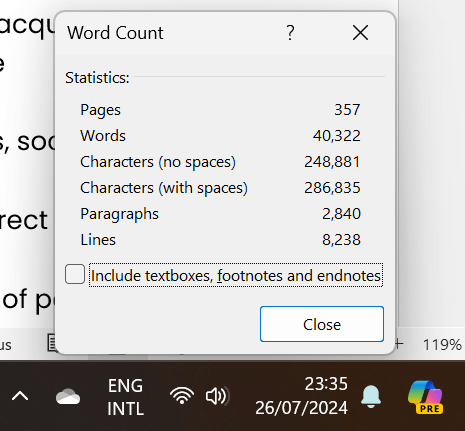
As I’ve mentioned, I’m hip-deep into writing another book. I’m about 40,000 words in and 40 per cent done. Many chapters still contain placeholder notes and ideas to flesh out. I’ll be honest. Many of the chapters contain only themes, notes, references, and citations. Some are ostensibly first drafts. For these chapters. I’ve engaged AutoCrit*, an AI copy editing and review application to keep me on track. I don’t particularly want to share too much inside information at this time, but I’d like to share some of AutoCrit’s feedback in dribs and drabs.
AutoCrit can analyse content by chapter. The first is a preamble—a preface. Here’s what AutoCrit has to say about it, categorised. I’ll present the raw responses and comment thereafter.
Synopsis
The non-fiction work “Democracy: The Grand Illusion” challenges the sanctity of democracy and questions its effectiveness by delving into inherent flaws often overlooked. The text opens with a provocative exploration of the fundamental flaws in democracy, arguing that it leads to suboptimal solutions and mediocre results both in theory and practice. It highlights how human nature, cognitive limitations, emotional triggers, and biases impact the execution of democratic systems.
Throughout the book, various forms of democracy are examined across different historical contexts globally. From ancient Mesopotamia to modern-day Western democracies like the United States, the author critiques the shortcomings of democratic governance. By dissecting voter apathy, cognitive biases, and mathematical imperfections in voting systems, they aim to provide a nuanced understanding of why democracy may be fundamentally flawed.
The text concludes by emphasising that while there may not be a perfect solution to address these flaws within democratic systems, incremental reforms can make them fairer and more effective. It acknowledges resistance from those who benefit from maintaining the status quo but argues for ongoing efforts towards improving governance despite historical precedents favouring entrenched power structures.
In its closing remarks on reforming governing systems knowing their inherent imperfections will persist, “Democracy: The Grand Illusion” leaves readers contemplating potential avenues for change within existing frameworks rather than advocating for revolutionary upheavals. Through referencing philosophical critiques dating back to Plato’s “Republic” as well as contemporary works on cognitive limitations like Daniel Kahneman’s “Thinking Fast and Slow,” this book encourages critical thinking about democratisation processes amidst evolving technological landscapes shaping public discourse.
Commentary
This feels like a fair assessment.
Audience
The audience for this text appears to be intellectually curious individuals interested in political theory, governance systems, and critical analysis of democracy. This includes academics, political scientists, philosophers, and readers who enjoy engaging with thought-provoking ideas that challenge conventional wisdom. The text seems tailored for those willing to question deeply held beliefs about democracy and open to exploring alternative perspectives on the subject.
Those who may not be the target audience include staunch defenders of traditional democratic principles without room for critical evaluation or scepticism. Readers seeking a straightforward endorsement of democracy as an ideal system may find the content challenging or even off-putting. Additionally, individuals looking for practical solutions or concrete proposals to improve democratic processes might feel unsatisfied by the lack of definitive recommendations in the text.
To make the text more relevant to its target audience, the author could consider providing more historical context and philosophical insights into various critiques of democracy throughout history. Including case studies or real-world examples that illustrate some of the challenges discussed could also enhance engagement with readers interested in applying theoretical concepts to contemporary issues. Moreover, offering suggestions for further reading or avenues for deeper exploration into specific aspects of democratic theory would cater well to an intellectually engaged audience seeking additional resources for continued study and reflection.
Commentary
This feels like a fair assessment of potential audience acceptance and resistance to engagement. As this is only the preface, historical contexts are in later chapters.
Structure and Organisation
The text is well-organised and follows a logical order. It begins with a preface quoting an anonymous source, setting the tone for introspection and critical analysis. The introduction effectively sets the stage by posing thought-provoking questions about democracy’s efficacy before delving into the main premises of the book. The author then transitions smoothly to discussing inherent challenges in democracy, historical contexts, implications of cognitive limitations, and critiques from various perspectives.
Each section flows seamlessly into the next, building upon previous discussions while maintaining coherence throughout. The text effectively introduces key concepts before expanding on them further, ensuring that readers can follow along with the author’s arguments and insights without confusion or disarray. Additionally, citations are appropriately included at relevant points to support claims made within the text.
Overall, “Democracy: The Grand Illusion” demonstrates strong structure and organisation by presenting its content in a clear and cohesive manner that guides readers through a nuanced exploration of democracy’s flaws and complexities.
Commentary
This feels like a fair assessment of my structural intent. I admit that in its current state, there is more structure than content. I’ll accept this unpaid endorsement.
Clarity
The author effectively conveys their central argument challenging the effectiveness of democracy and highlighting its inherent flaws. The text is well-structured and maintains a coherent flow throughout. However, there are instances where complex sentence structures and specialized terminology may hinder comprehension for some readers.
One example of potentially confusing language is when the author discusses “cognitive limitations exacerbating the execution of democracy from the perspective of voters and representatives.” This phrase might benefit from further clarification or simplification to ensure all readers grasp the intended meaning without difficulty.
Additionally, phrases like “mathematically tenable” and references to specific philosophical critiques or mathematical concepts could be challenging for readers not familiar with these subjects. Providing more context or explanations for such terms would enhance overall clarity for a broader audience.
Overall, while the text generally communicates its message effectively, some areas could be improved by offering clearer explanations or simplifying complex language to ensure maximum reader understanding.
Commentary
This feels like a fair assessment of clarity. I do my best not to muck it up. I’ll tighten up the language in a subsequent review. My modus operandi is to scrawl the stream of consciousness before restricting my flow with editorial concerns.
Argument and Persuasion
In the text, the author presents a provocative argument challenging the effectiveness of democracy and highlighting its inherent flaws. The opinions put forth include questioning the sanctity of democracy as a fair and equal system of governance, suggesting that it leads to suboptimal solutions with mediocre results both in theory and practice, emphasising human cognitive limitations and biases that hinder democratic processes, and proposing that democracy may be fundamentally flawed due to these factors.
Strengths of the persuasive elements in this text lie in its thought-provoking nature. By raising questions about widely held assumptions regarding democracy’s efficacy, the author encourages critical thinking among readers. The logical construction is evident through a systematic breakdown of various aspects contributing to the perceived flaws in democratic systems – from mathematical imperfections in voting mechanisms to challenges posed by human nature and cognitive biases.
The opinions presented are well-supported with references to historical perspectives (such as Ancient Athens) and philosophical critiques (Plato’s “The Republic,” Aristotle’s “Politics”) on democracy. Additionally, citations from contemporary sources like Daniel Kahneman’s work on cognitive biases lend credibility to the arguments made.
Overall, while some readers may find the critique of democracy unsettling or elitist, the text effectively challenges conventional beliefs without offering a definitive alternative solution. This approach prompts readers to engage critically with existing governance structures rather than simply dismissing them outright.
Commentary
This feels like a fair assessment. My goal is to survey the flavours of Democracy to serve as a menu to readers. Democracy is an inherently poor system of governance, but some flavours are better than others if one prefers to remain in this box.
Tone
The tone of the text is critical and provocative, challenging the traditional notions of democracy with a sense of scepticism and urgency. The author’s language conveys a sense of disillusionment with the current democratic systems, highlighting flaws and limitations that are often overlooked or dismissed. There is an underlying frustration with the status quo and a call to action for readers to critically examine their beliefs about democracy. The tone also carries elements of elitism, acknowledging that the critique may not be readily accepted by all but emphasizing the importance of questioning widely held assumptions. Overall, there is a mix of cynicism towards existing democratic structures and a hopeful aspiration for potential reforms or alternative governance models.
Commentary
This feels like a fair assessment of tone. I don’t mind being polemic, but I may work to soften some tonal aspects. As my intended audience are more intellectual critical thinkers, it may be fine as-is.
Interest and Engagement
The text “Democracy: The Grand Illusion” presents a thought-provoking and intellectually stimulating analysis of democracy, challenging conventional perspectives on the subject. Overall, the author effectively engages the audience by presenting a unique perspective and raising important questions about the efficacy of democratic systems.
The introduction sets a captivating tone by questioning the fundamental flaws in democracy and highlighting its limitations. The author’s use of rhetorical questions and provocative statements encourages readers to think critically about commonly held beliefs regarding democracy. Additionally, referencing historical contexts and philosophical critiques adds depth to the discussion, making it more engaging for those interested in political theory.
However, there are sections within the text that may potentially lose some readers’ interest due to their dense nature or repetitive arguments. For instance, parts discussing mathematical flaws in voting systems or technological impacts on democracy could be perceived as overly technical for general audiences. To enhance engagement in these sections, the author could consider incorporating real-world examples or case studies to illustrate complex concepts more clearly.
Furthermore, providing concise summaries or visual aids such as graphs or charts may help break down intricate ideas into digestible segments for readers who may struggle with dense theoretical discussions. By balancing theoretical analyses with practical applications and varied presentation styles, the author can maintain reader engagement throughout all sections of the book.
In conclusion, while “Democracy: The Grand Illusion” successfully captures attention through its bold critique of democracy’s shortcomings, enhancing engagement across all sections through improved clarity and varied presentation methods will ensure sustained interest from a wider range of readers.
Commentary
This feels like a fair assessment of engagement. My goal is to flesh this out in forward revisions as I assess continuity and flow. Meantime, capturing content into buckets is a higher priority than caring about redundancy.
Final Thoughts and Conclusions
The text concludes with a strong and thought-provoking reflection on the challenges and complexities of democracy. It effectively ties together the various points raised throughout the book, emphasizing the inherent flaws in democratic systems while also acknowledging the necessity of governance for societal well-being. The author leaves readers with a sense of urgency to reconsider traditional notions of democracy and encourages critical thinking towards potential reforms or alternative models. Overall, the final thoughts are clear and impactful and provide a compelling conclusion to the discussion presented in the text.
Commentary
I’ll take it.
How does this project sound to you? Leave comments below.
* AutoCrit is an AI editorial review application. Whilst I don’t have enough exposure or experience to fully endorse the programme, I am a subscriber who uses it to critique my writing. I am, however, an affiliate member, so if you purchase a subscription, I will receive compensation from them, and it will benefit this site at no additional expense to you.
I’m working on a new book—if by new I mean reengaging a book I started in 2022. I’m picking up where I left off with fresh eyes. As I’ve not had time to contribute much to this blog, I thought I’d share the preface as a work in progress. I may share additional subsections over time. Feel free to share any feedback in the comments section.
Imagine a world where the foundation of our governance, the system we hold as the pinnacle of fairness and equality, is fundamentally flawed. What if the mechanisms we trust to represent our voices are inherently incapable of delivering the justice and prosperity we seek? This book embarks on a provocative journey to challenge the sanctity of democracy, not with the intent to undermine its value but to question its effectiveness and expose the inherent limitations that have been overlooked for centuries.
This book is meant to be inclusive, though not necessarily comprehensive. Although focused heavily on a Western experience, particularly the United States, the insights and critiques apply globally.
Democracy feels like an anachronism awaiting a paradigm shift. As a product of the Enlightenment Age, democracy has been sacrosanct in the Western world for centuries. However, a quick glance at current results reveals dissonance. Not all is well. Despite typical defences such as entrenched political parties, low-information voters, rural-urban divides, gerrymandering, and illegal voting, this book sets out to show that democracy is fundamentally flawed. It doesn’t even work well on paper, almost inevitably yielding suboptimal results. When people are added to the equation, it just gets worse.
In this book, we’ll discuss inherent challenges to democracy. The main premises are:
In theory, democracy is not mathematically tenable. It always leads to suboptimal solutions with mediocre results. [1]
In practice, human nature and cognitive limitations exacerbate the execution of democracy from the perspective of voters and representatives. [2]
We’ll explore democracy from its beginnings and various forms across time, history, scale, and scope. We’ll investigate the impacts of imperfect information, human rationalities, emotional triggers, and cognitive limitations and biases of the general populace. We’ll survey the continents and look at ancient Mesopotamia, India, the Polynesian islands, and beyond.
This book aims to spark critical thinking and dialogue about the efficacy of democracy, encouraging readers to question widely held assumptions and consider the need for potential reforms or alternative governance models. Through this examination, the book hopes to inspire new ideas and solutions that can address the complexities and challenges inherent in democratic systems.
I’ve resurrected a book project (working title Dumbocracy) that I commenced at the end of 2021. I’ve revisited the structure and made some amends to the outline before I move forward. I’ve done more research and feel the topic is (sadly) still as relevant now as then. The approach I am taking is to present:
definition and summary
historical perspective of advocates and detractors
the main thesis and antithesis
alternatives
future prospects
I’ve got a lot going on, so this may whither or die on the vine, but I’m hoping to reach the goal line this time. Since I already invested many hours over days since Autumn 2020, the groundwork is already laid.
If anyone has any contributions, I welcome them.
Revised Chapter Order
Position and Setup
Introduce the central thesis and set the stage for the book.
Historical Backdrop – Pre-Enlightenment Until Now
Provide historical context to ground the reader in the evolution of democratic ideas.
Celebrity Supporters
Highlight influential figures who supported democracy, setting up the positive aspects and idealism associated with it.
Celebrity Anti-Democracy Figures
Present notable critics of democracy to introduce scepticism and counterpoints early on.
Prima Facie Arguments
Lay out the initial arguments against democracy, building on the scepticism introduced in the previous chapter.
Shaky Grounds and Necessarily Suboptimal Outcomes: Arrow’s Impossibility Theorem
Dive into the mathematical and theoretical flaws in democratic voting systems to provide a strong foundation for the critiques.
Essential Steelman Counterarguments
Present the strongest counterarguments to the prima facie arguments, offering a balanced perspective.
Are We Too Dumb for Democracy?
Analyze cognitive limitations and their impact on democratic decision-making.
Dealing with Rational Ignorance and Unknown Unknowns
Address the issues of rational ignorance and the limits of voter knowledge.
Reconciling Worldviews: Individualism Versus Collectivism
Discuss the philosophical tensions and their implications for democracy.
Possible People-Based Solutions
Introduce potential reforms and solutions to address the identified flaws.
People-Based Counterarguments
Defend democracy by presenting strong arguments for the capability and resilience of the populace.
Against Democracy
Explore Jason Brennan’s epistocracy and other critiques in depth.
Effective Mob Rule
Discuss ways to improve voter quality and address historical injustices.
The Representatives
Debate the idea of electing more qualified representatives.
Jeremy Bentham’s Panopticon — Watching the Watchers
Consider the concept of surveillance and accountability in governance.
US / UK Politics
Critique the current state of politics in the US and UK, providing contemporary relevance.
SCOTUS Partisanship
Examine the partisanship in the Supreme Court and its implications for democracy.
Jury Systems
Analyze the jury system as a microcosm of democratic principles.
What About…?
Anarchy and Libertarianism
Deliberative Democracy
Republicanism
Epistocracy
Sortition
Other Potential ‘What Abouts’
Tea Leaves
Speculate on the future of democracy and potential reforms or alternatives.
And So What? Where to Go from Here?
Summarize the findings and suggest practical steps for addressing the flaws in democracy and exploring alternatives.
NB: As is typical, these are working titles subject to change.
Hear me out. The Age of Enlightenment and after is based on the notion that ordinary people are rational, capable of reason, and critical thinking. I may not get out much, but I don’t notice a lot of evidence of this. In fact, I feel that the original proponents of this didn’t get out much either. And when they did, they congregated together.
I’m not talking about rote learning and being functionally literate. I’m talking about being able to suss out solutions to novel challenges. Call me an elitist, but I noticed this in my classmates at both university and grad school. I could count on one hand the number of people I would consider to be more than rote learners. I can report similar results when I taught undergrad economics. And to be honest, even rote learning seemed to be a challenge beyond reach for many.
Some may accuse me of being an elitist or a misanthrope, and I understand the motivation, but I could also be critiqued for claiming elephants to be large land mammals or ice to be cold. To be fair, notions of intelligence are sketchy enough without trying to measure reason and rationality, so I am speaking generically and metaphorically as I have no good measure either. I’m operating on intuitions.
The right hemisphere is about creative problem-solving.
In reading Iain McGilchrist’s books, he might argue that these people are just left-hemisphere dominant. That’s all rote activity. The right hemisphere is about creative problem-solving. I may be wrong, but I think it’s more than that.
As a metaphor, pick your favourite high-performing athlete. I’m not into sports, so I’ll toss out some names. Perhaps you’ve heard of some: Cristiano Ronaldo, Kylian Mbappé, Leo Messi, Virat Kohli, Micheal Jordan, LeBron James, or whomever. Who’s your favourite athlete? Leave a comment.
I might have practised some 10,000* hours a year for decades and I wouldn’t have been able to elevate my skills to the level of any of these. Moreover, even if I were to target someone in the lowest centile of all professional athletes in any given sport, I wouldn’t likely reach that level. I was holding out for curling, but alas, I still don’t think so. If you happen to be a professional athlete, then switch metaphors to music or art and ask if you could then reach the pinnacles of these disciplines.
The point I am trying to make is that when it comes to reason, most people aren’t even rank amateurs. They are more like pigeons playing chess. And let’s be serious, whether these pigeons are playing chess, checkers, go, or croquet, they aren’t going to fare any better.
Phenotypes such as brown eyes or red hair are determined. Aspects such as height and intelligence have propensities.
When a person is born into this world, some aspects are determined outright, whilst others have propensities. Phenotypes such as brown eyes or red hair are determined. Aspects such as height and intelligence have propensities.
At birth, a person’s height is limited by some upper limit under optimal conditions. If I encounter nutritional deficits or some other stressors, this theoretic height may never be reached. I feel the same is true for intelligence and how well we can reason. I don’t particularly agree that IQ scores are a great measure, but I’ll use the notion conceptually since most people likely know of them and generally how they work. In a nutshell, a score of 100 is considered average, give or take a standard deviation in either direction, so roughly speaking about 68.26 per cent of people in a population fall between 85 and 115. This leaves about 16 per cent above and below average. By extension, about 85 per cent of people are average and below.
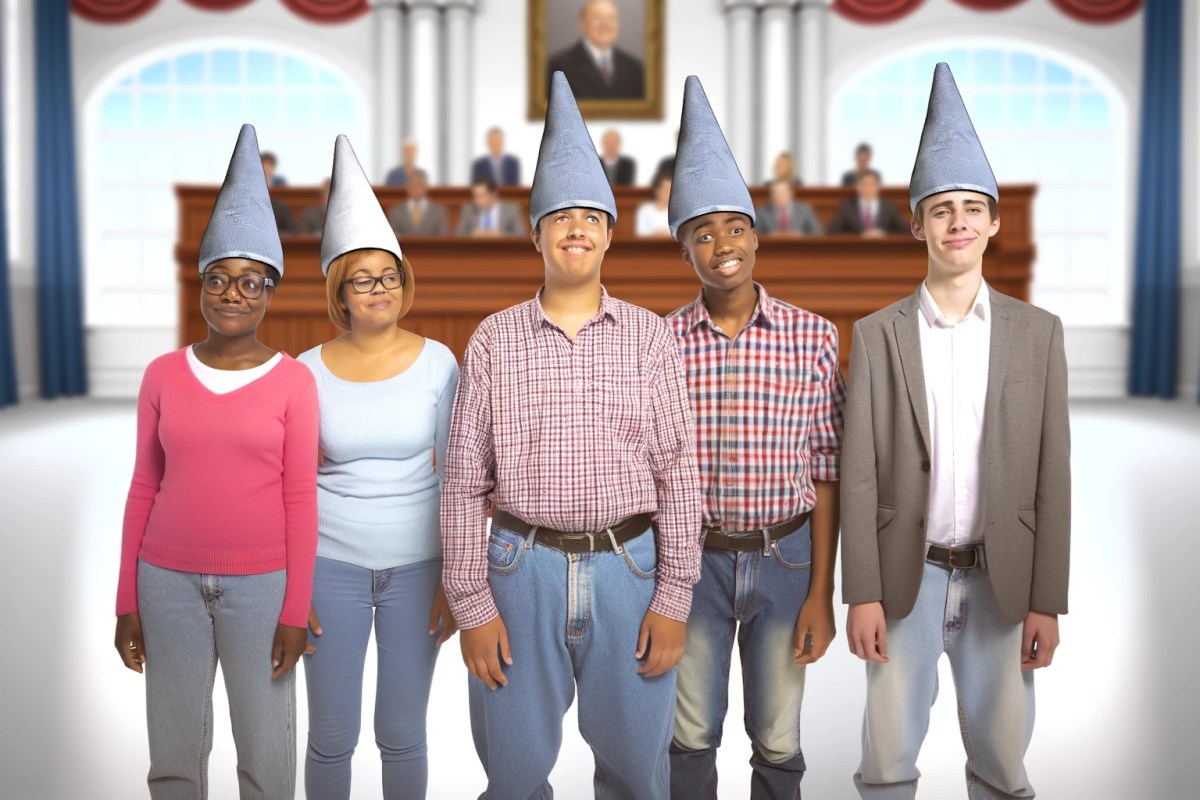
I’d like to assert is that the majority if not the entirety of this cohort cannot reliably reason or think rationally or critically.
What I’d like to assert is that the majority if not the entirety of this cohort cannot reliably reason or think rationally or critically. They can memorise that 1 + 1 = 2 and Paris is the capital of France, but novelty and synthesis are pretty much out of scope. And they can reason about small things in small doses.
Practically, this means a couple of things. Firstly, on the positive side, they can be trained to be drones. Wage slaves. Most jobs in the world are rote. Insert tab A into slot B. Follow an algorithm or procedure. This is not limited to so-called unskilled labour. This goes all the way up the food chain to doctors and lawyers, two rote professions if there are any.
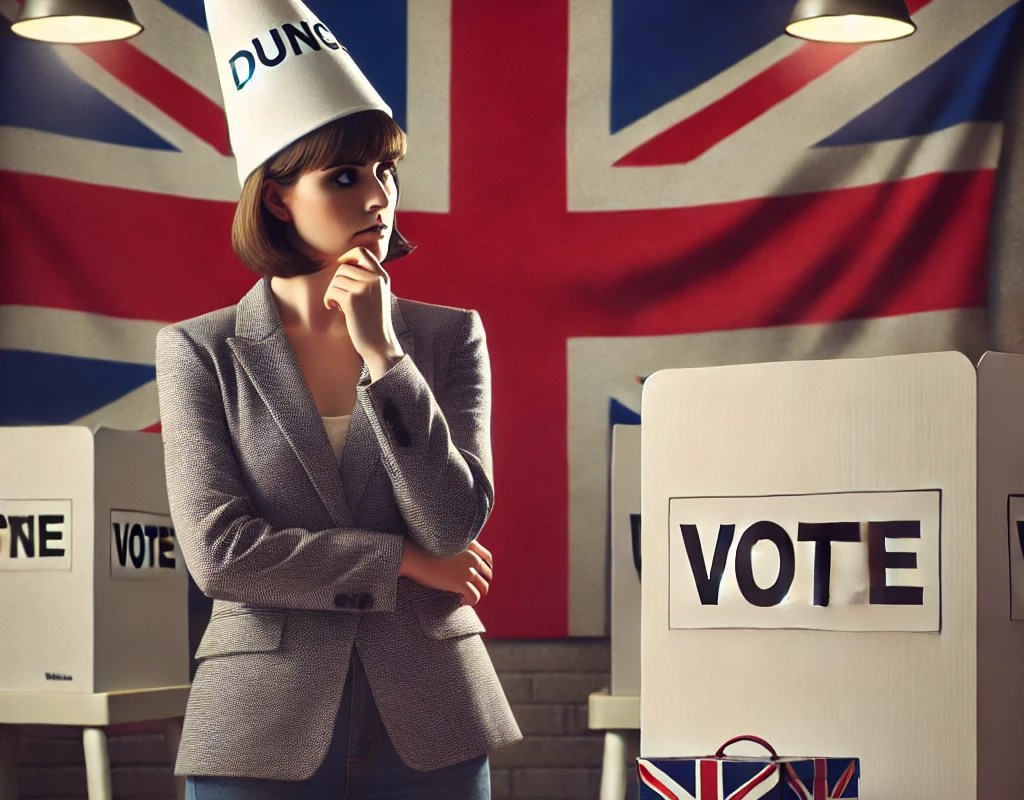
Secondly, on the negative side, they cannot be trained to participate in democratic processes. This is a failure of insight of the Fathers of the Enlightenment. Is that a thing? Moving on. To be fair, they did notice. Plato noticed, too. This is why, among other reasons, they sought a republic over a pure democracy. The problem, besides bad incentives and ulterior motives, is that many of these people aren’t any, or materially better, thinkers. Recall my previous reference to lawyers. How many politicians are lawyers? Q.E.D. OK, so I’m being irascible, but still.
The problem is that the masses have been taught that participative democracy is both good and a right to be cherished. And it would be if the population were up to par. In the United States, they’ve had challenges in the past with literacy tests to limit access to the polls, but one, this wasn’t testing the right thing, and two, as I said at the start there isn’t really a test for this particular capacity.
Let’s imagine that there was a test. And let’s further imagine that it was somewhat aligned to IQ score. Let’s say that the threshold kicks in just over 115. This would mean that only 15.9 per cent of the adult population would be able to vote. Even if the threshold was met at 100, that would still eliminate 50 per cent of eligible voters. That would not go over very well. Remember these people are rote learners, and they learned that (1) rights are inalienable and sacred and (2) voting is a right. Justified or otherwise, you could expect a revolt, even in America where people are afraid of their own shadows. They aren’t the French showing their numbers in yellow vests. They are much more docile when it comes to things like this. Gun-related violence is another story, but unless they are shooting each other this is where fending for their rights end.
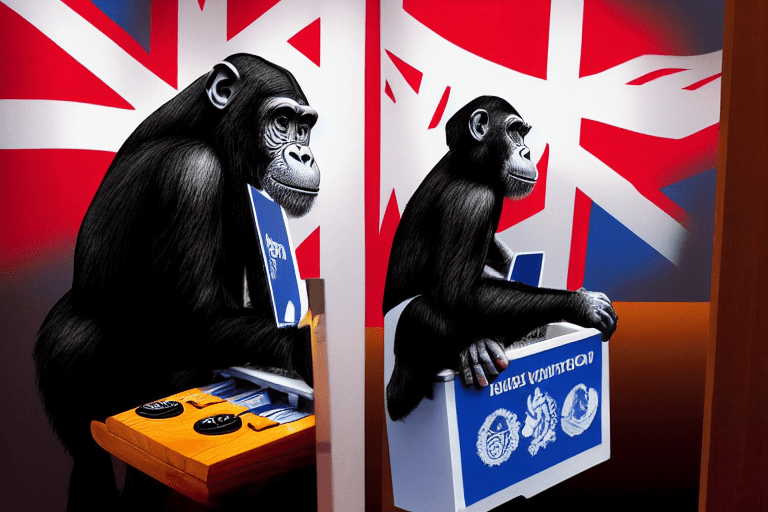
perhaps we could start allowing chimps to participate in the process
And maybe I am wrong, perhaps we could start allowing chimps to participate in the process. I’ve heard a lot of good things about dolphins and octopuses. I look around me, and I see a lot of nice people. People who enjoy life and are nice to talk with, maybe even about the weather. But being affable doesn’t make one a critical thinker. It doesn’t make a great foundation for government or even the selection of government.
Voting Chimps
The 64,000 question is what to do. The problem, as with any challenge involving people, is that it involves people. We could construct a test, and the affluent would find a way to bribe to get a favourable result or pay for the rote information and strategy to pass the test. They already use both of these approaches for college admissions, so I wouldn’t expect anything different here.
On a final note, some including Kant and Chomsky have argued that there are limits to human reason on a global level. I am just applying this to the local level, and there are many more local limits that never come close to encountering this higher global limit. That’s a challenge in and of itself.
In the end, you can rest assured. No one is going to voluntarily give up their voting rights any time soon. No meaningful test is on the horizon. The system will likely implode on itself first. In some places sooner than others.
* Yes, I know there are only 8,760 hours in an earth year. I was hoping you didn’t notice.
Being in a band is hard. It’s like being married to a bunch of partners, and if you are a band and not just some cat with some supporting characters, you’ve got artistic differences to consider. This is where I soured on direct democracy.
Slotrocket is the name of one of the bands I performed with. We played under this name exactly once, but let’s rewind to the democracy bits.
Skipping a lot of the details, I played bass in this line-up. It was a 3-piece with a focus on alt-post-grunge-nu-metal, but we all came from different places musically. The drummer came from speed metal, death metal, and maths rock. The guitarist-vocalist came from Classic Rock, Grunge and Nu-Metal. I came from all sorts of places, but I wanted to focus this project on the post-grunge thing. For the uninitiated, this is the likes of Seether, Three Days Grace, Breaking Benjamin and so on.
We didn’t have a name. Since we only played with friends and at parties and sometimes provided the backing for live karaoke, it was just us. We did arrive at the name of Breached, but it turned out that a Canadian band was already calling dibs on that, so we just let it slide—especially when they released an EP in the vein of early Incubus.
But then the guitarist-vocalist didn’t want to hold both roles. Too much effort. He didn’t care which. In the end, they found a female singer who was interested. It seems that there was a mixup in communication. They asked if I minded if she joined us during our next rehearsal. I figured it was just another live karaoke session, so when I said yes, it turns out that she was now a member of the band. Truth be told, I didn’t think a female would cop the vibe I was seeking. She was no Lacy Sturm or Amy Lee. She didn’t know any grunge material as she was more of a Country gal. But that’s not the story.
The story is the name. We deliberated for well over a month to settle on a name. We decided to create a spreadsheet. We’d all force rank the entries. And each of us had infinite veto votes to kill an offending entry from the list.
Skipping ahead a few chapters, I liked Rapeseed. It was a benign word that sounded edgy. The boys were fine with it. Notsomuch, the girl. There was no particular rush until we booked a gig—the gig. We’d need a name to promote.
I came up with Slotrocket. Again the boys were fine with it; her notsomuch. However, she didn’t veto—later claiming that she didn’t think we could possibly be serious. Since I booked the date and created the adverts, everything seemed to go under the radar—or under the rug.
A bit before the show, I was distributing material and advertising on our media outlets (as it were) and she caught a glimpse of the promo mats. Let’s just say that she was not amused. Still, when the time came, we performed.
OK, so I skipped over some stuff—the months of pouring over a spreadsheet. Our goal was unanimity. The name didn’t have to be everyone’s top pick, but we did need to attain a consensus view. As it happened, two of the biggest decisions came about by accident, and they both resulted in hard feelings.
It’s not that the 3 or 4 of us couldn’t have eventually come to a unanimous decision amounting to all of our first choices, but this would have taken time—and who knows how much.
One may feel justified accusing me of allowing perfection to be the enemy of the good, but that’s just something apologists tend to say, as they defend their preference for democracy.
The road to Hell is paved with good intentions. I wanted to post a fairly robust piece arguing against democracy, but it is proving to be a bit daunting of a task. There is a lot of data and information to support this position. Too much, in fact. I’ve decided to step back and approach supporting this position more academically (which is to say, less blog-like… citations, footnotes, counterpoints, and the rest).
“Democracy don’t rule the world, You’d better get that in your head; This world is ruled by violence, But I guess that’s better left unsaid.”
—Bob Dylan
As it happens, I’ve been spending a lot of prep time reading, reviewing, watching online content, and so on. To be honest—I know, right?—, I’ve been engaging in deliberate selection bias, seeking arguments and evidence to make my case. In fact, it’s not too difficult to locate. The reality is that most people, such as David Moscrop, who asks Are We Too Dumb for Democracy? are creating provocative titles to grab attention, but their punchline is always ‘of course not’ and let me tell you why not by peddling hope and optimism. There is a reason self-help books sell.
Where I am now as 2021 has bled into 2022 is to try to create a structure around my thoughts. So far, it looks like this—not necessarily in this order:
Position and setup
Prima facie arguments
essential strawman counter arguments
historical backdrop – pre-enlightenment until now (pro-dem args)








 Philosophics