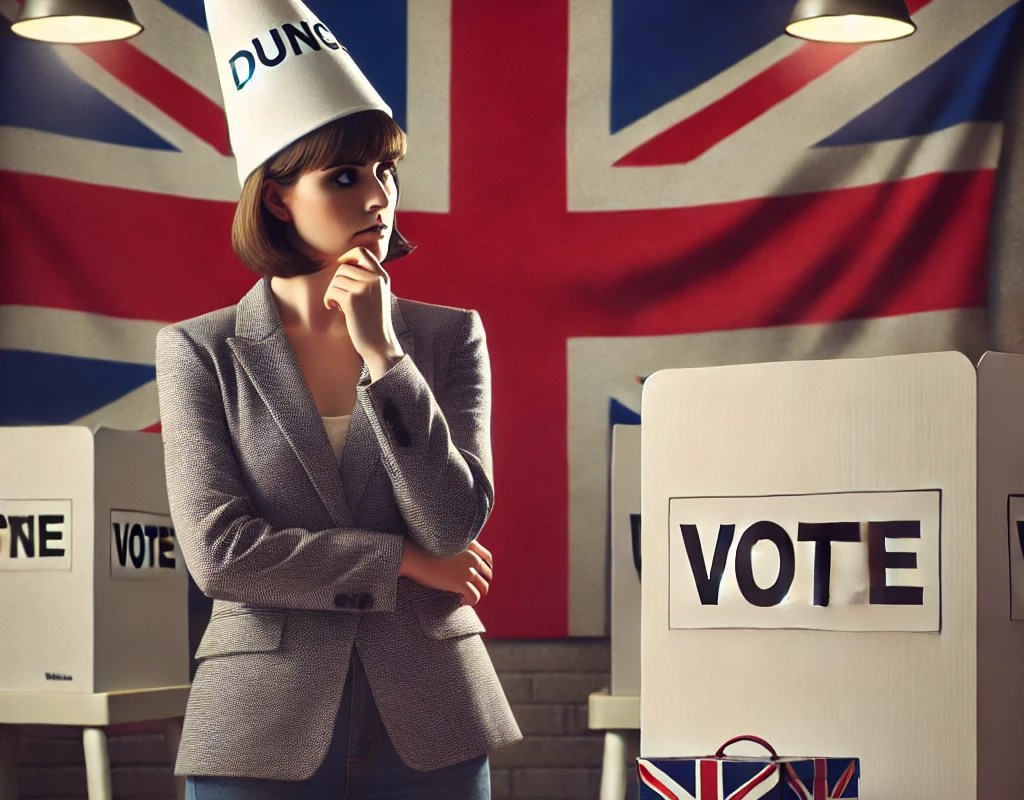
Switching Teams, Same Game: How Politics Is the New Religion

Jean-François Lyotard’s Le Différend has a way of gnawing at you—not with profound revelations, but with the slow, disquieting erosion of assumptions. It got me thinking about something uncomfortably obvious: political orientation is nothing more than the secular cousin of religious indoctrination. Just as most people will, without much scrutiny, cling to the religion of their upbringing and defend it as the One True Faith, the same applies to their political worldview. Whether you’re baptised into Anglicanism or wade knee-deep into the waters of neoliberalism, the zeal is indistinguishable.

Of course, there are the self-proclaimed rebels who smugly declare they’ve rejected their parents’ politics. The ones who went left when Mum and Dad leaned right or discovered anarchism in the ruins of a conservative household. But let’s not be fooled by the patina of rebellion: they may have switched teams, but they’re still playing the same game. They’ve accepted the foundational myths of institutions and democracy—those hallowed, untouchable idols. Like religion, these constructs are not just defended but sanctified, preached as the best or only possible versions of salvation. Dissenters are heretics; non-believers are unthinkable.

It’s not that political ideologies are inherently bad (just like religion has its occasional charm). It’s that the devout rarely stop to question whether the framework itself might be the problem. They assume the boundaries are fixed, the terms are immutable, and the debate is merely about the correct interpretation of the catechism. But if Lyotard has taught us anything, it’s this: the real battles—the différends—are the ones no one’s even acknowledging because the language to articulate them doesn’t exist in the prevailing orthodoxy.

Democracy: The Grand Illusion (AutoCrit)

The tone of “Democracy: The Grand Illusion” is predominantly analytical and academic. The author approaches the subject matter with a detached and objective perspective, focusing on presenting information, arguments, and counterarguments related to democracy without overt emotional bias. While the content delves into complex topics such as cognitive limitations in decision-making processes, historical perspectives on democracy, critiques of democratic systems, and potential reforms for improvement, the emotional perspective remains neutral and professional throughout. There is an absence of overtly passionate or emotive language that might sway readers one way or another; instead, the text maintains a scholarly tone aimed at informing and stimulating critical thinking about the concept of democracy.

I use AutoCrit as a first-pass review of my long-form writing. Above is the direction I am aiming for. Usually, I aim for polemic. I’ve been working on this since before Covid-19, but it keeps kicking to the back burner. I’m trying to resurrect it once again.

Does anyone who’s used it have an opinion on AutoCrit?

Don’t Care Much about History

As the years pass and my disappointment matures like a fine wine (spoiler alert: it’s vinegar), I’m reminded of the average intelligence quotient floating about in the wild. A few years back, I stumbled upon The Half-Life of Knowledge. Cute title, but it’s more optimistic than it should be. Why assume knowledge even has a shelf life? It’s one thing for once-useful information to spoil thanks to “progress,” but what about the things that were never true to begin with? Ah, yes, the fabrications, the lies we’re spoon-fed under the guise of education.

I’m well-versed in the lies they peddle in the United States, but I’d bet good money (not that I have any) that every nation’s curriculum comes with its own patriotic propaganda. What am I on about, you ask? Let’s just say I’ve been reading How the World Made the West by Josephine Quinn, and it’s got me thinking. You see, I’ve also been simmering on an anti-democracy book for the better part of five years, and it’s starting to boil over.

Here in the good ol’ US of A, they like to wax lyrical about how Athens was the birthplace of democracy. Sure, Athens had its democratic dabblings. But let’s not get it twisted—if you really look at it, Athens was more akin to the Taliban than to any modern Western state. Shocked? Don’t be. For starters, only property-owning men could vote, and women—brace yourselves—were “forced” to wear veils. Sounds familiar? “It’s a start,” you say. True, American women couldn’t vote until 1920, so let’s all pat ourselves on the back for that—Progress™️.

But no, hold your applause. First off, let’s remember that Athens and Sparta were city-states, not some cohesive entity called “Greece” as we so lovingly imagine. Just a bunch of Greek-speaking neighbours constantly squabbling like reality TV contestants. Meanwhile, over in Persia—yes, the supposed enemy of all things free and democratic—they had participative democracy, too. And guess what? Women in Persia could vote, own property, and serve as soldiers or military officers. So much for the idea that Athens was the singular beacon of democratic virtue.

More than this, Persian democracy was instituted by lottery, so many more people participated in the process by serving one-year terms. At the end of their term, they were audited to check for corruption. Now, you can see why we adopted the so-called Greek version. These blokes don’t welcome any oversight of scrutiny.

As a postmodern subjectivist, I tend to side-eye any grand narrative, and the history of Western civilisation is just one long parade of questionable claims and hidden agendas. Every time I think I’ve seen the last of the historical jump scares, another one comes lurking around the corner. Boo!

Why Democracy is Mathematically Impossible

In this video, Veritacium discusses why democracy is mathematically impossible, invoking Arrow’s Impossibility Theorem which I’ve mentioned many times here and in other writings. I won’t summarise or comment further save to recommend the video. Let me know what you think if you’re so inclined.

Video: Why Democracy is Mathematically Impossible

Individualism versus Collectivism

I continue my AutoCrit analysis of the chapter that explores individualism and collectivism. As always, this is a work in progress and may change by publication.

Synopsis

The text delves into the philosophical debate between individualism and collectivism, exploring their implications for democratic outcomes. It begins by defining and contrasting these two worldviews, discussing key thinkers associated with each perspective. The narrative then expands to include non-Western perspectives on collectivism, such as Confucianism and Ubuntu philosophy. The text also analyses anthropologist David Graeber’s critiques of both ideologies before examining how cognitive biases shape individualistic and collectivistic beliefs. Political divides in the UK and the US are explored through the lens of these ideologies, highlighting policy differences between parties. The conclusion emphasizes finding a balance between individual rights and collective responsibilities for effective democratic governance.

Audience

The target audience for this text is likely academics, researchers, students studying political science or philosophy, policymakers, and individuals interested in sociopolitical theory. People unfamiliar with political theory or those seeking a light read may not be the intended audience. To make it more relevant to a broader readership, the author could simplify complex concepts using everyday language without compromising depth.

Structure and Organisation

The structure follows a logical order by introducing key concepts before delving into specific examples and applications. Each section flows seamlessly into the next, creating a cohesive narrative that builds upon previous discussions effectively.

Clarity

The author effectively conveys their point throughout the text. The concepts of individualism and collectivism are clearly defined, with key thinkers and ideologies presented in a straightforward manner. Complex ideas are explained in a structured way that aids comprehension for readers unfamiliar with these philosophical debates.

One potential area where additional clarification could assist reader understanding is in the section discussing cognitive biases and worldviews. While the text mentions confirmation bias and ingroup bias, it might be helpful to provide more concrete examples or case studies to illustrate how these biases manifest in shaping individualistic or collectivistic beliefs. This could enhance the reader’s grasp of how cognitive limitations impact ideological perspectives.

Overall, however, the author maintains a clear and coherent presentation of complex philosophical concepts related to individualism and collectivism without significant hindrances to comprehension.

Commentary

I discuss Cognitive Biases in an earlier chapter. One challenge with AutoCrit is evident when analysing individual chapters. AutoCrit can analyse entire books, but since this is incomplete and contains stub content, the results are not representative. I’d share these notes, but they are silly.

Tone

The tone is analytical and objective. The author presents a detailed examination of the philosophical debate between individualism and collectivism without overt emotional bias. While discussing contrasting worldviews and their implications for democratic outcomes, the text maintains a neutral stance, focusing on presenting information rather than evoking strong emotional responses from readers. The language used is academic and informative, aiming to provide a comprehensive understanding of the topic rather than appealing to emotions or personal beliefs. Overall, the tone conveys a sense of intellectual curiosity and critical analysis in exploring complex ideas related to individualism versus collectivism in various contexts.

Commentary

One goal of mine is to present a balanced perspective. My primary thesis is that people are not strong candidates for democratic governance, so this is already a polemic concept at the start.

Interest and Engagement

The text effectively engages the audience by presenting a well-structured and informative exploration of the philosophical debate between individualism and collectivism. The clear division into sections with defined subtopics helps maintain reader interest and facilitates understanding of complex concepts.

However, some sections may risk losing the audience’s attention due to their heavy theoretical content or lack of practical examples. For instance, Section 2 on Cognitive Limitations and Their Impact delves into cognitive biases without offering concrete real-world illustrations to make the concepts more relatable. To improve this section, the author could incorporate case studies or anecdotes that demonstrate how these biases manifest in political decision-making processes.

Similarly, in Section 4 on Systematic Problems in the US Government, while discussing Montesquieu’s Separation of Powers theory and Party Duopoly issues are crucial topics, they might come across as too abstract for general readers. To enhance engagement here, providing historical examples or current events that exemplify these problems would help readers grasp their significance better.

Overall, maintaining a balance between theoretical discussions and practical applications throughout the text will ensure sustained reader engagement. By incorporating relevant examples and real-world scenarios where possible, the author can bring life to abstract concepts and make them more compelling for a broader audience.

Argument and Persuasion

The text presents opinions favouring both individualistic and collectivistic viewpoints while highlighting limitations inherent in each ideology through references to works by influential philosophers such as Ayn Rand and Karl Marx. These opinions are supported by historical context but could be bolstered further with more empirical evidence or contemporary case studies.

Final Thoughts and Conclusions

The text concludes with a strong and satisfying summary of the philosophical debate between individualism and collectivism, emphasizing the importance of finding a balance between individual rights and collective responsibilities for effective democratic outcomes. The call to action encourages policymakers, educators, and citizens to engage in efforts to reconcile these worldviews for the betterment of society. This final section effectively ties together the key points introduced throughout the work, leaving readers with a clear understanding of the overarching themes discussed.


References and Supporting Materials

Primary Texts

Hobbes, T. (1651). Leviathan

Locke, J. (1689). Two Treatises of Government

Marx, K., & Engels, F. (1848). The Communist Manifesto

Montesquieu, C. (1748). The Spirit of the Laws

Analytical Works

Dunn, J. (1984). Locke

Tuck, R. (1996). Hobbes

Hofstede, G. (1984). Culture’s Consequences: International Differences in Work-Related Values

Triandis, H. C. (1995). Individualism and Collectivism

Graeber, D. (2011). Debt: The First 5,000 Years

Graeber, D. (2015). The Utopia of Rules: On Technology, Stupidity, and the Secret Joys of Bureaucracy

Non-Western Perspectives

Confucius. (5th century BCE). Analects

Ramose, M. B. (1999). African Philosophy Through Ubuntu

Ura, K., Alkire, S., Zangmo, T., & Wangdi, K. (2012). A Short Guide to Gross National Happiness Index


AutoCrit is an AI-based editorial application. I am a member of their affiliate programme, so I gain minor financial benefits at no cost to you if you purchase through a link on this page.

Effective Mob Rule: Better Voters and Avoiding Mistakes of  the Jim Crow Era

I continue the AutoCrit review of my latest book project, Democracy: The Grand Illusion. In this chapter, I look at why direct democracy is not offered on a large scale even in the advent of digital technologies and the internet that might make this possible.

Synopsis

The text delves into the debate between direct democracy and representative democracy, exploring the perspectives of philosophers Jason Brennan and David Moscrop on enhancing voter competence within democratic systems. It discusses the challenges and ethical implications of implementing an “epistocracy” proposed by Brennan, where voting power is based on knowledge and competence. In contrast, Moscrop advocates for improving civic literacy to empower all citizens in making informed political decisions. The text also addresses the principle-agent problem in democracy and draws parallels with historical injustices like those from the Jim Crow era.

The opening introduces the contentious nature of direct democracy at a large scale and sets up the discussion around different approaches to enhancing democratic outcomes. The conclusion emphasizes learning from past mistakes, promoting inclusivity, transparency, and equity in improving voter competence for a more effective democratic process.

Audience

The target audience for this text would likely be scholars, policymakers, students of political science or philosophy, as well as individuals interested in democratic theory and governance issues. Those not inclined towards academic or theoretical discussions may find this text too dense or specialized. To make it more relevant to a broader audience, the author could simplify complex concepts using more accessible language without compromising depth or nuance.

Structure and Organisation

The text follows a logical order by first presenting contrasting views on direct vs representative democracy before delving into specific proposals by Brennan and Moscrop. Each section builds upon previous arguments cohesively without significant structural issues evident.

Tone

The tone is analytical yet critical at times when discussing potential ethical concerns related to proposed solutions but remains objective overall rather than emotive.

Interest & Engagement

While engaging for those interested in political theory debates, some sections discussing intricate philosophical concepts may risk losing general readers’ attention due to their complexity. To improve engagement levels throughout all audiences can benefit from clearer real-world examples illustrating abstract theories discussed within practical contexts

Final Thoughts & Conclusions

The final thoughts tie together key ideas introduced throughout the text effectively while emphasizing lessons learned from history regarding disenfranchisement tactics during periods like Jim Crow laws—creating a strong concluding statement that resonates with earlier discussions about inclusive solutions toward an effective democratic process.

Clarity

Overall, the author’s points are presented clearly; however, some sections contain complex sentence structures that might hinder comprehension for readers unfamiliar with philosophical or political terminology. For instance:

  • “…it harkens back to the Jim Crow era…” – This reference may require additional context for clarity.
    Providing brief explanations or examples alongside such references could enhance reader understanding.

Commentary

I’ve added a footnote to explain Jim Crow laws to uninformed readers, especially those educated outside of the United States of America.

Argument & Persuasion

Opinions presented include advocating for enhanced voter competence through epistocracy (Brennan) versus civic education (Moscrop). The strengths lie in logically constructing these contrasting viewpoints backed by historical contexts like Jim Crow laws; however further empirical evidence supporting these proposals would strengthen their persuasiveness.

  1. Rational Ignorance: The text presents the opinion that voters choose not to become well-informed due to the perceived insignificance of a single vote, introducing the concept of rational ignorance. This argument is logically constructed and supported by reasoning based on individual voter behaviour and the impact of collective voting outcomes.
  2. Populism and Demagoguery: The text argues that populist leaders exploit emotions, fears, and prejudices for support, potentially leading to policies against the populace’s best interests. This viewpoint is effectively presented with examples and explanations demonstrating how emotional manipulation can influence political decisions.
  3. Arrow’s Impossibility Theorem: The text discusses Arrow’s theorem, highlighting inherent flaws in voting systems that struggle to accurately reflect individual preferences in collective decisions without encountering issues like inconsistency or dictatorship. This argument is well-supported with a logical explanation of the challenges involved in creating a perfect voting system.
  4. Tyranny of the Majority: It is argued that majority rule in pure democracies can lead to the oppression of minority rights due to potential tyranny by the majority group. This perspective is persuasively presented through historical context and theoretical analysis illustrating how democratic systems may fail to protect minority groups from majority dominance.
  5. Policy Incoherence: The text suggests that democratically elected governments may implement inconsistent policies influenced by changing voter preferences and political pressures, leading to inefficiency and instability. This argument is supported by examples showing how frequent policy changes can disrupt governance effectiveness.

6 & 7. Influence of Money/Media & Voter Apathy/Low Turnout: These sections highlight how money influences politics through campaign financing while media shapes public opinion impacting electoral outcomes; they also discuss voter disengagement contributing to low turnout questioning election legitimacy which are supported by real-world instances reflecting challenges within democratic processes.

8 & 9. Complexity/Global Issues & Polarisation/Gridlock: These segments address modern governance complexities requiring technical expertise alongside global issues necessitating international solutions; they also delve into partisan polarisation causing legislative gridlock hindering effective policymaking which are logically constructed arguments backed up with relevant evidence.

10. Historical/Contemporary Examples: Lastly, this section explores failures in democracy using historical contexts such as the Weimar Republic or recent backsliding cases showcasing instances where democratic systems have regressed toward authoritarianism or anarchy providing substantial evidence supporting these assertions.

Interest and Engagement

The text presents a diverse range of topics within the realm of political science and democratic theory, offering valuable insights into various challenges and complexities associated with democratic governance. However, the engagement level may vary across different sections.

  1. Rational Ignorance: The concept of rational ignorance introduced by Downs is intriguing as it sheds light on voter behaviour in democracies. While the idea itself is thought-provoking, the presentation could potentially be enhanced by providing real-world examples or case studies to illustrate how this phenomenon manifests in practice.
  2. Populism and Demagoguery: The discussion on emotional manipulation and short-term focus in populism is particularly engaging due to its relevance in contemporary politics. To further captivate the audience, linking these concepts to recent populist movements or leaders could make the content more relatable and impactful.
  3. Arrow’s Impossibility Theorem: Arrow’s theorem delves into complex voting systems, which might challenge some readers’ attention spans. To maintain engagement, simplifying the explanation through analogies or visual aids could aid comprehension without sacrificing depth.
  4. Tyranny of the Majority: Tocqueville’s exploration of minority rights underlines crucial aspects of democracy but may risk losing reader interest due to historical context dating back to 1835. Connecting these ideas to present-day scenarios where minority rights are at stake can bridge relevance gaps for modern audiences.

5 & 6. Policy Incoherence & Influence of Money/Media: These sections touch upon critical issues like policy consistency and external influences on democracy; however, they might benefit from concise summaries or bullet points to streamline key takeaways for readers seeking practical implications rather than theoretical discussions alone.

7 – 10. Voter Apathy/Low Turnout; Complexity of Modern Governance; Polarisation/Gridlock; Historical/Contemporary Examples: These segments cover broad themes that resonate with current democratic challenges but may require a balance between depth and accessibility for varied reader interests. Incorporating anecdotes or anecdotes from diverse global contexts can enrich these discussions while maintaining reader engagement.

In conclusion, while each section contributes significantly to understanding democratic processes’ intricacies, enhancing engagement through relatable examples, visual aids where applicable, and balancing complexity with clarity would likely elevate audience interest throughout the text.

Final Thoughts and Conclusions

The text does not explicitly provide a section labelled “Final Thoughts and Conclusions,” but it effectively ties together the various points and ideas introduced throughout the different sections. Each segment contributes to a comprehensive exploration of challenges within democratic systems, from voter apathy to policy incoherence, media influence, governance complexity, and polarisation. While there may not be a traditional concluding section summarizing these discussions explicitly, the interconnected nature of the topics covered helps form a cohesive narrative that highlights critical issues facing modern democracies. The absence of an explicit final thoughts section is compensated by the seamless integration and synthesis of diverse perspectives presented in the text.


References and Supporting Materials

Primary Text

Moscrop, D. (2019). Too Dumb for Democracy? Why We Make Bad Political Decisions and How We Can Make Better Ones. Goose Lane Editions.

Analytical Works

Brennan, J. (2016). Against Democracy. Princeton University Press.

Kahneman, D. (2011). Thinking, Fast and Slow. Farrar, Straus and Giroux.

Foucault, M. (1977). Discipline and Punish: The Birth of the Prison. Vintage Books.

Case Studies and Examples

Fung, A., & Wright, E. O. (2003). Deepening Democracy: Institutional Innovations in Empowered Participatory Governance. Verso.

Gastil, J., & Levine, P. (Eds.). (2005). The Deliberative Democracy Handbook: Strategies for Effective Civic Engagement in the Twenty-First Century. Jossey-Bass.

Nyhan, B., & Reifler, J. (2010). “When Corrections Fail: The Persistence of Political Misperceptions.” Political Behavior, 32(2), 303-330.


AutoCrit is an AI-based editorial application. I am a member of their affiliate programme, so I gain minor financial benefits at no cost to you if you purchase through a link on this page.

Are We Too Dumb for Democracy?

I continue my AutoCrit analysis of the chapter that asks, “Are we too dumb for democracy?” I’m inclined to think, in general, the answer is yes, but I investigate several opposing voices and suggestions for mitigation. Here’s the editorial analysis of the work in process.

Synopsis

The text explores David Moscrop’s book Are We Too Dumb for Democracy? which delves into the capacity of voters to make informed political decisions. Moscrop argues that while voters may face cognitive limitations and biases, they can overcome these through education, information, and systemic reforms. He emphasizes the importance of enhancing political literacy, implementing institutional changes like deliberative democracy practices, and increasing public engagement to improve democratic decision-making.

The text opens by posing the question of whether individuals are capable of making sound political choices in a democratic system. It introduces Moscrop’s perspective on addressing cognitive biases and providing tools for voters to make rational decisions. The closing highlights the necessity of actively engaging in efforts to enhance political literacy, implement reforms, and foster public participation to create a more informed electorate.

Structure and Organisation

The text follows a logical order by introducing Moscrop’s core arguments on voter cognition challenges before discussing his proposed solutions. It is well-organized with clear headings outlining key points within each section.

Clarity

Overall clarity is maintained throughout the text; however some complex terms like “temporal myopia” might require further explanation for readers unfamiliar with psychological concepts related to decision-making biases.

Audience

The target audience for this text includes policymakers, educators, scholars interested in democracy studies, and engaged citizens seeking insights into improving democratic processes. Those not likely part of the target audience could be individuals uninterested in politics or those already well-versed in theories on voter behaviour. To make it more relevant to its target audience, Moscrop could provide more practical examples or case studies illustrating the successful implementation of his proposed solutions.

Commentary

AutoCrit goes off the reservation and confuses my content with Moscrop’s. If you are interested in hearing Moscrop’s position, he did a TEDx talk on the topic in June 2018.

Tone

The tone is analytical yet engaging as it critically examines voter behaviour without being overly pessimistic about democracy’s future prospects.

Interest and Engagement

While most sections are engaging due to their relevance in today’s political climate, areas discussing educational effectiveness or feasibility issues with deliberative democracy practices could potentially lose reader interest. To improve engagement levels here, Moscrop could incorporate real-world examples demonstrating how these methods have been successfully implemented elsewhere.

Commentary

Again, AutoCrit goes off the reservation and conflates my content with Moscrop’s. My goal is not to regurgitate his book. Obtain his book if you want to read examples.

Argument and Persuasion

Moscrop presents opinions supporting the idea that voters can overcome cognitive limitations through education and institutional reforms effectively. The persuasive elements are strong as he provides evidence from research studies and offers practical solutions backed by scholarly works such as Kahneman’s “Thinking Fast And Slow.”

Final Thoughts and Conclusions

The text effectively concludes with a comprehensive summary of David Moscrop’s arguments on the cognitive limitations of voters and potential solutions to enhance democratic decision-making. It ties together key points discussed throughout the analysis, emphasizing the importance of addressing these issues for the effective functioning of democratic systems. The call to action encourages active engagement from policymakers, educators, and citizens in efforts to improve political literacy, implement institutional reforms, and promote public participation. Overall, the conclusion is clear, strong, and satisfying, and serves as a fitting end to the exploration of Moscrop’s work.


References and Supporting Materials

Primary Text

Moscrop, D. (2019). Too Dumb for Democracy? Why We Make Bad Political Decisions and How We Can Make Better Ones. Goose Lane Editions.

Analytical Works

Brennan, J. (2016). Against Democracy. Princeton University Press.

Kahneman, D. (2011). Thinking, Fast and Slow. Farrar, Straus and Giroux.

Foucault, M. (1977). Discipline and Punish: The Birth of the Prison. Vintage Books.

Case Studies and Examples

Fung, A., & Wright, E. O. (2003). Deepening Democracy: Institutional Innovations in Empowered Participatory Governance. Verso.

Gastil, J., & Levine, P. (Eds.). (2005). The Deliberative Democracy Handbook: Strategies for Effective Civic Engagement in the Twenty-First Century. Jossey-Bass.

Nyhan, B., & Reifler, J. (2010). “When Corrections Fail: The Persistence of Political Misperceptions.” Political Behavior, 32(2), 303-330.


AutoCrit is an AI-based editorial application. I am a member of their affiliate programme, so I gain minor financial benefits at no cost to you if you purchase through a link on this page.

Defining Intelligence

Using AutoCrit, I continue to share the review progress of my work in progress, Democracy: The Grand Illusion—perhaps Grand Delusion might be more fitting. In this chapter, I establish a foundation for intelligence and cognitive function.

Synopsis

The text begins by discussing the concept of intelligence, specifically focusing on IQ as a measure of cognitive abilities relative to others. It explains the origins and standardisation of IQ tests, highlighting their limitations in capturing the full spectrum of human intelligence. The discussion then shifts towards Emotional Intelligence (EQ), outlining its components and emphasising its importance in interpersonal relationships and leadership roles.

The narrative further delves into Howard Gardner’s Theory of Multiple Intelligences, which challenges the idea that intelligence is a singular ability measured solely by traditional IQ tests. The text elaborates on various types of intelligences proposed by Gardner, such as linguistic, musical, spatial, naturalistic, and intrapersonal intelligence.

Moreover, cognitive biases are explored in detail within democratic processes through real-world examples like confirmation bias or groupthink. Strategies to mitigate these biases are suggested for improving decision-making within democracies.

The text concludes with a call for embracing diverse forms of intelligence within democratic systems while acknowledging and addressing cognitive biases to enhance governance effectiveness.

Audience

The target audience for this text appears to be individuals interested in psychology, education theory, and political science, or those exploring the intersection between human cognition and democratic governance. Readers seeking an in-depth analysis of different forms of intelligence alongside discussions on democracy would find this text engaging.

Those less inclined towards academic or theoretical discourse may not be the primary target audience. To make it more relevant to a broader readership base outside academia or specialized fields:

  • Simplifying complex terminology
  • Providing relatable examples
  • Incorporating practical applications

Structure and Organisation

The structure follows a logical order starting with defining traditional measures of intelligence leading up to discussions on multiple intelligences and cognitive biases impacting democracy. Each section flows cohesively into the next without abrupt transitions or disjointed topics. No significant issues with organisation are evident; each subsection builds upon previous concepts effectively.

Clarity

Overall clarity is maintained throughout most sections; however:

  • Complex sentence structures could potentially hinder comprehension for some readers.
  • Jargon related to psychological theories might require additional clarification for lay audiences.
    Providing simplified explanations where needed can enhance reader understanding without sacrificing depth.

Argument and Persuasion

Opinions presented focus more on informing than persuading; strengths lie in presenting well-supported arguments backed by historical context (e.g., case studies). Logical construction aids credibility but lacks explicit attempts at persuasion beyond informative purposes.

Tone

The tone remains informative yet engaging throughout without veering towards overly formal or casual language usage which suits an academic discourse effectively.

Interest and Engagement

The text manages to maintain interest through its exploration of diverse aspects related to human intelligence; however certain sections discussing specific types like “Naturalistic Intelligence” might require additional engagement strategies such as case studies showcasing individuals excelling in that particular domain.

Final Thoughts & Conclusions

The conclusions drawn at the end tie together various points introduced earlier effectively providing clear insights into how embracing diverse forms of intelligence can enhance democratic decision-making processes – offering strong closure that resonates with preceding discussions.

The text concludes by emphasising the importance of understanding intelligence in a multifaceted manner, encompassing both IQ and EQ as well as Howard Gardner’s theory of multiple intelligences. It highlights the limitations of relying solely on IQ tests for measuring intelligence, pointing out cultural biases and the narrow scope of such assessments. The discussion on emotional intelligence (EQ) adds depth to the exploration, underscoring its significance in interpersonal relationships, leadership, and mental health. By integrating multiple intelligences into the context of democracy, the text suggests a more inclusive approach to decision-making that values diverse forms of intelligence beyond traditional analytical skills. Overall, the conclusion effectively ties together key points introduced throughout the text, providing a comprehensive perspective on human intelligence and its implications for democratic systems.


Bonus

References and Citations

Democracy and Political Systems

  • Bogdanor, V. (1997). The monarchy and the constitution. Clarendon Press.
  • Brams, S. J., & Fishburn, P. C. (2007). Approval voting. Springer.
  • Dahl, R. A. (1989). Democracy and its critics. Yale University Press.
  • Dahl, R. A. (2006). On political equality. Yale University Press.
  • Diamond, L. (1999). Developing democracy: Toward consolidation. Johns Hopkins University Press.
  • Edwards, G. C. (2011). Why the Electoral College is bad for America. Yale University Press.
  • Farrell, D. M. (2011). Electoral systems: A comparative introduction. Palgrave Macmillan.
  • Kriesi, H. (2005). Direct democratic choice: The Swiss experience. Lexington Books.
  • Lijphart, A. (1999). Patterns of democracy: Government forms and performance in thirty-six countries. Yale University Press.
  • Ober, J. (2008). Democracy and knowledge: Innovation and learning in classical Athens. Princeton University Press.
  • Putnam, R. D. (2000). Bowling alone: The collapse and revival of American community. Simon & Schuster.
  • Reynolds, A., Reilly, B., & Ellis, A. (2005). Electoral system design: The new international IDEA handbook. International IDEA.
  • Sen, A. (1999). Development as freedom. Oxford University Press.
  • Shugart, M. S., & Wattenberg, M. P. (2001). Mixed-member electoral systems: The best of both worlds?. Oxford University Press.
  • Sunstein, C. R. (2009). Republic.com 2.0. Princeton University Press.
  • Tocqueville, A. de. (1835). Democracy in America. (H. Reeve, Trans.). Vintage Books.

Intelligence and Cognitive Psychology

  • Binet, A., & Simon, T. (1916). The development of intelligence in children. (E. S. Kite, Trans.). Williams & Wilkins.
  • Flynn, J. R. (1987). Massive IQ gains in 14 nations: What IQ tests really measure. Psychological Bulletin, 101(2), 171-191.
  • Gardner, H. (1983). Frames of mind: The theory of multiple intelligences. Basic Books.
  • Goleman, D. (1995). Emotional intelligence: Why it can matter more than IQ. Bantam Books.
  • Herrnstein, R. J., & Murray, C. (1994). The bell curve: Intelligence and class structure in American life. Free Press.
  • Kaufman, A. S. (2009). IQ testing 101. Springer Publishing Company.
  • Mayer, J. D., & Salovey, P. (1997). What is emotional intelligence? In P. Salovey & D. J. Sluyter (Eds.), Emotional development and emotional intelligence: Educational implications (pp. 3-31). Basic Books.
  • Sternberg, R. J. (1985). Beyond IQ: A triarchic theory of human intelligence. Cambridge University Press.
  • Sternberg, R. J., & Kaufman, S. B. (Eds.). (2011). The Cambridge handbook of intelligence. Cambridge University Press.
  • Terman, L. M. (1916). The measurement of intelligence. Houghton Mifflin.
  • Wechsler, D. (1949). Wechsler intelligence scale for children (WISC). Psychological Corporation.

Classical Works and Philosophy

  • Plato. (c. 380 BCE). The republic. (G. M. A. Grube, Trans.; C. D. C. Reeve, Rev.). Hackett Publishing Company.

AutoCrit is an AI-based editorial application. I am a member of their affiliate programme, so I gain minor financial benefits at no cost to you if you purchase through a link on this page.

Opposed to Democracy

Follows is another AutoCrit 1 review of my current focus—working title: Democracy: The Grand Illusion, affectionately called Dumocracy.

Synopsis

The chapter “Vote Against Democracy, Say ‘Nay'” delves into a comprehensive exploration of the critiques posed by prominent intellectuals and philosophers throughout history regarding democratic systems. The opening sets the stage by quoting Winston Churchill’s famous line: “The best argument against democracy is a five-minute conversation with the average voter.” This quote immediately introduces a critical perspective on democracy, foreshadowing the in-depth analysis to come.

The text then proceeds to examine various historical figures’ criticisms of democracy, ranging from Plato’s concerns about mob rule to Tocqueville’s observations about mediocrity in democratic societies. Each thinker’s critique is dissected and analyzed, shedding light on the potential pitfalls and limitations of democratic governance. From elitism and failures within democracies to warnings about the tyranny of the majority and challenges with meritocracy, each section offers valuable insights into different aspects of democratic systems.

As the text progresses towards its conclusion, it synthesizes these diverse critiques while acknowledging both strengths and weaknesses inherent in democratic ideals. It culminates by emphasizing that despite its flaws, democracy remains one of the best available forms of government—a sentiment encapsulated in Winston Churchill’s famous remark: “Democracy is the worst form of government, except for all others that have been tried.” This closing statement reinforces a pragmatic understanding of democracy while encouraging ongoing reflection on how to refine and improve democratic governance models.

In essence, “Vote Against Democracy, Say ‘Nay'” presents a nuanced examination of historical critiques surrounding democracy that challenge readers to critically assess both the virtues and vulnerabilities embedded within this prevalent system of governance.

Audience

audience for this text appears to be individuals interested in political theory, philosophy, and the complexities of democratic governance. Those who are engaged in scholarly or academic discussions surrounding democracy, its critiques, and potential reforms would likely find this text highly relevant. The detailed exploration of historical perspectives from prominent figures like Plato, Aristotle, Churchill, Nietzsche, and Tocqueville provides a comprehensive overview for readers with an interest in political thought.

However, individuals seeking a more general overview or introductory understanding of democracy may find the text overly intricate and specialized. To make it more accessible to a broader audience outside academia or political theory enthusiasts, the author could consider simplifying complex philosophical concepts into more digestible language. Additionally, providing real-world examples or contemporary case studies illustrating the practical implications of these critiques could help engage a wider range of readers who may not have prior knowledge of political theory. Incorporating clear summaries at key points throughout the text can also aid in enhancing readability and comprehension for those less familiar with the subject matter.

Structure and Organisation

The text follows a logical order and is well-organized. Each critique of democracy by the different intellectuals is presented in a structured manner, with clear transitions between each section. The text flows smoothly from one critique to the next, providing a comprehensive overview of various perspectives on democratic governance without any apparent issues of structure or organization.

Clarity

The author’s points are generally presented clearly throughout the text. Complex ideas and critiques of democracy are explained in a structured manner, making it easier for readers to follow the arguments presented by each thinker. However, there are instances where additional clarification or simplification could enhance reader understanding:

  1. In the section discussing Joseph Schumpeter’s elitist theory of democracy, some readers may find the concept of democracy as a competitive struggle for votes rather than genuine self-governance by the masses somewhat challenging to grasp without further elaboration on how this dynamic operates within democratic systems.
  2. The discussion on Michel Foucault’s critique of democracy introduces terms like biopolitics and power structures that may require more explicit definitions or examples to help readers unfamiliar with these concepts fully comprehend their significance within democratic contexts.
  3. Audre Lorde’s critique focusing on intersectionality and democratic inclusion touches upon complex social dynamics that might benefit from clearer illustrations or real-world applications to elucidate how these issues manifest in practice within democratic institutions.

Overall, while the text effectively conveys nuanced critiques of democracy by various thinkers, providing more concrete examples or simplified explanations in certain sections could enhance clarity for readers less familiar with political theory and philosophy.

Commentary

I may address these aspects with footnotes as this background information is at times extensive and in any case available elsewhere.

Argument and Persuasion

The text presents a range of opinions critiquing democratic systems from various thinkers such as Plato, Aristotle, Alexis de Tocqueville, Friedrich Nietzsche, Winston Churchill, Joseph Schumpeter, Simone Weil, Michel Foucault, and Audre Lorde. These critiques cover themes like elitism in governance (Plato), the importance of moderation (Aristotle), concerns about tyranny of the majority (Tocqueville), critique of egalitarianism (Nietzsche), pragmatic view on democracy’s flaws and strengths (Churchill), elitist theory emphasizing competition for votes over self-governance by masses (Schumpeter), highlighting failures to address spiritual needs and rootedness in society (Weil) and understanding how democratic institutions can perpetuate subtle forms of control through power structures embedded within knowledge frameworks.

Each thinker presents their arguments with logical reasoning and supporting evidence drawn from historical contexts or philosophical principles. The strength lies in the diversity of perspectives offered which enriches the discourse on democracy by exploring its complexities from different angles. By addressing issues like potential mediocrity in democracies or challenges with inclusivity for marginalized groups within democratic systems these critiques prompt critical reflection on areas where improvements may be needed.

Overall, the persuasive elements are well-supported through references to original texts or established theories. The logical construction is evident as each opinion is presented coherently with relevant examples or theoretical frameworks backing them up.

Tone

The text presents a range of emotional perspectives, reflecting both critical analyses and nuanced reflections on democratic systems. The tone varies from sober contemplation to impassioned critique, showcasing a mix of scepticism, concern, pragmatism, and urgency. Each author’s perspective evokes emotions such as caution (Plato), moderation (Aristotle), wariness (Tocqueville), disdain for egalitarianism (Nietzsche), pragmatic acknowledgement of flaws (Churchill), elitist realism (Schumpeter), longing for rootedness and community (Simone Weil), critical examination of power structures (Foucault) and call for inclusivity and justice for marginalized groups (Audre Lorde). These emotional tones collectively create a rich tapestry that challenges conventional views on democracy while urging readers to consider the complexities inherent in governance systems.

Interest and Engagement

The text presents a wide range of critiques on democracy from various historical and philosophical perspectives, which can be engaging for readers interested in political theory. The inclusion of notable figures such as Plato, Aristotle, Alexis de Tocqueville, Friedrich Nietzsche, Winston Churchill, Joseph Schumpeter, Simone Weil, Michel Foucault, and Audre Lorde adds depth and credibility to the discussion.

However, due to the detailed nature of each critique presented in the text and the extensive references to specific works by these thinkers, some sections may become dense or overwhelming for readers who are not well-versed in political philosophy. To improve engagement in these sections:

  1. Simplify Complex Ideas: Break down complex concepts into more digestible segments that are easier for a broader audience to understand.
  2. Provide Contextual Explanations: Offer brief explanations or summaries before delving into each critique to provide context for readers unfamiliar with the philosophers’ works.
  3. Use Analogies or Real-World Examples: Illustrate abstract ideas with relatable examples or analogies that help clarify their relevance in contemporary society.
  4. Incorporate Visual Aids: Consider using diagrams or visual aids to enhance understanding of intricate theories and make them more accessible.

By incorporating these strategies throughout the text when discussing challenging concepts from different critiques on democracy by prominent theorists such as Plato’s “The Republic,” Aristotle’s “Politics,” Tocqueville’s “Democracy in America,” Nietzsche’s concept of the Übermensch (Overman), Churchill’s pragmatic observations on democracy being “the worst form of government except all others,” Schumpeter’s elitist theory of democracy emphasizing competition among elites for votes rather than direct self-governance by all citizens; Weil’s focus on rootedness and community needs within democratic systems; Foucault’s analysis on power structures within democracies perpetuating control; Lorde’s intersectionality critique highlighting exclusionary practices towards marginalized groups—the author could maintain reader interest while navigating through intricate discussions surrounding democratic governance across history and philosophy.

Commentary

I plan to incorporate some visual and diagrammatic aids, but AutoCrit cannot evaluate this type of content.

Final Thoughts and Conclusions

The text ends with a comprehensive and cohesive conclusion that effectively ties together the various critiques of democratic systems presented by Plato, Aristotle, Alexis de Tocqueville, Friedrich Nietzsche, Winston Churchill, Joseph Schumpeter, Simone Weil, Michel Foucault, and Audre Lorde. The final thoughts provide a reflective summary of the challenges inherent in democratic governance while emphasizing the need for ongoing reflection and improvement within democratic systems. The concluding section successfully synthesizes the diverse perspectives on democracy discussed throughout the text.


  1. AutoCrit is an AI-based editorial application. I am a member of their affiliate programme, so I gain minor financial benefits at no cost to you if you purchase through a link on this page. ↩︎
  2. Churchill is not on record having said this, but the sentiment remains. ↩︎

In Favour of Democracy

Many forms of government have been tried and will be tried in this world of sin and woe. No one pretends that democracy is perfect or all-wise. Indeed, it has been said that democracy is the worst form of government except all those other forms that have been tried from time to time.” – Winston Churchill

As I continue to write and examine my book, I’ll share snippets of progress. In this article, I focus on the voices in support of democracy. This might seem like counting grains of sand on the beach given Democracy’s promotional propaganda. In the West, we are inundated with this messaging.

Some of the pro-democracy voices also appear in the chapter on sceptics, but I separate the streams of thought in each section. Representing pro-democracy voices are the following:

Western Thinkers

  • Karl Marx
  • Winston Churchill
  • John Stuart Mill
  • Thomas Jefferson
  • Alexis de Tocqueville
  • Nelson Mandela

Eastern and Untraditional Thinkers

  • Mahatma Gandhi
  • Aung San Suu Kyi
  • Sun Yat-sen
  • Benigno “Ninoy” Aquino Jr
  • Kim Dae-Jung

I wanted to gain perspective from more than white male voices promoting democracy. I found Nelson Mandela, a black African who subscribes to the Western tradition. Aung San Suu Kyi is the only female represented in this cohort.

Here is how AutoCrit* sees the content of this chapter using its reporting structure.

Synopsis

The text delves into the exploration and defence of democratic ideals through the perspectives of various historical figures, both Western and Eastern. It opens with a quote from Winston Churchill highlighting the imperfections of democracy but also its superiority over other forms of government. The author then introduces key thinkers such as Karl Marx, John Stuart Mill, Thomas Jefferson, Alexis de Tocqueville, Nelson Mandela, Mahatma Gandhi, Aung San Suu Kyi, Sun Yat-sen, Benigno Aquino Jr., and Kim Dae-Jung. Each figure’s support for democracy is examined within their historical context and relevance to modern governance. The text closes by reflecting on common themes among these figures regarding the challenges and potentials of democratic systems.

Audience

The target audience for this text appears to be readers interested in political philosophy, history, or governance systems. Those seeking insights into the evolution of democratic thought through influential figures would find value in this content. However, individuals looking for a light read or entertainment may not be the primary audience here. To make it more relevant to a wider audience base including students or general readers less familiar with political theory jargon could be simplified without compromising depth.

Structure and Organisation

The structure follows a logical order by introducing each figure individually along with their background information before discussing their support for democracy. This organisation allows for clear delineation between different perspectives while maintaining coherence throughout the text.

Clarity

Overall clarity is good; however, some sections delve deeply into specific philosophical concepts that may require prior knowledge or further explanation for complete understanding. For instance, when discussing epistocracy in relation to Jason Brennan’s views on political competency testing could benefit from clearer definitions or examples to aid comprehension.

Argumentation and Persuasion

Opinions presented are well-supported by referencing primary texts from historical figures like Churchill’s speeches or Gandhi’s writings which lend credibility to arguments made about their beliefs in democratic principles being logically constructed.

Tone

The tone throughout is informative yet respectful towards differing viewpoints on democracy presented by each figure discussed – ranging from critical analysis (as seen with Jason Brennan) to advocacy (like Nelson Mandela). There’s an objective approach taken towards evaluating these diverse opinions without overt bias evident in how they’re portrayed.

Interest and Engagement

While engaging overall due to its examination of significant historical figures’ stances on democracy across cultures; there are parts where excessive detail might lose reader engagement especially if unfamiliar with certain terms or contexts like agrarian democracies proposed by Jefferson which could benefit from simplification without losing substance.

Final Thoughts and Conclusions

The text concludes effectively summarizing common themes amongst discussed figures regarding democratic ideals while offering reflections tying together points introduced earlier providing a satisfying closure that encapsulates main ideas explored demonstrating thorough analysis facilitating reader understanding comprehensively.


* AutoCrit is an AI editorial review application. Whilst I don’t have enough exposure or experience to fully endorse the programme, I am a subscriber who uses it to critique my writing. I am, however, an affiliate member, so if you purchase a subscription, I will receive compensation from them, and it will benefit this site at no additional expense to you.

I edited some of AutoCrit’s output to conform with standard British English. Please remember that this is a first draft that will go through several review cycles.