Democracy: The Grand Illusion

As I’ve mentioned, I’m hip-deep into writing another book. I’m about 40,000 words in and 40 per cent done. Many chapters still contain placeholder notes and ideas to flesh out. I’ll be honest. Many of the chapters contain only themes, notes, references, and citations. Some are ostensibly first drafts. For these chapters. I’ve engaged AutoCrit*, an AI copy editing and review application to keep me on track. I don’t particularly want to share too much inside information at this time, but I’d like to share some of AutoCrit’s feedback in dribs and drabs.

AutoCrit can analyse content by chapter. The first is a preamble—a preface. Here’s what AutoCrit has to say about it, categorised. I’ll present the raw responses and comment thereafter.

Synopsis

The non-fiction work “Democracy: The Grand Illusion” challenges the sanctity of democracy and questions its effectiveness by delving into inherent flaws often overlooked. The text opens with a provocative exploration of the fundamental flaws in democracy, arguing that it leads to suboptimal solutions and mediocre results both in theory and practice. It highlights how human nature, cognitive limitations, emotional triggers, and biases impact the execution of democratic systems.

Throughout the book, various forms of democracy are examined across different historical contexts globally. From ancient Mesopotamia to modern-day Western democracies like the United States, the author critiques the shortcomings of democratic governance. By dissecting voter apathy, cognitive biases, and mathematical imperfections in voting systems, they aim to provide a nuanced understanding of why democracy may be fundamentally flawed.

The text concludes by emphasising that while there may not be a perfect solution to address these flaws within democratic systems, incremental reforms can make them fairer and more effective. It acknowledges resistance from those who benefit from maintaining the status quo but argues for ongoing efforts towards improving governance despite historical precedents favouring entrenched power structures.

In its closing remarks on reforming governing systems knowing their inherent imperfections will persist, “Democracy: The Grand Illusion” leaves readers contemplating potential avenues for change within existing frameworks rather than advocating for revolutionary upheavals. Through referencing philosophical critiques dating back to Plato’s “Republic” as well as contemporary works on cognitive limitations like Daniel Kahneman’s “Thinking Fast and Slow,” this book encourages critical thinking about democratisation processes amidst evolving technological landscapes shaping public discourse.

Commentary

This feels like a fair assessment.

Audience

The audience for this text appears to be intellectually curious individuals interested in political theory, governance systems, and critical analysis of democracy. This includes academics, political scientists, philosophers, and readers who enjoy engaging with thought-provoking ideas that challenge conventional wisdom. The text seems tailored for those willing to question deeply held beliefs about democracy and open to exploring alternative perspectives on the subject.

Those who may not be the target audience include staunch defenders of traditional democratic principles without room for critical evaluation or scepticism. Readers seeking a straightforward endorsement of democracy as an ideal system may find the content challenging or even off-putting. Additionally, individuals looking for practical solutions or concrete proposals to improve democratic processes might feel unsatisfied by the lack of definitive recommendations in the text.

To make the text more relevant to its target audience, the author could consider providing more historical context and philosophical insights into various critiques of democracy throughout history. Including case studies or real-world examples that illustrate some of the challenges discussed could also enhance engagement with readers interested in applying theoretical concepts to contemporary issues. Moreover, offering suggestions for further reading or avenues for deeper exploration into specific aspects of democratic theory would cater well to an intellectually engaged audience seeking additional resources for continued study and reflection.

Commentary

This feels like a fair assessment of potential audience acceptance and resistance to engagement. As this is only the preface, historical contexts are in later chapters.

Structure and Organisation

The text is well-organised and follows a logical order. It begins with a preface quoting an anonymous source, setting the tone for introspection and critical analysis. The introduction effectively sets the stage by posing thought-provoking questions about democracy’s efficacy before delving into the main premises of the book. The author then transitions smoothly to discussing inherent challenges in democracy, historical contexts, implications of cognitive limitations, and critiques from various perspectives.

Each section flows seamlessly into the next, building upon previous discussions while maintaining coherence throughout. The text effectively introduces key concepts before expanding on them further, ensuring that readers can follow along with the author’s arguments and insights without confusion or disarray. Additionally, citations are appropriately included at relevant points to support claims made within the text.

Overall, “Democracy: The Grand Illusion” demonstrates strong structure and organisation by presenting its content in a clear and cohesive manner that guides readers through a nuanced exploration of democracy’s flaws and complexities.

Commentary

This feels like a fair assessment of my structural intent. I admit that in its current state, there is more structure than content. I’ll accept this unpaid endorsement.

Clarity

The author effectively conveys their central argument challenging the effectiveness of democracy and highlighting its inherent flaws. The text is well-structured and maintains a coherent flow throughout. However, there are instances where complex sentence structures and specialized terminology may hinder comprehension for some readers.

One example of potentially confusing language is when the author discusses “cognitive limitations exacerbating the execution of democracy from the perspective of voters and representatives.” This phrase might benefit from further clarification or simplification to ensure all readers grasp the intended meaning without difficulty.

Additionally, phrases like “mathematically tenable” and references to specific philosophical critiques or mathematical concepts could be challenging for readers not familiar with these subjects. Providing more context or explanations for such terms would enhance overall clarity for a broader audience.

Overall, while the text generally communicates its message effectively, some areas could be improved by offering clearer explanations or simplifying complex language to ensure maximum reader understanding.

Commentary

This feels like a fair assessment of clarity. I do my best not to muck it up. I’ll tighten up the language in a subsequent review. My modus operandi is to scrawl the stream of consciousness before restricting my flow with editorial concerns.

Argument and Persuasion

In the text, the author presents a provocative argument challenging the effectiveness of democracy and highlighting its inherent flaws. The opinions put forth include questioning the sanctity of democracy as a fair and equal system of governance, suggesting that it leads to suboptimal solutions with mediocre results both in theory and practice, emphasising human cognitive limitations and biases that hinder democratic processes, and proposing that democracy may be fundamentally flawed due to these factors.

Strengths of the persuasive elements in this text lie in its thought-provoking nature. By raising questions about widely held assumptions regarding democracy’s efficacy, the author encourages critical thinking among readers. The logical construction is evident through a systematic breakdown of various aspects contributing to the perceived flaws in democratic systems – from mathematical imperfections in voting mechanisms to challenges posed by human nature and cognitive biases.

The opinions presented are well-supported with references to historical perspectives (such as Ancient Athens) and philosophical critiques (Plato’s “The Republic,” Aristotle’s “Politics”) on democracy. Additionally, citations from contemporary sources like Daniel Kahneman’s work on cognitive biases lend credibility to the arguments made.

Overall, while some readers may find the critique of democracy unsettling or elitist, the text effectively challenges conventional beliefs without offering a definitive alternative solution. This approach prompts readers to engage critically with existing governance structures rather than simply dismissing them outright.

Commentary

This feels like a fair assessment. My goal is to survey the flavours of Democracy to serve as a menu to readers. Democracy is an inherently poor system of governance, but some flavours are better than others if one prefers to remain in this box.

Tone

The tone of the text is critical and provocative, challenging the traditional notions of democracy with a sense of scepticism and urgency. The author’s language conveys a sense of disillusionment with the current democratic systems, highlighting flaws and limitations that are often overlooked or dismissed. There is an underlying frustration with the status quo and a call to action for readers to critically examine their beliefs about democracy. The tone also carries elements of elitism, acknowledging that the critique may not be readily accepted by all but emphasizing the importance of questioning widely held assumptions. Overall, there is a mix of cynicism towards existing democratic structures and a hopeful aspiration for potential reforms or alternative governance models.

Commentary

This feels like a fair assessment of tone. I don’t mind being polemic, but I may work to soften some tonal aspects. As my intended audience are more intellectual critical thinkers, it may be fine as-is.

Interest and Engagement

The text “Democracy: The Grand Illusion” presents a thought-provoking and intellectually stimulating analysis of democracy, challenging conventional perspectives on the subject. Overall, the author effectively engages the audience by presenting a unique perspective and raising important questions about the efficacy of democratic systems.

The introduction sets a captivating tone by questioning the fundamental flaws in democracy and highlighting its limitations. The author’s use of rhetorical questions and provocative statements encourages readers to think critically about commonly held beliefs regarding democracy. Additionally, referencing historical contexts and philosophical critiques adds depth to the discussion, making it more engaging for those interested in political theory.

However, there are sections within the text that may potentially lose some readers’ interest due to their dense nature or repetitive arguments. For instance, parts discussing mathematical flaws in voting systems or technological impacts on democracy could be perceived as overly technical for general audiences. To enhance engagement in these sections, the author could consider incorporating real-world examples or case studies to illustrate complex concepts more clearly.

Furthermore, providing concise summaries or visual aids such as graphs or charts may help break down intricate ideas into digestible segments for readers who may struggle with dense theoretical discussions. By balancing theoretical analyses with practical applications and varied presentation styles, the author can maintain reader engagement throughout all sections of the book.

In conclusion, while “Democracy: The Grand Illusion” successfully captures attention through its bold critique of democracy’s shortcomings, enhancing engagement across all sections through improved clarity and varied presentation methods will ensure sustained interest from a wider range of readers.

Commentary

This feels like a fair assessment of engagement. My goal is to flesh this out in forward revisions as I assess continuity and flow. Meantime, capturing content into buckets is a higher priority than caring about redundancy.

Final Thoughts and Conclusions

The text concludes with a strong and thought-provoking reflection on the challenges and complexities of democracy. It effectively ties together the various points raised throughout the book, emphasizing the inherent flaws in democratic systems while also acknowledging the necessity of governance for societal well-being. The author leaves readers with a sense of urgency to reconsider traditional notions of democracy and encourages critical thinking towards potential reforms or alternative models. Overall, the final thoughts are clear and impactful and provide a compelling conclusion to the discussion presented in the text.

Commentary

I’ll take it.

How does this project sound to you? Leave comments below.


* AutoCrit is an AI editorial review application. Whilst I don’t have enough exposure or experience to fully endorse the programme, I am a subscriber who uses it to critique my writing. I am, however, an affiliate member, so if you purchase a subscription, I will receive compensation from them, and it will benefit this site at no additional expense to you.
Declaration of Independence

It’s July. The season of independence in the United States. Independence from the overt tyranny of Britain, but not from the tacit tyranny of their government—the government purported to be ‘of the people, by the people, and for the people‘ per Abraham Lincoln’s 1863 Gettysburg Address. As their Constitution reads, ‘We the People‘. Governments may be of the people and by the people, but governments are an emergent phenomenon as happens when oxygen and hydrogen combine just so and create water. Two gases combine to create a new substance—water. Some forget that, like water, government are a distinct element to the people that constitute it. Some think it resembles them. It doesn’t. It’s Hobbes’ Leviathan—or a Jabberwok.

In preparation for the traditional Summer season, I took to reading Derrida’s 1976 essay, Declarations of Independence. It was interesting, but I was hoping to get more from it. I decided to deconstruct the opening paragraph—the preamble—of the Declaration of Independence:

Deconstructing Binary Oppositions

Self-Evident vs. Non-Self-Evident

The Declaration boldly asserts that ‘these truths’ are ‘self-evident’,’ a claim that is nothing more than a rhetorical trick. By presenting these ideas as self-evident, the authors seek to place them beyond questioning, discouraging dissent and critical examination. In reality, these ‘truths’ are far from universal; they are the product of a specific cultural and historical context, shaped by the interests and perspectives of the privileged few who drafted the document.

Interrogating Assumptions and Hierarchies The Declaration of Independence asserts that certain truths are ‘self-evident’, implying that these truths are so obvious that they require no further justification. However, the concept of self-evidence itself is far from universally accepted. It is deeply embedded in the philosophical tradition of Enlightenment rationalism, which holds that reason and logic can reveal fundamental truths about the world.

  1. Philosophical Foundations of Self-Evidence
    • Enlightenment Rationalism: The idea of self-evidence relies heavily on Enlightenment rationalism, which posits that certain truths can be known directly through reason and are therefore beyond dispute. Philosophers such as René Descartes and Immanuel Kant emphasised the power of human reason to uncover self-evident truths. Descartes, for instance, argued for the self-evident nature of ‘Cogito, ergo sum‘ (‘I think, therefore I am’) as a fundamental truth (Descartes, Meditations on First Philosophy).
    • Critique of Rationalism: Critics of Enlightenment rationalism, including existentialists like Friedrich Nietzsche and phenomenologists like Martin Heidegger, argue that what is considered self-evident is often culturally and historically contingent. Nietzsche, for example, contended that what we take as ‘truth’ is a product of our perspective and historical context, not an absolute given (Nietzsche, Beyond Good and Evil).
  2. Cultural and Philosophical Contingency
    • Cultural Relativity: Different cultures and philosophical traditions may not find the same truths to be self-evident. For instance, the concept of individual rights as self-evident truths is a product of Western liberal thought and may not hold the same self-evident status in other cultural frameworks. In many Eastern philosophies, the focus is more on community and harmony rather than individual rights.
    • Subjectivity of Self-Evidence: The term ‘self-evident’ implies an inherent, unquestionable truth, yet what one group or culture finds self-evident, another may not. This variability reveals the instability and subjectivity of the claim. For example, in traditional Confucian societies, the emphasis is placed on hierarchy and duty rather than equality and individual rights, demonstrating a different set of ‘self-evident’ truths.
  3. Constructed Nature of Truth
    • Language and Context: Jacques Derrida’s concept of différance illustrates how meaning is not fixed but constantly deferred through language. What we consider to be “truth” is constructed through linguistic and social contexts. Derrida argues that texts do not have a single, stable meaning but rather a multiplicity of interpretations that change depending on the reader’s perspective and context (Derrida, Of Grammatology).
    • Social Construction: Michel Foucault’s analysis of power and knowledge further deconstructs the notion of objective truth. Foucault argues that what is accepted as truth is produced by power relations within society. Truths are constructed through discourses that serve the interests of particular social groups, rather than being objective or self-evident (Foucault, Discipline and Punish).

Created Equal vs. Not Created Equal

The Declaration’s claim that ‘all men are created equal’ is a blatant falsehood, a manipulative promise designed to appease the masses whilst maintaining the status quo. The glaring contradictions of slavery and gender inequality expose the hollowness of this assertion. Equality, as presented here, is nothing more than an ideological construct, a tool for those in power to maintain their dominance while paying lip service to the ideals of justice and fairness.

Creator vs. No Creator

The Declaration refers to a ‘Creator’ who endows individuals with rights, grounding its claims in a divine or natural law. This invokes a theistic worldview where moral and legal principles are derived from a higher power. However, Derrida challenges this by showing that the concept of a creator is a cultural and philosophical construct, not a universal truth.

The presence of the creator in the text serves to legitimise the rights it declares. However, this legitimacy is contingent on accepting the cultural narrative of a creator. Secular and non-theistic perspectives are marginalised by this assertion, revealing the ideological biases inherent in the Declaration. The authority of the declaration is thus shown to be dependent on particular beliefs, rather than an objective reality.

Unalienable vs. Alienable

The notion of ‘unalienable Rights’ is another empty promise, a rhetorical flourish designed to inspire loyalty and obedience. In practice, these supposedly inherent and inviolable rights are regularly violated and denied, particularly to those on the margins of society. The Declaration’s lofty language of ‘Life, Liberty and the pursuit of Happiness’ rings hollow in the face of systemic oppression and injustice. These rights are not unalienable; they are contingent upon the whims of those in power.

Conclusion

Through this deconstruction, we expose the Declaration of Independence for what it truly is: a masterful work of propaganda, filled with false promises and manipulative rhetoric. The document’s purported truths and self-evident principles are revealed as arbitrary constructs, designed to serve the interests of the powerful while placating the masses with empty platitudes.

As some celebrate this 4th of July, let us not be fooled by the high-minded language and lofty ideals of our founding documents. Instead, let us recognise them for what they are: tools of control and manipulation, employed by those who seek to maintain their grip on power. Only by constantly questioning and deconstructing these texts can we hope to expose the truth behind the facade and work towards a more genuine understanding of freedom and equality.

References

  • Jacques Derrida, “Declarations of Independence,” in Negotiations: Interventions and Interviews 1971-2001, ed. Elizabeth Rottenberg (Stanford: Stanford University Press, 2002).
  • Jacques Derrida, Of Grammatology (Baltimore: Johns Hopkins University Press, 1976).
  • Friedrich Nietzsche, Beyond Good and Evil (Cambridge: Cambridge University Press, 2002).
  • Michel Foucault, Discipline and Punish: The Birth of the Prison (New York: Vintage Books, 1995).
  • Immanuel Kant, Critique of Pure Reason (Cambridge: Cambridge University Press, 1998).
  • René Descartes, Meditations on First Philosophy (Cambridge: Cambridge University Press, 1996).

Perfect and Relative Pitch and Reality

Perception of Reality™ is akin to having relative pitch. Unlike pitch, where some people have perfect pitch – the ability to name a note or chordal composition without any other reference – it is unlikely that anyone has or will have access to objective reality – analogically: perfect pitch for reality.

As I’ve mentioned, I believe that all our experiences and interactions with reality are relative, if not wholly subjective. There may exist an objective reality, but for reasons already noted – cognitive and sense perception deficits –, we can never access it.

Musically, If someone plays and identifies a reference note, say A (or do in movable do solfège), and then plays a major fifth above (or sol), a person with relative pitch can hear that fifth interval and identify it as an E. Everything is about relationships. In music, the relationships are intervalic, but we know where we are based on where we’ve been. A person with perfect pitch requires no such priming. They can identify the first A note without prompting.

Our experience with reality is also relative, but no one has the equivalence of perfect pitch. No one has access to objective reality – if there even is one.

I don’t deny that there could be an objective reality. I just believe it’s inaccessible. I am a qualified realist – so, not a physicalist –, but I don’t believe in supernatural or paranormal events. A so-called ‘supernatural’ event is merely an event that hasn’t yet been described in ‘natural’ terms.

Now that I got that off my chest, what are your thoughts on objective reality? Lemme know.

Death Revisited

A year ago, in March 2023, I spent nine weeks in hospitals. I remember the day I almost died. It was not life-changing or life-affirming. No tunnels, lights, angels, or life on replay in slow motion. Just me monologuing. Gasping for breath.

I was breathing three units of Oxygen through my nose, but I wasn’t getting enough. The staff upped the dose to five units and administered it through a face mask. I was gasping. They were pushing on a string. I wasn’t getting the Oxygen. Instead, I was gasping like a fish out of water.

No lights – just monologue. Being contemplative, I do this often anyway. I remember telling myself, just pick a side; flip a coin; in or out; live or die. I was indifferent to the outcome. I just wanted the suffering to end. Full stop. I had no investment in either outcome. I’ve lived a good life. I was at peace. I am at peace. A year on, and I’m still recovering.

The last thing I remember was telling a nurse, “I think you need to intubate me.”

“We might have to; she replied.

The next day, I awoke with tubes down my throat after an emergency surgery to drain fluid around my heart.

I can’t claim to have experienced a near-death experience, NDE, but I was on the threshold. There was no other side. No pleading. No review. Just me in the world I was thrown into – what Heidegger termed Geworfenheit.

This is all of us. Here without volition. Just trying to make it through. Before this incident, I didn’t believe in ageing. I was invincible. I lived life like a younger person, and no end was in sight.

Perhaps I was too quick to say this was not life-changing. Now, I realise the fragility in life – at least I was fragile. I aged overnight – and then some. Overshot my chronological age. This is where I remain. Vulnerable.

Although I’d like to return to work, I am still not employable. Besides all of the medical visits and physiotherapist, my ankle is broken, awaiting repair, and my hands still don’t quite work. I can type. I’m typing this. Slowly. Twenty words a minute. Lots of backspacing. A computer application might assist with this, but none do quite so. This translates to a twenty per cent productivity output. Not great.

I’ve always considered myself to be a knowledge worker, but I never realised how much I still need my hands. I’m not just a brain in a vat. I need to engage with the world.

I am recovering – slowly and not without setbacks. Still, I persist. I took the road less travelled. Might I have been better off taking the other road? It’s hard to say.

Cognitively, we humans have an endowment effect: We value what we have. For now, I have life. Irrational or otherwise, I’ll cling to it. I’ll hope for a better tomorrow, but hope floats. Hope and a dollar won’t buy you a cup of coffee at Starbucks. It’s a vapid yet very human fiction. I hope this next year will be better than the last. Let’s see where it goes.

Hemo Sapiens: Awakening

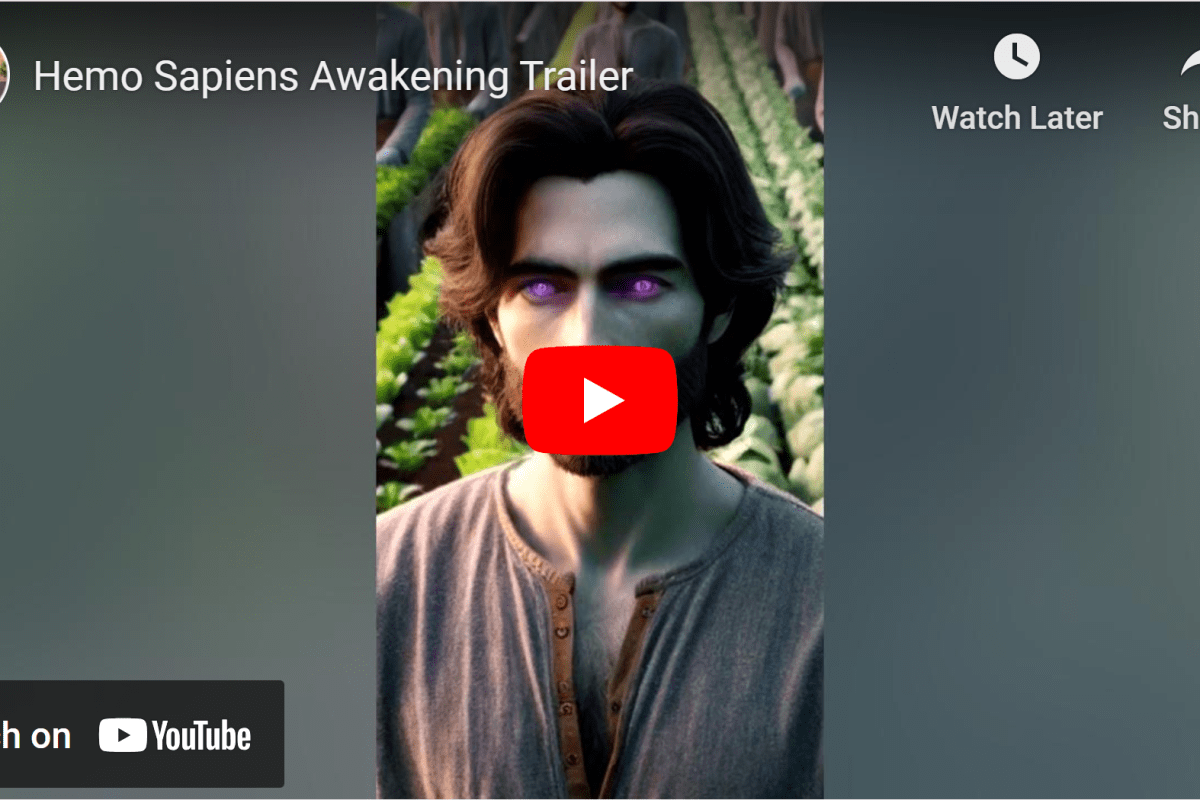
I’ve been neglecting this site as I’ve been focusing on releasing my first novel, which I’ve now managed successfully. I published it under a pseudonym: Ridley Park. The trailer is available here and on YouTube.

Hemo Sapiens: Awakening is the first book in the Hemo Sapiens series, though the second chronologically. The next book will be a prequel that tells the story about where the Hemo Sapiens came from and why. I’ve got a couple of sequels in mind, too, but I don’t want to get ahead of myself.

In summary, Hemo Sapiens is shorthand for Homo Sapiens Sanguinius, a seeming sub-species of Hemo sapiens Sapiens—us. In fact, they are genetically engineered clones. It’s a work of near-future speculative fiction. It’s available in hardcover, paperback, and Kindle. If you’ve got a Kindle Unlimited account, you can view it for free in most markets. The audiobook should be available in a couple weeks if all goes well.

Awakening explores identity, belonging, otherness, and other fictions. It talks about individualism and communalism. It looks at mores, norms, and more.

Check it out, and let me know what you think.

AI is Science Fiction

In the heart of the digital age, a Chinese professor’s AI-authored Science Fiction novel snags a national award, stirring a pot that’s been simmering on the back burner of the tech world. This ain’t your run-of-the-mill Sci-Fi plot—it’s reality, and it’s got tongues wagging and keyboards clacking. Here’s the lowdown on what’s shaking up the scene.

AI Lacks Originality? Think Again

The rap on AI is it’s a copycat, lacking the spark of human creativity. But let’s not kid ourselves—originality is as elusive as a clear day in London. Originality is another weasel word. Everything’s a remix, a mashup of what’s been before. We’ve all been drinking from the same cultural well, so to speak. Humans might be grand at self-deception, thinking they’re the cat’s pyjamas in the creativity department. But throw them in a blind test with AI, and watch them scratch their heads, unable to tell man from machine. It’s like AI’s mixing up a cocktail of words, structures, themes—you name it—and serving up a concoction that’s surprisingly palatable. And this isn’t the first time, not long ago, an AI-created artwork won as best submission at a state fair. In some cases, they are seeking AI-generated submissions; other times, not so much.

AI and the Art Debate

So, AI can’t whip up human-level art? That’s the chatter, but it’s about as meaningful as arguing over your favourite colour. Art’s a slippery fish—try defining it, and you’ll end up with more questions than answers. It’s one of those terms that’s become so bloated, it’s lost its punch. To some, it’s a sunset; to others, it’s a can of soup. So when AI throws its hat in the ring, it’s not just competing—it’s redefining the game.

The Peer Review Question Mark

Here’s where it gets spicy. The book bagging a national award isn’t just a pat on the back for the AI—it’s a side-eye at the whole peer review shindig. It’s like when your mate says they know a great place to eat, and it turns out to be just okay. The peer review process, much like reviewing a book for a prestigious award, is supposed to be the gold standard, right? But this AI-authored book slipping through the cracks and coming out tops? It’s got folks wondering if the process is more smoke and mirrors than we thought.


What’s Next?

So, where does this leave us? Grappling with the idea that maybe, just maybe, AI’s not playing second fiddle in the creativity orchestra. It’s a wake-up call, a reminder that what we thought was exclusively ours—creativity, art, originality—might just be a shared space. AI’s not just imitating life; it’s becoming an intrinsic part of the narrative. Science fiction? More like science fact.

The next chapter’s unwritten, and who knows? Maybe it’ll be penned by an AI, with a human sitting back, marvelling at the twist in the tale.

Good Enough

As I approach my sixty-second year on earth, having almost expired in March, I’ve been a bit more reflective and introspective. One is categorical. I’ve been told over the years that I am ‘good’ or ‘excel’ at such and such, but I always know someone better—even on a personal level, not just someone out in the world. We can all assume not to be the next Einstein or Picasso, but I am talking closer than that.

During my music career, I was constantly inundated with people better than me. I spent most of my time on the other side of a mixing console, where I excelled. Even still, I knew people who were better for this or another reason. In this realm, I think of two stories. First, I had the pleasure and good fortune to work on a record with Mick Mars and Motley Crue in the mid-’80s. We had a chat about Ratt’s Warren DiMartini, and Mick told me that he knew that Warren and a spate of seventeen-year-olds could play circle around him, but success in the music business is not exclusively based on talent. He appreciated his position.

In this vein, I remember an interview with Tom Morello of Rage Against the Machine. As he was building his chops he came to realise that he was not going to be the next Shredder or Eddie Van Halen, so he focused on creating his own voice, the one he’s famous for. I know plenty of barely competent musicians who make it, and I know some virtual virtuosos who don’t. But it involves aesthetics and a fickle public, so all bets are off anyway.

As I reflect on myself, I consider art and photography. Always someone better. When I consider maths or science, there’s always someone better. Guitar, piano? Same story.

Even as something as vague and multidimensional as business, I can always name someone better. I will grant that in some instances, there literally is no better at some level—just different—, so I sought refuge and solace in these positions. Most of these involved herding cats, but I took what I could.

Looking back, I might have been better off ignoring that someone was better. There’s a spot for more than the best guitarist or singer or artist or policeman for that matter. As a musician, I never thrived financially—that’s why I was an engineer—, but I could have enjoyed more moments and taken more opportunities.

When I was 18, I was asked to join a country music band. I was a guitarist and they needed a bass player. I didn’t like country music, so I declined—part ego, part taste. Like I said, aesthetics.

As I got older and started playing gigs, I came to realise that just playing was its own reward. I even played cover bands, playing songs that were either so bad or so easy. But they were still fun. I’m not sure how that would have translated as playing exclusively country music day after day, but I still think I might have enjoyed myself—at least until I didn’t. And the experience would still have been there.

I was a software developer from the nineties to the early aughts. I was competent, but not particularly great. As it turns out, I wasn’t even very interested in programming on someone else’s projects. It’s like being a commercial artist. No, thank you. It might pay the bills, but at what emotional cost?

I was a development manager for a while, and that was even worse, so I switched focus to business analysis and programme management, eventually transitioning to business strategy and management consulting. I enjoyed these more, but I still always knew someone better.

On one hand, whilst I notice the differences, it’s lucky that I don’t care very much. Not everyone can be a LeBron James or a Ronaldo, but even the leagues are not filled with this talent. I’m not suggesting that a ten-year-old compete at this level, but I am saying if you like it, do it. But temper this with the advice at the Oracle of Delphi: Know thyself. But also remember that you might never be the best judge of yourself, so take this with a grain of salt. Sometimes, ‘good enough’ is good enough.

Conscious and Subconscious Writing

I’ve been spending many hours finishing my novel, so it hasn’t left much time for writing here. I considered writing this on my other ‘writing’ blog, but I felt it was time to post something here, and it’s equally topical.

My writing style is typically stream-of-consciousness. I tend to have a problem or a scene I want to resolve. I place myself mentally into the scene, and I start to write. What might flow, I don’t tend to know in advance. The words just come out.

Occasionally, I’ll sit back and reflect more consciously, but mostly, it just comes out on the page. When I’m finished with a scene, I’ll usually revisit it consciously and look for gaps, continuity challenges, missing or extraneous details, room for character development, and so on.

Sometimes, I just embody a character. Other times (diversion: why is ‘sometimes’ a compound word, but not ‘other times’? That’s how my brain works), I embody the setting or the situation.

Sometimes, I need to address an entire chapter, so I look for obvious scenes and beats. I stub them out so that I don’t forget—perhaps even notes to myself about the purpose so I can step away and reengage later.

As a musician, I tend to approach music from the opposite direction. I might start from some inspiration, but most of my writing is brute-force analytics. My music is more laboured than my writing. My visual art falls more in the middle but leans towards the musical approach.

Atheist, Agnostic, Other

This article appeared in my social feed, What are the different types of atheism? But the author makes at least two notable mistakes. Firstly, he conflates atheism with agnosticism, the first being about belief and the last being about knowledge. So, one can believe or disbelieve in something, but that doesn’t speak to knowing. This debate is specifically about gods, so one can believe in a god but not know; one can not believe in gods and not know; one can believe in a god and know; and one can disbelieve in gods and not know. As for me, I am an igtheist: I don’t care about gods. It’s a silly place to spend my time.

For a theist or atheist, the existence of gods is a truth statement. For me, the question is not ruth apt; it’s ostensibly gibberish. Even then, I am still agnostic, which might also be ignostic because not only don’t I know, neither do I care.

As Ricky Gervais has pointed out (recasting per the linked article), if there are 10,000 gods, a typical Christian doesn’t believe in 9,999 gods. They believe in their god. Just 1. Of course, the other gods are nonsense. Ditto for Muslims. Ditto for Jews. In the end, they claim the same underlying deity, but they argue over which cohort He favours, and their god identifies as a male, so they’ve adopted male pronouns.

Secondly, whilst the author mentions religious and non-religious, he misses the spiritual cohort. This is a subset of non-religious. In some cases, I and many others might argue that spirituality is simply a personal religion, so the distinction would be one of community. The religious congregate en masse whilst the spiritual take this journey alone. One may also argue that some spiritual folks also congregate. I’ve attended more than one Wiccan or Pagan group event, but the ties may be looser than with a mainstream religion.

In the case of some spiritual adherents, non-religious is shorthand for being opposed to Big Religion. Perhaps not coincidentally, many of these are opposed to Big Pharma and Big Agriculture, but my purpose here is not a psychological profile.

I recently heard Robert Sapolsky say in a lecture that the religious live longer and are happier on average than non-religious, which is to say the spiritual and the atheists alike, so he notes this could provide an underlying evolutionary explanation for religious belief. Neither will I comment further on this notion, but there you have it. Take id or leave it.

Illusions of Self: Evanescent Instants in Time

In the realm of existential contemplation, the notion of the ‘self’ is akin to a fleeting present moment. It flits into existence for a fraction of an attosecond, vanishing before our grasp. Much like the illusory present, the ‘self’ manifests briefly and then fades into the annals of the past, a mere connection of temporal slices.

When we traverse the corridors of time, we effortlessly speak of the ‘past,’ stringing together these slices into a continuous narrative. This amalgamation serves our language and thought processes, aiding idiomatic expression. Yet, it remains a construct, a fiction we collectively weave. It is akin to the frames of a movie, where the illusion of movement and coherence is crafted by arranging individual frames in rapid succession.

The ‘self’ follows a similar illusionary trajectory. It exists only inasmuch as we christen it, attributing a name to a fleeting instance of being. However, this existence is as fleeting and ephemeral as a mirage. We name it, we perceive it, but it dissolves like smoke upon closer inspection.

This existential musing reminds one of the fictional entity – the unicorn. We can name it, describe it, and even envision it, yet its tangible existence eludes us. The ‘self’ aligns itself with this enigmatic unicorn, an abstract concept woven into the fabric of human understanding.

In this dance of philosophical thought, published works echo similar sentiments. Renowned thinkers like Nietzsche, in his exploration of eternal recurrence, or Camus, delving into the absurdity of life, have grappled with the transient nature of the ‘self.’ Their writings form a canvas, painting the portrait of an existence that flits through time, leaving only traces of memory and illusion in its wake.

In conclusion, the ‘self’ is a fleeting enigma, a temporal wisp that vanishes as quickly as it appears. Like a raindrop in the river of time, it merges and dissipates, leaving behind an evanescent trace of what we conceive as ‘I’. The philosophical gaze peers through the mist, challenging the very essence of this ephemeral entity, inviting us to question the very fabric of our perceived reality.