System Failure

The system is broken. It’s not just broken in the United States. It’s the entirety of Western Civilisation. It’s not time for a reboot. The virus is still inherent in the system. It’s time for a new system.

The reaction to this line of reasoning does something along the lines of, ‘It’s easy to criticise. What’s your solution?’ So let’s begin by parsing this enquiry.

Firstly, not all problems have solutions.

Humans, it seems, need resolution and closure. And they seem to gravitate towards easy answers, specious or otherwise. But humans have an abysmal track record of solving complex problems—political issues, social issues, economic issues, and so on. It’s not as much as there is no solution, per se, but that the interactions within the complexities are too many to consider. The system has a temporal dimension, which means even if I solve the problem at time-nought, the solution may not hold at time-prime.

Secondly, that one can recognise a problem does not mean one can fix it.

This was the denouement of Occupy Wall Street a few years back. They shed light on the problems, but those in charge—hawking ‘solutions’—established a frame wherein a problem without a solution is worse than a problem ‘remedied’ with the wrong solution. You don’t have to be a mechanic or body shop guy to recognise a smashed car even if you can’t fix it.

Auto smash

What then?

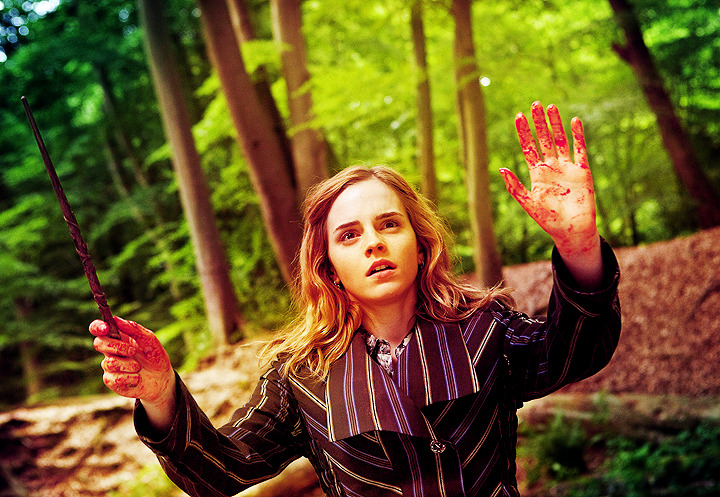
Harry Potter’s Hermione’s Magic Wand

If I had a magic wand, for a start, I’d abolish Capitalism, private property, and religion and go from there.

What’s wrong with private property?

‘Do you live on the street?’ is a typical response I hear when I suggest abolishing private property. ‘Give me your address. I suppose you wouldn’t mind if I moved in’ is another. I’ve discussed eliminating private property elsewhere, but the underlying problems remain:

  1. Why accept the usurpation of the commons to private property?
  2. Why accept the premise that one can own what one doesn’t possess?
  3. Why accept the premise of a first-come, first-served principle?
  4. Why accept, given the notion of property rights, that distribution must occur within the domain of economics?
  5. If one accepts that property should fall into the domain of economics, why not apply a ‘best use’ litmus instead of a ‘first come’ or ‘ability to purchase’ litmus?

Usurpation of the Commons

I don’t accept this usurpation. In nature, where conflict exists, violence or the threat of violence is the arbiter. As humans in nature, it’s no different. Like the meat one purchases behind the veil of a grocery mart, we are shielded from the inherent violence,

In many jurisdictions, property owners are justified in homicide if another person encroaches on their property. Many homeless or indigent people have tried to squat on unoccupied property only to be forcibly removed.
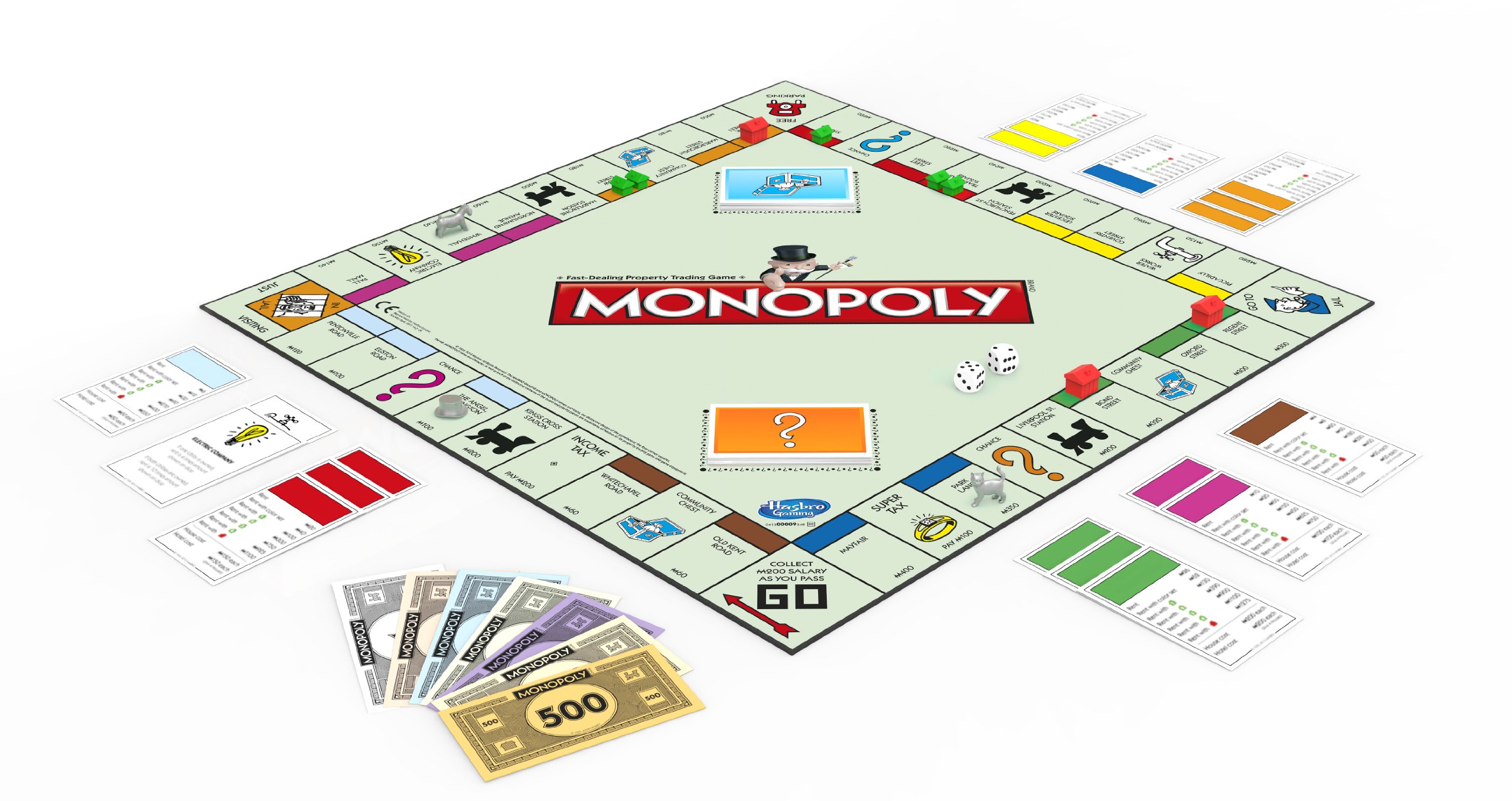
Monopoly Game Board

Property is like the game of musical chairs. And if you are late to the game, the chairs may already be taken. Imagine joining a game of monopoly late in the game and ownership of all the property has already been distributed. How do you think you might fare?

Possession is 9/10 of the Law

Possession is different to property. That I possess a place offers a different justification for my occupancy of it than a place that I own in absentia. Sure a philosophical argument could be made against any right to possess, but I’m not going there—at least not today.

This becomes a situation where usage is a determining factor. Can this ownership be justified if you’ve got a dozen places scattered around the globe?

First Come, First Served

It’s easy to see why this is in place: It’s simple. And at the start, there were few people and a seemingly infinite amount of land, but this was not sustainable. Land is ostensibly a fixed resource whilst humans multiply somewhat geometrically. So, given enough time, this allocation problem was predictable and inevitable.

But, given that property is something we insist on, what are the alternatives? Do we have a lottery periodically to redistribute property? Do we reset ownership whenever a new potentially qualifying owner emerges? Do we establish duration of ownership with some expiry? Do we not allow property to pass to forward generations? Or do we simply disallow ownership because this solution is too cumbersome to implement?

Disclaimer: In an attempt to economise my time yet still contribute content, this is a post dredged from Drafts (from May 2020) and posted with touchups in the manner of applying lipstick on a pig. Sadly, it’s still relevant.
Why Free Will is Philosophically and Scientifically Sound

I feel this article runs the reader down a rabbit hole, but as it already contains several points of view, I’ll uncharacteristically restrain commentary for now. Perhaps I’ll return to it later.

There are a lot of valid points in this article, but it misframes (perhaps unintentionally) and misses points just out of frame. As you read this, keep in mind that even if you accept the entire position, it does not invalidate the causa sui argument. This is the elephant in the room—hiding over there behind the ficus.

Feel free to comment.

Boris Johnson Resigns

In other news, Boris Johnson resigns. Another Conservative politician hits the bin. I’m neither Conservative nor Liberal, so I think I am in a place where I can comment as a disinterested observer. Of course, I am not fully disinterested; I am rather apathetic to it all. None of my horses is in the prevailing parties.

As I’ve been reading (too much) Jonathan Haidt, of all things, a Liberal apologist for Conservatives aimed at a Liberal audience. I have to wonder why Conservative politicians are so corrupt.

Hear me out. Before you accuse me of a hack job, allow me to explain. Are Liberal politicians corrupt? Of course, they are. Probably as corrupt. By and large, they have the same handlers and funding sources. But then why call out Conservatives as being corrupt?

According to Haidt and his Moral Foundations Theory (MFT), Conservatives collectively have more moral dimensions than Liberals and they have elevated ‘disgust’ triggers. This is what makes them more obsessed with ‘purity’.

According to MFT, Liberals have two moral dimensions: Care and Fairness, regarding the left side of the value pairs. Conservatives share these, but they also include Loyalty, Authority, and Sanctity.

“The Righteous Mind: Why Good People Are Divided by Politics and Religion,” Haidt 2012

I am distracted for a moment by the epiphany that this explains a lot about why American police units operate the way they do—dysfunctionally from the Liberal and minority perspective. Whilst they care and want ‘fairness’, how they care is typically different (though there are clear overlaps), and ‘fairness’ means something different to them. Next, dogpile on loyalty, authority, and sanctity.

Loyalty is to their group of other blue lives as well as their nationalistic and paternal fealty. Authority is them. They are the authority, and this is an inviolable relationship. Don’t question it. And then there’s sanctity. We need to clean up the neighbourhoods and cleanse them of criminals. The dirty people need to be taken off the streets as we perform our moral duties.

And I’m back. Whilst this intermission was a diversion, it is at the same time on point because they share this worldview with Conservative politicians—tough on crime, law and order. But what I am calling out is that if this is their worldview, they should be measured by a higher standard.

Distracted again, this also explains a lot about the outrage over Julian Assange, Chelsea Manning, and Edward Snowden. Each of these people exposed unfathomable corruption, and Conservatives want their heads on platters. This reflects their viewing of the world through a deontological lens and as measured by a different sense of fairness.

I am not judging here. I am merely pointing out that their loyalty to country (or whatever) trumps the fairness mechanism. In a way, they see it as unfair that someone would have the audacity to betray their (notably corrupt) government. They even buy into the argument that they could have used the reporting mechanisms in place rather than air the dirty laundry in the public forum. These people find no discomfort in maintaining state secrets, even when the secrecy is for nefarious intent.

Back again. My point is that if these are primary drivers for Conservatives—fundamental attribution bias notwithstanding—, why do they subvert their own morals? For Liberals, there is no such subversion because they don’t believe these are relevant moral dimensions. This bleeds into the abortion debate—the sanctity of life: Life is sacred (and too much hypocrisy on the Right to unpack here), so you need to abide by moral code. Let’s not run astray again.

Wrapping this up, even if Conservatives are no more or less corrupt than Liberals, they are claiming to have a higher standard and yet they fail to abide by it. For a Conservative to call out a Liberal for the same violation is rather silly because the Liberal never agreed to the Terms & Conditions at the start.

Done

As I was mistyping the title, I realised that ‘resigns’ is ‘reigns’ with an inserted ‘s’. Nothing more.

Revisiting The Righteous Mind

Je m’accuse. I am as guilty as the next bloke when it comes to constructing false dichotomies. I like reading Steven Pinker, Jonathan Haidt, and Joshua Greene, though I disagree with some fundamental aspects. Having put Time Reborn to bed, I’ve reengaged with The Righteous Mind and it’s dawned on me what goes against my grain. In retrospect, it should have been obvious all along, and perhaps it was. When I read works by these cats, I catch myself saying, ‘Yeah, but…’. A lot.

To be fair, I’ve not read much of Greene, so I’ll focus on the other two, Haidt in particular. From what I can tell, Greene is cut from the same cloth. I’ll elaborate. When I cite Haidt, just know that I mean the other two and their ilk.

Haidt divides the world into Liberals and Conservatives. This is the false dichotomy. I’m aware that I recently expounded on the political spectrum, but this is more than that. Whether this would be better depicted as further Left on the political spectrum or another dimension is open to debate.

I believe the biggest dissonance I feel against this common perspective is that these guys are all Liberals. In particular, they are Ivory Tower Liberals™—paternalistic know-it-alls. Upon reflection, Cass Sunstein falls into this category: paternalistic intellectuals. I don’t mean this pejoratively, but each of these is a privileged prescriptivist. But that’s not my beef.

The other common thread is that these people are all institutionalists. This brings everything into focus. These people are defenders of Enlightenment Age morality, so they’ve all adopted the same metanarrative.

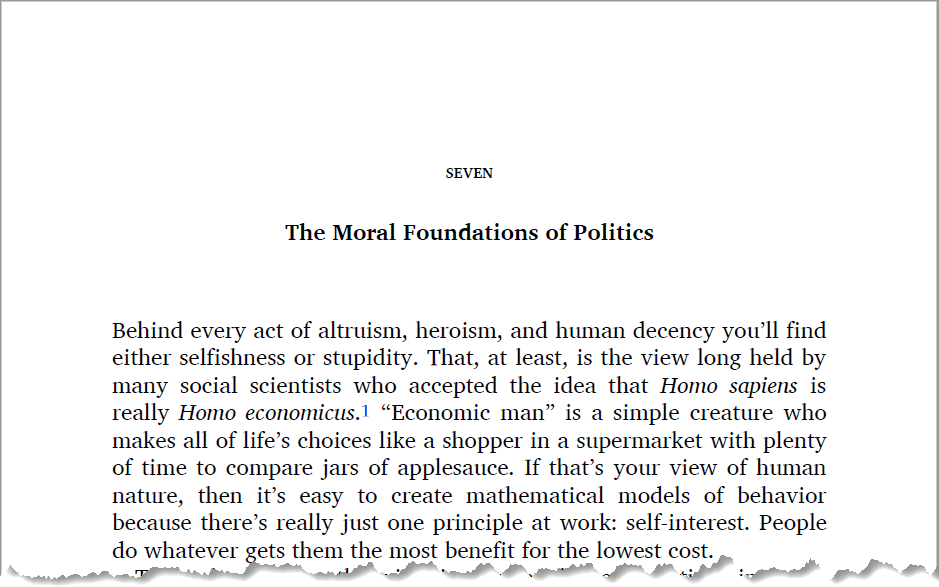
The Righteous Mind – Chapter 7

Haidt’s observations are accurate enough, but only within the frame of institutionalism—a frame I reject. This leaves my perspective out of view and unrepresented. In chapter seven, he establishes his action pairs that serve to divine moral truths about a person’s foundational political beliefs. He argues, like Pinker, that the mind is not a Blank Slate. He adopts neuroscientist Gary Marcus’ definition of innate:

“Nature bestows upon the newborn a considerably complex brain, but one that is best seen as prewired—flexible and subject to change—rather than hardwired, fixed, and immutable.”

— Gary Marcus, The Birth of the Mind (2004)

He further morphs Marcus’ ideas into this:

Nature provides a first draft, which experience then revises.… “Built-in” does not mean unmalleable; it means “organized in advance of experience.”

— Jonathan Haidt, The Righteous Mind (2012)

Given this background, Haidt invented these action pairs:

  • Care – Harm
  • Fairness – Cheating
  • Loyalty – Betrayal
  • Authority – Subversion
  • Sanctity – Degradation

I suppose I could reserve an entire post to disintegrate these. Suffice it to say that, categorically, I have issues with the meta of some of them—particularly, the last four. I am more accepting of the care – harm dichotomy, so my commentary would be more nuanced, especially in light of the scenario he cited, which shed light on his own thought processes.

I’m getting off track. The point I want to make is that these shared perspectives on society and identity, respectively macro- and microcosmic, make sense in an institutional framework, but is less necessary otherwise. And although Haidt attempts to defend his positions as not being invasive [my words, not his], this is simply because he accepts the underlying metanarratives blindly.

I’ll probably return to expound on this later, but for now, I am on to other things. Meantime, here is a review from a European, who rightly points out that this is a book written by an American for an American audience, even if he feels it is more universally applicable.

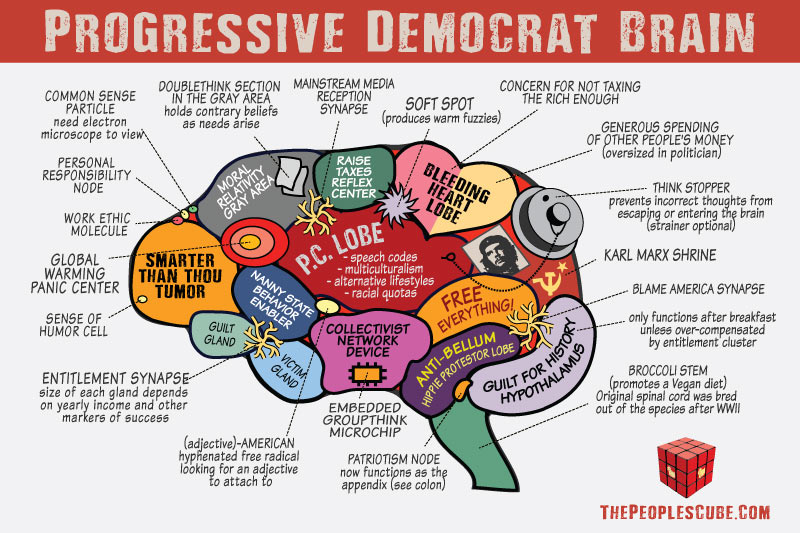
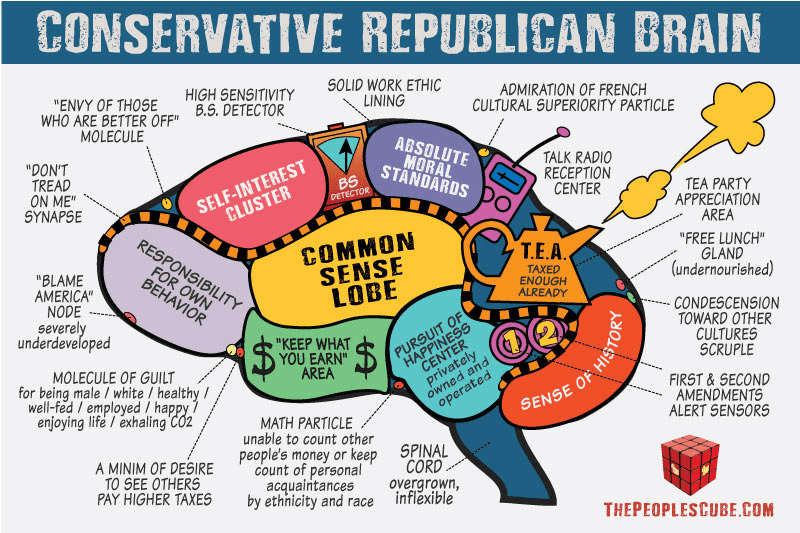
Out of a sense of fairness, I’ve included the Conservative brain image.

Video: No-Self, Self, and Selves

First, this is an extension of sorts from a prior post on No-Self, Selves & Self, but I wanted to create a short video for my YouTube channel to establish somewhat of a foundation for my intended video on the causa sui argument. Related content can be found on this one of the Theseus posts.

This video is under 8-minutes long and provides some touch-points. I had considered making it longer and more comprehensive, but since it is more of a bridge to a video I feel is more interesting, I cut some corners. This leaves openings for more in-depth treatment down the road.

As has become a routine, I share the transcript here for convenience and SEO relevance.

Transcript

In this segment of free will scepticism, we’ll establish some perspectives on the notion of the self.
Most of us in the West are familiar with the notion of the self. What’s your self? It’s me. For the more pedantic crowd, It is I.

We’re inundated with everything from self-help to self-awareness to self-esteem to selfies and self-love. We’ve got self-portraits, self-image, and self-harm. We’ve got self-ish and self-less.
We’ve even got self-oriented psychological disorders like narcissism. Attending to the self is a billion-dollar industry.

And whilst psychology and pop-psychology seem to consider the self to be a nicely wrapped package fastened tightly with a bow, it’s a little more contentious within philosophy. But there are other perspectives that don’t include the self, from no-self to slices of discontiguous selves. Let’s shift gears and start from the notion of having no self, what Buddhism calls no-self.

No-Self

Buddhism is an Eastern discipline, so it does not have the same foundations as the West. According to this system of belief, the notion of a personal identity is delusional, so there is no self at all. This obsession and clinging to this delusional self is a major cause of suffering.

the notion of a personal identity is delusional,
so there is no self at all.

In this view, all is one and indivisible, but self-deception leads us to believe we are individuals, each with a discrete self. In fact, the Buddhist notion of Enlightenment—as opposed to the Western notion of Enlightenment—is precisely this realisation that there is only one self, and this is the collective self. But, to be fair, except for the times where the self has yet to be developed—we’ll get to this in a bit—, this notion of no-self is aspirational in the sense of losing one’s self in order to reduce suffering.

The concept of selflessness exists in language, but this is more aimed at sublimating the self in favour of a greater collective good.

Self

The self is the central feature of many personality theories from Sigmund Freud and Carl Jung to Rollo May and Abraham Maslow. From individuation to self-actualisation. The self is self-referenced as I and me. Historically, the self had been considered to be synonymous with some metaphysical soul. Nowadays, psychology has taken the reigns on definitions.

One version of the self can be thought of as a single thread connecting beads of experience through time, time-slices of experience. We’ll come back to this. This sense of self extends backwards in time until now and contains aspirations projected forward in time as viewed from the perspective of now.

This sense of self extends backwards in time until now and contains aspirations projected forward in time as viewed from the perspective of now.

Whilst we use terms like ‘person’, ‘self’, and ‘individual’ somewhat synonymously, they each have different meanings. Whereas ‘individual’ is a biological term; ‘person’ is sociological or cultural; ‘self’ is psychological. Although the default position in the West is the adoption of the psychological notion, where each person has a self, there is also a philosophical notion. Given that the perspective of self is so ubiquitous with people accepting it as obvious, that it feels like I shouldn’t even spend time producing content to fill this space. But for a sense of completeness, I shall.

Psychologist William James distinguished between the ‘I’ and ‘me’ sense of the self, but let’s not parse this and consider each a stand-in for the self as experienced by the self. In this view, the self is generally considered to be the aggregation of continuous phenomenological moments and how we interpret them into a sense of ‘identity’.

In the West, the notion of having a self is imposed by convention. To feel otherwise is considered to be a sign of mental illness. As much as I want to share Foucault’s perspective on how delineating mental illness operates to the benefit of power structures, let’s just consider this out of scope. The Diagnostic and Statistical Manual of Mental Disorders, DSM-5, notes that a key symptom of borderline personality disorder, BPD, is a ‘markedly and persistently unstable self-image or sense of self’. Become selfless at your own peril.

There are challenges with the notion of self even in psychology. In developmental psychology, the self—differentiating one’s self into an identity separate from the world—, is not acquired until about the age of 18 months. Lacan had suggested that this so-called mirror stage developed at around 5 months as part of ego formation, but further research disputes this.

Although I won’t go into detail, individualist cultures experience the self differently than collectivist cultures. The origin of the concept of the individualistic view of self can be traced to early Christianity. In American culture, Protestantism seems to be a primary driver of the individualistic view of self. Let’s continue.

Selves

Heraclitus quipped, ‘No man ever steps in the same river twice, for it’s not the same river and he’s not the same man’. This is a nod to the impermanence of the self. Instead, there are selves.

No man ever steps in the same river twice, for it’s not the same river and he’s not the same man

Heraclitus

Galen Strawson proposes that although he understands intellectually what others mean when they use the word self, he doesn’t share this experience emotionally. Unlike the phenomenological slices connected by a thread, he doesn’t feel he has a thread. He posits that he experiences this prevailing sense of narrativity episodically without continuity.

A typical view of the self is that one feels narratively connected to past slices—the 5-year-old self with the 20-year-old self and with the 50-year-old self, whether that 50-year-old self is in the past, present, or future. Even though we are not the same person, there is some felt affinity.

My View

As for me, I consider the self to be a constructed fiction that serves a heuristic function. I don’t feel as disconnected as it seems Strawson does, but I don’t feel very connected to my 7 or 8-year-old self. And I can’t even remember before that. I’m not even sure I’ve got one data point for each year between 8 and 12, and it doesn’t get much better until 18 or 20. From there, I may be able to cobble together some average of a dozen or so per year without prompting, but I don’t even feel like the same person. Many of my views and perspectives have changed as well.

I don’t even feel like the same person

I was in the military until I quit as a Conscientious Objector. During that time, I became aware of Buddhism, and I doubled down on my musical interests. I worked in the Entertainment industry until I became an undergrad student, transitioning to become a wage slave whilst also attending grad school until I graduated. I’ve had several career foci since then. With each change, I’ve had a different self with a different outlook.

Can I connect the dots? Sort of. But I can also create a thematic collage out of magazine clippings or create art with found objects. I can tell a disjointed story of how I transitioned from X to Y to Z. It may even contain some elements of truth. Given how memory operates, who can tell?

In any case, what about you? In the next segment, I’m going to be discussing why we may not have free will owing to a lack of agency based on a causa sui argument.

Do you feel like you have a self? Does your sense of self have any gaps or inconsistencies? Do you feel you don’t have a self at all?

Let me know in the comments below.

Palaeolithic Emotions

The answer is P F Strawson.

When I was watching the video by Bob Doyle that inspired me to write No Escape from Moral Responsibility, Bob made an offhand remark about Galen Strawson that made me question how Bob couldn’t make a connection. In fact, that would make two because the trigger for my having penned the post in the first place is his comment about not understanding how probability in a system wouldn’t necessarily lead to zero degrees of agential freedom. After noting that Strawson, the younger, was an Impossibilist, he flippantly remarked that although Strawson, as the strictest species of Determinists, he and his ilk would be put off if someone knocked their coffee over.

Bob had already mentioned P F Strawson’s position that whether or not the universe was deterministic or indeterministic, people would still have an emotional response and seek a target—likely the animate entity nearest the cup. It may have been a cat or a gust of wind, but if there is a person nearby, blame will be cast.

People don’t even need a target. They’ll look for structural defects in the cup; perhaps the table is not level; why didn’t they leave more space between the tables? If I hadn’t had to stop for petrol, I’d have gotten another seat? Or if I had stopped for petrol, I wouldn’t have been in the vicinity. Humans are imbued with all sorts of magical thinking. I’d almost be willing to bet that this thing overruns the logical sort.

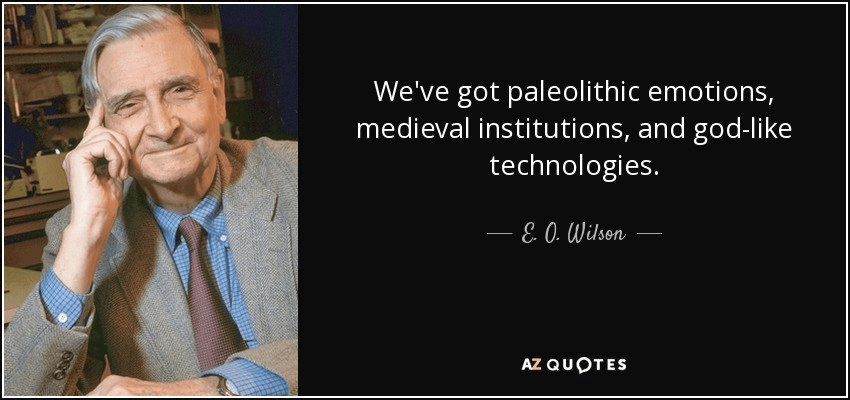
E O Wilson Quote

As E O Wilson once said.

We’ve got Paleolithic emotions…

E O Wilson

His context was different, but the point remains. Humans should be reclassified from Homo sapiens sapiens to Homo pathos sapiens.

This post has been in draft for a month or so. When I was looking for a cover image, I came across a post by SoundEagle on the topic of Palaeolithic Emotions. I opted to not appropriate the attendant art. Check it out of you are interested in what I didn’t purloin.

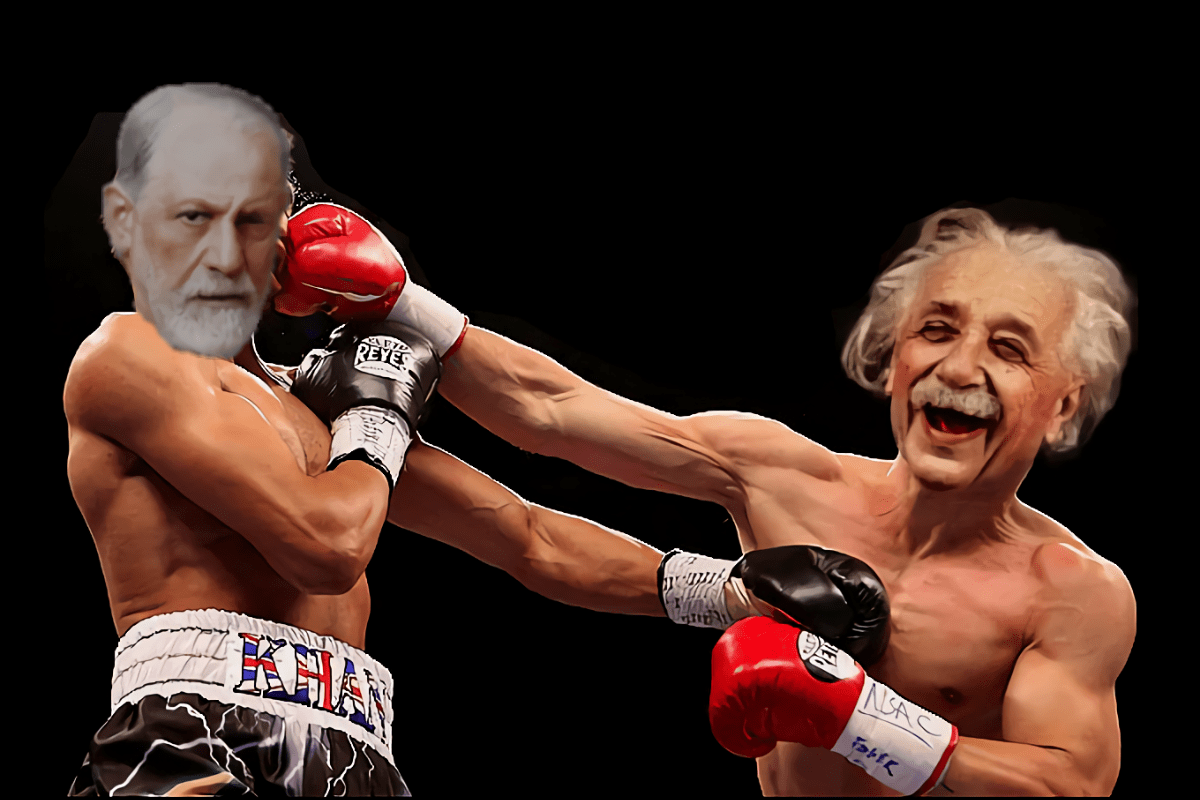
Intuition Showdown

Two different colleagues have independently recommended The Matter With Things by Dr Iain McGilchrist, who is also known for The Master and His Emissary, published in 2009.

As a result of these recommendations, I’ve watched some 6 or more hours of video interviews with Iain, some of which are hosted on his own site, Channel McGilchrist, including this one. Before I get to the topic promised by the title of this post, I’ll say that I like Iain. I respect his intellect, his demeanour, and his approach. If you are a credentialist, his an Oxford-educated psychiatrist—so he’s no slouch.

Iain’s positions are well researched, informed, and articulated. I could listen to him for hours. In fact, I have. And yet I disagree with a fundamental position he takes on intuition. Allow me to build up to that.

My first recommendation was due to a reaction I shared that depicting left-right brain hemisphere as analytic-creative was overly reductionist and quaint. McGilchrist was recommended because he disagreed. But it turns out his disagreement was more in the way it was being portrayed. The answer was wrong because the question was wrong. In a nutshell, his contention is that we shouldn’t be asking what each hemisphere processes, but how it goes about processing. I agree with this.

we shouldn’t be asking what each hemisphere processes, but how it goes about processing

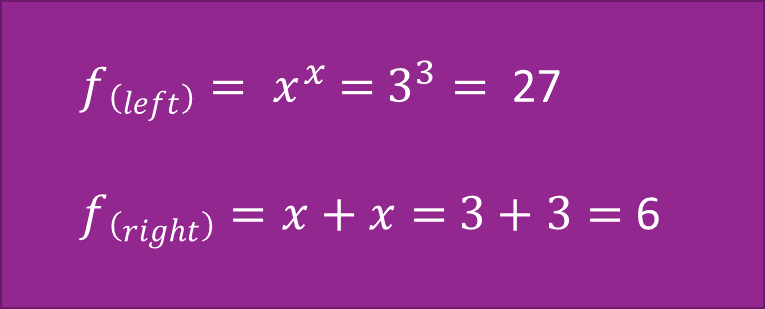
His point is that in cases where an experience (inputs) might be processed on one side versus another, the interpretation (outputs) would necessarily differ. To make a false analogy, the left brain might be performing an exponential function whilst the right brain might be performing an arithmetic function. So, if ƒ(left) = xx and ƒ(right) = x+x, then an input of 3 would yield 27 and 6, respectively. There is nothing wrong with either side, they just produce different results. In context, this difference might matter: How many feet across is that chasm I must leap. I say, ‘Oops’, as I am falling to my demise having underestimated the difference, having used the right rather than the left function.

False Analogy by the Numbers

So where is this showdown you are wittering on about? A little more setup.

Science is stereotypically an analytic function, which is the say it requires a lot of left hemisphere processing. Psychology—and keep in mind that I cast psychology as pseudoscience, or para-science when I am being more charitable—elevates the notion of intuition as not only having value but of being largely ignored by science.

Those who have been following me for a while, know that I am also critical of Scientistm™, the blind-faith devotion to the current state of science as being some infallible truth. But neither am I an advocate for metaphysical claims. This is what I feel Psychology™ is trying to do with intuition. It feels like they are not only trying to inject a metaphysical claim; they are simultaneously making a normative claim that you should have (and trust) intuition; further, they are staking out the territory to be able to say an absence of this acceptance is pathological, so this is a power play. We’ve got the tea leaf readers taking up arms against science.

Of course, I am being hyperbolic and polemic for effect, but this division exists. Iain is not the first to attempt to elevate intuition. A central idea that Jonathan Haidt tries to sell the reader on in his book, The Righteous Mind, is that we need to be more accepting and trusting of intuition. Even Malcolm Gladwell pushed this point in Blink: The Power of Thinking Without Thinking.

I do think that this will escalate. Even if it doesn’t materialise into a full-scale war, people will take sides—they already have—, and we’ll see more us versus them fingerpointing. Whilst I am not fully on the side of science, my propensity is to lean in that direction.

UPDATE: Even before I post this, I discover that I am behind the times with this prediction. In searching for a suitable image for this post, I find the book Science and Pseudoscience in Clinical Psychology, which calls out pseudoscience presented as fact not only in the obvious realm of pop psychology but in the offices of practising psychologists. I have not read it, so I am not in a position to recommend it. I may get a copy for myself, if only just to have it on hand.

Before I end this, I also wish to anticipate a point of disagreement. I’ve encountered practitioners of ‘scientific psychology’ who vehemently defend their vocation as science. Without addressing this directly, let’s just raise the point that applying the scientific method and maths to a discipline doesn’t graduate it to become a science. I can apply this to Tarot or haruspicy. If fact, this is how, in general, social sciences became so-called soft sciences: ‘Look at me, mum. I’m using numbers’.

Where do you fall on the topic of intuition? Am I exaggerating and making mountains out of molehills?

Small Print (enlarged for texture): I’ve been approved as an Amazon.com Affiliate, so any links to Amazon are monetised. The purchase price to you remains unaffected, but I may be compensated for these purchases. If a purchase does not accrue to an affiliate, Amazon keeps the difference.

PSA: If you know of an affiliate you want to support—whether me or another—, purchaser through the affiliate. It costs you nothing and benefits the little guy.

Revisiting Time Reborn

I’ve just finished with Time Reborn. I wasn’t expecting to be converted to Smolin’s proposition that time is real rather than constructed. I enjoyed the book, and he provided a solid foundational understanding of the conventional scientific perspective (circa 2013, when the book was published).

I understand that Smolin is a professional physicist with a PhD and his grasp of the fundamentals is solid, and I am a peripheral scientist at best. I fully grant that I may be on the left of the Dunning-Kruger curve and making rookie mistakes.

The biggest contention I have is that he insists that everything needs to have a reason, citing Leibnitz. His argument is based on the question of why is our universe so perfectly structured, that it would be improbable to have happened purely by chance.

Whilst I agree that everything has a cause, reasons are an artifice imposed by humans. In practice, where reasons don’t exist, we make them up. This is how we get false theories and gods. Smolin does discuss false theories of the past and attempts to claim that the prevailing theories occupy this space whilst his theory should replace it.

Any universe created without the ability to sustain life would not have us asking why it did not support life.

My reaction is that it just is. Whether Roger Penrose is correct in saying that the universe is continually recreated and destroyed, rinse and repeat, the reason the universe is constructed in such an (improbably) ordered fashion that can sustain life is that there is no reason. Any universe created without the ability to sustain life would not have us asking why it did not support life. It does. We are here to question, and so we do. End of story.

We can make up all sorts of stories, whether through science, religion, or some other origin myth. None of them is provable. As Smolin notes, this is a one-time event. If it is destroyed, so are we and our memories. If life is sustainable in a future—or even parallel—configuration, we’re sent back to start where we can fabricate new stories.

Perhaps in another universe, it will be configured so differently that some other sort of life is created, perhaps this life will not be DNA-based and be anaerobic? Who knows?

It seems that he has an interest in reserving a place for human agency, which has little room for movement in current scientific models. His model provides this room. Moreover, he further thinks that even in current models, human agency should be injected into the models. I suppose he is not familiar with Keynes’ animal spirits.

For some reason, he decided to devote the final chapter to the hard problem of consciousness. This was a particularly hot topic around that time, so he didn’t want to miss the boat. The long and the short of it, he didn’t think the qualia-consciousness answer would be found through physics—though he reserved that there was a non-zero probability that it could be. He posits this as an existential, experiential challenge, and science is not designed to address such affairs.

Supernatural

There is a battle being waged in the United States today, but it is not centred on the lack of separation of Church and State. I suppose this may be a uniquely American issue given its Constitutional roots, but the root cause is rather a lack of separation between Natural and Supernatural, not between Church and State.

Tomorrow America is celebrating Independence Day [sic], but until we are independent of religion, we cannot be independent. The only real independence is for the politicians who are independent of British control. There is nothing more substantial than this, and nothing for the ordinary citizen, who might as well be taking orders from England. Canada doesn’t look any worse for the wear and tear. I’m not a Monarchist, but it’s no less ridiculous than the Oligarchy or Plutarchy in play today.

I’ve got nothing again churches, per se. I don’t prefer the brainwashing that passes as organised religion, but neither am I fond of the brainwashing that is organised politics. And why is it called ‘brainwashing’? It’s clearly mind-muddling. I digress.

I do believe that it’s in the best interest to separate Church and State, not least because I need freedom from religion. It is already force-fed down my throat and codified into laws. We need less, not more.

Of course, a key topical debate is the abortion issue. This is strictly a religious issue. Even if you want to argue that it’s a moral rather than religious issue, it is still the result of supernatural beliefs. This is where the separation needs to happen.

Why won’t it happen? It won’t happen because people who believe in supernatural forces—especially active supernatural forces—are easy to manipulate. This has been true historically as well as contemporaneously. It’s too convenient for politicians to pull the old Santa Claus trick—if you aren’t good, Santa won’t give you any presents; and if you’re bad, he’s going to bring you coal instead.

I’ve said my peace. In the end, I don’t really even care if you believe in the supernatural, but if you believe that you (or anyone) can interpret these forces, I claim foul and out of bounds. This belief is not different to believing that you can understand what your dog or cat is ‘saying’—or your pet unicorn in the garden. It’s certifiable.

I know that other countries have to contend with this interference. Some even don’t mind the union. Is this a problem in other countries? Is it a problem in yours? Or do you consider it to be a necessary solution?

DISCLAIMER: This post has absolutely nothing to do with the Supernatural television series.

Cyclists are Economic Disasters

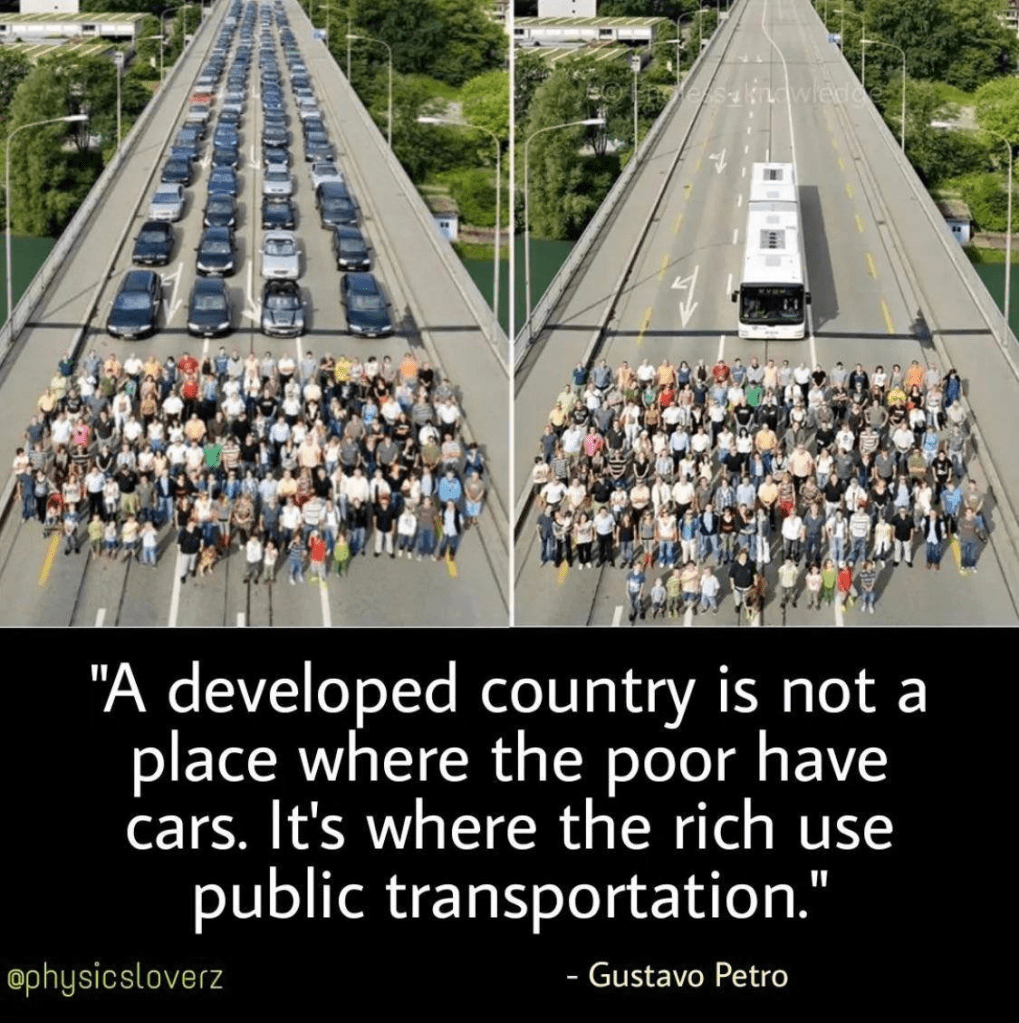
A colleague of mine posted this today. It was in quotations but was uncited. I attempted to discover the source, but the best I could do was to find a post from 2017 citing another author, Kaushik Patel on LinkedIn, but I do not know if this person originated this. It doesn’t really matter. In the spirit of full disclosure, my colleague is a fully indoctrinated, unapologetic Libertarian Capitalist. He also is an avid bicyclist, so reconciling the meta must be a challenge.

A Cyclist – is a disaster for the economy:

1. He does not buy the car and does not take a car loan.
2. Does not buy vehicle insurance.
3. Does not buy fuel.
4. Does not use the services of repair shops and car washes.
5. Does not use paid parking.
6. Does not become obese.
7. Yes, and well, dammit ! Healthy people are not needed for the economy. They do not buy drugs. They do not go to private doctors. They do not increase the country’s GDP ! On the contrary, every new McDonald’s outlet creates 30 jobs: 10 Dentists, 10 Cardiologists and 10 Weight Loss Experts.

So, what do you prefer- Cycling or fast food?

Like the Jackass parable, I recently shared, how one reacts to this is largely predictable if you know the worldview of the reactor.

This piece takes the perspective of the cyclist critiquing GDP economics satirically through the lens of an orthodox economist. Of course, there are also many internal contradictions and mistruths. I don’t intend to fully critique what I take to be a meme, but I’ll comment somewhat. To be fair, I get annoyed by bicycles intermingling with either automobiles or pedestrians. I’d prefer there be dedicated thoroughfares for bikes. When I am walking, I feel they’re like mosquitos or horseflies. When I’m driving, I see them as drunken toddlers. Who knows what they’re going to do next.

Meantime

Crossed my Facebook Feed

To be honest, I see them as anachronistic. They serve a purpose—many purposes, in fact—, but that doesn’t obviate the nuisance factors. I am not wholly anti-bicycle, but I feel they need a better implementation strategy. I rode bicycles until I was twelve years old or so. Not being the nineteenth century, I still view them as child’s toys. Regarding adults, there are generally two categories—the privileged (and self-righteous) and the underprivileged (and disenfranchised).

Privilege

The author of this quote is likely in this category. How dare someone try to undermine my god-given right to responsibly ride a bike for the greater good of humankind. These people not only own expensive bicycles. Some own several for on-road cycling, off-road cycling, and perhaps even performance cycling. Generally, they own the accoutrements and matching aerodynamic vestiments—padded bicycle shorts, a tight jersey, a sleek helmet, and proper cycling shoes, each contributing to the economy.

In the categories are the commuters, who cannot necessarily wear their gear on the commute, but trust me, they got it in the closet, and they’d wear it if they could.

Underprivilege

This category is for the poor who need to commute a relative distance but either can’t afford or justify an automobile or have had their licence revoked. These people are not a part of bike culture. They are bicyclists by necessity. This is not a play to the greater good. It’s just a way to not have to walk as much.

More Colour and Shape

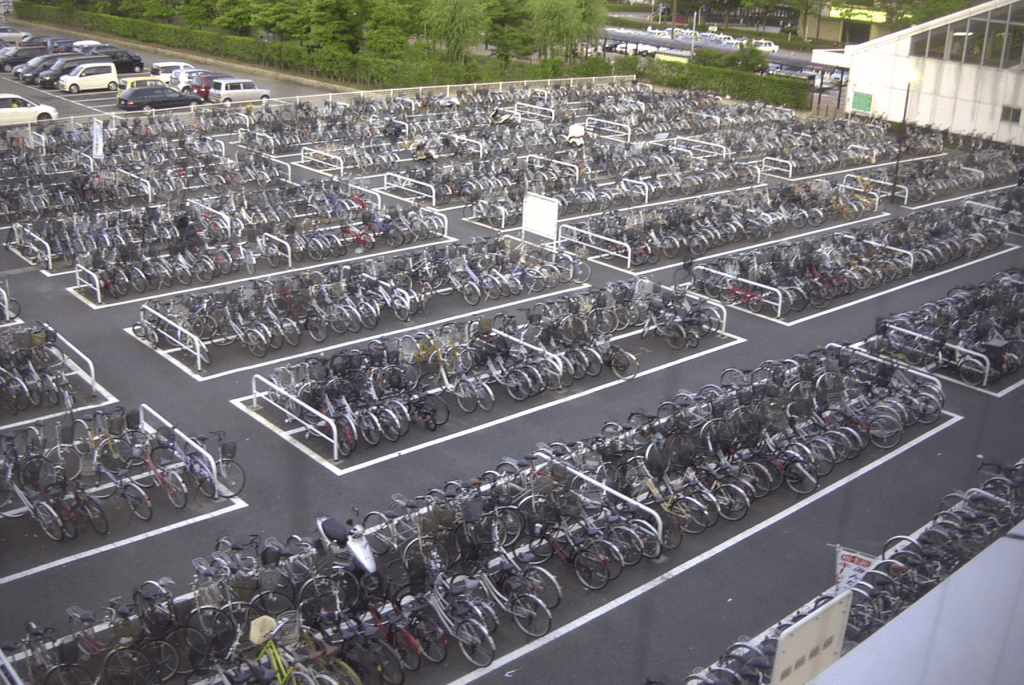
There is a large cultural component evident here. Japan has a bike culture. When I lived outside of Tokyo, I could drive past parking lots filled with thousands of bicycles. But that’s their culture.

A parking lot for bicycles in Niigata, NiigataJapan

I didn’t even own a car in Japan. I relied on their public transportation system and my feet. I drove friends’ cars and motorbikes. Japan also has favourable motorbike regulations, but that’s another topic.

What does it mean?

The meta of this satire is that from the perspective of the GDP, the cyclist does not contribute to the larger economy. I’ll not mention beyond this that the cyclist is a male.

He does not buy the car and does not take a car loan

This presumes that the bicycle is the sole means of transportation. Perhaps it is. Perhaps it isn’t. Perhaps he buys a car but pays cash. Why is he introducing financing into the equation? Of course, the bike needs to be purchased. Some are more expensive than a used car.

Does not buy vehicle insurance

This relies on the previous situation, but—and I hate to be the one to break it to you— not all people who own cars or drive buy automobile insurance. Do all jurisdictions actually require a person to purchase insurance?

Does not buy fuel

Ditto. Presuming this means petrol for the motorcar.

Does not use the services of repair shops and car washes

This is just silly. As with fuel, obviously, this is scoped to auto repair. And many people don’t use or rarely use car washes. Whilst one may bypass auto repair, you may not escape the need for bicycle repairs or tyres or frames and so on. Sure, these might be less expensive, but they are no zero-cost events.

Does not use paid parking

I am presuming this person either does not live in a congested city where one would have to pay for parking or his city subsidises parking, thus contributing to GDP.

Does not become obese

A bit of fat-shaming, perhaps? I guess he’s never seen a fat person on a bike. I’ll give him that the person on the bike might get some cardiovascular activity that wouldn’t have happened otherwise, and perhaps he’d avoid becoming morbidly obese, but I’m not accepting this one. Moreover, I’ll suggest that selection bias is more the factor.

Healthy people are not needed for the economy

Here’s the punchline. Healthy people don’t contribute to the Medical-Industrial Complex. Speaking from the perspective of the US, these people pay for preventative care, buy upscale food, eat in upscale restaurants—not to mention McDonald’s—, live in upscale housing in upscale neighbourhoods, shop in upscale stores, and so on. I’ve heard the sentiment that if you don’t spend money on Organic™ food and health supplements and treatment modalities, then you’ll spend it later in trying to recover your (inevitable) lost health.

How does McDonald’s generate dentists? Conveniently, he left out the medical personnel who get to treat knee injuries, injuries from falling and getting hit by cars (or maybe just car doors).

Closing

In the end, economics is not a good measure for much of anything, but it is a measure that can increase or decrease and, for what it’s worth, we can compare X to Y.

After all is said and done, I don’t care about the GDP, and I don’t care about cycling. Chalk it up to non-attachment or apathy—perhaps a little of each.