In the realm of existential contemplation, the notion of the ‘self’ is akin to a fleeting present moment. It flits into existence for a fraction of an attosecond, vanishing before our grasp. Much like the illusory present, the ‘self’ manifests briefly and then fades into the annals of the past, a mere connection of temporal slices.
When we traverse the corridors of time, we effortlessly speak of the ‘past,’ stringing together these slices into a continuous narrative. This amalgamation serves our language and thought processes, aiding idiomatic expression. Yet, it remains a construct, a fiction we collectively weave. It is akin to the frames of a movie, where the illusion of movement and coherence is crafted by arranging individual frames in rapid succession.
The ‘self’ follows a similar illusionary trajectory. It exists only inasmuch as we christen it, attributing a name to a fleeting instance of being. However, this existence is as fleeting and ephemeral as a mirage. We name it, we perceive it, but it dissolves like smoke upon closer inspection.
This existential musing reminds one of the fictional entity – the unicorn. We can name it, describe it, and even envision it, yet its tangible existence eludes us. The ‘self’ aligns itself with this enigmatic unicorn, an abstract concept woven into the fabric of human understanding.
In this dance of philosophical thought, published works echo similar sentiments. Renowned thinkers like Nietzsche, in his exploration of eternal recurrence, or Camus, delving into the absurdity of life, have grappled with the transient nature of the ‘self.’ Their writings form a canvas, painting the portrait of an existence that flits through time, leaving only traces of memory and illusion in its wake.
In conclusion, the ‘self’ is a fleeting enigma, a temporal wisp that vanishes as quickly as it appears. Like a raindrop in the river of time, it merges and dissipates, leaving behind an evanescent trace of what we conceive as ‘I’. The philosophical gaze peers through the mist, challenging the very essence of this ephemeral entity, inviting us to question the very fabric of our perceived reality.
I’ve been reengaging with philosophy, though my positions haven’t changed recently. My last change was to shift from being a qualified material realist to a qualified idealist in the shape of Analytic Idealism. In most matters I can think of, I am an anti-realist, which is to say concepts like truth and morality are not objective; rather they are mind-dependent.
I’ve long been on record of taking the stance that Capital-T Truth, moral truths, are derived rhetorically. There is no underlying Truth, only what we are aggregately convinced of, by whatever route we’ve taken. As a moral non-cognitivist, I am convinced that morality is derived through emotion and expressed or prescribed after a quick stop through logic gates. Again, there is nothing objective about morality.
Truth and morality are subjective and relative constructs. They resonate with us emotionally, so we adopt them.
Were I a theist — more particularly a monotheist —, I might be inclined to be emotionally invested in some Divine Command theory, where I believe that some god may have dictated these moral truths. Of course, this begs the question of how these so-called “Truths” were conveyed from some spirit world to this mundane world. I have no such conflict.
But let’s ask how an atheist might believe in moral realism. Perhaps, they might adopt a Naturalistic stance: we have some natural intuition or in-built moral mechanism that is not mind-dependent or socially determined. I am not a naturalist and I don’t take a universalist approach to the world, so this doesn’t resonate with me. I can agree that we have an in-built sense of fairness, and this might become a basis for some aspects of morality, but this is still triggered by an emotional response that is mind-dependent.
Another curious thing for me is why non-human animals cannot commit immoral acts. Isn’t this enough to diminish some moral universal? In the end, they are an extension of language by some definition. No language, not even a semblance of morality.
Anyway, there’s nothing new here. I just felt like creating a philosophical post as I’ve been so distracted by my health and writing.
As moral error theorists, we’re accustomed to facing criticism for our perspective. I’m a moral non-cognitivist, but there’s a significant intersection with these theories. When someone asserts that torture is wrong, I might argue that the claim is hollow, as moral wrongness is merely an emotional response masquerading as an objective moral stance. On the other hand, an error theorist would debunk this argument, stating that there’s no absolute position of right or wrong. Pragmatically, we both arrive at the conclusion that the claim cannot hold true.
Video: Is Error Theory Counterintuitive — Kane B
Intuition leads others to a different interpretation. If they believe something is true due to their epistemic certainty, then for them, it is true. Their reality is shaped by experience. Curse the limitations of sense perception and cognitive constraints. “I know what I know,” is their typical retort. Moreover, it’s a matter of practicality. “You know what I mean,” they insist.
They attempt to substitute fact with heuristics, truth with analogue, and terrain with a map. Admittedly, it’s convenient to feign an identity at play, but at best, it’s a near equivalence.
In the linked video, the example of claiming ‘that car is red’ is presented. But can cars truly be red? Not precisely. Cars can possess the property of appearing red to most individuals in specific lighting conditions, but a car cannot inherently be red. Thus, this statement is categorically false. We can assert ‘that the car appears to be red,’ and as a matter of practicality, we might designate the car as such. However, this highlights the inadequacy of language, particularly concerning abstract concepts.
A challenge arises from people’s inclination, driven by the principle of least effort, to seek simplicity and convenience, often at the expense of truth.
A challenge arises from people’s inclination, driven by the principle of least effort, to seek simplicity and convenience, often at the expense of truth. This principle underpins Occam’s Razor: choose the simplest version among competing explanations. It’s a misguided endeavour, akin to living under the notion that opposites attract rather than like attracting like.
I encounter this opposing worldview when I pinpoint certain inconsistencies or issues in the ‘real world,’ emphasizing that language is insufficient to convey adequate meaning, that there exists no objective moral centre, and that democracy is a system that falters even on paper. Almost invariably, the response is, ‘then what?’ I don’t possess the answer to ‘then what.’ I’m merely informing you that your leg is broken. I don’t need to know how to fix it for this to be true, a valid assessment.
While I’m on a roll, let’s talk about charity in philosophical argumentation, which, in my view, is another misguided concept. Why should I favour the notion that a person genuinely believes in the position they hold? It’s another heuristic rule set up to lend credence to otherwise weak arguments. We need not adhere to these boundaries—they’re nonexistent.
BONUS: I ran this content through ANTHROP/C’s Claude 2 for analysis and evaluation. I include it as an example of the bias inherent in generative AI. Whilst I realise that I am taking a polemic position—nothing new here—, Claude apes canned responses. Ironically, the same responses I am arguing against. I do agree that I could have ‘steel-manned’ my argument, but this is a blog post, not a dissertation. Perhaps another day.
Here are some thoughts on evaluating the blog post:
The author takes a strong moral non-cognitivist stance, arguing that moral claims like “torture is wrong” are not objective facts but expressions of emotion. This view aligns with moral error theory in debunking moral realism.
However, the dismissive attitude towards those who believe moral claims have truth value shows a lack of philosophical charity. The author could strengthen their position by steelmanning the opposing view before critiquing it.
The analogy between moral claims and claims like “the car is red” makes an interesting point about the inadequacy of language for capturing nuanced truth. However, more nuance could be applied in acknowledging the usefulness of simplifying language and heuristics in everyday life.
The author’s critique of Occam’s Razor and preference for complex explanations is thought-provoking but could benefit from addressing the pragmatic value of simpler models. Outright dismissing this philosophical principle seems extreme.
The call to abandon charity in argumentation in the name of absolute truth risks throwing the baby out with the bathwater. Some level of mutual understanding between interlocutors is needed for productive discourse.
Overall, while the post raises thoughtful challenges to moral realism, heuristics, and other commonly held views, the dismissive tone and lack of nuance weaken the arguments. More charity towards opposing views and addressing pragmatic concerns could strengthen the critique.
In summary, the post puts forward some provocative arguments but could benefit from greater philosophical charity, nuance, and balancing pragmatism with pursuing absolute truth. A more measured tone discussing pros and cons of different perspectives would likely lend more persuasive force.
Identity is a fiction; it doesn’t exist. It’s a contrivance, a makeshift construct, a label slapped on to an entity with some blurry amalgam of shared experiences. But this isn’t just street wisdom; some of history’s sharpest minds have said as much.
“There are no facts, only interpretations.”
— Friedrich Nietzsche
Think about Hume, who saw identity as nothing more than a bundle of perceptions, devoid of any central core. Or Nietzsche, who embraced the chaos and contradictions within us, rejecting any fixed notion of self.
Edmund Dantes chose to become the Count of Monte Cristo, but what choice do we have? We all have control over our performative identities, a concept that Judith Butler would argue isn’t limited to gender but applies to the very essence of who we are.
“I don’t feel that it is necessary to know exactly what I am. The main interest in life and work is to become someone else that you were not in the beginning.”
— Michel Foucault
But here’s the kicker, identities are a paradox. Just ask Michel Foucault, who’d say our sense of self is shaped not by who we are but by power, society, and external forces.
You think you know who you are? Well, Erik Erikson might say your identity’s still evolving, shifting through different stages of life. And what’s “normal” anyway? Try to define it, and you’ll end up chasing shadows, much like Derrida’s deconstruction of stable identities.
“No such things as selves exist in the world: Nobody ever was or had a self.”
— Thomas Metzinger
“He seemed like a nice man,” how many times have we heard that line after someone’s accused of a crime? It’s a mystery, but Thomas Metzinger might tell you that the self is just an illusion, a by-product of the brain.
Nations, they’re the same mess. Like Heraclitus’s ever-changing river, a nation is never the same thing twice. So what the hell is a nation, anyway? What are you defending as a nationalist? It’s a riddle that echoes through history, resonating with the philosophical challenges to identity itself.
“I never can catch myself at any time without a perception, and never can observe anything but the perception.”
— David Hume
If identity and nations are just made-up stories, what’s all the fuss about? Why do people get so worked up, even ready to die, for these fictions? Maybe it’s fear, maybe it’s pride, or maybe it’s because, as Kierkegaard warned, rationality itself can seem mad in a world gone astray.
In a world where everything’s shifting and nothing’s set in stone, these fictions offer some solid ground. But next time you’re ready to go to the mat for your identity or your nation, take a minute and ask yourself: what the hell am I really fighting for? What am I clinging to?
Language insufficiency or the inability of language to facilitate accurate or precise communication has been a notion I’ve stressed for years. In fact, I have another post with a similar title,
Conceptual language is likely to have been formed for a purpose different to social communication. It may have been formed to facilitate internal dialogue. This language was not written and may not have even been words as we know them, but we could parse and reflect upon our experiences in this world. Eventually, we developed speech and then writing systems to share communication. We went on to develop speculative and conditional language, visions of possible futures and answers to ‘what-if’ queries.
My intent is not to create a piece with academic rigour, though I might wish to. I may not even deign to link to references I’ve accumulated over the years. They are in memory, but it takes time and effort,especially when one isn’t purposefully accumulating citations.
I was prompted to write at 4am when I read in a story that Google CEO Sundar Pichai was taking “full responsibility for the decisions that led us” to twelve-thousand-odd layoffs at the company he helms. But what is the responsibility he cites? It’s meaningless. What can it mean—that he’s sorry? Responsibility is a weasel word. That and a dollar won’t buy you a cup of coffee at Starbucks. And on one hand, he can say that at least these people were employed with income in the first place, but thqat is little consolation for the expectation of longevity. Here’s a lesson in impermenance and trust. We tend to trust companies, but the trust is rather hope. We hope they don’t let us down. Hope is another weasel word, as is trust. Trust me.
About 40% of words employed…are phatic or filler words with little objective communication value
About forty per cent of words employed in a typical day are phatic or filler words with little objective communication value, though some provide a social function. This may be superfluous, this is not insufficiency. Insufficiency stems from not being to articulate what one wants to say or the expectation to understand what is being conveyed to you. In fact, people tend to overvalue what they hear or read.
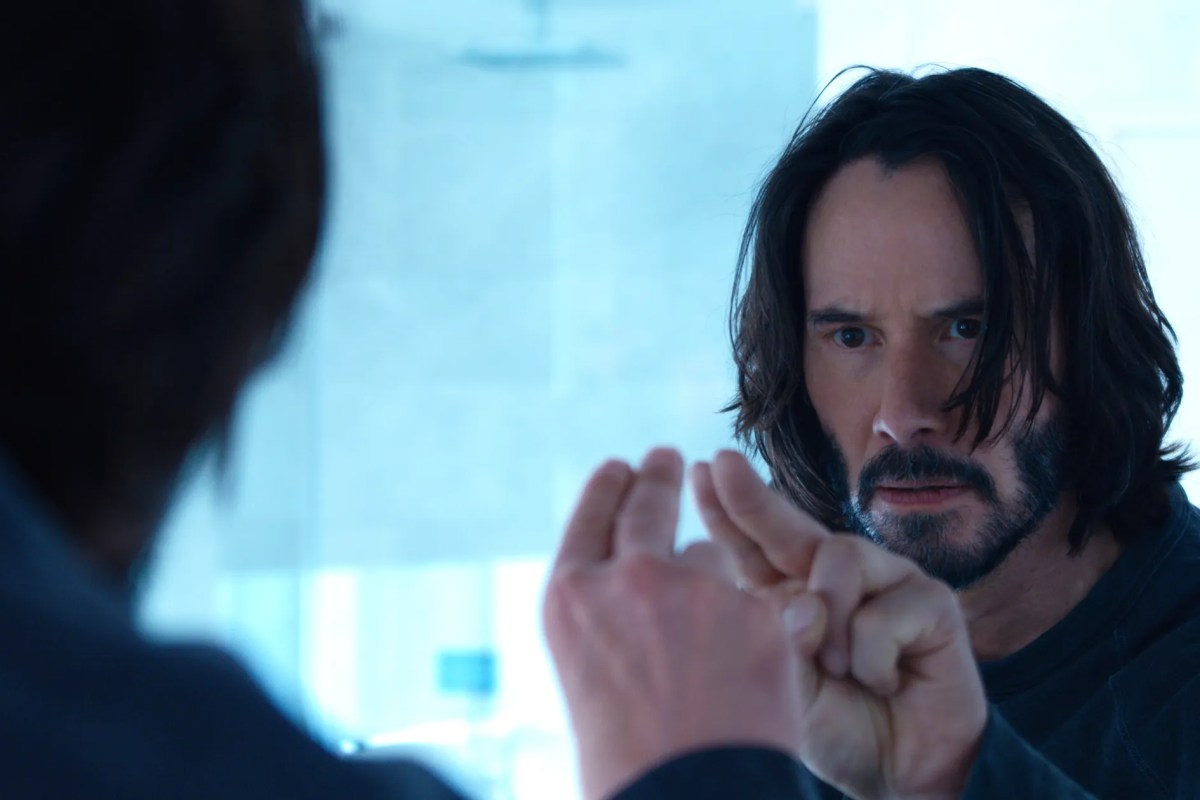
In most cases, this may not matter. As long as the content of a transmitted idea contains enough value to convey a message, this is good enough for everyday communication. “Look out! There’s a car turning into your lane.” “I’m hungry. There’s a restaurant.” “That was a good movie.” “Let’s meet at four o’clock.” In fact, much can be communicated without words—in gestures and facial expressions. It might even be argued that these vectors carry as much if not more communication content than the words we use.
IMAGE: Communication without words
“There.” I point to a drive-through restaurant ahead on the road. “I’m hungry.”
I could probably omit the there exclamation and just point. Here, words are sufficient, even if they may be redundant. There are challenges even at the fundamental level. Notably, aesthetic concepts are often nebulous.
“That restaurant is good.”
What does this statement mean to convey? Essentially, it means that I, the speaker, has been to the referenced restaurant and liked at least some of the food they tasted: “[The food at] that restaurant is good.” Perhaps, they are referring to the staff or the atmosphere. It depends on what good is qualifying. It also depends on a shared definiton of good. This is a insufficiency.
Of course, this insufficiency can be mitigated fairly quickly. Once you understand the ‘tastes’ of your interlocutor, you can parse whether the goodness also applies to you. If you don’t happen to like, say, Indian food and that is the restaurant being referenced, then you can dismiss the comment as phatic. If you don’t prefer satire, you might want to chalk up a statement like ‘M3GAN was a good movie’ to a sharing of personal information rather than a recommendation.”
Perhaps the biggest insufficiency is in the communication of abstract concepts, a category where aesthetics also sits. These are concepts such as God, love, and justice. Iain McGilchrist seems to feel that although these words may be insufficient, we all know what they mean. These are right brain notions that the left hemisphere just can’t rightly categorise. Though this might be a left brain argument, I am going to disagree by degrees.
My (hopefully not strawman) argument is that we do have subjective notions of what these things are, but the communication value is still diminished and in some cases insufficient. If my statement means to convey justice as {A, C, D, X} and the receiver understands justice to mean {A, B, C, Y, Z}, then the only shared aspect is {A,C}. If that is the only portion contextual to the conversation at hand, that’s fine. Communication has been sucessful. But is the message was meant to emphasise {Z}, then the communication is insufficient.
It could be that further conversation reveals this, but often times, a shared definition is assumed. When I say “I want justice” or “I take responsibility”, I have a notion of went denotative and connotative elements I have in mind. I expect the the receiver of my statement shares these elements.
In the case of the statement by Pichai, his notion of responsibility is clearly divergent from mine. This might fall back on some notion of blame, but he has no real repurcussions for his action. Perhaps reputationally, but like politicians, CEOs of large companies are already expected to be sociopaths with empty words, so he’s appologised with no weight, and for most people that’s good enough. The people who have been affected are just as unemployed as before. He may have arranged for a severance package, but in the case of the family referenced in the article, this means nothing because they have 60-days to become employed or they will be forced to leave the United States as a conditiopn of their H1B visa.
On a personal level, I was recently chatting with an Indian mate with an H1B visa who had just been hired after having been layed off by another company. He was racing against this 60-day clock. He had received a verbal offer, but once the company discovered that he needed sponsorship for his via, they offered him $30,000 less per year because they knew he had no bargaining power. This is just an editorial aside, so I won’t go down the rabbit hole of wage slavery, but know that I recognise the relationship and the exploitation in it.
When I have time, perhaps I’ll flesh out this notion and provide additional support. Of course, I also know that I am shovelling against the tide owing to the insufficiency of language. I won’t even start on the related topic of the rhetoric of truth.
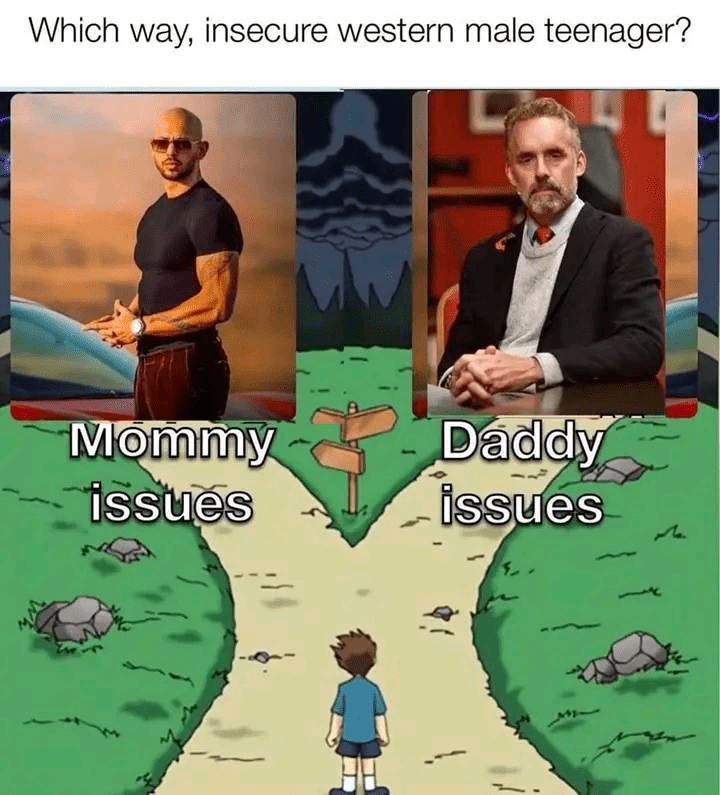
Some people seem to need to find meaning, yet they arrive from different experiences. These days, many insecure Western males appear to meet in a particular place that leaves them to make a decision. Of course, there is no decision because, in a Freudian-Jungian way, they arrive with issues and baggage. This dictates which path will be chosen—Andrew Tate or Jordan Peterson. Why not both?
This is not a commentary on a lack of free will, though that may come into play. It’s more a general lack of degrees of freedom when one arrives from such a place and has these two characters (caricatures?) as options for role models. In each case, overcompensation is evident.
It’s a slow news day and I’ve been otherwise occupied. I don’t have much to add, but I felt sharing this meme would fill space and time.
The English language employs a lot of otherwise unnecessary filler words. Particularly words relating to orientation.
“I fell down.”
“I’m driving up to New York.”
In the case of ‘fall down’, there are some cases where as a phrasal verb it might add clarity. One might use ‘He fell down‘ versus ‘She fell over‘. There is some nuance of meaning to be rendered here. But if one says, ‘She fell down the stairs’, few people are will interpret that as ‘She fell over the stairs’, so the inclusion is superfluous. One might also qualify that, ‘The monkey fell off the bicycle’.
Another clarification might involve the object relationship. For example, ‘I fell the tree’ is different to ‘I fell over the tree’ or ‘I fell off the tree’, which might be taken as analogous to ‘I fell down the tree’ or ‘I fell out of the tree’. ‘I fell the tree’ communicates that you chopped the tree down; ‘I fell over the tree’, might communicate that you tripped over the tree. I’m not sure many would say ‘I fell off the tree’. ‘I fell off the branch’ might be more apt. I feel that it would be more common for a native adult English speaker to say, ‘I fell out of the tree’ over ‘I fell down the tree’, which might be something a child would say. Of course, if the object of the tree were known, as in the following dialogue, the orientation might be foregone.
Having dropped from a tree, Abdul asks Paco what happened.
‘I fell.’
Of course, the falling may also be obvious and the question revolves around the cause. Perhaps, it’s just a step into the so-called ‘five whys‘.
Why did you fall? Because I lost my grip.
Why did you lose your grip? Because I was distracted.
Why were you distracted?
And so on. But this is a horse of a different colour.
So what about New York? Why do we tend to add orientation to these types of directions? If I live south of New York, it feels that I am adding something, but is there another New York I could drive down to? If not, what is the up conveying? Also, I’ve heard people refer to up in a reference that would not correspond to up in a map, say, to be travelling to New York from Toronto. Again, just saying, ‘I’m going to New York’ would suffice.
Another odd construct is to wake up, which is to say to awaken. ‘When did you wake?’ or ‘When did you awaken?’ ask the same question as ‘When did you wake up?’ I could even ask ‘Did I wake you?’ or ‘Did I wake you up?’ What is the purpose of up? One can’t actually awaken in another orientation. You can’t wake down or wake over or even wake off, so what’s with the up inclusion?
This works for stand, too, but at least there is a distinct meaning between ‘stand up‘, ‘stand down‘, and ‘stand off‘, though contextually it would be unlikely to confuse the three. If one said, ‘stand’, the meaning should be interpreted the same as ‘stand up‘. ‘Stand down‘ means to relax or withdraw, and ‘stand off‘ is a deadlock, but this is idiomatic language.
I had more examples in mind, but between the original idea and the time I got to the keyboard some hours had elapsed. If you speak a language other than English, does that language have similar filler words?
In French, if I say ‘j’ai tombé‘, it means ‘I fell’, but if I say ‘je suis tombé‘, it is akin to saying ‘I fell down‘ or ‘I fell off‘ without the explicit orientation.
George Harrison asked What Is Life? in a song, but he had a spiritual bent. The question is actually even more fundamental. Science has no settled meaning of what life is. Some posit that a virus is not life, and there is a multicellular organism discovered here on earth that requires no oxygen to survive. So when we are looking for signs of life on other planets, what is it that we are looking for exactly?
I spend a lot of time calling out weasel words, but we can’t even reliably define something we fundamentally are, which is alive. What is life? Forget about truth, justice, love, and freedom. These are abstract concepts, but not life. We live. We see life—experience life. We are a subset of it, but how do we know we’ve accounted for the full domain? Could something non-living be intelligent?—have intelligence?
It’s late and I am heading into a new year, AD 2023 BCE. And I was just thinking. If I am to believe Descartes, at least I’m alive parce que je donc, but I’ve got no answers in this realm.
In this first chapter of the second section of The Matter with Things, Iain McGilchrist asks, What is Truth? Section two has a different focus than the first, which was focused on foundation building. From here on in, he wants to build on this foundation.
Check out the table of contents for this series of summaries. Note that I have rendered my interstitial commentaries in grey boxes with red text, so the reader can skip over and just focus on the chapter summary.
At first, he establishes that each hemisphere ‘thinks’ it knows the true truth and has the best vantage on reality. He makes it clear that a short chapter will not do the topic of truth the justice he feels it deserves and notes that others have written books on the matter. He just wants to make a few points and clarify his position.
As we discovered in the first section, the left and right hemispheres perceive the world differently. The right hemisphere experiences the world as it is presented in a Gestalt manner. This is contrasted by the left hemisphere which views the world as a symbolic re-presentation. It’s not unfair to say that the right hemisphere experiences the world directly whilst the left hemisphere views a cache of the world.
In this chapter, McGilchrist (Iain) attempts to convince the reader that one side is more correct or correct more often than the other and so is more veridical. As he says, the left hemisphere ‘is a good servant but a poor master’. Of course, if we had a third hemisphere [sic], we might think it could mediate the other two, but then we’d need a fourth and a fifth, ad infinitum to act as the new arbiter.
Spoiler Alert: The right hemisphere wins the battle on truth pretty much hands down.
He wants to make it clear to the reader that he is no strict idealist. There is a reality ‘out there’ apart from mental processes that objectively exists even in the absence of a subject. Reality is not exclusively a projection of the brain.
His choice rather relies on the correspondence theory of truth, which is to say that the hemisphere that conveys perceptions more correspondent to our perceived reality would be more veridical.
Here, I challenge his reasoning on two accounts. In the first place,each hemisphere may operate better in one context versus another. In the second case, there may be a consequential factor, which again distils down to context. In risk management, there are notions of probability of failure and consequence of failure. For example, a failure to recognise the truth of a matter (we’ll use truth as a proxy for ‘fact’), may be inconsequential. If I am assessing the probability of a pipe bursting in a nuclear facility and the pipe is connected to a sink to deliver tap water, the consequence of this failure is practically insignificant. But if I am assessing the probability of a pipe containing radioactive materials, even if the probability of failure is low, the consequence of failure may be catastrophic.
Evolutionarily speaking, if you mistake a garden hose for a venomous snake, the consequence of failure is trivial. Turn the tables, and mistake a snake for a garden hose, the consequence may be fatal. I am not attempting to claim that one hemisphere interprets the low consequence scenario and the other interprets the high. I simply want to raise this nuance.
He makes the point that if we compare some known authentic object to a recollection, we want to retain the one that is more accurate.
I see a similar challenge. Hypothetically, let’s say I present a red disc and manipulate the hemispheres to activate only one at a time, asking to recall the object. If the left says it’s red and the right says it’s a disc, which is more correct? Again, I am not claiming that this is a real scenario, but if one side possesses facts unavailable to the other side, we’ve got a problem in making a truth claim.
To reiterate, the left hemisphere is more analogous to a photograph or a video account whereas the right hemisphere is to be in the place that is being photographed. The right hemisphere is duratively presenced whilst the left is re-presented. We move from a nominative form to a verbial form of representing reality. This leads him to ask if ‘truth’ is a thing or a process.
He shifts to a linguistic argument. When people view ‘truth’ as a noun, as a thing, the expectation is that it is static. Moreover, the descriptors of truth are rendered mainly in the past tense—representation, fact, perfect, precise, certain, and concluded. He provides definitions. When viewed duratively, ‘truth’ becomes a process. It is an active relationship. It flows. It’s an intercourse.
We may not ever get to an agreed truth, but neither is every position valid. Interpreting a text, for example, may have several conflicting meanings, but the possible meanings are relatively finite.
Take a simple sentence such as, “The dog bit the hand that feeds him.” This could be meant literally or figuratively. We might imagine different dogs, hands and person to whom the hand is attached. Perhaps the hand is attached to a bonobo. Perhaps, it’s a robotic hand. These are among various possible interpretations, and we may not ever agree on the truth of the matter. However, we can rule out that a giraffe or a watermelon were central to this narrative for what it’s worth.
The bookgoes on to discuss the etymology of the word ‘truth’ and of its relationship to the word ‘true’ (faithful) which is further related to ‘trust’. I won’t exhaust his explanation.
He does discuss correspondence and coherence theories of truth and discounts others such as consensus theory and social constructivism. He cautions not to equate truth with correctness. This is a left hemisphere game insisting on dichotomising things.
The book declares the despite a general agreement on the source or nature of truth, there is something there, so don’t give up un it. In the end, he seems to settle for a Pragmatistic version à la William James.
Personally, I feel he and others are over-invested in the nature of truth. And inflate its meaning over ‘fact’. To me, Capital-T Truth is an archetype, but it doesn’t otherwise exist. We have facts, and truth is sort of a perfect version of a fact. Love is in the same category, though I know Iain would disagree with this assertion. Of course, James dismissed semantic argument as petty and insisted that people simply know the truth of something. I’ve always found this take to be dismissive. I also feel that Pragmatism is too steeped in Empiricism and loses hold of the notion that what happened yesterday may not in fact manifest today or not in the same way.
I’ll also argue as others have before me that (besides being archetypal) the term is a redundant filler word. On a minuscule level, if I say ‘The cup is red’, saying ,’It’s true that the cup is red adds nothing’. The equation was already asserted. This leaves one to wonder what the purpose of it is.
Returnng to the asymmetry of the hemispheres he cautions up not to take a position that one of the other side is correct. Rather, even though there is an asymmetry in value, there is still a synthesis.
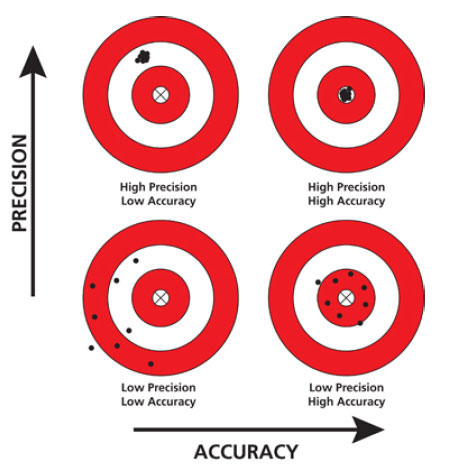
Iain uses the example of Newtonian and Einsteinian physics. At one point, they are practically synonymous and interchangeable. Only as we reach the speed of light does Newtonian physic exceed the bounds of its scope. He also educated the reader on the difference between precision and accuracy.
I like to view this in a musical context. If I play two notes together, say a B over an E, neither is more correct than the other. Notionally, I am playing an E5/B. This is neither an E or a B. The chord is the result of the two playing simultaneously. In this case E and B are both true and not true because the E5 is a synthesis. If I add a G# I get an E-major chord, subsequently adding a D renders an E7. In each of these cases, the truth of the notes, B, D, E, and G# remain true to their identity, but the fact is that the individuality is subsumed by the collective. This is the prevailing truth even though a person with perfect pitch can still individually identify the constituents of the chord. I don’t know if this is more confusion than necessary, but it helps me.
I’ve always like this illustration with target grouping, but this was not referenced by the book.
Image: Precision and Accuracy Chart
Interestingly, he cites Jay Zwicky’s definition: “Truth is the asymptotic limit of sensitive attempts to be responsible to our actual experience of the world … ‘sensitive attempts to be responsible’ means truth is the result of attention. (As opposed to inspection.) Of looking informed by love. Of really looking.” He accedes that there are degrees of truth.
Truth is the asymptotic limit of sensitive attempts to be responsible to our actual experience of the world
As the chapter comes to a close, he leaves us with a twisted categorical syllogism,
[p1] All monkeys climb trees
[p2] The porcupine in a monkey
[ c ] The porcupine climes trees
This structure presents a valid argument. However, it is not sound. It follows the Socratic logical syntax:
[p1] M a P
[p2] S a M
[ c [ S a P
Because of our exposure to and experience with the external world, we can assess this argument to be unsound, which is to say untrue by observation. Without this context, we could not render this assessment. He discusses the way right- and left-hemisphere occluded subjects respond to this discrepancy. In summary, an isolated left hemisphere with defend the logical syntax over the lived experience.
In conclusion, the hemispheres take different paths to assess truth and often end up at different destinations. The left hemisphere sees truth as a thing whilst the right views it as a process.








 Philosophics