I’ve been following Philosophy Tube since Abigail was Ollie. Always top-notch material. Their content has gotten longer over time, so I’ve found myself skipping over in favour of shorter presentations. I am so glad to have decided to watch this one.
As anyone who follows me knows, I am a big advocate of social construct theory, yet I learned so much in this vid, which is proper well-cited AF. Lot’s of new content to add to my backlog, so I’ve got more than enough reading material for my next few incarnations at least.
The biggest takeaway for me is the notion that not only is gender a social construct, but so is sex itself. Previously, I have defended the sex-gender distinction, but in fact, scientific taxonomies are still social constructs—only in the scientific community rather than the greater community at large.
Abigail’s platypus drives home the point. Not that it’s some big reveal. Another less poignient analogy is fruit and vegetable classification. Tomatoes are fruits. Mellons—watermellons, pumpkins, and so on—are fruits. Say it ain’t so.
Give it a viewing and like or comment here and/or there.
‘Do not ask who I am and do not ask me to remain the same: Leave it to our bureaucrats and our police to see that our papers are in order. At least spare us their morality when we write.’
—Michel Foucault, The Archaeology of Knowledge & the Discourse on Language
I am going to take liberal liberty with Foucault’s quote. This is another take on Heraclites’ ‘never the same man, never the same river’ quote. It can be taken as a commentary on identity and impermanence. Effectively, he is taking the position that the concept of identity is a silly question, so don’t bother asking about it. Then he defers to people who insist on it anyway.
To be fair, creating a sort of contiguous identity does simplify things and creates categorical conveniences.
Vendor: ‘Wasn’t it you who purchased that from me and promised to pay with future payments?‘
Zen: ‘There is no future. There is only now. And I am not the same person who purchased your car.‘
Perhaps this is where the saying, ‘Possession is 9/10 of the law‘, a nod to temporal presentism.
In any case, some systems are predicated on their being identity, so a person benefiting from that system will insist on the notion of identity.
Clearly, I’m rambling in a stream of consciousness, and it occurs to me that Blockchain offers a solution to identity, at least conceptually. In the case of Blockchain, one can always audit the contents of the past in the moment. And so it carries the past into the now.
If one were able to capture into an archive every possible historical interaction down to the smallest unit of space-time—neutral incident recording, indexing and retrieval challenges notwithstanding—, one could necessarily attribute the record with the person, so long as they are otherwise inseparable. (We’re all well-aware of the science fiction narrative where a person’s history or memory is disassociated, so there is that.)
Anyway, I’ve got other matters to tend to, but now this is a matter of historical record…
We’re all familiar with the scenario: a representative from law enforcement appears at a door and flashes a badge or an ID. It’s in most of the police movies. A gaggle of people in official-looking uniforms. One of them pulls out a warrant, and they make their way into the residence. You still with me?
Here’s the rub? How does one know with any degree of certainty higher than blind faith?
Do you know what an ‘official’ badge or ID looks like? How do you know it’s not counterfeit?
Do you even know what a search warrant looks like? It’s signed, do you know the person it’s signed by? Perhaps it’s a judge. Is the warrant real or fake? What about the uniforms or official-looking vehicles?
Indoctrination and cognitive dissonance are key factors
The answer is most people would have no idea. Indoctrination and cognitive dissonance are key factors. In movies, apart from the documentation, there’s the intimidation factor. And maybe guns for full effect.
To be sure, people have performed variations of this script, and they’ve been punked. So, the question remains: How can one tell? And when does when get to call bullshit?
And what are the down sides? If these cats are legit, and after the bullying and indignity, you’ll probably be facing accusations of obstruction or resisting. Of course, you’ll be justified, but justification is asymmetrical and out of your favour. The house holds the advantage, and you aren’t the house.
But let’s pretend that justice is symmetrical and does have meaning beyond its application as a power tool, how far would one need to go to be sure?
Take the case of the warrant signed by a judge. S/he shows up in person and says, ‘Yup. I signed that warrant’. Has that gotten you anywhere? Probably not. You don’t know this person, and you have no way of evaluating the authenticity of the claim. Does it take the governor? The president? The head of the UN?
And even if you trust the entire process thus far, what say do you have in justifying the merit of issuance of the warrant?
I can’t count the number of times I’ve defended Postmodernism (PoMo) from attack, so I am publishing this, so I can link to it. Perhaps I am not defending PoMo, but my flavour of it, but I’ve read a lot of work published by the usual suspects—some who eschew being lumped into a poorly defined category—or at least a nebulous category.
Before I get too far, I also want to remind the reader to take care to separate the philosophy from the person. One popular attack is the conflating of identity politics and social justice advocacy as PoMo phenomena. In fact, I consider myself to be PoMO—to be defined here in a moment—and a social justice warrior (SJW), this despite contesting the very notion of identity to begin with.
By definition, a summary is a reduction of some thing, but one needs to be careful not not arrive at reductio ad absurdum. Where appropriate, one may also wish to differentiate postmodernism with postructuralism. So as not to create a definition partir de rien, I’ll reference other accessible versions. A critic may disagree with these definitions, but they will serve as the foundation of my position and vantage.
Wikipedia gives us this definition (their reference links retained):
That postmodernism is indefinable is a truism. However, it can be described as a set of critical, strategic and rhetorical practices employing concepts such as difference, repetition, the trace, the simulacrum, and hyperreality to destabilize other concepts such as presence, identity, historical progress, epistemic certainty, and the univocity of meaning.
Notice the commonalities. PoMo is a descriptive, critical activity. It’s descriptive. As language and grammar can be approached descriptively of prescriptively, so can philosophy. Some ‘schools’ do both. PoMo is exclusively descriptive. PoMo was born as a reaction to Modernism, especially the unstated foundations labelled by Lyotard as metanarratives—the grand narratives and underlying ideologies of prevailing beliefs that were uncritically taken for granted, many of which that were formed or catalysed in the Age of Enlightenment.
Jean-François Lyotard defined philosophical postmodernism in The Postmodern Condition, writing “Simplifying to the extreme, I define postmodern as incredulity towards meta narratives….”[4] where what he means by metanarrative is something like a unified, complete, universal, and epistemically certain story about everything that is. Postmodernists reject metanarratives because they reject the concept of truth that metanarratives presuppose. Postmodernist philosophers in general argue that truth is always contingent on historical and social context rather than being absolute and universal and that truth is always partial and “at issue” rather than being complete and certain.[3]
My defence is that PoMo cannot be for social justice or engage in identity, as it has no positive position on these. It functions to critically deconstruct. People unfamiliar with PoMo concepts often misunderstand this notion of deconstruction. All to often, I see people criticise Derrida for his brand of Deconstruction, but that only illustrates the fact that they never read or simply misunderstand what Derrida means by Deconstruction. Perhaps, I’ll elaborate on that in future.
My point is that PoMo is corrosive—like lye. It eats away at ideologies, dissolves them. It is not meant to construct anything. So where does this constructive expectation come from? It derives primarily from two places.
Modernism
Most people casting dispersion are modernists. They need to construct things. To be fair, this perspective has been an evolutionary advantage, but some people can’t allow a bunch of Lego pieces to remain unconstructed. This is fine, but you need another tool to perform this task. It’s not PoMo.
Ad Hominem
The other challenge is the inability to distinguish between the person and the idea. Michel Foucault was very vocal in the political realm and actively promoted Marxism, but, firstly, Foucault was not a self-professed PoMo—and for several reasons, one could come to accord with his assessment; secondly, in his deconstruction of history, he discovered a foundational component—this activity being squarely PoMo—, but he reconstructed historical narratives employing the lens of power. This rebuilding is not PoMo activity.
Parting Shot
Besides—or in addition to—ignorance, some people have an agenda, and they play ad hominem games, so if they can vilify a person and associate that person to an ideology, it can have the tendency of poisoning the well. Uncritical people won’t even notice the sleight of hand and redirect.
never attribute to malice that which is adequately explained by ignorance*
Hanlon’s Razor
A textbook example is Stephen Hick’s attempt in Explaining Postmodernism: Skepticism and Socialism from Rousseau to Foucault to conflate feminism (a positive mechanism) with postmodernism (to reiterate, a negative mechanism). In it he claims that feminists Andrea Dworkin and Catherine Mckinnon are proponents of PoMo thought, but he is apparently unaware that McKinnon has explicitly attacked PoMo as destructive to feminism. A fuller critique of Hicks‘ work can be heard on YouTube. I recommend it highly if you have the better part of an hour to spare. Jordan B Peterson is a celebrity personality whose primary exposure to PoMo is Hicks, so when you understand how off-base Hicks is, you’ll realise why Peterson is so off-base, too.
* Hanlon’s razor is originally cast as “never attribute to malice that which is adequately explained by stupidity“, but I prefer the term ignorance, as it it less value-laden and more broadly applicable. Besides, to be ignorant does not mean to be stupid. Many ignorant people are not stupid. I am ignorant of the Russian language, but I am not stupid.
People influence one another and, when they’re together, they have a tendency to desire the same things, primarily not because those things are rare but because, contrary to what most philosophers think, imitation also bears on desire. Humans essentially try to base their being, their profound nature and essence, on the desire of their peers.
“Mimetic Desire: Shakespeare Rather than Plato.” When These Things Begin: Conversations with Michel Treguer, by René Girard and Trevor Cribben Merrill
Although I have some reservations—or at least reserve some latitude—, I tend to agree with Girard. Desire is a social construct. Desire is separate to needs. Desires are wants. As accomodated in Economics, we don’t need what we want, but we want what we need. We desire what we need.
we don’t need what we want, but we want what we need
What Girard is essentially saying is that I want what I want because you want it. This is independent of value in an economic sense. Memetically, the value of an object increases relative to the perceiver simply because another person wants it. In my reckoning, I’d separate want from desire or at least elevate desire to a higher degree of wanting.
Girard termed this triangular relationship between subject (you), object (the thing), and the mediator (the influencer) mimetic, to mimic. I suppose some of this might be considered to be memetic, but I also suppose that memes serve to simplify rather than serve as a distinct transmission vector.
circa 2016
My question is—exacerbated during this pandemic—how does this operate in isolation? I consider myself. I am not an ascetic by most definitions, but I am somewhat of a minimalist. My only ‘vices’ are my computer and my guitars. I used to be a professional musician—though most of that was spent on the other side of the console—and I was a Gibson snob. From the perspective of emotional desire, I still am. There is a certain nostalgia, but I don’t play out anymore, and I’m not seriously recording, so I don’t need the same perceived quality of an old Gibson.
Guitarists know that different guitars give different sounds. I’ve owned as many as 10 guitars at a time, and each had its purpose. Some was feel. This guitar was for Blues, this was other for Grunge, and that was for Jazz…and that for Fusion and that for a retro sound. This one had a fast neck, and this one sustained for days. This one was tuned à la Keith Richards, sans a string, to an Open G, and the was set up for Drop C, and of course there was the Standard-tuned one for good measure
Jason & Me circa 2012
Did I need 10 guitars? No. Did I need 1? Not really—not unless I wanted to be a musician, desired to be a musician, so the degree of freedom was l, given this other desire. Having 1 guitar for a guitar player is not the same as a painter with only one colour of paint, but it almost feels like it. It’s certainly a convenience, and it allows players to express themselves artistically.
The question isn’t why I desired a guitar, but why I wanted to be a musician, and of all the instruments, why the guitar—and why did I prefer this genre over that. I’ll admit that my tastes are rather eclectic, but all that says is that I mimic eclecticism or eccentrism. My parents are not eclectic. Most of my friends are mainstream whitebread people—none I’d deem eclectic.
I’m rambling. Just because I don’t remember the source of my desire doesn’t mean there is no source. Perhaps it’s a composite source. I can’t say. Perhaps the outcome I’m naming, say eclecticism, is incorrect, so I am seeking the wrong source.
circa 2004
My point was that I don’t need a Gibson to be satisfied. First, I’ve already owed them, and I don’t have the same performative needs. But I still want to play, and I still want to exercise some artistic freedom, so I still have a few guitars.
To wrap this up, I’ll leave with an unpaid mimitec endorsement of Harley Benton guitars. The last guitar I purchased was this Harley Benton Black Paisley TE70. It’s very fit, and I picked it up for about €200, which included shipping and handling. They are German-built. When I was a kid, a guitar at this price range would have be borderline unplayable and won’t sound shite-like. These aren’t €1,000 instruments, but you’d be hard pressed to find a 5x value differential. They are build solid and have been given extra care not previously seen in down-market instruments. If I wanted to spend another €200, I could upgrade the pickups and for a bit more swap out the electronics to bigger potentiometers—but I won’t. I was planning to splurge and spend €50 on locking machine heads. Nope. Good enough. At €200 a pop, I could afford all sorts of configurations, but even that desire has waned—at least a bit, at least for a while.
One if the biggest foci of postmodern philosophy is the metanarrative. Employment diversity is a place that the metanarratives go unquestioned by most. The most predominant aspect is the frame. Don’t accept it.
Inside this frame, some uncritically adopted narratives are as follows:
Work is good
Work builds character (proportionately to the effort exerted)
Work defines your value or worth as a human
Work signifies your place in society
Work is its own reward (except for monetary payment and recognition)
Value is defined by monetary achievement
Worth is defined by your place in an enterprise
And so on…
In this HBR article*, the frame has been established as a corporation and the diversity within this context. What this say by omission is that money and power is the measure of a meaningful existence. If only women were afforded a seat at this table—proportional to their population in society—, things will be even.
Women should start their own successful companies. Women should rise to the top of existing companies. Especially if they buy into the aforementioned narratives. Many women and men buy into this story lock, stock, and barrel (whatever that means), but only is you accept this as a frame is this relevant.
It’s easy to imagine a world where money is unnecessary, where labouring is unnecessary.
It’s easy to imagine a world where money is unnecessary, where labouring is unnecessary. Some have imagined a world without work, where people could instead pursue artistic endeavours, but this is just adopting a different set of narratives—like the person who exchanges drugs or alcohol for Jesus or some such. Out of the frying pan into the fire. This is the lie.
Interestingly, the HBR article makes these points:
Quantify gender equity in terms of economic gains for the company.
Hold leaders accountable for change by tying DEI metrics to performance reviews.
Offer development opportunities to increase gender intelligence, empathy, and self-efficacy.
Pull back the curtain on misperceived social norms.
Establish cross-gender professional relationships.
Frame, focus, and integrate interventions into core business outcomes and mission.
Notice that each of these operates from the perspective of the company. Granted, this is HBR, where the B is for Business, but still. Here’s the low down.
Gender equity will at some point increase your bottom line.
Create diversity metrics (and incentives) and tie them to performance review—presumably tied to the economic performance expected in bullet 1.
Educate your executives and staff to the misconceptions—so long as you don’t question the deeper metanarratives.
Essentially, the ask here is to establish male-female protégé-mentor relationships. Of course, this could be expanded to break binary gender stereotypes, too.
Back to business, frame the frame. But to tell the truth, I don’t even know how to interpret and summarise the provided example. It seems this is an admixture of points 1 and 2, given metrics should ladder up to stated objectives and outcomes.
asking for this equity in diversity is a short-term fix
In any case, asking for this equity in diversity is a short-term fix, but it’s unimaginative and buys into the worldview of the patriarchy. There is no reason to accept this prima facie. As with the notion of Democracy, I’d be willing to argue that the system itself is the problem and that any tinkering within the system is limited by the system itself.
* Apologies in advance if HBR has a paywall. Typically, the first 3 articles are free, but if you are like me that exhausts on day one.
So, I’ve gone down a rabbit hole. Again. This time, it’s Žižek. Again. I’ve still not read any of Žižek’s own work, but people mention him often and he is a shameless self-promoter. In this video clip, he responds to whether gender is a social construct. Unfortunately, he conflates gender with sex, and his examples cite transsexuals not transgenders.
sex is about biological sex assignment
To set the stage, sex is about biological sex assignment—the sex category you are assigned into at birth: male, female, or other for some 1.8%. This is a simplistic categorisation: penis = male; vagina = female; both or neither: rounding error. In some cases, a decision is made to surgically conform the child to either male or female and ensure through prophylactic treatment that this isn’t undone hormonally in adolescence.
gender is about identity
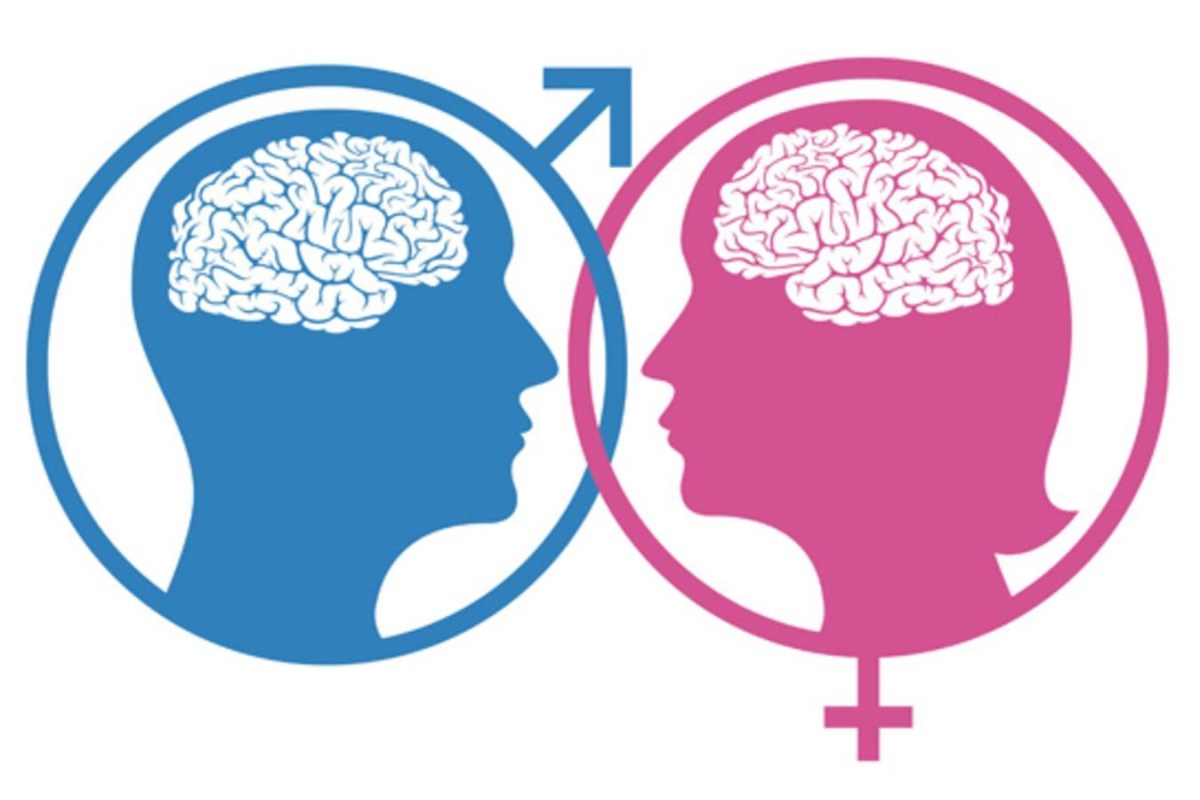
Gender is about identity. As such, it is entirely a social construct. All identity of this nature is a function of language and society. In this world—in the West—, females wear dresses (if they are to be worn at all) and males don’t—kilts notwithstanding. In this world, sex and gender have little room for divergence. so the male who identifies as this gender (not this sex) is ostracised.
The example I usually consider first is the comedian Eddie Izzard—a cross-dresser. He’s probably a bad example because he does identify as a male. He just doesn’t wish to be constrained by male role restrictions and wants to wear the makeup that’s been reserved for women in the West at this time.
Žižek eventually gets to an argument about essentialism—so we’re back at Sorites paradoxes and Theseus again. At the start, I could argue that the sexual distinction has few meaningful contexts. For me, unless I am trying to have sex and/or procreate, the distinction is virtually meaningless. For others, only procreation remains contextually relevant. In this technological world, as Beauvoir noted in the late 1940s, strength differentials are not so relevant. End where they are, sex is not the deciding factor—it’s strength.
Žižek’s contention seems to be that the postmoderns (or whomever) disclaim essentialism in favour of constructivism but then resolve at essentialism as a defence because ‘now I am in the body originally intended’. I’ll argue that this is the logic employed by the person, but this person is not defending some academic philosophical position. They are merely engaging in idiomatic vernacular.
I am not deeply familiar with this space, and if the same person who is making a claim against essentialism is defending their actions with essentialism, then he’s got a leg to stand on. As for me, the notions of essentialism and constructivism are both constructed.
Chump in Chief* wrote a piece on dementia using analogue of the ship of Theseus. As a topic, Hobbes’** Theseus thought experiment has been well-covered, but that’s never stopped me before.
This is all about identity. Essentially, there are two perspectives. To an observer not on the ship or aware of the transformation, they would be none the wiser. For all intents and purposes, if they had ever seen the ship before, it’s the same. But what about those on the ship?
For nearly all of these observers, it’s almost unquestionably still the same ship. In a manner paralleling a person’s cells being sloughed off every 7 years, the cells in place at the start aren’t there after 7 years. Most will not doubt that you are the same person.
the average human cell is about 7 to 10 years old
As cells are continually dying and replacing themselves, for an adult the average human cell is about 7 to 10 years old, which might be interpreted as saying in the fashion of Theses’ ship that a person is anew each 7 to 10 years. Let’s ignore that this is an average, and many cells have a lifespan of only a few days whilst others—cerebral cells in particular—are here from the start and so are as old as the person.
Another perspective is to consider the replacement parts: would it matter if the colour of the parts changed in the process? What about the materials? What about the underlying architecture? What if the departing sloop arrived a schooner? Weight? What then?
My favourite extension of this thought experiment is to ask the question two-fold: Not only do we ask if this ship built with new materials is still Theseus’ ship—which to be fair is more a question of ownership than of identity—, but what if I reconstruct the original ship with the original materials. Are these both Theseus’ ships? Can we continue this exercise with new material ad infinitum?
As far as I know, we can’t repurpose cells in this fashion, but what if we could? There are many such Star Trek transporter mishap thought experiments, or the Duplicates Paradox.
In these experiments, a transporting device disintegrates the subject, and replicates the subject at a distance—but this replication presumably uses different atoms and cells, and so what if a duplicate copy is made rather than the replacement copy? Who’s identity prevails? Is it murder to eliminate one of the duplicates? Similar questions have played out in the science fiction / fantasy space.
Locke and others suggest that for people, memory and the continuity of thought are key, but your thoughts of me are not the same as my thoughts of me. This is why an amnesiac may no longer maintain some original identity, and yet to the familiar outside observer, this shell of a person remains intact. This is pretty much how it plays out with zombies and dementia patients. This sense of identity is projected upon the person rather than exuded from them.
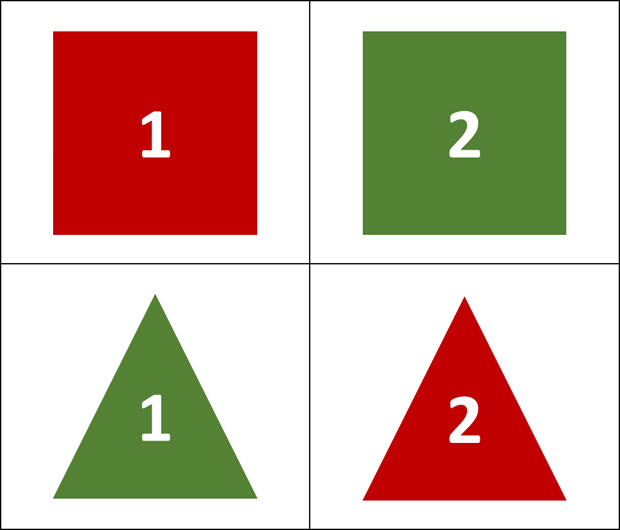
So what is my perspective? Rather than a paradox, it is more a problem of vaguity or ambiguity and how we’re defining sameness. There are many dimensions to similarity. I can present you a red square, a green square, a blue triangle, and a green triangle and play the Sesame Street ‘one of these things is not like the other game.
Is the sameness the colour, the shape, or the number? Could one be comparing area or perimeter?
So, I’ve gone off the reservation. I don’t put a lot of weight in notion of identity. It has evolutionary merit and is an effect of humans’ nature (as it were) to categorise and taxonomise.
* This Chief Chump charge may be unwarranted or even understated, as I don’t know this bloke. ** This is the same Hobbes with the ‘solitary, poor, nasty, brutish, and short’ claim to fame.
I was writing a post about cop and crime shows and fittingly commenting on cops and crime, when my girlfriend turned on Manhunt: Unabomber, a series about serial bomber Ted Kaczynski. I remember when the FBI finally caught Ted and publicised this story, but I don’t know how much of the series was dramatised versus the facts, so my comments will be on the series and not the underlying events.
I title this post after his published ‘manifesto’, Industrial Society and Its Future, but it otherwise has nothing to do with this topic or his manifesto. To me, Ted Kaczynski seems to be a contemporary Thoreau or Rousseau, a primitivist born into the wrong century.
From a philosophical position, the series depicted the perils of taking a deontological approach. Process prevailed over consequences, which resulted taking 18 years to identify and capture Kaczynski. Time and again, process and pushing paper were promoted over new methods.
criminal profiling is the astrology of forensics
As people familiar with me know, I find the discipline of psychology to be pseudoscience (or perhaps simply a parascience), and so-called criminal profiling is the astrology of forensics, which are already a bit sketchy from the start.
Television promotes the logical rationalism underlying forensic science, connecting the dots to a forgone conclusion, if only the right dots are found. As with most law enforcement and court dramas, the focus is on the good guys overcoming the bad guys. Sometimes, it’s the good cop rooting out the bad cops or the perils of a cop who crosses the line to the dark side. These shows want to show how procedural criminology is in order to dissuade people from taking this path.
Knowingly or otherwise, this is propaganda. The fact is that most crime goes unsolved. Most criminals don’t get caught. Many who get caught are not convicted. Some convicted didn’t commit the crime they have been charged with. From an economic perspective, the vast monetary value is taken by white collar professionals with MBAs not burglars and bank robbers.
Systems need people to have confidence in systems. It’s self-serving. The propaganda is important to shore up confidence in the system of law & order, but it’s analogous to slot machines in Vegas or Atlantic City or wherever. When a person wins, there are bells and lights to increase the excitement in the room. But this misses the losers. If the sound was for losers and not winners, the cacophony might be deafening.
Henry Ford failed at 7 business before succeeding
This propaganda overplays winners and concentrates focus. This is classic cognitive survivorship bias. But don’t ask about the losers. This framing isn’t limited to law enforcement. It is also employed in the prevailing Capitalist narrative, but it under advertises the fact that most entrepreneurs fail. Counter arguments are presented in the likes of Henry Ford failed at 7 business before succeeding. If you fail, just try again. It has to work out for you eventually—unless, of course, you aren’t working hard enough—not working as hard as the winners, not paying your dues.
Whilst watching, I found myself scoffing time and again. I am not a Romantic and not a Primative, so I didn’t exactly side with Kaczynski, but I definitely didn’t side with the system, even if that’s not what he was railing against.
Of interest to me was the forensic linguistics. Humourous to me was his choice of spelling. Like me, he wrote in international English. The series represented his spelling as accepted variants, but this is a US-centric position. In fact, most the the world that speaks English employes the British flavour, which is closer to international English than so-called American English, which is only spoken in the US and Central and northern South America. The rest of the world doesn’t use American English. I chose to use international English after high school. Occasionally I get comments and criticisms, but my grammatical footing is stronger than the vast majority of these. The biggest factor is that I don’t identify as an American. Rather, I am a citizen of the world. Perhaps Esperanto?
Humans seem to be hard-wired to prefer in-groups over out-groups, family and tribe over outsiders. In the business world, we hear about corporate culture. But these days, diversity is all the rage. Companies strive to convince the world that that have diverse and inclusive cultures, but what does this mean? Is there such an animal as a diverse culture? And how does one balance the familiarity of in-group homogeneity versus out-group heteronormativity?
you can’t spell culture without ‘cult’
In corporate-speak, there is the concept of cultural fitness. Afterall, we want efficient and productive humans and processes? People who don’t fit this mould are disruptive, right? So, we are justified in excluding people from the group, right? Remember, you can’t spell culture without ‘cult’.
Although the United States brand themselves as a cultural melting pot, this is only partially correct, and mostly in more populous areas, and even this occurs in pockets.
Diversity—in hiring and otherwise—is only accepted if it is along approved superficial dimensions—skin colour, national origin, sex, religious orientation, maybe gender, perhaps some latitude around lifestyle choices. But more substantial diversity need not apply. They are interested in hiring conforming normies. The gay guy is OK, so long as he toes the rest of the line. That woman: ditto. That Muslim: same. That black person: so long as s/he acts white in public.
everything needs to distil down to the white male ethic
Performatively, they’ll accept the diversity proponent as a PR prop. This person is proof that they hire [target group]. This person broadcasts how s/he can wear their cultural garb, bring cultural dishes to potlucks, put up posters and advertise about support groups outside of work. But in the end, everything needs to distil down to the white male ethic.
Talk about work-life balance is fine, so long as work gets the upper hand. You need to be able to talk about charity, but you need to be motivated by money and status. There are exceptions to this motivation, say, public health and healthcare, education, and so on, but the boundaries in these professions are narrow, too. Not acting ‘professional’ is a key criticism. So, if your diversity counters some perceived professionalism, your diversity is not welcome.
not acting ‘professional’ is a key criticism
If the company hires people who routinely put in 60 hours for 40 hours of salary, they are not interested in the person with boundaries, insisting on 40 hours of work for 40 hours of salary. They aren’t interested in people who might question the ethics of the company’s business practices. Companies aren’t generally interested in rebels.
You need to be Sartre’s waiter. You’ve got a role to perform. In fact, you are evaluated specifically how well you perform that role. So, whilst you may be a singing waiter or a dancing waitress, your boundaries aren’t much broader than this. It’s easy for an observer to dismiss the call for diversity. S/he’s a waiter, right? Why should I expect anything different to that? And this is what locks in a lack of diversity.
DISCLAIMER: This ended up more of a meandering rant, but I’m distracted and out of time. And so it goes…











 Philosophics