Many of us grew up hearing Janis Joplin belt out the words from Me and Bobby McGee, ‘Freedom’s just another word for nothing else to lose’, but freedom is just another word.
Didn’t I just write a post on freedom the other day? Why, yes; in fact, I did, but I was responding to a post on a different social media outlet, so I wanted to extend that position here.
Many Americans confuse the notions of freedom and liberty. Freedom might as well just be another word for nothing else to lose, but it’s just some nonsensical archetypal promise. Freedom is part of the American Dream — another pipe dream. I remember George Carlin’s comment that it has to be the American Dream because you’d have to be asleep to believe it. Yet, so many do. I suppose the question might be how humans can be so gullible, but then I see that marketing and propaganda are effective tactics, so I rescind my line of inquiry.
Give me liberty or give me death.
Patrick Henry, Dead American Dude
Another favourite word of Americans is liberty, as in ‘Give me liberty or give me death. Whilst liberty is some nebulous concept. Liberty is simply what a government (or power structure) allows its constituents to do. It has nothing to do with freedom. It’s about leftovers.
Patrick Henry, Dead American Dude
In political philosophy, there is an ongoing conversation about positive and negative liberties. This confounds the situation because it is typically couched as freedom to and freedom from. Freedom to is based somewhat on the concept of free will and autonomy whilst freedom from is about restrictions on behaviours. These two freedoms are not only mutually exclusive in some domains, but some positive freedoms are also actually paradoxical to themselves.
My ‘research’ took me on a tour of pogonotomy and pogonophora, a world that until now I had not been previously exposed, yet not quite enough to inspire me to follow the path to pogonology.
Full disclosure: I only perused the article and did not pursue the submitted paper, so any commentary is not on the source—merely a reference thereto.
Ernest Hemmingway
So, this is a nonsensical post. Je m’accuse. I am no fan of beards or the hipsters more categorically who sport them. Sure, some men look decent in beards—old, distinguished lot. I’m not talking the iconic yet ridiculous Abe Lincoln beard. Perhaps the weathered sea captain.
Freedom is just another weasel word undergirding many post-Enlightenment constitutions. In this metanarrative, Man needs freedom. It’s another inalienable right.
Man is born free and everywhere he is in chains.
Jean-Jacques Rousseau, The Social Contract
Jacques Cousteau
Religion is the opitate of the masses
Karl Marx, A Contribution to the Critique of Hegel’s Philosophy of Right
Karl Marx wrote something along the lines that ‘religion is the opiate of the masses’, Die Religion … ist das Opium des Volkes. He was correct, but the masses have more than one drug of choice. Freedom, independence, identity, sovereignty, and a plethora of others.
What is a plethora? Three Amigos (video clip)
Freedom is mind candy for the feeble-minded, a silly remnant of anachronistic Age of Enlightenment. To believe in freedom is to believe in Santa Claus, gods, and unicorns. I’ve got a bridge for sale in Brooklyn.
Find your self. What is this self you are searching for, and who is you in the first place?
You and self are taxonomical references—conveniences—, yet they don’t actually exist.
πάντα ῥεῖ : The only constant is change
Heraclitus of Ephesus
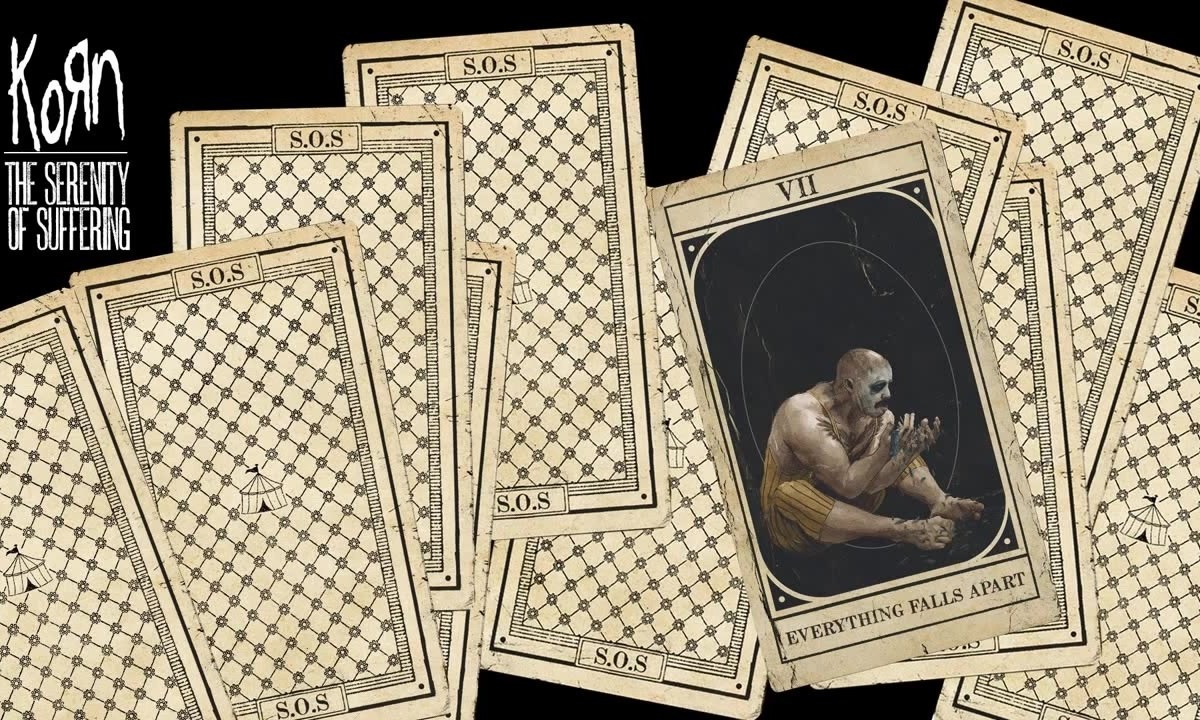
The Second Law of Thermodynamics states that entropy rules. Things decay. We can see this in the great structures of our ancient past. Try as we may, without energy, everything falls apart.
There is no you. The you that was born is not the same you that attended kindergarten, that graduated high school, dated, worked, or died. Even in a short span of time, you switch personae. Can you be multiple yous simultaneously? Are you only expressing some instance or another? I’m not buying it.
No one ever steps in the same river twice, for it’s not the same river and he’s not the same person
Plato, attributed to Heraclitus
When Heraclitus said that no man ever steps into the same river twice, it’s not only the river that has changed; the person has changed, too. It’s not the same person.
Woman in River
For the sake of convenience, we create this sense of identity, whether for ourselves or for others we want to categorise in some form or fashion. But they aren’t the same either.
It’s like the physical object that appears to be solid and yet is more space than material. It’s a matter of convenience, but it’s a trompe l’oeil. Yet again, your senses have deceived you.
Does this impact survival or some evolutionary progression? Apparently not. Not if you are here to read this. But that doesn’t make it real. Perception is reality.
But what about identity politics? Can’t a person choose their own identity? Sure. Choose away. It doesn’t it real.
I’ve written about the difference between sex and gender. Both are taxonomical creations. Whether a society accepts the distinction between sexes, genders, or even of the distinction of sex and gender is up to that society.
One is not born, but rather becomes, a woman.
Simone de Beauvoir, Second Sex
As with sex and gender, identity is a social construct. As such, its acceptance into a society is yet again a rhetorical effort.
Indeed, it has been said that democracy is the worst form of Government except for all those other forms that have been tried from time to time.
Sir Winston Chirchill
I am not a defender of or apologist for Democracy. Any system is only as strong as its weakest link, but save for the rhetorical promises Democracy is nothing but weak links. Turtles all the way down. It’s another failed Enlightenment experiment. Sure, you can argue that the Ancient Greeks invented democracy—or at least implemented it at any scale—, but specious Enlightenment ideals pushed it forward into the mainstream.
The Achilles’ heel of Democracy is the principle-agent problem, the same one that separates management (CEOs) from owners (shareholders). Incentives are different.
Achilles’ Heel
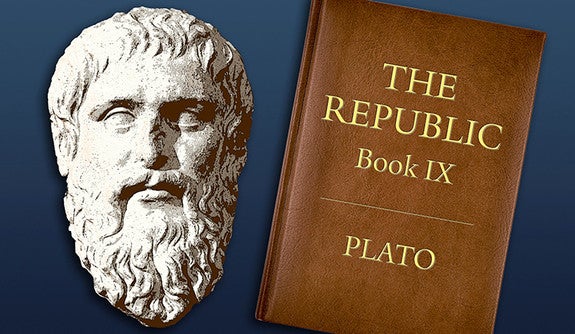
Plato published his solution is Republic, but this proposal was naive at best. The notion that meritocracy is something real or that we can appropriately understand dimensions and measures in order to create the right incentives is another weak link.
Plato’s Republic
We see the same problem controlling elected officials. Time and again, we elect them, and time and again, they disappoint. We, the People, are the principles, and the elected are our agents. People in the US (and in so-called ‘democratic’ societies) have the vote, and yet—per the oft-cited definition of insanity—, they perform the same action and continue to expect different results; in fact; they are always surprised). At its core, it’s an incentive and accountability problem.
Kenneth Arrow wrote about the Impossibility Theorem, where he proved mathematically that no voting system would yield optimal results. Democracy is cursed with mediocrity. We like to soft-pedal the notion of mediocrity with the euphemism of compromise, another Ancient Greek legacy of moderation. If this makes you feel better, who am I to break the delusion? Cognitive dissonance is a powerful palliative.
μηδέν άγαν
Do Nothing in Excess, Delphic Oracle Inscription
Interestingly enough, many people clamour for term limits (a subversion of democracy) because they can’t help themselves from voting for the same shit politicians over and again. They rationalise it and say it is to defend against the other guy’s vote because they’d have never voted for shit representation.
This is often couched as ‘save me from myself’, but it is just as aptly cast as ‘save me from democracy’. I suppose a heroin addict might have the same thoughts.
I’ve been engaging in a bit of friendly dialogue countering a claim citing the demise of atheism with a mate (Neal Mack) at a blog named The scientific case against evolution, but I’ve decided to pose some points here so I can leverage some of my expended energy on my own content.
Although I don’t believe in the supernatural or metaphysical, I’ve got no dog in the race as to how others believe. Where I draw the line, though, is where religious doctrine seeps into the realm of political philosophy, jurisprudence, and governance because then it’s not about a ‘personal relationship’ with God. It’s about imposing that God upon me.
Parent scolding child
As the sayings go, if you feel abortion is wrong, then don’t have one; if you don’t approve of gay marriage, then don’t marry a same-sex partner; if you don’t believe that two (or more) adults should be able to engage in safe, sane, and consentual sexual acts, then don’t participate; if you don’t believe that a woman should be able to earn money from sex, then don’t pay her any; and on and on and on and on…
if you don’t approve of gay marriage, then don’t marry a same-sex partner
But don’t impose your sense of morality on me. Keep it to yourself. If it were up to me, I would prefer that there be no religion and no superstition outside of the domain of fiction. But a key reason that these things even work in fiction is the sense that they could be or might be true. It fits into the evolutionary psychology the got humans to where we are instead of withering and dying on the evolutionary vine. But give us time. Homo sapiens sapiens is a relatively young species, and they appear on course to extinguish themselves relatively soon anyway, making all of this moot. Perhaps a more fitting name would have been Homo hubris.
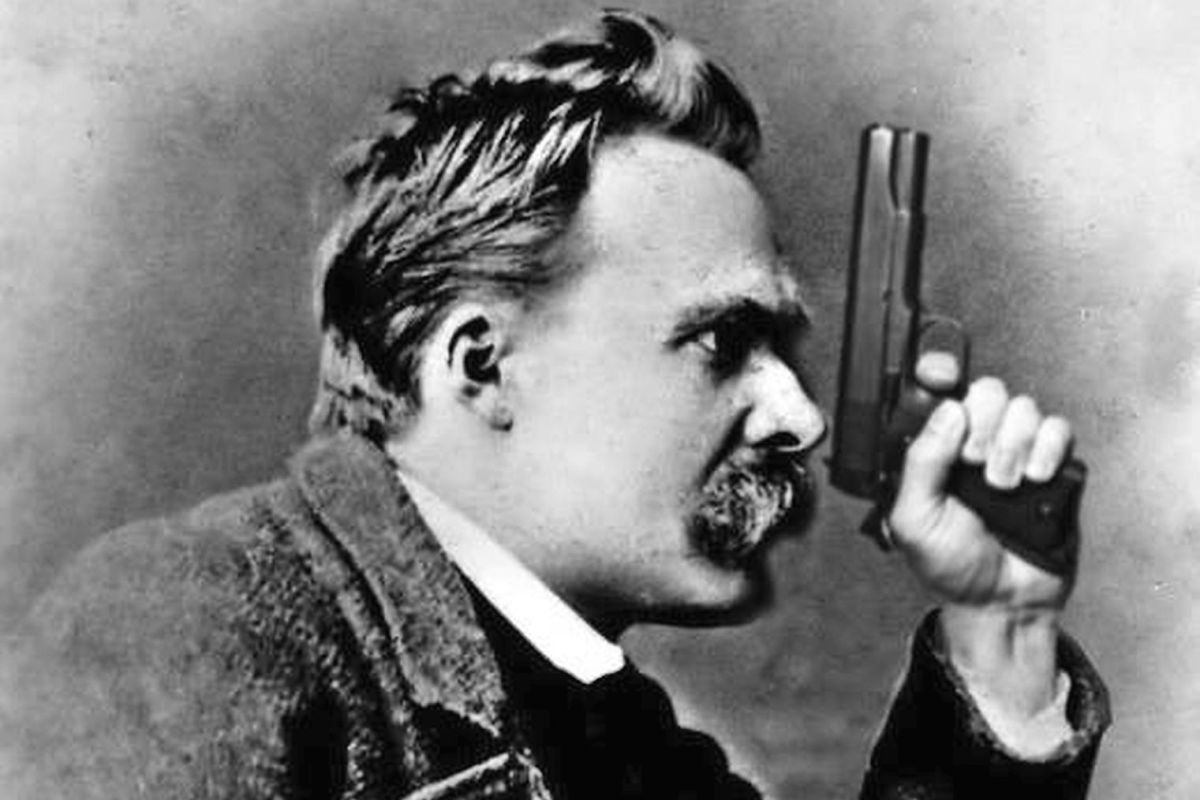
I’ll keep this post short, as I’ve got nothing new to add, and it’s getting late. If you’ve read my other posts, you’ll know that I am a non-cognitivist, and I don’t believe in any objective truth. I also understand—and as Nietzsche pointed out—the difficulty in forming a cohesive society without this orientation and supporting meta-narrative. Yet, this is not my problem.
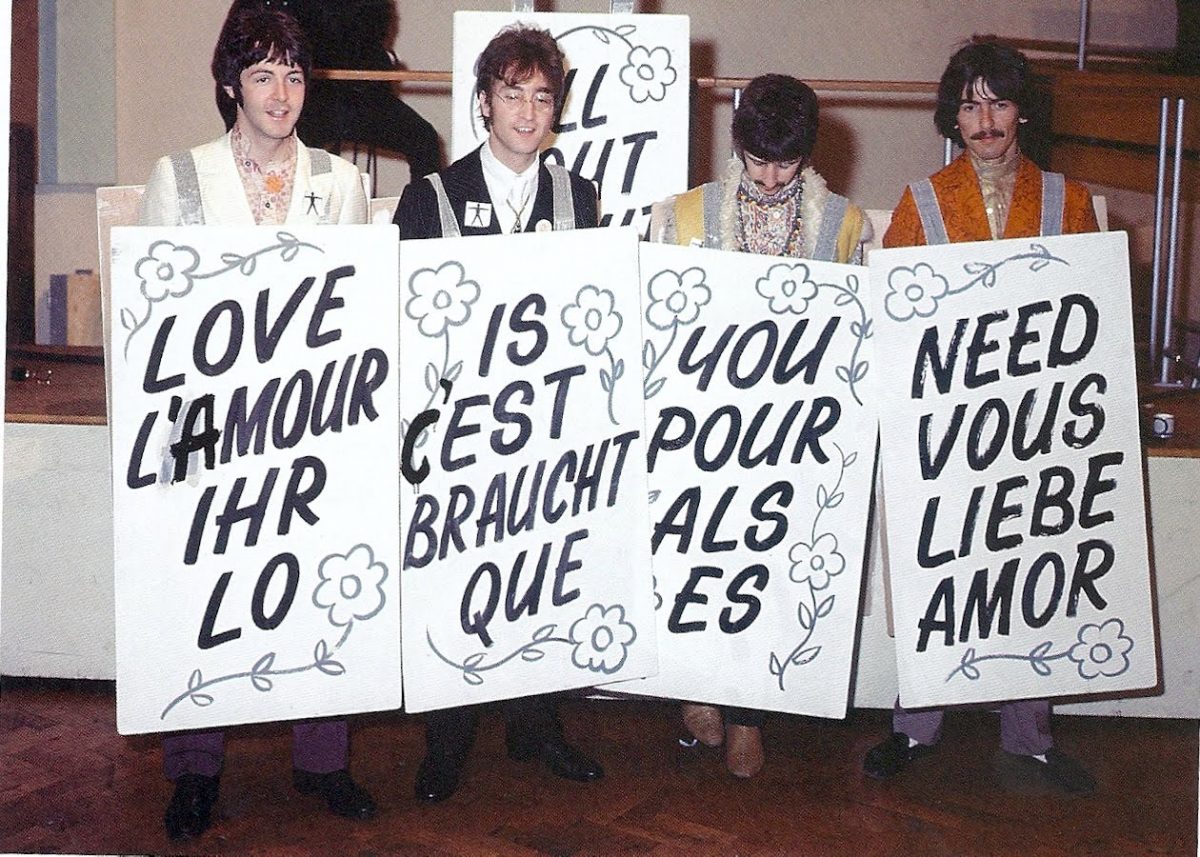
Love is an archetype. It’s a word we’ve created to express the notion of caring off the charts, on steroids. We throw it around and over-use it for many purposes. Generally, love is amorphic and expansive. In the typical scenario, a mother with a loved-child who bears another loves them both equally, but it’s not part of some arithmetic function where each child gets half an equal dose each. Love defies any notion of conservation of energy. Both children receive equal shares of the same quantity of love that the first received.
The Beatles – All You Need Is Love
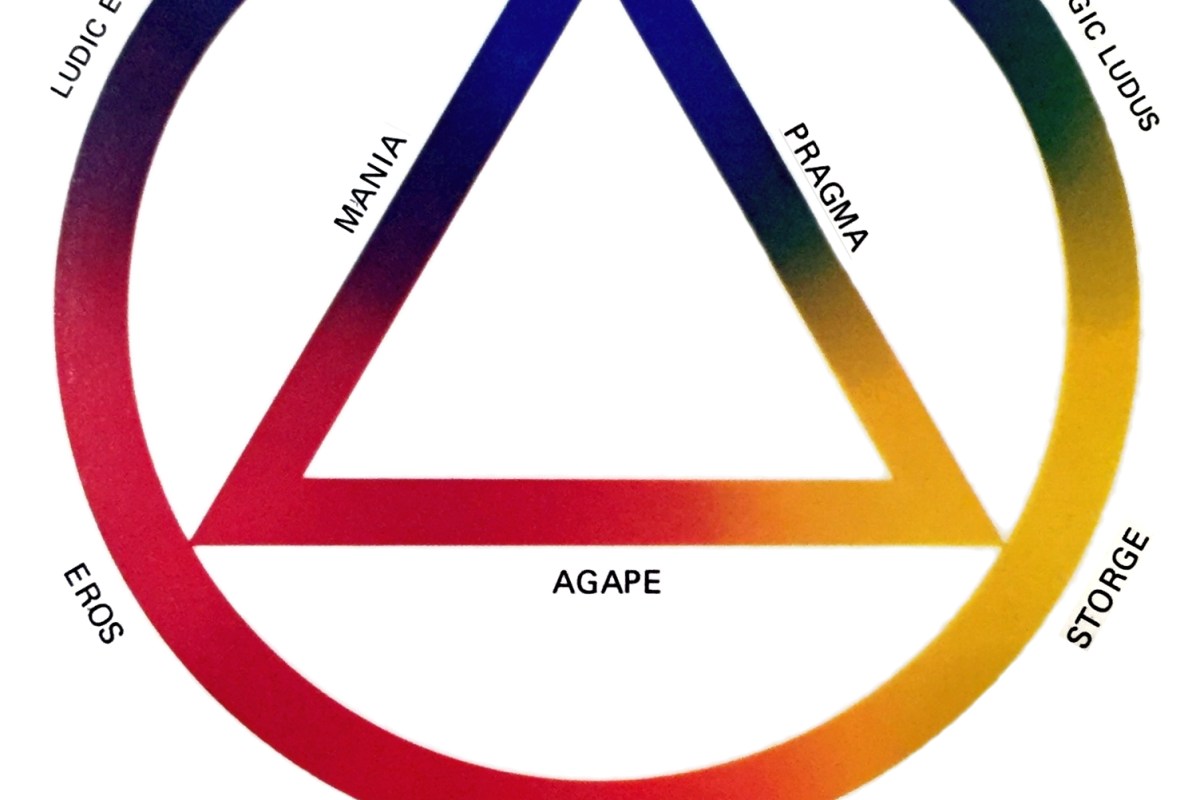
The ancient Greeks had several words to express love.
Storge (στοργή)
Storge is the love we have for community, for family, for our children and spouses. Storge is not romantic love. It is more a love of affection and tenderness. It may be the basis for the urge toward tribalism and nationalism, and it may have a sort of analogue to gravity, wherein the proximity of the source, the greater the attraction. This is where ‘blood is thicker than water’ and why I like my sports team better than yours.
Storge – love of family
Agape (ἀγάπη)
Agape is a sort of universal love, the selfless love of biblical reference of God and all of his children. Neither is agape a romantic notion. It is akin to charity, and the connection of transcending storge to include all of the world and ignoring the silos of tribalism. There appears to be a tension between agape and storge because one cannot have an equal love for all whilst retaining a greater love for one’s own tribe. Perhaps the notion is more aspirational than practicable.
Agape – Universal love
Philia (φιλία)
Philia is fraternal (to be more inclusive, perhaps also sororal) love, the brotherly love hoped to be inspired by the city of Philadelphia in Pennsylvania. This is an affectionate love, typically between equals. Again, philia has no romantic basis.
Philia – Sororal love
Eros (ἔρως)
Eros is notably erotic love; sexual love; intimate, passionate love; lust. Eros is ephemeral. Returning to physics, eros requires a lot of energy to maintain. In a typical setting, eros moderates to storge or pragma.
Plato believed that this love was transcendent of the body—and so could exist independently of body—, but I’ll not give heed to this metaphysical notion. Perhaps, this is where the notion of soulmates derives. This is a romantic love.
Ludus
Ludus is a lightweight version or precursor to erotic love. It is the playful, flirtatious nature expressed by young proto-lovers. Viewed teleologically, ludus may be seen as a stepping stone to eros, but not everyone makes it successfully to the final level.
Full disclosure: Ludus is Latin and not of Greek original.
Pragma (πράγμα)
Obviously, pragma is a pragmatic love. This is the love that remains to bond a pair who have remained together for years, say, an old married couple. This form either requires a lot of energy and compromise or a lot of apathy or indifference.
Older couple demonstrate pragma
Philautia
Philautia is a love of one’s self. It’s a portmanteau of philia + auto. As the saying goes, if you can’t love yourself, you can’t love anyone. As with most adages, they is as often true as not and require additional context to assess. Philautia should not be confused with narcissism, which may more properly be classified as a mania. It should also not be confused by onanism.
Philautia – Love of one’s self
Love will tear us apart… again.
Joy Division
Mania (μανία)
Some people include mania in their love collection. Mania is simply an unbalanced sort of love; obsessive love; eros gone wild.
Love has many meanings, but they are all about connecting. Perhaps, I am being hasty to dismiss the term, but it is overused and perhaps more phatic than genuine. In the parlance of Foucault, it’s a power phrase—especially in the erotic arena—, a means to manipulate.
2: Do not think it worthwhile to produce belief by concealing evidence, for the evidence is sure to come to light.
3: Never try to discourage thinking, for you are sure to succeed.
4: When you meet with opposition, even if it should be from your husband or your children, endeavor to overcome it by argument and not by authority, for a victory dependent upon authority is unreal and illusory.
5: Have no respect for the authority of others, for there are always contrary authorities to be found.
6: Do not use power to suppress opinions you think pernicious, for if you do the opinions will suppress you.
7: Do not fear to be eccentric in opinion, for every opinion now accepted was once eccentric.
8: Find more pleasure in intelligent dissent than in passive agreement, for, if you value intelligence as you should, the former implies a deeper agreement than the latter.
9: Be scrupulously truthful, even when truth is inconvenient, for it is more inconvenient when you try to conceal it.
10. Do not feel envious of the happiness of those who live in a fool’s paradise, for only a fool will think that it is happiness.
Although I don’t agree with all of these, I won’t challenge them here. On balance, they are words to live by.
Am I alone in this? Are there others who also cringe when they hear period-piece reenacters pronounce the word ye as ‘yee’, or is it just me? Be honest now.
Those as pedantic as I, know that ye was a solution to a technological limitation of early European printing. Prior to the printing press, Old English had a þ character pronounced thorn. Phonetically, it sounded like the modern English voiced dental fricative expression of the th digraph— IPA: /ð/.
Given this, ye would have been spelt þe and should be pronounced the (IPA: /ði/—not necessarily /ðə/) and not yee (IPA: /ji/). I am not sure if a hand-printed (or painted) sign of the day would have conformed to the pre-press spelling or the post-press variant. I wonder how long it took for thorn to pass by the wayside.
I am aware that language is a human construct and even that language is like a living organism. But in this case—as with Latin—, thorn is dead. It seems we should not revise the pronunciation of a fossil of a word. It seems to me it should be frozen in the amber of time.
Bonus Round 1
Back in the day, not only was the abbreviated as ye in printing, but this was abbreviated as ys and that was shortened to yt, as in the Mayflower Compact. Don’t ask why someone felt that it was important to abridge 3- and 4-letter words to 2 characters.
Herbert Manuscripts (excerpt)
Bonus Round 2
It’s may be important to note that the ye of Ye Olde Shoppe fame, which is simply a shortened form of the, is not the same ye of biblical fame, ‘Judge not, that ye be not judged‘, which was the plural form of thou, which is now rendered as you—the plural form.
And now you know…
As for the pronunciation of the ye of hear ye (hear ye), I am not sure which concept is being captured. If you know, then let me know.
I’ve been having a side debate with a Christian mate of mine who made these claims:
Whom do you serve?
Chrétien de Troyes — Perceval
‘[Non-religious people may] not define themselves as particularly “religious”, but…everyone is’, as he references lyrics from a Rush song, ‘even if you choose NOT to decide, you still have made a choice’.
‘One can choose to believe in nothing but themselves, but if they’re honest, “self” IS their religion. Everyone is religious.
We all yearn for some meaning and we end up pursuing something or someone to fill that inward desire. Whether we organise that something and call it “religion” is beside the point, as he references Bob Dylan’s lyric, “Ya gotta serve somebody; it may be the devil, or it may be the Lord, but ya gotta serve somebody.”
This had been the fluid exchange of ideas, but I’ll reply in turn.
even if you choose not to decide, you still have made a choice
Rush — Freewill
I’ve won’t repeat my position on free will, but one can choose to be religious or not. To choose not to be religious is not also a choice to be religious. I can agree that some people substitute superstitious, metaphysical believe for, say, scientism, and this is just as ridiculous, but some people remain unconvinced in these metanarratives.
“Self” is their religion
Some Guy
Again, not everyone even ascribes to the notion of self, and there is little reason to believe that there is some element of religious worship involved.
We all yearn for some meaning
Some Guy
Again, this is fundamental attribution error, the assumption that because he believes there is some underlying meaning and yearns to find it that everyone else does. I understand that he surrounds himself with people who share this belief system, and they convince themselves that someone who says otherwise is mistaken.
Ya gotta serve somebody; it may be the devil, or it may be the Lord, but ya gotta serve somebody
Bob Dylan — GottA Serve Somebody
This is clearly dualistic thinking incarnate; a false ‘you’re either with me or against me’ dichotomy.
I remember self-assessing myself when I was in high school. Nietzsche notwithstanding, I could never agree with the frame or the assertion that there are leaders and there are followers. I did not identify with either. I do feel that within the society I was born, that I need to comply just enough to not be subjected to the violence inherent in the system for non-conformance, but that’s not exactly following. I also don’t care to lead.
It turns out that this (perhaps not coincidentally) manifested in my career, as I am a consultant—an adviser.
















 Philosophics