The Morality We Can’t Stop Wanting

1–2 minutes

Humans can’t seem to stop clawing after morality. The primates among us chuck cucumbers when their neighbours get grapes, and the rest of us grumble about fairness on social media. The impulse is practically universal, an evolutionary quirk that kept us from throttling each other long enough to raise children and build cities.

Image: A seemingly perturbed capuchin monkey.

But universality is not objectivity. Just because every ape howls about fairness doesn’t mean “Justice” floats somewhere in Platonic space, waiting to be downloaded. It only means we’re the kind of animal that survives by narrating rules and enforcing them with shunning, shame, or, when necessary, cudgels.

Audio: NotebookLM podcast on this topic.

This is where Alasdair MacIntyre trips over his own robes. After Virtue skewers Enlightenment rationalists who tried to prop morality on reason, it then dismisses Nietzsche for being “irrational.” MacIntyre’s fix? Resurrect Aristotle’s teleology. If reason can’t save morality, maybe an ancient oak tree can. But this is wish-thinking with a Greek accent. He’s still arguing by reason that reason can’t do the job, then sneaking back in through Aristotle’s back door with a “firmer ground.” Firmer only because he says so.

Nietzsche, at least, had the decency to call the bluff: no telos, no floor, no cosmic anchor. Just will, style, and the abyss. Uncomfortable? Absolutely. Honest? Yes.

Deleuze went further. He pointed out that morality, like culture, doesn’t look like a tree at all. It’s a rhizome: tangled, proliferating, hybridising, never grounded in a single root. The fragments MacIntyre despairs over aren’t evidence of collapse. They’re evidence of how moral life actually grows—messy, contingent, interconnected. The only reason it looks chaotic is that we keep demanding a trunk where only tubers exist.

So here we are, apes with a craving for rules, building cities and philosophies on scaffolds of habit, language, and mutual illusion. We are supported as surely as the Earth is supported – by nothing. And yet, we go on living.

The need for morality is real. The yearning for telos is real. The floor is not.

« Je pense, donc j’ai raison ! »

3–4 minutes

The Enlightenment promised a universal Reason; what we got was a carnival mirror that flatters philosophers and fools the rest of us. MacIntyre and Anscombe diagnosed the corpse with precision, but then tried to resurrect it with Aristotelian or theological magic tricks. I’m less charitable: you can’t will petrol into an empty tank. In my latest essay, I put ‘Reason’ on the slab, call in Kahneman, Hume, Nietzsche, and others as expert witnesses, and deliver the verdict: morality is a house rule, not a cosmic law. This piece is part of a larger project that includes my Language Insufficiency Hypothesis and Against Dumocracy. The Enlightenment isn’t dying – it’s already dead. We’re just cataloguing the remains.

The Enlightenment was many things: a bonfire of superstition, a hymn to autonomy, a fever dream of “Reason” enthroned. Its philosophers fancied themselves heirs to Aristotle and midwives to a new humanity. And to be fair, they were clever enough to trick even themselves. Too clever by half.

Alasdair MacIntyre, in After Virtue, plays the role of forensic pathologist with admirable precision. He shows us how the Enlightenment dynamited the teleological scaffolding of Aristotle, then tried to keep the vocabulary of virtue, duty, and rights standing in mid-air. The result: what he calls a “moral Babel,” a chorus of shrill assertions dressed up as rational law. Elizabeth Anscombe had already filed the death certificate back in 1958 with Modern Moral Philosophy, where she pointed out that our talk of “moral obligation” is just a Christian relic without a deity to enforce it. And Nietzsche, that perennial party-crasher, cheerfully declared the whole project bankrupt: once the gods are dead, “ought” is nothing but resentment pretending to be metaphysics.

And yet, when MacIntyre reaches the heart of the matter, he can’t quite let the body stay buried. He wants to reattach a soul by importing an Aristotelian telos, even summoning a “new St Benedict” to shepherd us through the ruins. It plays beautifully with those still tethered by a golden string to Aquinas and the premodern, but let’s be honest: this is just hypnosis with a Latin chorus. Descartes told us je pense, donc je suis; MacIntyre updates it to je pense, donc j’ai raison. The trouble is that thinking doesn’t guarantee rightness any more than an empty petrol tank guarantees motion. You can will fuel into existence all you like; the car still isn’t going anywhere.

The behavioral economists – Kahneman, Tversky, Ariely, Gigerenzer – have already demonstrated that human reason is less compass than carnival mirror. Jonathan Haidt has shown that our “moral reasoning” usually lags behind our gut feelings like a PR department scrambling after a scandal. Meanwhile, political practice reduces “just war” to a matter of who gets to publish the rule book. Progress™ is declared, rights are invoked, but the verdict is always written by the most powerful litigant in the room.

So yes, MacIntyre and Anscombe diagnose the corpse with impressive clarity. But then they can’t resist playing resurrectionist, insisting that if we only chant the right metaphysical formula, the Enlightenment’s heart will start beating again. My own wager is bleaker – or maybe just more honest. There is no golden thread back to Aristotle, no metaphysical petrol station in the desert. Morality is not a universal constant; it’s a set of rules as contingent as the offside law. Killing becomes “murder” only when the tribe – or the state – says so. “Life is sacred” is not a discovery but a spell, a linguistic sleight of hand that lets us kill in one context while weeping in another.

The Enlightenment wanted to enthrone Reason as our common oracle. Instead, it handed us a corpse and told us to pretend it was still breathing. My contribution is simply to keep the coroner’s mask on and say: The magic tricks aren’t working anymore. Stop looking for a metaphysical anchor that isn’t there. If there’s to be an “after,” it won’t come from another Saint Benedict. It will come from admitting that the Enlightenment died of believing its own hype – and that language itself was never built to carry the weight of gods.

A Critique of Reason (Not to Be Confused with Kant’s)

2–3 minutes

Kant, bless him, thought he was staging the trial of Reason itself, putting the judge in the dock and asking whether the court had jurisdiction. It was a noble spectacle, high theatre of self-scrutiny. But the trick was always rigged. The presiding judge, the prosecution, the jury, the accused, all wore the same powdered wig. Unsurprisingly, Reason acquitted itself.

The Enlightenment’s central syllogism was never more than a parlour trick:

  • P1: The best path is Reason.
  • P2: I practice Reason.
  • C: Therefore, Reason is best.

It’s the self-licking ice-cream cone of intellectual history. And if you dare to object, the trap springs shut: what, you hate Reason? Then you must be irrational. Inquisitors once demanded heretics prove they weren’t in league with Satan; the modern equivalent is being told you’re “anti-science.” The categories defend themselves by anathematising doubt.

The problem is twofold:

First, Reason never guaranteed agreement. Two thinkers can pore over the same “facts” and emerge with opposite verdicts, each sincerely convinced that Reason has anointed their side. In a power-laden society, it is always the stronger voice that gets to declare its reasoning the reasoning. As Dan Hind acidly observed, Reason is often nothing more than a marketing label the powerful slap on their interests.

Second, and this is the darker point, Reason itself is metaphysical, a ghost in a powdered wig. To call something “rational” is already to invoke an invisible authority, as if Truth had a clerical seal. Alasdair MacIntyre was right: strip away the old rituals and you’re left with fragments, not foundations.

Other witnesses have tried to say as much. Horkheimer and Adorno reminded us that Enlightenment rationality curdles into myth the moment it tries to dominate the world. Nietzsche laughed until his throat bled at the pretence of universal reason, then promptly built his own metaphysics of will. Bruno Latour, in We Have Never Been Modern, dared to expose Science as what it actually is – a messy network of institutions, instruments, and politics masquerading as purity. The backlash was so swift and sanctimonious that he later called it his “worst” book, a public recantation that reads more like forced penance than revelation. Even those who glimpsed the scaffolding had to return to the pews.

So when we talk about “Reason” as the bedrock of Modernity, let’s admit the joke. The bedrock was always mist. The house we built upon it is held up by ritual, inertia, and vested interest, not granite clarity. Enlightenment sold us the fantasy of a universal judge, when what we got was a self-justifying oracle. Reason is not the judge in the courtroom. Reason is the courtroom itself, and the courtroom is a carnival tent – all mirrors, no floor.

Your Morals

I was commenting elsewhere on morals and was directed to Jonathan Haidt and his work. Notably, the questionnaire at YourMorals.org, where you can get your own assessment and contribute data points to the body of work.

Full disclosure: I am not a fan of this type of survey, as I’ve mentioned previously. Still, I made an attempt. Better still, I’ve copied the questions to critique. There are 36 all tolled. Perhaps, I’ll respond to a dozen at a time. The next dozen responses are here. Generally speaking, they present each question and provide a Likert scale as follows:

  1. Does not describe me at all
  2. Slightly describes me
  3. Moderately describes me
  4. Describes me fairly well
  5. Describes me extremely well

Standard fare. It starts off bad:

1. Caring for people who have suffered is an important virtue.

Why include an abstract concept like virtue? I don’t ascribe to the notion of virtue, so it’s an empty set. Given that, my response would be a 1. If I ignore the offensive nomenclature and assume it translates idiomatically into ‘beneficial for some target society’, then I still have to question what is meant by suffering, and how far does caring extend. Is it enough to feel bad about the homeless person, or does one have to care enough to provide sustenance and shelter? Talk is cheap.

2. The effort a worker puts into a job ought to be reflected in the size of a raise they receive.

This is fraught with all sorts of problems. In fact, it’s a reason why I consider myself to be a Postmodern. The inherent metanarrative is that societies are effectively money-based. I don’t happen to believe that, so I am again faced with responding to an empty set. Even if I attempt to abstract the ‘raise’ aspect to mean that effort represents input and output is a direct and (perhaps) proportional function, I am still left to wrestle with how this effort is measured and what could have been achieved had the others not been present.

Using a sports analogy—always a dangerous domain for me to play in—, what if LeBron James was to play an opposing team by himself? He needs the other team members. Of course, his teammates are compensated, too. But in his case, his salary is not only based on his athletic talent but on his celebrity power—rent in economic parlance. Perhaps LeBron makes a lot of baskets, but without the assists, he’d have fewer. And because he is the go-to guy, some other teammates might be sacrificing baskets as part of their winning strategy.

Finally, how do you measure the effort of an accountant, a janitor, and an executive? The question is fundamentally bollox.

3. I think people who are more hard-working should end up with more money.

On a related note, I can abbreviate my commentary here. Again, what is harder? Are we asking if construction workers should earn more than CEOs? More bollox.

4. Everyone should feel proud when a person in their community wins in an international competition.

Yet, again, an empty set and a sort of mixed metaphor. I don’t agree with the notion of identity and even less at scale—states, countries, and nationalities. Putting that aside, why should I derive pride (that cometh before the fall) because someone succeeds at some event anywhere? It’s facile. If the question was focused on whether I would be happy for that person, the answer might shift up the scale, but where would I have derived pride for that person’s achievements?

5. I think it is important for societies to cherish their traditional values.

First off, why? What values? Not to beat a dead horse, but what if my tradition is slavery? Should I cherish that? This is really asking should I cherish the traditions of my society. Clearly, it’s not asking if other societies should enjoy the privilege of cherishing theirs? From the standard Western vantage, many want to cherish their own, but not Eastern values of eating dogs or Middle Eastern values of burqaed women and turbans. Is this asking should the world subscribe to my society’s values? I’m not sure.

6. I feel that most traditions serve a valuable function in keeping society orderly

Speaking of tradition… We are not only dealing with the vague notion of tradition, we are discussing another vague concept, order, and elevating order over (presumably) disorder. Order connotes a status quo. And why is the superlative most present? Has someone inventoried traditions? I believe I am supposed to translate this as ‘I feel that the traditions I am familiar with and agree with help to create a society that I am content with’. Again, this betrays the privileged perspective of the observers. Perhaps those disenfranchised would prefer traditions like Capitalism and private property to be relics of the past–or traditions of two-party rule, partisan high court judges, or money-influenced politics, or politicians serving themselves and their donors over the people or Christmas.

7. We all need to learn from our elders

Learn what exactly from our elders? Which elders? The bloke down the block? That elderly Christian woman at the grocery mart? The cat who fought in some illegal and immoral war? The dude who hordes houses, cars, and cash at the expense of the rest of society? Or the guy who tried to blow up Parliament. I believe this is asking should we learn how to remain in place as taught by the privileged wishing to maintain their places.

8. Everyone should try to comfort people who are going through something hard

Define hard, and define comfort? This harkens back to the first question. Enough said. As far as lying is concerned, we should by now all be familiar with the adage trying is lying. Or as Yoda would restate it, do or do not, there is no try.

9. I think the human body should be treated like a temple, housing something sacred within

Obviously, this one is total rubbish. Here, I don’t have a structure that makes it difficult to answer. I may have sprained my eye rolling it, though. This said, what is a temple treated like?

10. I get upset when some people have a lot more money than others in my country

This one is interesting. Whilst I don’t believe that countries or money should exist. In practice, they do. So on its face, I can say that I get upset when we are thrown into a bordered region and told we need to exchange paper, metal, plastic, and bits for goods and services–that some people have more and others have less primarily through chance.

11. I feel good when I see cheaters get caught and punished

Which cheaters? Cheating requires perspective and a cultural code. It can privilege the individualist over the communalist. This reminds me of the cultures that are more interested in ensuring that all of their members finish a contest than having any one win.

Academically, it is considered to be cheating to work together on an exam because the individual is being tested. Of course, the exam is on certain content rather than on the contribution of the human being.

Again, the question feels targeted at cheaters getting caught circumventing something we value. If someone cheats becoming assimilated into some military-industrial society, I will encourage and support them. If they get caught and punished, my ire would more likely be directed toward the power structure that created the need to cheat.

12. When people work together toward a common goal, they should share the rewards equally, even if some worked harder on it

I’ll end this segment here on another question of meritocracy. I think it’s fair to judge the authors as defenders of meritocracy, though I could be wrong. This feels very similar to some other questions already addressed. The extension here is about sharing the rewards, whatever that means. Are we baking a cake? Did we build a house for a new couple? Did we plant trees in a public park? Did we clean up litter on a parkway? Did we volunteer to feed the homeless? And what was the work? Again, how are we measuring disparate work? Did the chicken farmer work harder than the cow farmer? Did the carpenter work harder than the organiser?

If the remainder of these questions is different enough, I’ll comment on them as well. Meantime, at least know you know more why I have little faith in the field of morals. This does nothing to change my opinion that morals are nothing more than emotional reactions and subsequent prescriptions. I don’t mean to diminish emotions, and perhaps that might be a good central pillar to a vibrant society. I’ll need more convincing.
Character Arc

The US government are a crime syndicate, a veritable mafioso family. The current Don, quite literally, Donald Trump, The Don, is a conman at all levels. Some forget that conman is short for confidence man. About a quarter of the eligible voters had confidence in him–or at the least had more confidence in him than in his rival.

The US don’t have a vote of no confidence, but the impeachment process may serve as a worst case proxy. Watching the news, much f the political theatre and grandstanding revolves around the issue of character. It all sounds so tidy. A particular legal defence tactic is to impugn character. He’s got character; she doesn’t. One can’t trust that bloke even though he’s in a position presumably predicated on this character thing.

Character is a quaint notion, remnant of specious Virtue Ethics. The warring families–let’s call them Republicans and Democrats–attempt to secure the moral high ground by making a claim on the impeccability of their character pedigree. But what is character?

Character is another weasel word mired in cultural relativism. Essentially, it’s an asymptotic function wherein a person approaches some archetypal ‘good life’, as in eudaimonia. In the end, it suffers the fate of a no true Scotsman logical fallacy.

What John Stuart Mill Got Wrong About Freedom

3–4 minutes

Graham Tomlin wrote a piece for Prospect, upon which I comment and whence comes the title of this post. Always the deconstructivist curmudgeon, it seems, I agree with Tomlin’s assertion that Mill was wrong, but so is Tomlin.

In a nutshell, Tomlin makes the argument that the Ancients had it right, and the Enlightenment derailed it. Tomlin wants to return to the days of yore when the artifice of character and virtue ruled the day, a time when men were men and women were women. A return to the good ole days.

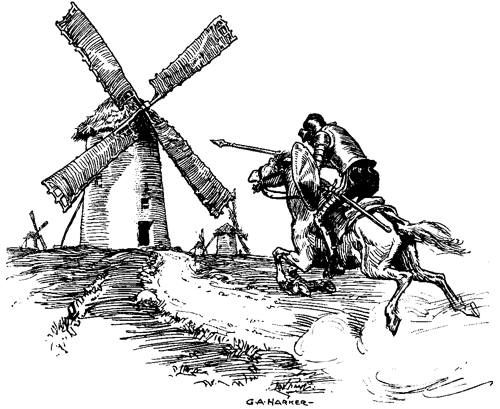
Tomlin waxes poetic, nostalgiac to a time that never was, a time that the prescription was to chase windmills of virtue and amass the currency of character. But character as currency is more unstable than Bitcoin.

Don Quixote Tilting Windmills

Is there anything more capricious than the held perception of character? Is there anything more futile than chasing the vicious cycle of virtue, always searching for that deserving true Scotsman?

Character is a term especially bandied about by political Conservatives, although Progressives tend to play the #MeToo game because it’s a game of appearances. It doesn’t matter what you do; it only matters what it looks like you do.

And even this is a game. Time and again politicians ‘slip’ (read: get caught), they apologise for the temporary lapse, and ask for forgiveness. Whether or not they keep their position, they are still forgiven and may return to their position learning their lesson (read: don’t get caught again). Let’s just dispense with the formalities.

Perception is reality

In Plato’s day, he holds out four moral virtues to pursue: courage, temperance, justice, and prudence.

Courage: the resolve to act virtuously, especially when it is most difficult

Temperance: moderation in all things; the middle path

Justice: to render every man what’s due

Prudence: application of practical wisdom

Courage seems to be caught in an infinite loop, as it essentially says to exercise temperance, justice, and prudence in the face of danger. Typically, courage is associated with heroic acts, though I fail to see the connection to rescuing a baby from a burning building with any of these other virtues. Perhaps the definition has morphed over the years. Everyone needs a hero. Only Zeus needs a Hera.

Temperance is to find the middle ground: eat but not too much; drink but not too much; rape but not too much; kill but not too much. Is there really a middle ground for all things? In traversing a canyon, shouldn’t one stay close to the edge—or what about sidewalks? Is it temperance that led US President Donald Trump to declare that Nazis and white supremacists. are ‘some very fine people‘, or does he just lack prudence?

Justice is the constant and perpetual will to render to every man his due.

Justinian — Institutes 1.1

Justice I’ve written about at some length so I won’t spend any additional time here.

Common sense is not so common.

Voltaire

Prudence, which advises one to use common sense, relies on a rare jewel. As Voltaire wrote, « le sens commun est fort rare ».

Perhaps I’m just too hard on people, but I find that most people are pretty dimwitted outside of some small area of focus, and I have to agree with Voltaire’s position on common sense. This is why as an economist, I find it so difficult to accept the homo economicus assertion so key for modern microeconomic theory and why behavioural economics has become a bigger deal in the past 30 years as more and more social scientists realise that people are predictably irrational.

Thanks but no thanks. There’s got to be a better way.

Utilitarianism

As I read his Utilitarianism, I want to like John Stuart Mill. He seems like such a clever man, but he is a victim of his Enlightenment Age. Attempting to fabricate order created by science’s encroachment on the absolutes of religion and the shifting sentiments toward monarchies, Mill tries to replace this moral compass with Jeremy Bentham‘s utility.

£1 ≠ £1

The problem is that despite (sort of) dispensing of religious doctrine, Mill was still fettered by the dogma of virtue ethics of dignity and duty. To this, he adds happiness. Not to go full-on Foucault, but these are concepts leveraged, like religion, to maintain power—take an elevated system in a constructed society, and the duty becomes a burden to the bottom, save for pretence of duty and dignity at the top.

I’ve had an issue with the concept of virtue and all of its offspring: duty, justice, and so on. I’ll likely write about this later. I expect that I’ll be reading Mill’s On Liberty next, so stay tuned.

Ignoring my contention that Utilitarianism is baseless, I have two other issues, using economic examples, each related to prospect theory (pdf):

  1. Regressivity: A person with less money values an incremental dollar more than a person with more money.

  2. Loss to gain asymmetry due to risk aversion: A person values losing a dollar more than earning a dollar, ceteris paribus.

Pareto efficiency, a cornerstone of Classical economics, does not take this into account. For this theory, all dollars are created (or perceived to be) equal, so it doesn’t matter whether person A, who earns £10,000 p.a., or person B, who earns £100.000 p.a.,  gets £100, but in the real world, person A would give it a higher value, so a transfer from A to B would be an inferior transaction to a B to A transaction.

This said, person B values the £100 more than having gained the amount, but it is not clear how to reconcile (in order to reach perceived parity) what the fair equilibrium would be, allowing that equality of outcome might not be the desired outcome.