Cause and effect: This clip by Jonny Thompson influenced this post.
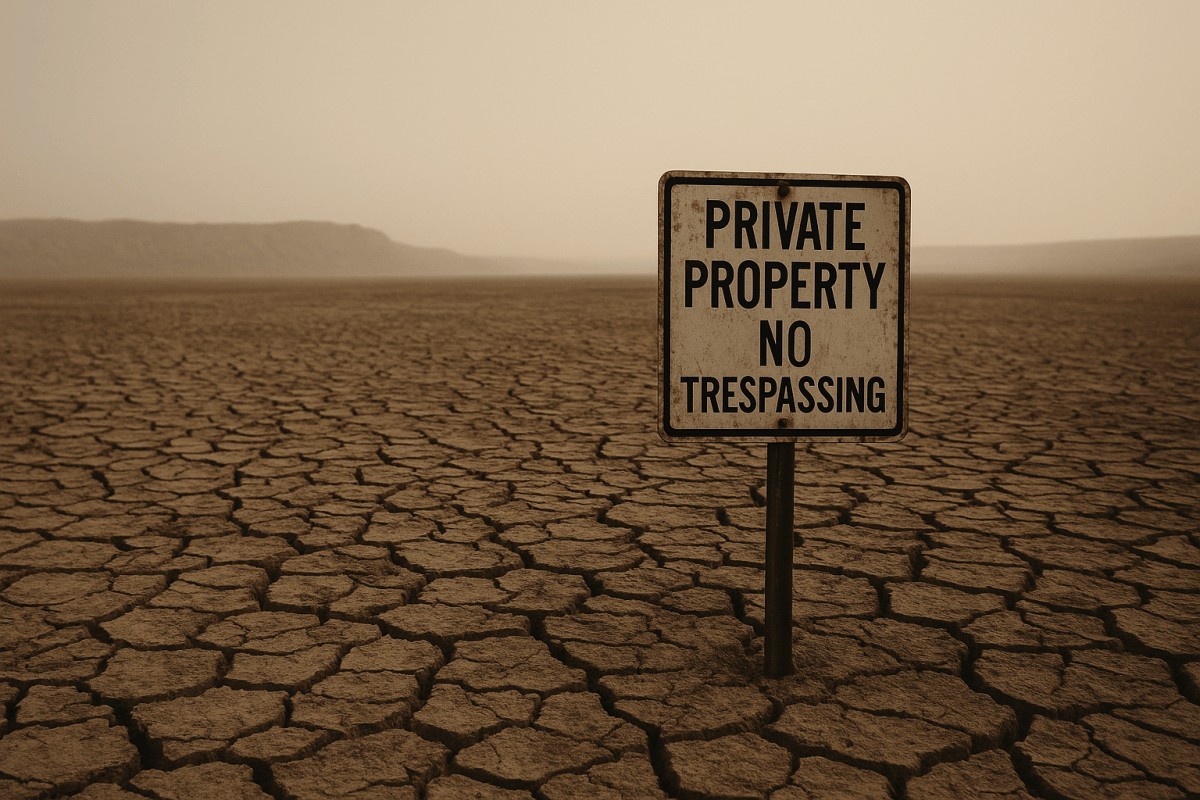
I’ve written extensively (and, some might say, relentlessly) on the immorality of private property, particularly the theological nonsense that undergirds its supposed legitimacy. Locke’s first-come, first-served logic might have sounded dashing in the 17th century, but it now reads like a boarding queue at Ryanair: desperate, arbitrary, and hostile to basic decency.
The core problem? Locke’s formulation assumes land was once freely available, as if Earth were a kind of colonial vending machine: insert labour, receive title. But that vending machine was already jammed by the time most of humanity got a look-in. Worse, it bakes in two kinds of chauvinism: temporal (screw the future) and speciesist (screw anything non-human).
Parfit’s long-termism lays bare the absurdity: why should a bit of land or atmospheric stability belong to those who happened to get here first, especially when their stewardship amounts to strip-mining the pantry and then boarding up the exit?
And no, “mixing your labour” with the land does not miraculously confer ownership—any more than a damp bint lobbing a sword at you from a pond makes you sovereign. That’s not philosophy; that’s Arthurian cosplay.
 Philosophics