Criminal Conservatism

A few years ago, I shared with a colleague that I had noticed that my high school classmates who seemed to be the most non-conformist (or perhaps the most anti-authoritarian), the ones most likely to have abused drugs and alcohol and most likely to criticise the Man, have by and large become extremely conservative on the political spectrum. Most are card-carrying Republicans, and dreaded low-information voters, continuing the trend of low-information acquisition and processing. He said that he had noticed a similar trend.

I still keep in contact with some some old mates who are Conservative Republicans, but who were high-information consumers then and still, so I am not saying that all Conservatives are low-information people.

A man who is not a Liberal at sixteen has no heart; a man who is not a Conservative at sixty has no head.

—Benjamin Disraeli (Misattributed)

The past couple of years, in a sort of nod to Bukowski, I’ve been researching or circulating among the underbelly of the United States, the veritable dalit-class comprised of drug dealers and users, pimps, prostitutes, and thieves. And I’ve noticed the same trend. These people might fear or hate the police and the system, and they may not vote or even be high-information seekers, but they seem to have a marked propensity to Conservatism. I admit that this is anecdotal and rife with confirmation bias, but this is my observation.

To broad brush any group into some monolith is always a fools errand and missing dimensional nuance, but the general direction holds. In my observation, these people are very black & white, and they want to see law & order (as much as they want to avoid its glance). They are interested in fairness, and call out being beat, as in being shorted in a drug deal or overpay at the grocery store–the same grocery store from which they just shoplifted.

When they see a news story, ‘That bank robber deserved to get caught’ would not be an unexpected response. Even if they got caught, they might voice that they deserved it. The received sentence might be a different story.

I am not sure why this shift from anti-establishment to hyper establishment happens. I’ve also noticed that even if they dislike the particular people serving government roles, they still feel that the abstract concepts of government, democracy, capitalism, and market systems make sense, if only the particular instance is not great.

One reaction I had is that some of these people feel that the transgressions of their youth might have been avoided only if there were more discipline, and so they support this construct for the benefit of future generations, who, as embodied in Millennials, are soft and lack respect for authority.

I’d recently re-discovered a Bill Moyers interview with moral psychologist Jonathan Haidt, and there is some relationship. And whilst I could critique some of Haidt’s accepted metanarrative relative to society, his points are valid within the constraints of this narrative.

The video is almost an hour long and was produced in 2012, it is a worthwhile endeavour to watch.

I am wondering if anyone else has seen this trend or who has experienced a contrary trend. Extra points for an explanation or supporting research.

Cover image: Sean Penn, excerpt from Fast Times at Ridgemont High, and Brett Cavanaugh, SCOTUS and posterboy Conservative hack

Good to Coöperate: Property

2–3 minutes

I happened upon an entry in Current Anthropology: Is It Good to Cooperate? [PDF] (Volume 60, Number 1, February 2019), wherein the authors claim there are 7 universal moral codes. The universality is suspect insomuch as they found a preponderance of observations, so unanimity was not always found. I am also concerned with the specificity of the definition of property.

The group studied ethnographic accounts of ethics from 60 societies, across over 600 sources. The universal rules of morality are:

  1. Help your family
  2. Help your group
  3. Return favours
  4. Be brave
  5. Defer to superiors
  6. Divide resources fairly
  7. Respect others’ property

It’s well past my bedtime, and I should be sleeping, so I just want to pick out one of these universals: property rights.


La propriĂ©tĂ©, c’est le vol!

What is Property? — PIERRE-JOSEPH PROUDHON

Property can mean several things: In the description of methodology, it appears that these authors are referring to property rather than possession, as a key identifier is the ability to transfer property intergenerationally. What is the scope of the definition of property. There is a difference between passing along a family home and passing along vacant property a world away. Is rent-seeking property ownership universal? Would all societies subscribe to the notion held by Western Capitalism, wherein one can own property that, theoretically, one may never have seen? In the United States, they have concepts like intellectual property, which is at best a subversion of the notion.


»» »» »» »» »» »» EDIT »» »» »» »» »» »»

There may be a problem with reading (or at least posting) at 2AM—and property is a hot button item for me. I may have been hyper-focused on the intergenerational wealth transfer. I’d like to read more about how other societies view this as well as which ones do and don’t. Of course, I’d like to understand how the interviewers couched the questions.

In the end, the summary was about possession and not property:

Private property, in some form or other, appears to be a cross-cultural universal (Herskovits 1952). Morality-as-cooperation leads us to expect that this type of cooperative behavior—deferring to prior possession—will be regarded as morally good .

Op. cit.

As an anti-Capitalist, I notice that no claims are being made into the morality of competition. I may may a few posts on my observations of the remaining 6 list items.

What Still Remains

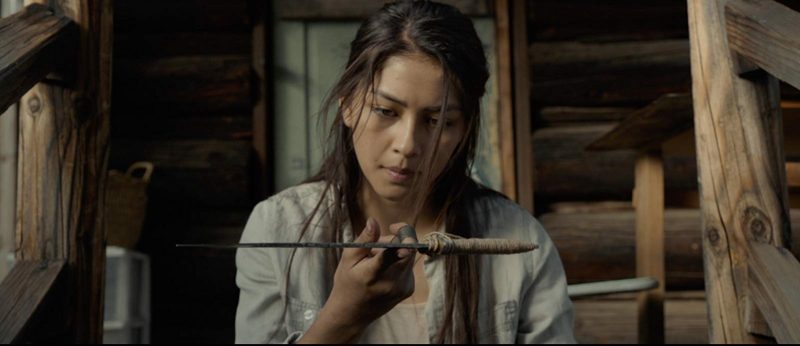
I haven’t done any film reviews, and I’m not about to start now. I’ve just watched What Still Remains on Netflix.

People become their own kind of monster.

What Still Remains Film Trailer

This is decent post-apocalyptic fare, some catalyst, societies, competing factions, good versus evil, at least in the eyes of the devout. But that’s not what I am going to be writing about.

What still remains contains good writing and strong character development. It does over-employ tropes, but this seems to be the norm these days: modular writing; rearranging the Lego pieces to make something that appears fresh. So what do I have to say?

Spoiler Alert: Proceed with caution…

This is a perfect depiction of the problems with property rights and social contract theory. There are apparently 3 factions—4 if you count independents.

Anna

Initially, there were the Changed, never seen on screen and perhaps not even contemporaneous to the current period, though they may reside in the unseen cities. Anna, the protagonist, and her family are among the independent. Peter, a preacher from the ordained, holier than thou faction. In the realm of ‘if you’re not with me (and our God), you’re against me, thence evil’, they are the arbiters of all that is good. And then there are the Berserkers, as named by the Ordained. To the Ordained, Berserkers aspire to be Changed, but the Berserkers view themselves more along the line of Spartans: Pain is good.

Peter

All scenes are shot in the wilderness, but the various factions have staked property claims with wide perimeters. The penalty for trespass appears to usually involve death of the offending party—or at least a hefty fee. This is Hobbes’ ‘solitary, poor, nasty, brutish, and short’ life outside of society quip, though he didn’t exactly account for a class of societies despite this being common in his day.

Berserker

So, these factions don’t actually have property rights; what they have is a notion of property, and they defend it with violence, as is a necessary condition for all property. In so-called modern societies, the violence is obfuscated much in the same manner that supermarkets obscure the carnage behind the meat. It’s still there; it’s just at arm’s length. Violate one of these ‘rights’, and you’ll see the violence inherent in the system.

And then there’s social contract theory—or the gaping flaw in the logic. Anna is an independent, but one can only be as independent as the ability to defend their independence. It’s sort of like contract law. If you can afford to defend a contract, you are entitled to having it enforced.

Redact intellectual property rant.

Anna doesn’t particularly want to belong to either faction, who have divided their world into two pieces in the same manner that, say, Britain and Scotland might have. If you happen to be born there through some loin lottery, you pretty much have to choose a side. Given Sartre’s no excuses policy, you can choose neither; it just won’t bode well for you. You’ve got no real choice.

Social Choice Theory

In Anna’s eyes, upon the death of her mother and brother, she is persuaded with reluctance to return with Peter to his community, a God-fearing bunch. Her mum had indoctrinated her into this cult of God through bible readings, so she was primed for the eventuality. Some independent interlopers attempted to block their return journey by claiming trespass, so Peter summarily offed them rather than paying their ransom—a fee Anna has been willing to tender.

When the two finally reached the sanctuary, Anna quickly realised that she had no say in the matter: she was either a (good) member or (an evil) dead. To reiterate, this is an underlying problem with social contract theory. There is no exit clause.

Side Bar: Some have argued that the cost of coerced—though they’d never use this term—participation and compliance is owed to the greater good. There is no reason given why this is preferred or across which dimensions better is being assessed—or good for that matter—, so don’t ask. Long live Jeremy Bentham and John Stuart Mill with a hat tip to David Hume.

“The first man who, having fenced in a piece of land, said “This is mine,” and found people naĂŻve enough to believe him, that man was the true founder of civil society.

From how many crimes, wars, and murders, from how many horrors and misfortunes might not any one have saved mankind, by pulling up the stakes, or filling up the ditch, and crying to his fellows: Beware of listening to this impostor; you are undone if you once forget that the fruits of the earth belong to us all, and the earth itself to nobody.”

Jean-Jacques Rousseau, Discourse on the Origin of Inequality

Hobbes, Locke, and Rousseau each approached social contracts from their own perspectives, but it may be interesting to note that each was a privileged white male of his day. Sure, Hobbes was a monarchist, and Rousseau was the Thoreau of his day, a nostalgist, but he like the others were beneficiaries of the status quo, save perhaps at the margins.

Anna thought she had sovereignty over her choices. In the end, the plot line prevailed, but then again, this was just a movie, so even her choices were scripted.

Calvin & Hobbes

Life Lessons from Battle Royale

I’ve played some multiplayer games in my lifetime, and there are lessons of fairness to be learnt. In these games—whether PUBG or World of Warcraft, there are competitive and cooperative elements. Some have in-game economies and others ex-game versions. The common theme is acceptance of the concept that one cannot simply purchase a win or even a winning character. The game is won with a combination of skill and luck—good old-fashioned RNG. Except at the margin, wealth is insignificant, and there is little dynastic benefit, which is to say one can’t inherit a better toon bequeathed by some other.

 “Socialism never took root in America because the poor see themselves not as an exploited proletariat but as temporarily embarrassed millionaires.”

In gaming, we recognise this to be unfair. Taking more classic games as examples, we would not find it acceptable for one player to start a chess game with additional pieces or to start a Monopoly game with hotels already in place.

In real life, many* don’t feel that this inbuilt advantage is somehow unfair. In fact, it’s desirable. Let alone that most—which is to say 90-plus-odd-percent of them—will never be in a position to give or receive this advantage. This is where Rawlsian logic comes into play. Under the veil of ignorance, the vast majority of humans would not choose this system.

Unfortunately, whilst people may not live under a veil of ignorance—at least not in the manner presumed by the thought experiment—, they also under a veil of delusion, living as if by the misattributed John Steinbeck quote that people somehow view themselves as temporarily embarrassed millionaires.

To be sure, as Michael Walzer noted, there are many places where market-based economics are appropriate, but it would be good to remember that there are many places where it’s not.


* By many, I mean to call out Libertarians, who have no issue with persisting wealth across generations. They apparently have a belief that (1) wealth can be earned, and one earned, (2) it can be carried forward into perpetuity—even if the subsequent wealth holder only acquires it through association, as with inheritance.