(A brief note on language, power, and moral certainty)
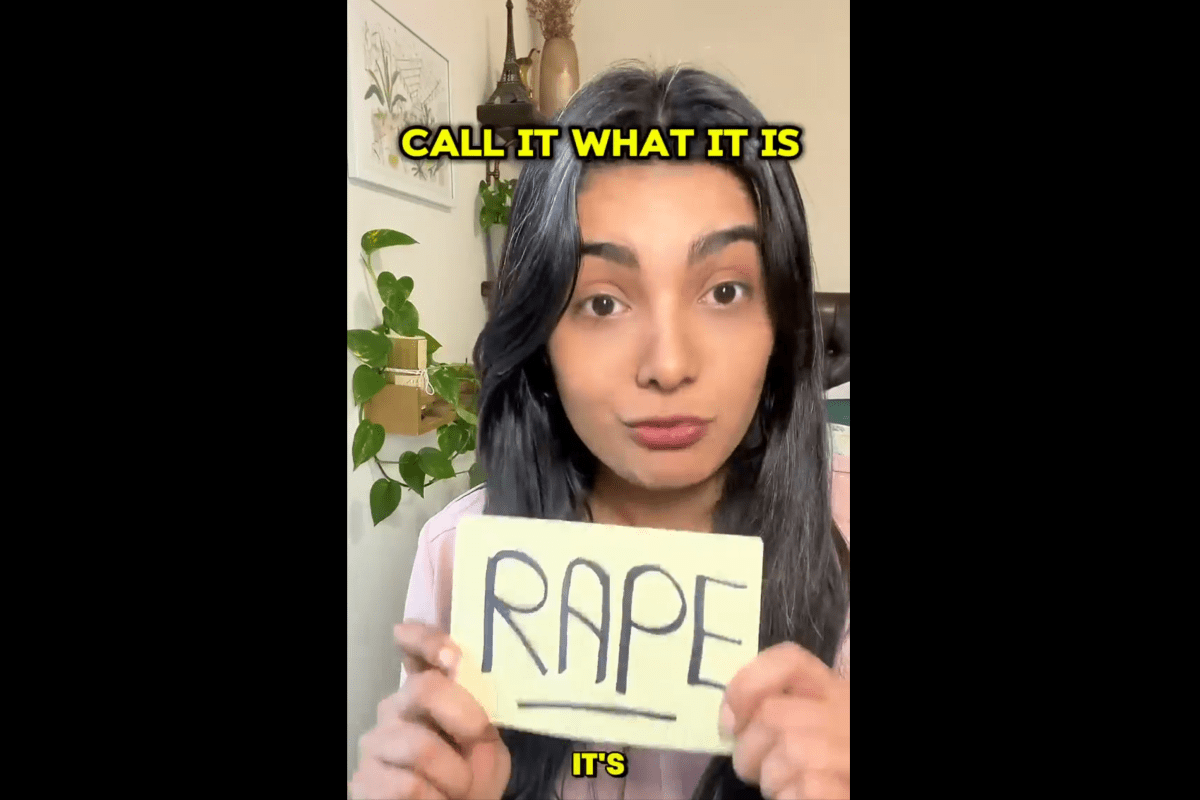
There is a particular kind of video that circulates online with tremendous force. A woman addresses the camera directly.
She is clear, indignant, morally resolute:
- It’s not an ‘inappropriate relationship with a 17-year-old’. It’s rape.
- It’s not ‘coerced sex with a minor’. It’s rape.
- It’s not a ‘young woman’. It’s a child.
- Call it what it is.
Before proceeding, let me state something unambiguously: sexual exploitation of minors is morally reprehensible within contemporary Western legal and moral frameworks. I am not contesting that. Nor am I defending euphemism for its own sake. This is where philosophers of language take a lot of heat.
The question here is narrower and, perhaps, more uncomfortable: What work is being done by the demand to ‘call it what it is‘?
Euphemism and Softening
She is correct in one respect. Institutional language often softens. Inappropriate relationship is anaesthetic. It lowers emotional temperature. It blunts moral outrage. Institutions frequently prefer such language because it reduces volatility, legal exposure, and procedural risk.
Language can minimise. That is not controversial. But it’s only half the story.
Naming Is Not Neutral
When she insists on rape and child, she is not merely removing euphemism. She is installing thick, legally saturated categories.
Rape is not a raw moral atom floating in space. It is a juridical classification defined by statute, evidentiary thresholds, and evolving legal doctrine. Its scope has expanded significantly over time: marital rape was once unrecognised; coercion has broadened beyond physical force; statutory rape collapses questions of consent into questions of legal capacity.
Likewise, child is not a purely biological category. It is a modern legal identity with shifting age thresholds and historical elasticity. The concept has expanded across the last two centuries as education extended, labour laws tightened, and adolescence became socially constructed as a protected stage of dependency.
To say this is not to relativise harm. It is to recognise that categories are historically sedimented and institutionally stabilised.
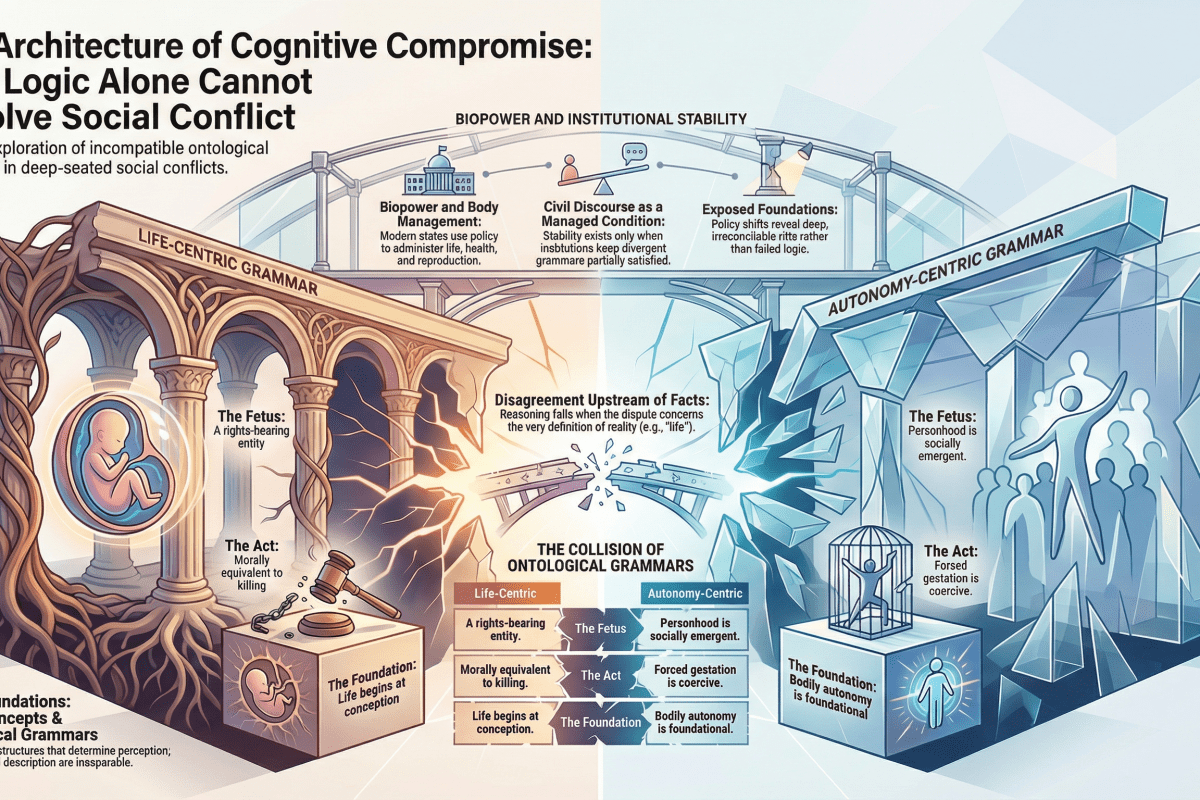
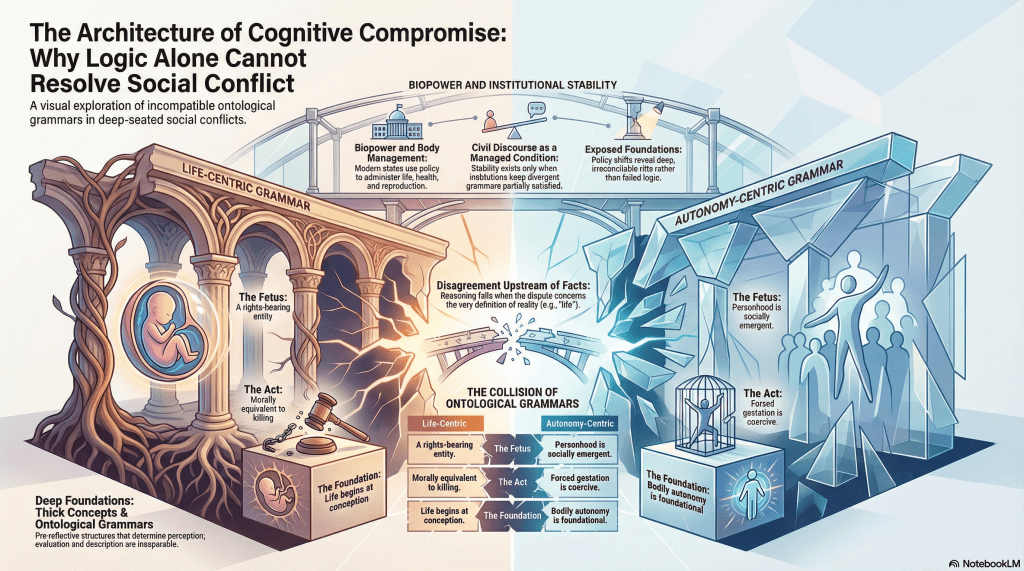
When someone says ‘Call it what it is‘, they are treating these contemporary legal categories as metaphysically self-evident. But they are products of a specific ontological framework: one in which autonomy and consent are foundational, and in which minors are deemed categorically incapable of exercising full sexual agency.
That framework is dominant in the West. It is not universal globally or historically.
Elasticity and Instrumentality
There is another asymmetry worth noticing.
Child expands protectively when someone is victimised. But the same individual may be stripped of childhood if they commit a serious crime: ‘They acted like an adult. They should have known better.’
The boundary is not purely developmental. It is normative. The category flexes.
Similarly, rape operates differently in everyday speech, in moral condemnation, and in statutory law. In the case of statutory rape, the term does not necessarily describe force; it describes the legal impossibility of consent. It is a doctrinal move grounded in an ontology of agency.
None of this weakens moral condemnation. But it reveals that these terms are not merely descriptive. They are instruments of moral and legal allocation.
Power and Irony
There is also a certain irony in the video.
She accuses mainstream institutions of manipulating language to reduce severity. Yet her demand is to deploy one of the state’s most powerful juridical classifications immediately and universally.
Rape derives its force from the same legal apparatus she critiques. It is powerful precisely because it is institutional. She is not rejecting power; she is attempting to redirect it.
This is not hypocrisy. It is politics. But it is politics nonetheless.
Ontology and Universality
The deeper issue is not whether we should condemn sexual exploitation. We should.
The issue is whether contemporary Western legal categories are simply “what is,” or whether they are historically developed ontological commitments that feel self-evident because they have been normalised.
The woman in the video experiences her categories as universal moral Truth. Many viewers agree. That agreement does not make the categories metaphysically timeless; it makes them hegemonic.
Recognising semantic expansion and legal drift does not undermine moral seriousness. It clarifies where moral authority resides: not in eternal linguistic atoms, but in historically stabilised frameworks.
Why This Is Unpopular
Online discourse prefers moral clarity over semantic archaeology. When harm is salient, genealogical analysis sounds like minimisation. Distinguishing between descriptive, legal, and ontological levels is interpreted as evasion.
It is not.
It is possible to affirm moral condemnation while also acknowledging that:
- Language frames perception.
- Legal categories evolve.
- Terms are deployed instrumentally.
- Ontologies masquerade as nature once naturalised.
One can insist on moral seriousness without pretending that our current vocabulary fell from the sky fully formed.
But saying so will reliably lose popularity on the internet.
Apparently, clarity has thresholds.
Full Video Transcript
‘Hey. It’s not an “Inappropriate Relationship with a 17-year-old”, it’s rape.
‘It’s not “coerced sex with a minor”, it’s rape.
‘It’s not “non-consensual sex with a 13-year-old”, it’s rape.
‘Call it what it is! Call them what they are.
‘And while we’re at it, it’s not a “young woman”, it’s a child!
‘It’s not a preteen, it’s a child!
‘It’s not a “mature girl”, it’s a child!
‘This use of specific language by mainstream media is super intentional, and it’s a tool of the patriarchy to try to reduce the egregiousness of horribly egregious acts that men commit against women and girls!
‘And, I say this with full awareness of the irony of my needing to use show and tell to make my point because I am beholden to these stupid social media platforms, which commit violence against women and girls every day in their own right by automatically suppressing any content as soon as I say a particular word.
‘And you and I need to say that it’s absolutely unacceptable!’






 Philosophics