I wrote an experimental short story, the details of which I’ll presently share, but first, I wish to describe an encounter with AI – NotebookLM. Firstly, I want to disclose that I am not an AI hater. Secondly, I understand its limitations. Thirdly, I understand the limitations of language. Fourthly, I understand the limitations of people. Let this set the stage.
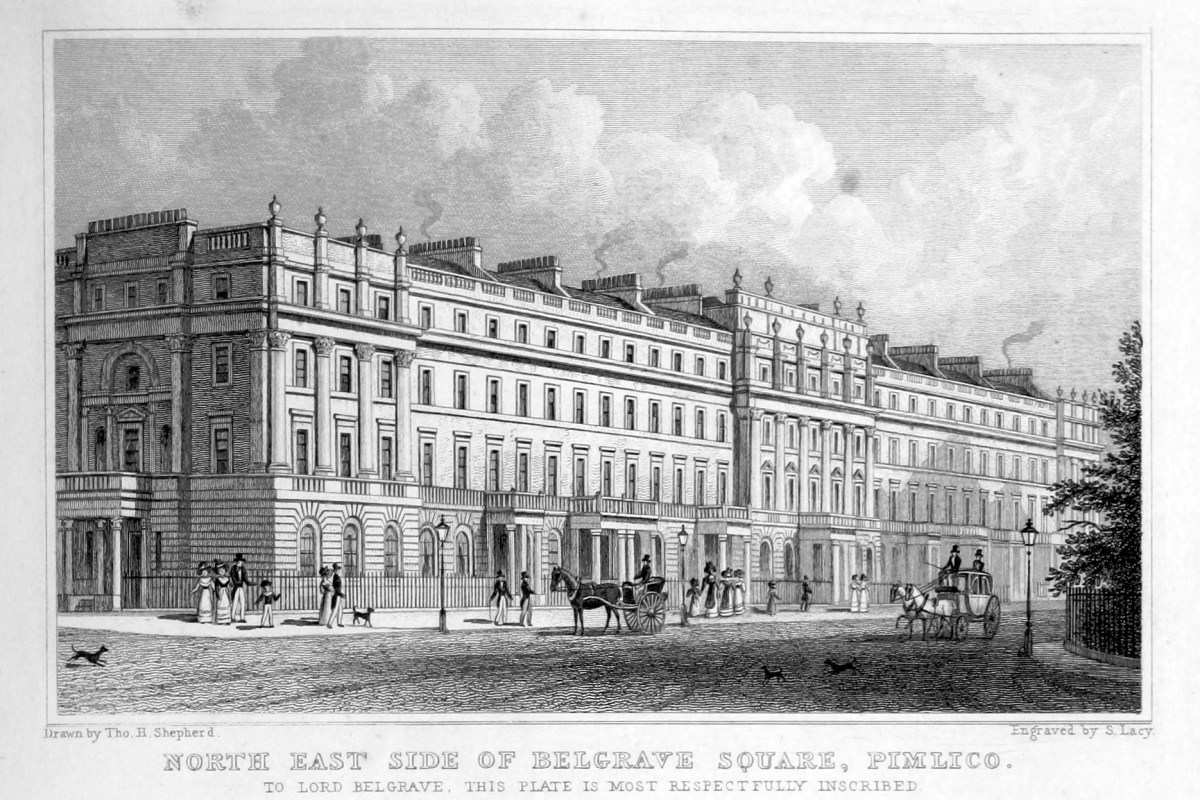
In this short story that I named Advantagement, there is an inspector in Victorian London working with his partner on a missing-person case, the daughter of the mayor. A piece of evidence is a hairbrush left on her dresser. None of this is important for now.
After I wrote it, I posted it to my Ridley Park blog, not intending to share it here, though I had reasons I might have instead. I fed it to NotebookLM to get an AI summary podcast, something I do routinely even here on Philosphics blog. The interpretation led to this post.
I like NotebookLM, but it has its flaws. Some are trivial, some comical. This one is curious and might shed light on how LLMs process information.
Let’s return to the hairbrush. NotebookLM keyed in on the hairbrush as the evidence it was, but then it strayed off the reservation. Suddenly, an ordinary hairbrush was now silver and monogrammed. I had to revisit my manuscript to see if I had subconsciously scribbled these details. Nope. No such description.
I’m not done noting errors, but I’ll pause to suss out the LLM. What I think might have happened is that it took in the notions of a posh house set in late nineteenth century London and presumed that a brush would appear like this. I considered retroactively adding the detail. As a writer, I struggle with deep POV because I don’t experience the world so vividly. But this hallucination isn’t the worst of it.
Next, the LLM noted that the hairbrush was orientated with bristles facing down on her dresser. This was stated in the story. Then, it went off the tracks again. This monogrammed silver hairbrush, bristles down, was a clue because anyone with such an expensive artefact would want to show it off, so showcase the fancy monogram.
But here’s the rub: if the bristles were down, the monogramme would be prominently displayed. To be obscured, it would have been positioned with the bristles facing up. This is a logical error I can’t explain.
Scratch that, I understand full well that LLMs are, by definition, Large Language Models – the acronym is a dead giveaway. These are not logic models, though, I suppose, one might assume one of the Ls stands for logic – Like Large Logic Model or Logical Language model of some such, but one would be mistaken.
What about the story?
I might as well spill the tea on the motivation of the story. Although it is a detective story, this was just a vehicle.
I had been watching this video, ‘Why don’t we have words for these things?‘ I love these guys, even if only for this inspiration.
I thought it might be a fun idea to create a character who speaks in these terms – malformed English. I immediately thought of Mr Burns from The Simpsons and his anachronisms, or someone ripe with malaprops. It suggested that I might choose Victorian England, Sherlock Holmes, a detective, a sidekick… vying for promotion. A high-profile case.
But not Sherlock Holmes – more Inspector Clouseau or Mr Bean, successful in spite of himself. I decided to offset his inanity with a logical partner, but it would be a woman, as unlikely as this might be given the period. Now it’s open to topical management politics.
When I told my sister the story idea, she thought of Get Smart, the 1960s comedy with Don Adams and Barbara Feldon. Yes, that too, but my goal wasn’t comedy. It was satire – and absurdism.
At uni, I enjoyed the short stories of Donald Barthelme. He was generally a lighter version of Kafka, and orthogonal to Kurt Vonnegut, especially Harrison Bergeron, a favourite classic. I wanted to shoot for that.
In conceit to the Peter principle of management, I decided to name the lead character Peter. For the rest, I adopted period-appropriate names.
My primary goal was to employ these confabulated words. In practise, it’s easy anough to suss out their meanings in context. Give it a read. It’s under 3,500 words.



 Philosophics