
Food for Thought: Musings of a Culinary Agnostic

I wouldn’t eat or sleep if I didn’t have to. Let’s talk about eating.

I eat to survive. Some people live to eat; I eat to live. I don’t like food, and I don’t like to eat. These sentiments may share something in common.

I think about my food preferences on a normal curve. Most dishes score a 5 (a T score of 50; just divide by 10 to lose the zero)—give or take. Quite a few are 4s and 6s. A few are 3s and 7s. Even fewer are 2s and 8s, which are virtually indistinguishable from 1s and 9s or 0s and 10s. Ninety-five per cent of all foods fall between 3 and 7; eighty-five per cent fall between 4 and 6, where six is barely OK. My personal favourites tap out at about 7.
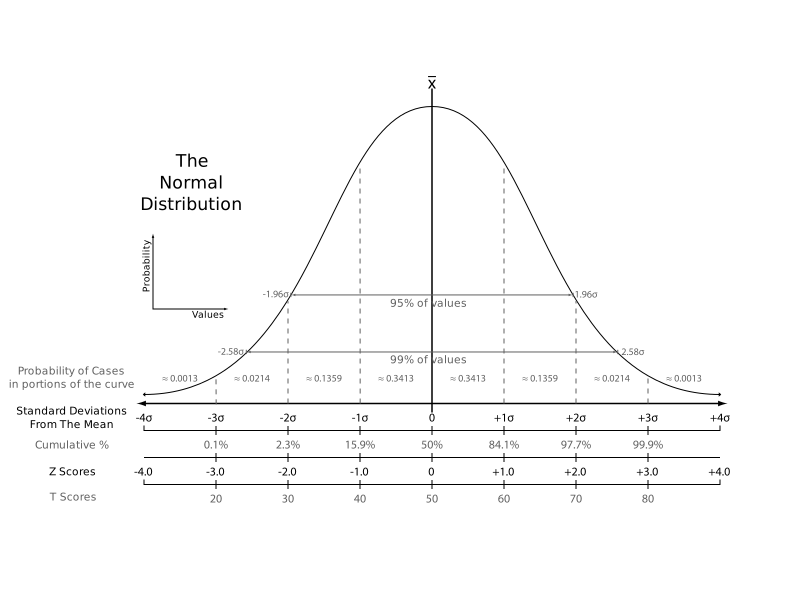
On the low end, once I get to 3, it might as well be a zero. Perhaps if I were at risk of dying, I’d partake. On the high end, an 8, 9, or 10? I wouldn’t know. I’m not sure I’ve ever eaten better than an 8, and that was just once.

You might say my scale isn’t calibrated. Maybe. I think of the food scale as I do the pain scale but in reverse because 10 is worse. It’s difficult to frame the boundaries. Actually, the pain scale is easier.

I was hospitalized for months in 2023. It didn’t so much make me reassess my pain scale as to confirm it. Prior to this visit, on a scale of 0 to 10, I had never subjectively experienced pain above a 4, save for dental nerve pain. During this visit, I had pain approaching if not equaling dental pain—8s and 9s. The 9 might have been a 10, but I was leaving headroom to allow for something worse still.
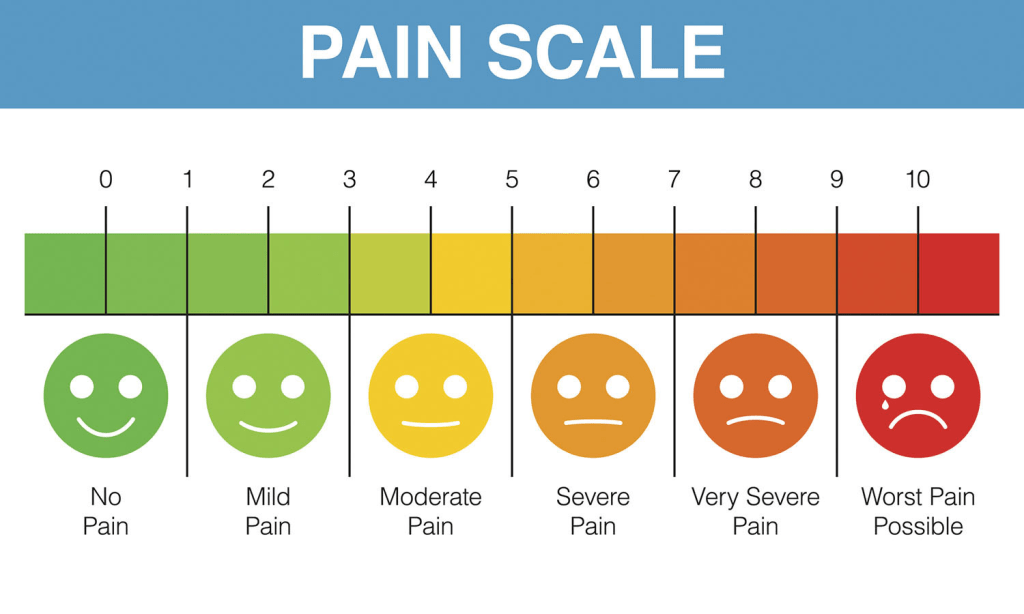
An instructive story involves my wife delivering a pregnancy. She wanted to be wholly natural—no drugs. It only took one contraction to toss that idea aside. She realized that the pain she had registered was beyond her perceived boundaries. Perhaps food is like that for me. I’m not sure I’ll ever experience an analogous event to find out.

Since my typical intake is a 5, it’s not something I look forward to or enjoy. I have no interest in extending the experience. This leads us to mealtimes—another time sink. I dislike mealtime as much as eating. I’m a mindful introvert. I don’t mind people one-on-one, but I want to be mindful. If I’m eating, I want to be mindful of eating. If I am talking, I want to focus on that. I get no pleasure from mealtime banter.

I’ve once experienced a memorable meal, a meal that felt above all the rest. It was at a French restaurant in Beverly Hills. When I returned some months later, it had converted into a bistro with a different menu. The experience was not to be repeated. Besides, chasing happiness is a fool’s errand. I wouldn’t have likely had the same experience even if the second meal was identical to the first, given diminishing marginal returns on pleasure.

Does this mean I don’t like anything? No. It means I might like, say, some pizza more than a burger. For me, most meat is a 5 or below. Chicken might be a 6. Fish is a 3 at best. Chicken prepared a certain way might even break 7, but that’s pretty much the cap—except for that one time I’ve already mentioned.

Trip Advisor: Chicago Favorites Ultimate Food and Walking Tour

Most people I’ve spoken with about this can’t imagine not loving food. When I lived in Chicago, with its foodie culture, they thought I was borderline insane. Does anyone else have a disinterested relationship with food? Let’s defer the sleep topic to another day.

All Claims Are Equal

One of the most prominent strawman attacks of postmodernism and of relativism more generally is the statement countering the claim that all claims are equal.

I know of no one outside those attacking the claim believe this. I’ll give a couple of examples to illustrate why the attack is preposterous — a culinary case and a socio-political case.

The Proof is in the Pudding

Visit a recipe site, and search for macaroni cheese recipes. You’ll get hundreds if not thousands of recipes. Are they all equal? No. It depends on your tastes and preferences…even your audience. There are variations in the type of pasta, the type or types of cheese, whether to add additional ingredients, whether to prepare on the range or baked in the oven, and so on.

For your children, a prĂŞt-Ă -manger out of the box preparation as opposed to the Gruyère and truffles verion you’re reserving for your next soirĂ©e.

Is there a best recipe? No. There are only preferences.

Is there an objectively best recipe? No. There are only preferences.

Can I create any recipe? No. Read on.

And they called it macaroni…

To have a recipe qualify as mac & cheese, there are at least to requirements for inclusion into the domain: Macaroni (or any pasta product or substitute) and cheese (ditto but with cheese products). I’m only pretty sure that no one countering that relativists claim that everything is equal is also arguing that one can make mac & cheese with, say, tacks and bricks. So, one has to question either the intelligence or the integrity of someone assuming someone else would defend this argument. Context matters. And just the choice of a contextual boundary is subjective (and relative).

Good Enough for the Government?

This works for recipes, but what about for government? Obviously Democracy is the best possible form of government because reasons, duh. And people. And agency. And other words I can imagine and associate in my defence.

As with mac & cheese, we need a defined purpose. The problem is that there are not only different purposes, there are different actors, each with their own needs and desires.

At no time is anyone arguing that public policy created by a council of gerbils is the same as that of people or or some artificial intelligence, just as no one is proposing that we throw mac & cheese against a wall in the manner or reading entrails to arrive at a meaningful end. Though, to be fair, given some policy choices I’ve seen, I might have voted for the mac & cheese method.

So, what are you trying to say?

By now a reader should have disavowed the notion that relativists do not recognise domain boundaries. It could be very legitimate for a non-relativist (objectivist?) to call something out as having improper domain boundaries, whether over-specified, under-specified, or just mis-specified, but that’s not the same claim.

A person may justifiably make the claim that such a such is not valid because it does not account for some other absent cohort. Perhaps it leaves out the dead or the unborn, or the animals, or the broader biosphere, if only by proxy. This is not to say that this would be easy or convenient, but it is certainly rational.

Most implemented government systems not only privilege humans over everything else, it virtually excludes everything else. But this is not the main point, which is that if a place and people have a functioning form of government, whether it is better or worse is up to the participants to decide, and there is not likely to be a consensus view. It should always be expected that there will be detractors for any number of reasons. There may be large contingencies of detractors. It could easily be that a government is divided into two worldviews, as in the United States, Canada, and the UK — each side claiming that they’ve got the solution, each side denying relativism in order to defend their version of truth.

Ambiguous Aesthetics

That language is arbitrary is tautological, an analytic claim. It’s true by definition. Structuralists, i.e. Saussure, had known this even before the postmoderns, e.g. Derrida, came into the picture.

Trigger Warning
If sexist perspectives offend your sensibilities, continue at your own risk. This is not meant to offend, rather just to illustrate, but you’ve been forewarned.

Where it might be most apparent is in aesthetics. So, when describing the appearance of a woman in a positive light—I’m a guy, so indulge me, please—, one might describe her by one or more of these descriptors:

Beauty is in the eye of the beholder.

Margaret Wolfe Hungerford
  • Adorable
  • Beautiful
  • Cute (or Kawaii, if you’re into the Anime culture)
  • Gorgeous
  • Handsome
  • Hot
  • Lovely
  • Pretty
  • Sexy
  • A 10 (or something along an otherwise arbitrary if not capricious scale)

Each of these is a term to indicate some aesthetic quality. Each capturing a connotative notion, and of course, beauty is in the eye of the beholder.

Givenchy – Ugly Beauty

Beauty in things exists merely in the mind which contemplates them.

David Hume

I am not going to attempt to illustrate the nuances between these terms. As with any preference-oriented terms, the relationship between and within a given term. What I think is beautiful may not be to you.

What I think is beautiful today, I may not feel is beautiful tomorrow. Speaking in terms of music, there are plenty of songs I thought were ‘good’ when I was growing up, but I don’t like them anymore. Take a look at fashion in the past and how silly it might look now. If you are older, take a look at some pictures of how you dressed in your teens or twenties. You may have felt like quite the chick magnet in the day, and now you cringe and no longer wonder why you spent as many nights alone as you might have.

As a test, gather 100 images of different, say, women—I’m staying with the trend—and rank them from 1 to 100; rate them cute, sexy, whatever. Record your choices. Do this each day for a month and see how steady your choices are. It will be extremely unlikely that there will be no variation no matter how carefully you try to define your classification to remain consistent—and this is just communicating with yourself. Now imagine if you have to consistently convey this to other people.

Cover image courtesy of this article.