The Melian Dialogue, Trump, and the Persistent Fantasy of Fair Play

3–4 minutes

We like to believe the world is governed by rules. By fairness. By international law, norms, institutions, treaties, and laminated charters written in earnest fonts. This belief survives not because it is true, but because it is psychologically necessary. Without it, we would have to admit something deeply unfashionable: power still runs the table.

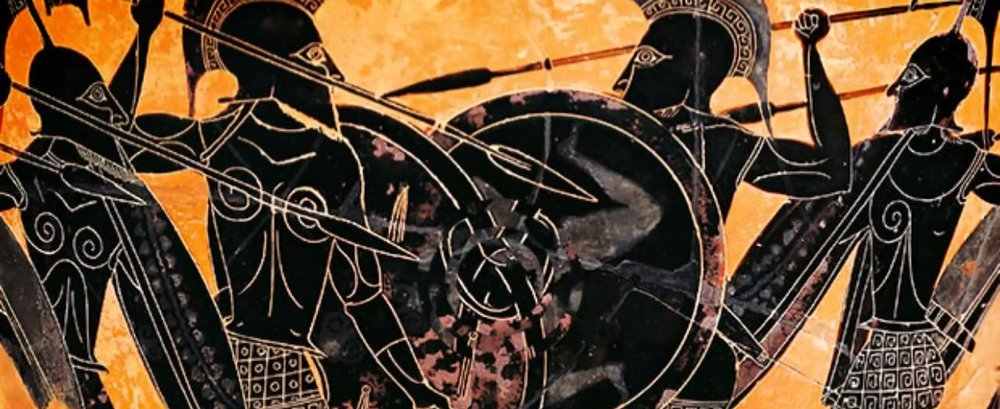
Two and a half millennia ago, Thucydides recorded what remains the most honest conversation in political theory: the Melian Dialogue. No soaring ideals, no speeches about freedom. Just an empire explaining itself without makeup.

Audio: NotebookLM summary podcast of this topic.

Athens, the regional superpower of the ancient world, demanded that the small island of Melos surrender and pay tribute. Melos appealed to justice, neutrality, and divine favour. Athens replied with a line so indecently clear that political philosophy has been trying to forget it ever since: ‘The strong do what they can and the weak suffer what they must’.

That sentence is not an ethical claim. It is a descriptive one. It does not say what ought to happen. It says what does. The Athenians even went further, dismantling the very idea that justice could apply asymmetrically: ‘Justice, as the world goes, is only in question between equals in power’.

This is the part liberal internationalism prefers to skip, usually by changing the subject to institutions, norms, or aspirations. But the Athenians were being brutally honest. Appeals to fairness only work when neither side can impose its will outright. When there is a power imbalance, morality becomes theatre.

The Melians refused to submit. They chose honour, principle, and the hope that the gods would intervene. Athens killed every Melian man of fighting age and enslaved the women and children. End of dialogue. End of illusions. Fast-forward to now.

In early 2026, under Donald Trump, the United States launched a military operation against Venezuela, striking targets in Caracas and forcibly detaining Nicolás Maduro, who was transported to the United States to face federal charges. The justification was framed in familiar moral language: narco-terrorism, stability, regional security, democratic transition. The accompanying signals were less coy: temporary U.S. administration, resource access, and ‘order’. Cue outrage. Cue talk of illegality. Cue appeals to sovereignty, international law, and norms violated. All of which would have been very moving… to the Athenians.

Strip away the rhetoric and the structure is ancient. A dominant power identifies a weaker one. Moral language is deployed, not as constraint, but as narrative cover. When resistance appears, force answers. This is not a deviation from realism. It is realism functioning exactly as advertised.

Modern audiences often confuse realism with cynicism, as if acknowledging power dynamics somehow endorses them. It does not. It merely refuses to lie. The Melian Dialogue is not an argument for empire. It is an autopsy of how empire speaks when it stops pretending. And this is where the discomfort really lies.

We continue to educate citizens as if the world operates primarily on ‘shoulds’ and ‘oughts’, whilst structuring global power as if only ‘can’ and ‘must’ matter. We teach international law as though it binds the strong, then act shocked when it doesn’t. We pretend norms restrain power, when in reality power tolerates norms until they become inconvenient.

The Athenians did not deny justice. They reclassified it as a luxury good. Trump’s Venezuela operation does not abolish international law. It demonstrates its conditional application. That is the real continuity across 2,500 years. Not cruelty, not ambition, but the quiet consensus among the powerful that morality is optional when enforcement is absent.

The lesson of the Melian Dialogue is not despair. It is clarity. If we want a world governed by rules rather than force, we must stop pretending we already live in one. Appeals to fairness are not strategies. They are prayers. And history, as ever, is not listening.

Dune: Prophecy – Eugenics, Lies, and Weak CGI

So, you watched Dune: Prophecy episode 1 on HBO Max. Congratulations on your bravery. Let’s face it—Dune adaptations are a minefield. Remember David Lynch’s Dune? Of course, you do because it’s impossible to unsee Sting in that ridiculous winged codpiece. And whilst Denis Villeneuve’s recent entries managed to elevate the franchise from high-school drama club aesthetics to actual cinema, they also came dangerously close to being too good—almost like Dune took itself seriously.

And now, here we are, back on shaky ground with Dune: Prophecy. Sure, the first episode was watchable, despite some environmental CGI that looks like it came out of a Sims expansion pack. But this isn’t a film review channel, so let’s dive into the show’s actual content—or, as I like to call it, The Philosophy 101 Drinking Game.


Eugenics: Creepy, Even by Dune Standards

Ah, eugenics. Nothing screams cosy sci-fi night in like a narrative steeped in genetic elitism. The Bene Gesserit’s obsessive fixation on a “pure bloodline” takes centre stage, making you wonder if they’re auditioning for a dystopian version of Who Do You Think You Are?. Creepy is putting it mildly. It’s all very master race, but with better posture and less obvious moustaches.


Righteousness vs. Power: The Valya Harken Show

Valya Harken is an enigma—or perhaps just your classic power-hungry sociopath cloaked in the silky veil of duty. Is she righteous? Maybe. Is she using morality as a smokescreen for her own ambition? Absolutely. Watching her wrestle with her supposed “deontological duty” to the sisterhood is like watching a cat pretend it cares about knocking over your wine glass. Sure, it’s interesting, but it’s also patently obvious there’s an ulterior motive.

Her quest for power is unmistakable. But here’s the kicker: the sisterhood needs someone like her. Systems, after all, fight to survive, and Valya is just the ruthless gladiator they require. Whether her motives are noble or nefarious is irrelevant because survival trumps all in the Dune universe. Her arc underscores the show’s recurring obsession with false dichotomies—righteousness versus calculated ambition. It’s not “one or the other,” folks. It’s always both.


Progress as a Façade

Progress, Dune-style, is a beautifully brutal illusion. One group’s advancement always comes at another’s expense, a message that’s summed up perfectly by the episode’s pull quote: “Adversity Always Lies in the Path of Advancement.” In other words, progress is just oppression with better PR. It’s a meta-narrative as old as civilisation, and Dune leans into it with an almost smug glee.


Lies, Manipulation, and the Human Condition

If humanity’s greatest weapon is the lie, then the Bene Gesserit are armed to the teeth. For a group that claims to seek truth, they certainly have no qualms about spinning elaborate deceptions. Case in point: the mind games encapsulated by “You and I remember things differently.” It’s a phrase so loaded with gaslighting potential it should come with a trigger warning.

This manipulation isn’t just a tool; it’s the cornerstone of their ethos. Truth-seeking? Sure. But only if the “truth” serves their interests. It’s classic utilitarianism: the ends justify the means, even if those means involve rewriting history—or someone else’s memory.


Fatalism, Virtue Ethics, and the Inescapable Past

The Dune universe loves a good dose of fatalism, and Prophecy is no exception. The idea that “our past always finds us” is hammered home repeatedly as characters grapple with choices, bloodlines, and cultural memory. It’s as though everyone is permanently stuck in a Freudian therapy session, doomed to relive ancestral traumas ad infinitum. In this world, identity is less a personal construct and more a hand-me-down curse.


Self-Discipline and Sacrifice: The Dune Holy Grail

Finally, we come to self-discipline and sacrifice, the twin pillars of Dune’s moral framework. Whether voluntarily undertaken or brutally enforced, these themes dominate the narrative. It’s a trope as old as time, but it works because it’s relatable—who among us hasn’t sacrificed something important for an uncertain future? Of course, in Dune, that sacrifice usually involves something more dramatic than skipping dessert. Think more along the lines of betraying allies, murdering rivals, or, you know, manipulating an entire galaxy.


The Verdict

Dune: Prophecy has potential. It’s rich in philosophical musings, political intrigue, and that uniquely Dune blend of high drama and existential dread. Sure, the CGI needs work, and some of the dialogue could use an upgrade (how about less exposition, more nuance?), but there’s enough meat here to keep you chewing. Whether it evolves into something truly epic—or collapses under the weight of its own ambition—remains to be seen. Either way, it’s worth watching, if only to see how far humanity’s greatest weapon—the lie—can take the sisterhood.