Ownership and Democracy

A Facebook friend is pushing for the adoption of a new phrase: red washing, where it indicates a false sense of ownership and control. This friend has collectivist leanings, so perhaps that’s where the red comes from. It doesn’t make logical sense to me, but rather than focus on the phrase itself, I want to discuss the sentiment and intent. Essentially, his contention is that some forms of ownership don’t offer the same sense of control as others. If I own a car, or a pencil, it’s mine to do with it what I please. But if I only own a piece of something, my control diminishes. This is especially true where my ownership is a minority share.

The first mistake my friend makes is to presume that ownership and control are one in the same. I don’t feel we need to discuss the case where the State controls the limits of any ownership. You can own property, but what you can construct on it is limited by zoning laws and perhaps community guidelines. You can own a car, but you can’t drive it on public roads at 200 MPH, or paint it like a police car affixed with blue and red lights. You can’t stab your neighbour with the pencil you own. And you can’t own or even possess heroin under normal circumstances. I feel that these ownership restrictions are obvious. These are aspects of control ceded to the State. Some Libertarians may baulk, but for the most part, these are generally accepted limitations.

My interest here is the notion of diluted ownership. This really underscores the difference between ownership and control. A simple illustrative example is a publicly traded company. One can own a share in that company, but ostensibly, this gives you no control. If one holds a million shares, maybe they have a voice. If one has a majority share or can create a coalition to compose a majority share, one ostensibly has control. Otherwise, although your ownership may grant you other advantages, control is not one of them. One can benefit by price increases in the marketplace, perhaps collect dividends, and you can cast your proxy vote, but these don’t represent control.

Likewise, this is how democracy operates in practice. One has a vote. Theoretically, it’s one person, one vote—one vote per person. Though in the United States this is the system de jure, not de facto system, where it’s closer to one vote per dollar.

Consider the United States. In 2020, there were 239,000,000 eligible voters. Each eligible voter is an owner of this democracy or republic. Pick your poison. Effectively, this means that one’s ownership share affords them 1/239,000,000 control. This wouldn’t even qualify as homoeopathic, and that’s a pretty low bar.

Dehydrated Water

I’ve commented elsewhere on how democracy is a specious proposition. That it only provides an ‘illusion of control‘. This is fine for the power structure. All they need to operate is to maintain this illusion and for the people to defend their voiceless voices.

Of course, the Republican flavour of Democracy is even worse. Not the Republican party. The sense of representative democracy over direct democracy or even anarchy. Republicanism adds a principle-agency challenge to it’s already weak-tea proposition.

And all I have is a keyboard.

Metanarrative Problem

Audio: Philosopher Bry Willis discusses this topic.

Postmodernism was summarised by Lyotard as having an incredulity toward metanarratives.

What does this mean? What are metanarratives, and why harbour incredulity toward them?

Audio: NotebookLM podcast on this topic.

Metanarratives are narratives. Stories presented through a lens with a certain perspective. These stories provide a historical account of how a culture arrived to where it has. They can be viewed as origin stories. Metanarratives are also teleological, as they provide the foundation to progress, to advance the culture to a better future. Embedded in these metanarratives are the rules and conditions necessary to navigate, both from the past and into the future.

We’ve got stories. In his book Sapiens: A Brief History of Humankind, historian, Yuval Noah Harari tells us how important stories are for having made human progress. Hooray for us!

This sounds good so far. Right? We’ve got Caesar, Cornwall, and Kahn. We’ve got triumph of us over others. Good prevailing over evil. Right over wrong. So why the incredulity?

Let’s keep in mind that Lyotard is suggesting incredulity and not rejection. The narrative could be fine and accurate enough. One might argue that the benefit of the narrative for the purpose of cohesion outweighs the detriments posed.

There are several notable problems with metanarratives.

Firstly, the past suffers from a cherry-picked survivorship bias. The story threads that don’t support the narrative are abandoned, and some threads are marginalised. So, there’s a dimensional problem. As with any historical account, one needs to adopt a perspective and create a story. Let’s not forget that the word history comes from the word story. In fact, French only has one term: l’histoire. History is story.

Secondly—and this is somewhat related to the survivorship bias problem—, is that we privilege the perspective we take to view this history. In his book, We Have Never Been Modern, Latour uses this line of argumentation to arrive at the conclusion that we have never been modern. It is only because we are here now and surveying history through a rearview mirror that we can even look into the past. And we feel that we have somehow overcome this past. The past was primitive, but we are modern. Some time in the future we’ll deservedly be viewed in the same light because that’s how progress works. But there is no reason to accept this privileged assignment. It’s a function of ego—and to be even more direct: hubris.

Lastly, there’s the issue of teleology. Through this privileged vantage, we orient toward some alleged destination. Like fate, it’s just there for the taking. The only barriers are time, not keeping your eyes on the prize, and not following the rules to get there. There’s an embedded deontology. Those other societies don’t understand what it takes. You need to follow this path, this religion, this sports team. Because this is the best there is.

But there are no crystal balls. We cannot divinate the future. There is no particular reason to believe that our imagined path is the best path. If you don’t believe this, just ask the culture next door.

I’d like to think that somehow Progressives would be more aware of this tendency—and perhaps in some sense they are, but it’s not very apparent pragmatically. I don’t want to get distracted by the notion of institutionalism, but that is evidence of taking a privileged position regarding the status quo—even if your vision of the future would take a different path than your more conservative brethren and sistren.

In closing, this has been a summary of the problem postmoderns have with metanarratives. It could be that the metanarrative you believe to be valid is valid. It could be that your religion is the true religion. It could be that your sports team is the best sports team. That your system of government is the best of all other alternatives. It’s more likely that you’ve convinced yourself that these things are true than them being true.

We can either adopt the perspective of Voltaire’s Dr Pangloss and consider our world to be the best of all possible worlds, or we can step back and consider that we haven’t exhausted all of the possibilities.

Opiates of the Masses

No, really.

Memories are fallible. I’d thought I had written on this topic of opiates and public policy at length. And perhaps I have. Just not here. Perhaps that’s a good thing. Searching my blog for my take on opiates, I find that I cite Marx’s ‘Religion is the opiate of the masses‘, four times—make that five. But nothing more.

Carl Hart recently published a book on his heroin use—Drug Use for Grown-Ups: Chasing Liberty in the Land of Fear. By some accounts, Carl might appear to be the stereotypical heroin addict in the United States. Well, he’s black, so there’s that. But that’s where the stereotype ends.

Carl Hart is a professor of neuroscience in the psychology department of Ivy League, Columbia University—at least before he published his book. I’ve not read his book, but at my blog I’ve provided a link to the Guardian article, which prompted this post.

The gist I get from having read the Atlantic article is that the public health narrative surrounding heroin and other illicit drugs is akin to the hype of the days when Reefer Madness was all the moral outrage. And make no mistake—this outrage has everything to do with moral one-upmanship and nothing to do with health outcomes. This is pure and simple cultural performativism signalling the higher ground one occupies. As is common enough, many people have actually internalised their misinformation and disinformation to the point they truly believe there is a medical basis to their belief systems. If they are at all introspective, they would see that morals and Calvinism have nothing to do with this purported health care policy. It’s a seemingly reasonable, logical place to arrive. No emotional element is necessary.

But allow me to step back for a moment. Am I saying that there are no possible harmful effect for consuming drugs and other chemicals? No. Am I claiming that no one has ever died as a result of chemical intoxication or overdose? No, again. Am I saying that drug abuse does not incapacitate some people? Nope. I am saying none of the above. I am claiming that hyperbole abounds, the causal connection is overattributed, and cofactors are ignored in favour of an orthodox etiology.

For the record, I am a teetotaler. I do not abuse or even use chemicals referred to as drugs—illicit or otherwise. I don’t drink alcohol, don’t smoke cigarettes. I don’t even drink coffee or covfefe. I do drink Coca Cola, so my big vice in this regard is caffeine. Even rarely do I take ibuprofen or acetaminophen.

As I note in my Defence of Capitalism post, it’s difficult to get good second-hand information of illicit drugs. The medical-industrial complex and the official police state peddle fear and disinformation. Whether they believe the information they dispense is true or not is irrelevant. What is important is the low truth content. It makes one wonder what to trust and what not to when these agencies routinely propagate falsehoods and misrepresent truth.

This misrepresentation isn’t limited to opiates. I found it interesting when Michael Phelps won gold at the Olympics, only to announce that he was the consummate pothead, and smoking weed was part of his daily routine. Here’s what the official Olympics website says about him, by the time he retired at Rio 2016 at the age of 31, Michael Phelps had collected a total of 23 golds, three silvers and two bronzes at the Olympics, a record-breaking haul that looks unlikely to be bettered for many years to come. So much for the lazy stoner stereotype. As marijuana becomes more accepted by mainstream culture, we come to notice that many of the so-called mental health issues were just fabricated. The purpose was to shroud a moral argument in medical legitimacy. Whether the healthcare industry was complicit or it was the law enforcement regime gone rogue is a separate question. Yet again, it undermines the legitimacy of any claims.

In 2020, the world encountered the Coronavirus, COVID-19. And medical expertise, particularly around immunology and the spread of pathogens, came into question. In the United States and United Kingdom, their misinformation was further exacerbated by administrations hostile to science. But given the history of misinformation for political purposes, it may be premature to blame the general public for being reluctant to trust the alarms. They’ve created the classic Boy Who Cried Wolf scenario. And so the question becomes what health information can one trust? And who is the authoritative source?

Listen to this as a podcast on Spotify

Insurrection Bandwagon

There was a recent insurrection at the United States Capitol building in Washington, DC. I won’t take any more time discussing whether this is hyperbole or real. In the end, it doesn’t matter. It’s not relevant to the solution.

From the perspective of propaganda, it’s been an effective message. It’s gotten Trump haters and supporters to view Trump as a common enemy—some of them anyway. Some people and entities can’t performatively distance themselves fast enough or scapegoat him loudly enough.

Whilst I do feel that much of the hullabaloo is performative, I’m not going to focus on the performative aspect. This serves to amplify, but it’s not the central message. Instead, I’d like to frame this through the lens of René Girard’s mimetic theory of conflict and resolution.

Adopting Girard’s vantage, we can see each of mimetic desire, scapegoating, mimetic crisis, ritual, sacrifice, and culture.

Mimetic Desire

In a social context, mimetic theory is about creating in-groups and out-groups—and intentionally so. Groups have rules, by which membership is governed. Symbols are employed to amplify belonging and compliance. At it’s core, mimetic desire employs mimesis—imitation. Monkey see, monkey do.

Here, society is the prevalent in-group. From their perspective, this is the us of the in-group versus the them of the out-group. Girard noted that us versus them is evident in many contexts—whether in the wild or otherwise—, and it can be exploited. It’s about creating a flag to rally around—in this case literally, figuratively speaking.

The mechanism of mimetic desire is to coalesce the focus on some object. From the positive dimension, the desire is to belong, but mimetic desire doesn’t have to be positive. As in this case, it can be negative. The masses have assembled for a common cause of vilifying one Donald J Trump.

Mimetic Crisis

The insurrection is the mimetic crisis. It broke the rules. It’s unclear how all of the many rules that were broken in the four preceding years were able to fly under the radar. To some extent, the US government is constructed of two nearly equal in-groups. They each belong to the institution of institutionalised government and so-called Republican ideal as an expression of modern Democracy. They share some common beliefs, but this sharing diverges dimensionally and methodologically. The telos are multi faceted, and each group prefers different facets—and the facets desired by the public are different still.

At first—to borrow from Kübler-Ross—, there was denial by the Trump-aligned party of sycophants. These Trump-aligned Republicans (read: Neoconservatives; UK: Tories) were also aligned with the outgroup, leaving them vulnerable to ostracism. Meanwhile, the Democrats (read: Liberal/Neoliberal; UK: Labour) secured the moral high-ground and control of the larger in-group. They painted themselves as the adults wearing big boy trousers (over their Pull-Ups).

Scapegoating

Scapegoating is instrumental in mimetic theory. It’s a mechanism to build solidarity and cohesion through exclusion. Narratively, it operates to distinguish acceptable behaviour versus unacceptable. In almost all instances, scapegoating is an object to project blame.1 The remaining members have received the signal.

Here, we have two entities to scapegoat 2: the insurrectionists and the Instigator in Chief, soon to be ex-president, Donald Trump.

Ritual

Ritualistically, scapegoats need to be bear the brunt of the anger of the in-group and associated friends and family. There are procedures to follow. These rituals play out in the House in the form of impeachment, and in the Senate in the form of conviction. For the uninvited guests, the traditional court system ritual

Part of the outrage is performative ritual. Certain entities are checking the boxes suggested by their PR teams. These same entities had nothing to say for the past four years as they’ve enriched themselves at the expense of the American public and world, but this was the last straw. They vowed to cut off support and funding —until they don’t, but by then no one will be any the wiser. People have both short attentions spans and memories.

There is no requirement whatsoever that rituals produce anything. As hard work is its own reward, ritual for the sake of ritual is all that’s necessary. Rituals needn’t be authentic or heartfelt. Simply mime the parts, and you’re all set. Plus, you get full credit—participation points just for playing.

Sacrifice

One ritual is to sacrifice the goats, but we need only exile the offending members. In Christian lore 3, there are actually two goats—a sacrificial goat and an emissary goat—the scapegoat. The sacrificial goat is, obviously, sacrificed—burnt offerings—, but the emissary goat was released into the wilderness, taking with it all sins and impurities. This is the excommunicated, the shunned.

Culture

Where performatism really comes in, is cultural signalling. People and other entities work overtime to signal they are on the winning side. This includes everything from Oscar-winning performances to cringeworthy Razzie-candidates. Those in the public eye tend to go overboard. It’s good to remember that an empty vessel makes the most noise.


  1. The notable exception to this scapegoat-blame relationship is the Christian Christ myth, where Jesus acted as a scapegoat but was without blame.
  2. Trump and the Scapegoat Effect, The American Conservative, David Gornoski, September 1, 2016.
    An interesting article discusses the Trump-scapegoating phenomenon that also mentions René Girard’s work.
  3. Leviticus 16:21–22

Parlez-vous Parler?

Amazon is threatening to pull the plug on Parler because of the content of its users. Google Play and Apple Store are pulling the Parler app from their offerings. These are private corporations and so are allowed to choose who they allow on their platforms, but these are dangerous grounds to tread. And it’s all too easy to fall into the mass hysteria—performative or otherwise—and let the mob rule.

Parler is a joke, but make no mistake this is the epitome fascist oligarchy and oligopoly. This is a concerted power play by the power brokers. The powers that be of the oligopoly are some of the same players as those of the oligopoly. And there is no mistaking the powers. They have the power to silence the president of the United States of America.

Olly, olly oxen free.

Let’s end-run around net neutrality.

Believe me. I feel that Donald J Trump is a vile person and a poor excuse for a human being. Viscerally, I wish they had silenced him 4 years ago—or 40, give or take. But this is clearly a shot over the bow.

A parallel in the public sector might be the way they got their foot in the door with income taxes back in the day. To pay for World War I, the US needed cash. Taxes are an easy scheme, but at the time most government operations were funded through tariffs, excise and use fees, and property taxes.

Taxing income was illegal, so there was a dilemma. But this dilemma had an easy solution. Let’s make incomes taxes legal, and we can tax the richest Americans the fair and modest amount of 1 per cent of income. The common man wouldn’t even notice.

Once taxing income was legal, the trojan horse having successfully breached the fortress, it was only a short while before the rates rose above 1 per cent and the tax base expanded to everyday workers, even as the wealthy moved away from an income-based existence to a capital gains-based one.

This is a textbook slippery slope.

Ferme-la!

My question is how does one get from ‘I disapprove of what you say, but I will defend to the death your right to say it’ to ‘Ferme-la!’ so easily?

I disapprove of what you say, but I will defend to the death your right to say it.

Evelyn Beatrice Hall (Misattributed to Voltaire)

In the end, this is playing to emotion, leveraging mass hysteria and outrage, performative and otherwise.

I’ve got too many distractions happening to finish with the exposition, so here’s a short list of reference stories I intended to reference.

Bonus

The End

Watch Dogs: Legion

I’m not a gamer. OK, so I have been known to play some games, but I’m not very good at them and don’t justify committing any significant time improving my playing skills. Besides, I’m fairly occupied outside of the gaming experience. Part of it, I think, is that games I don’t identify with the experience gaming offers. Driving games? No. Flying games? Nope. Shooting games? Nah. Puzzle games. For a few moments, then naw. Building games? Farming games? Role play games? Not so much. That said, many friends and associates play games, so I remain somewhat aware and occasionally participate badly. My son plays certain games, so I am aware enough to allow for a communication thread in the same way I am somewhat conscious of sports because my brother steeps himself in sports. But in practise, I couldn’t tell you the difference between Marcus Rashford and Alex Verdugo.

All of this said, I come upon a piece from a few months ago. Ultimately, it reads like a philosophy on gaming. In the piece, the author, Austin Walker reviews Watch Dogs: Legion and explains why it doesn’t live up to its meta potential. I haven’t played any of the Watch Dog games and might not ever, but his point seems to be that they had the best talent and could have been edgy, but they didn’t. He offers some possible solutions on the edge, but he leaves a fuller solution to the game makers.

For those unfamiliar with the context of Watch Dogs: Legion (as I was), it’s a collaborative anti-establishment game. It promises to rail against the oppressive, ultraconservative, fascist powers through collective action, but as Walker writes, this activity is performative. In the end, nothing changes beyond some superficiality.

Perhaps, this, itself, is the commentary: Nothing changes except at the margins, but I don’t think this was the intent. Instead, it’s about a place to redirect one’s anger and frustration, except there is no resolution. Perhaps it’s supposed to be more about the journey than the destination, but I’m not buying that either.

In any case, rather than summarise Walker’s work, I link to it to speak for itself. And despite its deficits, it still feels it reserves a space not yet occupied by other properties yet, so a little more imagination could inch it into just the right place.

Ref: https://www.vice.com/en/article/pkdy5y/watch-dogs-legion-review

For the record, the last game I enjoyed playing with friends was 7 Days to Die, which I’ve played on and off since 2013 or so. It’s come a long way since it was first released. Interestingly, it’s still in Alpha—some 8 years later, so I’m not sure what that even means anymore.

Institutionalised

This LA Times Op-Ed piece, Why so many people want to believe the election was stolen, got my mind wondering

The United States have seen ‘stolen elections‘ before, but the last time this happened in a presidential election—hanging chads, and all—, Al Gore was on the losing end of a misguided Supreme Court decision that landed George W Bush into the Whitehouse. This time, we see Donald J Trump on the losing end and Joe Biden running the victory lap—except Trump was running a victory lap himself until the weight of reality stalled him.

Gore is an Institutionalist.

Many Gore supporters felt upset (and somewhat betrayed) as he conceded the election to Bush. Gore is an Institutionalist. For all of their hubris, some politicians still see the institution as a higher power greater than them. Al Gore is one of these. Despite all of their faults, most of the past presidents have been institutionalists—systemists. One of the benefits of the US system is a peaceful transfer of power. To preserve a system, proponents need to maintain the mythos of that institution.

Gore said that he fought the good fight, but by the rules of the system, he lost. Not different to a court case lost on technical grounds rather than merit, he sucked it up and demurred to the system. It may not be perfect, but it works.

Trump is not an institutionalist.

Enter Donald Trump. Trump is not an institutionalist. He is entirely self-serving—a narcissist in pop-psychology vogue. He makes no qualms about disparaging the system. He seeded the fraud argument just to be able to say, ‘I told you so’, in the event of a loss. And so he did.

— Fin —

Donald J Trump, like others before him—Homer J Simpson, Barney J Rubble, Forrest J Gump?—is a simple man—a simpleton. George W Bush was another. Many of their followers are simple, too, though not all are simpletons. They just want to believe. It’s human nature.

I am not an institutionalist, but I understand the comfort zone institutions provoke. And beyond nostalgia, there can be a certain benefit to institutions. For one, it’s easier to navigate charted territory. So, whilst I don’t have a horse in the institutional race, I can see how one’s disposition towards can be a factor in how it treats it.

— Bumper Trailer —

What Reason?

Any system built on the presumption of widespread capacity for reason is bound to fail. The ability for most humans to ‘reason’ is clearly abridged and homoeopathic. And this is before one factors in cognitive deficits and biases. This is separate from sense perception limitations.

Nietzsche was right to separate the masters from the herd, but there are those in both classes with these limited capacities, though in different proportions.

People are predictably irrational

In economics, we have to define reason so narrowly just to create support the barebones argument that humans are rational actors—that given a choice, a person will take the option that leaves them relatively better off—, and even with this definition, we meet disappointment because people are predictably irrational, so they make choices that violates this Utilitarian principle. And it only gets worse when the choices require deeper knowledge or insights.

Democracy is destined to fail

This is why democracy is a destined to fail—it requires deeper knowledge or insights. The common denominator is people, most of whom are fed a steady diet of the superiority of humans over other species and lifeforms and who don’t question the self-serving hubris. They don’t even effectively evaluate their place in the system and their lack of contribution to it.

To the masters, who are aware of the limited abilities of the herd to reason, it seems like hunting fish in a barrel. If we convince the herd that they have some control over their destinies, that’s as far as it needs to go, but among the masters, there are subclasses, so people in these factions are also vying for position, so each employs rhetoric to persuade herd factions.

No one is sheltered from the limitations of reason

To the people out reading and writing blogs and such, confirmation bias notwithstanding, they may more likely to be ‘reasonable’ or able to reason, but try as they may, no one is sheltered from the limitations of reason.

More on this later…

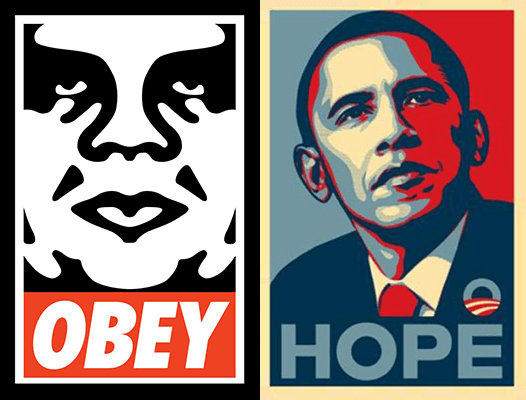
Hopeful Rhetoric

My base belief is that what people believe is their truth, and rhetoric is a primary way to convince them. Part of the rhetorical mechanism is to introduce evidence, but this, too, is shrouded in rhetoric.

I’m not talking about the evidence that ‘standard’ water boils at 100°C at sea-level. This is tautological. Water is defined as H₂O. Literally, 100°C is the definition of where water boils under these conditions.

But things that cannot be repeated in controlled environment with the ability to alter parameters within the environment rely on rhetoric. This is why Newton’s laws seemed som compelling until a new narrative (somewhat) supplanted it. Still, this is not the point I want to make. I want to concentrate on the socio-poliotical domain.

I feel that given two equally viable explanations, the one offering more hope will prevail. Donald Trump knows this. This is why in the midst of the COVID-19 pandemic, he railed at a presser how he chastised a reporter for questioning his (false) narrative of hope. Politics relies on more than one rhetorical thread, and many already have the disposition of reviling Trump, so any messages from him are discounted at the start.* But, ceteris paribus, if a person assesses two equally probable outcomes—a typical door number 1 or door number 2 scenario—, and (for whatever exogenous reason) hope is associated to particular door.

In a survival scenario, perhaps you are one of three people lost in a cave and there are two possible paths forward. One person asserts that s/he feels that—without evidence—the left path is best way out but adds logically there is no way to tell, that you might as well flip a coin. The other person confidently conveys that s/he knows—without evidence—that the right path is the path to salvation. Being otherwise indifferent, you are likely to acquiesce to the second person, the one who offers hope over logic.

I fully admit that this is 100 per cent fabricated whole cloth from thin air, but the reason I come to this point is when you compare atheists to theists, anarchists to statists, nihilists to Existentialists, and any such analogic pair, the right side gets more traction and requires much more evidence to sway people to the left.

So when Occupy Wall Street (effectively anarchists) made demands, the status (read: the general population) asked ‘Who’s your leader?’ When the media-industrial complex broadcast this, the public was immediately sympathetic to the structured system. This is slightly different in that it’s not necessarily hope, rather a comfort zone—an endowment effect. It’s a benefit accruing to the incumbent.

My point is: hope floats. It acts to buoy otherwise rhetorically equivalent arguments. Or perhaps hope is simply an employed rhetorical device, so it’s unnecessary to call it out. Now, I’ve convinced myself to adopt this position.

* This is why ad hominem attacks can be effective, as persons swayed by the attack discount messages delivered by this person despite there not being a necessary connection between the grounds for debasement and the claim being asserted.

Democracy à la Carte

I’ve been pondering the notion of democracy. This is not new for me. I’ve looked around and asked myself, ‘If democracy is so great, why is it not more widely adopted’. I don’t mean why don’t other countries try it? And I don’t mean to confound the issue by arguing that a republic is not a democracy, the last refuge of the desperate.

Democracy is a pathetic belief in the collective wisdom of individual ignorance. 

H. L. Mencken

Mencken offers more critique in his Notes on Democracy.

What I wonder is why, if it’s so good, why don’t companies structure democratically? Why not the military? I’ve always found this particularly humorous: An autocratic, socialised structure defending democracy. Some of the biggest democratic flag-wavers are military and ex-military.

I know that most military members in the US would be lucky to work flipping burgers at McDonald’s. Some speak of the mental illness and homelessness of military veterans, but this misses the direction of the arrow of causation. These people had a free ride, room, and board on Uncle Sam’s dime in the States—some other denomination elsewhere. It’s really no wonder that one wouldn’t want to give these people a voice in military affairs, and yet they do get a voice in civilian affairs. It’s a good thing almost half of Americans eligible to vote don’t.

The best argument against democracy is a five-minute conversation with the average voter.

Winston Churchill

I’ve already mentioned that democracy is a sham and its best feature is the illusion of control. I suppose if I come up with something better, I might write about it. Until then, it’s just one of many mediocre options.

Interestingly, some people’s options are asinine. Frank Karsten hawking his book and ideology on Beyond Democracy thinks that downsizing is the answer. Hans-Hermann Hoppe agrees, as he posits in several essays in Democracy: The God that Failed. I don’t disagree, but his basic point seems to be that 300MM people deciding is too much, so perhaps 10MM or 20MM might work better. What’s the limit? Why not 150? How is conflict among this smaller political units adjudicated? With this downsizing, how does the system control the urge for upsizing? In the end, this feels like more Libertarian, anarcho-capitalistic mental masturbation, which as I type this feels redundant. Unfortunately, the common denominator is people, and that’s Achilles’ heel.