System Failure

The system is broken. It’s not just broken in the United States. It’s the entirety of Western Civilisation. It’s not time for a reboot. The virus is still inherent in the system. It’s time for a new system.

The reaction to this line of reasoning does something along the lines of, ‘It’s easy to criticise. What’s your solution?’ So let’s begin by parsing this enquiry.

Firstly, not all problems have solutions.

Humans, it seems, need resolution and closure. And they seem to gravitate towards easy answers, specious or otherwise. But humans have an abysmal track record of solving complex problems—political issues, social issues, economic issues, and so on. It’s not as much as there is no solution, per se, but that the interactions within the complexities are too many to consider. The system has a temporal dimension, which means even if I solve the problem at time-nought, the solution may not hold at time-prime.

Secondly, that one can recognise a problem does not mean one can fix it.

This was the denouement of Occupy Wall Street a few years back. They shed light on the problems, but those in charge—hawking ‘solutions’—established a frame wherein a problem without a solution is worse than a problem ‘remedied’ with the wrong solution. You don’t have to be a mechanic or body shop guy to recognise a smashed car even if you can’t fix it.

Auto smash

What then?

Harry Potter’s Hermione’s Magic Wand

If I had a magic wand, for a start, I’d abolish Capitalism, private property, and religion and go from there.

What’s wrong with private property?

‘Do you live on the street?’ is a typical response I hear when I suggest abolishing private property. ‘Give me your address. I suppose you wouldn’t mind if I moved in’ is another. I’ve discussed eliminating private property elsewhere, but the underlying problems remain:

  1. Why accept the usurpation of the commons to private property?
  2. Why accept the premise that one can own what one doesn’t possess?
  3. Why accept the premise of a first-come, first-served principle?
  4. Why accept, given the notion of property rights, that distribution must occur within the domain of economics?
  5. If one accepts that property should fall into the domain of economics, why not apply a ‘best use’ litmus instead of a ‘first come’ or ‘ability to purchase’ litmus?

Usurpation of the Commons

I don’t accept this usurpation. In nature, where conflict exists, violence or the threat of violence is the arbiter. As humans in nature, it’s no different. Like the meat one purchases behind the veil of a grocery mart, we are shielded from the inherent violence,

In many jurisdictions, property owners are justified in homicide if another person encroaches on their property. Many homeless or indigent people have tried to squat on unoccupied property only to be forcibly removed.
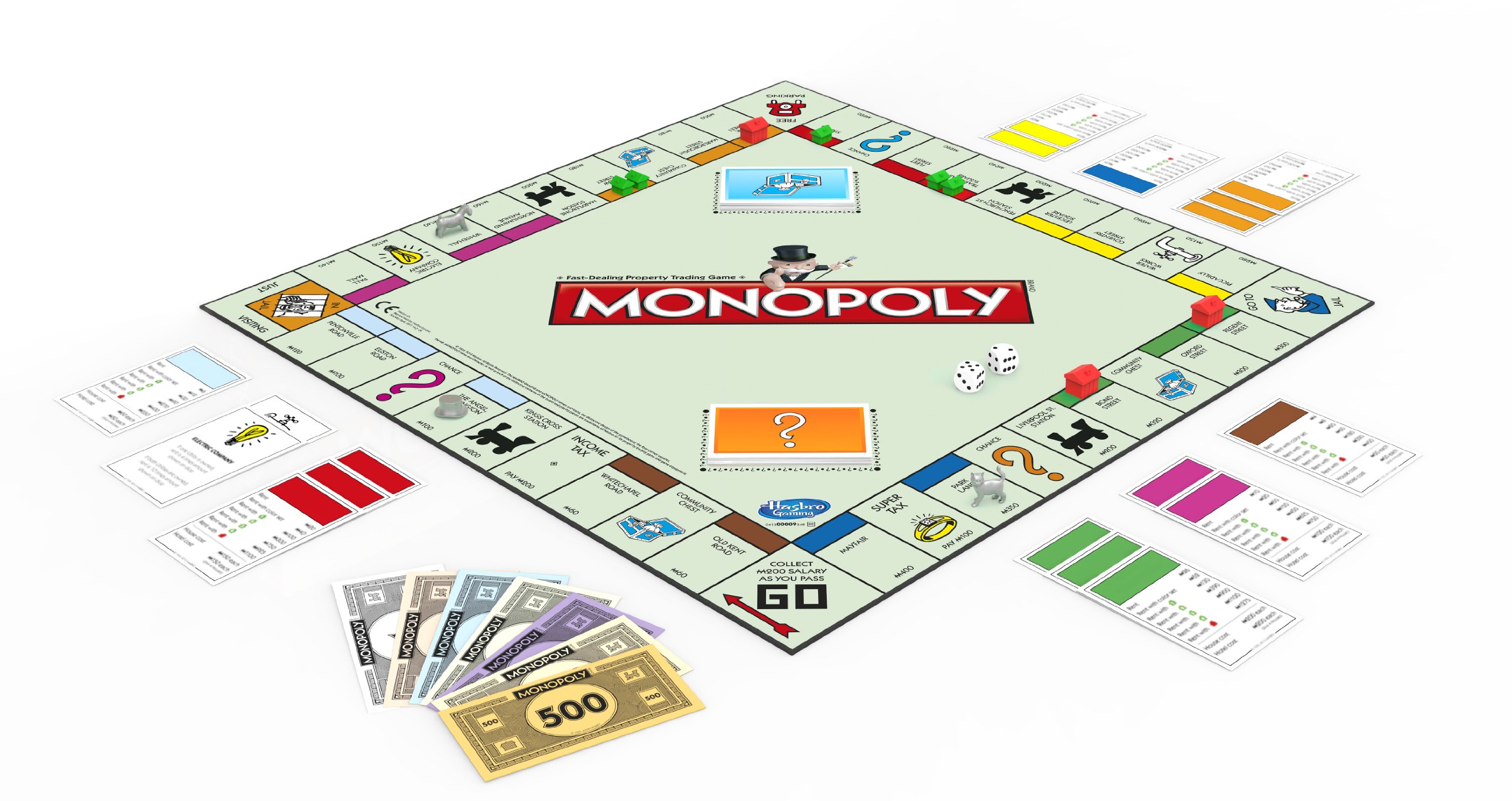
Monopoly Game Board

Property is like the game of musical chairs. And if you are late to the game, the chairs may already be taken. Imagine joining a game of monopoly late in the game and ownership of all the property has already been distributed. How do you think you might fare?

Possession is 9/10 of the Law

Possession is different to property. That I possess a place offers a different justification for my occupancy of it than a place that I own in absentia. Sure a philosophical argument could be made against any right to possess, but I’m not going there—at least not today.

This becomes a situation where usage is a determining factor. Can this ownership be justified if you’ve got a dozen places scattered around the globe?

First Come, First Served

It’s easy to see why this is in place: It’s simple. And at the start, there were few people and a seemingly infinite amount of land, but this was not sustainable. Land is ostensibly a fixed resource whilst humans multiply somewhat geometrically. So, given enough time, this allocation problem was predictable and inevitable.

But, given that property is something we insist on, what are the alternatives? Do we have a lottery periodically to redistribute property? Do we reset ownership whenever a new potentially qualifying owner emerges? Do we establish duration of ownership with some expiry? Do we not allow property to pass to forward generations? Or do we simply disallow ownership because this solution is too cumbersome to implement?

Disclaimer: In an attempt to economise my time yet still contribute content, this is a post dredged from Drafts (from May 2020) and posted with touchups in the manner of applying lipstick on a pig. Sadly, it’s still relevant.

Boris Johnson Resigns

In other news, Boris Johnson resigns. Another Conservative politician hits the bin. I’m neither Conservative nor Liberal, so I think I am in a place where I can comment as a disinterested observer. Of course, I am not fully disinterested; I am rather apathetic to it all. None of my horses is in the prevailing parties.

As I’ve been reading (too much) Jonathan Haidt, of all things, a Liberal apologist for Conservatives aimed at a Liberal audience. I have to wonder why Conservative politicians are so corrupt.

Hear me out. Before you accuse me of a hack job, allow me to explain. Are Liberal politicians corrupt? Of course, they are. Probably as corrupt. By and large, they have the same handlers and funding sources. But then why call out Conservatives as being corrupt?

According to Haidt and his Moral Foundations Theory (MFT), Conservatives collectively have more moral dimensions than Liberals and they have elevated ‘disgust’ triggers. This is what makes them more obsessed with ‘purity’.

According to MFT, Liberals have two moral dimensions: Care and Fairness, regarding the left side of the value pairs. Conservatives share these, but they also include Loyalty, Authority, and Sanctity.

“The Righteous Mind: Why Good People Are Divided by Politics and Religion,” Haidt 2012

I am distracted for a moment by the epiphany that this explains a lot about why American police units operate the way they do—dysfunctionally from the Liberal and minority perspective. Whilst they care and want ‘fairness’, how they care is typically different (though there are clear overlaps), and ‘fairness’ means something different to them. Next, dogpile on loyalty, authority, and sanctity.

Loyalty is to their group of other blue lives as well as their nationalistic and paternal fealty. Authority is them. They are the authority, and this is an inviolable relationship. Don’t question it. And then there’s sanctity. We need to clean up the neighbourhoods and cleanse them of criminals. The dirty people need to be taken off the streets as we perform our moral duties.

And I’m back. Whilst this intermission was a diversion, it is at the same time on point because they share this worldview with Conservative politicians—tough on crime, law and order. But what I am calling out is that if this is their worldview, they should be measured by a higher standard.

Distracted again, this also explains a lot about the outrage over Julian Assange, Chelsea Manning, and Edward Snowden. Each of these people exposed unfathomable corruption, and Conservatives want their heads on platters. This reflects their viewing of the world through a deontological lens and as measured by a different sense of fairness.

I am not judging here. I am merely pointing out that their loyalty to country (or whatever) trumps the fairness mechanism. In a way, they see it as unfair that someone would have the audacity to betray their (notably corrupt) government. They even buy into the argument that they could have used the reporting mechanisms in place rather than air the dirty laundry in the public forum. These people find no discomfort in maintaining state secrets, even when the secrecy is for nefarious intent.

Back again. My point is that if these are primary drivers for Conservatives—fundamental attribution bias notwithstanding—, why do they subvert their own morals? For Liberals, there is no such subversion because they don’t believe these are relevant moral dimensions. This bleeds into the abortion debate—the sanctity of life: Life is sacred (and too much hypocrisy on the Right to unpack here), so you need to abide by moral code. Let’s not run astray again.

Wrapping this up, even if Conservatives are no more or less corrupt than Liberals, they are claiming to have a higher standard and yet they fail to abide by it. For a Conservative to call out a Liberal for the same violation is rather silly because the Liberal never agreed to the Terms & Conditions at the start.

Done

As I was mistyping the title, I realised that ‘resigns’ is ‘reigns’ with an inserted ‘s’. Nothing more.

Revisiting The Righteous Mind

Je m’accuse. I am as guilty as the next bloke when it comes to constructing false dichotomies. I like reading Steven Pinker, Jonathan Haidt, and Joshua Greene, though I disagree with some fundamental aspects. Having put Time Reborn to bed, I’ve reengaged with The Righteous Mind and it’s dawned on me what goes against my grain. In retrospect, it should have been obvious all along, and perhaps it was. When I read works by these cats, I catch myself saying, ‘Yeah, but…’. A lot.

To be fair, I’ve not read much of Greene, so I’ll focus on the other two, Haidt in particular. From what I can tell, Greene is cut from the same cloth. I’ll elaborate. When I cite Haidt, just know that I mean the other two and their ilk.

Haidt divides the world into Liberals and Conservatives. This is the false dichotomy. I’m aware that I recently expounded on the political spectrum, but this is more than that. Whether this would be better depicted as further Left on the political spectrum or another dimension is open to debate.

I believe the biggest dissonance I feel against this common perspective is that these guys are all Liberals. In particular, they are Ivory Tower Liberals™—paternalistic know-it-alls. Upon reflection, Cass Sunstein falls into this category: paternalistic intellectuals. I don’t mean this pejoratively, but each of these is a privileged prescriptivist. But that’s not my beef.

The other common thread is that these people are all institutionalists. This brings everything into focus. These people are defenders of Enlightenment Age morality, so they’ve all adopted the same metanarrative.

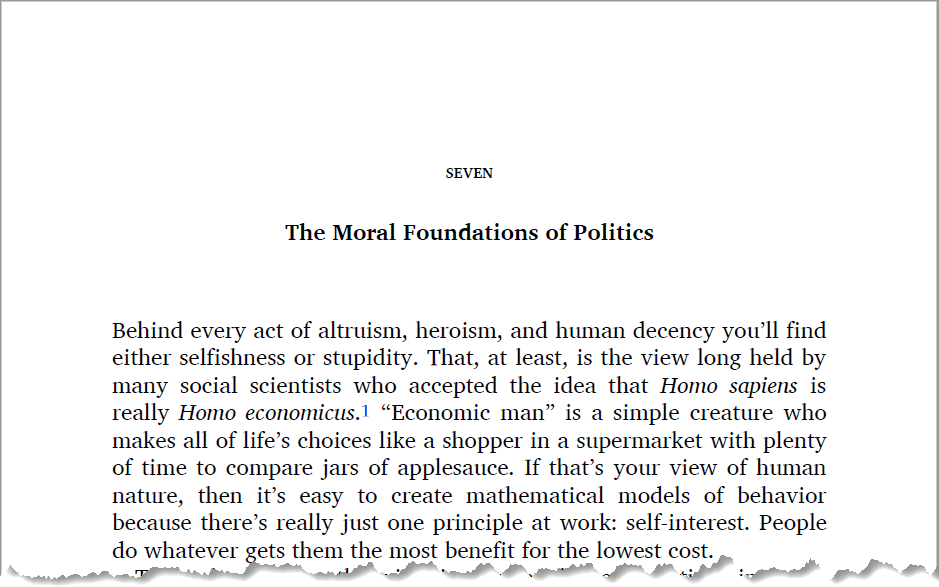
The Righteous Mind – Chapter 7

Haidt’s observations are accurate enough, but only within the frame of institutionalism—a frame I reject. This leaves my perspective out of view and unrepresented. In chapter seven, he establishes his action pairs that serve to divine moral truths about a person’s foundational political beliefs. He argues, like Pinker, that the mind is not a Blank Slate. He adopts neuroscientist Gary Marcus’ definition of innate:

“Nature bestows upon the newborn a considerably complex brain, but one that is best seen as prewired—flexible and subject to change—rather than hardwired, fixed, and immutable.”

— Gary Marcus, The Birth of the Mind (2004)

He further morphs Marcus’ ideas into this:

Nature provides a first draft, which experience then revises.… “Built-in” does not mean unmalleable; it means “organized in advance of experience.”

— Jonathan Haidt, The Righteous Mind (2012)

Given this background, Haidt invented these action pairs:

  • Care – Harm
  • Fairness – Cheating
  • Loyalty – Betrayal
  • Authority – Subversion
  • Sanctity – Degradation

I suppose I could reserve an entire post to disintegrate these. Suffice it to say that, categorically, I have issues with the meta of some of them—particularly, the last four. I am more accepting of the care – harm dichotomy, so my commentary would be more nuanced, especially in light of the scenario he cited, which shed light on his own thought processes.

I’m getting off track. The point I want to make is that these shared perspectives on society and identity, respectively macro- and microcosmic, make sense in an institutional framework, but is less necessary otherwise. And although Haidt attempts to defend his positions as not being invasive [my words, not his], this is simply because he accepts the underlying metanarratives blindly.

I’ll probably return to expound on this later, but for now, I am on to other things. Meantime, here is a review from a European, who rightly points out that this is a book written by an American for an American audience, even if he feels it is more universally applicable.

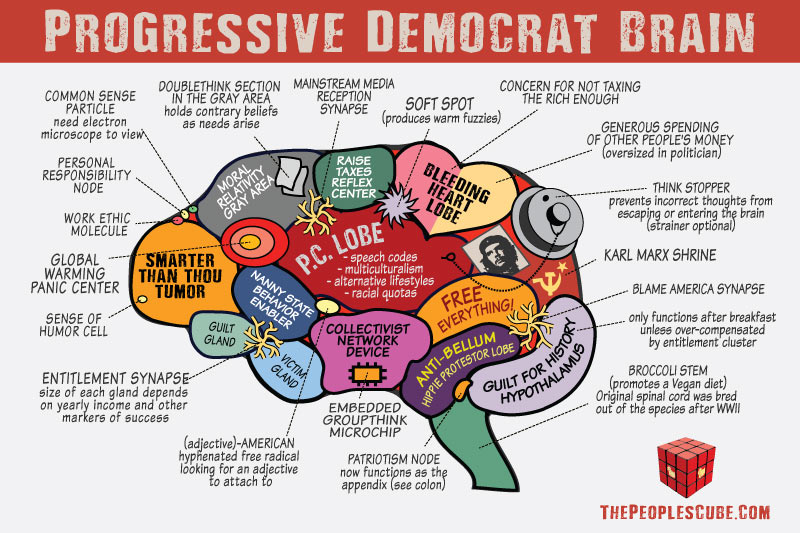
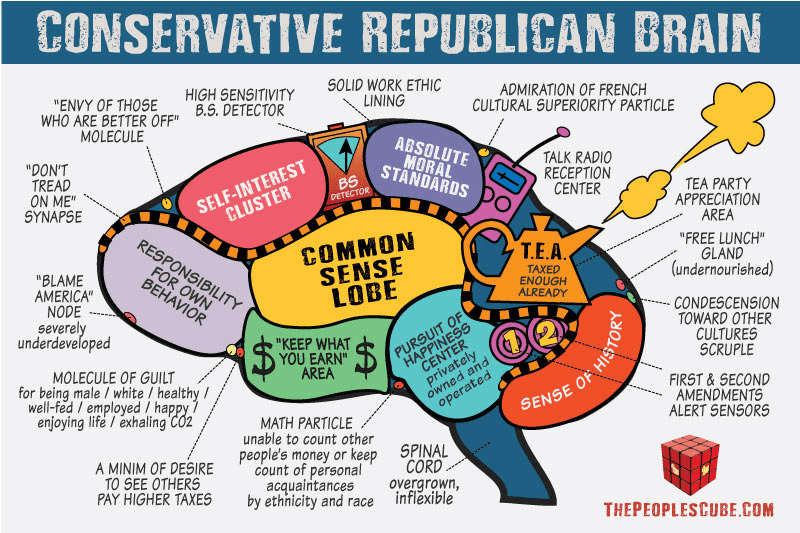
Out of a sense of fairness, I’ve included the Conservative brain image.

Supernatural

There is a battle being waged in the United States today, but it is not centred on the lack of separation of Church and State. I suppose this may be a uniquely American issue given its Constitutional roots, but the root cause is rather a lack of separation between Natural and Supernatural, not between Church and State.

Tomorrow America is celebrating Independence Day [sic], but until we are independent of religion, we cannot be independent. The only real independence is for the politicians who are independent of British control. There is nothing more substantial than this, and nothing for the ordinary citizen, who might as well be taking orders from England. Canada doesn’t look any worse for the wear and tear. I’m not a Monarchist, but it’s no less ridiculous than the Oligarchy or Plutarchy in play today.

I’ve got nothing again churches, per se. I don’t prefer the brainwashing that passes as organised religion, but neither am I fond of the brainwashing that is organised politics. And why is it called ‘brainwashing’? It’s clearly mind-muddling. I digress.

I do believe that it’s in the best interest to separate Church and State, not least because I need freedom from religion. It is already force-fed down my throat and codified into laws. We need less, not more.

Of course, a key topical debate is the abortion issue. This is strictly a religious issue. Even if you want to argue that it’s a moral rather than religious issue, it is still the result of supernatural beliefs. This is where the separation needs to happen.

Why won’t it happen? It won’t happen because people who believe in supernatural forces—especially active supernatural forces—are easy to manipulate. This has been true historically as well as contemporaneously. It’s too convenient for politicians to pull the old Santa Claus trick—if you aren’t good, Santa won’t give you any presents; and if you’re bad, he’s going to bring you coal instead.

I’ve said my peace. In the end, I don’t really even care if you believe in the supernatural, but if you believe that you (or anyone) can interpret these forces, I claim foul and out of bounds. This belief is not different to believing that you can understand what your dog or cat is ‘saying’—or your pet unicorn in the garden. It’s certifiable.

I know that other countries have to contend with this interference. Some even don’t mind the union. Is this a problem in other countries? Is it a problem in yours? Or do you consider it to be a necessary solution?

DISCLAIMER: This post has absolutely nothing to do with the Supernatural television series.

Cyclists are Economic Disasters

A colleague of mine posted this today. It was in quotations but was uncited. I attempted to discover the source, but the best I could do was to find a post from 2017 citing another author, Kaushik Patel on LinkedIn, but I do not know if this person originated this. It doesn’t really matter. In the spirit of full disclosure, my colleague is a fully indoctrinated, unapologetic Libertarian Capitalist. He also is an avid bicyclist, so reconciling the meta must be a challenge.

A Cyclist – is a disaster for the economy:

1. He does not buy the car and does not take a car loan.
2. Does not buy vehicle insurance.
3. Does not buy fuel.
4. Does not use the services of repair shops and car washes.
5. Does not use paid parking.
6. Does not become obese.
7. Yes, and well, dammit ! Healthy people are not needed for the economy. They do not buy drugs. They do not go to private doctors. They do not increase the country’s GDP ! On the contrary, every new McDonald’s outlet creates 30 jobs: 10 Dentists, 10 Cardiologists and 10 Weight Loss Experts.

So, what do you prefer- Cycling or fast food?

Like the Jackass parable, I recently shared, how one reacts to this is largely predictable if you know the worldview of the reactor.

This piece takes the perspective of the cyclist critiquing GDP economics satirically through the lens of an orthodox economist. Of course, there are also many internal contradictions and mistruths. I don’t intend to fully critique what I take to be a meme, but I’ll comment somewhat. To be fair, I get annoyed by bicycles intermingling with either automobiles or pedestrians. I’d prefer there be dedicated thoroughfares for bikes. When I am walking, I feel they’re like mosquitos or horseflies. When I’m driving, I see them as drunken toddlers. Who knows what they’re going to do next.

Meantime

Crossed my Facebook Feed

To be honest, I see them as anachronistic. They serve a purpose—many purposes, in fact—, but that doesn’t obviate the nuisance factors. I am not wholly anti-bicycle, but I feel they need a better implementation strategy. I rode bicycles until I was twelve years old or so. Not being the nineteenth century, I still view them as child’s toys. Regarding adults, there are generally two categories—the privileged (and self-righteous) and the underprivileged (and disenfranchised).

Privilege

The author of this quote is likely in this category. How dare someone try to undermine my god-given right to responsibly ride a bike for the greater good of humankind. These people not only own expensive bicycles. Some own several for on-road cycling, off-road cycling, and perhaps even performance cycling. Generally, they own the accoutrements and matching aerodynamic vestiments—padded bicycle shorts, a tight jersey, a sleek helmet, and proper cycling shoes, each contributing to the economy.

In the categories are the commuters, who cannot necessarily wear their gear on the commute, but trust me, they got it in the closet, and they’d wear it if they could.

Underprivilege

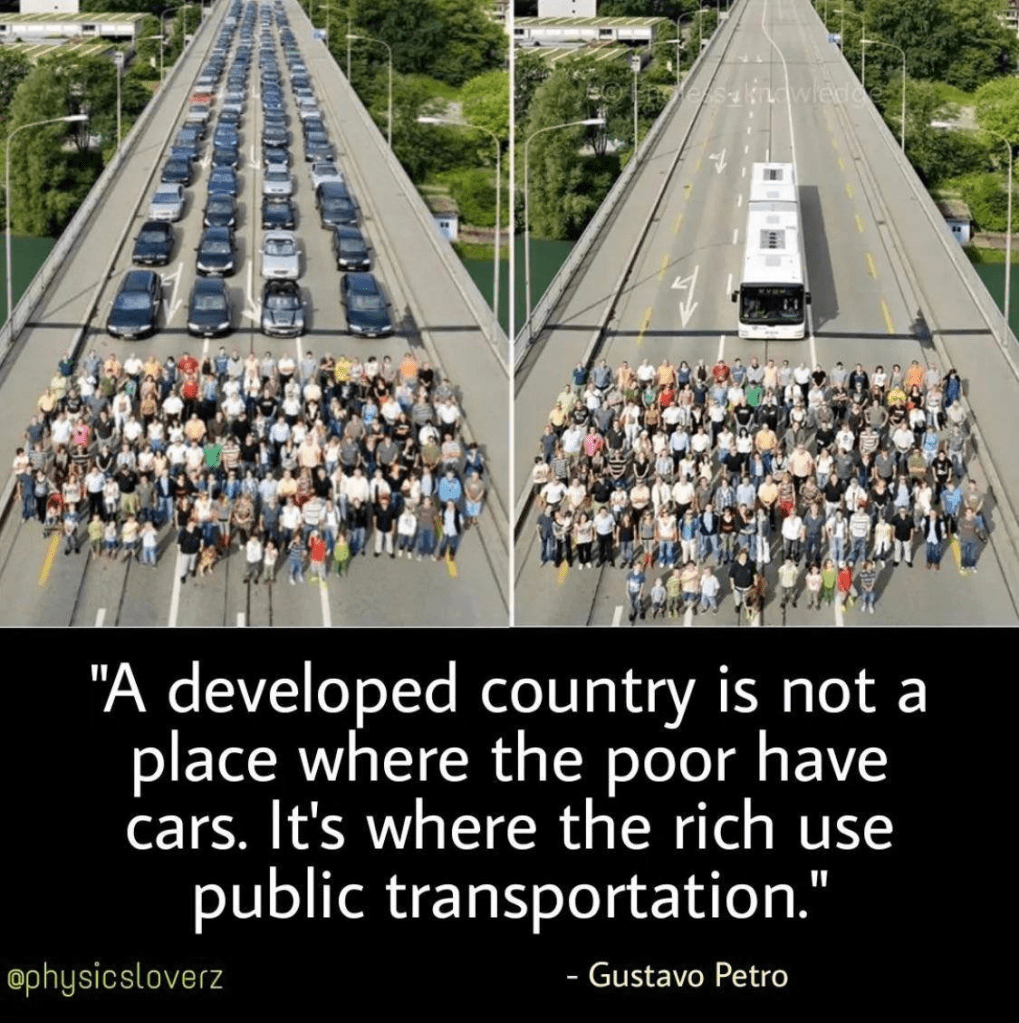
This category is for the poor who need to commute a relative distance but either can’t afford or justify an automobile or have had their licence revoked. These people are not a part of bike culture. They are bicyclists by necessity. This is not a play to the greater good. It’s just a way to not have to walk as much.

More Colour and Shape

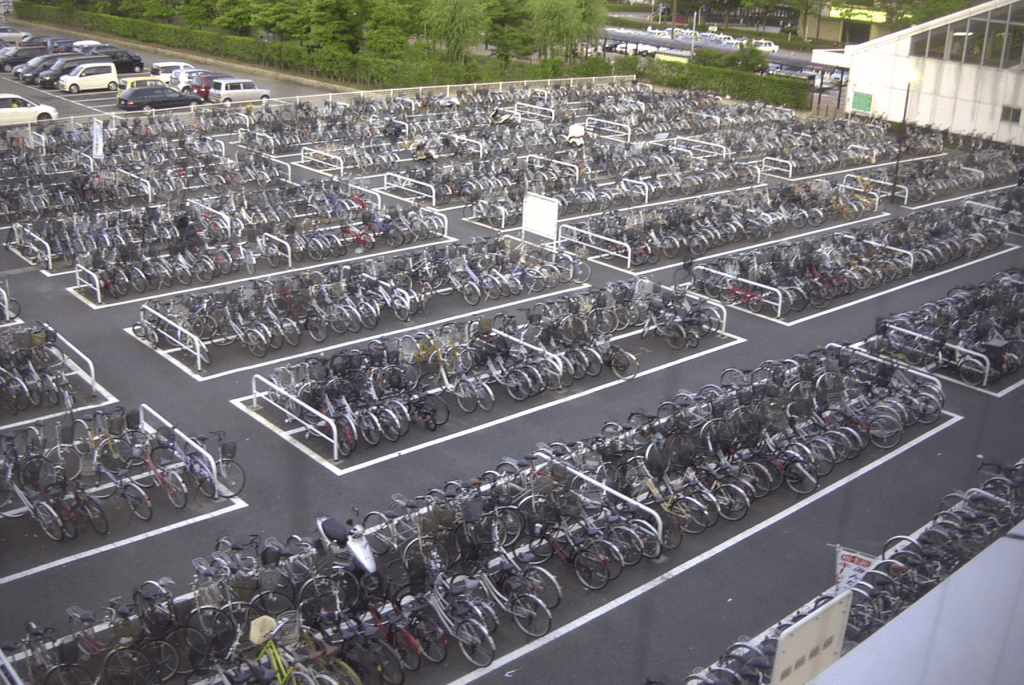
There is a large cultural component evident here. Japan has a bike culture. When I lived outside of Tokyo, I could drive past parking lots filled with thousands of bicycles. But that’s their culture.

A parking lot for bicycles in Niigata, NiigataJapan

I didn’t even own a car in Japan. I relied on their public transportation system and my feet. I drove friends’ cars and motorbikes. Japan also has favourable motorbike regulations, but that’s another topic.

What does it mean?

The meta of this satire is that from the perspective of the GDP, the cyclist does not contribute to the larger economy. I’ll not mention beyond this that the cyclist is a male.

He does not buy the car and does not take a car loan

This presumes that the bicycle is the sole means of transportation. Perhaps it is. Perhaps it isn’t. Perhaps he buys a car but pays cash. Why is he introducing financing into the equation? Of course, the bike needs to be purchased. Some are more expensive than a used car.

Does not buy vehicle insurance

This relies on the previous situation, but—and I hate to be the one to break it to you— not all people who own cars or drive buy automobile insurance. Do all jurisdictions actually require a person to purchase insurance?

Does not buy fuel

Ditto. Presuming this means petrol for the motorcar.

Does not use the services of repair shops and car washes

This is just silly. As with fuel, obviously, this is scoped to auto repair. And many people don’t use or rarely use car washes. Whilst one may bypass auto repair, you may not escape the need for bicycle repairs or tyres or frames and so on. Sure, these might be less expensive, but they are no zero-cost events.

Does not use paid parking

I am presuming this person either does not live in a congested city where one would have to pay for parking or his city subsidises parking, thus contributing to GDP.

Does not become obese

A bit of fat-shaming, perhaps? I guess he’s never seen a fat person on a bike. I’ll give him that the person on the bike might get some cardiovascular activity that wouldn’t have happened otherwise, and perhaps he’d avoid becoming morbidly obese, but I’m not accepting this one. Moreover, I’ll suggest that selection bias is more the factor.

Healthy people are not needed for the economy

Here’s the punchline. Healthy people don’t contribute to the Medical-Industrial Complex. Speaking from the perspective of the US, these people pay for preventative care, buy upscale food, eat in upscale restaurants—not to mention McDonald’s—, live in upscale housing in upscale neighbourhoods, shop in upscale stores, and so on. I’ve heard the sentiment that if you don’t spend money on Organic™ food and health supplements and treatment modalities, then you’ll spend it later in trying to recover your (inevitable) lost health.

How does McDonald’s generate dentists? Conveniently, he left out the medical personnel who get to treat knee injuries, injuries from falling and getting hit by cars (or maybe just car doors).

Closing

In the end, economics is not a good measure for much of anything, but it is a measure that can increase or decrease and, for what it’s worth, we can compare X to Y.

After all is said and done, I don’t care about the GDP, and I don’t care about cycling. Chalk it up to non-attachment or apathy—perhaps a little of each.

Pragmatic Limitations of Language

Heather at https://hermeneutrix.com/ commented briefly on the recent Political Spectrum post. Visting her site, she is all about words. Check it out. But even before visiting, I had the idea to visualise my reaction to her response.

To be fair, this is a response I get from my Pragmatist colleagues: don’t get your knickers in a twist arguing semantics. But in my noggin, I envision this Venn diagamme. (Well, not exactly. I just made this up, but you get the point.) Since the topic happened to be on the definition of Conservative, I’ll retain the context, but this is arbitrary.

Before I get to this, I want to set the stage with a more common and arguably more agreeable term: tree. If we ask a large number of people on the street to provide attributes of a tree, we might get something like this image abstraction below.

Tree

Venn: Tree

Although people may have different ideas, there will be some key core elements—trunks, branches, and roots. Of course, within the taxonomy of trees, there are types—pine, oak, willow, redwood, birch, and so on—each sharing these key attributes. These trees have some distinct attributes—coniferous versus deciduous, green versus red, flowering versus non versus, fruit-bearing, nut-bearing, height, and age. I think I can stop.

In general, I think it’s safe to say that if you point to a tree, and ask what it is to a person with sight and language, they will either respond ‘It’s a tree’ or ‘It’s an elm’. Even the elm response can be quickly qualified with a follow-up question, “What is an Elm?”

I understand that a botanist or an arborist may have a more nuanced definition. In fact, when I lived in a rental property outside of Chicago, my wife at the time defended the life of a tree that looked rather like a berry-bearing ficus, but that the village elders said was a weed and not allowed to remain. Here, we get into whether a tomato is a fruit or a vegetable or a squash is a berry or a fruit, or is corn a vegetable or a grain—or are we discussing maize? I get it. Even here, we can quickly come to terms. I said chips; I meant fries.

I could even get into the political conversation where the US justice system tried to redefine person to strip the rights away from those they didn’t want to have them. Of course, the United States has a history of not considering people to be people, though some were given 3/5ths and 4/5ths of personhood. Mighty white of them.

Back to trees. There are natural and artificial trees, but these are just simulations—hullo, Baudrillard. In the English language, there are non-arboreal trees, some not even rendered from fibres. We’ve got shoe trees—for which I fail to see the relationship to trees—and bell trees. We even have tree structures, like a taxonomy or a family tree, leveraging the branching metaphor. Some of these things escape the main bubble, but the connexion is never lost and is easy to navigate to a core understanding.

Conservative

I think we are amicably on the same page here and ready to move on from tree to conservative. Here, the circles are much more varied and divergent. Although there is common ground, as well there are points where there is no intersection in meaning.

Venn: Conservative

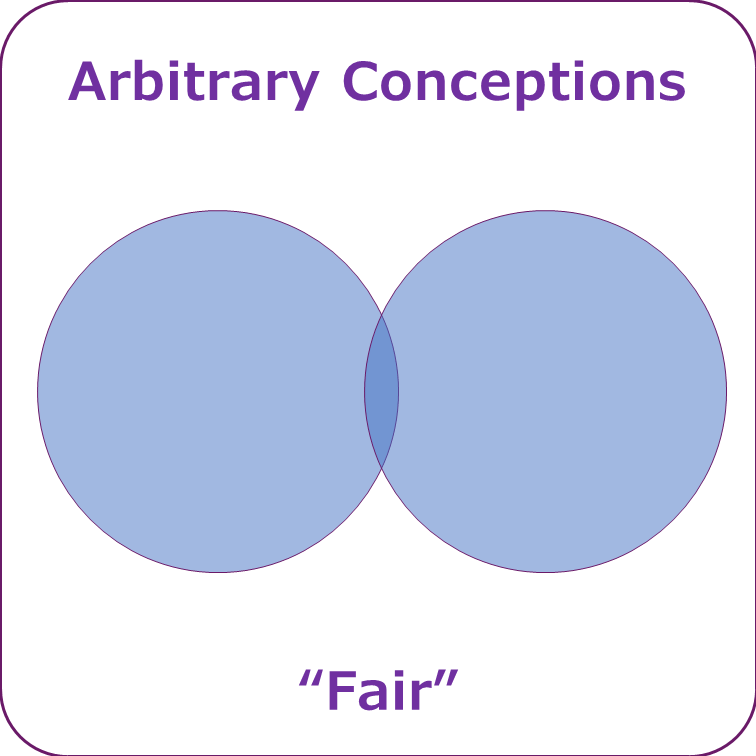
I’ve discussed a simpler abstract term before: fairness. To recapitulate, most people will tell you they want situations in the world to be fair. Only fair means entirely different things to different people. I’ve written about this in several places, so I’ll continue on our conservative journey.

Venn: Fair (oversimplified for effect)

Not only has the term conservative morphed over the years, it has different meanings—though to be fair, probably fewer than ‘liberal’. As I’ve discussed here before prior to the recent post, liberals are conservatives, but no one is really defending this position because the goal is identity, and identity involved separation to be distinguished.

Like fair, conservative has some common ground. The challenge is to understand which flavour is being used. Are you communicating by using the same term, or are you talking across each other? In some cases, this can lead to what I’ll call false positives (borrowing the language of statistical errors) where you think you are in agreement, except you aren’t. The other side of this coin is the false negative, where you think you are in disagreement when in fact you are talking about two different things.

This happened to me. A mate asked me to meet her at a certain time and place —I’ll just use McDonald’s because it is so ubiquitous. I went to the McDonald’s and waited. After a while, she called.

“Are you close?”

I scan the car park.

“I don’t see you. Maybe I missed you. I’m parked on the side near Taco Bell, not the oil change place.”

“There’s no Taco Bell at McDonald’s. What McDonald’s did you go to?”

It turns out that she was a distance away and wanted me to meet her halfway—like two-thirds to be honest. I assumed she meant the one we’d commonly visit.

This is a false positive. Communication was presumed to occur. It did. It just wasn’t useful. And since the reason for the rendezvous in the first place is to save time—one might say to ‘conserve’ time, but even I wouldn’t stoop to such a low target.

Wrapping up, the challenge is that trees are objects in the world. We can quickly recalibrate ourselves by reference. This is not possible for abstract concepts. I tend to refer to these are weasel words. Some use these words unknowingly. Whenever I hear some yahoo wintering on about freedom or justice, my first impression is that this bloke is tripping on a Kool-Aid propaganda overdose. Most common people falsely believe that people can understand what’s in their heads.

And to be fair—the left sort, not the one on the right—, when these yahoos utter the term, they are probably using it like their neighbour. But walk a few blocks or miles, and that bet is off. Sure, if the people have a common connexion, this might moderate the differences. But if one attempts to triangulate across worldviews, all bets are off. You may or may not be singing from the same hymnal.

Political Spectrum

I am trying to avoid commenting on the recent SCOTUS decision and how it is symptomatic of how the United States remains a failed state—at least a zombie state—, so this preamble should suffice for now.

I was chatting politics into the wee hours with my son, who’s been on this earth for almost 25 years now. I consider myself to be on the left of traditional political scales. He considers himself to be on the right, but he’s trying to make sense of the scales and dimensions. He had two questions: First, ‘What are the crucial dimensions and positions that define left and right?’ Second, ‘Where do Liberals fit into the equation?’

Knowing me, he wanted to provide some context and confer with me his knowledge that would also serve to frame and anchor the conversation. A key point was to have clarified the adopted nomenclature and positioning on a theoretical map.

We started with the origins of the left-right distinction, which was barely a valid dichotomy even as it was coined in France. There was no duolith. Those on the left or right had features in common but taken holistically, this was a reductionist categorisation, as tends to happen. Exacerbating this, as it does today, still, the politicians with voices remained to the right of the unvoices masses.

He asked about the difference between freedom and liberty because his sources differentiate the two. Whilst connotation and nuance may enter the picture, etymologically speaking, freedom is a native English word whilst liberty is French via Latin. Connotatively, freedom is an absolute measure whilst liberty is granted within a political framework. Positive and negative liberties aside, liberty is an attenuator. It restricts freedom even if it allows most of the signal through. Effectively, liberty is permission by the state to act in certain ways.

By the end of the conversation, he was framing the key difference around notions of national identity and nationalism—I versus we. I shared my thoughts on the construction of identity, thus making for a poor foundation, though we both agreed that national narratives have been the impetus for much activity. (I am reluctant to insert the word progress here.)

After our conversation, I began researching dimensions established or otherwise proposed by political science. This led me to a place I found interesting—the distinction between radical, progressive, conservative, and reactionary positions. For some reason, this never really occurred to me.

I’m not sure one can employ these terms in general discussion without definition and qualification, but I feel they are useful in their own right. Typically, I view the political landscape—at the highest level and with a US-bent—as Left (communists, socialists, anarchists, progressives) and Right (conservatives, liberals, and fascists). I also know that this is imprecise, but maps always are.

This new vocabulary helps by distilling the map to this—ordered differently:

  • Right
    • Conservative
    • Reactionary
  • Left
    • Progressive
    • Radical

Conservative

Conservatives want to maintain the status quo. This is interesting usage adoption. Fundamentally, advocates of this view want to promote and to preserve traditional social institutions and practices. In Western culture, conservatives seek to preserve a range of institutions such as organized religion, parliamentary government, and property rights. Conservatives tend to favour institutions and practices that guarantee stability and evolved gradually. Adherents of conservatism often oppose progressivism and seek a return to traditional values

In Western culture, conservatives seek to preserve a range of institutions such as organized religion, parliamentary government, and property rights.

My first thoughts when I hear the term are a harkening back to the old ways—the Ozzie and Harriott mythos, white picket fences, Mom and apple pie. But this is different. Effectively, rather than reaching back, it wants to preserve the current moment in time. Where it gets more nebulous, I think, is that some people include nostalgia in the now. Duratively, perhaps a person might remember some aspect of their childhood. Though this has been lost by now, they imagine it as part of their identity. This can also extend further back as they wish some other historical aspects can be cherry-picked. Perhaps the white conservative wishes to be able to subjugate women as was the practice in the 1950s of America, but to not conserve high union participation and high marginal tax rates, as affronts to freedom (or whatever). This ends up being an exercise in selective memory and revisionist history-making.

This needs to be distinguished from a so-called traditional conservativism in the tradition of Burke or Hobbes, who want to conserve some sense of fundamental morality they feel derives from nature.

Reactionary

Reactionaries oppose whatever is in effect at the moment—the petulant toddler—but with a twist. Like the conservatives, there is a conservation effort but rather than a focus on the status quo, the focus is on status quo ante, which is a return to the old ways, tried and true.

Progressive

Progressives support social reform. Ostensibly, they don’t oppose tradition, but they feel that old structures need to be reimagined and reinterpreted in face of social and technological change. An underlying metanarrative is the notion of progress. I am not going to comment on progressivism generally and the nuances evident in the American flavour of it.

Radical

Radical politics denotes the intent to transform or replace the fundamental principles of a society or political system, often through social changestructural changerevolution or radical reform

During the 20th century, radical politicians took power in many countries across the world. Such radical leaders included Vladimir Lenin and Joseph Stalin in Russia, Mao Zedong in China, Adolf Hitler in Germany, as well as more mainstream radicals such as Ronald Reagan in the United States and Margaret Thatcher in the United Kingdom. Of course, Donald Trump is a more recent example in the United States.

Summary

To me, these terms operate on a gravity to now. Conservatives are heavily anchored in the familiar and seek stability. Then they see factors in the past that they imagine will also serve this purpose, so they wish to incorporate these and carry them forward. Conservatives are not unaware of the need for change, they just want to not create waves in the process.

Likewise, although placing a heavier weight on the past than even conservatives, reactionaries are not fundamentally opposed to retaining what is working currently. The term working is subjective and perspectival, so they may wish to retain something that works for them at the expense of others. This is a challenge for conservatism as well. Just because racial segregation seemed to work for an equivalent person in the past doesn’t mean it worked well for the excluded.

Like reactionaries, progressives aren’t afraid of keeping a foot in the present—and there may be plenty of lessons to learn from the past—, but they feel that given the change in the underlying terrain, some refactoring is in order.

And then there are the radicals. I suppose that radicals have different motivators, but in essence, they feel that the current implementation is substantially broken, and it needs more than a few small tweaks and a fresh coat of paint. These people are renovating rather than redecorating. They may even want to throw the baby out with the bath water. Some may wish to keep the baby.

As for me, I usually place myself in the Progressive camp, but under the definition, I am more of a radical. The system is broken. We don’t just need to delete it, we need to install a new one.

Thomas Jefferson said that the United States should rewrite the Constitution every 19 years. Why 19 years? Who knows? Given the intransigence in American politics, this would have been a disaster. And given the powers that be, the debate would be over which parts to conserve and which to progress. Being the cynic that I am, my guess is that it would devolve to worse than we have now.

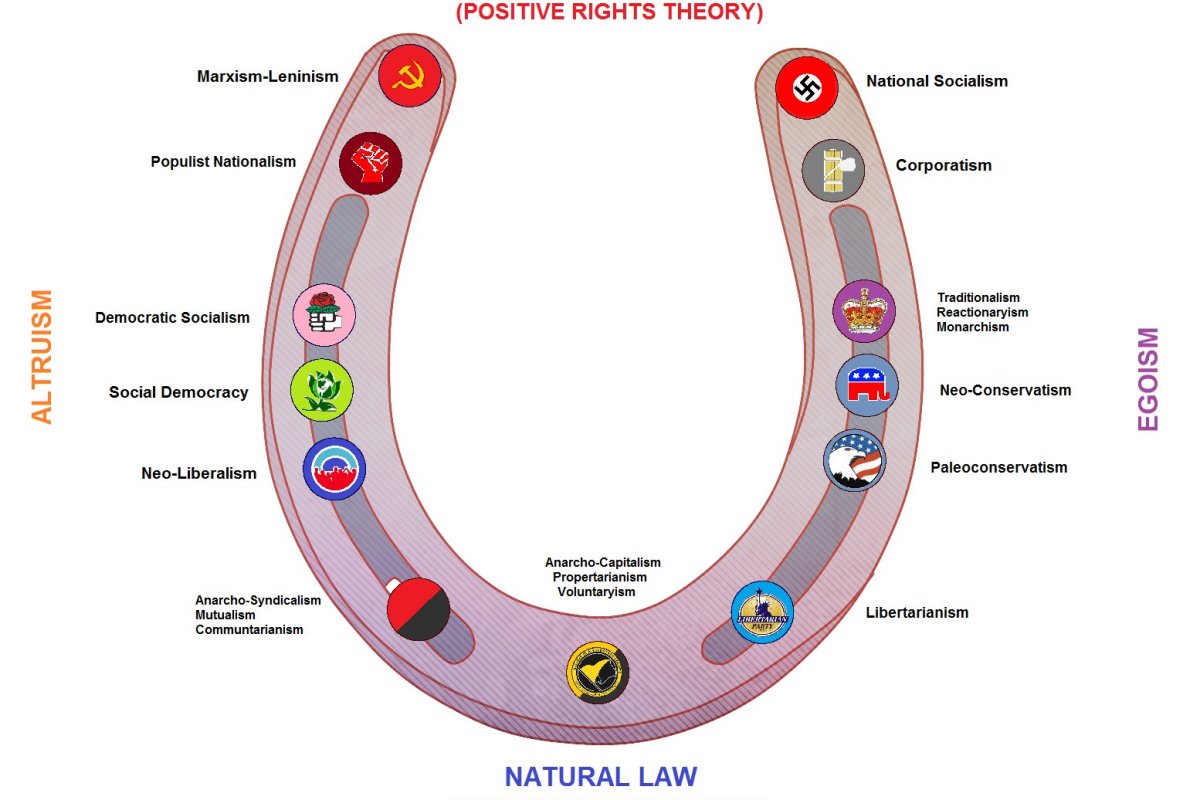
DISCLAIMER: For the record, I don’t endorse the placement of the political ideologies on the horseshoe image, but I find it interesting and it grabbed my attention. I hope it grabbed yours, too.

Agency Is Dead

Agency is going through the same fits as religion. When Nietzsche regarded society around him at the time, he declared that God is dead and asked now what? This is precisely the same challenge in different clothes.

Preserving “law and order” without a concept of real responsibility is a daunting task.

Dan Dennett

Without a God to use as a bully pulpit and mechanism of fear, how could we keep people in line in cohesive societies? Without the notion of human agency to allow for responsibility and blame, how can we keep people in line in cohesive societies? Only the predicate has changed, but the question remains, do we persist in lying for the so-called greater good? This is similar to the Santa Claus myth to keep young children in line.

If nobody is responsible, not really, then not only should the prisons be emptied, but no contract is valid, mortgages should be abolished, and we can never hold anybody to account for anything they do.  Preserving “law and order” without a concept of real responsibility is a daunting task.

—Dan Dennett, “Reflections on Free Will” (naturalism.org)

One might like to think that lying is psychologically pathological, but it seems to be a significant part of the human condition. The fundamental question doesn’t appear to be ‘should I tell the truth’, but rather ‘Can I get away with lying?’ Despite all the talk of Truth and integrity, this seems to be the default state of humans. This renders integrity just another lie. But you knew that already, but let’s not fall into another Foucauldian rabbit hole.

We no longer have any sympathy today with the concept of ‘free will’: we know only too well what is is — the most infamous of all the arts of the theologian for making mankind ‘accountable’. . . Everywhere accountability is sought, it is usually the instinct         for punishing and judging which seeks it… the doctrine of will has been invented essentially for the purpose of punishment, that is of finding guilty.

Twilight of the Idols: ‘The Four Great Errors’, 7
Appropriate Graphic

Houston, we have a problem

EDIT: Since I first posted this, I’ve discovered that computer algorithms and maths are not playing well together in the sandbox. Those naughty computer geeks are running rogue from the maths geeks.

In grade school, we typically learn a form of PEMDAS as a mnemonic heuristic for mathematical order of operations. It’s a stand-in for Parentheses, Exponents, Multiplication, Division, Addition, and Subtraction. This may be interpreted in different ways, but I’ve got bigger fish to fry. It turns out that many (if not most) programming languages don’t implement around a PEMDAS schema. Instead, they opt for BODMAS, where the B and O represent Brackets and Orders—analogous to Parentheses and Exponents. The important thing to note is the inversion of MD to DM, as this creates discrepancies.

And it doesn’t end here. HP calculators interject a new factor, multiplication by juxtaposition, that mathematician and YouTuber, Jenni Gorham, notates as J resulting in PEJMDAS. This juxtaposition represents the implied multiplication as exemplified by another challenge;

1 ÷ 2✓3 =

In this instance, multiplication by juxtaposition instructs us to resolve 2✓3 before performing the division. Absent the J, the calculation results in ½✓3 rather than the intended 1/(2✓3). As with this next example, simply adding parentheses fixes the problem. Here’s a link to her video:

And now we return to our originally scheduled programming…

Simplifying concepts has its place. The question is where and when. This social media war brings this back to my attention.

As depicted in the meme, there is a difference of opinion as to what the answer is to this maths problem.

6 ÷ 2 ( 1 + 2 ) =

In grade school, children are taught some variation of PEMDAS, BOMDAS, BEDMAS, BIDMAS, or whatever. What they are not taught is that this is a regimented shortcut, but it doesn’t necessarily apply to real-world applications. The ones defending PEMDAS are those who have not taken maths beyond primary school and don’t use maths beyond some basic addition and subtraction. Luckily, the engineers and physicists who need to understand the difference, generally, do.

Mathematicians, scientists, and engineers have learned to transform the equation into the form on the left, yielding an answer of 1. If your answer is 9, you’ve been left behind.

Why is this such a big deal?

When I taught undergraduate economics, I, too, had to present simplifications of models. In practice, the approach was to tell the students that the simplification was like that in physics. At first, you assume factors like gravity and friction don’t exist—fewer variables, fewer complexities. The problem, as I discovered in my advanced studies, is that in economics you can’t actually relax the assumptions. And when you do, the models fail to function. So they only work under assumptions that cannot exist in the real world—things like infinite suppliers and demanders. Even moving from infinite to a lot, breaks the model. Economists know this, and yet they teach it anyway.

When I transitioned from undergrad to grad school, I was taken aback by the number of stated assumptions that were flat out wrong.

When I transitioned from undergrad to grad school, I was taken aback by the number of stated assumptions that were flat out wrong. Not only were these simplifications flat out wrong, but they also led to the wrong conclusion—the conclusion that aligned with the prevailing narratives.

This led me to wonder about a couple of things

Firstly, if I had graduated with an English degree and then became a PhD candidate in English, would I have also learnt it had mostly been a lie for the purpose of indoctrination?

Secondly, what other disciplines would have taught so much disinformation?

Thirdly, how many executives with degrees and finance and management only got the fake version?

Fourthly, how many executives hadn’t even gotten that? Perhaps they’d have had taken a class or two in each of finance and economics and nothing more. How many finance and economics courses does one need to take to get an MBA? This worries me greatly.

To be honest, I wonder how many other disciplines have this challenge. I’d almost expect it from so-called soft sciences, but from maths? Get outta here.

Half-life of knowledge

This also reminds me of the notion of the half-life of knowledge. What you knew as true may eventually no longer be. In this case, you were just taught a lie because it was easier to digest than the truth. In other cases, an Einstein comes along to change Newtonian physics into Oldtonian physics, or some wisenheimer like Copernicus determines that the cosmic model is heliocentric and not geocentric.

If you’ve been keeping up with my latest endeavour, you may be surprised that free will, human agency, identity, and the self are all human social constructs in need of remediation. Get ready to get out of your comfort zone or to entrench yourself in a fortress of escalating commitment.

Tolerance and Normalisation

I chatted with an associate this evening about the gun debate in America. For some reason, gun control is again a hot topic. He believes that guns, like drugs, should be treated as mental health issues.

Click an image to read the referenced article.

The Atlantic: An ER Doctor’s ‘Third Way’ Approach to the Gun Crisis
The Atlantic: The Real Reason America Doesn’t Have Gun Control

Full Disclosure: I do not believe that the Second Amendment of the United States confers unrestricted rights to own a gun. Full stop. I believe this is a perversion by activist Supreme Court justices of the original intent of the grammatically-challenged Forefathers of that cursed country.

The mental health topic brought my attention to the question of tolerance and normalisation. Mental health, an interest of psychology has a sordid past. At its very core is the idea that humans can be normalised, that they can be categorised into normal and abnormal behaviours, and what is deemed normal might have some room for variation, but this tolerance doesn’t really allow for much discrepancy.

Normalisation expects to bring people into some basic conformity—give or take. The problem is that this is contextual and the acceptable range changes over time and place. Many behaviours previously considered abnormal are now acceptable, and some acceptable behaviours are no longer tolerated. Some of these changes have flip-flopped legal status as well. It’s just a game to some people.

Tolerance takes a position that there is no normal, per se. Some people just have different ideas.

Here is a clip of an interview with Dr Oz ( né Mehmet Cengiz Öz) where he illustrates my position. I’ll disintegrate it next.

Dr Oz explains why he does not support legalisation of marijuana

Transcript

Reporter: What is your stance on [the legalisation of] marijuana?

Dr Oz: … There are not enough Pennsylvanians to work in Pennsylvania, so giving them pot so they stay home… I don’t think [is] an ideal move. I also don’t want to breed addiction to marijuana. It’s not physical addiction; it’s emotional addiction, but I don’t want young people to think they have to smoke a joint to get out of their house in the morning. We need to get Pennsylvanians back at work you got to give them their mojo, and I don’t want marijuana to be a hindrance to that. I also don’t want people operating heavy machinery and driving by me when they’ve been taking their fourth joint of the day. But there are other issues that are plaguing Pennsylvanians. We’re a border state, practically, … because they’re flying illegal immigrants up here from the border in the middle of the night … but they’re also getting their narcotics up here really easily.

So, let’s break down this word salad. This will reveal some of Dr Oz’ and my worldview biases.

  1. Neither Oz nor I advocate the use of marijuana or other recreational drugs. However, Oz wants to make or keep it illegal and criminalised. I do not agree. I feel they should regulate it and tax it. Although I neither advocate nor endorse the use of any of these herbs and chemicals, I feel they should do this for all drugs. [And if we are going to make these chemicals illegal, let’s not be hypocrites and make nicotine, alcohol, and caffeine illegal.] I’m not advocating this. I’m just saying adopt a position and maintain it with integrity.
  2. There are not enough Pennsylvanians to work in Pennsylvania.

    First, Oz is a wage slaver. Next, the unemployment rate for PA was 4.9% in March, so this does not appear to be a problem.
  3. so giving them pot so they stay home… I don’t think [is] an ideal move.

    Oz makes an unsubstantiated connection between the legalisation of marijuana and staying home—being lazy or unmotivated.
  4. I also don’t want to breed addiction to marijuana.

    Marijuana is not known to be addictive. As a doctor, Oz knows this.
  5. It’s not physical addiction; it’s emotional addiction

    Here, Oz backtracks, but he also introduces an unsubstantiated claim. If you are interested in why I consider psychology pseudoscience, follow this link to explain DSM changes in this area.
  6. but I don’t want young people to think they have to smoke a joint to get out of their house in the morning

    Oz makes a total non-sequitur here. Nothing he has mentioned this far would lead to this conclusion. If someone already feels this way, its legal status is irrelevant. Enough said.
  7. We need to get Pennsylvanians back at work you got to give them their mojo, and I don’t want marijuana to be a hindrance to that.

    This is more Calvinistic wage slavery advocacy. Again, he is equating the consumption of marijuana with being unmotivated. Perhaps he should challenge Micheal Phelps to a swimming race. If motivation is the issue, perhaps he rather favours legalising amphetamines—but I supposed he’d have a preconceived rationale for that, too.
  8. I also don’t want people operating heavy machinery and driving by me when they’ve been taking their fourth joint of the day.

    Where does the number four come from? Is four different to one or two? Has this been studied? Is he saying this doesn’t already happen? Does he believe that current intoxication laws and incapacitation regulations aren’t in place?
  9. We’re a border state, practically…

    Where to start… Pennsylvania is a border state. It borders New York, New Jersey, Ohio, Delaware, Maryland, and West Virginia. If one counts for the water border of Lake Erie, one might be able to argue that it shares an international border with Canada—although, I feel that’s a stretch. At that point, one wouldn’t be far from considering Hawaii to border California. It’s only water. He does say practically, so perhaps that’s his out.
  10. because they’re flying illegal immigrants up here from the border in the middle of the night

    Wait a minute… Geezer’s talking about the southern border between the United States and Mexico. (That’s where brown people live.) The fewest number of states between Mexico and Pennsylvania is four, but that’s stretching it. Something tells me that Oz is at least an elitist and at worst a racist. I’m a sad panda.

    Another non-sequitur. Somehow, Oz is trying to create a link between marijuana and narcotics whilst also contending that legalising marijuana would somehow affect these illegal flights. Wait, are the flights illegal or just the passengers? How does he know that either is illegal? And does it have to be at night? I get the feeling that Oz watches too much television. Perhaps that’s what we should criminalise. So many questions.
  11. but they’re also getting their narcotics up here really easily

    OK? Perhaps we should contract with them to transport the marijuana up here if they are so efficient. Or would it be better to grow it locally? Racists tend to be nationalists and would likely favour a Made In America policy—unless they can exploit brown people. Or Oz can employ otherwise unemployed Pennsylvanians on his pot plantations. Where does it end?

What does this have to do with normalisation and toleration?

People like Dr Oz want to mainstream people, a concept some familiar with special education might remember—get the people in line with the herd. Proper people—normal people—are supposed X and Y and Z. Toleration allows that there may be people with descriptively ‘normal’ traits and behaviours, but there should not necessarily be a penalty for noncompliance.

When I was an undergrad student, I had a side job as a shift supervisor at an Au Bon Pain in Boston. On an occasion, one worker, let’s call her Mary, was arguing with another worker that we’ll call Marie. Mary said she was not going to make any more sandwiches because she had already made twice as much as Marie. Although I understand the notion of fairness she was invoking, I reminded her that she was being paid by the hour, not the piece. As long as she was still on the proverbial clock, she would continue to make sandwiches. Although I didn’t press this point, I could have hired Marie to watch Mary make sandwiches. In fact, I suppose I was hired to watch them both make sandwiches.

The point is—Mary’s perception aside—that there was no reason to presume these two should produce an equal number of sandwiches in an hour, a day, or a month.

I mention this because—getting back to Oz’ drugs scenario—if people are happy getting high on heroin and nodding out on Kensington Ave, that’s their issue, not Oz’ and not mine. If Pennsylvania needs workers and can’t get them, figure out how to attract workers. Don’t create a situation so bad that the alternate to work is just the lesser of two evils. This reminds me of a story from my consulting days.

Without dropping any names, I was hired by a company to ‘deflect’ some costs. The high-level concept was to redirect people from a relatively expensive call centre to cheaper self-service. I reminded them of the Principle of least effort.

Essentially, I conveyed that people are inherently lazy—echoing Carl Jung. People will take the path of least resistance. If it’s easier for them to call, they’ll call; if it’s easier to self-serve, they’ll do that.

“So we should make it more difficult for customers to call?” was how this was interpreted.

“You should make it easier to self-serve.”

I’m still shaking my head to this day. What humans will do to other humans in the name of commerce.

Where was I?