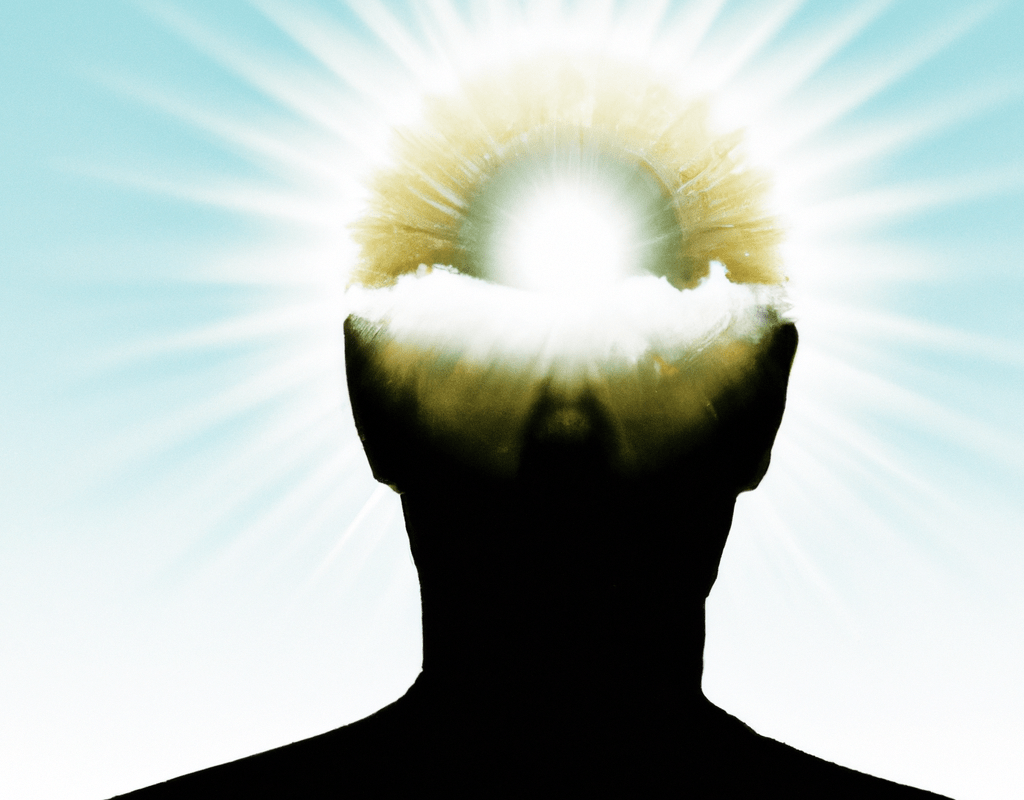
God be in my head, And in my understanding; God be in mine eyes, And in my looking; God be in my mouth, And in my speaking; God be in my heart, And in my thinking; God be at mine end, And at my departing.
Podcast: Audio rendition of this page content
Sir Henry Walford Davies put this traditional prayer to music as a hymn. Iain McGilchrist recited it as a poem after a brief setup in an interview.
I am an atheist, and the closest I get to gods is through metaphor, allegory, or allusion. And I don’t engage in it, but I understand when others invoke it. And to be completely honest, I was multitasking when Iain was reciting, and I misheard it, and this miss was more profound for me.
God be in my head, And in my understanding; Don’t be in mine eyes, And in my looking;
That’s what prompted me to seek it out and pen a post. In the original form, it’s more of an invocation. In my misinterpretation, I felt he was saying to keep God in your head as a metaphorical reference—as an archetype—, but God is not for the eyes and the looking. God is a matter of faith.
As for the rest, it flows the same. Speak as you understand it. Feel God in your heart, if you should so choose. Think about him if you wish. And carry this thought with you until the end if it brings you comfort.
Myself, I get no comfort from the notion. I don’t feel I need it, but it is a cultural phenomenon, so to be aware is a part of cultural and emotional intelligence.
I feel that I’ve always intuitively understood metaphor. I remember listening to Joseph Campbell in the 1980s as he was describing how one of his biggest challenges was to get people to understand the embodiment of metaphor and not just the vapidity of simple simile.
Chapter 10 of The Master and His Emissary is titled The Enlightement, which is to say another chapter centred around a religious theme and paradigm shift. Only it isn’t. This chapter is focused mainly on metaphor and poetry, and that’s where I want to comment.
If you haven’t happened to have read the prior posts on The Master and His Emissary orThe Matter with Things, I’ll summarise the functions of the left and right cerebral hemispheres. If you have, feel free to skip this paragraph. The left hemisphere is closing and convergent whilst the right hemisphere is expansive and divergent, The left is about naming, categorising, and analysing; the right is about experiencing the world as presenced. Where the right hemisphere is about presentation, the left is about re-representation. A challenge occurs when the re-presented view of the left supersedes the experiential view of the right. This is what occurs in a left-dominant brain.
Metaphor is a function of the right hemisphere. The left hemisphere considers metaphor to be a figure of speech. It trivialises it in one of two ways. Either, it reduces it to components that map to some other concepts—ignoring the parts that can’t be mapped—, or it assumes the metaphor to be whimsy and therefore without inherent value.
But metaphor is more than a figure of speech. It’s a figure of thought that can’t be reduced. Metaphor is like art or music and other residences of the right hemisphere. These things must be taken as whole entities and be considered in the manner of Gestalt.
Being analytical and representative, the left hemisphere can be educated. I could be wrong, but I don’t see how the right can be strengthened. It seems that its weakness is interference from the left, but the left is constantly wintering on that it’s always right, and all you need is to be more analytical. If you don’t have empathy, you can’t learn it. If you don’t understand metaphor, you’re pretty much out of luck. The same goes for anything in the experiential right hemisphere.
Might I be wrong? Sure, I’m no neuroscientist, but short of some external event, like a stroke, brain lesions, head trauma, or some such. I don’t see the vector. In a way, it’s like the advancement of technology. It’s difficult to stem the tide and reverse it. This is the challenge. In the West, we’ve been on a path to rationality and reason—left hemisphere fare—, which has shifted it further and further left. We just need more systems and processes.
Why the title, “Metaphor and Simile?” Metaphor resides in the province of the right hemisphere. Simile resides in the left. I remember listening to Joseph Campbell in the 1980s discussing the power of metaphor. Where metaphor is a mode of thought, simile is just a figure of speech. And it’s an analytical analogue. Love is like a rose. There’s a simple mapping. Love is a rose is more robust. John Lennon sings these lines in Mind Games.
Love is the answer and you know that for sure
Love is a flower you got to let it grow
Love is a flower. You got to let it grow. Grammatical structure aside—only an intractable problem for left-brainers—, this is a relatively simple metaphor, flowers grow and bloom; love grows and blooms.
Follows are another few famous metaphors. These may feel more accessible than some others.
“All the world’s a stage, and all the men and women merely players. They have their exits and their entrances.”
William Shakespeare
“All our words are but crumbs that fall down from the feast of the mind.”
Khalil Gibran
This one is particularly interesting as it suggests how diminutive words are relative to that of the mind—mere crumbs.
“And your very flesh shall be a great poem.”
Walt Whitman
How shall your flesh be a great poem? No like a great poem, but to be a great poem.
I’ve talked about Robert Frost’s The Road Less Travelled previously.
Two roads diverged in a yellow wood, And sorry I could not travel both And be one traveler, long I stood And looked down one as far as I could To where it bent in the undergrowth;
Then took the other, as just as fair, And having perhaps the better claim, Because it was grassy and wanted wear; Though as for that the passing there Had worn them really about the same,
And both that morning equally lay
In leaves no step had trodden black.
Oh, I kept the first for another day!
Yet knowing how way leads on to way,
I doubted if I should ever come back.
I shall be telling this with a sigh Somewhere ages and ages hence: Two roads diverged in a wood, and I— I took the one less traveled by, And that has made all the difference.
This poem is replete with metaphors.
The road itself is a metaphor for life, and the forks are the choices we make. Interpreted from a post-Modern perspective, and as Frost said himself, the trick is that it doesn’t matter which path is taken. In any case, irrespective of which paths you take, it will still make all the difference.
I’ve digressed.
McGilchrist says societies and people are moving too far into a left-dominant worldview, which only reinforces and accelerates this worldview. I don’t know how reversible it is. It’s swung both ways before, but that was prior to Scientism. This and hubris are not a great combination. In the end, the probability of teaching someone metaphor is on par with teaching someone to appreciate a work of art or a piece of music.
McGilchrist says we need to regain this capacity for metaphor—and empathy and so on—, but this requires (in my mind) a paradigm shift. I don’t see it happening at an individual level. There would need to be a cultural shift, and that is unforeseeable from here at the moment.
Here’s the challenge as I see it. In saying that we need to regain the ability to understand metaphor without assuming it can be deconstructed without a loss of meaning, he doesn’t provide a path—at least not yet. I’ve got two chapters remaining, so perhaps he’ll offer some guidance or conceptual framework in one of them. Otherwise, the future looks bleak. Of course, humans are adaptable. Evolution works that way, but you can also veer down an evolutionary dead end without knowing your journey has no viable future until you get there. And that will make all the difference.
In the spirit of full disclosure and to set the stage, I’m an atheist and can’t remember being otherwise. I’ve discussed this here before at length. Iain McGilchrist is not.
Religion is the topic of chapter nine of The Master and His Emissary. I understand what the author is saying, and I think a question I have about a fundamental issue is coming to head. Although I’ve spoken at greater length before, I’ll recapitulate here.
An assertion of McGilchrist’s is that we should judge the hemispheres by how well each corresponds to the truth of reality. He goes on to tell us that the left hemisphere is the controller of words, so we shouldn’t get hung up on the word truth and the definition that pales relative to the intuition of truth. I have an issue with this, but I’ll return to it in a moment.
As I’ve stated countless times by now, the left cerebral hemisphere is convergent and closing whilst the right is divergent and expansive. The left is intellect whilst the right is intuition. The left is categorisation, naming, and re-presentation whilst the right is Gestalt and presentation. The left is literal whereas the right is metaphorical. I’ll return to this presently.
Before touching on religion, I’ll articulate my challenge. He makes an unsubstantiated assertion that we can’t build a whole from a sum of parts. Instead, we need to accept the whole as presented as is, and realise that we may not be able to fully account for all of the parts. Just trust our intuition of the experience.
My contention here is that neither is quite right. Whilst the left hemisphere has the possibility of leaving things out, the right hemisphere has the possibility of adding irrelevant or otherwise injected content. In the case of religion, this would be along the lines of inserting a god of the gaps. I’ll come back to this.
All religions are not created equal. McGilchrist argues that Catholicism is a right-hemisphere religion whilst Protestantism, in particular Lutherans, operates from the left hemisphere. He even cites Max Weber’s writings noting the connexion between Protestantism and Capitalism. Despite being raised in an area with seventy-odd per cent Roman Catholics, I don’t know enough about Catholicism to critique that part of his assertion, but I agree with his statement on Protestants. As for my intuition, I’d say that all of the rote ritualism is a left-hemisphere function, but I’m not sure.
As he continues his argumentation he makes a case that religion needs to be taken metaphorically and cannot be deconstructed. This is to lose the proverbial woods for the trees. Of course, this is not only precisely what the left hemisphere does it’s also what the Protestant reformation did and Protestantism continues to do today. Like Capitalism, the focus is on the individual. For Catholics, it’s communal. Although he doesn’t cite Calvanlism and the ideal of work, the result is the same. Hard work yields a preternatural payoff.
I have no problem with metaphor, whether in speech, writing, art, or music. I’ve been a musician and dabbled in art. Much of my favourite fiction is metaphorical, and I don’t need to dissect it any of these to enjoy the experience.
religion can be experienced metaphorically
I am even willing to grant that religion can be experienced metaphorically. I have no quarrel here. Where his argument tends to lose ground is when it becomes prescriptive and systematised. Again, I am no expert on Catholicism, but I have attended Catholic church ceremonies. I even got ejected from CCD classes I had attended with a mate when I was eight or nine years old—not a great way to win hearts and minds.
When I lived in West Los Angeles—Palms to be exact—, my apartment was across the street from an Anglican church. Down the road, there was a Hare Krishna ashram—very diverse. I poked my nose into each. In fact, the Anglican church was my designated voting location, so I visited there on that occasion periodically. The spectacle of the smoke of frankincense and myrrh billowing out and wafting up is still a pleasant recollection. Frankly, I hadn’t thought of it in years, but writing about it returned the memories. Of course, the ashram had its own incense; only it was nag champa.
Some self-professed ‘spiritual’ people I have encountered, love the spectacle of a Catholic ceremony. There are candles, rituals, chanting, kneeling, chorals, and incantations. I can see how these can be taken metaphorically, but it’s also rote. But that’s not where my difficulty lay.
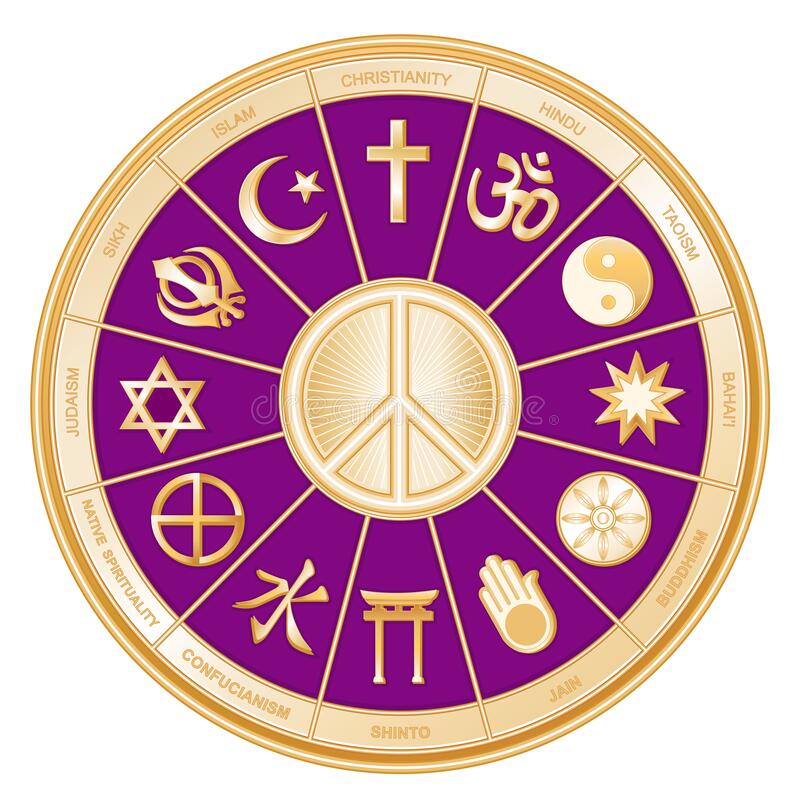
My problem is not that religion can’t be interpreted metaphorically. In fact, I can’t agree more. My problem is that this metaphor further aligns to God or to gods. But wait. I know what you’re thinking. Those are just metaphors, too. And I agree. The problem isn’t that I don’t grant or understand that. It’s that the parishioners don’t. They think there is an old bearded man in the clouds issuing commandments and listening for their prayers. And if you don’t toe the line and play nice, your eternal life prospects don’t look good.
He does argue that this fire and brimstone are artefacts of the Protestants, but this is what I see depicted in films and books. Obviously, the Southen Baptist preacher at the pulpit shrieking sermons is Protestant fare. On the other hand, Catholics have demons to exorcise and rosary beads and confession. I can see that these are metaphorical. Perhaps he’s right. I don’t know if Catholics have the equivalent of eternal hell. They do have—or did have—a purgatory. Do they have a decalogue. As far as I know, they do. Perhaps he was just speaking in relative terms—that Catholic tradition is just more right-hemisphere-oriented than Protestantism.
If this is the extent of his claim, we agree, but he goes further and invokes the divine. Yet again, I can accept this as a metaphor, but I feel he means it to be taken more literally. In any case, the followers seem to tend to.
With meditation … the idea is to let go and forego attachment
This brings me back to God of the gaps. Metaphors are concepts or notions. I say this because, metaphors don’t, for example, answer prayers. The act of praying may be metaphorical—perhaps I could equate it to singing or meditation—, but no physical action is expected in return. With singing, the effect may be a connexion or an emotion. The music is aiming to lift spirits or make one reflective or sad—perhaps add tension in a suspense movie. With meditation—guided meditation notwithstanding—, the idea is to let go and forego attachment. What do your suspect we are letting go of? What are we detaching from? The fetters of the left hemisphere—the bastion of judgment.
Prayer is different. On one hand, there is the metaphorical aspect of compassion and sharing, But it doesn’t end there. Susie has surgery and we pray for her recovery. Metaphorically, a believer may feel consoled by compassion. Even Susie may feel better, which will lead to a more positive disposition that may lead to faster recovery and healing, even if by placebo effects. On the other hand, perhaps not. And then there’s distance healing where the recipient isn’t even aware of the prayers, but they are either brokered by God or simply permeate the fabric of the universe or Jung’s collective unconsciousness. This is where it goes off the rails.
So, when I am asked to accept religion metaphorically but am also asked to accept magical thinking as part of that equation, I’m just not on board. Sorry. It makes no sense and doesn’t even feel intuitively right.
religion is about power
Call me a cynic, but for me, religion is about power. Perhaps at one time, the religious experience was a feeling, but all evidence points to this being almost immediately exploited by the priest classes and then by Government and other nefarious actors. Some countries are worse than others, but that’s no consolation.
In the end, I get the religion-metaphor connexion, and I trust that Iain is not so naive to see the Foucauldian power-control angle. Besides, if culture is shifting to the left hemisphere and can’t interpret metaphors very well—something experience demonstrates—, so I’m not sure the defence holds as much water as he wants it to.
“Education is an admirable thing, but it is well to remember from time to time that nothing that is worth knowing can be taught.”
— Oscar Wilde
I’ve loved this quote since I first read it however many years ago. I used to have a plaque with this inscription hung on a wall. This quote came back to mind when I was reading more McGilchrist. I expect to post the summary of chapter nine of The Matter with Things by the end of the weekend. I’ve read it and am now extracting a summary. But I digress.
“Education is an admirable thing.” This is a testament to the left cerebral hemisphere, although it provides fodder for the right as well. Instruction is about categorisation and structure; language and rote; stuffing out brains with facts and trivia.
But “nothing worth knowing can be taught.” This is a right hemisphere conceit. It can’t be taught because it must be experienced.
One can’t teach allegory.
One can’t teach allusion.
One can’t teach metaphor.
One can teach simile.
One can teach poetry, but one can’t teach a poem.
One can teach art, but one can’t teach a work of art.
One can teach music, but one can’t teach the qualia of music. That’s a minor key. You’re supposed to feel sad there. That’s a major seventh chord, doesn’t that uplift you? And what about this raga?
What can’t be taught lay in the realm of intuition and feeling. Emotional response.
“My mom always said life was like a box of chocolates. You never know what you’re gonna get.”
Forrest Gump
The leading quote cannot be more appropriate for my experience trying to render Forrest Gump in a forest. It may be me, but I want to blame the technology. I was trying to render a metaphorically appropriate image of missing the Forrest for the trees by literally placing Forrest Gump in the woods. Let’s just say your mileage may vary.
Native Midjourney renderNative Midjourney renderMidjourney render via DALL-E source
My first attempt was to prompt Midjourney with this string:
forrest gump standing in a savannah georgia forest cinema photorealistic high detail
I seem to have got [a] (possibly) Forrest Gump standing; [b] a Savannah forest [c] (perhaps) Forrest Gump in a cinema; and [d] a larger-than-life Forrest Gump standing among the trees.
Let’s try something new to see where it goes:
tom hanks forrest gump standing in a savannah georgia tree forest cinema photorealistic high detail
Hmm. I certainly see the rendering engine picked up on the tree tag, but what became of Forrest and Tom. There seems to be a figure standing in the distance. Not exactly impressive. Let’s switch from Midjourney to DALL-E-2 and tweak the prompt:
tom hanks as forrest gump wearing a seersucker suit and standing in a savannah georgia tree forest cinematic hyper-realistic
Various DALL-E-2 renders of Forrest Gump in a Savannah, GA, forest
Note that these are in reverse chronological order, so the lower images were rendered first. Dall-E renders 4 images at a time, as does Midjourney. After the bottom four images, I added Tom Hanks‘ name and the seersucker suit for obvious reasons.
I added his seersucker suit that seemed to (occasionally) make its way into a render. It is looking better, but I am not convinced that DALL-E knows about Tom Hanks. In the final four images (from the top left), I edited the fourth image on the second row and explicitly instructed Dall-E to insert Tom Hanks’ face without much luck.
I had one more idea. I could use the DALL-E render as a seed image for Midjourney. This is the last image at the top of the gallery strip at the top of this page. Certainly more Tom Hanks’ likeness, but at the expense of the trees, save for the first in the quadrant that appears to contain only trees.
In the end, I’ll just say that I did not obtain a suitable render for use as a metaphor elsewhere, but I did get fodder for this post. I have to admit there’s a certain creep factor. I can easily imagine Michael Myers from the Halloween franchise—not to be confused with Mike Myers of Austin Powers and Shrek franchises—in place of Forrest.
DALL-E-2 is now in open beta, and you can generate up to 50 free images your first month and 15 free thereafter. It’s the easier of the two engines. Midjourney needs to be run as a Discordbot and seemed to be aimed more at professionals, but you can still get 25 free images when you join. After 25 images, you’ll be prompted to join.
What do you think? Have you tried these or another AI image generation engine? Let me know in the comments.
The hemispheres of the brain have functional differences. I created a short-form video on YouTube, so it’s less than 60 seconds.
Transcript
If you see a face in this image (in the accompanying video), you can thank the right hemisphere of your brain. The right hemisphere is about unity and the whole—a Gestalt. It fills in missing pieces to construct a whole. And it’s usually pretty good at it.
Think of the right hemisphere as Zen. It’s about experiencing the world as presented. It experiences the world without judgment, without attachment, without naming. It’s about openness and options. The left hemisphere is about division and parts. Where the right hemisphere wants to open up, the left wants to close down. And it’s about creating maps and symbols, then re-presenting these. Where the left hemisphere of the brain is focused on the trees, the right hemisphere sees the forest or the woods.
The left hemisphere is what creates our sense of self and individuality whilst it would probably not be unfair to characterise the right hemisphere as the Buddhist notion of selflessness and an undivided universe, where ‘self’ is an illusion. The left hemisphere is literal whilst the right is metaphoric. It is also the realm of poetry and empathy.
Not explicitly about Kübler-Ross. In the 1990s, I enjoyed listening to the stories of a cantadora—keeper of the stories—, Clarissa Pinkola Estes and her Theatre of the Imagination. Many inspirational stories. That I deem psychology as a pseudoscience does not mean that it serves no purpose. It runs aground where they interpret metaphor for the actual—the symbol for the object. There is a lot to glean from symbols as representations, and one can even apply them to their lives, but never conflate the map for the terrain.
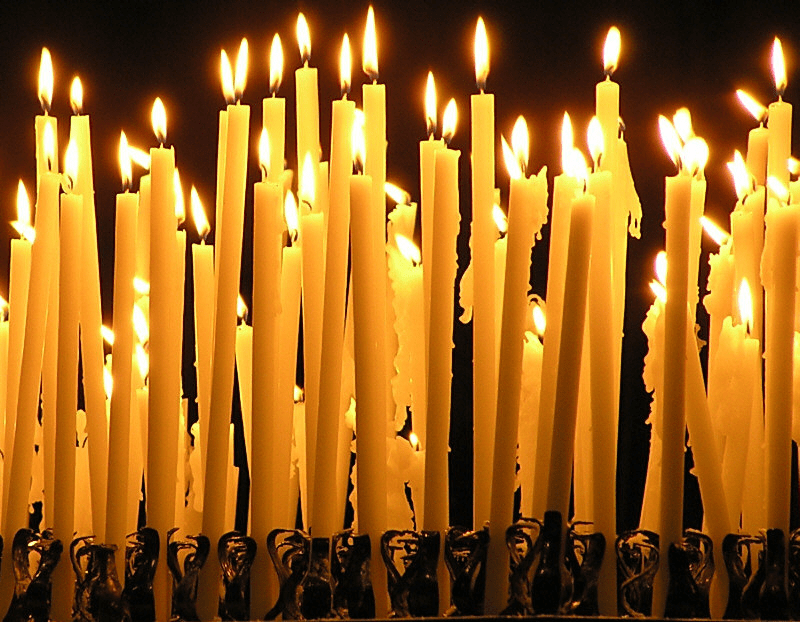
I loved Baba Yaga, but the one I am reminded of today regards candles as measures of life remaining. In this story, a person on a deathbed pleads with Death.
Death explains that the candles represent peoples’ lives and their life force.
Some are tall and burning brightly whilst others are on the verge of being snuffed out
The Dying assumes that all the tall and bright candles must represent young children and that the ones with almost no wax and wick to burn are the elderly.
Death explains:
Some children have very short candles.
And some of the very tall and very bright ones are very old people.
‘Look, here is yours’, Death tells him.
The Dying is directed to one of the dimmest, most pathetic, struggling-for-its-last-few-moments-of-burning-candle in all the land.
I just published a video on YouTube—just over 7 minutes long. I’ll be publishing the audio as a podcast and will share the script here as well.
Human Agency is an illusion. This is the end of the story. If you listen for a while, you’ll hear as I rewind and pull back the curtains.
[Redacted]
Let’s get started.
Human Agency is an illusion.
Think of life as a motion picture that’s already been filmed. The ending is already known. The script has been written and performed by actors already chosen and hired.
I like this visual, but it’s not quite right. The end is not known in the same sense as that of the movie. It’s just as inevitable, just unknown.
Some might prefer to use the metaphor of cascading dominos. And this might even play better into the illusion. Some unforeseen force might intervene and stop the otherwise inevitable. But even this is beyond our control. Like an action-adventure story, we’re strapped into a runaway train and just along for the ride. This train might someday stop, but we’ll have had nothing to do with it. Enough of metaphors. What am I saying? Why am I saying it? And what does it mean?
Allow me to set up the scene. From there, I’ll elaborate.
For millennia, there’s been a debate over free will and determinism. These terms have been defined in different ways in an attempt to sway the argument for or against, one way or another. It turns out that for the human agency illusion, it doesn’t much matter, but it might still help to set the stage, so let’s establish some foundation. I like to consider free will and determinism as bookends.
free will is the ability to make a choice and have had the ability to have chosen otherwise
Commonly, free will is the ability to make a choice and have had the ability to have chosen otherwise. That one can make this choice of their own accord or volition, is typically added for good measure. On the other hand, determinism says that everything that happens is determined by everything that has happened prior in a chain of cause and effect. Like dominoes falling one after another, so some event has caused another event since the dawn of time. Perhaps before time.
Some have argued that random events occur in our universe. Quantum theory suggests this. But that these events happen, doesn’t mean that we as humans have any say in the matter. This is what is known as indeterminism. Causes and effects are not so cut and dry. Some stochastic event serving as an exogenous factor manifesting as a pigeon, can swoop down and break the causal domino chain, but that doesn’t afford us human agency. A little more background. Some hold that free will and these alternatives are either mutually exclusive, or they’re compatible with each other. Not surprisingly, those who believe that these can coexist are called compatibilists, whilst the others are incompatibilists.
What I am saying is that if we allow that this wide shot might have validity, we can zoom in for a tight shot on the agent and notice that it doesn’t really matter. Some have said that the freewill versus alternatives challenge is a pseudo-problem. I am going to agree for the time being, if only for expedience. Before getting to the illusion of agency, let’s see why this situation creates problems.
Without getting too deep, humans seem to be wired to view their reality in a manner of cause and effect. Moreover, they seem wired to attribute blame based on this presumed causal relationship. Oksana hit a homerun. We should praise her. Raj robbed a store. We should blame him. Western society is constructed with this worldview, so we create rules and laws. We may even choose to codify how to rehabilitate or punish him. Or to reward her.
Without agency, there is no cause to praise or blame
Without agency, there is no cause to praise or blame. Whilst I consider it a pathology, for better or for worse, given the human propensity to blame concomitant with the agency illusion, I don’t see this changing any time soon.
There are arguments around quarantining bad actors independent of their agency or lack thereof on the grounds of public safety. Even this logic has serious holes, but we’ll save that for another time. And now the big reveal. With a reminder that my intent is to not go deep, how can I say that human agency is an illusion? Let’s start with the science.
As a lifeform, humans are a product of heredity, genetics, and epigenetics. Essentially, DNA passes information from generation to generation. Besides determining our physical attributes—head, shoulders, knees, and toes, potential height and weight, pigmentation, sex, and so on, it also establishes our temperament—our base attitude and way we perceive and interpret the world. This doesn’t make us clones or robots or automatons, but it does comprise some percentage of what we are. Identity politics aside, we don’t have much control of our sex, finger count, or eye colour. Clearly, we aren’t talking about trans-humans and cyborgs here.
Genetics and so on aren’t the only factor. Behaviourists will remind us that the environment and circumstances mould us, too. Each of us is taught mores and moral codes; how to behave and act. We are raised in a structure comprised of family, school, church, peers, larger society, authority figures, and whatever else—ostensibly like a sausage being stuffed into a skin.
Beyond the genetics that we have no control over, we are products of our environment
Beyond the genetics that we have no control over, we are products of our environment. These things interact, but there is nothing of us that we are responsible for creating. Despite the motivational tripe, we cannot create ourselves. This, too, is an illusion—delusion if I am being less charitable.
I’ll reserve elaboration for future content. In a nutshell, you’ve got no agency. Every choice you make is based on prior events. Even something as simple as choosing to order a chocolate or vanilla ice cream in a cup or a cone, sugar cone or waffle cone is predicated on some prior events, and you had nothing to do with them. You were a passive vessel.
I’ll leave with two relevant quotes.
A man can do what he wants, but not want what he wants.
Arthur Schopenhauer
And as Galen Strawson puts it,
You do what you do, in any given situation, because of the way you are.
So in order to be ultimately responsible for what you do, you have to be ultimately responsible for the way you are—at least in certain crucial mental respects.
But you cannot be ultimately responsible for the way you are in any respect at all.
So you cannot be ultimately responsible for what you do.
So there you have it. I hope you found this cursory treatment interesting and informative if not provocative.
[Redacted]
I’m interested in hearing what you think. Do you think you have agency? Do we have free will, or is everything determined at the start? I didn’t even mention religion. Does that throw a spanner in the works? Let me know.
The lamb spends all its time worrying about the wolf and ends up being eaten by the shepherd.
— Unknown
I think one could look at this from several perspectives or through different lenses.
We worry about the wrong things.
At some level, this is about trust.
We trust the wrong people. Those whom we most entrust do us in. But I feel this is contextual.
One might feel this shepherd is Capitalism or the State or organised religion. Perhaps it’s culture or identity cohorts. Or all or these or none of these.
On another level, it recalls the inevitability of death. This shepherd reaper is always waiting in the wings whether or not one worries.
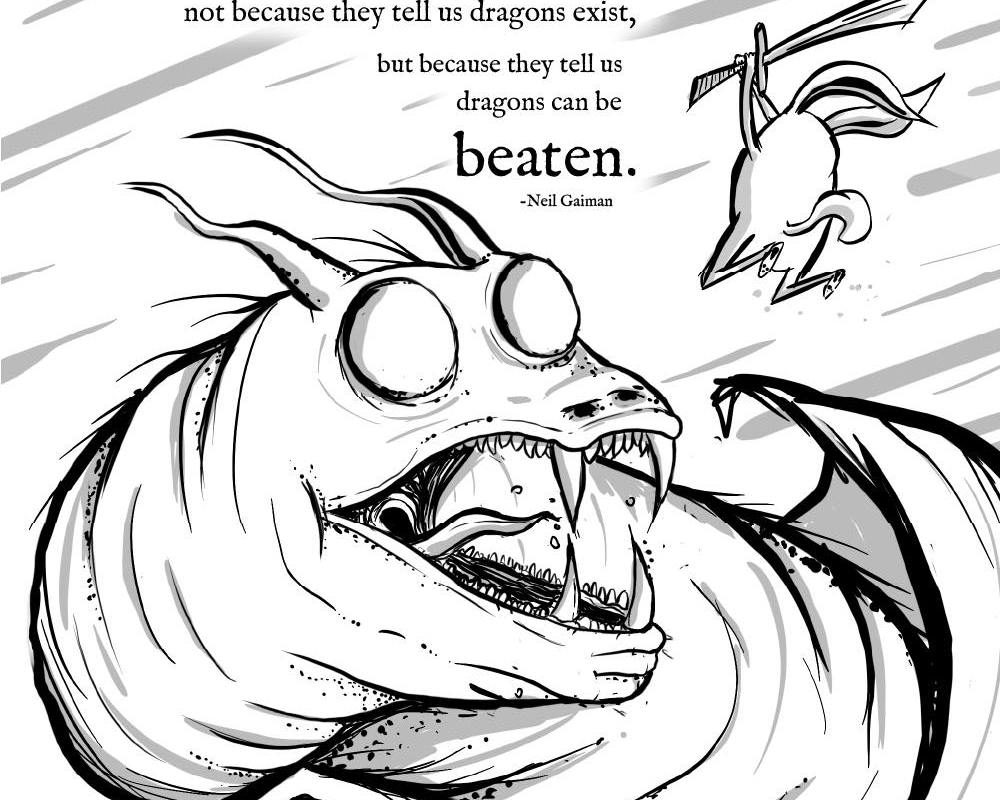
Neil Gaiman, an articulate, imaginatory writer. He makes a claim:
Fairy tales are more than true — not because they tell us dragons exist, but because they tell us that dragons can be beaten.
Neil Gaiman
To me, this is a problem with correlating imagination with truth. Moreover, many a war was lost on the story that it could be won.
Of course, we can still play the metaphor game. I’ve been a fan of metaphor since Joseph Campbell. Metaphor is strength. There was a time when I read Jung and had a stronger interest in Depth and Archetypal Psychology. And fairy tales per Marie-Louise von Franz or her more contemporary cantadora, Clarissa Pinkola Estes. Archetypes are metaphor, but this doesn’t render them real. Still, we can operate as if they are. The trick is to remember that they are not.






 Philosophics