Democracy: The Idiot’s Opiate, The Sequel Nobody Asked For

Yesterday, I suggested democracy is a mediocre theatre production where the audience gets to choose which mediocre understudy performs. Some readers thought I was being harsh. I wasn’t.

A mate recently argued that humans will always be superior to AI because of emergence, the miraculous process by which complexity gives rise to intelligence, creativity, and emotion. Lovely sentiment. But here’s the rub: emergence is also how we got this political system, the one no one really controls anymore.

Like the human body being mostly non-human microbes, our so-called participatory government is mostly non-participatory components: lobbyists, donors, bureaucrats, corporate media, careerists, opportunists, the ecosystem that is the actual organism. We built it, but it now has its own metabolism. And thanks to the law of large numbers, multiplied by the sheer number of political, economic, and social dimensions in play, even the human element is diluted into statistical irrelevance. At any rate, what remains of it has lost control – like the sorcerer’s apprentice.

People like to imagine they can “tame” this beast, the way a lucid dreamer thinks they can bend the dream to their will. But you’re still dreaming. The narrative still runs on the dream’s logic, not yours. The best you can do is nudge it; a policy tweak here, a symbolic vote there, before the system digests your effort and excretes more of itself.

This is why Deming’s line hits so hard: a bad system beats a good person every time. Even if you could somehow elect the Platonic ideal of leadership, the organism would absorb them, neutralise them, or spit them out. It’s not personal; it’s structural.

And yet we fear AI “taking over,” as if that would be a radical departure from the status quo. Newsflash: you’ve already been living under an autonomous system for generations. AI would just be a remodel of the control room, new paint, same prison.

So yes, emergence makes humans “special.” It also makes them the architects of their own inescapable political microbiome. Congratulations, you’ve evolved the ability to build a machine that can’t be turned off.

Democracy: Opiate of the Masses

Democracy is sold, propagandised, really, as the best system of governance we’ve ever devised, usually with the grudging qualifier “so far.” It’s the Coca-Cola of political systems: not particularly good for you, but so entrenched in the cultural bloodstream that to question it is tantamount to treason.

Audio: NotebookLM Podcast on this topic.

The trouble is this: democracy depends on an electorate that is both aware and capable. Most people are neither. Worse still, even if they could be aware, they wouldn’t be smart enough to make use of it. And even if they were smart enough, Arrow’s Impossibility Theorem strolls in, smirking, to remind us that the whole thing is mathematically doomed anyway.

Even this number is a charade. IQ measures how well you navigate the peculiar obstacle course we’ve designed as “education,” not the whole terrain of human thought. It’s as culturally loaded as asking a fish to climb a tree, then declaring it dim-witted when it flops. We call it intelligence because it flatters those already rewarded by the system that designed the test. In the United States, the average IQ stands at 97 – hardly a figure that instils confidence in votes and outcomes.

The Enlightenment gents who pushed democracy weren’t exactly selfless visionaries. They already had power, and simply repackaged it as something everyone could share, much as the clergy promised eternal reward to peasants if they only kept their heads down. Democracy is merely religion with ballots instead of bibles: an opiate for the masses, sedating the population with the illusion of influence.

Worse still, it’s a system optimised for mediocrity. It rewards consensus, punishes brilliance, and ensures the average voter is, by definition, average. Living under it is like starring in Idiocracy, only without the comedic relief, just the grim recognition that you’re outnumbered, and the crowd is cheering the wrong thing.

English Language in Decline

My first academic love was linguistics, and I am still very interested in language. Besides philosophy, I spend a lot of time researching, reviewing, and enjoying content on linguistics and music.

I’ve listened to several episodes of Jade Joddle, and she’s become disheartened with the decline of the English language—in particular, the demise of British English. In this clip, she shares her perspective on what she feels are the causes.

One of her peeves is American English. I know, right? Specifically, the bollox known as Netflix. Although it’s difficult to disagree with tripe that passes as content on Netflix, I’ll have to disagree with the notion of declining. It’s obvious that Jade is a prescriptivist—a characteristic more evident in women than in men for some reason—and a nostalgic conservative. She sees change as negative or dangerous, so she resists.

What’s interesting to me is that as a language teacher she doesn’t have a strong grasp of the fluidity of language. I’d love to see her in dialogue with John McWhorter or someone of this nature.

Jade has an episode from perhaps 2020 where she explains why she doesn’t smile much—because she’s serious. She is genuinely put off by a supposed lack of literacy and decay of standards. In her earlier videos, she was more playful and even performed what might be considered to be skits. She went on location, but then something changed.

Meantime, I do my part in maintaining proper British English—or World English, as I prefer to call it.

The first person who says she sounds like one of the teachers on Peppa Pig gets a demerit.

Democracy Ă  la Carte

I’ve been pondering the notion of democracy. This is not new for me. I’ve looked around and asked myself, ‘If democracy is so great, why is it not more widely adopted’. I don’t mean why don’t other countries try it? And I don’t mean to confound the issue by arguing that a republic is not a democracy, the last refuge of the desperate.

Democracy is a pathetic belief in the collective wisdom of individual ignorance. 

H. L. Mencken

Mencken offers more critique in his Notes on Democracy.

What I wonder is why, if it’s so good, why don’t companies structure democratically? Why not the military? I’ve always found this particularly humorous: An autocratic, socialised structure defending democracy. Some of the biggest democratic flag-wavers are military and ex-military.

I know that most military members in the US would be lucky to work flipping burgers at McDonald’s. Some speak of the mental illness and homelessness of military veterans, but this misses the direction of the arrow of causation. These people had a free ride, room, and board on Uncle Sam’s dime in the States—some other denomination elsewhere. It’s really no wonder that one wouldn’t want to give these people a voice in military affairs, and yet they do get a voice in civilian affairs. It’s a good thing almost half of Americans eligible to vote don’t.

The best argument against democracy is a five-minute conversation with the average voter.

Winston Churchill

I’ve already mentioned that democracy is a sham and its best feature is the illusion of control. I suppose if I come up with something better, I might write about it. Until then, it’s just one of many mediocre options.

Interestingly, some people’s options are asinine. Frank Karsten hawking his book and ideology on Beyond Democracy thinks that downsizing is the answer. Hans-Hermann Hoppe agrees, as he posits in several essays in Democracy: The God that Failed. I don’t disagree, but his basic point seems to be that 300MM people deciding is too much, so perhaps 10MM or 20MM might work better. What’s the limit? Why not 150? How is conflict among this smaller political units adjudicated? With this downsizing, how does the system control the urge for upsizing? In the end, this feels like more Libertarian, anarcho-capitalistic mental masturbation, which as I type this feels redundant. Unfortunately, the common denominator is people, and that’s Achilles’ heel.

Defending Democracy

2–3 minutes

Indeed, it has been said that democracy is the worst form of Government except for all those other forms that have been tried from time to time. 

Sir Winston Chirchill

I am not a defender of or apologist for Democracy. Any system is only as strong as its weakest link, but save for the rhetorical promises Democracy is nothing but weak links. Turtles all the way down. It’s another failed Enlightenment experiment. Sure, you can argue that the Ancient Greeks invented democracy—or at least implemented it at any scale—, but specious Enlightenment ideals pushed it forward into the mainstream.

The Achilles’ heel of Democracy is the principle-agent problem, the same one that separates management (CEOs) from owners (shareholders). Incentives are different.

Achilles’ Heel

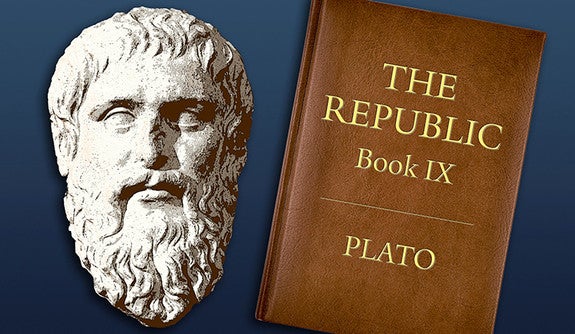
Plato published his solution is Republic, but this proposal was naive at best. The notion that meritocracy is something real or that we can appropriately understand dimensions and measures in order to create the right incentives is another weak link.

Plato’s Republic

We see the same problem controlling elected officials. Time and again, we elect them, and time and again, they disappoint. We, the People, are the principles, and the elected are our agents. People in the US (and in so-called ‘democratic’ societies) have the vote, and yet—per the oft-cited definition of insanity—, they perform the same action and continue to expect different results; in fact; they are always surprised). At its core, it’s an incentive and accountability problem.

Kenneth Arrow wrote about the Impossibility Theorem, where he proved mathematically that no voting system would yield optimal results. Democracy is cursed with mediocrity. We like to soft-pedal the notion of mediocrity with the euphemism of compromise, another Ancient Greek legacy of moderation. If this makes you feel better, who am I to break the delusion? Cognitive dissonance is a powerful palliative.

μηδέν άγαν

Do Nothing in Excess, Delphic Oracle Inscription

Interestingly enough, many people clamour for term limits (a subversion of democracy) because they can’t help themselves from voting for the same shit politicians over and again. They rationalise it and say it is to defend against the other guy’s vote because they’d have never voted for shit representation.

This is often couched as ‘save me from myself’, but it is just as aptly cast as ‘save me from democracy’. I suppose a heroin addict might have the same thoughts.