Nontonomy

Being critical of freedom, liberty, and autonomy is likely to make one the subject of scorn and derision. Most people tend to feel these things are self-evident attributes and goals, but they are all simply rhetorical functions. I was reading a passage in Mills’ On Liberty, where he posits

That the only purpose for which power can be rightfully exercised over any member of a civilized community, against his will, is to prevent harm to others. His own good, either physical or moral, is not a sufficient warrant … Over himself, over his body and mind, the individual is sovereign.

On Liberty, John Stuart Mill

It should come as no surprise that I question a position adopted by the Enlightenment Age. These geezers posited that many things were self-evident, but all of this is self-serving magical thinking, and there is no reason to have truck with any of it. These are all normative claims being dressed as positive, non-normative, ones, hoping to skirt scrutiny by employing a position of self-evidence.

I am generally critical of any notions of identity and self from the start, so affixing some attribute of power to it seems just silly.

It seems that I again am distilling this notion to a power equation. As a person, I want to claim power, if anything, over my self however that might be defined. And though, I would like this, too, it is nothing more than some emotional reaction.

Without delving into the depths of autonomy quite yet, on a proverbial desert island—as necessarily the case with any social constructs, where these notions are meaningless without a social context—adding a second person creates friction. Person A seemed to have full autonomy on this island—notwithstanding the other life forms on this island that are somehow never granted autonomy—now has had this autonomy reduced by the presence of Person B.

Firstly, Person A may have claimed this island to be their own. Given this, Person B is infringing on this autonomous decision, having arrived sequentially. Is Person B tresspassing? Does their presence harm Person B, be limiting their autonomy however slightly?

Mills’ concept is one of no harm: one is free to do what one chooses as so long as it doesn’t harm another. Accordingly, it says one is free to harm one’s self—essentially treating the self, the corpus, as personal property. Just as one could damage a piece of personal furniture, one could damage themself. I am not sure if Mills intend this to extend to suicide, but that’s not an important distinction here, so I’ll move on.

Let’s return to Person A on the island—only Person A is a woman and Person B is a fetus. What rights and autonomy does Person B now possess? For some, it has full autonomy; full personhood. Still, Person B is ostensibly trespassing, so does this autonomy even matter if it exists?

If you are Person X and own a house, and I, as Person Y, enter into it, how does this differ from A and B? Can you justify disallowing Person Y from exercising autonomy whilst supporting Person B? I don’t want to make this about abortion, so I’ll keep stop here.

Colourless Green Ideas Sleep Furiously

I was thinking about a story idea, but it seems too daunting to attempt. Call it a mind experiment tethered to solipsism. The conceptual framework is this:

The premise is that ‘reality’ is generated in real-time—except there is no time; there is no space. All of this is constructed. Think of the sort of dream you may have experienced where physics-defying events occur. These dreams don’t care about the continuity of time or space. You can instantly be here and then there irrespective or where here and there are. One may even be in both places at once or nowhere at all. One can transform from one state to another or even be stateless. One doesn’t require an ego or a sense of I; rather, the I may shift without effort or it might dissolve. We are not encumbered by bodies. Vonnegut’s short story Unready to Wear—that for some reason indexed in my recollection as Pas prêts à porter.

In this world, perception is loaded into memory. But unlike a typical video game, the rest of the world is not a telos. It’s rather procedurally generated. In fact, even this is a poor analogy because the generation could be some stochastic process with no need to connect event 0 to event 1.

Empirically, events rely on preceding events. This is the world of cause and effect—a snooker ball collides with another and causes it to fall into a pocket; a stock price rises or falls, but these are not random events as they are inexorably linked to the past. As no one expects an unperturbed ball to jump into a pocket any sooner than one would expect a stock price to be truly random–to jump from 100 to 2 to 999 to 42. But with dreaming, all of this is possible.

Returning to the video game metaphor, what you see in the moment is all that is real. If you look in a particular direction, a table with a lamp and book on it might appear to be situated next to a chair; that registers as reality. But if you look away and then back, none of this needs to remain there. There needn’t be a table or a chair. Or there could be, but they don’t have to be the same table and chair; and there needn’t be a book.

In this reality, the mind—label it as you will—continually reconstructs whatever it wants to, simultaneously—apologies for the temporal terminology, but communication is restricted to the convention of shared meaning—and whatever it generates arrives with a plausible backstory. Given this, any history or relationships are always part of this fiction. Cognitive devices would be active to ensure this backstory appears to have continuity with our sense of the past; rather, it generates this plausible past. This past only has to be plausible in the moment—enough to hold the illusion together.

Consider a nebulous dream. These dreams don’t need to conform to conventions of time and space. But when we occasion to convey these dreams to a journal, a mate, or a therapist, we are forced to fit into a conventional spatiotemporal structure–first, this happened and I was here, and then that happened and I was there. But this was not the reality of the dream. This is subjectively experiential and so cannot be conveyed. In these dreams, there are no rules, but we apply structure that wasn’t really there in the first place; but we interpret time and space linearly and contiguously—even where no such structure exists. I think it would tedious to write and difficult to follow….. Perhaps better suited for an AI author.

To put a finer point on it, I’ll leave with a snippet. Let’s begin with the chair next to a table with a lamp and a book set upon it. You are a nuclear scientist on your way to a job interview at 3:30pm because why not?


A scheduled alarm awakens you. A clock on a bedside table reads 8 a.m. Your focus is on an interview this afternoon at 3:30, so you don the suit you’d set out the night before.

In the kitchen, you decline your partner’s offer of the soup he’s heated for lunch. He routinely eats soup for lunch on Thursdays.

The engine is still making a ticking sound, but you are distracted by the woman fussing with her makeup on the commuter train.

You’ve always preferred to take notes by hand with a fountain pen, having found the mass of the implement to add weight to your ideas.

Your wife, sipping café au lait on the sofa, smiles adoringly at you as you walk through the living room. She’s wearing that azure sweater she bought in Anchorage—or was it Chicago? The telephone rings.

“The captain has asked all passengers to fasten their seatbelts and prepare for a landing. We’ll be arriving at London Heathrow in about 20 minutes.” You close your laptop and acknowledge the flight attendant as she walks past.

You hang up the phone and tell your girlfriend it was a wrong number. You’re not sure that she believes you, but the barking dog distracts you. You don’t prefer to take lunch in public parks. You prefer the beach.

You pay for the trousers and accept the recommendation to purchase a leather belt. You’ve got to get back to your office. There’s not usually traffic at this hour. That’s why you left before 11.

Out of the corner of your eye, you catch a glimpse of your husband. What’s he doing in Sydney? You tell yourself that you must be mistaken and eat the last morsel on your plate, the waiter hovering with the check.

Ten more minutes you tell yourself as you glance at the clock on the wall. Don’t go off you plead with the alarm clock, but the cat walking across the bed tells you that this ten minutes will not be used catching up on sleep.

“Four. Seven minus three is four,” you offer.

“Very good. And what is seven plus three?”

This is your favourite part of Phantom, but you wonder what became of your date. On one hand, he seemed like a nice guy.

“There are only eleven. It says a dozen.”

You continue to read the same paragraph over and again but it doesn’t seem to make sense.

Why is that guy looking at you? He must know that you know that he’s staring.

You are trying to find the heat of the stage light so you can get into the shot. “Line?” you ask.

You lock the door of your hotel room behind you as imagine crashing on the bed in front of you, but you’ve just noticed that you’d forgotten your luggage.


As I just took a stream of consciousness approach save for actively quashing any semblance of contiguity. To be honest, I seriously considered entering snippets into a spreadsheet and then randomising the concepts. Another thought was to approach it like Mad Libs, but I opted for a more organic approach.

In the end, my goal was to dissolve concepts of sex or gender of time and place and of context in general. Looking back, it seems one could create continuity differently. In dreams I’ve experienced, I’ve awakened to discover an element in the environment likely inspired the events in a dream, so perhaps the ticking of the engine could have derived from the ticking of the alarm clock.

My initial goal was not one of continuity, but reading ex post facto, it might need something to keep attention—rather a string to follow out of the labyrinth. On the other hand, that is more of a testament to a need for some narrative.

And so it goes…

Shout out to Nick Bostrom’s essay Are You Living In a Computer Simulation?

Roland Barthes on Rereading

Roland Barthes explains that rereading is difficult because when you reread, you are performing a deeply counter-cultural act. He writes that « the commercial imperatives of our society, oblige us to squander the book, to throw it away on the pretext that it is deflowered, so that we may buy another. »

Barthes writes that « rereading is no longer consumption, but play », and that probably says it best.

The new book you’re looking for is probably already on the shelf – right where you left the old one. « Rereading, an operation contrary to the commercial and ideological habits of our society, which would have us “throw away” the story once it has been consumed (“devoured”), so that we can then move on to another story, buy another book, and which is tolerated only in certain marginal categories of readers (children, old people, and professors), rereading is here suggested at the outset, for it alone saves the text from repetition (those who fail to reread are obliged to read the same story everywhere), multiplies it in its variety and its plurality: rereading draws the text out of its internal chronology (“this happens before or after that”) and recaptures a mythic time (without before or after); it contests the claim which would have us believe that the first reading is a primary, naïve, phenomenal reading which we will only, afterwards, have to “explicate,” to intellectualize (as if there were a beginning of reading, as if everything were not already read: there is no first reading, even if the text is concerned to give us that illusion by several operations of suspense, artifices more spectacular than persuasive); rereading is no longer consumption, but play (that play which is the return of the different) ».
— Roland Barthes, SZ : An Essay, Translated by Richard Miller, Hill and Wang 1974

With few exceptions, I don’t reread entire books. I do refer to complex and favourite passages. My justification is that there is so much I haven’t even touched, so is it better to master once-experienced material over the expansion of material? In defence of rereading, sometimes perspective has changed and additional experiences provide different facets for reflection—and this has happened to me—, but how does one determine the value of retrod paths?

No Better Time Than Now

I saw this first on LinkedIn—that Instagram for personal promotion in a sea of vanity and hubris of all flavours—and had been sourced from Twitter, a more free-form universe.

Image

As the narrative went, this was written by a Parkinson’s-afflicted father to his daughter. There are many ways to interpret this. Ostensibly, it’s in line with Nike’s Just Do It tagline of a few decades back or perhaps Joseph Campbell’s advice to follow your bliss, but what is it?

To me, the it involves socially sanctioned activities, whether in commerce or the arts. If the it is robbing banks or shooting fentanyl, perhaps the drive should rather be suppressed. So the do it or go for it operates within boundaries. Nothing new here.

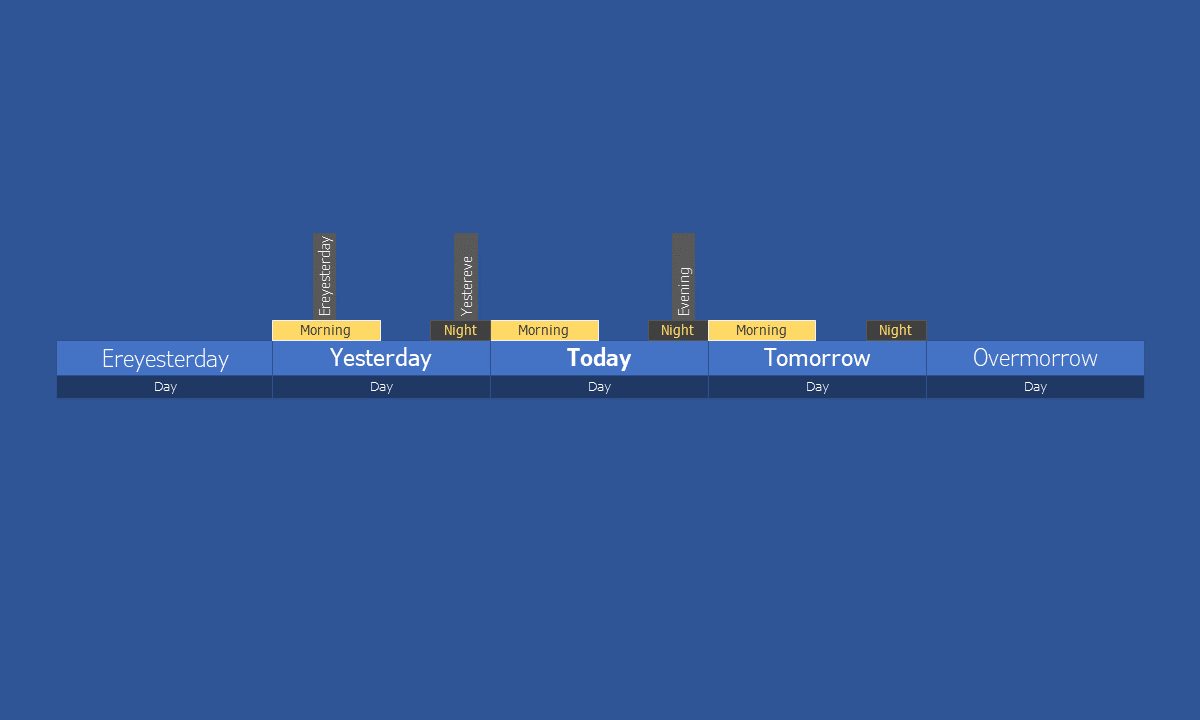
Then there’s the ‘no time is better than now’—exclamation—bit. Why privilege now? Why wouldn’t it have been a better yesterday or last week or tomorrow?

I love quotes—or they pique my interest—if they interest me. But vapid platitudes annoy me to no end. They are beyond being trite. I suppose I can forgive the person who finds solace in this note, but these almost always preach to the choir. They resonate with the daughter—first on an emotional level owing to the familial connection and next to a connection in worldview. I don’t need to point out the connection between worldview and upbringing. Let’s pretend there is no covariance.

Meantime, whatever you’re doing go for it. Just do it. Or not. Take the path on the left. Or the right. Or just sit and meditate. Or turnaround and try something else. But whatever you do, just do it. There’s no better time than now.

Dialetheic Logic and Reality

It’s too late for me to digest this piece on Graham Priest’s Radical Dialetheic Logic and Reality, but I’m interested enough to bookmark it here.

The word dialetheism comes from the Greek δι (di- ‘twice’) and ἀλήθεια (alḗtheia ‘truth’). It’s the view that there are some statements which are both true and false. In other words, it’s the view that there can be a true statement whose negation is also true. In the literature, these statements are called “true contradictions” or (to use Graham Priest’s neologism) dialetheia.

Paul Austin Murphy

Fais dodo

Slotrocket

Being in a band is hard. It’s like being married to a bunch of partners, and if you are a band and not just some cat with some supporting characters, you’ve got artistic differences to consider. This is where I soured on direct democracy.

Slotrocket is the name of one of the bands I performed with. We played under this name exactly once, but let’s rewind to the democracy bits.

Skipping a lot of the details, I played bass in this line-up. It was a 3-piece with a focus on alt-post-grunge-nu-metal, but we all came from different places musically. The drummer came from speed metal, death metal, and maths rock. The guitarist-vocalist came from Classic Rock, Grunge and Nu-Metal. I came from all sorts of places, but I wanted to focus this project on the post-grunge thing. For the uninitiated, this is the likes of Seether, Three Days Grace, Breaking Benjamin and so on.

We didn’t have a name. Since we only played with friends and at parties and sometimes provided the backing for live karaoke, it was just us. We did arrive at the name of Breached, but it turned out that a Canadian band was already calling dibs on that, so we just let it slide—especially when they released an EP in the vein of early Incubus.

But then the guitarist-vocalist didn’t want to hold both roles. Too much effort. He didn’t care which. In the end, they found a female singer who was interested. It seems that there was a mixup in communication. They asked if I minded if she joined us during our next rehearsal. I figured it was just another live karaoke session, so when I said yes, it turns out that she was now a member of the band. Truth be told, I didn’t think a female would cop the vibe I was seeking. She was no Lacy Sturm or Amy Lee. She didn’t know any grunge material as she was more of a Country gal. But that’s not the story.

The story is the name. We deliberated for well over a month to settle on a name. We decided to create a spreadsheet. We’d all force rank the entries. And each of us had infinite veto votes to kill an offending entry from the list.

Skipping ahead a few chapters, I liked Rapeseed. It was a benign word that sounded edgy. The boys were fine with it. Notsomuch, the girl. There was no particular rush until we booked a gig—the gig. We’d need a name to promote.

I came up with Slotrocket. Again the boys were fine with it; her notsomuch. However, she didn’t veto—later claiming that she didn’t think we could possibly be serious. Since I booked the date and created the adverts, everything seemed to go under the radar—or under the rug.

A bit before the show, I was distributing material and advertising on our media outlets (as it were) and she caught a glimpse of the promo mats. Let’s just say that she was not amused. Still, when the time came, we performed.

OK, so I skipped over some stuff—the months of pouring over a spreadsheet. Our goal was unanimity. The name didn’t have to be everyone’s top pick, but we did need to attain a consensus view. As it happened, two of the biggest decisions came about by accident, and they both resulted in hard feelings.

It’s not that the 3 or 4 of us couldn’t have eventually come to a unanimous decision amounting to all of our first choices, but this would have taken time—and who knows how much.

One may feel justified accusing me of allowing perfection to be the enemy of the good, but that’s just something apologists tend to say, as they defend their preference for democracy.

Millennial Morality

Surfing the Web, I happened upon a blog wherein Wintery Knight riffed on a conversation about morality with an atheist millennial man. My interest was piqued, so I scanned it and then read it. I scanned the About page, and it’s apparent that we hold diametrically opposed worldviews, and that’s OK.

As a result of the encounter with this millennial man, the post intends to answer the question: How could I show him that happy feelings are not a good basis for morality? But let’s step back a bit.

In the words of the author, ‘I asked him to define morality, and he said that morality was feeling good, and helping other people to feel good.’ Here’s the first problem: Although a conversation about morality may have occurred between the author and an atheist millennial man, the post is not in fact a reaction to Millennial morality. Rather, it’s of the respondent’s dim characterisation of what morality is (whether for a theist or an atheist). His reply that morality is ‘feeling good, and helping other people to feel good’ sounds more like hedonism and compassion. The author does pick up on the Utilitarian bent of the response but fails to disconnect this response from the question. The result is a strawman response to one person’s hamfisted rendition of morality. The author provides no additional context for the conversation nor whether an attempt to correct the foundational definition.

A quick Google search yields what should by now be a familiar definition of morality: principles concerning the distinction between right and wrong or good and bad behaviour.

morality (noun) : principles concerning the distinction between right and wrong or good and bad behaviour

Oxford Languages

Clearly, conflating utility with rightness and wrongness, with goodness and badness, is an obvious dead-end at the start. This said, I could just stop typing. Yet, I’ll continue—at least for a while longer.

At the top of the article is a meme image that reads ‘When I hear someone act like they’re proud of themselves for creating their own moral guidelines and sticking to them’.

This is one of the memes from the Wintery Knight facebook page

Natalie Portman sports an awkward facial expression and a sarcastic clap. Under the image is a line of copy: If you define morality as “whatever I want to do” then you’ll always be “moral”, which is tautological, but a bit of a non-sequitur to the rest, so I’ll leave it alone.

Let’s stop to regard this copy for a few moments but without going too deep. Let’s ignore the loose grammar and the concept of pride. I presume the focus of the author to be on the individually fabricated morals (read: ethical guidelines or rules) and that the fabricator follows through with them.

That this person follows through on their own rules is more impressive than the broken New Year’s resolutions of so many and is a certainly better track record than most people with supposed religious convictions.

May be a cartoon of text
New Years’ Resolutions

First, all morals are fabricated—his morals or your morals. And you can believe that these goods came from God or gods or nature or were just always present awaiting humans to embody them, but that doesn’t change the point.

Let’s presume that at least some of his morals don’t comport with the authors because they are borne out of compassion. Since we’ve already established precedence for cherry-picking, allow me to side-step the hedonistic aspects and instead focus on the compassionate aspects. Would this be offensive to the author? Isn’t, in fact, in Matthew 7:12 and Luke 6:31, the do unto others Golden Rule edict, is a call for compassion—at least sympathy if not empathy?

After a quick jab at abortion (tl; dr: abortion is bad) taking the scenic route to articulate the point that atheists typically don’t think of unborn children as people, apparently without fully grasping the concept of zygotes and gametes. The author then confuses the neutral notion of a probabilistic outcome with accidents, having negative connotations—as if I flip a coin, the result is an accident. Let’s ignore this passive-aggressive hostility and move on. Let’s also forgive the flippant—or at least facile—articulation of biological evolutionary processes as ‘the strong survive while the weak die’. We can let it slide since what is meant by strong in this context is wide open.

child (noun) : a young human being below the age of puberty or below the legal age of majority

Oxford Languages

The author continues with a claim that ‘you aren’t going to be able to generate a moral standard that includes compassion for weak unborn children on that scenario’. This feels like an unsubstantiated claim. Is this true? Who knows. Some people have compassion for all sorts of things from puppies to pandas without having some belief in rights. Some people like Peter Singer argues that rights should be extended to all species, and all humans should be vegans. I wonder if the author can live up to this moral high watermark. Maybe so. Probably doesn’t mix linen and wool because it’s the right thing to do.

“If the rule is “let’s do what makes us happy”, and the unborn child can’t voice her opinion, then the selfish grown-ups win.” This is our next stop. This is a true statement, so let’s tease it a bit. Animals are slaughtered and eaten, having no voice. Pet’s are kept captive, having no voice. Trees are felled, having no voice. Land is absconded from vegetation and Animalia—even other humans. Stolen from unborn humans for generations to come. Lots of people have no voice.

People are into countries and time and space. What about the converse situation? Where is the responsibility for having the child who gains a voice and doesn’t want this life? Does it matter that two consenting adults choose to have a child, so it’s OK? Doesn’t the world have enough people? What if two consenting adults choose to rob a bank? I know I don’t have to explicitly make the point that once the child is thrown into this world, the voice is told to shut up if it asks to exit or even tries to exit without permission. Unless circumstances arise to snuff out the little bugger as an adult.

Finally, the author is warmed up and decides to focus first on fatherhood. The question posed was whether the interlocutor thought that fatherlessness harmed children, to which the response was no.

Spoiler alert: The author is toting a lot of baggage on this fatherhood trip. Before we even get to the father, the child, or the family, there is a presumption of a Capitalist, income-based, market economy. Father means the adult male at the head of a nuclear family with a mum (or perhaps a mother; mum may be too informal), likely with 2 kids and half a pet. The child is expected to also participate in this constructed economy—the imagined ‘right’ social arrangement. It goes without saying that I feel this is a bum deal and shit arrangement, but I’ll defer to pieces already and yet to be written here. But if fathers are the cause of this ‘Modern’ society, fuck ’em and the horses they rode in on.

She asks him, if a system of sexual rules based on “me feeling good, and other people around me feeling good”, was likely to protect children. Evidently, he was silent, but here you can already determine that she unnecessarily links sex to procreation. And reflecting on a few paragraphs back, how is forcing a child (without asking) to be born and then told to become a wage slave or perish not violent and cruel?

(Self-guidance: Calm down, man. You can get through this.)

So the question is surreptitiously about procreative sex. By extension, if the couple can’t procreate for whatever myriad reasons, it’s OK? Sounds like it? Premenstrual, menopausal, oral, anal, same-sex coupling is all OK in this book. Perhaps, the author is more open-minded than I am given credit for. Not all humans are fertile, sex with plants and animals won’t result in procreation. A lot of folks would call this author kinky or freaky. Not my cup of tea, but I’m not judging. Besides, I’ve read that book—though shalt not judge. I’m gonna play it safe. And they couldn’t print it if it wasn’t true.

Spoiler Alert: Jesus dies at the end.

Seeking credibility, the author cites Bloomberg, as Centre to Centre-Left organisation as Far-Left. Clearly another red flag. Excuse me, your bias is showing. This piece is likely written for choir preaching, so we’ll take the penalty and move along.

A quick jab at the bête noire of ‘Big Government’ facilitating idle hands and, presumably genitals, to play. The idle rich as Croesus folks are idols to behold. At least I can presume she opposes military spending and armed aggression on the grounds of harm, so we’ve got common ground there. They’re probably an advocate of defunding the police, though by another name. so there’s another common platform. It just goes to show: all you need to do is talk to ameliorate differences. We’re making good headway. Let’s keep up the momentum.

Wait, what? We need to preserve a Western Way? I was shooting for something more Zen. Jesus was a Westerner—being from Bethlehem and all. (That’s in Israel—probably on the Westside.)

r/memes - Everyone else in the Middle East Jesus Christ
White Jesus from the Middle East

No worries. Just a minor setback—a speedbump. It’s just a flesh wound. But we’ve pretty much reached the end. A little banter about some other studies. There’s an impartial citation from the Institute for Family Studies on cohabitation they beg the question and employs circular logic. And another from the non-partisan Heritage Foundation finds that dads who live with their children spend more time with them. How profound. I’d fund that study.

And it’s over. What happened? In the end, all I got out of it is ‘I don’t like it when you make up morals’. You need to adopt the same moral code I’ve adopted.

Emotivism
AJ Ayer – Emotivism

Where was I? Oh yeah. Fathers. So these people don’t mean generic fathers. They mean fathers who subscribe to their worldview. In their magical realm, these fathers are not abusive to their mothers or children; these fathers are not rip-roaring alcoholics; these fathers are the dads you see on the telly.

Suspiciously absent is the plotline where the fathers are ripped from their families through systematic racism and incarcerated as if they didn’t want to be there for their children. And this isn’t discussing whether it’s an issue of fathers or an issue of money. It isn’t discussing whether someone else might serve as a proxy for this role. Indeed, there is nothing magical about fathers unless you live in a fantasy world.

Comment below or by email.

Your Morals – Part 2 of 3

Continuing my response to Johnathan Haidt’s Moral survey…

13. I believe that one of the most important values to teach children is to have respect for authority

This is a legitimate question without subtext. I happen to disagree with it, but at least it’s legit. Children should not only be taught to question authority, they should question the structure that perpetuates authority.

14. It makes me happy when people are recognized on their merits

dot dot dot … Let’s not retread in the nonsensical space that is meritocracy. Next…

15. I think people should be rewarded in proportion to what they contribute

smh … Next…

16. It upsets me when people use foul language like it is nothing

Sadly, this is another legitimate question. Language is language. If someone feels that some language is out of bounds—and this as well extends to the proponents of PC speech—then this is more a reflection of their repression than anything more. Liam Gallagher FTW

17. Our society would have fewer problems if people had the same income

Not another money-based economy question. I’ll leave it at ‘Our society would have fewer problems is people had no necessity for income’.

18. It pains me when I see someone ignoring the needs of another human being

I suppose it does, but given the ubiquity of this as well as the contrary situation, what’s one to do. On balance, this can either be a disconnected or misguided government or an apathetic person. Needs is a weasel word, but I’ll let it slide.

19. It upsets me when people have no loyalty to their country

Eyeroll, please. TF is loyalty anyway? And where’s the reciprocity? I think I’m on to something. Obviously, someone who fetishises a country has pathological issues. I’m not sure what the scale differential is between country fetishists and sports fans, but I’ll move along. Now you know what does upset me.

20. I am empathetic toward those people who have suffered in their lives

Sure. Sympathetic, perhaps even compassionate. Another vapid question. Each of these is contingent on what suffering is perceived.

21. Everyone should love their own community

Define community. Define love. Should? Is this my imposition? Everyone? What is this sorcery? Next…

22. I believe that compassion for those who are suffering is one of the most crucial virtues

Here we go with virtues again—more tripe about relative goodness and badness. Translation: I believe that being good is good. According to Google, compassion is sympathetic pity and concern for the sufferings or misfortunes of others; sympathy is feelings of pity and sorrow for someone else’s misfortune; pity is the feeling of sorrow and compassion caused by the suffering and misfortunes of others; therefore, compassion is [feelings of pity and sorrow for someone else’s misfortune] [with the feeling of sorrow and compassion caused by the suffering and misfortunes of others] and concern for the sufferings or misfortunes of others. This is some recursive word salad if I’ve even seen it.

23. We should all care for people who are in emotional pain

More shoulds and alls and care and pain with a dash of emotional.

Maybe I'm too emotional*
But your apathy is like a wound in salt
Maybe I'm too emotional
Or maybe you never cared at all
Maybe I'm too emotional
Your apathy is like a wound in salt
Maybe I'm too emotional
Or maybe you never cared at all

24. I think having a strong leader is good for society

I think that having a strong leader is good in some cases…for some members of society. As with benevolent dictators, leaders can be beneficial, if there is a common cause. Oftentimes, the common cause is a contrived narrative, leading in a direction, which may or may not resolve in a better place for some—never all, and what about the rest? This is a role of society.


* Good 4 You — Daniel Leonard Nigro / Olivia Rodrigo / Hayley Williams / Josh Farro

We’re All Conservatives These Days

I’ve always taken the Libertarian Political Compass to be a bit interesting, like fortune cookies and tarot readings. Along with other tests like MBTI and IQ tests, it feels like it might be useful. In fact, it is. It facilitates signals tribal affiliation. Whenever I take the test, I always trend to the lower-left corner, so I can smugly reaffirm my Leftist leanings—if you interpret leanings as up against the wall and on the floor.

When I commented on a forum that I felt that (presuming the X-Y axes of this scale without even mentioning it) Liberals and Conservatives in the United States are each Right of Centre and Conservative—they just want to Conserve different things, someone replied with a link to this video by Halim Alrah. Whilst I won’t comment on his class materialism claim—at least not now—, I do feel it makes me not only double down on my claim but to toss more into the Conservative bucket list.

Besides noting that each aspect is defined in the abstract, he tacitly makes a point with which I agree: all professional and most amateur politics are Conservative: Conservatives want to conserve the 1950s; Liberals want to conserve the 1960s and some of the 1930s and ’40s; Leftist Marxists want to conserve the missed opportunities of the 19-teens, and I suppose the Progressives want to conserve the 19-teens as well. Bully!

all professional and most amateur politics are Conservative

Politics are inherently backwards-looking and fraught with appeals to tradition, each cherry-picking which traditional narrative fits their bill whilst suffering from selective blindness in areas that didn’t quite work out or fit the narrative. Or they want to cash in a mulligan and try again. Or they feel with 20/20 hindsight, they can Groundhog Day the hell out of it. In some hundreds of generations, we’ll be bound to get it right. Even Libertarians and Anarchists cling to ideas of the past. As I’ve mentioned before, I am an anarchosyndicalist, and though that has never been instantiated to scale, it is nonetheless an idea almost two hundred years old. Hardly novel.

I am not a traditionalist, but neither I am not claiming that every tradition is rubbish. But what worked in the past may not actually work in the present or in the future. As the title of a book that I am fond of reminds us, What Got You Here Won’t Get You There, so these political armchair quarterbacks are operating on bad assumptions. All are operating on nostalgia and historical reconstructions of what might have been. Perhaps they excel at Risk or Sid Meyer’s Civilisation. Whatever the mindset, it’s taking a rearview mirrored approach.

So, what’s in a name anyway? If Conservatism doesn’t denote anything and only connotes a bunch of old white guys as a synonym for Tories in the UK and Republicans in the US; and where the Republicans and Democrats could both merge into a single Oligarchy Party (or Kleptocratic Party depending on one’s mood)?

In the end, we need a new way to describe the political sphere if we wish to promote discussion and build alliances, but perhaps that’s never been the goal.