Jordan Peterson: Derivative, Disingenuous, and (Hopefully) Done

I don’t like most of Jordan Peterson’s positions. There – I’ve said it. The man, once ubiquitous, seems to have faded into the woodwork, though no doubt his disciples still cling to his every word as if he were a modern-day oracle. But recently, I caught a clip of him online, and it dredged up the same bad taste, like stumbling upon an old, forgotten sandwich at the back of the fridge.

Audio: NotebookLM podcast on this topic

Let’s be clear. My distaste for Peterson isn’t rooted in petty animosity. It’s because his material is, in my view, derivative and wrong. And by wrong, I mean I disagree with him – a subtle distinction, but an important one. There’s nothing inherently shameful about being derivative. We all are, to some extent. No thinker sprouts fully-formed from the head of Zeus. The issue is when you’re derivative and act as if you’ve just split the atom of human insight.

Peterson tips his hat to Nietzsche – fair enough – but buries his far greater debt to Jung under layers of self-mythologising. He parades his ideas before audiences, many of whom lack the background to spot the patchwork, and gaslights them into believing they’re witnessing originality. They’re not. They’re witnessing a remixed greatest-hits album, passed off as a debut.

Image: Gratuitous, mean-spirited meme.

Now, I get it. My ideas, too, are derivative. Sometimes it’s coincidence – great minds and all that – but when I trace the thread back to its source, I acknowledge it. Nietzsche? Subjectivity of morality. Foucault? Power dynamics. Wittgenstein? The insufficiency of language. I owe debts to many more: Galen Strawson, Richard Rorty, Raymond Geuss – the list goes on, and I’d gladly share my ledger. But Peterson? The man behaves as though he invented introspection.

And when I say I disagree, let’s not confuse that with some claim to divine epistemic certainty. I don’t mean he’s objectively wrong (whatever that means in the grand circus of philosophy). I mean, I disagree. If I did, well, we wouldn’t be having this conversation, would we? That’s the tragicomedy of epistemology: so many positions, so little consensus.

But here’s where my patience truly snaps: Peterson’s prescriptivism. His eagerness to spew what I see as bad ideology dressed up as universal truth. Take his stance on moral objectivism—possibly his most egregious sin. He peddles this as if morality were some Platonic form, gleaming and immutable, rather than what it is: a human construct, riddled with contingency and contradiction.

And let’s not even get started on his historical and philosophical cherry-picking. His commentary on postmodern thought alone is a masterclass in either wilful misreading or, more likely, not reading at all. Straw men abound. Bogeymen are conjured, propped up, and ritually slaughtered to rapturous applause. It’s intellectually lazy and, frankly, beneath someone of his ostensible stature.

I can only hope we’ve seen the last of this man in the public sphere. And if not? Well, may he at least reform his ways—though I shan’t be holding my breath.

Dukkha, the Path of Pain, and the Illusion of Freedom: Buddhism, Antinatalism, and the Lonely Road of Individuation

The First Noble Truth of Buddhism—the notion that life is suffering, or dukkha—is often misinterpreted as a bleak condemnation of existence. But perhaps there’s something deeper here, something challenging yet quietly liberating. Buddhism doesn’t merely suggest that life is marred by occasional suffering; rather, it proposes that suffering is woven into the very fabric of life itself. Far from relegating pain to an exception, dukkha posits that dissatisfaction, discomfort, and unfulfilled longing are the baseline conditions of existence.

This isn’t to say that life is an unending stream of torment; even in nature, suffering may seem the exception rather than the rule, often concealed by survival-driven instincts and primal ignorance. But we, as conscious beings, are haunted by awareness. Aware of our mortality, our desires, our inadequacies, and ultimately, of our impotence to escape this pervasive friction. And so, if suffering is indeed the constant, how do we respond? Buddhism, antinatalism, and Jungian psychology each offer their own, starkly different paths.

The Buddhist Response: Letting Go of the Illusion

In Buddhism, dukkha is a truth that urges us not to look away but to peer more closely into the nature of suffering itself. The Buddha, with his diagnosis, didn’t suggest we simply “cope” with suffering but rather transform our entire understanding of it. Suffering, he argued, is born from attachment—from clinging to transient things, ideas, people, and identities. We build our lives on desires and expectations, only to find ourselves caught in a cycle of wanting, attaining, and inevitably losing. It’s a form of existential whiplash, one that keeps us bound to dissatisfaction because we can’t accept the impermanence of what we seek.

The Buddhist approach is both radical and elusive: by dissolving attachment and breaking the cycle of clinging, we supposedly dissolve suffering itself. The destination of this path—Nirvana—is not a state of elation or contentment but a transcendence beyond the very conditions of suffering. In reaching Nirvana, one no longer relies on external or internal validation, and the violence of social judgment, cultural obligation, and personal ambition falls away. This may seem austere, yet it offers a powerful antidote to a world that equates happiness with accumulation and possession.

Antinatalism: Opting Out of Existence’s Violence

Where Buddhism seeks liberation within life, antinatalism takes an even more radical stance: why bring new beings into an existence steeped in suffering? For antinatalists, the suffering embedded in life renders procreation ethically questionable. By creating life, we induct a new being into dukkha, with all its attendant violences—society’s harsh judgments, culture’s rigid impositions, the bureaucratic machinery that governs our daily lives, and the inescapable tyranny of time. In essence, to give birth is to invite someone into the struggle of being.

This perspective holds that the most humane action may not be to mend the suffering we encounter, nor even to accept it as Buddhism advises, but to prevent it altogether. It sees the cycle of life and death not as a majestic dance but as a tragic spiral, in which each generation inherits suffering from the last, perpetuating violence, hardship, and dissatisfaction. Antinatalism, therefore, could be seen as the ultimate recognition of dukkha—an extreme empathy for potential beings and a refusal to impose the weight of existence upon them.

Jungian Individuation: The Lonely Path of Becoming

Jung’s concept of individuation offers yet another approach: to delve deeply into the self, to integrate all aspects of the psyche—the conscious and the unconscious—and to emerge as a fully realised individual. For Jung, suffering is not to be escaped but understood and incorporated. Individuation is a journey through one’s darkest shadows, a confrontation with the parts of oneself that society, culture, and even one’s own ego would rather ignore. It is, in a way, an anti-social act, as individuation requires the courage to step away from societal norms and embrace parts of oneself that might be seen as disturbing or unconventional.

But individuation is a lonely road. Unlike the Buddhist path, which seeks to transcend suffering, individuation requires one to face it head-on, risking rejection and alienation. Society’s judgment, a kind of violence in itself, awaits those who deviate from accepted roles. The individuated person may, in effect, be punished by the very structures that insist upon conformity. And yet, individuation holds the promise of a more authentic existence, a self that is not a mere amalgam of cultural expectations but a reflection of one’s truest nature.

The Delusions That Keep Us Tethered to Suffering

Yet, for all their starkness, these paths might seem almost abstract, philosophical abstractions that don’t fully capture the reality of living within the constraints of society, culture, and self. Human beings are armed with powerful psychological mechanisms that obscure dukkha: self-delusion, cognitive dissonance, and hubris. We fabricate beliefs about happiness, purpose, and progress to protect ourselves from dukkha’s existential weight. We convince ourselves that fulfilment lies in achievements, relationships, or material success. Cognitive dissonance allows us to live in a world that we know, on some level, will disappoint us without being paralysed by that knowledge.

It’s worth noting that even those who acknowledge dukkha—who glimpse the violence of existence and the illusory nature of happiness—may still find themselves clinging to these mental defences. They are shields against despair, the comforting armours that allow us to navigate a world in which suffering is the baseline condition. This is why Buddhism, antinatalism, and individuation require such rigorous, often painful honesty: they each ask us to set down these shields, to face suffering not as a solvable problem but as an intrinsic truth. In this light, psychological defences are seen not as failures of awareness but as survival strategies, albeit strategies that limit us from ever fully confronting the nature of existence.

Finding Meaning Amidst the Violence of Being

To pursue any of these paths—Buddhist enlightenment, antinatalism, or Jungian individuation—one must be prepared to question everything society holds dear. They are radical responses to a radical insight: that suffering is not accidental but foundational. Each path offers a different form of liberation, whether through transcendence, abstention, or self-integration, but they all require a certain fearlessness, a willingness to look deeply into the uncomfortable truths about life and existence.

Buddhism calls us to renounce attachment and embrace impermanence, transcending suffering by reshaping the mind. Antinatalism challenges us to consider whether it is ethical to bring life into a world marked by dukkha, advocating non-existence as an escape from suffering. And individuation asks us to become fully ourselves, embracing the loneliness and alienation that come with resisting society’s violence against the individual.

Perhaps the most realistic approach is to accept that suffering exists, to choose the path that resonates with us, and to walk it with as much awareness as possible. Whether we seek to transcend suffering, avoid it, or integrate it, each path is a confrontation with the violence of being. And maybe, in that confrontation, we find a fleeting peace—not in the absence of suffering, but in the freedom to choose our response to it. Dukkha remains, but we may find ourselves less bound by it, able to move through the world with a deeper, quieter understanding.

Thinking Truth

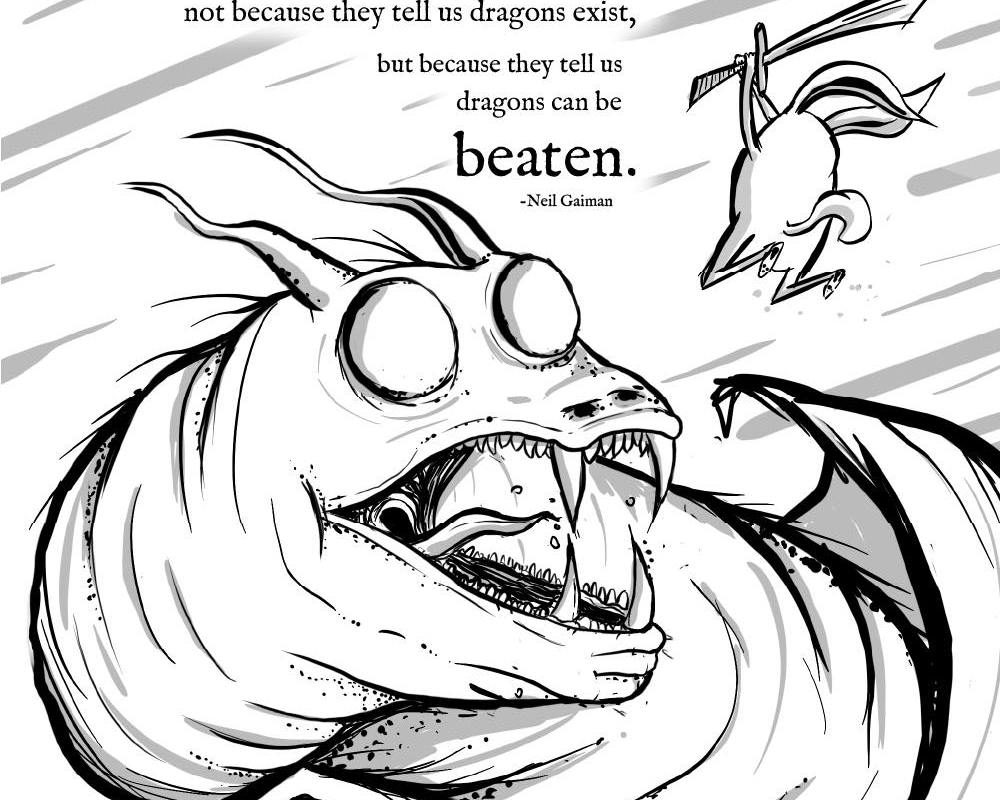
Neil Gaiman, an articulate, imaginatory writer. He makes a claim:

Fairy tales are more than true — not because they tell us dragons exist, but because they tell us that dragons can be beaten.

Neil Gaiman

To me, this is a problem with correlating imagination with truth. Moreover, many a war was lost on the story that it could be won.

Of course, we can still play the metaphor game. I’ve been a fan of metaphor since Joseph Campbell. Metaphor is strength. There was a time when I read Jung and had a stronger interest in Depth and Archetypal Psychology. And fairy tales per Marie-Louise von Franz or her more contemporary cantadora, Clarissa Pinkola Estes. Archetypes are metaphor, but this doesn’t render them real. Still, we can operate as if they are. The trick is to remember that they are not.

Mauvaise Foi

I find the notion of authenticity interesting. I believe that Heidegger was the first philosopher to promote the issue. As I have a contention with matters of identity in general, the notion of authenticity has no foundation in my eyes. As I don’t believe that the notion of identity is valid, it follows that I don’t ascribe to notions of authenticity either—the question is: authentic to what?

Essentially authenticity can be described as ‘being true to one’s own essence or true self’—whatever that might be. Heidegger presents authenticity as a response to our place in the world. An inauthentic person conforms to society and in the loses their own identity in the process to become assimilated into the society.

Carl Jung had a related concept, individuation. This is where a person strips off all of the ego and superego to get to the core of their being, to unpeel the onion, but to find a centre—and to become that true unadulterated self. This is not what Heidegger means by authentic.

To Heidegger, an authentic person remains true to themself within the constraints of society. As with Camus’ acceptance of the Absurd, Heidegger’ authenticity accepts the ‘real world’ as is it whilst retaining with awareness one’s self, even if this is more limiting than Jung’s individuation or Sartre’s freedom with no excuses.

Sartre’s vein of Existentialism contained within it the notion of authenticity. This is in common with other Continental philosophies. According to Sartre, when people hyper-constrain their identities to preclude their larger humanity, they are operating in bad faith, mauvaise foi (eidĂ©tique de la mauvaise foi). A while back, a story from an incident in 2013 was circulating on social media, where a Spanish runner, Ivan Fernandez Anaya, assisted another runner, Kenyan athlete, Abel Mutai, who errantly believed that he had already passed the finish line, so he stopped with another 10 metres to go.

The reaction was split—some praising Anaya for his humanity and other chastising him for not following the rules of the competition. These critics are guilty of mauvaise foi, of prioritising the minuscule for the larger picture. In fact, all sports do this. One might argue that all competition does this, but this is a matter of perspective. I think that Sartre’s scope was a bit narrower than this, but I believe it’s not off-point.

Evidently, I am just typing stream of consciousness, and the stream has come to an end.

And so it goes

Jacques Lacan, anyone?

I’m wondering whether I should delve into Lacan. I am only vaguely aware of him and have never read any of his published essays or lectures. From what I’ve gleaned, I may end up down some rabbit hole. His interest in the function of language interests me, but his analogy of that to psychoanalysis is disconcerting.

The analogy is fine, but I have a problem with the entire field of psychoanalysis as I view it as pseudoscience. As with Freud and Jung, the speculation around the unconscious and their metaphors are fine storytelling, but that’s about it.

My interest is in his structural approach to language and the notion I share concerning the lack of specificity in language, but it seems to me that my time would be better spent reading Derrida.

Lacan is categorised as both a structuralist and a post-structuralist, which might be correct given the period in which he lived, but I am still trying to figure out how he might be considered to be a post-structuralist, as he seems to be concerned with a sense of order, which is somewhat antithetical to this worldview.

True Believer

I’m an unabashed atheist, a position I’ve defended since 5th grade when I refused to pledge allegiance* in class—primarily on account of the God clause, but I’ve never been a fan of fealty. It was difficult as at the time I was being raised a WASP in a town comprised of 70-odd per cent of Roman Catholics.

I’d wrestled with the concept for years, even taking a middle-ground agnostic position until I decided to get off the fence and pick a side. Dawkin’s God Delusion made it easier when he published his 7-point spectrum, stretching between an absolute believer to an absolute atheist. Here I was able to remain agnostic but defend the atheist notion as, say, a 6 of 7 on the scale—or 6.9999 as the case might be.

The spectrum of theistic probability is published on Wikipedia:

  1. Strong theist. 100% probability of God. In the words of C.G. Jung: “I do not believe, I know.”
  2. De facto theist. Very high probability but short of 100%. “I don’t know for certain, but I strongly believe in God and live my life on the assumption that he is there.”
  3. Leaning towards theism. Higher than 50% but not very high. “I am very uncertain, but I am inclined to believe in God.”
  4. Completely impartial. Exactly 50%. “God’s existence and non-existence are exactly equiprobable.”
  5. Leaning towards atheism. Lower than 50% but not very low. “I do not know whether God exists but I’m inclined to be sceptical.”
  6. De facto atheist. Very low probability, but short of zero. “I don’t know for certain but I think God is very improbable, and I live my life on the assumption that he is not there.”
  7. Strong atheist. “I know there is no God, with the same conviction as Jung knows there is one.”

I leave open there could be such a higher ‘energy’ or some such, but I feel the probability is pretty remote—something less than homoeopathic.

Unicorns are the new black

Allow me to sidestep the distinction between an atheist meaning not believing and an agnostic meaning not knowing. For the average person, this distinction is lost—sort of like the use of who versus whom or of fewer versus less at grocery checkout stations.

So why does an atheist care about religion enough to write about it? He doesn’t write about unicorns—except when discussing religion. Why can’t he just agree to individual religious freedom and leave it at that? And why does he refer to himself in third-person?

Religion…is the opiate of the masses

Karl Marx

Marx infamously wrote that religion is the opiate of the masses. He was correct, but religious belief is a cancer. It is not benign. Various people have exclaimed that ‘your right to swing your arm ends at my nose.’ Religion violates this sensibility and smacks you in the face.

Although moral sentiment a precedent to religion, religion is a crucible that codifies it. And like cancer, it spreads into the public sphere as law. I’ve written about the moral outrage of prostitution, and it seeps into legislation around abortion, adoption, and restroom usage. It’s not that one could not have developed these positions independently, but in the US these positions are highly correlated to religious beliefs.

It doesn’t much matter to me the causal direction of this relationship; the correlation is enough for me. I don’t want to say that all religious activity is harmful, but the basis of it is delusional. We consider psychiatric treatment for those with different delusions.

God is dead

Friedrich Nietzsche

And so my interest in religion is that I would prefer to pull it out by the roots. As Nietzsche notes, if God is dead, we don’t really have a suitable concept to keep society focused. The masses will go into withdrawal. Enlightenment Age Humanists tried to replace it with Natural Law and then some abstract notions that serve as philosophical mental masturbation, but society will not congeal around it, and so politicians prey on the delusional masses.

*The history of the US Pledge of Allegiance is fairly insidious.

There Are No Accidents

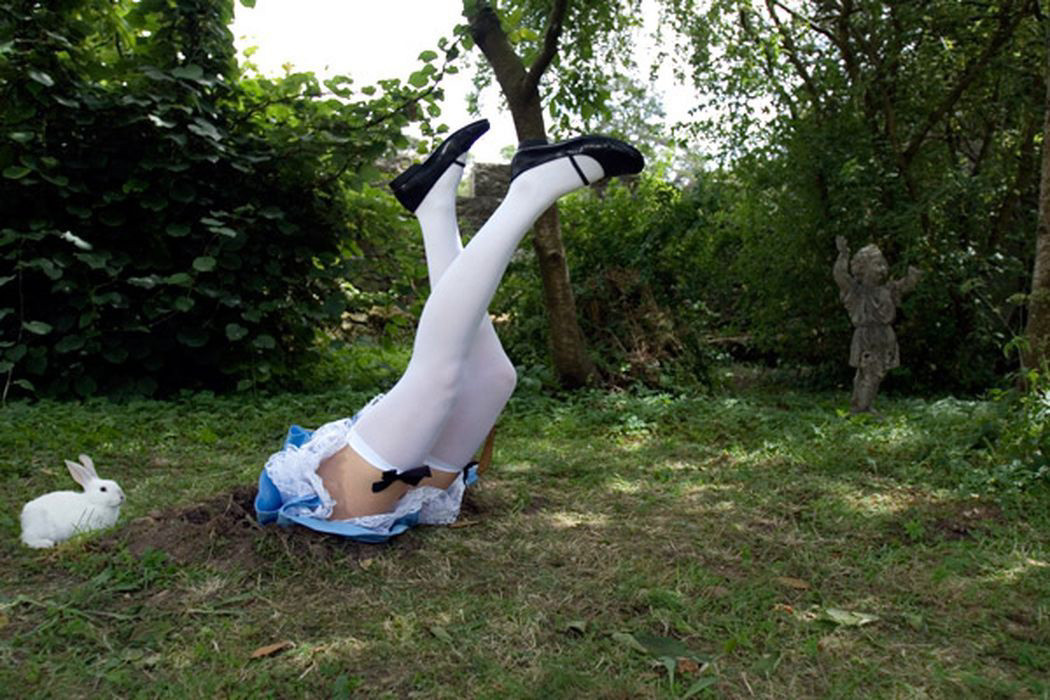
There are no accidents, or so claimed Carl Jung in his work on synchronicity, positing that events may be connected causally or by meaning. Some people see this as the work of some karmic force whilst others use it to suggest that a person is being passive-aggressive.

Karma

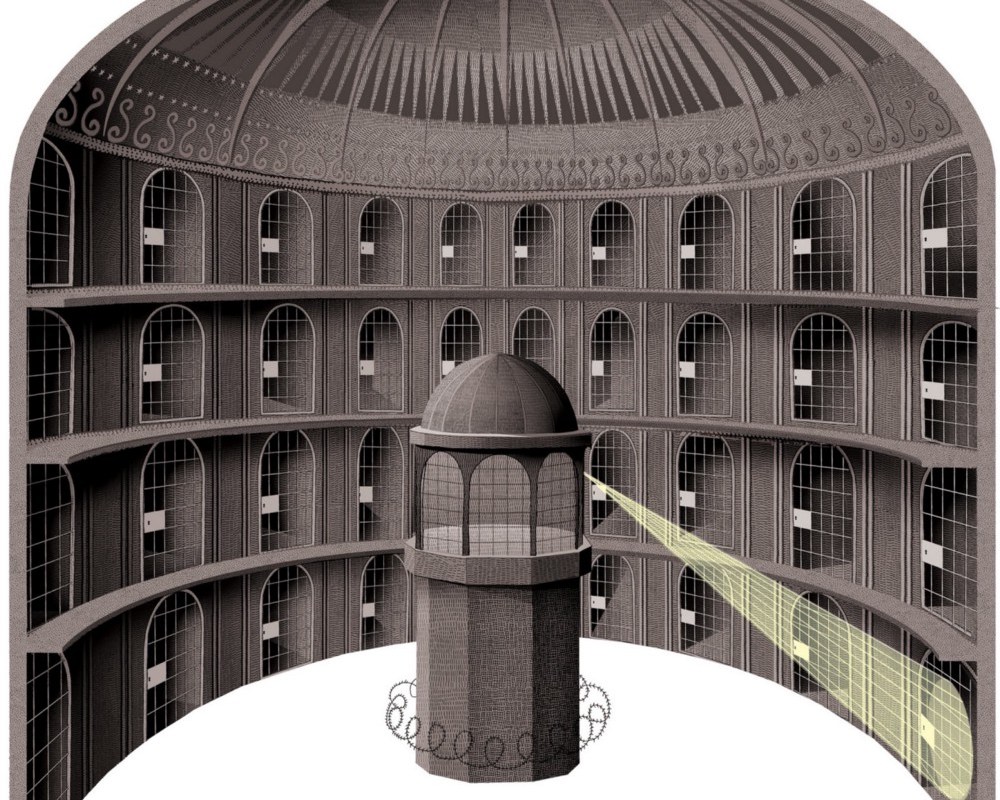
In the karmic sense, this means that there is no escaping fate, and, as with Santa Claus, he is constantly watching you, like some personified panopticon. See the short post on karma, too.

I’m not sure if the bible story of Judas and Jesus is really a karmic anecdote, but under this paradigm, everything is a no-fault situation. Judas was fated to betray Jesus. And despite this lack of responsibility, Judas still committed suicide once he realised what he had done and despite it not being an accident.

Passive-Aggression

In the passive-aggressive sense, it is to say the event A may be caused by something in person B’s unconscious mind—and not by some collective consciousness or a Universal Overseer. So, secretly, if Person B accidentally backed into your parked car, it may not be by some conscious volition; rather, it’s because or some deep-seated anger or other ill-will harboured and directed for you.

The problem is that if you accept that there are no accidents, then you—intentionally or otherwise—parked your car in a place where it would necessarily be hit by someone—by anyone. It just happened to be this other person for whom there are also no accidents. So, both parties are blameless. But people love to blame, and they like to defer responsibility.

Verdict

The bottom line is that both of these concepts are a bit sketchy. In a world of no free will, the karma situation might be plausible, but this wreaks havoc on moral-ethical systems. I discuss that in most post on karma.