Why Post-Position? 🧐
As 2025 closes, I find myself in the mildly suspicious position of being asked where I stand. I’m almost pretty sure it’s a deontological duty I must fulfil.
This has become the ritual gesture of our time. Not what are you working on? or what are you unsure about? but what is your position? The question arrives already armed with a grid. Left or right. Modern or postmodern. Optimist or doomer. Builder or critic. Pick a square. Declare yourself. Be legible.
I have spent enough years inside philosophy, politics, systems design, and cultural critique to recognise this for what it is. Not a genuine request for understanding, but a demand for administrative convenience. Positions are easy to catalogue. They travel well on social platforms. They allow disagreements to be staged rather than examined. I no longer occupy one.
If I had to name the shift that has taken place in my thinking, I might call it post-postmodern. More accurately, I think of it as post-position. Not because I have outgrown critique, but because I have grown weary of pretending that declaring a stance is the same thing as doing the work.
Postmodernism, to its credit, diagnosed something real. It exposed the hidden scaffolding behind our grand narratives. It showed how claims to neutrality smuggled power, how universals arrived late and acted eternal, and how reason often functioned as a polite enforcement mechanism. That diagnosis still stands. Nothing that followed has invalidated it. What failed was not the critique, but the decision to treat critique as a destination.
Somewhere along the line, postmodernism hardened into an identity. Suspicion became an aesthetic. Irony turned into a resting posture. Eventually, even scepticism acquired a set of approved moves and unacceptable conclusions. The work of dismantling was mistaken for the achievement of wisdom.
The response to this impasse has been predictable. We are now urged to rebuild. To restore foundations. To recover truth, agency, meaning, and normativity. Usually with a tone of urgency that suggests things have all gone a bit too far. They haven’t gone too far. They’ve gone exactly where the premises lead.
At this point, it is worth noting that ‘postmodernism’ has largely ceased to exist as a self-ascribed position at all. It survives almost entirely as a slur. No serious thinker today introduces themselves as a Postmodernist in the way one might once have claimed empiricism, structuralism, or even analytic philosophy.
The term is now deployed from the outside, usually as shorthand for intellectual irresponsibility: relativism, nihilism, irony, excess critique. It is a caricature assembled by its opponents, then attacked as if it were a living school with doctrines and membership cards.
People who employ the term Postmodern™* relative to philosophy are intellectually lazy and not likely worth engaging in a debate on the topic, because they have not likely engaged the content charitably, if at all, outside of a caricature.
This matters because it reveals something quietly telling. What is being rejected under the banner of ‘postmodernism’ is not a coherent programme, but the discomfort produced when inherited certainties fail to survive scrutiny. The slur functions as a containment strategy. It allows critics to dismiss the diagnosis without engaging the illness.
Any thinker with even a passing familiarity with the terrain knows this. Which is why no self-respecting, or self-denigrating, postmodern thinker would now characterise themselves as such. The label has been evacuated of descriptive value and filled with anxiety.
What is being revived in these reconstruction projects is not certainty, but legibility. A longing for systems that can be explained cleanly, defended coherently, and enforced consistently. Clear positions are attractive because they reduce friction. They allow disagreement to be formalised, managed, and ultimately neutralised. This is where I step off.
Post-position thinking is often mistaken for relativism, so it is worth being explicit. It does not claim that nothing is real, that all claims are equal, or that consequences dissolve into opinion. Reality remains stubborn. Harm remains unevenly distributed. Constraints still bite.
What it rejects is something more specific: the belief that ethical, epistemic, or political seriousness requires the occupation of a stable, declarable position.
Positions are not engines of thought. They are summaries produced after the fact. They tidy complexity into something portable, then forget the mess that made the tidying necessary. Once adopted, they begin to govern perception. You start seeing what fits and discarding what does not. The position becomes an answer generator rather than a question machine.
Post-position thinking refuses that trade.
It stays with instability where stability would be dishonest. It tolerates contradiction where resolution would be cosmetic. It treats coherence as local, provisional, and negotiated rather than universal and enforceable. This is not indecision. It is fidelity to how complex systems actually behave. One way to describe the shift is a movement away from critique toward maintenance.
Modernism wanted to build. Postmodernism wanted to dismantle. Both share a quiet assumption that there is a point at which the work is done. Maintenance has no such illusion. It accepts that some systems cannot be fixed, only kept from doing additional damage – that concepts fray; that norms age badly; that repair is continuous and never final.
Maintenance is unspectacular. It does not produce manifestos. It does not scale elegantly. It involves partial solutions, awkward compromises, and the constant risk of failure. It is also where most of the moral work actually happens.
From this vantage point, the demand to ‘take a position‘ looks increasingly misplaced. Not because commitments vanish, but because commitments are situational, asymmetric, and responsive to context. Loyalty shifts from creeds to consequences. What matters is not whether an idea is internally consistent, but what it does when it leaves the page and collides with institutions, incentives, and frightened people.
So when I refuse to declare where I stand, it is not evasiveness. It is a refusal to pretend that standing still is a virtue.
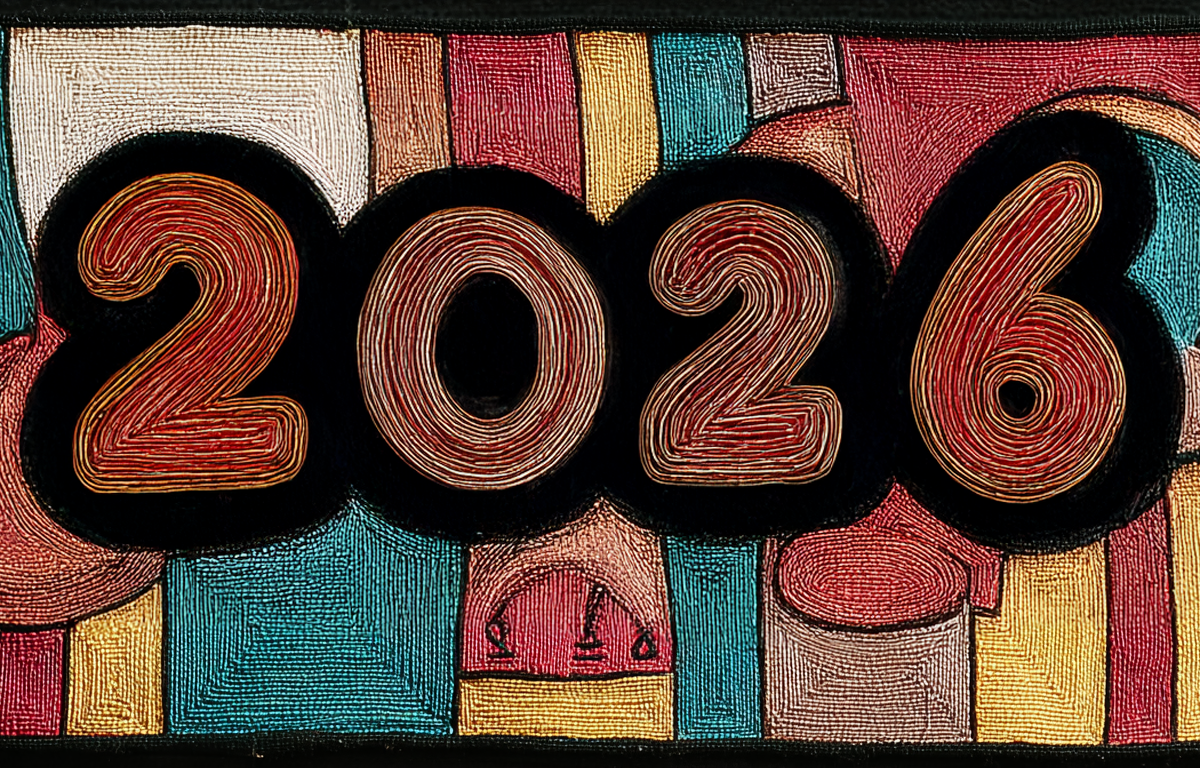
This is the posture I am carrying into 2026. Not a programme, not a system, not a rehabilitated foundation. Just a refusal to confuse clarity with truth, structure with virtue, or positions with thinking.
If that feels unsatisfying, that may be the point. Satisfaction is a modernist luxury. Maintenance rarely provides it. The work continues anyway.
* To be fair, I have referred to myself as Postmodern™, but this was a shortcut out of solidarity with Foucault, Derrida, Latour, Baudrillard, and others painted with this brush. I still admire these thinkers.







 Philosophics