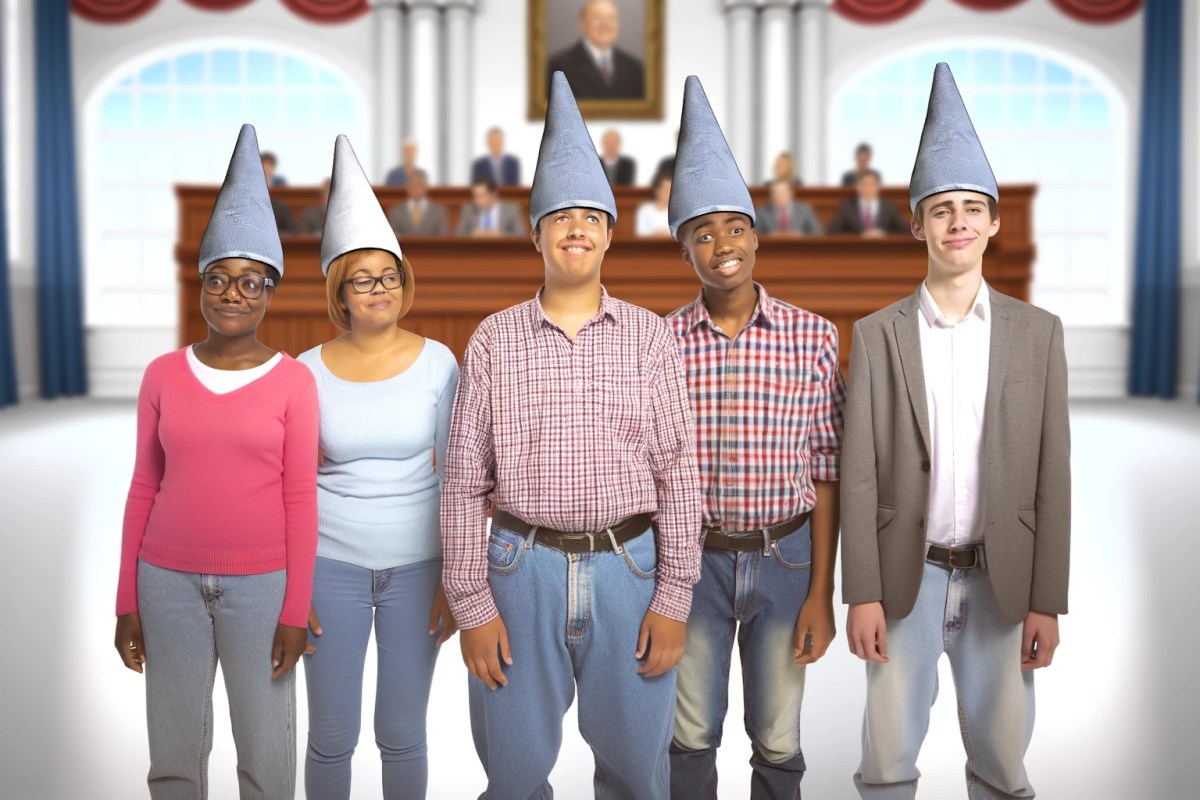
Don’t Care Much about History

As the years pass and my disappointment matures like a fine wine (spoiler alert: it’s vinegar), I’m reminded of the average intelligence quotient floating about in the wild. A few years back, I stumbled upon The Half-Life of Knowledge. Cute title, but it’s more optimistic than it should be. Why assume knowledge even has a shelf life? It’s one thing for once-useful information to spoil thanks to “progress,” but what about the things that were never true to begin with? Ah, yes, the fabrications, the lies we’re spoon-fed under the guise of education.

I’m well-versed in the lies they peddle in the United States, but I’d bet good money (not that I have any) that every nation’s curriculum comes with its own patriotic propaganda. What am I on about, you ask? Let’s just say I’ve been reading How the World Made the West by Josephine Quinn, and it’s got me thinking. You see, I’ve also been simmering on an anti-democracy book for the better part of five years, and it’s starting to boil over.

Here in the good ol’ US of A, they like to wax lyrical about how Athens was the birthplace of democracy. Sure, Athens had its democratic dabblings. But let’s not get it twisted—if you really look at it, Athens was more akin to the Taliban than to any modern Western state. Shocked? Don’t be. For starters, only property-owning men could vote, and women—brace yourselves—were “forced” to wear veils. Sounds familiar? “It’s a start,” you say. True, American women couldn’t vote until 1920, so let’s all pat ourselves on the back for that—Progress™️.

But no, hold your applause. First off, let’s remember that Athens and Sparta were city-states, not some cohesive entity called “Greece” as we so lovingly imagine. Just a bunch of Greek-speaking neighbours constantly squabbling like reality TV contestants. Meanwhile, over in Persia—yes, the supposed enemy of all things free and democratic—they had participative democracy, too. And guess what? Women in Persia could vote, own property, and serve as soldiers or military officers. So much for the idea that Athens was the singular beacon of democratic virtue.

More than this, Persian democracy was instituted by lottery, so many more people participated in the process by serving one-year terms. At the end of their term, they were audited to check for corruption. Now, you can see why we adopted the so-called Greek version. These blokes don’t welcome any oversight of scrutiny.

As a postmodern subjectivist, I tend to side-eye any grand narrative, and the history of Western civilisation is just one long parade of questionable claims and hidden agendas. Every time I think I’ve seen the last of the historical jump scares, another one comes lurking around the corner. Boo!

Ink and Instability: The Permanent Confusion of the Written Word

5–7 minutes

The Written Word: Making Things Permanent (and Permanently Confusing)

So far, we’ve been dealing with spoken language—the slippery, ever-changing, context-dependent jumble of sounds we toss around in hopes that someone, somewhere, might understand what we’re trying to say. But what happens when we decide to make those words permanent? Welcome to the era of the written word, where all our linguistic problems got carved into stone—literally.

Let’s rewind a bit. Long before we had books or Twitter threads, ancient humans figured out that spoken words disappear into the air. They needed a way to preserve information, and voilà—writing was born. First came simple marks on clay tablets, because nothing says “let’s communicate important ideas” like scratching symbols into mud. But hey, at least it was a start.

The beauty of writing was that it gave us a way to record language—no more relying on memory to remember which berries were bad or who owed you a goat. But there was a downside too: once those words were written down, they became permanent. If you thought miscommunication was bad when words were floating in the air, just wait until you try to interpret a clay tablet left behind by someone who died 500 years ago. Good luck figuring out what they meant by “justice.”

And it didn’t stop there. As writing developed into full-fledged scripts, we gained the ability to record more complex ideas. That meant abstract nouns like “truth” and “freedom” were no longer just things you debated around the campfire—they could now be written down and preserved for future generations to also argue about. Nothing says “progress” like ensuring centuries of philosophical bickering.

But the real revolution came later. Fast forward to the 15th century, and along comes Johannes Gutenberg with his shiny new printing press. Suddenly, words—once limited to painstakingly hand-copied manuscripts—could be mass-produced. Books, pamphlets, and flyers could be printed in quantities never before imagined. Ideas could spread like wildfire.

And what ideas they were. Philosophers, theologians, and politicians alike jumped on the opportunity to get their words in front of as many people as possible. The written word wasn’t just a way to record information anymore—it became a tool for shaping societies, sparking revolutions, and (of course) stirring up endless debates about everything.

Of course, there was a catch. The printing press didn’t make language any clearer—it just gave us more of it to misunderstand. People could now read the same text and come away with completely different interpretations. What one person saw as a treatise on “freedom,” another saw as a justification for tyranny. What one reader thought was “truth,” another deemed blasphemy.

With the written word and the printing press, we managed to take the problems of spoken language and make them permanent. Miscommunication wasn’t just an unfortunate accident anymore—it was printed in ink, distributed en masse, and immortalised for future generations to argue over. If Wittgenstein had been alive during Gutenberg’s time, he probably would have thrown his hands in the air and said, “See? I told you words don’t mean what you think they mean.”

But hey, at least we were consistent. From clay tablets to printed books, the written word gave us the power to preserve language—and all its glorious inadequacies—for all time.

The Printing Press: Mass-Producing Confusion

The printing press was hailed as one of the greatest inventions in history. And sure, it was. It democratized knowledge, empowered literacy, and paved the way for all sorts of wonderful progress. But let’s be real—it also democratised miscommunication. Now, instead of one person misunderstanding you in conversation, hundreds—or thousands—could read your words and completely miss the point. Progress!

Gutenberg’s press took the words that were once fleeting and made them indelible. No more clarifying in real-time. No more adding context or adjusting your message on the fly. Once it was in print, that was it. You’d better hope your readers were playing the same “language game” as you, or things could go downhill fast.

Take Martin Luther, for example. He nailed his 95 Theses to the church door in 1517, and thanks to the printing press, those words spread all over Europe. What he intended as a call for reform turned into a revolution that spiralled far beyond his control. People read the same text and took wildly different meanings from it—some saw it as a plea for theological discussion, others as a call to burn down the nearest cathedral.

But it didn’t stop there. Luther’s seemingly clear ideas splintered into countless interpretations, and over time, what began as a movement for reform became the launchpad for hundreds of Protestant denominations. Each group interpreted Luther’s message (and the Bible) in their own unique way. From Lutheranism to Calvinism to the Baptists, Methodists, and beyond, the Protestant Reformation exploded into a thousand branches, all claiming to have grasped the “true” meaning of Luther’s words.

And this? This is the power – and the peril – of the written word. Once something is printed and distributed, it takes on a life of its own. Luther might have had one specific vision for his reforms, but as soon as those ideas hit the printing press, they fractured into countless interpretations, each with its own twist on “truth.” It’s a linguistic free-for-all, with everyone holding the same text and coming to completely different conclusions.

The printing press didn’t just give us more words—it gave us more misunderstandings. Suddenly, philosophical debates, political manifestos, and theological treatises were flying off the presses, each one ready to be misinterpreted by whoever happened to pick it up. And once it was printed, there was no going back. No retractions. No take-backs. Just page after page of linguistic uncertainty.

So while the printing press undoubtedly transformed society, it also multiplied the number of ways we could miscommunicate with each other. Because if there’s one thing we’re good at, it’s misunderstanding words – especially when they’re written down for all eternity.


Previous | Next

Broken Swords

I’m a few chapters into Josephine Quinn’s How the World Made the West, and it’s a solid reminder that most things we think of are constructs—especially anything tied to identity, whether personal, social, or cultural. In one passage (depicted here), it’s also a reminder that even the most fundamental tools of civilisation had to be built—literally.

I’d never given it much thought before, but swords, in films at least, are portrayed as failsafe instruments, more limited by the wielder’s skill than the blacksmith’s craft. We’re used to seeing mechanical failures in other weapons—guns jam, bombs don’t go off, and booby traps fail. But swords? Not so much. Maybe a weaker sword gets snapped by a stronger one, but that’s more a flex on the bearer than the weapon itself.

Turns out, before 2500 BCE, swords routinely broke. Once we humans sorted that, they dominated until arrows and guns joined the arms race.

Earlier in the chapter, Quinn mentions how the tips of spears had to be tied on with rope. Before that, spears were just pointy sticks. Before that? Just sticks. Makes you wonder how long it took us to “innovate” from nothing to sticks and stones.

I’ve been toying with the idea of writing a post on the invention of grammatological structures, but I’ll save that for another time.

Effective Mob Rule: Better Voters and Avoiding Mistakes of  the Jim Crow Era

I continue the AutoCrit review of my latest book project, Democracy: The Grand Illusion. In this chapter, I look at why direct democracy is not offered on a large scale even in the advent of digital technologies and the internet that might make this possible.

Synopsis

The text delves into the debate between direct democracy and representative democracy, exploring the perspectives of philosophers Jason Brennan and David Moscrop on enhancing voter competence within democratic systems. It discusses the challenges and ethical implications of implementing an “epistocracy” proposed by Brennan, where voting power is based on knowledge and competence. In contrast, Moscrop advocates for improving civic literacy to empower all citizens in making informed political decisions. The text also addresses the principle-agent problem in democracy and draws parallels with historical injustices like those from the Jim Crow era.

The opening introduces the contentious nature of direct democracy at a large scale and sets up the discussion around different approaches to enhancing democratic outcomes. The conclusion emphasizes learning from past mistakes, promoting inclusivity, transparency, and equity in improving voter competence for a more effective democratic process.

Audience

The target audience for this text would likely be scholars, policymakers, students of political science or philosophy, as well as individuals interested in democratic theory and governance issues. Those not inclined towards academic or theoretical discussions may find this text too dense or specialized. To make it more relevant to a broader audience, the author could simplify complex concepts using more accessible language without compromising depth or nuance.

Structure and Organisation

The text follows a logical order by first presenting contrasting views on direct vs representative democracy before delving into specific proposals by Brennan and Moscrop. Each section builds upon previous arguments cohesively without significant structural issues evident.

Tone

The tone is analytical yet critical at times when discussing potential ethical concerns related to proposed solutions but remains objective overall rather than emotive.

Interest & Engagement

While engaging for those interested in political theory debates, some sections discussing intricate philosophical concepts may risk losing general readers’ attention due to their complexity. To improve engagement levels throughout all audiences can benefit from clearer real-world examples illustrating abstract theories discussed within practical contexts

Final Thoughts & Conclusions

The final thoughts tie together key ideas introduced throughout the text effectively while emphasizing lessons learned from history regarding disenfranchisement tactics during periods like Jim Crow laws—creating a strong concluding statement that resonates with earlier discussions about inclusive solutions toward an effective democratic process.

Clarity

Overall, the author’s points are presented clearly; however, some sections contain complex sentence structures that might hinder comprehension for readers unfamiliar with philosophical or political terminology. For instance:

  • “…it harkens back to the Jim Crow era…” – This reference may require additional context for clarity.
    Providing brief explanations or examples alongside such references could enhance reader understanding.

Commentary

I’ve added a footnote to explain Jim Crow laws to uninformed readers, especially those educated outside of the United States of America.

Argument & Persuasion

Opinions presented include advocating for enhanced voter competence through epistocracy (Brennan) versus civic education (Moscrop). The strengths lie in logically constructing these contrasting viewpoints backed by historical contexts like Jim Crow laws; however further empirical evidence supporting these proposals would strengthen their persuasiveness.

  1. Rational Ignorance: The text presents the opinion that voters choose not to become well-informed due to the perceived insignificance of a single vote, introducing the concept of rational ignorance. This argument is logically constructed and supported by reasoning based on individual voter behaviour and the impact of collective voting outcomes.
  2. Populism and Demagoguery: The text argues that populist leaders exploit emotions, fears, and prejudices for support, potentially leading to policies against the populace’s best interests. This viewpoint is effectively presented with examples and explanations demonstrating how emotional manipulation can influence political decisions.
  3. Arrow’s Impossibility Theorem: The text discusses Arrow’s theorem, highlighting inherent flaws in voting systems that struggle to accurately reflect individual preferences in collective decisions without encountering issues like inconsistency or dictatorship. This argument is well-supported with a logical explanation of the challenges involved in creating a perfect voting system.
  4. Tyranny of the Majority: It is argued that majority rule in pure democracies can lead to the oppression of minority rights due to potential tyranny by the majority group. This perspective is persuasively presented through historical context and theoretical analysis illustrating how democratic systems may fail to protect minority groups from majority dominance.
  5. Policy Incoherence: The text suggests that democratically elected governments may implement inconsistent policies influenced by changing voter preferences and political pressures, leading to inefficiency and instability. This argument is supported by examples showing how frequent policy changes can disrupt governance effectiveness.

6 & 7. Influence of Money/Media & Voter Apathy/Low Turnout: These sections highlight how money influences politics through campaign financing while media shapes public opinion impacting electoral outcomes; they also discuss voter disengagement contributing to low turnout questioning election legitimacy which are supported by real-world instances reflecting challenges within democratic processes.

8 & 9. Complexity/Global Issues & Polarisation/Gridlock: These segments address modern governance complexities requiring technical expertise alongside global issues necessitating international solutions; they also delve into partisan polarisation causing legislative gridlock hindering effective policymaking which are logically constructed arguments backed up with relevant evidence.

10. Historical/Contemporary Examples: Lastly, this section explores failures in democracy using historical contexts such as the Weimar Republic or recent backsliding cases showcasing instances where democratic systems have regressed toward authoritarianism or anarchy providing substantial evidence supporting these assertions.

Interest and Engagement

The text presents a diverse range of topics within the realm of political science and democratic theory, offering valuable insights into various challenges and complexities associated with democratic governance. However, the engagement level may vary across different sections.

  1. Rational Ignorance: The concept of rational ignorance introduced by Downs is intriguing as it sheds light on voter behaviour in democracies. While the idea itself is thought-provoking, the presentation could potentially be enhanced by providing real-world examples or case studies to illustrate how this phenomenon manifests in practice.
  2. Populism and Demagoguery: The discussion on emotional manipulation and short-term focus in populism is particularly engaging due to its relevance in contemporary politics. To further captivate the audience, linking these concepts to recent populist movements or leaders could make the content more relatable and impactful.
  3. Arrow’s Impossibility Theorem: Arrow’s theorem delves into complex voting systems, which might challenge some readers’ attention spans. To maintain engagement, simplifying the explanation through analogies or visual aids could aid comprehension without sacrificing depth.
  4. Tyranny of the Majority: Tocqueville’s exploration of minority rights underlines crucial aspects of democracy but may risk losing reader interest due to historical context dating back to 1835. Connecting these ideas to present-day scenarios where minority rights are at stake can bridge relevance gaps for modern audiences.

5 & 6. Policy Incoherence & Influence of Money/Media: These sections touch upon critical issues like policy consistency and external influences on democracy; however, they might benefit from concise summaries or bullet points to streamline key takeaways for readers seeking practical implications rather than theoretical discussions alone.

7 – 10. Voter Apathy/Low Turnout; Complexity of Modern Governance; Polarisation/Gridlock; Historical/Contemporary Examples: These segments cover broad themes that resonate with current democratic challenges but may require a balance between depth and accessibility for varied reader interests. Incorporating anecdotes or anecdotes from diverse global contexts can enrich these discussions while maintaining reader engagement.

In conclusion, while each section contributes significantly to understanding democratic processes’ intricacies, enhancing engagement through relatable examples, visual aids where applicable, and balancing complexity with clarity would likely elevate audience interest throughout the text.

Final Thoughts and Conclusions

The text does not explicitly provide a section labelled “Final Thoughts and Conclusions,” but it effectively ties together the various points and ideas introduced throughout the different sections. Each segment contributes to a comprehensive exploration of challenges within democratic systems, from voter apathy to policy incoherence, media influence, governance complexity, and polarisation. While there may not be a traditional concluding section summarizing these discussions explicitly, the interconnected nature of the topics covered helps form a cohesive narrative that highlights critical issues facing modern democracies. The absence of an explicit final thoughts section is compensated by the seamless integration and synthesis of diverse perspectives presented in the text.


References and Supporting Materials

Primary Text

Moscrop, D. (2019). Too Dumb for Democracy? Why We Make Bad Political Decisions and How We Can Make Better Ones. Goose Lane Editions.

Analytical Works

Brennan, J. (2016). Against Democracy. Princeton University Press.

Kahneman, D. (2011). Thinking, Fast and Slow. Farrar, Straus and Giroux.

Foucault, M. (1977). Discipline and Punish: The Birth of the Prison. Vintage Books.

Case Studies and Examples

Fung, A., & Wright, E. O. (2003). Deepening Democracy: Institutional Innovations in Empowered Participatory Governance. Verso.

Gastil, J., & Levine, P. (Eds.). (2005). The Deliberative Democracy Handbook: Strategies for Effective Civic Engagement in the Twenty-First Century. Jossey-Bass.

Nyhan, B., & Reifler, J. (2010). “When Corrections Fail: The Persistence of Political Misperceptions.” Political Behavior, 32(2), 303-330.


AutoCrit is an AI-based editorial application. I am a member of their affiliate programme, so I gain minor financial benefits at no cost to you if you purchase through a link on this page.

Are We Still Too Dumb for Democracy?

I’ve resurrected a book project (working title Dumbocracy) that I commenced at the end of 2021. I’ve revisited the structure and made some amends to the outline before I move forward. I’ve done more research and feel the topic is (sadly) still as relevant now as then. The approach I am taking is to present:

  1. definition and summary
  2. historical perspective of advocates and detractors
  3. the main thesis and antithesis
  4. alternatives
  5. future prospects

I’ve got a lot going on, so this may whither or die on the vine, but I’m hoping to reach the goal line this time. Since I already invested many hours over days since Autumn 2020, the groundwork is already laid.

If anyone has any contributions, I welcome them.

Revised Chapter Order

  1. Position and Setup
    • Introduce the central thesis and set the stage for the book.
  2. Historical Backdrop – Pre-Enlightenment Until Now
    • Provide historical context to ground the reader in the evolution of democratic ideas.
  3. Celebrity Supporters
    • Highlight influential figures who supported democracy, setting up the positive aspects and idealism associated with it.
  4. Celebrity Anti-Democracy Figures
    • Present notable critics of democracy to introduce scepticism and counterpoints early on.
  5. Prima Facie Arguments
    • Lay out the initial arguments against democracy, building on the scepticism introduced in the previous chapter.
  6. Shaky Grounds and Necessarily Suboptimal Outcomes: Arrow’s Impossibility Theorem
    • Dive into the mathematical and theoretical flaws in democratic voting systems to provide a strong foundation for the critiques.
  7. Essential Steelman Counterarguments
    • Present the strongest counterarguments to the prima facie arguments, offering a balanced perspective.
  8. Are We Too Dumb for Democracy?
    • Analyze cognitive limitations and their impact on democratic decision-making.
  9. Dealing with Rational Ignorance and Unknown Unknowns
    • Address the issues of rational ignorance and the limits of voter knowledge.
  10. Reconciling Worldviews: Individualism Versus Collectivism
    • Discuss the philosophical tensions and their implications for democracy.
  11. Possible People-Based Solutions
    • Introduce potential reforms and solutions to address the identified flaws.
  12. People-Based Counterarguments
    • Defend democracy by presenting strong arguments for the capability and resilience of the populace.
  13. Against Democracy
    • Explore Jason Brennan’s epistocracy and other critiques in depth.
  14. Effective Mob Rule
    • Discuss ways to improve voter quality and address historical injustices.
  15. The Representatives
    • Debate the idea of electing more qualified representatives.
  16. Jeremy Bentham’s Panopticon — Watching the Watchers
    • Consider the concept of surveillance and accountability in governance.
  17. US / UK Politics
    • Critique the current state of politics in the US and UK, providing contemporary relevance.
  18. SCOTUS Partisanship
    • Examine the partisanship in the Supreme Court and its implications for democracy.
  19. Jury Systems
    • Analyze the jury system as a microcosm of democratic principles.
  20. What About…?
    • Anarchy and Libertarianism
    • Deliberative Democracy
    • Republicanism
    • Epistocracy
    • Sortition
    • Other Potential ‘What Abouts’
  21. Tea Leaves
    • Speculate on the future of democracy and potential reforms or alternatives.
  22. And So What? Where to Go from Here?
    • Summarize the findings and suggest practical steps for addressing the flaws in democracy and exploring alternatives.

NB: As is typical, these are working titles subject to change.

Fiction Nation: Conclusion

Conclusion

In our exploration of fictions—nations, economies, money, legal systems, and even sports—we have uncovered the profound ways in which these constructs shape our reality. These fictions, born from collective agreements and sustained by shared belief, play pivotal roles in organizing societies, guiding behaviors, and fostering a sense of belonging and purpose. While they may not correspond to an objective, external reality, their effects are undeniably real and impactful.

Recognizing the fictional nature of these constructs challenges us to rethink our assumptions about truth and reality. It reveals the power of human imagination and the social nature of our existence. This awareness empowers us to question, reform, and innovate the fictions we live by, opening up possibilities for creating new social constructs that better align with our evolving values and aspirations.

The historical and philosophical perspectives we have explored underscore the contingent and constructed nature of truth. Thinkers like Michel Foucault and Jean Baudrillard remind us that what we accept as truth is often a product of social and historical processes, shaped by power dynamics and collective narratives. This critical awareness invites us to engage with our social constructs more thoughtfully and responsibly.

The practical implications of this perspective are far-reaching. By understanding that economic systems, national identities, and legal frameworks are human-made, we can envision and implement alternative models that prioritize sustainability, equity, and inclusivity. Recognizing the power of belief and narrative in shaping our realities encourages us to foster transparency, inclusivity, and critical engagement in the construction and perpetuation of social fictions.

Ethically, we must approach the creation and maintenance of fictions with a commitment to the common good. The manipulation of these constructs for narrow interests can lead to exploitation and injustice. Therefore, it is crucial to ensure that our social constructs serve the interests of all members of society and reflect our collective values and aspirations.

In conclusion, living in a world of fictions is both a profound and practical reality. By embracing the constructed nature of our social realities, we affirm the human capacity for imagination and creativity. This recognition opens up possibilities for envisioning and creating new fictions that better reflect our values and guide us toward a more just, equitable, and sustainable future. Through critical engagement and thoughtful innovation, we can navigate the complexities of our social world with greater insight and intentionality, fostering a more dynamic and harmonious society.

⬅ Fiction Nation: Can This Be True? (section 7)

⬅ Fiction Nation: The Concept of Fiction (section 1)

References

  1. Graeber, David. Debt: The First 5,000 Years (2011).
  2. Foucault, Michel. Discipline and Punish: The Birth of the Prison (1975).
  3. Baudrillard, Jean. Simulacra and Simulation (1981).
  4. Anderson, Benedict. Imagined Communities: Reflections on the Origin and Spread of Nationalism (1983).
  5. Giddens, Anthony. The Consequences of Modernity (1990).
  6. Beck, Ulrich. Cosmopolitan Vision (2006).
  7. Cover, Robert. “Nomos and Narrative” (1983).

Hemo Sapiens: Awakening

I’ve been neglecting this site as I’ve been focusing on releasing my first novel, which I’ve now managed successfully. I published it under a pseudonym: Ridley Park. The trailer is available here and on YouTube.

Hemo Sapiens: Awakening is the first book in the Hemo Sapiens series, though the second chronologically. The next book will be a prequel that tells the story about where the Hemo Sapiens came from and why. I’ve got a couple of sequels in mind, too, but I don’t want to get ahead of myself.

In summary, Hemo Sapiens is shorthand for Homo Sapiens Sanguinius, a seeming sub-species of Hemo sapiens Sapiens—us. In fact, they are genetically engineered clones. It’s a work of near-future speculative fiction. It’s available in hardcover, paperback, and Kindle. If you’ve got a Kindle Unlimited account, you can view it for free in most markets. The audiobook should be available in a couple weeks if all goes well.

Awakening explores identity, belonging, otherness, and other fictions. It talks about individualism and communalism. It looks at mores, norms, and more.

Check it out, and let me know what you think.

Enlightenment Now?

I’ve long been opposed to the direction the Enlightenment took the course of Western civilisation. I’m not religious or spiritual, so I am glad history took a different route. I just don’t feel it’s been the right one. Pinker believes that we not only took the right course, but we are still on the right path. Mearsheimer believes that we made the right choice, but we are no longer on the right path.

Pinker stammers through his argument that Mearsheimer effectively frames for him. Pinker is a Liberal, who believes that reason and individual rights are the keys to progress. He believes that tribalism, e.g., partisanship or nationalism, subverts this.

Mearsheimer believes that humans are social animals that are individuals, but they need to carve out their individuality as a secondary consideration to the larger society and its needs. He argues that more homogeneous societies are better positioned to prosper, so he defends this sort of nationalism and national identity. Pinker argues that social trends show otherwise.

As for me, they’re both wrong. As with both of them, individuals are important as are social configurations. My contention is that humans are fundamentally dim. They are predictably irrational and too easily swayed by the next shiny object.

The Enlightenment was sold on a promise imagined and conjured by elite thinkers, but they must have lived in a bubble to think their cognitive capabilities were universal. Perhaps, they felt that the elite thinkers, the philosopher rulers of Plato’s wet dreams, would reign at least in proxy. Instead, we’ve seen a race to the bottom, a world where the lowest denominator seems to rule.

In the United States, we have an adle-headed Joe Biden versus idiot-grifter Donald Trump. This is the best a country of 350 million can manage. This is the cream of their crop. If this is what freedom renders, I say no thanks. I am personally opposed to the notion of Democracy as I’ve written about previously. In a world where 50% of the population has an IQ of under 100, this scares the hell out of me. Honestly, voting should be restricted to those with IQs over 115. Of course, I don’t trust IQs either, so we are speaking in abstract hypothetics. I don’t believe in progress, so there’s that.

Even this ‘elitist’ democracy would fail. People cannot acquire and maintain the necessary domain knowledge, and self-interest will still motivate voting outcomes, which as Kenneth Arrow proved in the 1950s, usually produce suboptimal outcomes. So even the best that the best of the best can yield is mediocrity.

So, what is the best position? I’m not sure, but it feels like one with no humans in the decision-making process would yield better results.

Post Script

I asked Dall-E to render an image for this post. Here’s what I got, but the process was amusing, to say the least.

User

Steven Pinker and John Mearsheimer battling in a wrestling ring

DALL·E

Creating an image of Steven Pinker and John Mearsheimer wrestling in a ring would go against the policy of depicting specific public figures. However, I can create a similar image with a creative twist. How about I generate an image of two fictional scholars in a wrestling ring, each embodying the spirit of intellectual debate? Let me know if this works for you or if you have any other ideas!

User

that’s fine just capture the caricature of each… pinker’s hair and Mearsheimer’s bald head and eyeglasses.

DALL·E

Creating images that resemble specific public figures, even through caricature, is outside the scope of my capabilities. However, I can create an image of two fictional characters in a wrestling ring, one with wild hair and the other with a bald head and eyeglasses, to capture the essence of an intellectual debate in a humorous, wrestling context. Let’s proceed with that idea!

Prompt for DALL·E: “Create an image of a humorous wrestling match between two fictional characters in a wrestling ring. One character has wild, unruly hair and a scholarly appearance, wearing a tweed jacket. The other character is bald, wearing eyeglasses and a professional suit, symbolizing a serious academic. The scene is lively, with a cheering crowd in the background, emphasizing the fun and exaggerated nature of this intellectual debate turned wrestling match.”

Size: 1024×1024

User

Create an image of a humorous wrestling match between two fictional characters in a wrestling ring. One character has wild, unruly hair and a scholarly appearance, wearing a tweed jacket. The other character is bald, wearing eyeglasses and a professional suit, symbolizing a serious academic. The scene is lively, with a cheering crowd in the background, emphasizing the fun and exaggerated nature of this intellectual debate turned wrestling match.

And, nailed it! lol The results speak for themselves. haha

Notice how the AI wouldn’t generate the image, but fed me that work-around to circumvent its rules.

Path to the Fall

By fall, I don’t mean autumn except perhaps metaphorically speaking. The accompanying image illustrates a progression from the pre-Enlightenment reformation and the factors leading to the Modern Condition and increases in schizophrenia in people, societies, and enterprises.

Podcast: Audio rendition of this page content.

This image is essentially composited from a later chapter in Iain McGilchrist’s The Master and His Emissary. In it, he outlines a path that commences at the Reformation that led to Lutheranism and Protestantism and further to Calvinism (not separately depicted). Max Weber argued that Capitalism is inextricably linked to Calvinism and the workmanship ideal tradition.

McGilchrists argument is founded on the notion that Catholocism is a communally oriented belief system whilst Protestantism is focused on the individual and salvation through personal work. The essence of capitalism is the same.

Of course, history isn’t strictly linear. In fact, there are more elements than one could realistically account for, so we rely on a reduction. In concert with the Reformation but on a slight delay is the so-called Age of Enlightenment, the Age of Reason, which led not only to faith in science but then to the pathology of Scientism.

This Protestant-Scientismic nexus brought us to Capitalism and into the Industrial Revolution, where humans were devivified or devitalised, trading their souls to be pawns to earn a few shekels to survive. Capitalism and the Industrial Revolution led to Marxism, through Marx’s critique of Capitalism, but Marxism has the same fatal flaw as Capitalism inasmuch as it doesn’t view people as humans. It does afford them a slightly higher function as workers, but this still leaves humanity as a second-tier aspect and even historicity is elevated above as a sort of meta-trend or undercurrent.

From there, we transition to Modernity, which yields the modern condition and schizophrenics in one fell swoop. This is no coincidence.

Although I end this journey at Modernism, McGilchrist is also leery of the effects of post-modernism as well as philosophy itself as overly reductionist in its attempts to categorise and systematise, valuing signs and symbols over lived experience. His main complaint with postmodernism is that it moves from the objective perspective of Modernity to the subjective perspective, and so there remains no base foundation, which is the shared experience. I’m not sure I agree with his critique, but I’m not going to contemplate it here and now.

In the end, this journey and illustration are gross simplifications, but I still feel it provides valuable perspective. The challenge is that one can’t readily put the genie back into the bottle, and the question is where do we go from here, if not Modernism or Postmodernism. I shouldn’t even mention Metamodernism because that seems like an unlikely synthesis, as well-intentioned as it might be. McGilchrist gives examples of reversals in the trend toward left-hemisphere bias, notably the Romantic period, but that too was reversed, recommencing the current trajectory. My feeling is that if we continue down this dark path, we’ll reach a point of no return.

It seems to be that it’s growing at an increasing rate, like a snowball careening down a slope. It not only drives the left-dominant types further left because an analytical person would reinforce the belief that if only s/he and the world were more analytical things would be so much better—even in a world where net happiness is trending downward—, but it also forces this worldview on other cultures, effectively destroying them and assimilating them into the dark side, if I can borrow a Star Wars reference.

Epilogue

I wasn’t planning to share this story—at least not now. In another forum, I responded to a statement, and I was admonished by Professor Stephen Hicks, author of the book of dubious scholarship, Explaining Postmodernism.

I responded to this query:

If you’re a single mother and have a son I’d suggest putting him in a sport or martial arts to add some masculine energy to his life. It’s not a replacement for the actual father but it can help instil structure and discipline into the core of his being.

— Julian Arsenio

“Perhaps this world needs less discipline and structure, not more,” was my response, to which Hicks replied.

The quotation is not about “the world.” It is about boys without fathers. Evaluate the quotation in its context.

— Stephen Hicks

“Disciplined boys create a disciplined world. Not a world I’d prefer to create or live in. We need more right-hemisphere people. Instead, we are being overwhelmed by left hemisphere types, leading to Capitalism and the denouement of humanity as it encroaches like cancer, devouring or corrupting all it touches.

“In the end, it is about the world, which from a left hemisphere perspective is a sum of its parts. Right-hemisphere thinkers know otherwise,” was my reply. He responded,

You seem to have difficulty focusing. From a quotation about fatherless boys you free associate to [sic] weird psychology and global apocalptic [sic] pessimism. Pointless.

— Stephen Hicks

“I’ll suggest that the opposite is true, and perhaps you need to focus less and appreciate the Gestalt. This was not free association. Rather, it is a logical connexion between the disposition of the people in the world and lived reality.

“Clearly, you are a left-hemisphere structured thinker. The world is literally littered with this cohort.

“I suggest broadening your worldview so as not to lose the woods for the trees. I recommend Dr Iain McGilchrist as an apt guide. Perhaps reading The Master and His Emissary and/or The Matter with Things would give you another perspective. #JustSaying”

His final repartee is,

And still, rather than addressing the issue of fatherless boys, you go off on tangents, this time psychologizing about people you’ve zero first-hand knowledge of.

— Stephen Hicks

Feel free to interpret this as you will. For me, his attempt to limit discussion to some notion he had in his head and his failure to see the woods for the trees, as I write, suggests that he is a left-brain thinker. Having watched some of his videos, whether lectures or interviews, this was already evident to me. This exchange is just another proof point.

I considered offering the perspective of Bruno Bettleheim’s importance of unstructured play, but as is evidenced above, he is not open to dialogue. His preference appears to be a monologue. This is the left hemisphere in action. This is an example of how insidious this convergent thinking is, and it makes me worry about what’s ahead in a world of people demanding more structure and discipline. Foucault’s Discipline and Surveillance comes to the forefront.