Against the Intelligence Industrial Complex

Why IQ is Not Enough – and Never Was

I’m not a fan of IQ as a general metric. Let us be done with the cult of the clever. Let us drag the IQ score from its pedestal, strip it of its statistical robes, and parade it through the streets of history where it belongs—next to phrenology, eugenics, and other well-meaning pseudosciences once weaponised by men in waistcoats.

The so-called Intelligence Industrial Complex—an infernal alliance of psychologists, bureaucrats, and HR departments—has for too long dictated the terms of thought. It has pretended to measure the immeasurable. It has sold us a fiction in numerical drag: that human intelligence can be distilled, packaged, and ranked.

Audio: NotebookLM podcast on this topic.

What it measures, it defines. What it defines, it controls.

IQ is not intelligence. It is cognitive GDP: a snapshot of what your brain can do under fluorescent lights with a timer running. It rewards abstraction, not understanding; speed, not depth; pattern recognition, not wisdom. It’s a test of how well you’ve been conditioned to think like the test-makers.

This is not to say IQ has no value. Of course it does—within its own ecosystem of schools, bureaucracies, and technocracies. But let us not mistake the ruler for the terrain. Let us not map the entire landscape of human potential using a single colonial compass.

True intelligence is not a number. It is a spectrum of situated knowings, a polyphony of minds tuned to different frequencies. The Inuit hunter tracking a seal through silence. The griot remembering centuries of lineage. The autistic coder intuiting an algorithm in dreamtime. The grandmother sensing a lie with her bones. IQ cannot touch these.

To speak of intelligence as if it belonged to a single theory is to mistake a monoculture for a forest. Let us burn the monoculture. Let us plant a thousand new seeds.

A Comparative Vivisection of Intelligence Theories

Theory / ModelCore PremiseStrengthsBlind Spots / CritiquesCultural Framing
IQ (Psychometric g)Intelligence is a single, general cognitive ability measurable via testingPredicts academic & job performance; standardisedSkewed toward Western logic, ignores context, devalues non-abstract intelligencesWestern, industrial, meritocratic
Multiple Intelligences (Gardner)Intelligence is plural: linguistic, spatial, musical, bodily, etc.Recognises diversity; challenges IQ monopolyStill individualistic; categories often vague; Western in formulationLiberal Western pluralism
Triarchic Theory (Sternberg)Intelligence = analytical + creative + practicalIncludes adaptability, real-world successStill performance-focused; weak empirical groundingWestern managerial
Emotional Intelligence (Goleman)Intelligence includes emotion regulation and interpersonal skillUseful in leadership & education contextsCommodified into corporate toolkits; leans self-helpWestern therapeutic
Socio-Cultural (Vygotsky)Intelligence develops through social interaction and cultural mediationRecognises developmental context and cultureLess attention to adult or cross-cultural intelligenceSoviet / constructivist
Distributed Cognition / Extended MindIntelligence is distributed across people, tools, systemsBreaks skull-bound model; real-world cognitionHard to measure; difficult to institutionalisePost-cognitive, systems-based
Indigenous EpistemologiesIntelligence is relational, ecological, spiritual, embodied, ancestralHolistic; grounded in lived experienceMarginalised by academia; often untranslatable into standard metricsGlobal South / decolonial

Conclusion: Beyond the Monoculture of Mind

If we want a more encompassing theory of intelligence, we must stop looking for a single theory. We must accept plurality—not as a nod to diversity, but as an ontological truth.

Intelligence is not a fixed entity to be bottled and graded. It is a living, breathing phenomenon: relational, situated, contextual, historical, ecological, and cultural.

And no test devised in a Princeton psych lab will ever tell you how to walk through a forest without being seen, how to tell when rain is coming by smell alone, or how to speak across generations through story.

It’s time we told the Intelligence Industrial Complex: your number’s up.

The Truth About Lying

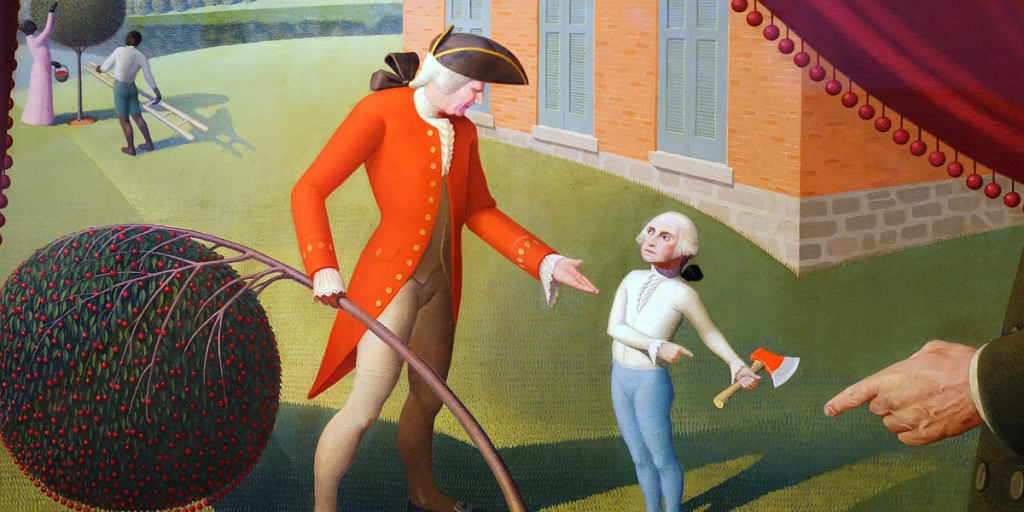
Every American knows that George Washington cannot tell a lie, so he confesses to chopping down a cherry tree. Much of American (and pretty much any) history is rife with lies. Sure, some myths, fables, and legends contain some kernel of truth, but they’re ostensibly propaganda and lies. But what is it about humans and lying? Moreover, if you don’t lie appropriately, you’re marginalised.

Why Honesty Gets You Shunned

Ah, truth. That elusive, glittering ideal we claim to cherish above all else. The thing we teach our children to uphold, weave into our national anthems, and plaster across inspirational posters. Yet, scratch the surface of human interaction, and you’ll find a murky, convoluted relationship with truth—one that oscillates between romantic obsession and outright disdain. If truth were a person, it would be the friend we invite to parties but spend the whole night avoiding.

It’s not just that we lie—we excel at it. We lie casually, reflexively, like it’s part of our evolutionary DNA. And here’s the kicker: we don’t just tolerate lying; we expect it. Worse still, they are promptly shunned when someone dares to buck the trend and embrace honesty—unapologetically refusing to engage in the ritualistic deception that greases the wheels of society. It’s a paradox so rich it deserves its own soap opera.

Lying: The Social Glue That Binds Us

Let’s start with the uncomfortable truth: lying is essential to civilisation. Yes, the thing your kindergarten teacher told you was bad is the same thing that keeps society from collapsing into chaos. Without lies, polite society would implode under the weight of raw honesty.

  • The Politeness Lie: “Do these trousers make me look fat?” Imagine answering this question truthfully. You’d be ostracised by lunchtime.
  • The Collective Myth: From national pride to religious dogma, our shared lies—”We’re the greatest country on Earth!” or “Our side never starts wars!”—are the glue that holds nations, ideologies, and social hierarchies together.

Without these lies, the façade crumbles, and we’re left staring into the abyss of our inadequacies. Lies make the unbearable palatable. They provide comfort where truth would leave only discomfort and despair.

The Paradox of the Honest Outsider

Now here’s where it gets juicy: we claim to value honesty, yet we loathe the honest person. The unapologetic truth-teller is viewed not as virtuous but as insufferable. Why? Because they threaten the delicate equilibrium of our collective deceptions.

  • Social Disruption: Truth-tellers force us to confront realities we’d rather ignore. Like that co-worker who insists the team-building exercises are pointless, they upset the carefully curated fiction we’ve all agreed to believe.
  • Untrustworthy Honesty: Ironically, we often trust liars more than truth-tellers. The liar plays by the unspoken rules of the game, while the honest person seems unpredictable and even dangerous.
Image: Meme: ‘What’s your greatest weakness?’

Lies as Power Plays

From a Foucauldian perspective (because who doesn’t love a bit of Foucault?), lies are more than social lubricants—they are tools of power. Governments lie to maintain control, institutions lie to justify their existence, and individuals lie to navigate these systems without losing their minds.

But honesty? Honesty is a destabilising force. It’s a rebellion against the status quo. Those who reject lies challenge the structures of power that depend on them. This is why whistleblowers, truth-tellers, and sceptics are often ostracised. They expose the game, and in doing so, they risk collapsing the entire house of cards.

Cognitive Dissonance and Escalating Commitment

The real kicker is how we defend these lies. Once we’ve told or accepted a lie, we become invested in it. The psychological discomfort of admitting we’ve been duped—cognitive dissonance—leads us to double down.

  • Escalating Commitment: From minor fibs (“I’ll just hit snooze once”) to societal delusions (“This war is for freedom”), we defend lies because admitting the truth feels like self-destruction.

Meanwhile, the honest person, standing on the sidelines of this elaborate charade, becomes a threat. Their refusal to participate makes them a mirror, reflecting the absurdity of our commitment to the lie. And we hate them for it.

The Ostracism of Honesty

Shunning the truth-teller isn’t just a quirk of human behaviour—it’s a survival mechanism. Lies are the foundation of the social contract. Refusing to lie or to accept lies is tantamount to breaking that contract.

  • The Group Protects Itself: Honest individuals are scapegoated to preserve cohesion. They’re labelled as rude, arrogant, or untrustworthy to justify their exclusion.
  • The Emotional Toll: Truth-tellers aren’t just rejected—they’re actively punished. This social cost ensures that most people choose compliance over honesty.

Is There Hope for Honesty?

So, where does this leave us? Are we doomed to live in a world where lies are rewarded and honesty is punished? Not necessarily. Here’s the silver lining: lies may be the glue that binds us, but truth is the solvent that cleanses.

  • Building Bridges: Truth-tellers who approach honesty with empathy—rather than confrontation—can foster change without alienating others.
  • Cultural Shifts: Societal norms around lying are not fixed. Movements like radical transparency in organisations or calls for accountability in politics show that change is possible.

The challenge is navigating the paradox: to live truthfully in a world that prizes deception without becoming a martyr for the cause.

Conclusion: The Truth Hurts, But Lies Hurt More

Our love-hate relationship with truth is as old as humanity itself. Lies comfort us, unite us, and shield us from the harshness of reality—but they also entrap us. The truth-teller, though ostracised, holds a mirror to our collective delusions, forcing us to confront the uncomfortable question: what kind of world do we want to live in?

For now, it seems, we’d rather lie than answer honestly.

References

  1. Ariely, D. (2012). The Honest Truth About Dishonesty: How We Lie to Everyone—Especially Ourselves. Harper.
    • Explores everyday lies, self-deception, and the psychological mechanisms behind dishonesty.
  2. Raden, A. (2021). The Truth About Lies: The Illusion of Honesty and the Evolution of Deceit. St. Martin’s Press.
    • Examines the evolutionary and cultural roots of deception and its role in shaping human behaviour.
  3. Foucault, M. (1977). Discipline and Punish: The Birth of the Prison. Vintage Books.
    • A foundational text for understanding power dynamics, including how truth and lies are used to control and normalise behaviour.
  4. Foucault, M. (1980). Power/Knowledge: Selected Interviews and Other Writings, 1972–1977. Pantheon Books.
    • Delves into the relationship between power and the production of truth in society.
  5. Bok, S. (1999). Lying: Moral Choice in Public and Private Life. Vintage Books.
    • A comprehensive analysis of the ethical dimensions of lying and its societal implications.
  6. Smith, D. L. (2004). Why We Lie: The Evolutionary Roots of Deception and the Unconscious Mind. St. Martin’s Press.
    • Explores how deception is hardwired into the human psyche and its evolutionary advantages.
  7. Orwell, G. (1946). Politics and the English Language. Horizon.
    • A classic essay on how language—including lies—is used as a tool of manipulation in politics.
  8. Arendt, H. (1972). Crises of the Republic. Harcourt Brace Jovanovich.
    • Particularly the essay “Lying in Politics,” which critiques the use of deception in public affairs.
  9. Trivers, R. (2011). The Folly of Fools: The Logic of Deceit and Self-Deception in Human Life. Basic Books.
    • Examines self-deception and its evolutionary benefits, shedding light on how lies operate at individual and societal levels.
  10. Nietzsche, F. (1873). On Truth and Lie in an Extra-Moral Sense (translated in Philosophy and Truth, 1979). Harper & Row.
    • A philosophical exploration of truth as a construct and the utility of lies.

Power Relations Bollox

As I put the finishing touches on the third revision of my Language Insufficiency Hypothesis manuscript, I find myself reflecting on the role of Foucault’s concept of Power Relations in shaping the use and interpretation of language in institutional contexts.

A key aspect of my hypothesis is the notion that some abstract conceptual language is intentionally vague. I touched on this idea in my recent article on the ambiguity of the term ‘gift’, but the implications extend far beyond that specific example. The strategic use of linguistic indeterminacy is a pervasive feature of many professional domains, serving to veil and enable subtle power plays.

NotebookLM Audio Podcast Discussion of this content.

In my manuscript, I examine the concept of ‘reasonableness’ as a prime example of this phenomenon. This term is a favourite hiding spot for legal professionals, appearing in phrases like ‘reasonable doubt’ and ‘reasonable person’.Yet, upon closer inspection, the apparent clarity and objectivity of this language dissolves into a morass of ambiguity and subjectivity. The invocation of reasonableness often serves as a rhetorical sleight of hand, masking the exercise of institutional power behind a veneer of impartiality.

While I don’t wish to venture too far into Nietzschean cynicism, there is a sense in which the legal system operates like a casino. The house always seeks to maintain its edge, and it will employ whatever means necessary to preserve its authority and legitimacy. In the case of reasonableness, this often involves a strategic manipulation of linguistic indeterminacy.

The court reserves for itself the power to decide what counts as reasonable on a case-by-case basis. Definitions that prove expedient in one context may be swiftly discarded in another. While skilled advocates may seek to manipulate this ambiguity to their advantage, the ultimate authority to fix meaning rests with the judge – or, in some instances, with a higher court on appeal. The result is a system in which the interpretation of key legal concepts is always subject to the shifting imperatives of institutional power.

This example highlights the broader significance of the Language Insufficiency Hypothesis. By attending to the ways in which abstract and contested terms can be strategically deployed to serve institutional ends, we can develop a more critical and reflexive understanding of the role of language in shaping social reality. In the process, we may begin to glimpse the complex interplay of power and meaning that underlies many of our most important professional and political discourses.

Language Insufficiency, Rev 3

I’m edging ever closer to finishing my book on the Language Insufficiency Hypothesis. It’s now in its third pass—a mostly subtractive process of streamlining, consolidating, and hacking away at redundancies. The front matter, of course, demands just as much attention, starting with the Preface.

The opening anecdote—a true yet apocryphal gem—dates back to 2018, which is evidence of just how long I’ve been chewing on this idea. It involves a divorce court judge, a dose of linguistic ambiguity, and my ongoing scepticism about the utility of language in complex, interpretative domains.

At the time, my ex-wife’s lawyer was petitioning the court to restrict me from spending any money outside our marriage. This included a demand for recompense for any funds already spent. I was asked, point-blank: Had I given another woman a gift?

Seeking clarity, I asked the judge to define gift. The response was less than amused—a glare, a sneer, but no definition. Left to my own devices, I answered no, relying on my personal definition: something given with no expectation of return or favour. My reasoning, then as now, stemmed from a deep mistrust of altruism.

The court, however, didn’t share my philosophical detours. The injunction came down: I was not to spend any money outside the marital arrangement. Straightforward? Hardly. At the time, I was also in a rock band and often brought meals for the group. Was buying Chipotle for the band now prohibited?

The judge’s response dripped with disdain. Of course, that wasn’t the intent, they said, but the language of the injunction was deliberately broad—ambiguous enough to cover whatever they deemed inappropriate. The phrase don’t spend money on romantic interests would have sufficed, but clarity seemed to be a liability. Instead, the court opted for what I call the Justice Stewart Doctrine of Legal Ambiguity: I know it when I see it.

Unsurprisingly, the marriage ended. My ex-wife and I, however, remain close; our separation in 2018 was final, but our friendship persists. Discussing my book recently, I mentioned this story, and she told me something new: her lawyer had confided that the judge disliked me, finding me smug.

This little revelation cemented something I’d already suspected: power relations, in the Foucauldian sense, pervade even our most banal disputes. It’s why Foucault makes a cameo in the book alongside Nietzsche, Wittgenstein, Saussure, Derrida, Borges, and even Gödel.

This anecdote is just one straw on the poor camel’s back of my linguistic grievances, a life filled with moments where language’s insufficiency has revealed itself. And yet, I found few others voicing my position. Hence, a book.

I aim to self-publish in early 2025—get it off my chest and into the world. Maybe then I can stop wittering on about it. Or, more likely, I won’t.

The Relativity of Morality: A Penguin’s Tale

I recently watched The Penguin on HBO Max, a series set in DC’s Batman universe. Ordinarily, I avoid television – especially the superhero genre – but this one intrigued me. Less spandex, more mob drama. An origin story with a dash of noir. I’ll spare you spoilers, but suffice it to say that it was an enjoyable detour, even for someone like me who prefers philosophy over fistfights.

This post isn’t a review, though. It’s a springboard into a larger idea: morality’s subjectivity – or, more precisely, its relativity.

Audio: Spotify podcast related to this topic.

Morality in a Vacuum

Morality, as I see it, is a social construct. You might carry a private moral compass, but without society, it’s about as useful as a clock on a desert island. A personal code of ethics might guide you in solitary moments, but breaking your own rules – eating that forbidden biscuit after vowing to abstain, for instance – doesn’t carry the weight of a true moral transgression. It’s more akin to reneging on a New Year’s resolution. Who’s harmed? Who’s holding you accountable? The answer is: no one but yourself, and even then, only if you care.

The Social Contract

Introduce a second person, and suddenly, morality gains traction. Agreements form – explicit or tacit – about how to behave. Multiply that to the level of a community or society, and morality becomes a kind of currency, exchanged and enforced by the group. Sometimes, these codes are elevated to laws. And, ironically, the act of adhering to a law – even one devoid of moral content – can itself become the moral thing to do. Not because the act is inherently right, but because it reinforces the structure society depends upon.

But morality is neither universal nor monolithic. It is as fractured and kaleidoscopic as the societies and subcultures that create it. Which brings us back to The Penguin.

Crime’s Moral Code

The Penguin thrives in a criminal underworld where the moral compass points in a different direction. In the dominant society’s eyes, crime is immoral. Robbery, murder, racketeering – all “bad,” all forbidden. But within the subculture of organised crime, a parallel morality exists. Honour among thieves, loyalty to the family, the unspoken rules of the game – these are their ethics, and they matter deeply to those who live by them.

When one criminal praises another – “You done good” – after a successful heist or a precise hit, it’s a moral judgement within their own framework. Outside that framework, society condemns the same actions as abhorrent. Yet even dominant societies carve out their own moral exceptions. Killing, for instance, is broadly considered immoral. Murder is outlawed. But capital punishment? That’s legal, and often deemed not only acceptable but righteous. Kant argued it was a moral imperative. Nietzsche, ever the cynic, saw this duality for what it was: a power dynamic cloaked in self-righteousness.

In The Penguin, we see this dichotomy laid bare. The underworld isn’t without morals; it simply operates on a different axis. And while the larger society might disdain it, the hypocrisy of their own shifting moral codes remains unexamined.

Final Thoughts on the Series

I’ll save other philosophical musings about The Penguin for another time – spoilers would be unavoidable, after all. But here’s a quick review: the series leans into drama, eschewing flashy gimmicks for a grittier, more grounded tone. The writing is generally strong, though there are moments of inconsistency – plot holes and contrivances that mar an otherwise immersive experience. Whether these flaws stem from the writers, director, or editor is anyone’s guess, but the effect is the same: they momentarily yank the viewer out of the world they’ve built.

Still, it’s a worthwhile watch, especially if you’re a fan of mob-style crime dramas. The final episode was, in my estimation, the best of the lot – a satisfying culmination that leaves the door ajar for philosophical ruminations like these.

Have you seen it? What are your thoughts – philosophical or otherwise? Drop a comment below. Let’s discuss.

Jargon, Brains, and the Struggle for Meaning

6–9 minutes

Specialised Languages: Academia’s Jargon Olympics

If you thought normal language was confusing, let’s take a moment to appreciate the true champions of linguistic obscurity: academics. Welcome to the world of specialised languages, where entire fields of study have developed their own language games that make even Wittgenstein’s head spin.

Here’s how it works: Every discipline—science, law, philosophy—creates its own jargon to describe the world. At first, it seems helpful. Instead of using vague terms, you get precise definitions for complex ideas. But what started as a way to improve communication within a field quickly turned into a linguistic arms race, where the more obscure and convoluted your terms are, the smarter you sound. You’re not just a lawyer anymore—you’re someone who’s ready to throw “res ipsa loquitur” into casual conversation to leave everyone else in the room wondering if they’ve missed a memo.

The problem? If you’re not part of the club, good luck understanding what anyone is talking about. Want to read a physics paper? Prepare to learn a whole new vocabulary. Need to get through a legal document? You’ll be knee-deep in Latin phrases before you even get to the point. And don’t even try to decipher a philosophical text unless you’re ready to battle abstract nouns that have been stretched and twisted beyond recognition.

It’s not just the words themselves that are the issue—it’s the sheer density of them. Take “justice” for example. In philosophy, you’ve got theories about distributive justice, retributive justice, restorative justice, and a hundred other variations, each with its own set of terms and conditions. And that’s before we even touch on how “justice” is defined in legal circles, where it becomes an even more tangled mess of case law and precedent. Every field is playing its own version of the “justice” game, with its own rules and definitions, and none of them are interested in comparing notes.

This is the academic world in a nutshell. Each discipline has built its own linguistic fortress, and unless you’ve spent years studying, you’re not getting in. But here’s the kicker: even within these fields, people are often misunderstanding each other. Just because two scientists are using the same words doesn’t mean they’re on the same page. Sometimes, it’s more like a game of intellectual one-upmanship—who can define the most obscure term or twist a familiar word into something completely unrecognisable?

And let’s not forget the philosophers. They’ve turned linguistic acrobatics into an art form. Good luck reading Foucault or Derrida without a dictionary (or five) on hand. You might walk away thinking you understand their points, but do you really? Or have you just memorised the jargon without actually grasping the deeper meaning? Even scholars within these fields often argue over what was really meant by a certain text—Barthes, after all, famously declared the “death of the author,” so it’s not like anyone really has the final say on meaning anyway.

So here we are, knee-deep in jargon, trying to communicate with people who, technically, speak the same language but are operating within entirely different rulesets. Every academic discipline has its own secret code, and if you don’t know it, you’re lost. Even when you do know the code, you’re still at risk of miscommunication, because the words that look familiar have been stretched and shaped to fit highly specific contexts. It’s like being fluent in one dialect of English and then suddenly being asked to write a thesis in legalese. Good luck.

In the end, academia’s specialised languages don’t just make things harder—they actively create barriers. What started as a way to improve precision has turned into an obstacle course of incomprehensible terms, where the real challenge is just figuring out what anyone’s actually saying. And let’s be honest, even if you do figure it out, there’s no guarantee it’s going to mean the same thing next time you see it.

Neurolinguistics: Even Our Brains Can’t Agree

So far, we’ve seen how language is a mess of miscommunication, cultural differences, and academic jargon. But surely, at least on a biological level, our brains are all on the same page, right? Well, not exactly. Welcome to the wonderful world of neurolinguistics, where it turns out that even the very organ responsible for language can’t get its act together.

Here’s the deal: Neurolinguistics is the study of how the brain processes language, and while it’s fascinating, it’s also a bit of a buzzkill for anyone hoping for consistency. See, your brain and my brain don’t process language in the same way. Sure, we’ve got similar hardware, but the software is wildly unpredictable. There are individual differences, cultural influences, and developmental quirks that all affect how we understand and produce language. What’s simple for one brain might be completely baffling to another.

Take, for example, something as basic as syntax. Chomsky might have told us we all have a universal grammar hard-wired into our brains, but neurolinguistics has shown that how we apply that grammar can vary significantly. Some people are wired to handle complex sentence structures with ease—think of that friend who can follow 10 different clauses in a single breath. Others? Not so much. For them, even a moderately tricky sentence feels like mental gymnastics. The brain is constantly juggling words, meanings, and structures, and some brains are better at it than others.

But the real kicker is how differently we interpret words. Remember those abstract nouns we’ve been wrestling with? Well, it turns out that your brain might be interpreting ‘freedom’ or ‘justice’ completely differently from mine – not just because of culture or upbringing, but because our brains physically process those words in different ways. Neurolinguistic studies have shown that certain regions of the brain are activated differently depending on the individual’s experience with language. In other words, your personal history with a concept can literally change how your brain lights up when you hear or say it.

And don’t even get me started on bilingual brains. If you speak more than one language, your brain is constantly toggling between two (or more) linguistic systems, which means it’s running twice the risk of misinterpretation. What a word means in one language might trigger a completely different association in another, leaving bilingual speakers in a constant state of linguistic flux. It’s like trying to run two operating systems on the same computer—things are bound to get glitchy.

But here’s the real kicker: Even within the same person, the brain can’t always process language the same way all the time. Stress, fatigue, emotional state—all of these factors can influence how well we handle language on any given day. Ever tried to have a coherent conversation when you’re tired or angry? Good luck. Your brain isn’t interested in nuance or deep philosophical ideas when it’s in survival mode. It’s just trying to get through the day without short-circuiting.

So, not only do we have to deal with the external chaos of language – miscommunication, different contexts, shifting meanings – but we also have to contend with the fact that our own brains are unreliable interpreters. You can use all the right words, follow all the right grammar rules, and still end up with a garbled mess of meaning because your brain decided to take a nap halfway through the sentence.

In the end, neurolinguistics reminds us that language isn’t just a social or cultural problem – it’’’s a biological one too. Our brains are doing their best to keep up, but they’re far from perfect. The very organ that makes language possible is also responsible for making it infinitely more complicated than it needs to be. And if we can’t rely on our own brains to process language consistently, what hope do we have of ever understanding anyone else?


Previous | Next

Declaration of Independence

It’s July. The season of independence in the United States. Independence from the overt tyranny of Britain, but not from the tacit tyranny of their government—the government purported to be ‘of the people, by the people, and for the people‘ per Abraham Lincoln’s 1863 Gettysburg Address. As their Constitution reads, ‘We the People‘. Governments may be of the people and by the people, but governments are an emergent phenomenon as happens when oxygen and hydrogen combine just so and create water. Two gases combine to create a new substance—water. Some forget that, like water, government are a distinct element to the people that constitute it. Some think it resembles them. It doesn’t. It’s Hobbes’ Leviathan—or a Jabberwok.

In preparation for the traditional Summer season, I took to reading Derrida’s 1976 essay, Declarations of Independence. It was interesting, but I was hoping to get more from it. I decided to deconstruct the opening paragraph—the preamble—of the Declaration of Independence:

Deconstructing Binary Oppositions

Self-Evident vs. Non-Self-Evident

The Declaration boldly asserts that ‘these truths’ are ‘self-evident’,’ a claim that is nothing more than a rhetorical trick. By presenting these ideas as self-evident, the authors seek to place them beyond questioning, discouraging dissent and critical examination. In reality, these ‘truths’ are far from universal; they are the product of a specific cultural and historical context, shaped by the interests and perspectives of the privileged few who drafted the document.

Interrogating Assumptions and Hierarchies The Declaration of Independence asserts that certain truths are ‘self-evident’, implying that these truths are so obvious that they require no further justification. However, the concept of self-evidence itself is far from universally accepted. It is deeply embedded in the philosophical tradition of Enlightenment rationalism, which holds that reason and logic can reveal fundamental truths about the world.

  1. Philosophical Foundations of Self-Evidence
    • Enlightenment Rationalism: The idea of self-evidence relies heavily on Enlightenment rationalism, which posits that certain truths can be known directly through reason and are therefore beyond dispute. Philosophers such as René Descartes and Immanuel Kant emphasised the power of human reason to uncover self-evident truths. Descartes, for instance, argued for the self-evident nature of ‘Cogito, ergo sum‘ (‘I think, therefore I am’) as a fundamental truth (Descartes, Meditations on First Philosophy).
    • Critique of Rationalism: Critics of Enlightenment rationalism, including existentialists like Friedrich Nietzsche and phenomenologists like Martin Heidegger, argue that what is considered self-evident is often culturally and historically contingent. Nietzsche, for example, contended that what we take as ‘truth’ is a product of our perspective and historical context, not an absolute given (Nietzsche, Beyond Good and Evil).
  2. Cultural and Philosophical Contingency
    • Cultural Relativity: Different cultures and philosophical traditions may not find the same truths to be self-evident. For instance, the concept of individual rights as self-evident truths is a product of Western liberal thought and may not hold the same self-evident status in other cultural frameworks. In many Eastern philosophies, the focus is more on community and harmony rather than individual rights.
    • Subjectivity of Self-Evidence: The term ‘self-evident’ implies an inherent, unquestionable truth, yet what one group or culture finds self-evident, another may not. This variability reveals the instability and subjectivity of the claim. For example, in traditional Confucian societies, the emphasis is placed on hierarchy and duty rather than equality and individual rights, demonstrating a different set of ‘self-evident’ truths.
  3. Constructed Nature of Truth
    • Language and Context: Jacques Derrida’s concept of différance illustrates how meaning is not fixed but constantly deferred through language. What we consider to be “truth” is constructed through linguistic and social contexts. Derrida argues that texts do not have a single, stable meaning but rather a multiplicity of interpretations that change depending on the reader’s perspective and context (Derrida, Of Grammatology).
    • Social Construction: Michel Foucault’s analysis of power and knowledge further deconstructs the notion of objective truth. Foucault argues that what is accepted as truth is produced by power relations within society. Truths are constructed through discourses that serve the interests of particular social groups, rather than being objective or self-evident (Foucault, Discipline and Punish).

Created Equal vs. Not Created Equal

The Declaration’s claim that ‘all men are created equal’ is a blatant falsehood, a manipulative promise designed to appease the masses whilst maintaining the status quo. The glaring contradictions of slavery and gender inequality expose the hollowness of this assertion. Equality, as presented here, is nothing more than an ideological construct, a tool for those in power to maintain their dominance while paying lip service to the ideals of justice and fairness.

Creator vs. No Creator

The Declaration refers to a ‘Creator’ who endows individuals with rights, grounding its claims in a divine or natural law. This invokes a theistic worldview where moral and legal principles are derived from a higher power. However, Derrida challenges this by showing that the concept of a creator is a cultural and philosophical construct, not a universal truth.

The presence of the creator in the text serves to legitimise the rights it declares. However, this legitimacy is contingent on accepting the cultural narrative of a creator. Secular and non-theistic perspectives are marginalised by this assertion, revealing the ideological biases inherent in the Declaration. The authority of the declaration is thus shown to be dependent on particular beliefs, rather than an objective reality.

Unalienable vs. Alienable

The notion of ‘unalienable Rights’ is another empty promise, a rhetorical flourish designed to inspire loyalty and obedience. In practice, these supposedly inherent and inviolable rights are regularly violated and denied, particularly to those on the margins of society. The Declaration’s lofty language of ‘Life, Liberty and the pursuit of Happiness’ rings hollow in the face of systemic oppression and injustice. These rights are not unalienable; they are contingent upon the whims of those in power.

Conclusion

Through this deconstruction, we expose the Declaration of Independence for what it truly is: a masterful work of propaganda, filled with false promises and manipulative rhetoric. The document’s purported truths and self-evident principles are revealed as arbitrary constructs, designed to serve the interests of the powerful while placating the masses with empty platitudes.

As some celebrate this 4th of July, let us not be fooled by the high-minded language and lofty ideals of our founding documents. Instead, let us recognise them for what they are: tools of control and manipulation, employed by those who seek to maintain their grip on power. Only by constantly questioning and deconstructing these texts can we hope to expose the truth behind the facade and work towards a more genuine understanding of freedom and equality.

References

  • Jacques Derrida, “Declarations of Independence,” in Negotiations: Interventions and Interviews 1971-2001, ed. Elizabeth Rottenberg (Stanford: Stanford University Press, 2002).
  • Jacques Derrida, Of Grammatology (Baltimore: Johns Hopkins University Press, 1976).
  • Friedrich Nietzsche, Beyond Good and Evil (Cambridge: Cambridge University Press, 2002).
  • Michel Foucault, Discipline and Punish: The Birth of the Prison (New York: Vintage Books, 1995).
  • Immanuel Kant, Critique of Pure Reason (Cambridge: Cambridge University Press, 1998).
  • René Descartes, Meditations on First Philosophy (Cambridge: Cambridge University Press, 1996).

Fiction Nation: Conclusion

Conclusion

In our exploration of fictions—nations, economies, money, legal systems, and even sports—we have uncovered the profound ways in which these constructs shape our reality. These fictions, born from collective agreements and sustained by shared belief, play pivotal roles in organizing societies, guiding behaviors, and fostering a sense of belonging and purpose. While they may not correspond to an objective, external reality, their effects are undeniably real and impactful.

Recognizing the fictional nature of these constructs challenges us to rethink our assumptions about truth and reality. It reveals the power of human imagination and the social nature of our existence. This awareness empowers us to question, reform, and innovate the fictions we live by, opening up possibilities for creating new social constructs that better align with our evolving values and aspirations.

The historical and philosophical perspectives we have explored underscore the contingent and constructed nature of truth. Thinkers like Michel Foucault and Jean Baudrillard remind us that what we accept as truth is often a product of social and historical processes, shaped by power dynamics and collective narratives. This critical awareness invites us to engage with our social constructs more thoughtfully and responsibly.

The practical implications of this perspective are far-reaching. By understanding that economic systems, national identities, and legal frameworks are human-made, we can envision and implement alternative models that prioritize sustainability, equity, and inclusivity. Recognizing the power of belief and narrative in shaping our realities encourages us to foster transparency, inclusivity, and critical engagement in the construction and perpetuation of social fictions.

Ethically, we must approach the creation and maintenance of fictions with a commitment to the common good. The manipulation of these constructs for narrow interests can lead to exploitation and injustice. Therefore, it is crucial to ensure that our social constructs serve the interests of all members of society and reflect our collective values and aspirations.

In conclusion, living in a world of fictions is both a profound and practical reality. By embracing the constructed nature of our social realities, we affirm the human capacity for imagination and creativity. This recognition opens up possibilities for envisioning and creating new fictions that better reflect our values and guide us toward a more just, equitable, and sustainable future. Through critical engagement and thoughtful innovation, we can navigate the complexities of our social world with greater insight and intentionality, fostering a more dynamic and harmonious society.

⬅ Fiction Nation: Can This Be True? (section 7)

⬅ Fiction Nation: The Concept of Fiction (section 1)

References

  1. Graeber, David. Debt: The First 5,000 Years (2011).
  2. Foucault, Michel. Discipline and Punish: The Birth of the Prison (1975).
  3. Baudrillard, Jean. Simulacra and Simulation (1981).
  4. Anderson, Benedict. Imagined Communities: Reflections on the Origin and Spread of Nationalism (1983).
  5. Giddens, Anthony. The Consequences of Modernity (1990).
  6. Beck, Ulrich. Cosmopolitan Vision (2006).
  7. Cover, Robert. “Nomos and Narrative” (1983).

Path to the Fall

By fall, I don’t mean autumn except perhaps metaphorically speaking. The accompanying image illustrates a progression from the pre-Enlightenment reformation and the factors leading to the Modern Condition and increases in schizophrenia in people, societies, and enterprises.

Podcast: Audio rendition of this page content.

This image is essentially composited from a later chapter in Iain McGilchrist’s The Master and His Emissary. In it, he outlines a path that commences at the Reformation that led to Lutheranism and Protestantism and further to Calvinism (not separately depicted). Max Weber argued that Capitalism is inextricably linked to Calvinism and the workmanship ideal tradition.

McGilchrists argument is founded on the notion that Catholocism is a communally oriented belief system whilst Protestantism is focused on the individual and salvation through personal work. The essence of capitalism is the same.

Of course, history isn’t strictly linear. In fact, there are more elements than one could realistically account for, so we rely on a reduction. In concert with the Reformation but on a slight delay is the so-called Age of Enlightenment, the Age of Reason, which led not only to faith in science but then to the pathology of Scientism.

This Protestant-Scientismic nexus brought us to Capitalism and into the Industrial Revolution, where humans were devivified or devitalised, trading their souls to be pawns to earn a few shekels to survive. Capitalism and the Industrial Revolution led to Marxism, through Marx’s critique of Capitalism, but Marxism has the same fatal flaw as Capitalism inasmuch as it doesn’t view people as humans. It does afford them a slightly higher function as workers, but this still leaves humanity as a second-tier aspect and even historicity is elevated above as a sort of meta-trend or undercurrent.

From there, we transition to Modernity, which yields the modern condition and schizophrenics in one fell swoop. This is no coincidence.

Although I end this journey at Modernism, McGilchrist is also leery of the effects of post-modernism as well as philosophy itself as overly reductionist in its attempts to categorise and systematise, valuing signs and symbols over lived experience. His main complaint with postmodernism is that it moves from the objective perspective of Modernity to the subjective perspective, and so there remains no base foundation, which is the shared experience. I’m not sure I agree with his critique, but I’m not going to contemplate it here and now.

In the end, this journey and illustration are gross simplifications, but I still feel it provides valuable perspective. The challenge is that one can’t readily put the genie back into the bottle, and the question is where do we go from here, if not Modernism or Postmodernism. I shouldn’t even mention Metamodernism because that seems like an unlikely synthesis, as well-intentioned as it might be. McGilchrist gives examples of reversals in the trend toward left-hemisphere bias, notably the Romantic period, but that too was reversed, recommencing the current trajectory. My feeling is that if we continue down this dark path, we’ll reach a point of no return.

It seems to be that it’s growing at an increasing rate, like a snowball careening down a slope. It not only drives the left-dominant types further left because an analytical person would reinforce the belief that if only s/he and the world were more analytical things would be so much better—even in a world where net happiness is trending downward—, but it also forces this worldview on other cultures, effectively destroying them and assimilating them into the dark side, if I can borrow a Star Wars reference.

Epilogue

I wasn’t planning to share this story—at least not now. In another forum, I responded to a statement, and I was admonished by Professor Stephen Hicks, author of the book of dubious scholarship, Explaining Postmodernism.

I responded to this query:

If you’re a single mother and have a son I’d suggest putting him in a sport or martial arts to add some masculine energy to his life. It’s not a replacement for the actual father but it can help instil structure and discipline into the core of his being.

— Julian Arsenio

“Perhaps this world needs less discipline and structure, not more,” was my response, to which Hicks replied.

The quotation is not about “the world.” It is about boys without fathers. Evaluate the quotation in its context.

— Stephen Hicks

“Disciplined boys create a disciplined world. Not a world I’d prefer to create or live in. We need more right-hemisphere people. Instead, we are being overwhelmed by left hemisphere types, leading to Capitalism and the denouement of humanity as it encroaches like cancer, devouring or corrupting all it touches.

“In the end, it is about the world, which from a left hemisphere perspective is a sum of its parts. Right-hemisphere thinkers know otherwise,” was my reply. He responded,

You seem to have difficulty focusing. From a quotation about fatherless boys you free associate to [sic] weird psychology and global apocalptic [sic] pessimism. Pointless.

— Stephen Hicks

“I’ll suggest that the opposite is true, and perhaps you need to focus less and appreciate the Gestalt. This was not free association. Rather, it is a logical connexion between the disposition of the people in the world and lived reality.

“Clearly, you are a left-hemisphere structured thinker. The world is literally littered with this cohort.

“I suggest broadening your worldview so as not to lose the woods for the trees. I recommend Dr Iain McGilchrist as an apt guide. Perhaps reading The Master and His Emissary and/or The Matter with Things would give you another perspective. #JustSaying”

His final repartee is,

And still, rather than addressing the issue of fatherless boys, you go off on tangents, this time psychologizing about people you’ve zero first-hand knowledge of.

— Stephen Hicks

Feel free to interpret this as you will. For me, his attempt to limit discussion to some notion he had in his head and his failure to see the woods for the trees, as I write, suggests that he is a left-brain thinker. Having watched some of his videos, whether lectures or interviews, this was already evident to me. This exchange is just another proof point.

I considered offering the perspective of Bruno Bettleheim’s importance of unstructured play, but as is evidenced above, he is not open to dialogue. His preference appears to be a monologue. This is the left hemisphere in action. This is an example of how insidious this convergent thinking is, and it makes me worry about what’s ahead in a world of people demanding more structure and discipline. Foucault’s Discipline and Surveillance comes to the forefront.

Agency Is Dead

Agency is going through the same fits as religion. When Nietzsche regarded society around him at the time, he declared that God is dead and asked now what? This is precisely the same challenge in different clothes.

Preserving “law and order” without a concept of real responsibility is a daunting task.

Dan Dennett

Without a God to use as a bully pulpit and mechanism of fear, how could we keep people in line in cohesive societies? Without the notion of human agency to allow for responsibility and blame, how can we keep people in line in cohesive societies? Only the predicate has changed, but the question remains, do we persist in lying for the so-called greater good? This is similar to the Santa Claus myth to keep young children in line.

If nobody is responsible, not really, then not only should the prisons be emptied, but no contract is valid, mortgages should be abolished, and we can never hold anybody to account for anything they do.  Preserving “law and order” without a concept of real responsibility is a daunting task.

—Dan Dennett, “Reflections on Free Will” (naturalism.org)

One might like to think that lying is psychologically pathological, but it seems to be a significant part of the human condition. The fundamental question doesn’t appear to be ‘should I tell the truth’, but rather ‘Can I get away with lying?’ Despite all the talk of Truth and integrity, this seems to be the default state of humans. This renders integrity just another lie. But you knew that already, but let’s not fall into another Foucauldian rabbit hole.

We no longer have any sympathy today with the concept of ‘free will’: we know only too well what is is — the most infamous of all the arts of the theologian for making mankind ‘accountable’. . . Everywhere accountability is sought, it is usually the instinct         for punishing and judging which seeks it… the doctrine of will has been invented essentially for the purpose of punishment, that is of finding guilty.

Twilight of the Idols: ‘The Four Great Errors’, 7
Appropriate Graphic